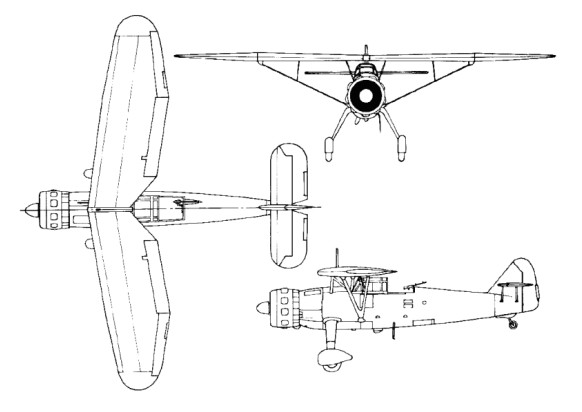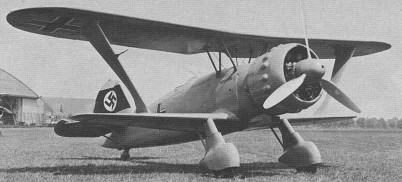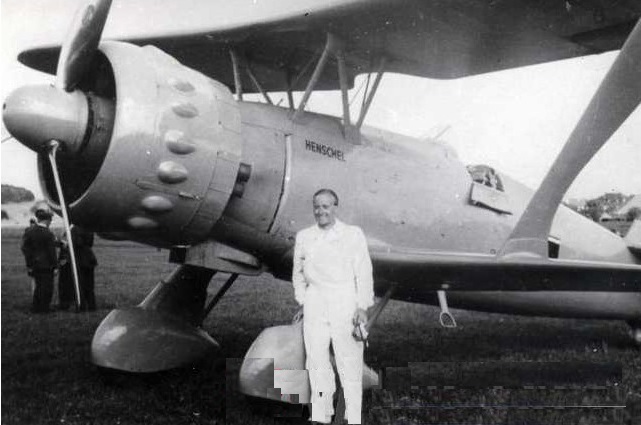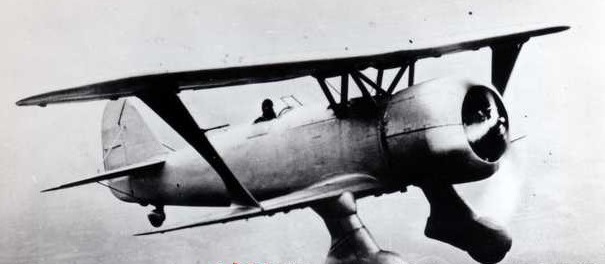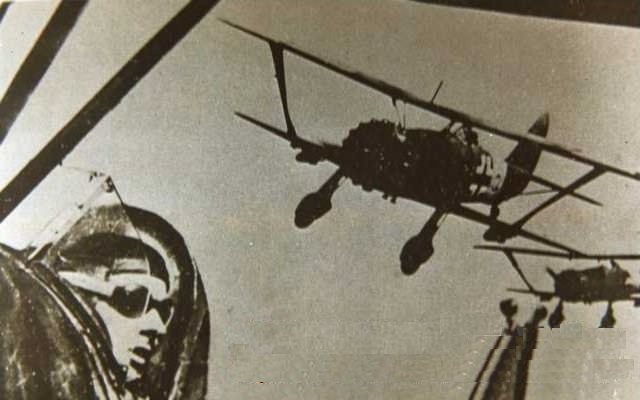
Henschel Hs 129

Henschel was one of four companies (the others being Focke-Wulf, Gotha and Hamburger Flugzeugbau) to which, in April 1937, the Technische Amt of the Reichsluftfahrtministerium (RLM) issued a specification for a twin-engine ground-attack aircraft. It was required to carry at least two 20 mm MG FP cannon and to have extensive armour plating protection for crew and engines. The two designs for which development contracts were awarded on 1 October 1937 were the Focke-Wulf Fw 189C and Henschel Hs 129.
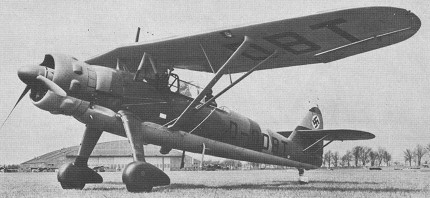
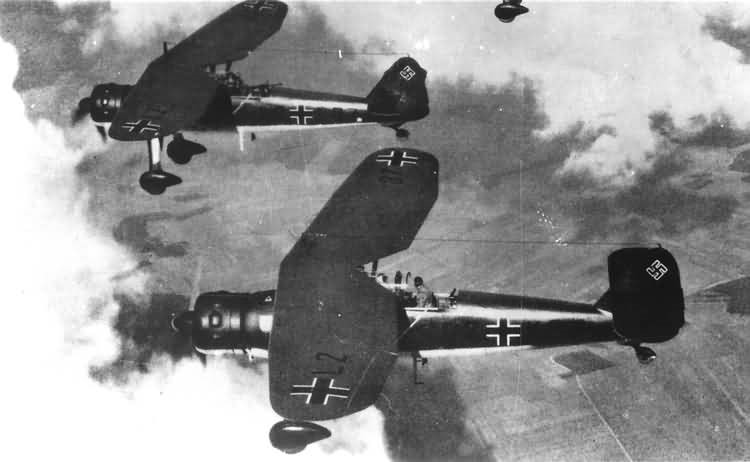
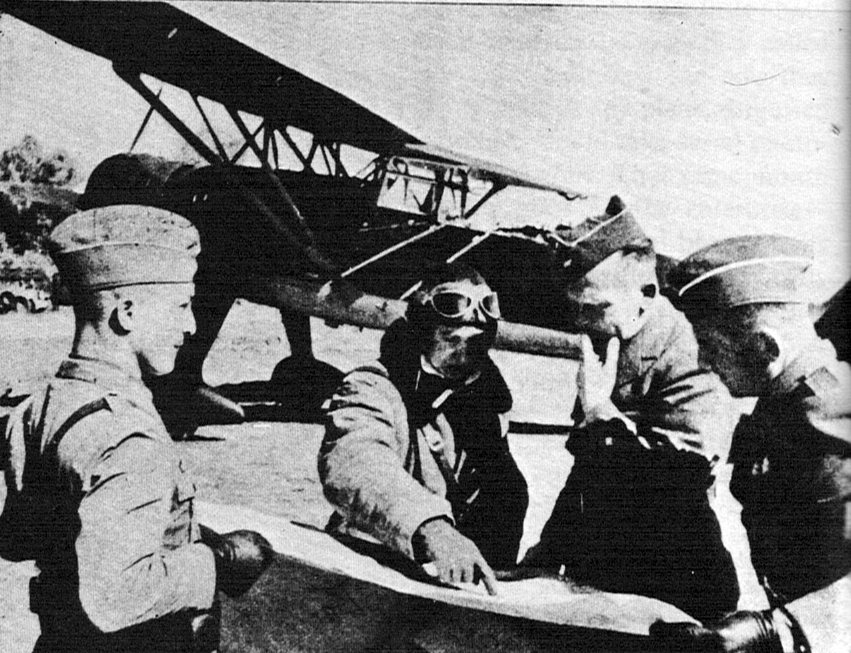
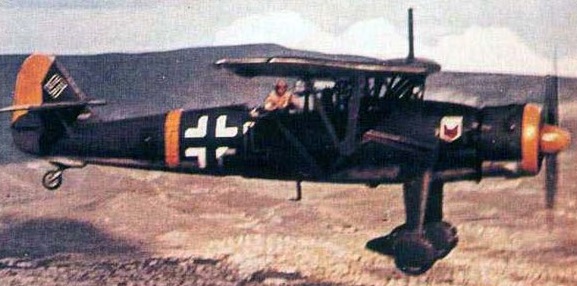
The Hs129 was another Friedrich Nicolaus design with a light alloy stressed-skin fuselage of triangular section.
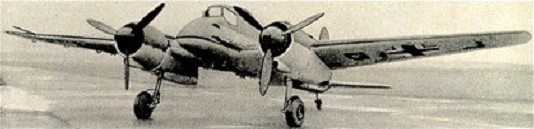
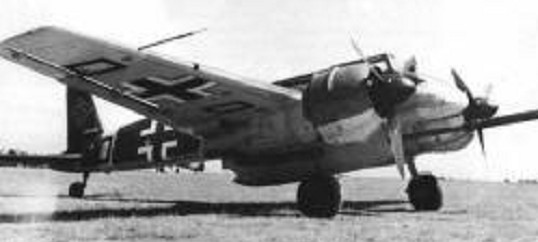
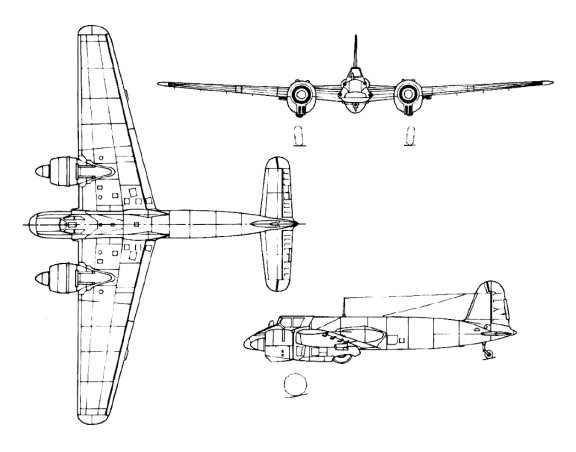
It was designed around a single large “bathtub” of steel sheeting that made up the entire nose area of the plane, completely enclosing the pilot up to head level. Even the canopy was steel, with only tiny windows on the side to see out of and two angled blocks of glass for the windscreen. It contained a small cockpit with a restricted view, necessitating the removal of some instruments to the inboard sides of the engine cowlings. The windscreen was made of 75 mm (2.95 in) armoured glass and the nose section was manufactured from armour plating. Nose armament comprised two 20 mm MG FF cannon and two 7.92 mm (0.31 in) MG 17 machine guns. In order to improve the armor’s ability to stop bullets the sides were angled in forming a triangular fuselage, resulting in almost no room to move at shoulder level. The Revi C 12/C gunsight was mounted outside on the nose. The prototype flew in the spring of 1939, powered by two 465 hp (347 kW) Argus As 410A-1 engines, and two further prototypes were flown competitively against the modified Fw 189 development aircraft for the Fw 189C.

The entire nose section formed a welded armoured shell 6 mm to 12 mm thick around the pilot, with toughened 75 mm thick glass in the canopy. The total weight of the nose armour was 2,380 lbs (1080 kg).
In the end the plane came in 12% overweight and the engines 8% underpowered, and the controls proved to be almost inoperable as speed increased. The Fw design proved to be no better, both planes were underpowered with their Argus 410 engines, and very difficult to fly. In the end the only real deciding factor was that the Henschel was smaller and cheaper. The Focke-Wulf was put on low priority as a backup, and testing continued with the Hs 129A-0.
Two self-sealing wing tanks each holding 45 Imperial gallons (205 litres) and a single self-sealing fuselage tank of 44 Imperial gallons (200 litres). The Hs 129B-2 was capable of carrying a single droppable auxiliary fuel tank of 33 Imperial gallons (150 litres)

The company was awarded a contract for eight pre-production Hs 129A-0 aircraft, and these were issued initially to 5 (Schlacht)./LG 2 in 1940, but transferred to 4./SG 101 at Paris-Orly in 1941, with the exception of two which were converted at Schonefeld to accept Gnome-Rhone 14M 4/5 radial engines. It was with this powerplant that 10 Hs 129B-0 development aircraft were delivered from December 1941; improvements included a revised cockpit canopy and the introduction of electrically-actuated trim tabs. Armament comprised two 20 mm MG 151/20 cannon and two 7.92 mm (0.31 in) MG 17 machine guns, along with the ability to carry four 50kg bombs under the midline.

But even before the A-1’s were delivered the plane was redesigned with the Gnome-Rhone 14M radial engine, which were captured in some number when France fell. This engine supplied 700 hp (522 kW) for takeoff compared to the Argus at 465 hp (347 kW). The A-1 planes were converted into Hs 129B-0’s for testing (although some claim that some A’s were sold to Romania) and the pilots were reportedly much happier. Their main complaint was the view from the canopy, so a single larger windscreen and a new canopy with much better vision were added, resulting in the production model Hs 129B-1. The first flight of the Hs 129B was in October 1941.

B-1’s started rolling off the lines in December 1941, but they were delivered at a trickle. In preparation for the new plane, I./Sch.G 1 had been formed up in January with 109’s and Hs 123’s, and they were delivered B-0’s and every B-1 that was completed. Still, it wasn’t until April that 12 B-1’s were delivered and its 4th staffeln was ready for action. They moved to the eastern front in the middle of May, and in June they received a new weapon, the 30 mm MK 101 cannon with armor-piercing ammo in a midline pod.

The production Hs 192B-1 series became operational on the Eastern front, where the type was to be used most widely, although it served also in North North Africa, Italy and in France after the D-Day landings. Sub-variants of the M 129B-1 series included the Hs 129B-1/R1 with additional offensive armament in the form of two 110 lbs (50 kg) bombs or 96 anti-personnel bombs. The Hs 129B-1/R2 with a 30-mm MK 101 cannon beneath the fuselage. The Hs 129B-1/R3 with four extra MG 17 machine-guns; the Hs 129B-1/R4 with an ability to carry one 551 lbs (250 kg) bomb instead of the Hs 129B-1/R1’s bomb load; and the Hs 129B-1/R5 which incorporated an Rb 50/30 camera installation for reconnaissance duties.

By May of 1942 only 50 of the planes had been delivered when they started to deliver the new Hs 129B-2 model side-by-side with the B-1. The only difference between the two were changes to the fuel system – a host of other minor changes could be found almost at random on either model. As time went on these changes were accumulated into the B-2 production line until you could finally tell them apart at a glance, the main differences being the removal of the mast for the radio antenna, the addition of a direction-finding radio antenna loop, and shorter exhaust stacks on the engines.

In the field the differences seemed to be more pronounced. The R-kits were renumbered and some were dropped, and in general the B-2 planes received the upgraded cannon pack using a MK 103 instead of the earlier MK 101. These guns both fired the same ammunition, but the 103 did so about almost twice the rate.
The Hs 129B-2 series which was introduced into service in the early part of 1943. They included the Hs 129B-2/Rl which carried two 20 mm MG 151/20 cannon and two 13 mm (0.51 in) machine-guns; the generally similar Hs 129B-2/R2 introduced an additional 30 mm MK 103 cannon beneath the fuselage; the Hs 129B-2/R3 had the two MG 13s deleted but was equipped with a 37 mm BK 3,7 gun; and the Hs 129B-2/R4 carried a 75 mm (2.95 in) PaK 40L (‘L’ for Luftwaffe) gun in an underfuselage pod. Final production variant was the Hs 129B-3 of which approximately 25 were built and which, developed from the Hs 129B-2/R4, substituted an electro-pneumatically operated 75 mm BK 7,5 gun for the PaK 40 (Panzer Abwehr Kanone 40). The lethal capability of the Hs 129B-2/R2 was amply demonstrated in the summer of 1943 during Operation ‘Citadel’, the German offensive which was intended to regain for them the initiative on the Eastern Front after the defeat at Stalingrad. During this operation some 37,421 sorties were flown, at the end of which the Luftwaffe claimed the destruction of 1,100 tanks. However accurate these figures, not all of those destroyed could be credited to Hs 129s, but there is little doubt that the 879 of these aircraft that were built (including prototypes) played a significant role on the Eastern front. Inspite of its small numbers and deficiancies, proved extremely successful in the anti-role, however, it suffered heavy losses and not many examples survived the war.

Even by late 1942 complaints started about the MK103 against newer versions of the Soviet T-34 tanks. One solution would be to standardize on the larger 37 mm gun, itself adapted from an anti-tank gun that had recently been abandoned by the army. For some reason the Luftwaffe decided to skip over this gun (although it served perfectly well on the Ju 87), and install a gigantic 75 mm gun from the Panzer IV. A huge hydraulic system was used to damp the recoil of the gun, and an auto-loader system with twelve rounds was fitted in the large empty space behind the cockpit. The resulting system was able to knock out any tank in the world, but the weight slowed the already poor performance of the plane to barely flyable in this new Hs 129B-3 version.
B-3’s only started arriving in June 1944, and only 25 were delivered by the time the lines were shut down in September. A small number were also converted from older B-2 models. In the field they proved deadly weapons, but with only 25 of them they had no effect on the war effort.

During operation Citadel, on 8 July 1943, the new Henschel Hs 129s of the German 4th Antitank Group of the 9th Ground-Attack Wing under Capt. Meyer, virtually wiped out a Soviet armoured brigade.

The Hs 129B equipped three Staffeln of the 8th Assault Wing of the Royal Romanian Air Corps. On 23 August 1944 there was a coup in Romania, as a result of which the country changed from being an ally of Germany to becoming an enemy. These Hs 129Bs, accordingly were used against the German armies, finally being combined into a unit equipped with the Ju 87D Stuka.

In order to address the poor performance of the aircraft, plans had been underway for some time to fit the plane with newer versions of the Italian Isotta-Fraschini Delta engine that delivered 850 hp (634 kW). However the engine ran into a number of delays, and was still not ready for production when the plant was overrun by the Allies.

In late September 1944, the entire manufacturing programme was abandoned, along with virtually all other German aircraft production except the ’emergency fighter programme’. Total production had amounted to only 879, including prototypes. Because of attrition and other problems, the Hs 129 was never able to fully equip the giant anti-tank force that could be seen to be needed as early as winter 1941-42, an overall effect on the war was not great. Towards the end, in autumn 1944, operations began to be further restricted by shortage of high octane petrol, and by the final collapse of Germany only a handful of these aircraft remained.

The Hs 129B-1 and B-2 were the major production variants, the latter fitted to carry a drop-tank. Some were equipped experimentally with the SG 113A recoilless gun installation: a battery of six 75mm smooth-bore tubes, each 1.6m long, mounted in the fuselage at an angle slightly beyond the vertical to fire downwards and rearwards. The weapon was intended for use against tanks and was triggered automatically when the aircraft flew over a tank at low altitude. A total of more than 800 Hs 129 were built.

A-Series
Engines: Two 465 hp (347 kW) Argus As 410A-1
Maximum speed: 253 mph (407 km/h) at 12,565 ft (3830 m)
Service ceiling: 29,525 ft (9000 m)
Initial climb rate: 1,600 ft (486 m) per minute.

Hs 129A-0

B-Series
Engines: 2x Gnome-Rhone 14M, 700 hp / 522 kW
Propellers: Ratier Length: 32 ft / 9.75 m
Wingspan: 46 ft 7 in / 14.20 m
Height: 10 ft 8 in / 3.25 m
Wing area: 312 sq.ft / 29 sq.m
Empty equipped weight: 8,400 lb / 3,810 kg
Maximum take-off weight: 11,574 lb / 5,250 kg
Maximum speed: 253 mph / 407 km/h
Combat range: 348 miles / 560 km
Service ceiling: 29,525 ft / 9,000 m
Armament:
Guns: 2x 20 mm MG 151/20, 2x 7.92 mm MG 17
Bombs: 2x 110 lb, 4x 50 kg
Crew: 1

Hs 129B-0

Hs 129B-1
Range: 348 miles (560 km) on internal fuel.
Armament: Two 20 mm MG 151/20 cannon with 125 rounds per gun and two 7.92 mm (0.31 in) MG 17 machine guns with 500 rounds per gun.

Hs 129B-1/R2
Engine: 2 x Gnome Rhone 14M 4/5, 522kW
Max take-off weight: 5110 kg / 11266 lb
Empty weight: 3810 kg / 8400 lb
Wingspan: 14.2 m / 6 ft 7 in
Length: 9.75 m / 31 ft 12 in
Height: 3.25 m / 10 ft 8 in
Wing area: 29.0 sq.m / 312.15 sq ft
Max. Speed: 407 km/h / 253 mph
Ceiling: 9000 m / 29550 ft
Range: 560 km / 348 miles
Armament: 2 x 20mm cannons, 1 x 30mm cannon, 2 x 7.92mm machine-guns
Crew: 1

Hs 129B-2
Range: 427 miles (688 km) on internal fuel.
Armament: Two 20 mm MG 151/20 cannon with 125 rounds per gun and two 13 mm (0.51 in) MG 131 machine-guns with 250 rounds per gun (retained the 7.92 mm (0.31 in) MG 17 machine guns).

Hs 129B-2/Wa (Waffentrager)

Hs 129B-3/Wa (Waffentrager)

Hs 129C
Henschel Hs 126

Henschel Hs 126

In 1935 Henschel developed the parasol-wing Henschel Hs122 short range reconnaissance aircraft as a replace¬ment for the Heinkel He 45 and He 46, but although a few of the 492-kW (660-hp) Siemens SAM 22B-engined aircraft were built, the Hs 122 was not adopted for Luftwaffe use. From it, however, Henschels chief designer Friedrich Nicolaus derived the Henschel Hs 126 which incorporated a new wing, can¬tilever main landing gear and a canopy over the pilot’s cockpit, the observers position being left open. Making its appearance in 1936 the Henschel Hs 126 V1 was a modified Hs 122A airframe powered by a Junkers Jumo 210.

The pilot was seated in a protected cockpit under the parasol wing and the gunner in an open rear cockpit. The aircraft was of all-metal construction, the wing was a high lift parasol wing was designed by Friedrich Nicolaus and this allowed the Hs 126 to use short and rough landing strips. The wheels had long struts which gave it a nose high appearance on the ground. To reduce drag, spats were sometimes fitted. It had a strut-braced tail unit and tailwheel-type landing gear. Cockpit access was via a ladder on the side and the rear of the cockpit was open to the elements. The gunner/observer had a handheld camera and also operated a Zeiss Rb topographic camera that was located in a bay behind him. The canopy had deflector panels to shield the gunner’s gun from the slipstream.

Henschel Hs 126 Article

The first prototype was not entirely up to Luftwaffe standards; it was followed by two more development planes equipped with different engines. Following the third prototype, during 1937 Henschel built 10 pre-production Hs 126A-O aircraft based on the third prototype, and some were used for operational evaluation by the Luftwaffe’s Lehrgruppe reconnaissance unit in the spring of 1938.

Initial production version was the Hs 126A-1, generally similar to the pre-production aircraft but powered by the 656-kW (880-hp) BMW 132dc radial engine. Armament comprised one forward-firing 7.92-mm (0.31-in) MG 17 machine-gun, plus one similar weapon on a trainable mounting in the rear cockpit, and five 10-kg (22-lb) bombs or a single 50-kg (110-lb) bomb could be carried on an underfuselage rack. A hand-held Rb 12.5/9x 7 camera in the rear cockpit was supplemented by a Zeiss instrument in a rear-fuselage bay.

The Hs 126 entered service in 1938 after operational evaluation with the Legion Kondor contingent to the Spanish Civil War (in 1938 six were delivered to the Condor Legion and served in Aufklarungsgruppe 88. Five of these survived to be turned over to Spain at the end of the Civil War), and 16 were delivered to the Greek air force.

An improved but similar He 126B-1 was introduced during the summer of 1939, this incorporating FuG 17 radio equipment and either the Bramo 323A-1 or 671-kW (900-hp) 323A-2. The final Hs 129B- 2/R-4 version was armed with a 75 mm cannon.

By the time the Hs 126A-1 joined the Luftwaffe, the re-equipping of reconnaissance formations was already well advanced, and by the start of World War II in September 1939, Germany already had several good short range observation and long range recon aircraft. Some 13 squadrons were equipped with the He 126 in the invasion of Poland, where it was able to operate as a bomber and ground attack aircraft, as well as in its normal army co-operation, reconnaissance and artillery spotter roles. Luftwaffe Henschels were active during the Polish campaign, the absence of any effective fighter or antiaircratt opposition enabling them to mix in a bit of bombing and strafing with their everyday reconnaissance and Army cooperation duties. RAF and Armee De l’air aircraft weren’t so obliging, being present in large numbers and motivated by hostile intent, and losses among the poorly armed Henschels began to rise alarmingly- twenty were lost between 10-21 May. By spring, when the “Sitzkrieg” ended in the invasion of the Netherlands, Belgium, and France production of the Hs 26 was being wound down following the RLM’s decision to order Focke Wulf’s Fw 189 “Fliegende Alige” into production as a replacement. One Staffel operated Hs 126s in Atrica in support of Rommel’s Afrika Korps, but the rest were transferred to the Eastern Front when Operation Barbarossa began, gradually being phased out as Fw 189s arrived from mid 1942 on. Relegated to rear area utility jobs Hs 126s re-entered combat later that same year following the establishment of Storkampfstaffeln for night time harassment, and continued flying these missions against partisans in the Balkans during 1943.

By June 1941, there were 48 squadrons of the aircraft in service – in the aftermath of the campaign in France one squadron, 2.(H)/14 took the Hs 126 to North Africa, where it remained in service until August 1942. This left forty-seven squadrons equipped with the Hs 126 for the invasion of the Soviet Unit. The aircraft was still vulnerable, and began to suffer heavy losses. In the spring of 1942 the Fw 189 began to replace it, and by the end of the year it had gone from use in the front line. From 1942 on, most of the surviving Hs 126s were used as training aircraft but some were used as a glider tug and for night-fighting units (Nachtschlachtgruppen) in specialized close-support and ground attack roles. The Hs 126 was used by NSGr 7 in the Balkans, 3./NSGr 11 in Estonia and 2./NSGr 12 in Latvia. It remained in use in the Balkans until April 1945 and the German collapse. Production of the Hs 126 ended in 1941 and the type was retired from the front line in 1942. Some 800 in total were produced.

Production aircraft were built in Berlin, at Schänefeld and Johannisthal, from 1938 and entered operational service first with AufklGr. 35. By the outbreak of World War II the re-equipment of He 45- and He 46-equipped reconnaissance units with the Hs 126 was well under way. The type was withdrawn progressively from front-line service during 1942 on replacement by the Focke-Wulf Fw 189.

Gallery

Hs 126A4
Max Speed: 221mph.
Ceiling: 9840ft.
Wingspan: 47ft 6in.
Length: 35ft 7in.
Armament: MG17 and MG15 machine guns.

Hs 126B-1
Engine: 1 x Bramo 323A-1, 634kW / 850-hp
Max take-off weight: 3090 kg / 6812 lb
Empty weight: 2030 kg / 4475 lb
Wingspan: 14.5 m / 47 ft 7 in
Length: 10.85 m / 35 ft 7 in
Height: 3.75 m / 12 ft 4 in
Wing area: 31.6 sq.m / 340.14 sq ft
Service ceiling: 8300 m / 27250 ft
Range: 720 km / 447 miles
Maximum speed: 310 km/h (193 mph) at sea level
Armament: two 7.92-mm (0.31-in) MJ 17 machine-guns, plus one 50-kg (110lb) or five 10-kg (22-lb) bombs
Crew: 2

Henschel Hs 123

Spurred on by Ernst Udet’s enthusiastic reports on what he’d seen during his tour of the United States, the Luftfahrtkomissariat’s C AMT let design contracts to Fiesler and Henschel for prototypes of Sturzkampffleugzeugen, or dive bomber.

Henschel Hs 123 Article

In February 1934, a requirement was published for the aircraft and tenders were awarded to Hamburger Flugzeugbau GmbH, Fieseler Aircraft GmbH and Henschel Aircraft GmbH.

Henschel chief designer Friedrich Nicolaus developed a sesquiplane with an open cockpit and fixed landing gear of all-metal construction. The power was a BMW 132 enclosed in a NACA ring. The wings had the usual control surfaces and they were partially covered with fabric. The control surfaces were all covered with fabric.

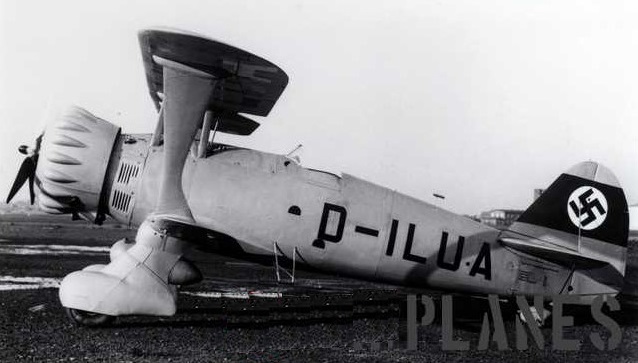
The construction of the prototype progressed rapidly and on 1 April 1935, the Hs 123 V1 was completed. Maiden flight was on April 5, 1935 and Hs 123 V1 had the registration D-ILUA. The V2 was tested with a Wright Cyclone R-1820 F52, starting with 770 hp power. This machine suffered from a landing accident and later was adapted to use the BMW 132 A and in this configuration was designated as Hs 123 V8.

The testing of the three machines from different manufacturers was held at Rechlin from June 1935 up to January 1936. Henschel’s Hs 123, flown by Udet himself, comfortably beat out its competition, the Fi 98, but two prototypes were lost in quick succession once flight testing had begun at Erprobungsstelle Rechlin. Examination of the wreckage and static testing of the surviving ariplane pointed to weakness in the top wing’s center-section, the design being modified accordingly. The Henschel Hs 123 was found as most suitable from all proposed aircraft and production began in 1936 at Kassel. The Hs 123 V5 was presented in 1937 at the International Air Meeting in Dübendorf.

The very first production block was Hs 123A-0, delivered to units in 1936 and the main purpose for these machines was operational testing by the Luftwaffe. The first series-manufacture example was the Hs 123A-1 and these had minor differences compared with the previous pre-production block. The aircraft was equipped with pilot armor. The main offensive armament was four SC50 bombs mounted on the bottom wing racks with optional SC250 bomb mounted beneath the fuselage. On the fuselage central position it was also possible to mount a droppable fuel tank. Two MG 17 machine guns, caliber 7.92 mm, were mounted in the top nose and they were synchronized to fire through the propeller arc.

Hs 123A 1s first entered service with Stukagruppe I/162 Immelmann, examples soon being sent off to Spain where they were flown by “volunteers” from the Legion Condor, proving their worth by providing close support for Nationalist ground forces. The Spanish Air Force later received the remaining Hs 123 A-1. These Hs 123 were based in Seville and during the combat evaluation Hs 123 performed at a high efficiency in the close-support missions, and at the same time performed as a safe combat platform for its pilots.

By 1939, despite its success in Spain, the Luftwaffe considered the Hs 123 obsolete and most of the Schlachtgeschwader equipped with the type had been disbanded and only II.(Schl)/LG2 remained operational with the Hs 123. Sole operational II. (Schl)/LG 2 had 39 machines which were engaged in combat missions during the Polish Campaign. This single unit proved to be particularly effective and this is greatly dedicated to the sound of the engine which had a psychological effect on ground forces. It was also true that the Hs 123 could take considerable punishment and stay flyable. One of the benefits was use from unprepared airfields.

After this good combat record, the Hs 123 was put into the combat missions over the Low Countries and France. At this time the Luftwaffe had two operational combat aircraft, the Junkers Ju 87 was a dive bomber and the only machine that could give close support was the Hs 123, previously declared by the Luftwaffe as ’obsolete’. After the campaign in France some number of machines was sent to 10.(Schl)/LG 2. and they were seriously considered to be used during Operation Barbarossa. In the begining of Operation Barbarossa, the single Gruppe of the Luftwaffe that was providing ground support was II.(Schl)/LG 2, equipped with 38 Bf 109Es and 22 Hs 123s. During the operations the Bf109 was shown vulnerable during operations with weak landing gear as well as a sensitive engine to ground fire and Hs 123 again showed some advantage as a close support aircraft. The Escuadrilla Azul, volunteers from Spain flew the type during this time. Bitter experience came in the winter 1941/42 since the open cockpit was not good accommodation for pilots in harsh winter climate. From January 1942, the unit was re-designated as SchlG 1 and Hs 123 became a part of 7./SchlG 1. SchlG 1 took part in the operations in Crimea, Battle of Kharkov and in the Battle of Stalingrad. The Hs 123 was then being replaced with modern aircraft. The remaining machines were sent to the trainer units as well as in non-operational occupied zones.

China imported 12 Hs 123 A-0 from Germany before the war, those aircraft only saw limited actions in the Chinese air force, after new aircraft from the Soviets arrived in China after 1938, those survived German war planes were transferred to reserve. Germany stopped military supply to China in May 1938 and the Hs 123s suffered from shortages of spare parts and they saw limited service. Operated by 15th Sq of the Chinese air force, the few Hs 123 were used in the dive bombing role against Japanese shipping on the Yangtze River in 1938.

Although scheduled to be phased out in favor of Junker’s Ju 87 the Hs 123 did its ground attack job so well that General Wolfram von Richthofen recommended, in 1943, that it be put back into production. Whatever the idea’s worth it could not be followed up on, since all tooling and jigs had been broken up for scrap three years earlier.

Last samples of the Henschel Hs 123 remained operational until the spring 1944 when 7./SG 1 replaced their last Hs 123s with the Ju 87. By 1945, the Hs 123s that remained serviceable were reassigned to secondary duties such as supply dropping and glider towing.

During its service the Hs 123 had just a few operational camouflage patterns. First one was splinter with RLM 61, 62 and 63 at the topside and RLM 65 at the bottom. There were two variations of this scheme used. During the later service this camouflage pattern was still used no matter that it was officially discarded and during overpainting the aircraft got single colour of RLM 71 or 70 at the topside.

Gallery

Hs 123A-1
Engine: 1 x BMW 132Dc, 656kW
Max take-off weight: 2215 kg / 4883 lb
Empty weight: 1500 kg / 3307 lb
Wingspan: 10.5/8.0 m / 34 ft 5 in / 26 ft 3 in
Length: 8.33 m / 27 ft 4 in
Height: 3.2 m / 10 ft 6 in
Wing area: 24.85 sq.m / 267.48 sq ft
Ceiling: 9000 m / 29550 ft
Range: 855 km / 531 miles
Armament: 2 x 7.92mm machine-guns, 450kg of bombs
Crew: 1

Heinkel-Hirth HeS 011 / 109-011

Starting in 1936, Junkers started a jet engine development project under the direction of Wagner and Müller, who worked on axial compressor designs. By 1940 they had progressed to the point of having a semi-working prototype, which could not run under its own power and required an external supply of compressed air.

Meanwhile, Hans Mauch, in charge of engine development at the RLM, decided that all engine development should take place at existing engine companies. In keeping with this new policy, he forced Junkers to divest itself of their internal engine teams. Müller and half of the existing Junkers team decamped and were happily accepted by Ernst Heinkel, who had started German jet development when he set up a lab for Hans von Ohain in 1937. The two teams worked on their designs in parallel for some time, von Ohain’s as the HeS 8 (or 109-001), and the Junkers team as the HeS 30 (109-006). Heinkel’s efforts were later re-organized at Hirth Motoren.

Helmut Schelp, who had taken over from Mauch, felt that the BMW 003 and Junkers Jumo 004 would reach production at about the same power levels long before either would be ready, and cancelled both of the Heinkel projects. He had outlined a new development plan, with three engine classes, the 003 and 004 were “Class 1” engines of under 1000 kg thrust suitable for small fighters, but only really useful in twin-engine designs. Schelp was much more interested developing a “Class II” engine of 1000–2000 kg, larger designs able to power a full-sized fighter design with a single engine. Schelp was also interested in seeing one of his own pet projects, the diagonal compressor, adopted. Schelp had earlier convinced Heinkel to put some effort into another pet project of his, a twin-compressor single-turbine turboprop, but had given up on this and instead offered Heinkel his new concept as a consolation prize.

In some ways, the HeS 011 can be considered a combination of the two teams’ designs, a three-stage axial compressor from Müller’s team, combined with a single-stage centrifugal compressor from von Ohain’s, the two driven by a single two-stage turbine. It featured a unique compressor arrangement, combining a three-stage axial compressor with a “diagonal” stage similar to a centrifugal compressor directly forward of the three-stage axial compressor, along with a low-compression impeller in the intake, just ahead of the diagonal stage to smooth out airflow. The engine operated at somewhat higher thrust levels, about 2,700 lbf (12 kN), as opposed to about 1,750 to 2,000 lbf (7.8 to 8.8 kN) thrust for the 003 and 004 respectively. The 011 shared two features with the Jumo 004, with an engine-mounted Reidel two-stroke engine functioning as an APU to get the central shaft turning during engine startup, but mounted above the intake orifice within a Heinkel-crafted prefabricated sheet-metal intake passage instead of inside the intake diverter as the 004 had done, and also had a variable geometry exhaust nozzle, with a restrictive body of differing aerodynamic shape to the 004’s Zwiebel (onion) unit, that likewise traveled fore and aft in the nozzle to vary the thrust. Plans were also made for a turboprop version, the HeS 021, but the workload at Heinkel was so high that this project was later given to Daimler-Benz to complete.

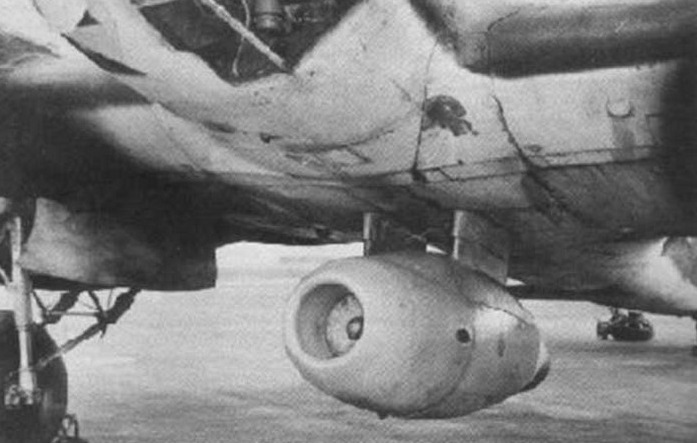
First run in September 1943, prototypes were available in 1944, and tested using a Heinkel He 111 bomber, mounting the engine on the external hardpoints under the fuselage.

Heinkel He.111 with He S011 test jet

Over the next year, practically all German aircraft designers based their projects on the 011. Like the nearly three hundred experimental examples built of the complex Jumo 222 piston engine, the HeS 011 turbojet never entered production, with only 19 prototypes built in total. One of these was mounted in the Messerschmitt Me P.1101 that was taken to the United States, forming the basis of the Bell X-5.

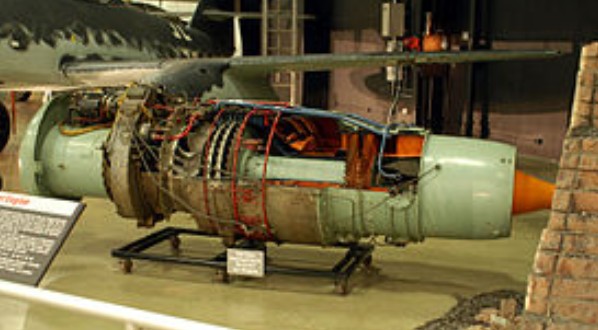
Two museum-preserved examples of the HeS 011 engine still exist in the United States, at the National Museum of the U.S. Air Force in Dayton, Ohio, and at the EAA AirVenture Museum in Oshkosh, Wisconsin.

Type: Turbojet
Length: 3450 mm (11 ft 3¾ in)
Diameter: 875 mm (34½ in)
Dry weight: 950 kg (2,094 lb)
Compressor: Diagonal + three stage axial
Combustors: 16 chambers
Turbine: Two stage axial.
Maximum thrust: 12.01 kN (2,700 lbf) at 10,000 rpm.
Thrust-to-weight ratio: 12.63 N/kg (1.29 lbf/lb)

Heinkel-Hirth HeS 40

The Heinkel HeS 40 (HeS – Heinkel Strahltriebwerk) was an experimental constant-volume jet engine designed by Adoph Müller’s team at Heinkel starting some time in 1940 or 41. It was based on the mechanical layout of the HeS 30, but replaced the conventional flame cans with oversized ones including large poppet valves that sealed off the chambers during firing. Constant-volume combustion, similar to the Otto cycle used in most piston engines, is considerably more fuel efficient than the constant-pressure combustion used in a typical jet engine.

The design was based on the HeS 30 not only to make parts more readily available as well as to make direct comparisons between the two easier. The main changes were to reduce the compression ratio of the compressor to about 2:1 (from 2.8:1), and add the new combustion chambers. The new chambers were considerably larger than the originals, forcing a reduction in the number from ten to six burners. The valve stems projected forward into streamlined fairings in the intake area behind the compressor.

The operational cycle of the engine is somewhat similar to a conventional six-cylinder engine. Slightly compressed air, similar to an automobile equipped with a turbocharger, was channeled into the cylinders in turn, closed off with the poppet valves, and then burned. By the time the combustion was complete the pressure in the flame cans would be much higher, although the actual compression ratio is not specified. The hot gas then blew through a turbine to extract power, instead of forcing a piston to move. Although there would be some loss of charge during the burning period, and thus the design would be less efficient than the true Otto cycle, it would nevertheless be somewhat more efficient than a traditional jet engine, at the cost of some complexity.

It appears the HeS 40 was never built, and remained a paper design. Nevertheless, work on the design was ended by 1942, by which point the HeS 30 was making good progress.

Heinkel-Hirth HeS 30 / 109-006 / Junkers Jumo 109-

The HeS 30 (HeS – Heinkel Strahltriebwerk) was an early jet engine, originally designed by Adolf Müller at Junkers, but eventually built and tested at Heinkel. The first Jumo 109-009 was running by the summer of 1938, but the project and its staff were switched to Heinkel after Junkers’ engine division discovered that jet engine development work was being undertaken in secret under the auspices of the company’s airframe division.

The engine division of Junkers had already begun to move into turbojet development, and in the summer of 1931 it received a German air ministry contract for the new Jumo 1009-004. This was designed for a thrust of 1543 lb / 700 kg at a speed of 559 mph / 900 kph, and was schemed round an eight-stage axial compressor, six combustors, a single stage turbine designed with the aid of AEG’s turbine expertise and provision for afterburning.

It was possibly the best of the “Class I” engines, a class that included the more famous BMW 003 and Junkers Jumo 004, but work on the design was stopped by the Reichluftfahrtministerium (RLM) as they felt the Heinkel team should put all their efforts into other designs.

The HeS 30 was designed before the RLM introduced standardized naming for their engine projects. It was assigned the official name 109-006, and it was sometimes called the HeS 006 as a short form. Development ended just as these names were being introduced, so “HeS 30” naming is much more common.

Herbert Wagner started engine developments at Junkers in 1936, placing Adolf Müller in overall charge of the project. In 1938 Junkers purchased Junkers Motoren (Jumo), formerly a separate company. In October 1939, under pressure from the RLM, Junkers moved all their engine work to Jumo’s Dessau factories from their main plants at Magdeburg. Müller would have ended up in a subordinate role after the move, but decided to leave instead. He and about half of the original Junkers team were scooped up by Ernst Heinkel and moved to his Rostock campus, where Hans von Ohain was working on the Heinkel HeS 3 engine.

The first unit ran in November 1940, but was beset with so many technical problems that it was early 1942 before anything approaching reliability was attained; a Jumo 109-004A was flown for the first time under a Messerschmitt Bf 110 in March 1942, and other A-series engines were flown in prototypes of the Me 262.
In the production-configured B-series the quantity of strategic materials was halved, largely through replacement of castings by sheet metal construction. This reduced weight and the number of man-hours involved in construction.

Of all of the designs Müller brought with him, the HeS 30 was simplest and easiest to build. Müller had already built a test engine while still at Junkers, however it was only able to run at about half its designed RPM, which limited compression and required a continuous supply of external compressed air. The design was abandoned when Müller left, the Jumo team’s simpler design being used instead. Müller promised Heinkel he could have the engine up and running on a testbed within one year of completing the move, a promise he was ultimately unable to keep.

Key to the engine’s working cycle was an axial compressor of then-unique construction. Most German engines of the era had the stators do all of the actual compression, with the rotors speeding up the air for them to compress. In the HeS 30, the rotor and stators shared compression about 50-50, a design originally provided by Rudolph Friedrich of Junkers. Overall the engine had a five-stage compressor providing air at a compression ratio of 3:1 to ten flame cans, which powered a single-stage turbine. The turbine was also unique for the era, using a set of guide vanes that were adjustable for various operating speeds. Like most German axial engines, the engine also included a variable-geometry exhaust cone to lower back pressure when starting, and an electric starter motor.

Due to the move, it took considerable time for the team to restart work on the design, and even though three experimental engines were ordered as the 109-006 in 1939, it was not until May 1942 the first engine actually ran. In addition to problems with the move, the compressor turned out to provide more mass flow than initially suspected, forcing a redesign of the turbine. To add to the problems, Müller and Heinkel had an argument in May that eventually led to Müller resigning.

Work on the engine continued, and by October it was running at full speed. Of all of the early engines, the HeS 30 was by far the best design. It produced a thrust of 860 kg (1,895 lb), almost equidistant between the BMW 003’s 800 kg (1,780 lb) and the Jumo 004’s higher 900 kg (1,980 lb), but weighed only 390 kg (860 lb), providing a much better power-to-weight ratio than the dry weights of either the 003 at 562 kg (1,240 lb) or the 004 at 720 kg (1,585 lb). The HeS also had better specific fuel consumption and was also smaller in cross-section.

Helmut Schelp, in charge of engine development at the RLM, refused to give Heinkel a production contract, an event Hans von Ohain claims brought Ernst Heinkel near tears. Schelp noted that while the design was excellent, BMW and Jumo were so far ahead they simply did not need another “Class I” engine – something that would prove ironic in another two years when both of those engines were still not operational. It also appears he had some misgivings about the compressor arrangement, but if this was the case it was never official. He also cancelled von Ohain’s Heinkel HeS 8 at the same time.
Instead of yet another Class I engine, Schelp asked Heinkel to continue work on a Class II engine of about 1,300 kg thrust, which would be needed for reasonably sized single-engine fighters, and as a useful addition to twin-engine bombers. Thus work on the HeS 30 and HeS 008 ended, and Heinkel turned, grudgingly, to the Heinkel HeS 011, which would not enter production before the war ended. The remains of Müller’s team were then moved to the Heinkel-Hirth plants to work on the new engine.

Starting some time in 1940 or ’41, the basic mechanical layout of the HeS 30 was also used on an experimental constant-volume engine known as the Heinkel HeS 40.

The Jumo 109-004B-1 first ran in May 1943, and the use of blades of improved shape in the first two stages of the compressor helped to increase thrust to 1984 lb / 900 kg. This variant was quite rapidly cleared for production, the first units being delivered in March 1944 to power the Me 262A. Further development resulted in the Jumo 109-004B-4, with hollow rather than solid turbine blades, which entered production in December 1944, it was about to be supplanted by the 2315 lb / 1050 kg thrust Jumo 109-004D-4 as the war ended.

Specifications
Type: Turbojet
Length: 2.72m
Diameter: 0.62m
Dry weight: 390kg (860lb)
Compressor: Axial 5-stages
Combustors: 10 Cannular chambers
Turbine: Axial 1 stage
Fuel type: Gasoline
Oil system: pressure scavenge return
Maximum thrust: 860kp (1,896lb)
Overall pressure ratio: 3:1 Pressure ratio

Heinkel-Hirth HeS 8 / 109-001

The Heinkel HeS 8 (prefix being an abbreviation for “Heinkel Strahltriebwerk”-Heinkel Jet Engine) was an early jet engine designed by Hans von Ohain while working at Heinkel, and first run in September 1940. It was the first jet engine to be financially supported by the RLM, bearing the official name 109-001.

The HeS 8 was intended to power the Heinkel He 280 twin-engine fighter, although both Heinkel and von Ohain preferred the axial HeS 30. A lengthy gestation period meant it was finally becoming ready for production at about the same time as the Junkers Jumo 004 and BMW 003. In 1942 work was ended on the HeS 8 and HeS 30, and Heinkel was ordered to move on to the larger Heinkel HeS 011 instead. The He 280 was left engineless, and was eventually abandoned.

By the time the HeS 3 program wound down in 1939, it appears that von Ohain no longer favoured the centrifugal compressor for jet engines. He had been “sold” on the axial compressor as early as 1938, after a meeting with D. Encke of AVA, but continued with the centrifugal design in the HeS 3 because it was much easier to work with. It is likely he would have developed an axial design as a follow-on to the HeS 3, but it appears the RLM was interested in keeping him working on centrifugal designs as a backup in case the various axial designs ran into problems.

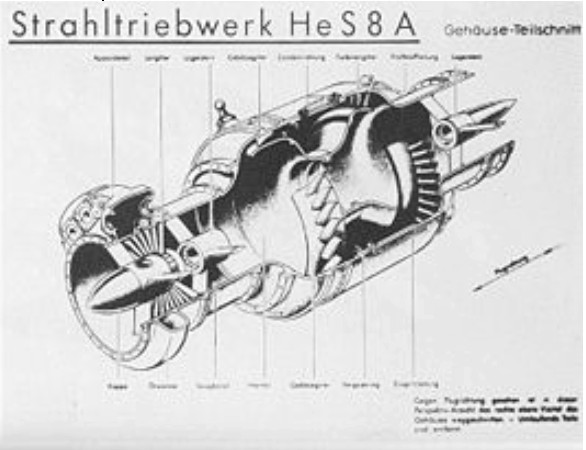
The main problem with the centrifugal compressor was the large cross-sectional area. von Ohain had been looking at solutions to this problem as soon as the HeS 1 design was winding down in 1937. His first attempt at the HeS 3 was to separate the compressor and turbine —which were back-to-back in the HeS 1— and place the combustion chambers between them. Various problems in this original HeS 3 design forced them to abandon this layout for an updated HeS 3b, but it appears von Ohain felt it was still the best solution, and he returned to it for the HeS 8. The result was an engine that was only slightly wider than the compressor disk, whereas earlier models had piping lying outside the compressor disk and were therefore somewhat larger.

Another problem with the original engine series was that the compressor was fairly sensitive to disturbances in the intake airflow. To address this, the HeS 8 added a low-pressure impeller in the intake in front of the main compressor. The impeller did not add much to the compression, but by increasing pressure on the compressor face the airflow was greatly stabilized. The 14-blade impeller and 19-blade compressor were both made of milled aluminum. The 14-blade turbine was made of steel, and uncooled, which suggests turbine burnout would be common. The various components were connected together on a common tubular power shaft, supported by three ball races. The combustion chamber consisted of two diffusers that slowed the airflow from the compressor, and then injected fuel through 128 nozzles arranged in two sets at different “depths”. Various accessories, including the starter, were grouped around the intake and did not add to the overall diameter.

Work progressed slowly, and by the time the first He 280 prototype was ready in September 1940 the engine was nowhere near ready for flight. The prototype then started glider testing while work on the engines and additional airframes continued. The engines were finally considered ready to go in early 1941, although at only 500 kg thrust instead of the planned 700 kg. The engines were later fitted and the He 280 first took to the air on 2 April 1941, although the cowlings had to be left off as the engine proved to leak fuel. Three days later the aircraft was demonstrated for a party of RLM officials, who were impressed, and full backing for Heinkel’s program was forthcoming.

Development of the engine stalled at this point, and by early 1942 the thrust had crept up to only 550 kg. An attempt to improve the design by adding a single axial compressor stage behind the centrifugal compressor was used from V15 (the 15th prototype) on, and new airflow routing in the compressor started on V16. It appears about 30 engines were completed in total, the later models with the various improvements generating about 600 kg of thrust. But by this point the various all-axial designs, including Heinkel’s own HeS 30, were progressing nicely. Helmut Schelp, in charge of jet development at the RLM, decided that the 003 and 004 were “good enough”, and cancelled all work on Heinkel’s existing designs. Instead he asked them to move onto a “Class II” engine design, which would evolve as the Heinkel HeS 011.

Several modifications of the basic HeS 8 design were also explored over the project’s lifetime. The HeS 9 appears to be a modification adding a second axial compressor stage, and replacing the full centrifugal stage with a new “diagonal compressor” that Schelp favoured. Little is known about this design other than the fact that RLM ordered ten of them, but none was built. It appears it was this layout that was used to develop the 011. Another modification, the HeS 10, placed a complete HeS 8 engine inside a larger nacelle, and expanded the intake impellor to be larger than the engine. The HeS 10 appears to have been the first example of what would today be called a turbofan engine. In order to extract more power from the exhaust to drive the fan, an additional single axial-stage turbine was added behind the HeS 8’s existing centrifugal one. The only real difference between the HeS 10 and a modern turbofan engine was that the fan was not powered independently of the core, although, given the separate axial turbine stage, this would not have been difficult to arrange.

Specifications

V16 on
Type: Turbojet
Length: 2.400 m
Diameter: 0.775 m
Dry weight: 380 kg
Maximum thrust: 700 kg at 13,500 RPM planned, 600 kg delivered
Overall pressure ratio: 2.7:1

Heinkl P.1077 Julia

Besides Bachem with the Ba-349 Natter, three other companies submitted proposals for the Jägernotprogramm (Emergency Fighter Program). The front runner was Ernst Heinkel A.G. with their P.1077 Julia which took off from a rail and landed on a skid like the Me-163, the runner up was the Junkers Flugzeug und Motorenwerke’s EF-127 Walli; the Messerschmitt A.G.’s P.1104 was also in the running. As expected, Heinkel won the contract; Heinkel was a preferred and established aircraft manufacturer and already had its own dedicated woodworking shop in Vienna, which could be geared up to build the Julia very quickly. In addition, the P.1077 was easy and cheap to build and had low running costs. The Heinkel project had been in development since August and was granted the point-defense commission on September 8th.

Heinkl He 419

In 1943 the He 319 (project P1065 Ic) was proposed as a high-speed bomber or night fighter with a nose mounted armament of 4 x MK108 and powered by BMW801 radial engines. A mock-up was built the same year but destroyed during a RAF raid. All efforts converged immediately to a new program designated He 419. It consisted in a high-altitude fighter. The V1 (also A0 pre-series version) was actually built from a He 219 A-5 tail and fuselage with DB603G engines and a newly designed wing of 55 sq.m area.

The He 419 A1 was intended to be fitted with single fin unit for production simplification. To avoid production of newly designed pieces the A1 was overtaken by the He 419-B1/R1 version which featured the same fin unit of the He 219. The 2000 hp DB603G engines were fitted with a turbo system driven by exhaust, and an endurance of about 2 hours. The B1 had a larger wing of 59 sq.m. Armament consisted in 2xMG151 in the wing roots and 2 x MK108 in a ventral tray. Maximum speed reached was 670 km/h at 14.500 m; landing speed was 172 km/h; cruise speed was 650 km/h with a calculated range was 2.540 km.

Six finished He 419-B1/R1 were built in Marienehe utilizing He 219A 5 fuselages. The six were flown with the He 319 tail, very long-span wing of 59 square metres (635 sq ft), two 20 mm MG 151/20 in the wings and four 30 mm MK 108 in ventral housing. Speed was 422 mph (679 km/h) to 44,619 ft (13,600 m).