To provide a replacement for the II-2 Shturmovik (ground-attack aircraft), the llyushin design bureau developed two different prototypes in 1943. The Il-8 bore a close resemblance to the II-2, but was powered by a more powerful AM-42 engine, and had new wings, horizontal tail surfaces and landing gear married to a late-production Il-2 fuselage. Test-flown in April 1944, the II-8 was rejected in favour of the contemporary llyushin Il-10, which began its test flight programme in that month.
World War 2
Ilyushin TsKB-26 / TsKB-30 / DB-3 / IL-4
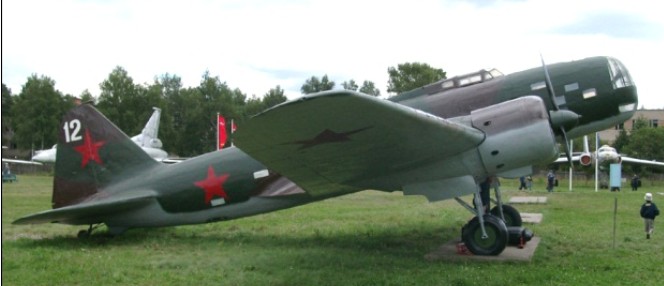
The TsKB-26 long-range bomber prototype first flew in 1935, a twin-engined metal low-wing monoplane powered by 597kW Gnome-Rhone K14 radials. Demonstrated by test pilot Vladimir Kokkinaki on May Day 1936, the prototype went on to establish two world altitude records during July 1936.
A second prototype, the TsKB-30 had an enclosed instead of open position for the pilot, Soviet M-85 engines and a metal rear fuselage. The TsKB-30 also broke records and then attracted world interest by flying from Moscow to Canada, where pilot Kokkinaki had to make a wheels up landing on 28 April 1939 after covering a distance of 8000km.
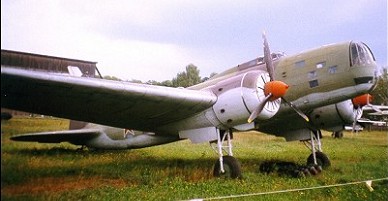
The TsKB-30 entered production in 1937 as the DB-3B (DB being a Soviet contraction denoting long range bomber). Early examples were powered by 571kW M-85 engines, but these were replaced by 716kW M-86s in 1938.
It served widely with the ADD (Long-Range Aviation) and the V-MF (Naval Aviation), remaining operational well into the war with Germany, DB-3s being credited with some of the earliest attacks on Berlin.
The aircraft suffered from a poor defensive armament of single nose, dorsal and ventral 7.62mm guns, and lost heavily during the Winter War against Finland in 1939-40.
The DB-3 served also with the Finnish air arm between 1940 and 1945, five captured aircraft being augmented by six purchased from German war booty supplies. DB-3 production terminated in 1940 with the 1,528th machine.
In 1939 a modified version with lengthened nose and more armour (the DB-3F) appeared, and in 1940, in conformity with changed Russian practice, the designation became IL-4 (denoting the designer, Sergei Ilyushin).
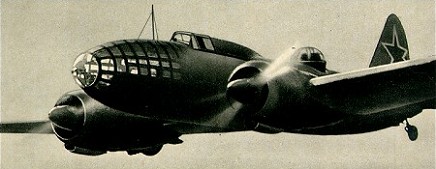
Soon after the German attack on the USSR opened in 1941 it was decided to withdraw IL-4 production to newly opening plants in Siberia, at the same time replacing a large proportion of the metal structure by less strategically critical wood. IL-4s also entered service with Soviet Naval Aviation, and it was a naval manned force of these bombers that first raided Berlin from the east on 8 August 1941. Thereafter the IL-4 paid frequent visits to the German capital and other targets in Eastern Europe. In 1944 production ended, although the IL-4 served until the end of the war and afterwards. Apart from increasing the calibre of its guns and giving it a torpedo carrying ability, the IL-4 remained virtually unchanged between 1941 and 1944.
Well over 5,000 IL-4s were produced between 1937 and 1944, the vast majority in the last three years.
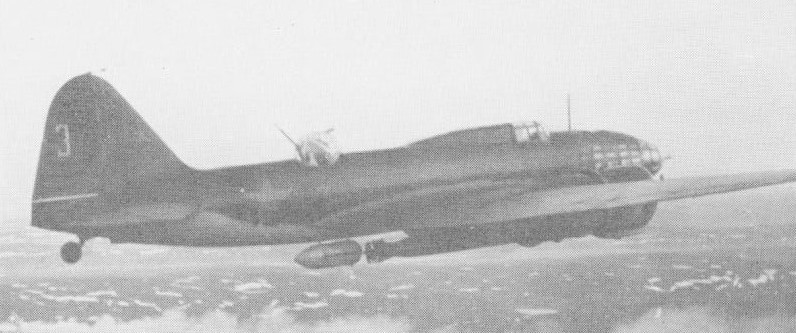
DB-3M
Engine: 2 x M-87B, 708kW
Max take-off weight: 7660 kg / 16887 lb
Loaded weight: 5270 kg / 11618 lb
Wingspan: 21.44 m / 70 ft 4 in
Length: 14.22 m / 46 ft 8 in
Height: 4.19 m / 13 ft 9 in
Wing area: 65.6 sq.m / 706.11 sq ft
Max. speed: 445 km/h / 277 mph
Ceiling: 9700 m / 31800 ft
Range: 3800 km / 2361 miles
Armament: 3 x 7.62mm machine-guns, 2500kg bombs
Il-4
Engine: 2 x M88B, 810kW
Max take-off weight: 10055 kg / 22168 lb
Empty weight: 5400 kg / 11905 lb
Wingspan: 21.4 m / 70 ft 3 in
Length: 14.8 m / 48 ft 7 in
Height: 4.1 m / 13 ft 5 in
Wing area: 66.7 sq.m / 717.95 sq ft
Max. Speed: 429 km/h / 267 mph
Cruise speed: 340 km/h / 211 mph
Ceiling: 9700 m / 31800 ft
Range w/max.fuel: 3800 km / 2361 miles
Range w/max.payload: 1200 km / 746 miles
Crew: 3-4
Armament: 3-8 machine-guns, 2500kg bombs
DB-3F
Engine: 2 x M-88, 1100 hp
Wingspan: 70 ft 2 in
Length: 47 ft 6 in
Max speed: 265 mph at 20,000 ft
Sevice ceiling: 30,700 ft
Max range: 2500 mi
Armament: 3 x 7.62 mm mg
Bombload: 4400 lb or 1 x 18in torpedo
Crew: 3-4
Il-4 / DB-3F
Payload: 5,500 lb
Cruise speed: 200 kt
Ceiling: 31,800 ft
Range: 2,400 miles
Crew: 3
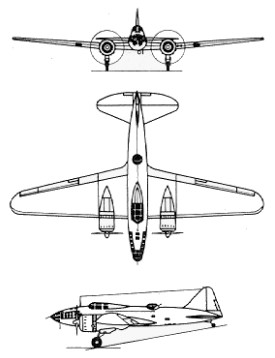
Ilyushin Il-2 / BSh-2 / TsKB-57
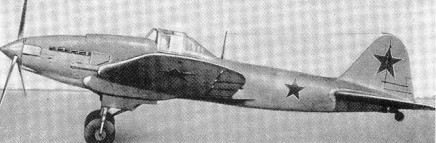
The Ilyushin Il-2 origin dates back to the mid-thirties, within the Soviet military criteria of having air support for the operations of the ground forces.
In 1935 a requirement was launched to obtain a ground attack aircraft that was protected, or more specifically a BSh (Bronirovanyi Shturmovik, armored attack aircraft). Finally Sergei Ilyushin’s team was the one that around 1938 developed the Il-2 that was going to be able to perform the functions required.
Two prototypes were developed a few months apart, the two-seater TsKB-55, also designated BSh-2 (from Bronirovanni Shturmovik, armoured attacker) by the air force that first flew on October 2, 1939, and the single-seater TsKB-57, which replaced the radio operator with an additional fuel tank. They were equipped with AM-35 and AM-38 engines respectively, with 1,350 and 1,600hp. of power, heavily armed with 20mm ShVAK cannons, machine guns, bombs and rockets and protected with more than 700 kg of armour.
On 12 October 1940 the TsKB-57 took to the air with the more powerful 967kW M-38 engine. This improved machine led to the IL-2 which was just getting into service when the Germans invaded in June 1941.
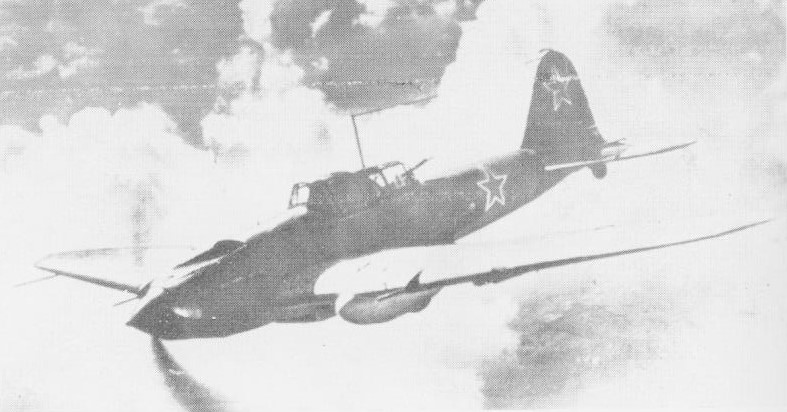
Serial production was prepared in factories in Moscow, Fili and Voronezh, but when only the first 250 examples had been delivered, the German invasion occurred on June 22, 1941.
The factories in Fili and Voronezh were moved to Kuybishyev, which became the center of production under pressing pressure from the Kremlin to make the model available in mass quantities.
Armament of the original IL-2 was two 20mm ShVAK and two 7.62mm ShKAS guns firing ahead, plus eight 82mm rockets and four 100kg bombs. The need for rear protection resulted in a second crew member being added to man a rear gun, usually a 12.7mm BS, and the forward guns were changed to the hard-hitting 20 or 37mm VYa, and sometimes two of each, in 1942. Bomb load went up to 600kg, including PTAB armour-piercing bombs. The Shturmovik’s weapons could pierce all German armoured vehicles, even the Tiger tank being vulnerable when attacked from the rear.
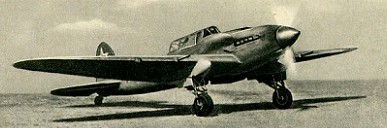
The aircraft was redesignated Il-2M with the new 1,750hp AM-38F engine, also increasing the armour up to 950 kgs. A new modification was also introduced, which consisted of converting the radio operator into a tail gunner, handling a 12.7mm UBT heavy machine gun, entering into action as of October 1942 under the designation Il-2M3, which was to be finally the main production version.
The Il-2m3 two seat version had a uniform armoured shell entire forward fuselage, with rear fuselage and wings of plywood and other light materials. They carry two 37mm cannon.
In 1943, the Poles were the first foreign operators of the Il-2, followed by the Czechs, Bulgarians, and Yugoslavs.
By the time the Ilyushin Il-10, an improved variant, went into production in August 1944, 36,163 Il-2 Shturmoviks had been delivered. In the postwar period, significant quantities were delivered to China, North Korea, and both Poland and Czechoslovakia produced improvements on the models, adapting them to their requirements. He received the nickname or code name “Bark” by NATO.
The IL-2 remained in operational service in the Soviet Union and with the Air Forces of Czechoslovakia and Poland into the 1950s.
Output averaged 1,200 per month during most of World War II, to give a total of approximately 36,000. When the IL-10 developed version is added the total is reported to amount to 42,330.
Variants:
- TsKB-55: two-seater prototype.
- BSh-2: designation of the TsKB-55 in the V-VS.
- TsKB-57: single-seat prototype.
- Il-2: production model of the TsKB-57 (1941).
- Il-2M: single-seat production model with improved armament and engine.
- Il-2M3: variant similar to the Il-2M but with a tail machine gunner.
- Il-2T: torpedo version for the Soviet Navy with the capacity to carry a 533mm torpedo.
- Il-2U or U-Il-2: trainer version with double control.
- Il-2I: prototype with M-38 radial engine.
Engine: 1 x Mikulin AM-38F V-12, 1300kW / 1770 hp
Wingspan: 14.6 m / 47 ft 11 in
Length: 11.6 m / 38 ft 1 in
Wing area: 38.5 sq.m / 414.41 sq ft
Max take-off weight: 5360 kg / 11817 lb
Empty weight: 4200 kg / 9259 lb
Max. speed: 430 km/h / 267 mph at 6560 ft
Cruise speed: 320 km/h / 199 mph
Ceiling: 6000 m / 19700 ft
Range w/max.fuel: 800 km / 497 miles
Range w/max.payload: 600 km / 373 miles
Armament: 2 x 23mm machine-guns, 3 machine-guns, 400-600kg external
Crew: 1-2
l-2M3
Power plant: Mikulin AM-38F, 1,720hp
Wingspan: 14.60 m
Wing area: 38.50 sq.m
Length: 11.65 m
Height: 4.17m
Empty weight: 4,520 kg
Maximum takeoff weight: 6,360 kg
Maximum operating speed: 410 km/h (255 mph; 221 kt)
Service ceiling: 4,530 m (14,862 ft)
Service ceiling: 4,530 m
Range: 770 km
Wing loading: 160 kg/sq.m
Power/weight: 0.21 kW/kg
Crew: 2
Armament: 2 x VYa-23 23mm mg, 150 rounds per gun, 1 x Berezin UBT 12.7mm machine gun, 150 rounds, 2 x 7.62mm ShKAS machine guns, 750 rounds per gun
Bombload: 50 kg, 100 kg or 200 kg internal
Hard points: 4 / 600 kg total for 2 x Cannon or 2x RS-82 and RS-132 Rockets
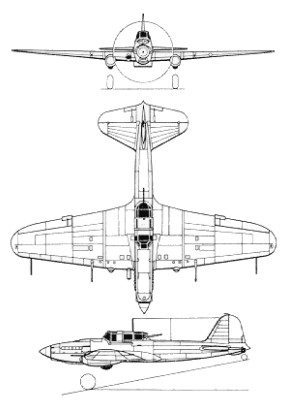
Ilyushin Il-1
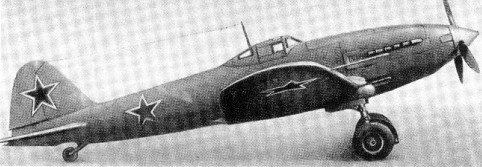
A low to medium altitude heavily armed fighter.
First flew 19 May 1944.
Ilyushin
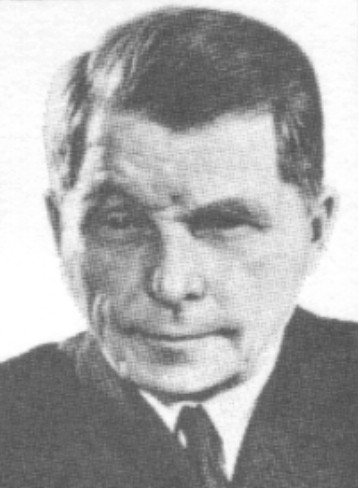
Sergei Ilyushin, was a mechanic in the Russian air force in WW1. During the early 1920s Sergei Vladimirovich llyushin (died 1977) was a student at the Zhukovskii Military Air Academy, and began glider design. Graduating from the Air Academy, Ilyushin went to TsAGI, where he was influenced by Tupolev.
From 1935 one of the most successful Soviet aircraft designers, beginning with IL-4 (DB-3) bomber developed from TsKB-26 design, of which nearly 7,000 built. Founded own OKB just before Second World War, though 1933 generally attributed as starting point for llyushin designs. Most famous wartime aircraft was IL-2 Shturmovik armoured ground-attack aircraft, a vital weapon in the defeat of the German invasion of Russia, and of which more than 36,000 were built.
Post-Second World War developed IL-12 and IL-14 transports which established Aeroflot’s civil airline network. IL- 28 bomber of 1948 (in class of British Canberra) was first Soviet jet bomber, remaining in large scale use for many years. IL-18 civil transport, which entered service with Aeroflot in 1959, was nation’s first turboprop airliner. IL- 38 anti-submarine/maritime patrol aircraft developed from IL-18 and first flown 1961. IL-20 reconnaissance, electronic intelligence, and communications relay aircraft also developed from IL-18, with IL-24 civil variant. IL-62, 114/186- seat turbofan-powered transport, which inaugurated Aeroflot’s Moscow-New York service in July 1968, was Soviet Union’s first long-range jet airliner.
IL-76T four-turbofan medium/long-range freight transport first flew 1971 and over 900 built, with in-flight refueling tanker derivative first flown 1983 as IL-78, and communications relay variant as IL-82. IL-86 wide-body transport first flew December 22,1976; 103 built before production ended. Strategic-command-post version became IL-80 Maxdome. Follow-on IL-96 wide-body airliner first flew December 1988 and remains in production. II- 98 proposed as twin-engined derivative of IL-96. IL-106 heavy military transport and IL-112 shorthaul regional airliner projected. IL-114 twin-turboprop transport first flew March 1990 and ordered with production and marketing by Uzbekistan-Russian consortium. Special electronic versions of IL-114 developed for “Open Skies” missions and Russian Federal Border Guard patrol. IL-103 4/5-seat lightplane first flown May 1994 and manufactured by MAPO “MiG”.
Current name in 1998 llyushin Aviation Complex, or Aviatsionnyi Kompleks imeni S.V. llyushina.
Ikarus AD
Yugoslavia
Formed at Novi Sad in 1923, Ikarus was one of the country’s largest aircraft manufacturers. Initial production centered on a number of S.M. training flying-boats, followed by a military type I.O. In 1926 the company acquired a license to build the Potez 25 biplane, and established a new factory at Zemun for its production.
Four out of five Yugoslav aircraft plants were in close proximity to each other, built in and around Belgrade: Ikarus, Rogožarski, Zmaj and Utva. The fifth one was DFA (Državna Fabrika Aviona – State Aircraft Factory) which was located in Kraljevo.
The production facilities of Ikarus were destroyed in World War Two but rebuilt in 1946 and soon nationalised by the new Tito lead Yugoslav communist government.
In the early 1950’s Ikarus continued to develop a number of experimental research aircraft protoypes. These included a number of early jet aircraft under the Ikarus 451 designation a number which all featured the same basic airframe of the piston engined S-451 but all served different purposes in testing and evaluation. The 451 designated jet aircraft included the first jet designed and built in Yugoslavia (S-451M), a more advanced jet design (S-451M Zolja), a close support military jet development (J-451MM Stršljen) and jet training aircraft (S-451MM / T-451MM).
Ikarus experimented with further jet designs in the early 1950’s. The Ikarus 452M and 453 aircraft were both unconventional designs that were briefly used for flight testing
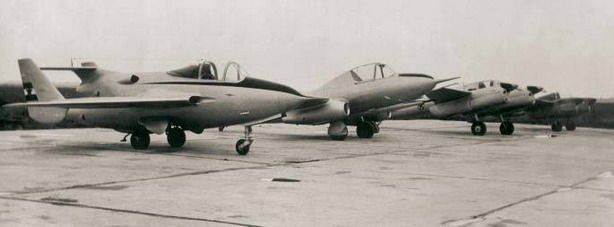
None of the Ikarus experimental aircraft went into wide production but they did provide a stepping stone for future aviation technology development in Yugoslavia. By the early 1960’s aircraft development ceased at Ikarus and had been taken over by Soko based in Mostar, Bosnia-Herzegovina (Ikarus manufacturing buses).
Hughes Aircraft Co / Hughes Helicopters
Hughes Aircraft Co was founded in 1935 by businessman/film magnate Howard Hughes to produce the Hughes H-1 racing aeroplane, in which Hughes established a world landplane speed record of 352.46mph (567.23kmh). The Hughes XF-11 experimental twin-engined, twin-boom photo-reconnaissance aircraft, which had contrarotating propellers, crashed on its maiden flight, seriously injuring Hughes. He then sponsored the massive Hughes H-4 Hercules. Made entirely of wood, this eight-engined flying-boat had the greatest wingspan (320 ft; 97.54 m) of any aircraft built to date. It made its one and only flight on November 2,1947 with Howard Hughes at the controls.
Between 1949-1952 the Hughes Aircraft Company built and tested the XH-1 heavylift helicopter, designed as a “flying crane” for the USAF.
Hughes owned Kellett designs.
Known formerly as the Hughes Tool Company, became a Division of the Summa Corporation in the early 1970s. Hughes first two-seat light helicopter, the Model 269, first flew in 1955. It continued in production, though muchmodified, as the Hughes 300. Production of the 0H-6A Cayuse turbine helicopter for the U.S. Army and other military forces led to the commercial Model 500 one/sevenseat light helicopter, with military variants in the Defender series. Hughes won the U.S. Army’s competition for an Advanced Attack Helicopter (AAH) with its Model 77, a twin-turbine design which first flew in September 1975, and which received the Army designation YAH-64 Apache. Also developed the unique NOTAR (no tail rotor) anti-torque system, initially tested on a converted 0H-6A in December 1981. Company taken over by McDonnell Douglas January 1984.
Hughes Helicopters became McDonnell Douglas Helicopters in January 1986 then later to Lynn Tilton’s Patriarch Partners in 2005.
Howard NH-1
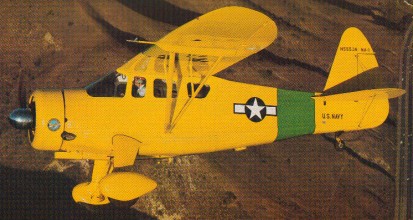
US Navy instrument trainer.
Howard XLRH-1
During 1942 the U.S. Navy let contracts for the development of several amphibious transport gliders, but very little informa¬tion has been revealed concerning them.
The Howard Aircraft Company also received a contract to produce a similar glider, the XLRH 1, two prototypes of which were ordered (BuAer Nos. 11649 and 11650) plus fifty production LRH 1 gliders (BuAer Nos. 31586 635), but it is not certain if either XLRH 1 was completed.
Howard DGA-18K
At Howard, Gordon Israel was part of an effort to pump out a new trainer, the DGA 18K, for the Advanced Civilian Pilot Training Program; on the day the certificate for the type was presented, five production airplanes had been test flown and were ready for delivery. It had been only three weeks from the announcement of the project to the presentation of the certificate.
The Howard DGA-18K two-seat primary trainer was produced in quantity during 1940- 1942 for the U.S. Government’s Civilian Pilot Training Program.
 All Aero