Instituto de Pesiquas Technologicas / IPT

In 1899 in São Paulo the Strength of Material Laboratory of the Engineering Faculty Escola Politécnica was created. In the first years of its existence, the Laboratory performed tests with materials mostly employed in the civil construction. In 1926, the Laboratory evolved itself into the Laboratory for Material Testing also gaining research attributions and in turn gave later birth to the Instituto de Pesquisas Tecnológicas (IPT). The interest of IPT in aviation appeared from studies looking for application areas of wood in engineering. A report containing properties of numerous wooden elements, result of an extensive and systematic research, was published by IPT and was worldwide acknowledged. In 1938, Frederico Brotero and Orthon Hoover designed a monoplace aircraft of wooden structure. The first one of the four prototypes of the aircraft was constructed in the IPT facilities and finished in Rio Claro, a city located in the countryside in the State of São Paulo. The airplane was nicknamed Bichinho de Rio Claro (Rio Claro’s mascot) but later it gained the IPT-0 denomination.

In 1948, the Divison of Aeronautics of the IPT was created, originated from the Section of Aeronautics. The IPT designed a glider for primary instruction, the Gafanhoto, which was designated IPT-1. A public-domain report was published by IPT containing the required information to build the glider.

IPT built 17 different types of aircraft along its aeronautical activities.

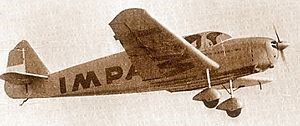
IMPA Tu-Sa / LF-1

The IMPA Tu-Sa, (IMPA – Industrias Metalúrgicas y Plasticas Argentinas S.A.), or Impa Tu-Sa-O, was a civil trainer developed in Argentina in the 1940s for aeroclub use. It was a conventional, low-wing monoplane with wide-track fixed tailwheel undercarriage. Frst flown on 17 April 1943, approximately 25 were built as LF-1 during 1943-1944. Derived directly from the RR-11, the Tu-Sa (or Tu-Sa-O) initially had the same 65hp Lycoming O-145-B2 engine but that was later upgraded to a 80hp Continental.

In service, the aircraft demonstrated a number of serious and fundamental design flaws that led to a series of accidents and pilots joking that Tu-Sa stood for Todo Un Sarcófago Aéreo (“Altogether an aerial coffin”). When it became apparent that the defects could not be corrected without a complete redesign of the aircraft, they were withdrawn from use.

IMPA RR-11

IMPA products included a prototype RR-11 two-seat cantilever low-wing cabin monoplane. The sole example of this was built in 1942 by its designer Alfredo Davinz Ferrer.

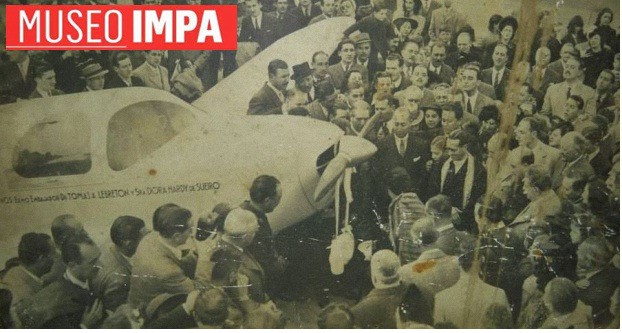
The initiative had come from the founder of IMPA, Eng. Jose Mario Sueiro, who amidst the backdrop of the Second World War, decided to enter the aviation industry. Davins Alfredo Ferrer designed the RR-1 and oversaw its construction that took place in the 4th floor of the factory

IMPA workers not only developed the body of the plane, but the instruments: speedometers, tachometers, compasses, etc. It was noted that there was no way out to the street, a neighbor recalling they even broke one of the walls of the factory to remove.

Sueiro made the maiden flight of July 25, 1942 at the airfield of Pacheco, accompanied by sr. Ciro Comi, which made headlines in major Argentine newspapers. The event was attended by members of the company; national authorities, as the director of Military Industries, Colonel Savio and the director of Civil Aviation, Dr. Samuel Bosch; and the president of the UIA, Luis Colombo.

Lycoming O-145-B2, 65 hp
Wingspan: 11.05 m
Length: 7.42 m
Wing area: 13 m²
Maximum ceiling: 5,000 m
Maximum speed 162 km / h
Power performance speed: 155 km / h
Cruising speed: 143 km / h
Endurance: 5 hr

IMPA

Argentina
Industria Metalurgica e Plastica SA, a munitions factory, opened an aircraft department in September 1941. The initiative had come from the founder, Eng. Jose Mario Sueiro, who amidst the backdrop of the Second World War, decided to enter the aviation industry.

For it he contracted Spainard Davins Alfredo Ferrer, whom he had met in Paris, and who already had experience in the French aviation industry. Ferrer designed the prototype and oversaw its construction that took place in the 4th floor of the factory. Working steadily, IMPA workers not only developed the body of the plane, but his instruments: speedometers, tachometers, compasses, etc.

A new factory opened at Quilmes Airport, Buenos Aires, in December 1944. Products included prototypes of RR-11 two-seat low-wing cabin monoplane (1942) and Chorlito light single-seat trainer (1943). Only production aircraft was the Tu-Sa (or LF-1), of which 25 were built 1943-1944.

The RR-11 IMPA “fully built in our country, with raw material and Argentine workers” as he liked to say ing. Sueiro was a “feel” for the time and his maiden flight of July 25, 1942 at the airfield of Pacheco, made headlines in major Argentine newspapers.

The event was attended by members of the company; national authorities, as the director of Military Industries, Colonel Savio and the director of Civil Aviation, Dr. Samuel Bosch; and the president of the UIA, Luis Colombo. Besides the pilot sr. Ciro Comi made the opening round.

Thus, IMPA initiated an aircraft production line continued with the prototype IMPA RR-12D-13D RR IMPA, IMPA Your Sa, IMPA Plover, the Impita, and in 1944 opened an office in the town of Quilmes dedicated to this production.

Ilyushin Il-10

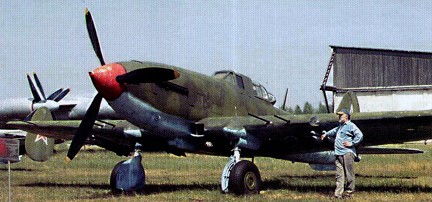
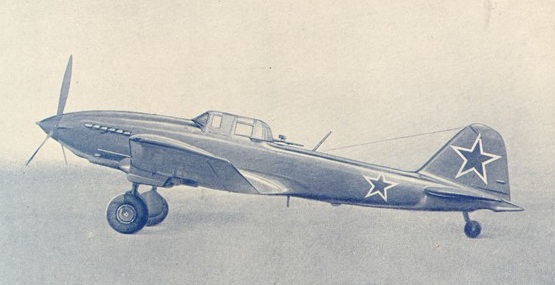
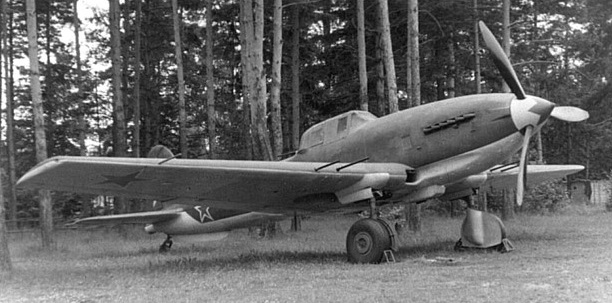
To provide a replacement for the II-2 Shturmovik (ground-attack aircraft), the llyushin design bureau developed two different prototypes in 1943. The Il-8 and Il-10. The Il-10M attack aircraft was created after a proposal by the Soviet Air Force Marshal Pavel Zhigarev.

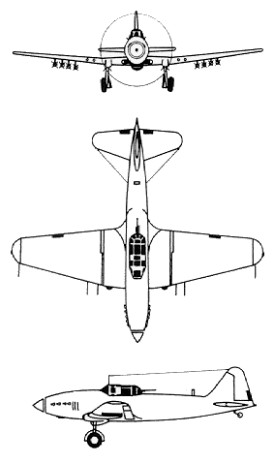
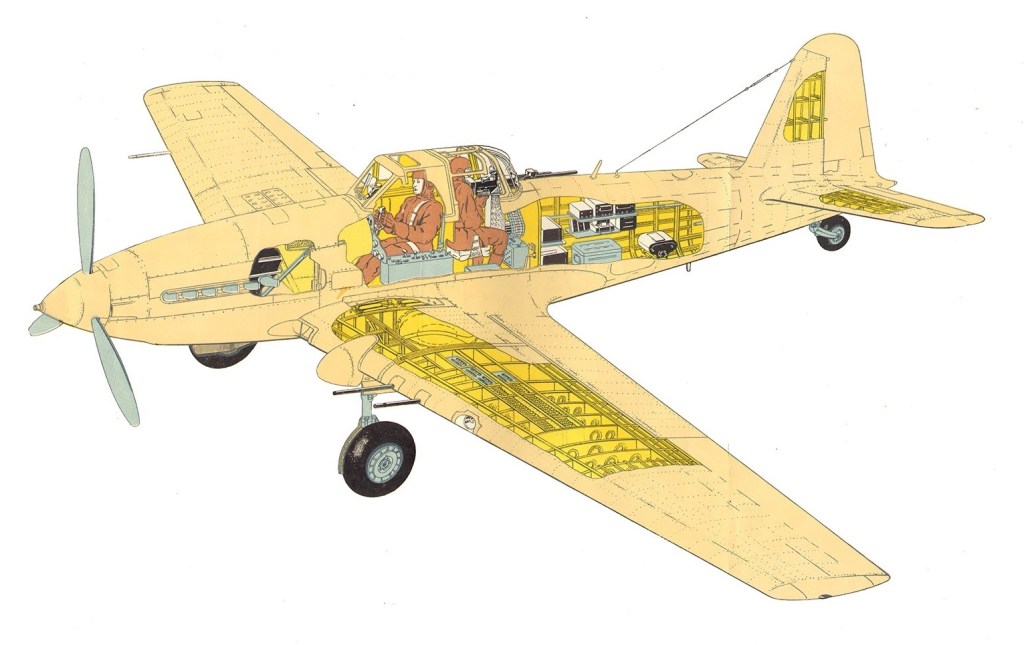
The II-8 was rejected by the Council of Ministers in favour of the contemporary llyushin Il-10 M, which first flew on 2 July 1951, piloted by Ilyushin’s chief test pilot V. Kokkinaki. The Il-10 was a completely new design of all-metal construction and improved aerodynamic form. It provided better crew accommodation, the gunner seated with his back to the pilot in an enlarged cockpit, and both crew members were located within the protective armoured shell. Revised main landing gear units retracted within the wing, eliminating the large landing gear fairings of the II-2 and requiring only small fairings over the pivoting mechanism.

Early favourable reports of the prototype test programme led to a batch of pre-series machines, quantity production being initiated in August 1944, with evaluation in operational regiments starting two months later. The type was used first in operations in February 1945 and by that spring output reached a peak. Many regiments re-equipped with the Il-10 before the German surrender, and a considerable number took part in the brief but large-scale operations against the Japanese in Manchuria and Korea during August 1945.

Production of the Il-10 continued post-war with Soviet factories building 4,966 machines, the last leaving the production lines in 1955. Additionally, ll-10s were also built at the Czech Avia factory, under the designations B-33 and CB-33, the CB-33 being the equivalent of the II-10U trainer variant. Czech production finished in 1954 when over 1,200 examples had been completed.

From 1951 onwards Soviet production had concentrated on the II-10M which featured an entirely new wing of revised planform and deeper aerofoil section, a slightly lengthened fuselage, modified landing gear with increased track, increased fuel capacity, and significantly improved armament. However a lot of equipment that the designers had planned to install on the new machine needed numerous improvements, and so production of the Il-10M started only in 1953. There were 146 aircraft built.

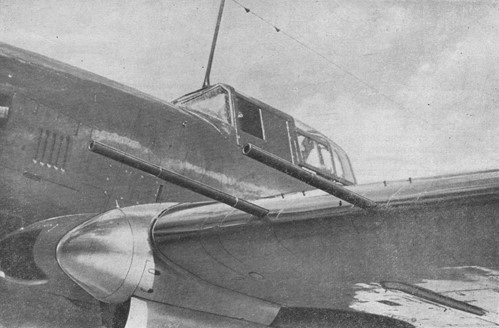
The Shturmovik was armed with four wing-mounted 23-mm NR-23 cannons, plus one 20-mm B-20-EN cannon installed in the VU-9M rear turret. The normal ammunition load was 600 shells for the NR-23’s and 150 shells for the rear gun.

Aside the cannon armament the aircraft could carry 400 kg of bombs and up to 600 kg in an overloaded configuration. The bombs were loaded into two bomb bays and on external BD-2 mounts fitted under the fuselage in front of the bomb bays. Additionally the Il-10M could be equipped with BD-3 bomb mounts on the wing hardpoints.

Alternatively, the new machine was able to mount four launch tubes on wing pylons that were capable of shooting unguided rockets.

The aircraft was quite heavily armored for its time. The plating varied from 4 to 16 mm near the rear armored wall. The armor protected all of the main parts of the aircraft’s power plant, control elements and crew cabin.

The Il-10M was powered by the AM-42 engine which was capable of producing 1750hp and fitted with a 3.6m diameter, three-bladed AV-5L-24 propeller.

The pilots who flew these machines noted a significant increase in controllability and stability in flight over the Il-10. Nevertheless the Il-10M didn’t get a chance to see combat. It was not ready for the conflict in Korea, while later conflicts were dominated by jet-powered aviation.

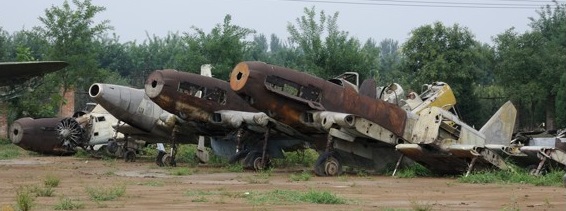
The Il-10 formed the sole equipment of Soviet assault units for a number of years and was also used widely by Warsaw Pact countries. Other Communist countries to employ the type included North Korea in the opening stages of the Korean War in 1950. Losses were heavy and the type was obsolete but, Il-10s remained in service with the Soviet V-VS until 1956 and with various satellite air arms for several years longer. For some time after that they were flown as gunnery trainers but they were decommissioned in April 1956 and all the crews were reassigned for further training on jet aircraft. most had been scrapped by the mid-1960s.

The Il-10 had been tested with a ZhRD-1 auxiliary rocket engine in the rear fuselage to provide short-term performance boost, but this modification was not adopted. The llyushin bureau strove to develop later shturmovik designs, including the II-20 single-seater and the Il-40 with twin turbojets, but official encouragement was minimal.

The Il-10M became the last mass-produced piston-powered attack aircraft designed by the Ilyushin design bureau.

Engine: 1 x AM-42, 1470kW / 1973 hp
Max take-off weight: 6335 kg / 13966 lb
Empty weight: 4680 kg / 10318 lb
Wingspan: 13.4 m / 43 ft 12 in
Length: 11.1 m / 36 ft 5 in
Height: 4.3 m / 14 ft 1 in
Wing area: 30.0 sq.m / 322.92 sq ft
Max. speed: 302 kt / 560 km/h / 348 mph
Cruise speed: 370 km/h / 230 mph
Service ceiling: 7000 m / 22950 ft
Range w/max.fuel: 830 km / 516 miles
Range w/max.payload: 420 km / 261 miles
Crew: 2
Armament: 5 machine-guns, 6 missiles, 600kg of bombs