The Jacobs Aircraft Engine Company was formed in 1929 in Philadelphia. Later the company moved to Pottstown, Pennsylvania after purchasing the machine workshop of the Light Manufacturing and Foundry Company.
An early product was the Jacobs L-3, a small 55 hp 3 cylinder engine of 1929. The Cessna UC-78 Bobcat used the L-4 engine
By 1933, Jacobs had developed the L-4 seven-cylinder radial air cooled engine with a power rating of 225 horsepower and a displacement of 757 cubic inches (12.4 litres). It was better known as by its military designation, the R-755. At the time it became known as the best producer of engines in the 200-400 horsepower range. Jacobs was the first to start making engines using forged aluminum pistons, sodium-filled exhaust valves and magnesium alloy crankcases.
The L-4 was used mostly on the Cessna UC-78 Bobcat, Cessna 195 and Stearman PT-18 Kaydet.
Due to the tendency of the L-4 engine to vibrate heavily at low rpms it was given the nicknames Shakin’ Jake and Shakey Jake.
Later developments included the 285 hp L-5 or R-830, and 330 hp L-6 or R-915.
Jacobs engines were fitted to many US-built aircraft of the inter-war period, including several Waco models. They were in use in 26 different countries including in Canada, where 330 horsepower L6-MB engines were used to power the Royal Canadian Air Force’s Avro Anson Mk. II aircraft.
In 1941 the American War Department gave the contract to Jacobs to produce Pratt & Whitney R-985 and R-1340 engines until 1945. Jacobs ranked 87th among United States corporations in the value of World War II military production contracts.
After World War II, Jacobs became a division of Republic Industries (not Republic Aircraft).
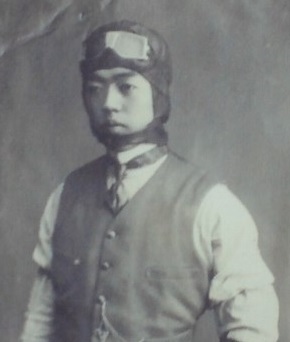
Itô was born in in southern Osaka. While employed as a young man by the Sadoshima Copper and Iron Company in his hometown of Osaka, Otojiro Itoh (伊藤音次郎, Itô Otojirô) (June 3, 1891 – December 26, 1971) became inspired with flight when seeing the Wright brothers’ success in a film. ‘
In September 1909, after reading an article about the new biplane developed by Sanji Narahara, Itô wrote a letter to Narahara pleading to be employed as a pilot. At Narahara’s urging, Itô began taking night classes on mechanical engineering at the Kôshu Gakko (now Kogakuin University). He continued to maintain a correspondence with Narahara for many years.
At the age of 19, in 1910, ltoh left home and moved to Tokyo where he worked as a mechanic at the Narahara aeroplane company. Impressed with his eagerness and interest in aviation, Narahara made ltoh an assistant to Einosuke Shirato, who had worked exclusively for Narahara as a pilot. This association was interrupted when Itoh reached the age of 20 because, like all other young Japanese men, he was conscripted for a one year term of service in the military. Upon returning to Narahara in 1912, he assisted in the manufacture of the aeroplanes and accompanied demonstration flights around Japan as a ground crewman.
In February 1915, following Narahara Sanji’s departure from the aviation community, Itô established the Itô Aircraft Research Center in present day Mihama Ward of Chiba City.
As spare-time employment, ltoh assisted Shigesaburo Torigai with the manufacture of the Torigai Hayabusa-go Aeroplane which eventually crashed in September 1913. ltoh borrowed this aeroplane, quit his job and moved with the aeroplane to Inage, on Tokyo Bay just north of Chiba City. There he made repairs and modifications to the aeroplane, and began to learn to fly with the help of two others. The sandy beach there proved an excellent runway, but its availability was dependent upon the height of the tide. After three months of flying training, maintaining and repairing his own aircraft, he had accumulated a total of a mere 3 hours of flying.
Pilot licences, or, for that matter, any regulations concerning flying and aeroplanes were yet to come. Therefore, Itoh established a flying school on the beach at Inage in February 1915, and called it the ltoh Kyodo Hiko Renshusho (Itoh Co-operative Flight Training Ground). The ltoh Aeroplane Research Studio and Training Ground were both known to the public as ltoh Airfield. For flying training, he used the Torigai Hayabusa-go Aeroplane after it had been modified. To supplement his income, Itoh joined part time with Shirato, formerly with the Narahara company, who now was building his own aeroplanes. This added income allowed ltoh to begin his commercial construction of aircraft and by the autumn of 1915 he completed his first; the Itoh Emi I.
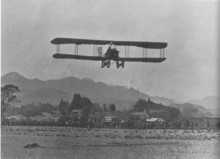
In November 1915, Itô finished construction of an airplane named after himself and his hometown, the “Itô-Emi Type 1.” On January 8, 1916, Itô flew his aircraft over Tokyo, making him famous among Japanese aviators. After Itô’s aircraft facility suffered severe damage from winds and flooding in late September 1917, he moved his operation to Tsunanuma-chô (now Naraishino City), and reestablished his business under the name “Itô Aircraft Manufacturing.” Among the pilots that Itô trained was Tadashi Hyōdō, the first Japanese woman to earn her pilot’s license, and Inoue Chôichi, who established the Japan Air Freight Corporation.
Ito-Emi type 1
When the Asahi News Corporation established the Tôsai Teiki Airlines in 1923, Itô Aircraft Manufacturing provided both aircraft and pilots, thereby contributing to civil aviation transportation. In 1930, Itô established the Japan Light Aircraft Club and appointed Sanji Narahara as club president, which contributed to the spread of lighter-than-air aircraft in Japan.
Although Itô was one of the few successful aviators to come from a purely civil aviation background, he withdrew from the world of aviation following the ban on all aviation activities from the GHQ after the Occupation of Japan. Itô established a farming cooperative with volunteers drawn from the former workers at his factory in 1948, and moved to Tôyama Village in Chiba Prefecture (now Tôhô, Narita City) to open up new farmland as part of the post-war land reclamation project.
Despite the great effort expended by Itô’s group to cultivate land that had once been bamboo forest, their farm was eventually included in the area designated for the Tokyo International Airport (now Narita International Airport). The sudden announcement of this plan was devastating for many local residents, some of whom participated in the Sanrizuka Struggle, but it was said that Itô alone of all the area’s residents welcomed the arrival of the airport. Although he had put his energy into farming, Itô willingly agreed to sell his land, and was among the first to sign a contract with the airport organization.
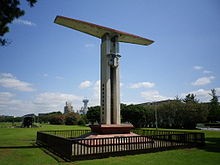
Memorial to the birthplace of civil aviation
Afterwards, Itô put his energy into the establishment of the Civil Aviation Memorial in Inage Seaside Park. The journals and written records that Itô left behind were eventually used by author Hiragi Kunio. On December 26, 1971, Itô died at the age of 80.
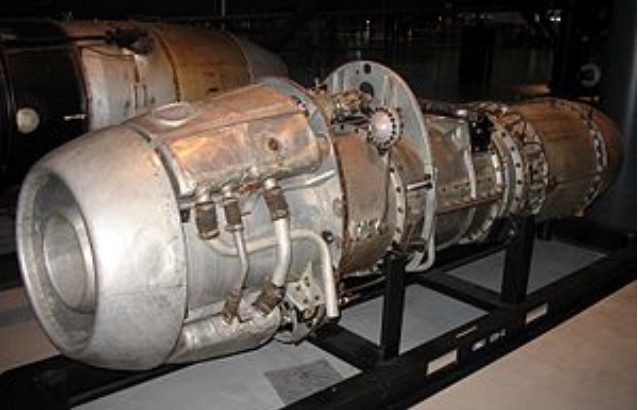
The Ishikawajima Ne-20 (Japanese: 石川島 ネ-20) was Japan’s first turbojet engine. It was developed during World War II in parallel with the nation’s first military jet, the Nakajima Kikka.
The decision to manufacture this engine came about because of the unsuitability of two earlier powerplants selected for the Kikka, the Tsu-11 and the Ne-12. The Ne-20 was made possible by Imperial Japanese Navy engineer Eichi Iwaya obtaining photographs and a single cut-away drawing of the German BMW 003 engine.
In July 1944, the Japanese military attache stationed in Germany returned home with a few photocopies, including a cross-section of the BMW 109-003 turbojet and some general materials concerning the Me-262 fighter and Me-163 interceptor. The important data such as the schematic drawings, however, were being transported by a submarine which was sunk.
When details, breaf as they were, of the BMW 19-003 reached Japan, the Army and Navy held a joint conference at which it was decided that a Japanese version of this turbojet held more promise in the short term than Japanese work still in its early stage. This resulted in 4 projects.
The Ne-20 was the navy project headed by Osamu Nagano assisted by Tanegashima at Kugisho in Yokosuka. The Ne-20 was to become the Japan’s most successul turbojet and the other 3 projects were not fully developped in the time available.
It was the Tokyo Ishikawajima Shipyards that was chosen by the navy to be in charge of trial-manufacture and mass production of jet engines (for commercial use also).
Koichi Ichida, chief of the Business Planning Department, National Aerospace Development Agency, says that reciprocal engines were the main power during the war, but Ishikawajima made steam turbine engines for ships. It was close to a jet engine because of the rotating mechanism. That is why turbo engines were researched for automobile engines as well.
Only a small number of these engines, perhaps fifty, were produced before the end of the war. Two of them were used to power the Kikka on its only flight on August 7, 1945. Only a few of the engines under construction survived. It was also planned to use the engine to power a version of the Ohka kamikaze weapon, but this was not implemented before the end of the war.
Nakashima Aeroplane and Mitsubishi Heavy Industries also were directed to do trial-manufacture with the same one-page diagram from Germany, but both were unable to realize it.
Everything concerning aircraft, including the Ne-20, was either destroyed by the Allied Powers or brought back to the United States.
Three Ne-20s have been preserved: One at Ishikawajima-Harima’s internal company museum in Tanashi, Two at the National Air and Space Museum in Washington, DC.
Ne-20 Type: Turbojet engine Length: 2700 mm Diameter: 620 mm Dry weight: 470 kg Compressor: Axial compressor Maximum thrust: 475 kgf (4.66 kN, 1,047 lbf) at 11,000 rpm
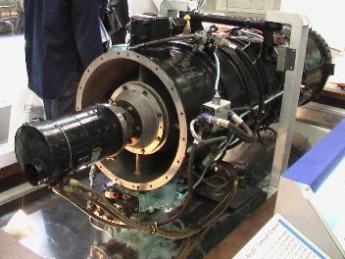
The Tsu-11 was a primitive, motorjet-style jet engine produced in small numbers in Japan in the closing stages of World War II. It was principally designed to propel the Japanese Ohka flying bomb, a kamikaze weapon.
The Tsu-11 used a four-cylinder inverted inline Hitachi Hatsukaze Ha 11 piston engine to drive a single-stage compressor. A fuel injection system was fitted behind the compressor. In operation, fuel would be mixed with the compressed air and the resulting mixture ignited, creating thrust. The engine was designed to overcome the major shortcoming of the Ohka Type 11 weapons, that of limited range. The Type 11 was powered by solid-fuel rocket motors, which provided tremendous acceleration, but had a very short burn time. The upshot of this was that the Ohka’s carrier aircraft would have to fly very close to the target, making it vulnerable to interception. In practice, most Ohka-carrying bombers were shot down before they ever had the opportunity to launch their weapons. It was reasoned that a jet engine would provide high speed as well as enough range to keep the carrier plane safe long enough to release the Ohka and leave the area.
The engine was first tested hung underneath a Yokosuka P1Y bomber sometime in 1944 and was deemed successful enough to order into production. The Ohka was adapted to accommodate the engine in a lengthened fuselage with jet intakes added at the sides. This configuration was designated Ohka Type 22. The Tsu-11 was also selected to power the Yokosuka MXY-9 Shuka (“Autumn Fire”) – a trainer intended to prepare pilots for the Mitsubishi J8M rocket-powered interceptor. Neither of these aircraft entered service, however, as their development took place too late in the war.
A single example of a Tsu-11 engine exists, preserved at the National Air and Space Museum in Washington DC. In 1997 it was installed in the museum’s Ohka 22 during its restoration. Engineering analysis of the engine during the restoration process suggested that the fuel injection and combustion probably contributed little to the power of the engine, with most of the thrust actually being produced by the compressor – in effect, an afterburning ducted fan engine.
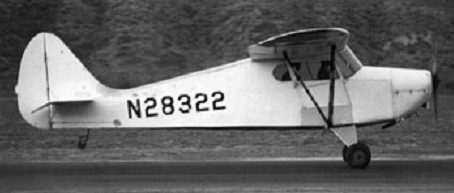
In 1940, the Interstate Aircraft & Engineering Corp. began production of the Interstate Cadet. The S1B was a member of a family of taildraggers, such as the Piper Cub, Taylorcraft, Luscombe, and Aeronca Champ that served many a weekend pilot with fun-filled hours during the late 1930s and early 1940s. The original Cadet was produced in a number of versions using engines from 65 hp to 102 hp. Most popular was the S5B using a 102-hp four-cylinder Franklin. The tandem two-seater was modified for the military at the beginning of the war and called the L-6 liaison plane. This version was equipped with a glazed canopy that extended well aft toward the tail. In 1969, production of the Interstate Cadet was resurrected by Bill and Jan Diehl, owners of Arctic Aircraft Co. in Anchorage, Alaska. The revived Cadet was dubbed the S2B2.
Engine 102-hp Franklin Length: 23.458 ft / 7.15 m Height: 6.988 ft / 2.13 m Wingspan : 35.499 ft / 10.82 m Wing area : 173.839 sq.ft / 16.15 sq.m Gross wt. 1,650 lb / 748.0 kg Empty wt. 1,103 lb. / 500.0 kg Wing loading: 9.43 lb/sq.ft / 46.0 kg/sq.m Fuel capacity 15 USG. Top speed 114 mph / 99 kts / 183 km/h Cruise 105 mph / 91 kts / 169 km/h Stall 38 mph. Initial climb rate 900 fpm. Range: 469 nm / 869 km Service ceiling 16,500 ft / 5030 Seats 2.
Founded in April 1937, this company was originally a manufacturer of hydraulic and other precision components for the U.S. aircraft industry. Produced in 1940 the Cadet two-seat light cabin monoplane which, after U.S. entry into the Second World War, was developed as a light liaison and observation aircraft for the U.S. Army. Designed and built a number of drone aircraft prototypes for both U.S. Army and Navy. All were pilotless radio-controlled weapon carriers.
The Technological Research Institute constituted the technical base on which Companhia Aeronáutica Paulista emerged. It was the Paulistinha project, passed on to Companhia Aeronáutica Paulista (CPA) together with the Planalto plane that generated the first royalties paid to the IPT.
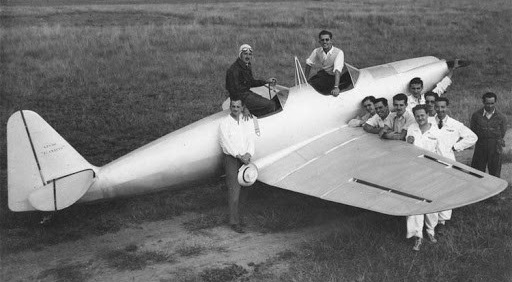
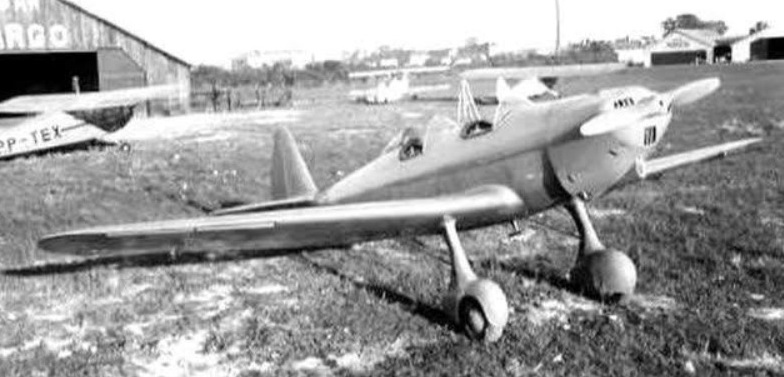
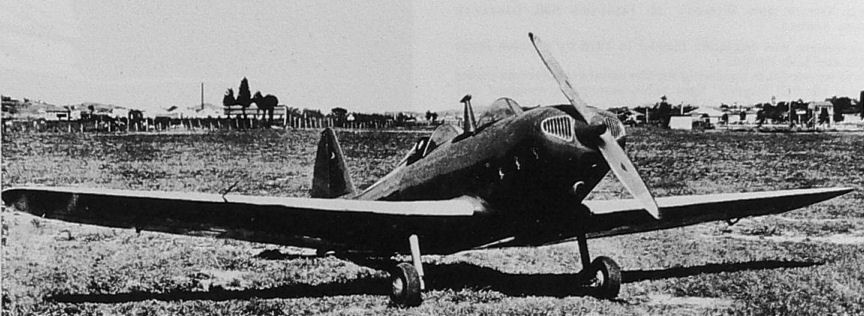
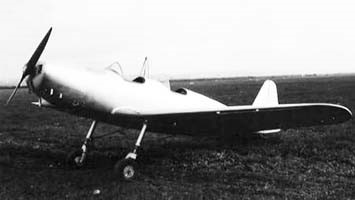
The IPT-4 was designed by Clay Presgrave do Amaral of Instituto de Pesquisas Tecnológicas (IPT). The project had been initiated under the designation IPT-4 and although the design work had been contracted to CAP, IPT insisted on a wing profile of its own choosing that led to serious stability problems in the final product. It was a low-wing single-engine, for pilot training. The structure was made of wood, with plywood and canvas coverings. It was equipped with a 90-horsepower Franklin engine. The pilot and instructor in tandem open cockpits with fixed tailwheel undercarriage.
CAP-1
Clay do Amaral was part of the first board of the Companhia Aeronáutica Paulista, and IPT-4 became CAP-1, called Planalto.
CAP-1
First flying in June 1942 (prototype registration PP-TFW), successful test of the aircraft made it possible to sign a contract for the production of 20 aircraft. Since the institute did not have its own production facilities, the contract was handed over to Companhia Aeronautica Paulista (CAP). As a result, production aircraft were already produced under the designation CAP-1 Planalto.
CAP-1
The CAP-3 replaced the CAP-1’s Franklin 4AC engine with a de Havilland Gipsy with double its power in the mid-40s, but the stability problems remained unaddressed until CAP engineer Oswaldo Fadigas redesigned the wing in the CAP-6. The firm attempted to sell this latter type to the Ministry of Aeronautics, but succeeded only in selling conversion kits for the existing CAP-1s and -3s in the military’s inventory.
IPT-4 Planalto Engine: Franklin 4AC-199-B3, 90 hp Seats: 2
CAP-1 Engine: Franklin 4AC-199-B3, 67 kW (90 hp) Wingspan: 8.6 m (28 ft 3 in) Wing area: 12 sq.m (130 sq ft) Aspect ratio: 6.16:1 Length: 6.4 m (21 ft 0 in) Height: 2.6 m (8 ft 6 in) Empty weight: 335 kg (739 lb) Gross weight: 570 kg (1,257 lb) Cruise speed: 155 km/h (96 mph, 84 kn) Stall speed: 85 km/h (53 mph, 46 kn) Endurance: 2.5 hours Crew: 2
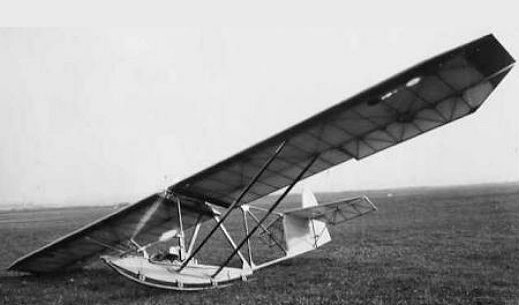
The IPT-3 glider, called Saracura, was a copy of the German Zoegling, intended for pilot training. The IPT-3 first flew in September 1942. It was a simple model, easy to handle.
Saracura = Saracura rail (Aramides saracura), bird from Latin America
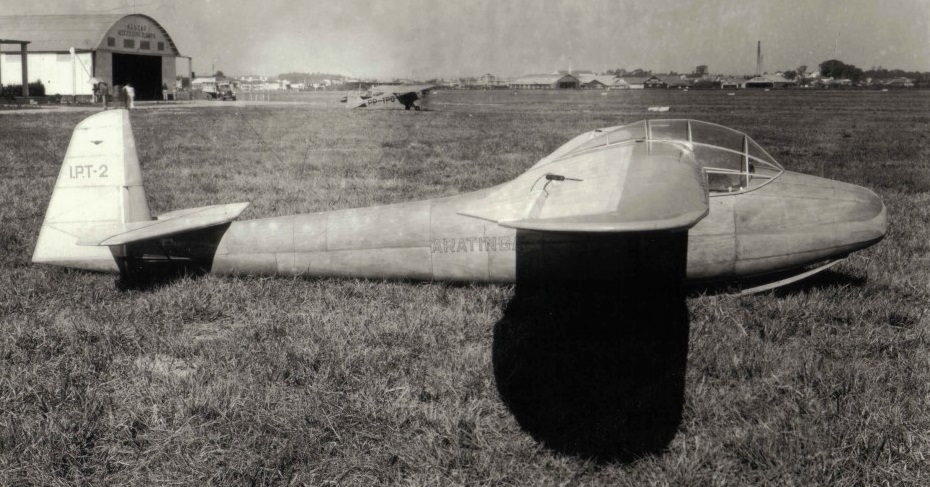
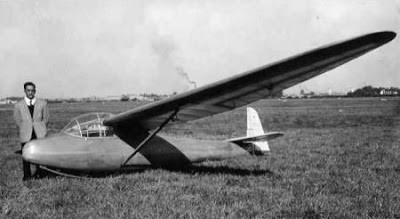
The IPT-2 Aratinga was a glider produced by the Brazilian Instituto de Pesquisas Tecnologicas (IPT).
In the early 1940s, the Wood Research Department of the Instituto de Pesquisas Tecnologicas carried out intensive research into the use of indigenous woods in aircraft construction. The results were so promising that it was decided to set up its own aviation department. Its first director was Frede Abranches Brotero, who gathered a team of young engineers around him. Silvio de Oliveira was entrusted with the development of a new advanced glider and decided to revise the Grunau Baby, which was already used in Brazil.
The IPT-2 Aratinga was designed as a shoulder-wing aircraft with a conventional tail unit and a closed single-seat cockpit. A skid was under the hull. The machine was a wooden structure made from local woods, with the hull partly covered with plywood and partly covered with fabric. The wings were completely covered with fabric.
The only prototype IPT-2 Aratinga glider performed its maiden flight in July 1942.
The machine was later used by José Carlos de Barros Neiva, who developed it into a successful glider, the Neiva B Monitor.
Wing span: 10 m Wing area: 8.7 m² Length: 5.52 m Empty weight: 185 kg Minimum speed: 55 km / h Top speed: 130 km / h Seats: 1
 All Aero