Karhumäki Brothers

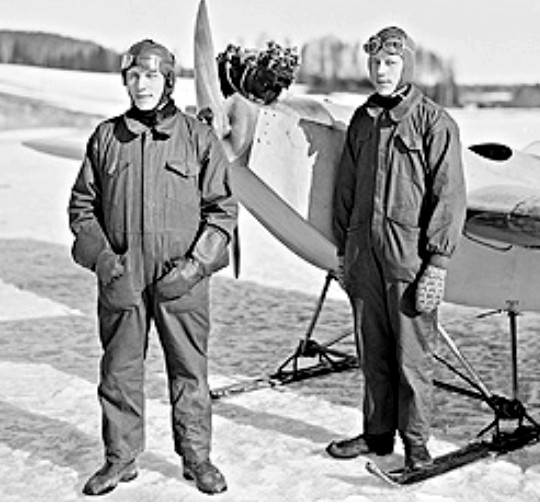
Niilo and Valto Karhumäki

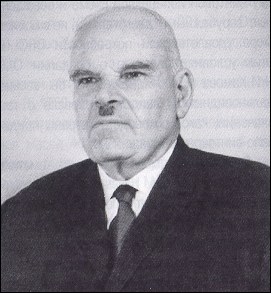
Niilo and Valto Karhumäki, also known as the Karhumäki brothers (Finnish: Veljekset Karhumäki), were Finnish aviation pioneers, aircraft manufacturers and airline founders.

Born in Multia, Niilo and Valto Karhumäki moved to Jyväskylä, where they founded a company called Veljekset Karhumäki in late 1924, which dealt with pilot training, public displays, aircraft maintenance and aerial photography during the 1930s. Niilo Karhumäki had completed in early Air Force reserve pilot course in Vyborg and received a pilot’s license.

Niilo and Valto Karhumäki started in autumn 1924 the construction of an airplane at their home. The work also involved Emil Kankaanpää and Hope Hovinen. The machine was given the name Bear 1. The brothers built in the 1920s of four aircraft: Bear 1 Bear 2 Bear 3 and Tern. Construction was initially something of a hobby, but soon expanded into a versatile aviation business.

In order to start a co-operation with the Finnish Air Force, the headquarters of Veljekset Karhumäki was moved to Kuorevesi. During World War II the company was merged into the Valtion lentokonetehdas company, manufacturer of a number of military aircraft. In the 1930s the Viri single-seat light monoplane was built, design by Finnish Club of Aeronautical Engineers. In 1939-1941 a new factory was built, near Halli airfield, where trainers for Finnish Air Force were built. The Karhumäki brothers designed the Karhumäki Karhu 48B light airplane, of which a small number was produced during the 1950s.

In 1950, Karhumäki Airways was founded by Veljekset Karhumäki, an airline initially offering scheduled passenger flights on mostly domestic routes. In 1963, Aero O/Y (today’s Finnair) acquired the majority of its stake, and in 1996 Karair (as it was known by then) was fully absorbed into Finnair.

Successful air transport and repair activities were discontinued due to tougher competition in 1963. Aerial Photography and the Ministry of Agriculture and Forestry flights continued. The brothers have been honoured with a monument called Lentäjäveljestenaukio (which translates as “Pilot Brothers Square”) in Halli.
Kamov AK

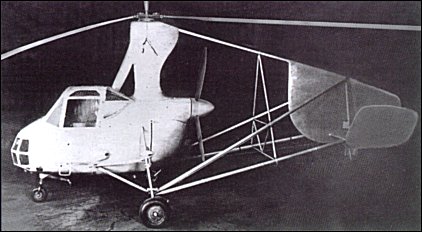
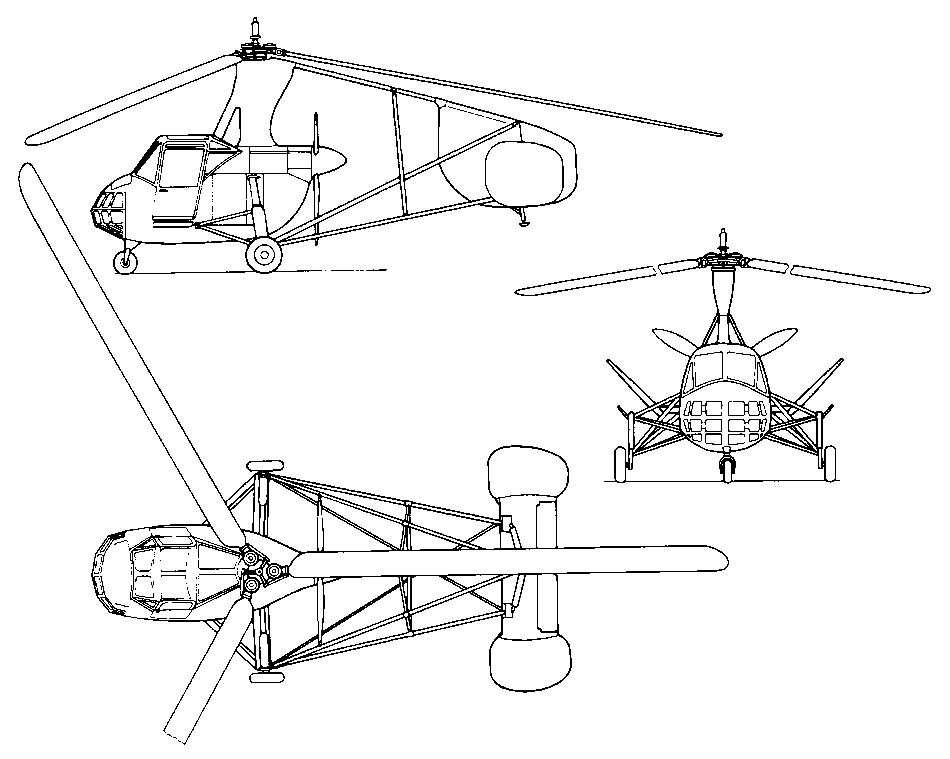
Kamov took job of chief designer in factory at Smolensk opened 1939 to make production autogyros (beginning with A-7-Za). Kamov obtained permission to build a side-by-side observation machine with side doors. The AK was fitted with tricycle gear, a single fin rudder on struts from rotor head and main gears, and no wings.
Work was delayed by evacuation in July 1941 but work restarted at a new facility in Lake Baikal region in 1942. The project was abandoned 1943 because of termination of interest by VVS.

AK
Engine: 1 x MV-6
Rotor diameter: 13.5m
Loaded weight: 1317kg
Empty weight: 1026kg
Max speed: 176km/h
Ceiling: 4,700m

Kamov A-7

This autogyro designed by Kamov was considerably more stream-lined than its predecessors. The rotor had three blades, the fuselage was completely covered by a light alloy skin and the landing gear was streamlined.
A later version, the A-7-3, which had two small fins below the stabilizer, was used during the last war for some observation missions.
Kamov created the only (in the World) armed autogyro (A-7-3) that saw (limited) combat action.

Kamov

Nikolai Il’yich Kamov was born in 1902. In 1923 he graduated from the Tomsk Technological Institute. From 1923 to 1931 he worked at a number of the USSR’s aircraft factories having various posts, including those of brigade chief and leading designer in the design bureau of D.P.Grigorovich. From 1931 to 1948 (with short pauses) he headed separate brigades and an experimental design group in TsAGI. Between 1928 and 1943 he was engaged in the design and construction of autogyros.
Nicolai Kamov started building his first rotor-winged aircraft in 1929, together with N.K.Skrzhinskij. The first Soviet Autogiro was designed by Kamov and Skrzhinskii based on Cierva models.
In 1945 he started the design work on a co-axial helicopter. Kamov gained distinction for lightweight single-seat helicopters after Second World War, including Ka-8 of 1947.
On October 7, 1948 the Minister of Aviation Industry M.V.Khrunichev issued Directive No.772 ordering the establishment of the Experimental Design Bureau No.2 (OKB No.2) headed by N.I.Kamov. The OKB was to be hosted by the State All-union Experimental Factory No.3 in Sokol’niki, a district of Moscow. In accordance with this directive all the specialists of the group which had been developing the Ka-8 on a voluntary basis were transferred to Kamov’s OKB-2.
The aircraft factory No.3 of the Ministry of Aviation Industry was considered to be, for all practical purposes, the base enterprise of the OKB headed by chief designer I.P.Bratukhin. It comprised several production shops and divisions, including the flight test facility at the Izmaylovo airfield (then a suburb of Moscow). The OKB-2 occupied the rooms allocated to it at the premises of this enterprise. Its staff rendered considerable assistance to the speedily growing brigades of the OKB-2 in establishing themselves and gaining the necessary practical experience in design and calculation work.
This was followed by the single-seat Ka-10 of 1950 appearance as a piston-engined helicopter for shipbome observation duties, with two contrarotating rotors and no anti-torque tail rotor; these rotor design features were to be found in most subsequent Kamov helicopters. The Ka-15 two-seater of the 1950s used for agricultual work in addition to naval anti-submarine and other roles, and the Ka-18 four-seat development was flown in 1957 and widely operated on varied civil tasks. The Ka- 22 Vintokryl was a very large twin-turboprop convertiplane, first seen in 1961, and established many world records. The twin-turboshaft powered Ka-25 was first flown in April 1961 and deployed by the Soviet Navy as a shipborne anti-submarine warfare helicopter, and also for target acquisition, joining the Navy from 1972 and manufactured up to 1977.
The more capable Ka-27 was first flown in August 1973 and joined Soviet Navy from 1981, with the Ka-28 as an export version. The related Ka-29 first flown in July 1976 as a shipborne assault and transport variant plus the Ka-33 export model without weapons. The Ka-31 was flown in October 1987 as a shipborne AEW&C variant, and Ka-32 first flown October 1980 as civil model for transport, flying-crane, rescue, offshore support, patrol, firefighting and other uses, with the Ka-327 as a maritime patrol version of the Ka-32. The piston-engined civil Ka-26 first flew in 1965 (some military use), with the modern Ka-126 (first flown in October 1987) and the Ka-128 turboshaft developments. All having pod-and-boom fuselages to allow attachment of modules aft of cockpit for various cargoes (from passenger carrying to agricultural equipment) or left open for flying-crane duties. A new twin-turbine development is the Ka-226 (first flown September 1997). The Ka-50, was first flown in June 1982 as a single-seat combat helicopter, with the Ka-50N Black Shark night-attack version flying March 1997, while side-by-side two-seat derivative became the Ka-50 Alligator (first flown in June 1997).
1995: 8a March 8th St., Lubertsky, Moscow Region 140007, Russia.
In 1996, Kamov became a member of MIG MAPO-M.
A military multipurpose twin-turboshaft helicopter is the Ka-60 for 10 equipped troops (rolled out July 1998), with a 16-passenger civil version as the Ka-62. A light single-turboshaft Ka-115 was to fly in 1999, carrying pilot and up to four passengers.

Kaiser-Hughes

Henry J. Kaiser was a world leader in shipbuilding, associated primarily with the prefabricated Liberty Ship of Second World War. In 1942 Kaiser proposed construction of 5,000 transport flying-boats for troop carrying. Lacking aviation experience, he formed a joint company with Hughes Aircraft, Hughes to undertake design and Kaiser construction of the Hughes-Kaiser HK-1, the world’s largest aircraft. In November 1942 a contract was signed for three aircraft, one for static test and two for flight. By 1944 construction of the first was still at the preliminary stage, and the U.S. Army and Navy withdrew technical assistance. The contract was reduced to one aircraft; Kaiser withdrew, and thereafter the design was called the Hughes H-4 Hercules.

Junkers Jumo 223 / Jumo 224

The Junkers Jumo 223 was an experimental 24-cylinder aircraft engine based on the Junkers Jumo 205. Like the Jumo 205, it was an opposed piston two-stroke diesel engine. It had four banks of six cylinders in a rhomboid configuration, with four crankshafts one at each vertex of the rhombus, and 48 pistons. It was designed for a power of 2,500 horsepower at 4,400 rpm, and weighed around 2,370 kg.

Only one example is known to have been built. It is rumoured to have been taken to Moscow after the war, where development may have continued.

In 1942 the 223 was abandoned in favour of an even larger engine, the Jumo 224 with an intended output power of 4,500 horsepower.

The Jumo 223 series was influential to the successful three-crankshaft Napier Deltic engine.

Junkers EF-127 Walli

Besides Bachem with the Ba-349 Natter, three other companies submitted proposals for the Jägernotprogramm (Emergency Fighter Program). The front runner was Ernst Heinkel A.G. with their P.1077 Julia which took off from a rail and landed on a skid like the Me-163, the runner up was the Junkers Flugzeug und Motorenwerke’s EF-127 Walli; the Messerschmitt A.G.’s P.1104 was also in the running. As expected, Heinkel won the contract.

Junkers Ju.488

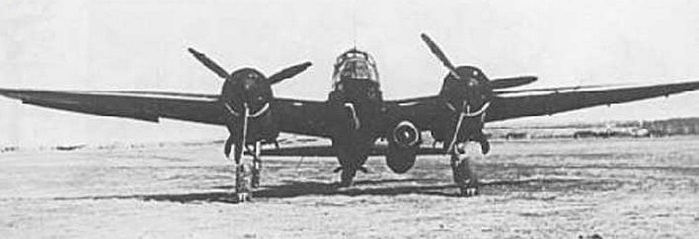
Some sources claim that this was a development of the Ju 388, but it actually was a four-engined long-range bomber, built of Ju 188, Ju 288 and Ju 388 parts. The development of the Ju 488 was ordered from manufacturers in occupied France, who were not very motivated. When the prototype finally neared completion in 1944, it was destroyed by the French resistance with sten guns and grenades.

Junkers Ju.390

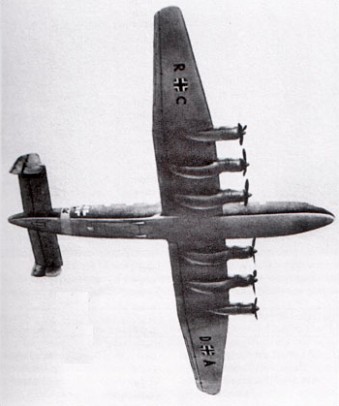
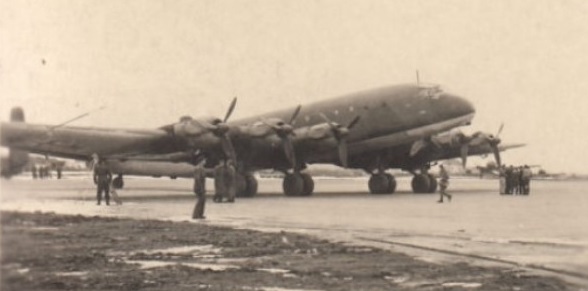
The German Junkers Ju 390 long range heavy bomber aircraft design was intended to be able to strike at locations along the east coast of the United States during World War 2. The Ju 390 itself was a further development of the Junkers Ju 290 and was also tasked to fulfill the roles of maritime reconnaissance and transport in addition to its bombing duties. The Ju 390 – also known under the unofficial name of “New York Bomber” – was developed as two working prototypes, effectively making the idea of transatlantic bombing theoretically possible for Hitler and his Luftwaffe. The Ju 390 was part of the failed “Amerika Bomber” project considered by the Germans, this including the Messerschmitt Me 264 and Focke-Wulf Ta 400 designs.

The Junkers Ju 390 heavy bomber appeared when general German wartime philosophy was still centered around medium-class bomber aircraft. Full developmental resources were never really delegated to the Ju 390 project en mass and the entire program was slow. With origins in the Ju 290 airframe, the Ju 390 basically saw its wings lengthened via extensions fitted to help accommodate the additional engines (three to a wing for a total of six installations). The fuselage was also applicably lengthened for the long-range bombing role. Defense was supplied by a pair of 13mm machine guns in a gondola position as well as 2 x 13mm machine guns in beam positions. A pair of 20mm cannons would have been mounted to a dorsal turret and a single 20mm cannon would have been installed in the tail. Crew accommodations would have amounted to ten personnel made up of the flight crew and dedicated gunners. The heavy transport model was given the proposed designation of Ju 390A-1 while the maritime patrol and long-range heavy bombers would have been assigned Ju 390B and Ju 390C respectively.

Ju.390 V-1 GH+UK

Power for the Ju 390 V01 prototype was supplied by 6 x BMW 801D radial piston engines, of 1,730 hp. Maximum speed was listed at 314 miles per hour with a range of approximately 6,030 miles. The service ceiling was a reported 19,700 feet. Empty weight was in the vicinity of 87,100lbs while maximum take-off weight topped at 166,400lbs. The Ju 390 maintained a length of 112 feet, 2 inches with a span of 165 feet, 1 inch. Her height was 22 feet, 7 inches.

First flight for a Ju 390 V1 prototype occurred on October 20, 1943, and Ju 390 V2 was also flown in October of 1943 with testing believed having gone into 1945.

An initial order of 26 Ju 390s were ordered for serial production, however, the program was cancelled in June of 1944 to allocate critical wartime resources and development to other more pressing projects. Pparticularly those of defensive in nature. The Ju 390 was officially strickened from Luftwaffe contention in 1945. Ju 390 V1 was destroyed on the ground by the Germans as the American Army closed in on the development facility.

A test flight of a Ju 390 is said to have taken the aircraft from Brest, France, to within 200 miles of New York city, and returned.

In the fall of 1944, Japanese authorities were granted local production rights to the Ju 390, though none were ever started before the Empire capitulated in August of 1945.

Junkers Ju 390 V1 (New York Bomber)
Engines: 6 x BMW 801D radial, 1268kW.
Length: 112.20ft (34.2m)
Width: 165.03ft (50.30m)
Height: 22.60ft (6.89m)
Empty Weight: 87,083lbs (39,500kg)
Maximum Take-Off Weight: 166,449lbs (75,500kg)
Maximum Speed: 314mph (505kmh; 273kts)
Maximum Range: 6,027miles (9,700km)
Service Ceiling: 19,685ft (6,000m)
Armament proposed:
2 x 13mm MG 131 machine gun in gondola
2 x 13mm MG 131 machine guns in waist beam positions.
2 x 20mm MG 151/20 cannons in dorsal turret
1 x 20mm MG 151/20 cannon in tail gun position
Crew: 10