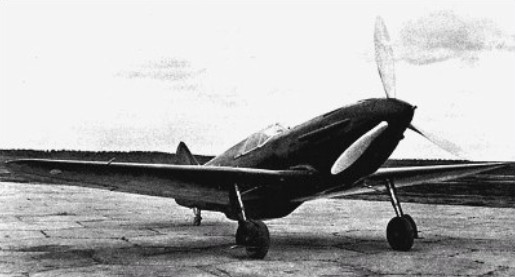
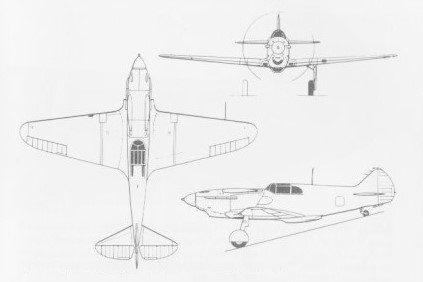
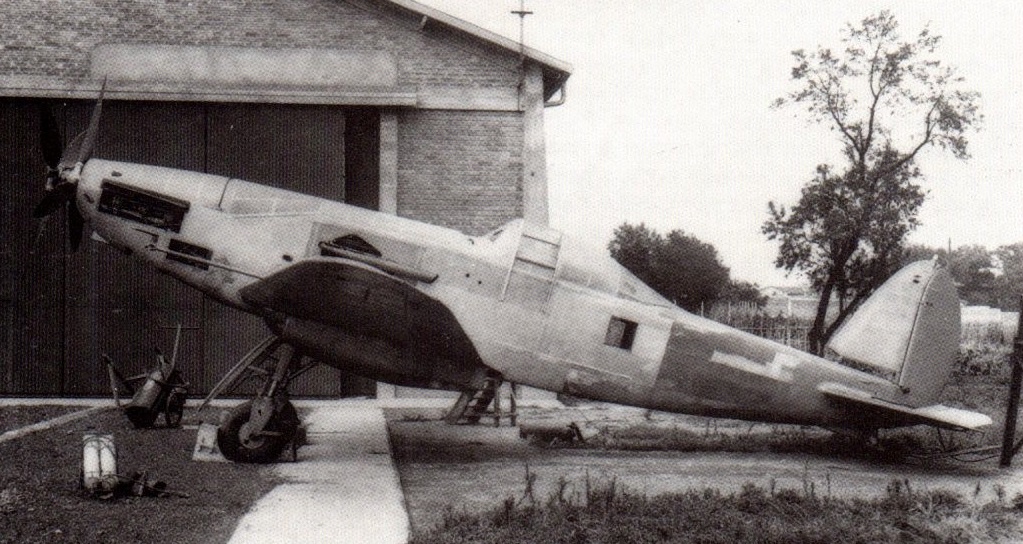
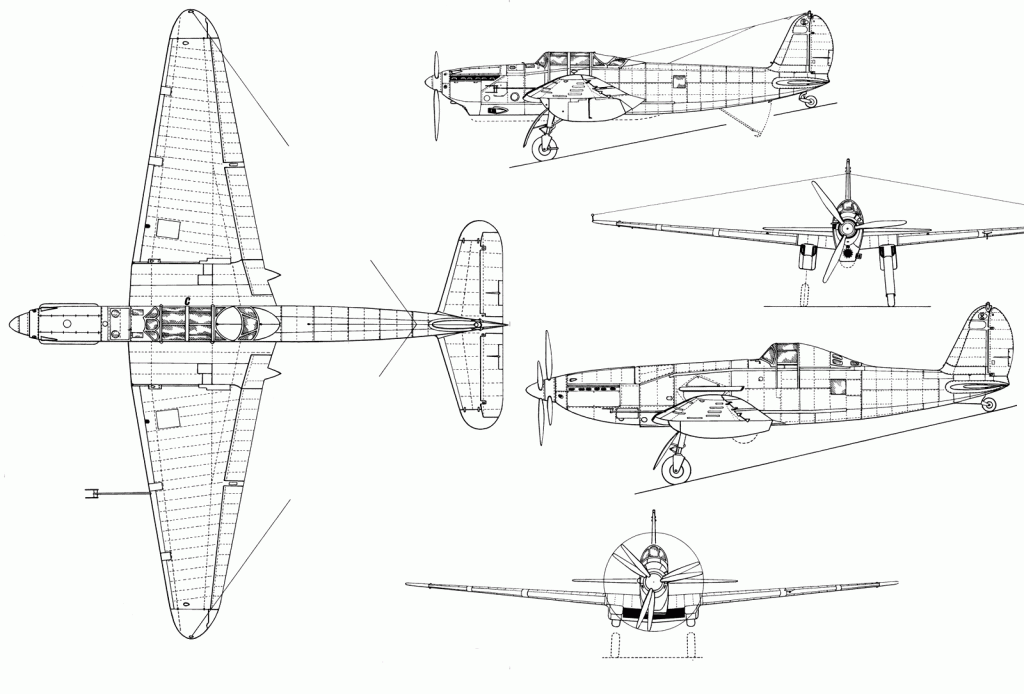
Semyon A Lavochkin, together with V P Gorbunov and M I Gudkov, established a new design bureau in September 1938, and began work on a single-seat tactical fighter. Initially designated I-22, the fighter was novel in that plastic-impregnated wood known as delta drevesina was used extensively in its construction, with stressed bakelite plywood skinning. Power was provided by a 1,100hp Klimov M-105P engine with a 23mm VYa-23V cannon mounted between the cylinder banks, the remaining armament comprising two 12.7mm UB machine guns in the forward upper decking. Work began simultaneously on seven prototypes, and a pre-series of 100 fighters was laid down. The first prototype was flown on 30 March 1940, the designation having meanwhile been changed to LaGG-1. It demonstrated inadequate range, ceiling and manoeuvrability, and potentially dangerous handling characteristics. Time did not permit fundamental redesign of the fighter, and the Lavochkin team therefore initiated a programme aimed at alleviating the more serious of the fighter’s defects. Improvements were progressively introduced, while the design was subjected to a thoroughgoing weight analysis. The large calibre machine guns were replaced by 7.62mm ShKAS guns, and the 23mm cannon gave place to one of 20mm. Various remedies for the handling shortcomings were applied, and the first LaGG-1 prototype to introduce these changes was referred to as the I-301 (from the numerical designation of the factory – GAZ-301). This also featured redesigned outer wing panels incorporating additional fuel tanks. The I-301 entered flight test on 14 June 1940, the modified aircraft being assigned the designation LaGG-3 and most pre-series examples of the LaGG-1 being completed to the later standard.
LaGG-1 Engine: 1 x 1,100hp Klimov M-105P Wingspan: 9.80 m / 32 ft 2 in Length: 8.81 m / 28 ft 11 in Height: 4.40 m / 14 ft 5 in Wing area: 17.50 sq.m / 188.37 sq ft Max take-off weight: 3380 kg / 7452 lb Empty weight: 2968 kg / 6543 lb Max. speed: 600 km/h / 373 mph ROC: 2953 fpm / 900 m/min Service ceiling: 31,496 ft / 9600 m Range: 660 km / 410 miles
Semyon Alexse’evich Lavochkin headed a design bureau formed for fighter production under the 1938 program. The first aircraft, the I-22, flew in 1939; also called LAGG-1 (Lavochkin, Gorbunov, Gudkov). Alterations on the production line 1940-1941 resulted in LAGG-3 with wood construction, with phenoform-aldehyde impregnated fuselage. Superseded by La-5 with radial engine in 1942. Followed by 1943 La-7,1945 La-9,1946 La-11. This latter allmetal aircraft was the last piston-engined fighter in Soviet Air Force. Bureau later produced La-17, the first Soviet turbojet fighter with reheat, but was disbanded on Lavochkin’s death in 1960.
The design of Latécoère 299 was started on March 8, 1937, when the Marine Ministry of France approved a general program for the renewal of the aircraft fleet.
Among other specifications, an assignment was made for the design of SB aircraft (observer-bomber). The specification was for a single-engine seaplane weighing up to 3,500 kg, a double seaplane weighing up to 1600 kg and a twin-engine aircraft with a folding wing for the carrier “Bearn”. There are several tasks at once: planes must be reconaisance, spotting enemy submarines, dive bombing or torpedo attack, and also covered by friendly vessels with smoke. the max speed should be at least 300 km \ h.
In May 1936, Socièté Industrielle d’Aviation Latécoère successfully tested the Latecoere 298 floatplane. In some parameters, such as the speed, it did not fit into the requirements, but otherwise it was quite suitable for completion of the category SB.
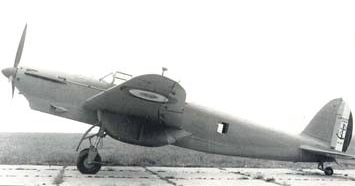
In December 1937 the ministry issued an updated specification, which indicated a speed of 400 km / h, and the folding and unfolding time of the wing should not exceed 3 minutes. In such parameters Latecoere 298 clearly did not fit, so it was necessary to refine the fuselage, tail and wing, and also had to provide for the installation of a more powerful 920 hp HS.12Y-27 motor. In June 1938, the layout of Latecoere 298 was revised accordingly and presented by the evaluation commission. The new aircraft, switched to the usual wheeled undercarriage, was named Latecoere 299. The preliminary design was liked by the higher ranks of naval aviation, especially as it was developed on the basis of the already serial torpedo carrier. The first order for two prototypes was received on July 5, 1938, with the final delivery date no later than July 5 of the following year.
Both prototypes were built and successfully passed tests. The only thing that does not succeed was the maximum design speed. The mass production of the Latecoere 299 was prevented by the capitulation of France. Further development of this aircraft was considered a secondary task and all work on it in July 1940 was stopped. Two Latecoere 299 remained standing in the hangar, and slowly parts were removed for other aircraft.
In the autumn of 1940, work was resumed on the design and construction of a twin-engine fighter Arsenal VB.10 with a tandem arrangement of motors. A few months earlier, the Ministry of Aviation had signed a contract for the construction of 30 serial aircraft, although they had not even begun to build a prototype. This fighter was designed by designers Vernis and Gatier and had very promising characteristics, so VB.10 fell into the category of priority developments. If now there was nowhere to hurry, Verniss “bargained” from the DTI (Office of Advanced Technology) both Latecotere 299 prototypes, the Laté 299-01 and Laté 299-02, both with 970 hp HS.12Y-43 engines.
It was not difficult to do this, as these planes suddenly turned out to be unclaimed. Verniss suggested using them to develop the installation of tandem HS 12Z motors, connected by an Arsenal 200 transmission system and rotating in opposite directions, two coaxial props with a diameter of 3.2 meters. Because of this, the single-seat cockpit was moved closer to the tail. Because of this, it was necessary to make the cabin single and move it closer to the tail, but in the rear part there was a place for a mechanic who could regulate the operation of the power plant.
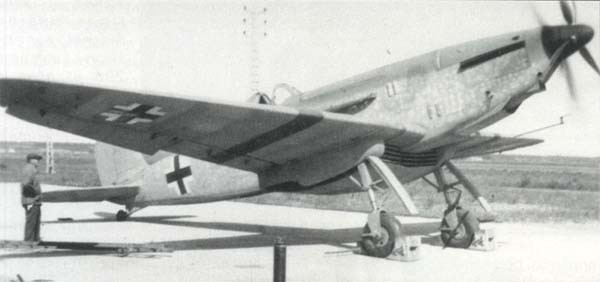
Reconstruction of the aircraft began in 1942 and after processing it received the new designation Latecoere 299A. When the aircraft was almost ready for testing, it turned out that it was not realistic to get the HS 12Z engines in the near future, and instead of them the less powerful but quite affordable HS 12Y-31 (800 hp) were installed.
Complete occupation of the country prevented the completion of the matter, but Verniss managed by some miracle to convince the Germans to continue building prototypes, which was done in 1943. As a result of delays, the Latecoere 299A was rolled out onto the take-off field only in April 1944, after two months of preliminary static tests. He never rose into the air. The German pilots at the Bron airbase took several runs on it, ending in capotation with damage to the nose of the fuselage. Latecoere 299A was again sent for repair, where he waited for a raid of allied aircraft. On April 30, 1944, this aircraft burned down in a hangar, leaving Verniss without a test bench.
Late 299 Engine: Hispano-Suiza 12 Y-43, 920 hp Wing span: 15.64 m Wing area: 34.60 sq.m Length: 12.28 m Height: 4.46 m Empty weight: 3170 kg Normal takeoff weight: 4650 kg Maximum speed: 345 km / h Cruising speed: 275 km / h Range: 900 km Rate of climb: 348 m / min Ceiling: 6600 m Crew: 3 Armament: two stationary and one manual 7.5 mm Darne mg Bombload: up to 900 kg
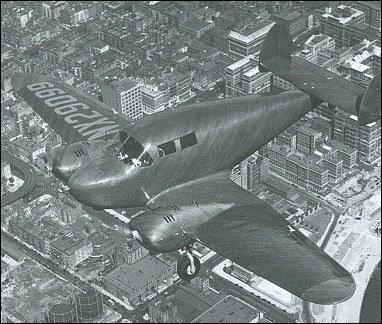
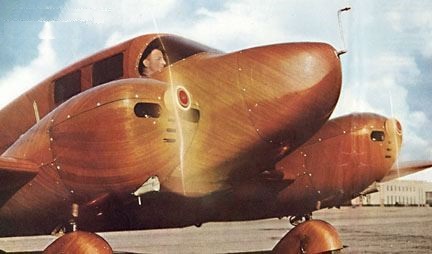
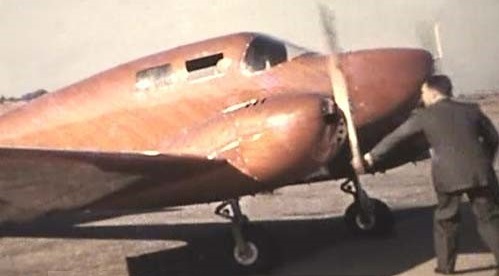
The Langley 2-4, variously described as the Langley Monoplane or Langley Twin was a twin-engine utility aircraft built in the United States and first flown in 1940. Named in honour of Samuel Pierpont Langley, the aircraft was designed by Arthur Draper and Martin Jensen to make use of non-strategic materials in its construction and thereby avoid any shortages brought about by war. Its design was conventional – a low-wing cantilever monoplane with twin tails and tailwheel undercarriage.
The manufacturing process, however, was unorthodox, and the aircraft’s structures were built up from mahogany veneers bent over moulds and impregnated with vinyl and phenol resins to make them hold their shape. The Vidal plastic-bonded mahogany plywood construction. The use of metal for structural elements – even in fasteners – was thereby almost completely avoided.
Two prototypes were constructed, one with 65 hp (49 kW) engines NX29099, and another (29-90 NC/N51706) with 90 hp (67 kW) engines. The second machine was purchased by the United States Navy and evaluated as the XNL-1 39056, but the navy did not order the type. The Langley was a Type Certificated airplane, achieving ATC number 755.
Once the United States entered the war, it transpired that the resins needed for construction were in far shorter supply than the metal that would have been needed to produce an aircraft by conventional means, and the project was abandoned.
The XNL-1 was sold as war surplus. The Langley was landing in Oklahoma in 1965 and after touch down the brakes locked flipping the airplane over and damaging the fuselage beyond economical repair.
John Pierce and Hurley Boehler had a Stinson 108 fuselage in their hangar without wings, so they decided to purchase the Langley and, following the accident, its wings, engine nacelles, and main undercarriage were mated to a Stinson 108 fuselage to create a one-of-a-kind homebuilt aircraft named the Pierce Arrow N6622A.
2-4-65 Engines: 2 × Franklin 4AC, 65 hp (49 kW) Length: 20 ft 8 in (6.30 m) Wingspan: 35 ft 2 in (10.72 m) Maximum take-off weight: 1155 lb Maximum speed: 135 mph (216 km/h) Cruising speed: 185 kph Stall: 50 mph Range: 400 miles (640 km) Service ceiling: 13,300 ft (4,100 m) Take-off distance: 200 ft Crew: one pilot Capacity: three passengers
2-4-90 / NL-1 Engines: 2 × Franklin, 90 hp Wingspan: 35 ft 2 in (10.72 m) Length: 20 ft 8 in (6.30 m) Empty weight: 1738 lb Loaded weight: 2850 lb Maximum speed: 138 mph Cruising speed: 117 kph Stall: 55 mph Range: 350 miles at 100 mph ROC: 695 fpm Crew: one pilot Capacity: three passengers
Established in 1940 as Langley Aircraft Corp (pres: Caleb S Bragg). Langley Aircraft Corporation was based in Port Washington, NY, with director Martin Jensen and Arthur Draper.
In 1942 the company was acquired by Andover-Kent Aviation Co (pres: J J Brooks), New Brunswick NJ, but WW2 curtailed activity. After the company built the first airplane, two or three cars were released in 1942 under the license of “Andover-Kent Aviation Company”.
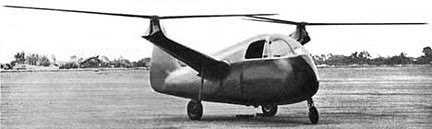
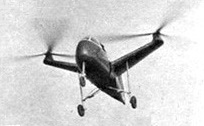
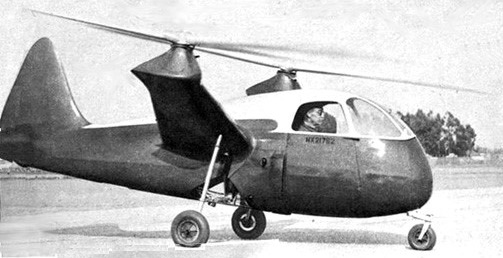
Designed by Fred Landgraf with twin overlapping rotors on wingform pylon, and retractable landing gear. The sole example, NX21762, first flew on 2 November 1944.
A U.S. Army development contract was issued in 1945 but it was damaged in a test flight.
Sale price was to be $2,300. A U.K. license was held by Firth Helicopters of London.
The company, beset by financial problems, cancelled development of a three place H-3 and 5-8 place H-4, and auctioned its design and tooling in 1949, with the remains of the prototype going for $50.
1943: (Fred) Landgraf Helicopter Co, 135 St at Central Ave, Los Angeles CA. Incorporated 1943 at Los Angeles by Fred Landgraf, after several years development of H-2 twin-rotor light helicopter, which first flew in 1944. U.S. Army development contract 1945. Retractable tricycle landing gear, and overlapping synchronised rotors. U.K. license held by Firth Helicopters of London, but parent company inactive by 1949.
In 1949 Landgraf Helicopter Co disposed of its machinery and office equipment by auction. The prototype H-2 helicopter, badly damaged in a crash some months before, was sold for $50. The company remained in existence, though completely inactive.
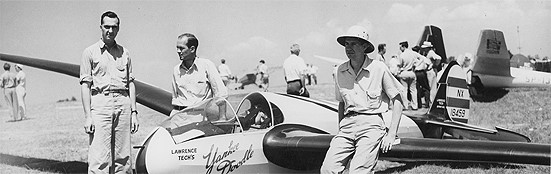
With the need for military trainers on the outbreak of World War II, Laister designed the two-place Yankee Doodle 2 from the original LK-10A / Lawrence Tech Sailplane with straight wings and automatic control hook-ups. Under the sponsorship of John Kauffmann, a St. Louis businessman, simplified versions were produced in quantity as TG-4A’s for the USAAC in 1942-43.
One of the pioneer US sailplane designers, John W. (or Jack) Laister built his first design, a gull-winged acrobatic sailplane in 1938 and later formed, with John R. Kauffman, the Laister-Kauffman Aircraft Corp. This produced, among other types, the TG-4A training glider version of the LK-10 for the USAAF and was one of the 16 firms taking part in the Waco CG-4A Hadrian programme, building 310 out of the nearly 14,000 CG-4As completed. Laister-Kauffman also produced one of the biggest troop-carrying gliders of the war, the 42-seat XCG-10A, which had a span of 105ft and could carry a 155mm howitzer or a 2½ ton truck.
 All Aero