Lockheed

Loughead Aircraft Manufacturing Company
Lockheed Aircraft Company

Of the Loughead three brothers Victor (the oldest), Allan and Malcolm, Allan started as a mechanic for a local aviation enthusiast who owned a Curtiss pusher, and he soon became a barnstormer and flight in-structor.
Allan and Malcolm Loughead built their first aircraft, the Model G seaplane, in 1913.
With Malcolm, he formed the Loughead Aircraft Manufacturing Company at Santa Barbara, California, in 1916,
With the help of designer Jack Northrop, Lockheed built the F1 twin-engined flying-boat in 1918, but it was turned down by the Navy. In 1923 Northrop left to take a job with Donald Douglas, and later founded his own corporation.

Loughead Aircraft Manufacturing Company survived until the end of World War 1, when thousands of surplus aircraft and engines flooded the market. Malcolm left to join the automobile industry. The original Lockheed Com¬pany built the moulded-plywood S-1 sports plane. It could not compete with cheap war-surplus aircraft, and the company suspended manufac¬ture in 1920 and was liquidated in 1921.

In 1926, Allan refounded the Lockheed Aircraft Company of Hollywood, and with a young designer, John K. Northrop, soon turned out a radical all wood, monocoque, cantilever monoplane the Lockheed Vega from 1925, a fast two-seater intended for airline work. 141 were built between 1925 and 1932.

Company moved to Burbank 1928. Vega gave rise to low-wing series of transports, the Altair/Orion/Sirius, differing in seating arrangements. Many records and notable flights performed on these aircraft.

In 1929, Lockheed came under the control of the Detroit Aircraft Corpora¬tion, then came the Depression. After the Great Crash Detroit Aircraft Corporation went bankrupt in 1931 and with it, Lockheed. The company went into receivership and, in partnership with Carl Squier a Lloyd Stear¬man, Robert Gross bought the assets in 1932 for $40,000.

Lockheed brothers had left the company, formed Lockheed Brothers Aircraft Corporation Company purchased by Robert E. Cross and Lloyd Stearman for a consortium, resumed trading under old name.

Launched a new series of twin-engined transports, starting with the Lockheed 10A Electra. To¬gether with Stearman and a young de¬signer, Hall Hibbard, Gross supervised development of the Lockheed 10 the original Electra. If the project failed, the company would surely collapse. Midway through the development, wind tunnel tests revealed that the plane had insufficient rudder control. Working in a wind tunnel at the University of Michigan, a young graduate student modified the design and added a twin tail. It solved the problem, and Gross, recognizing talent, immediately hired the student. His name was Clarence “Kelly” Johnson.
In 1934, the Lockheed 10 Electra flew.

In 1937 the L-14 Super Electra appeared, a smaller executive version of the L-10A. RAF bought 250 bomber variants of 14, called Hudson, in 1938. L-18 Lodestar flew 1939, a lengthened and more powerful Model 14.
The Lockheed P-38 Lightning of 1939, introduced as a high-altitude interceptor, had worldwide use, mainly as ground-attack and fighter-bomber aircraft.

In 1939 TWA formulated a requirement for a long-range transport and C. L. Johnson designed the 558km/h Constellation, which first flew in 1943. First 22 requisitioned as military transports. Built up to 1958 in increasingly powerful, larger-capacity and longer-range versions.

Ventura of 1941 was a bomber variant of Model 18. Naval PV-1 came in 1942 and the torpedo-carrying PV-2 Harpoon in 1943. Success of the Harpoon led to long-range Neptune, main equipment of patrol squadrons 1947-1962.

Lockheed was employing 94,000 people by June 1943, but by the end of 1944 were down to 60,000, and by the summer of 1945 they were down to 35,000 – fewer than 1939.

By April 1948 their employment was down to 13,800.

First flight August 1954 of C-130 Hercules tactical military turboprop transport, later also produced in commercial form; delivered from 1956 and remaining in production in 1999 in latest C-130J form with fully integrated digital avionics, advanced engines and propellers, and other improvements (well over 2,200 Hercules transports built).

Company also produced the four-turboprop Electra airliner (first flown December 1957) and derived P-3 Orion long-range maritime patrol/reconnaissance aircraft (first flown August 1958, and remaining in production in the U.S.A. until 1995, although Japanese Kawasaki-built examples continued in production).

Around 1960 Fokker was looking for and American partner. Lockheed turned down the proposal because they thought it could not be profitable, but Northrop agreed to by a twenty-one percent share.

C-130 followed by much larger strategic C-141 StarLifter transport (first flown December 1963) and C-5A Galaxy (first flown June 1968) which, at 348,810kg gross weight and with a span of 67.88m, was then the world’s largest operational aircraft; C-5B followed for USAF and two C-5As modified to carry outsized space cargoes as C-5Cs.

First U.S. jet fighter was Lockheed P-80 Shooting Star (first flown January 1944) which later saw service in Korea. F-104 of 1954 was smallest-span-ever American service aircraft (wings spanned 6.7m) and first fighter capable of sustained Mach 2.0. Saw widespread service as part of U.S. offshore arms and aid deals. Subsequent activities included CP-140 Aurora for Canada as a development of the Orion ;S-3 Viking carrier-borne anti-submarine aircraft (first flown January 1972 and later also used by the U.S. Navy in ES-3A electronic reconnaissance and signals/ communications intelligence, and US-3A carrier onboard delivery variants); and L-1011 TriStar widebodied airliner (first flown November 1970).

A secret “Skunk Works” at Palmdale, California, was responsible for the military U-2 Dragon Lady spyplane (first flown August 1955), A-12 Mach 3.6 strategic reconnaissance aircraft sponsored by the CIA (first flown April 1962) and developed into the YF-12 interceptor and fully operational SR-71A Mach 3+ strategic reconnaissance aircraft for the USAF, and the F-117A stealth fighter for subsonic night attack on priority targets (first flown June 1981), among other types.

In September 1977 Lockheed Aircraft Corporation took new name Lockheed Corporation.
The Tactical Military Aircraft division of General Dynamics bought by Lockheed Corporation in March 1993, becoming Lockheed Fort Worth Company. In March 1995 Lockheed Corporation merged with Martin Marietta to form Lockheed Martin Corporation. Intended merger with Northrop Grumman, announced in July 1997, did not take place. Company set-up then included Lockheed Martin Tactical Aircraft Systems in charge of F-16 production and updates and part of the F-22 program; Lockheed Martin Aeronautical Systems tasked with F-22, military transport and maritime patrol aircraft work, plus production and support of C-130 and P-3; and Lockheed Martin Skunk Works which undertakes advanced, secret and innovative design/development, work including support and improvement of F-117A, U-2 / TR-1, X-33 reusable launch vehicle and more. There are many other divisions.

1990 Lockheed Martin programs include continued production of the F-16 fighter and C-130 transport, development and production of the F-22 Raptor air dominance fighter (first flown September 1990, with first flight of an engineering and manufacturing development aircraft September 1997, and deliveries of full production to start to USAF in 2002 to allow initial operational capability in 2005); and development in association with Northrop Grumman and BAe of Joint Strike Fighter for U.S. forces.
Lisunov

Design engineer Boris Lisunov was sent to the U.S.A. to study the Douglas DC-3 and prepare for production in the Soviet Union. Production under designation PS-84 began in 1939, entering service in the same year. In 1942 the PS-84 became known as the Li-2. The only Soviet wartime transport, it was used postwar by Aeroflot.

Lippisch DM-1

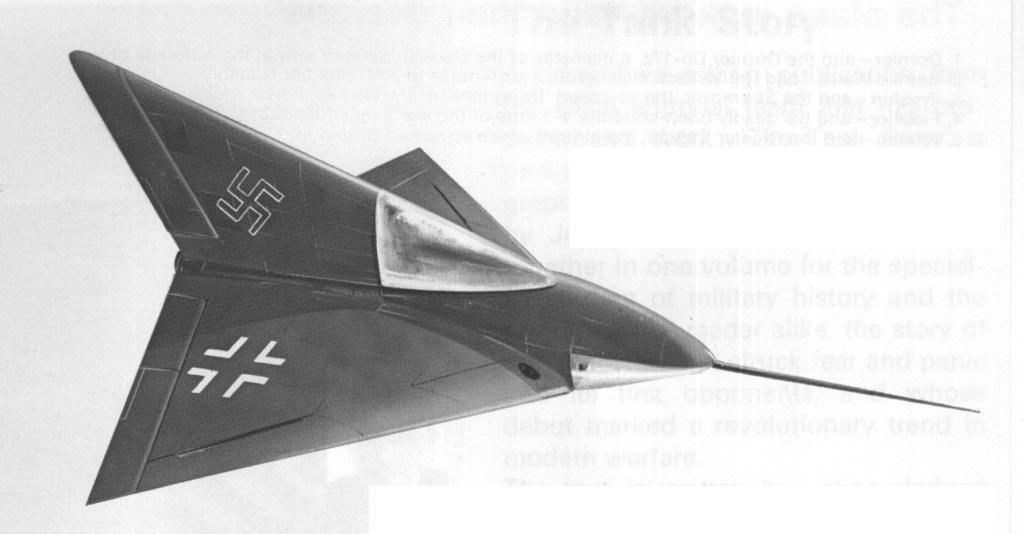
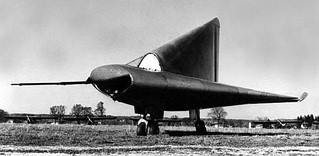
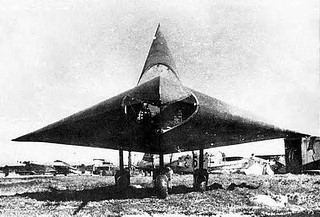
During World War II, Dr. Alexander Lippisch proposed a ramjet propelled point defence fighter, the Lippisch P.12/13a. It was a sharply-swept delta flying wing with the engine buried the a thick, blunt-nosed wing. The pilot was accommodated in the forward section of the tail fin, which was as thick as the wings and almost as large. A scale model was successfully flown at Spitzerberg, near Vienna.

Lippisch himself lost interest in the design and began work on the P.13b with a different wing, but he was approached by students of Akaflieg Darmstadt and Akaflieg München, who asked for vital war work so that they would not be drafted. By this time in 1944 Lippisch realised that the war was hopeless and was happy to oblige, arranging for them to build a full-scale aerodynamic test glider for the P.12/13a project.

Construction was begun at the workshop of the Akaflieg Darmstadt, as the Darmstadt D-33. The workshop was bombed in September 1944, so the part-built airframe was moved to the Akaflieg München workshops at Prien am Chiemsee, where it was redesignated the DM-1 (for Darmstadt-München 1). At Prien, Wolfgang Heinemann and Hans Zacher from Darmstadt, with Klaus Metzner and Hermann Nenninger from Munich, continued the work.

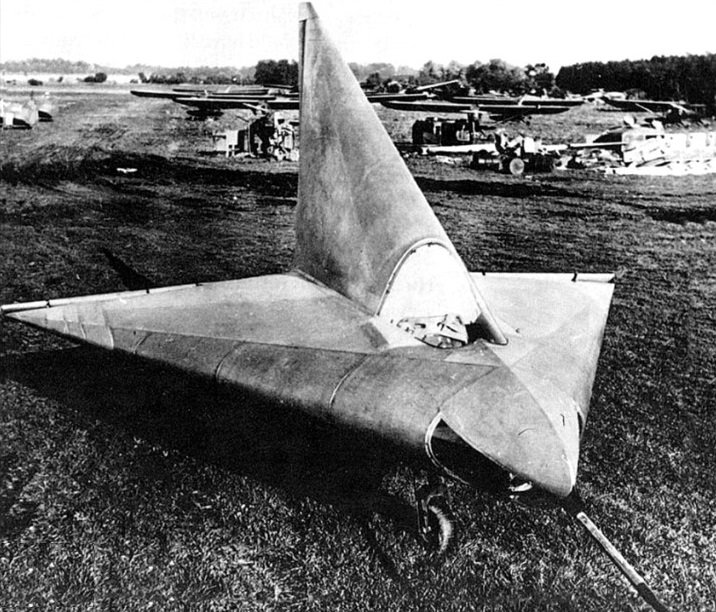
The DM1 was a single-seat glider made from steel tubing, plywood and bakelite impregnated plywood. The cockpit canopy was integrated into the fin leading edge. Launching the DM-1 was to be by piggy-back or aero-tow.

After occupation by U.S. Troops in May 1945, work continued at the DM-1 on behalf of the U.S. military government, with General Patton and Charles Lindbergh visiting Prien to see the project.

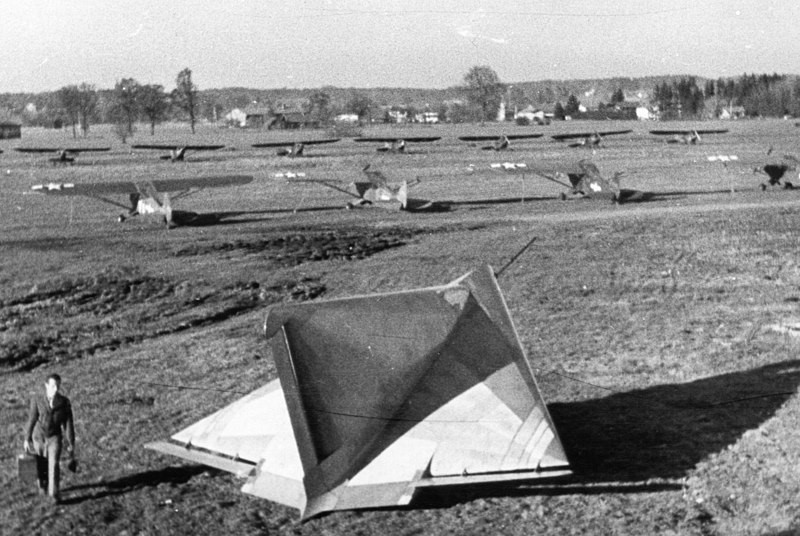
The DM 1 at Munich Prien airport after the war

Completed in early November 1945, the DM-1 was shipped in a wooden box to Langley Field in Virginia where the flow behaviour of the DM-1 was examined in the NACA (National Advisory Committee for Aeronautics, forerunner of today’s NASA) full-size wind tunnel.

When tested at Langley, the DM-1 was found to perform poorly. It generated significantly less lift at low speeds than small-scale models had suggested. The cause proved to be vortex lift generated by the models which, due to its much higher Reynolds number, the full-size aircraft did not produce.

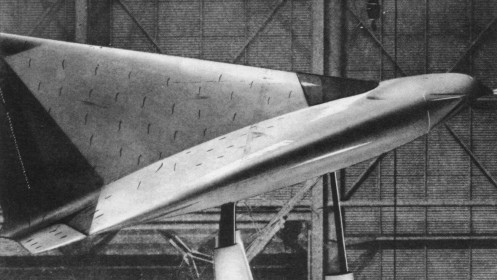
The DM-1 modified for wind tunnel testing by NACA.

As a consequence it underwent a programme of modifications. Like all Lippisch deltas it had a thick wing with a blunt leading edge. A strip was fixed along the leading edge to simulate a sharp profile. This created the vortices seen on the model and greatly increased the lift. The origin of modern vortex lift theory may thus be traced to the NACA study and the modified DM-1.

The large and even thicker vertical stabilizer was removed and replaced with one of much smaller size, along with a cockpit canopy from a Lockheed P-80 Shooting Star in a more conventional position. Together with improvements to the elevon hinges, this significantly reduced overall drag.

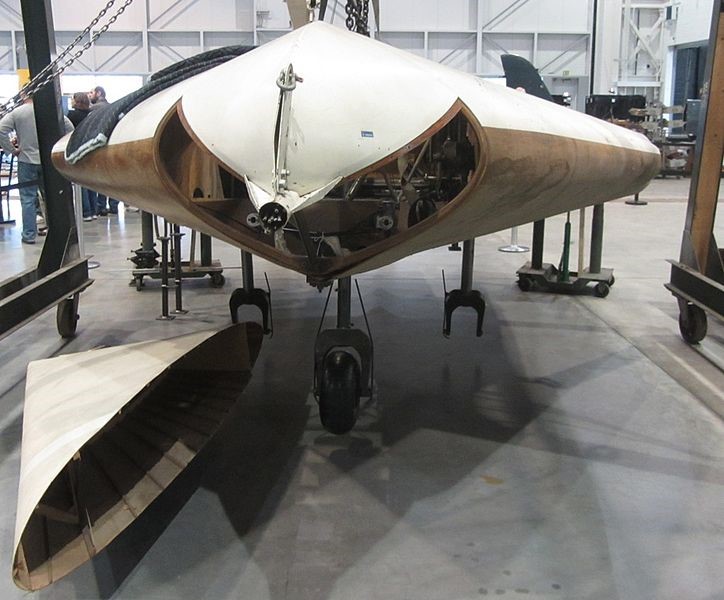
After completion of testing the DM-1 was retired to the National Air and Space Museum, Smithsonian Institution in Washington, D.C. for storage at the Paul E. Garber Preservation, Restoration, and Storage Facility.

Lippisch DM-1 in restoration at the Smithsonian

Besides the NASA modifications, the Akafliege Darmstadt and München defined some powered designs for a development programme derived from the DM-1.
DM-1 (Lippisch). Glider as originally built but never flown, with thick wings and large tail.
(NACA). Glider as modified with leading-edge strip, small thin fin, conventional cockpit and sealed elevon hinges.
DM-2. Larger, supersonic test plane with 8.5 metres (27 ft 11 in) span, 8.94 metres (29 ft 4 in) length and prone pilot. Powered by a Walther liquid-fuelled rocket. All-up weight 11,500 kilograms (25,400 lb).
DM-3. Developed version of the DM-3 with pressure cabin and more powerful Walther C engine.
DM-4. Engine flight testbed, initially fitted with a Walther C. Airframe weight (without engine) 2,500 kilograms (5,500 lb)

DM-1
Wingspan: 6 m (19 ft 8 in)
Wing area: 19 m2 (200 sq ft) ca
Length: 6.32 m (20 ft 9 in)
Height: 3.25 m (10 ft 8 in)
Empty weight: 375 kg (827 lb)
Gross weight: 460 kg (1,014 lb)
Maximum glide ratio: 7
Crew: 1

Lioré-et-Olivier LeO 45 / LeO 451

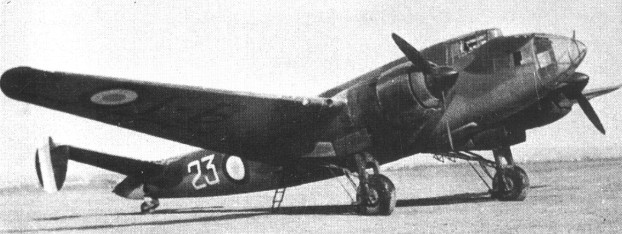
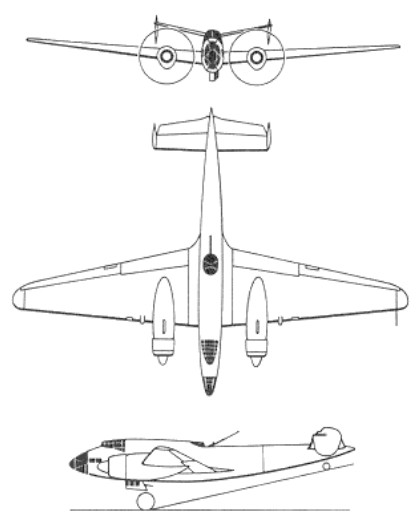
The LeO 45.01 B4 – designed by Jean Mercier to Armee de l’Air Programme A21 (1934) – first flew on 16 January 1937. It was an all-metal low-wing monoplane powered by two 805-kW (1,080-hp) Hispano¬Suiza 14Aa radial radial engines. The wings had considerable dihedral and the streamlined elliptical monocoque fuselage had a pointed and fully glazed nose. The landing gear was fully retractable. Accommodation provided for a pilot in an enclosed cockpit, behind which was the radio operator’s panel and below the retractable ventral gun turret.
Trials revealed that the tail needed revision, and development problems with the Hispano-Suiza engine led to the decision in favour of Gnome-Rhone 14 radials in the LeO 451, which was built by SNCASE, the nationalised organisation into which LeO had been absorbed.

Production LeO 451s had two 849.5kW Gnome-Rhone 14N 48/49 or 38/39 radial engines in specially designed Mercier cowlings. Despite excellent performance, construction of the type was slow. The first production aeroplane flew in March 1939, and although 1,783 aircraft were ordered only 452 had been produced by the fall of France. Only five LeO 451s were on first-line strength by 3 September 1939. Subsequent production amounted to 225 more aircraft.

Liore et Olivier LeO 451 Article

A number of modifications were incorporated during series production, the principal being a totally redesigned fin and rudder assembly. Armament included a fixed 7.5mm MAC 1934 nose machine-gun, another gun of the same type flexibly mounted in the ventral gondola, and a somewhat troublesome 20mm HS-404 on a special mounting in the dorsal position. Maximum bomb load – carried in fuselage and wing bomb bays – was 2,400kg.
The LeO 451s were used initially for long-range reconnaissance missions, then for daylight bombing during the Battle of France and in night raids on Italian targets during June 1940. A further 225 were ordered by the French Vichy regime, the type serving in French overseas territories, later relegated to transport and liaison duties (a number flown in these roles by the Luftwaffe). Twenty-seven LeO 451s were ceded to Italy in 1941 but saw little service.

Variants with different engines reached prototype form, and some production aircraft were modified as transports, glider tugs, mailplanes and trainers. There were numerous experimental conversions of the basic design. Several examples remained in use in secondary roles for several years following the end of the Second World War.

LeO 451
Engines: 2 x Gnome-Rhone 14N-48/49, 850kW (1,140 hp).
Span: 22.5m (73 ft 9.75in).
Length: 17.17m (56 ft 4in).
Max T/O weight: 11400 kg (25,133 lb).
Max speed: 308 mph at 15,750ft.
Operational range: 1,429 miles.
Armament: 1×20-mm Hispano¬Suiza cannon and 2×7.5 mm (0.295-in) MAC machine-guns plus up to 1500 kg (3,307 lb) bombs internal.

LeO 451 B.4
Engine: 2 x Gnome-Rhone 14N 48/49, 850kW
Max take-off weight: 11400 kg / 25133 lb
Loaded weight: 7815 kg / 17229 lb
Wingspan: 22.5 m / 73 ft 10 in
Length: 17.17 m / 56 ft 4 in
Height: 5.24 m / 17 ft 2 in
Wing area: 68.0 sq.m / 731.95 sq ft
Max. speed: 495 km/h / 308 mph
Ceiling: 9000 m / 29550 ft
Range: 2300 km / 1429 miles
Crew: 4
Armament: 2 x 7.5mm machine-guns, 1 x 20mm cannon, 1500kg of bombs

Letov

Vojenska tovarna na letadla Letov

Czechoslovakia
Vojenska tovarna na letadla Letov was created in 1923, initially building the designs of Alois Smolik. Major output centered on the S-1/S-2 reconnaissance/light bomber biplanes; S-4 fighter of 1922; S-6 bomber; S-10 trainer (licensed from Hansa-Brandenburg); S-16 long-range reconnaissance biplane, built late 1920s/early 1930s for Czechoslavakia, Latvia and Turkey; S-18 trainer; S-19 four-passenger civil transport; S-20 biplane fighter; S-21 trainer version of S- 20; S-32 five-passenger high-wing tri-motor; and the S- 328/528 series of reconnaissance/light bomber biplanes. Also undertook license production of Tupolev SB-2 twin-engined monoplane bomber. Built Arado and Junkers types during German occupation 1940-1945.

Note: early designations combined chief designer, Alois Smolík’s initial with engine type and design number. Eg: SHS-4 = S for chief designer, Alois Smolík; HS for Hispano-Suiza 8Ba; and 4 for the fourth Letov design. Designations were later rationalized, dropping the engine type letters. Design evolutions followed the French pattern (eg: S-18 begets S-118, S218, etc.).

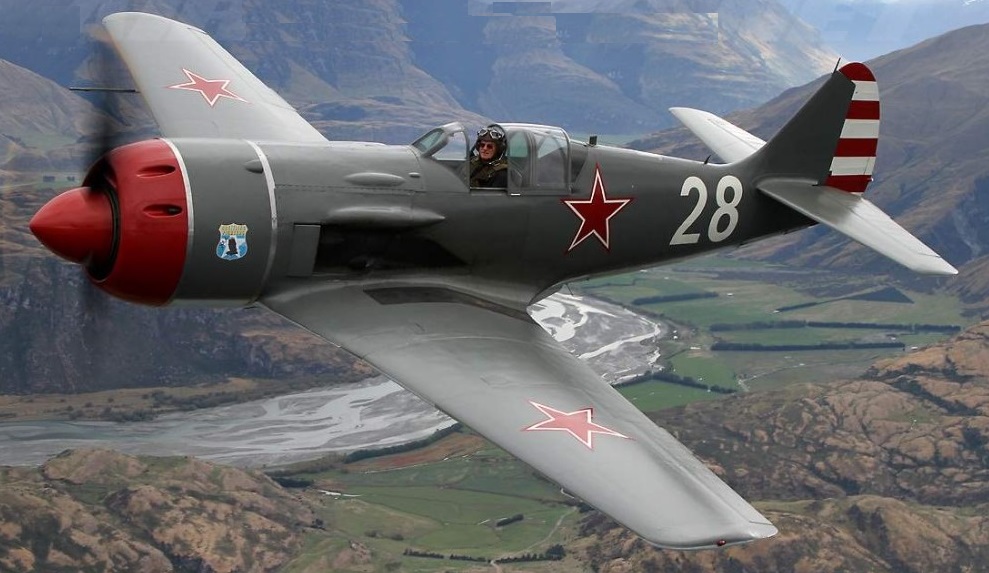
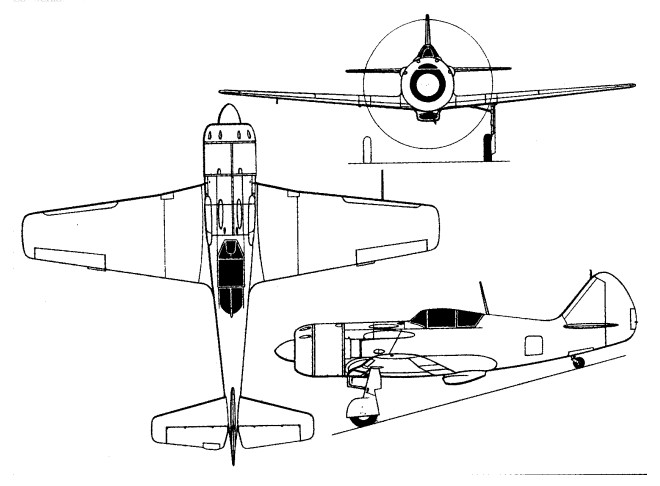
Lavochkin La-9 / La-130 / La-138

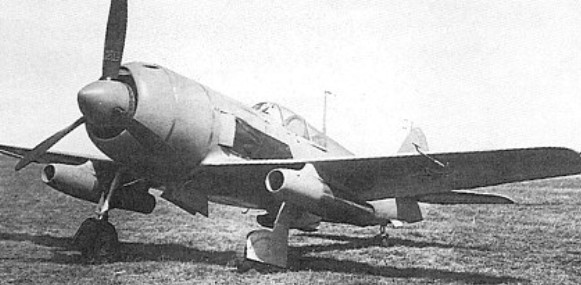
Closely related to the La-126, the La-130 – first flown on 16 June 1946 – encluded a number of refinements, both aerodynamic and structural, and featured a revised fuel system of increased capacity and a laminar flow symmetrical wing section. It retained the ASh-82FN radial of the preceding fighters, but provision was made for four 23mm NS-23 cannon.

The similarity to the famous Lavochkin La-7 was only superficial; the new fighter was all-metal and had laminar flow wings.

The aircraft’s strength decreased due to the removal of wood from the airframe largely allowing for the fuel and armament capacity of four guns. In combat it showed that the La-130 was equal to the La-7 but was inferior to the Yakovlev Yak-3 in horizontal and vertical maneuvers.

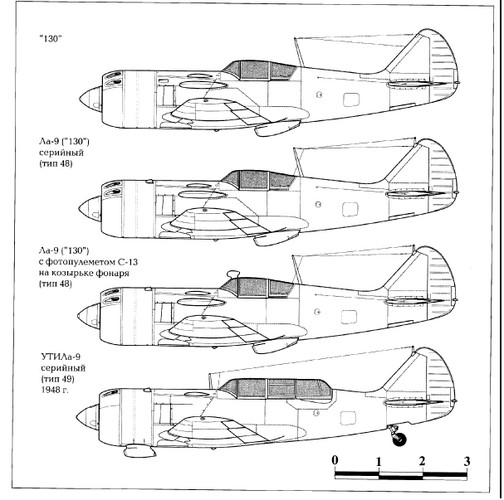
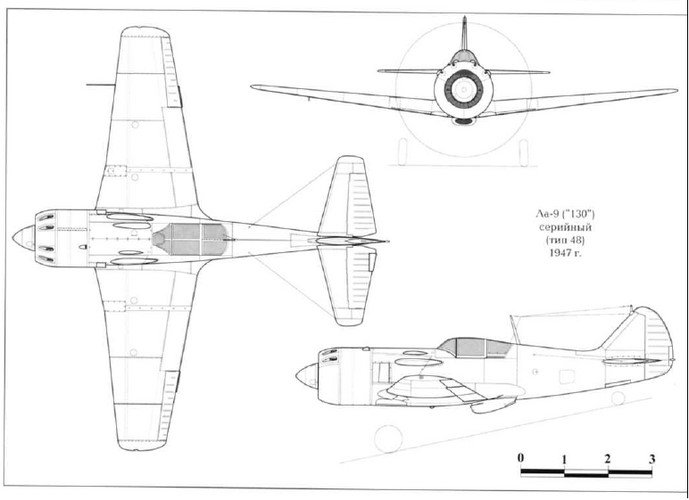
Series production was authorised in November 1946 as the La-9 (Russian: Лавочкин Ла-9), deliveries to the VVS commencing February 1947 from GAZ 21 at Gor’kiy.

A tandem two-seat training version, the La-9UTI, was flown in July 1947, and series production continued for three years, 1,630 single-seaters and 265 two-seaters being built.

One example, designated La-138, was fitted with two PVRD-430 ramjets of 300kg underwing, factory testing performed during March and April 1947, and increases in level speed of 107 to 112km/h were recorded in level flight. A small batch of aircraft was completed with underwing provision for RD-13 pulsating athodyds, or pulse-jets, as La-9RDs. These boosters were found to have a bad effects on the handling characteristics.

In 1950 China imported 129 La-9 aircraft. The last 5 La-9 fighters were retired in 1959. The Romanian Air Force imported 10 in 1950 (5 La-9 and 5 La-9 UTI), and the type was also operated by North Korea.

Gallery

La-9
Length; 30 ft 2.25 in
Span: 34 ft 9.75 in
Speed SL: 428 mph
Armament: 4 x 20 mm cannon

La-9
Engine: Shvetsov Ash-82FNV, 1825 hp (1,380 kW)
Wingspan: 9.8 m (32 ft).
Wing area: 17.7 sq.m / 190.52 sq ft
Length: 8.46 m
Height: 2.54 m
MAUW: 3,675 kg / 8104 lb
Empty weight: 2660 kg / 5864 lb
Loaded weight: 3,265 kg
Fuel cap: 825 lt.
Max. speed: 690 km/h / 429 mph
ROC: 3200 fpm.
Ceiling: 10800 m / 35450 ft
Cruise: 278 kt (515 kph).
Range: 990 km (615 mi)
Armament: 2 20 mm ShVAK cannons or 3 20 mm Berezin cannons
Bombload: 200 kg
Crew: 1

La-9RD
Engines: 1 x Shvetsov Ash-82 / 2 x RD-13 pulsejet
Max. speed: 474 mph

La-9UTI
Armament: 1 x 12.7 mm UBS machine gun
Seats: 2

La-9UTI
Armament: 1 x 23 mm NS-23 cannon
Seats: 2

La-132
Engine: Shvetsov ASH-82M

La-9M (LA-134)
long-range combat prototype

La-138
An La-9 fitted with two PVRD-450 auxiliary ramjet engines under the wings

Lavochkin La-126

By the end of 1944, the Lavochkin bureau had abandoned further development of the mixed-construction La-7 in favour of an entirely new all-metal design bearing only a configurational similarity to its predecessor, and, early in 1945, work began on this as the La-126. The La-126 possessed no commonality with the Lavochkin bureau’s previous La-7 fighter, apart from an M-82FN (ASh-82FN) engine. It featured an all-metal monocoque fuselage and a TsAGI laminar-section wing. Armament was restricted to two 20mm ShVAK cannon and prototype flight testing was completed at the factory on 10 January 1945, but no production was undertaken, the La-126 serving as a basis for the La-130.
The prototype was subsequently fitted with two Bondaryuk VRD-430 ramjets as the La-126PVRD, and these, it was claimed, increased maximum speed in level flight by 100km/h. The La-126PVRD was tested between June and September 1946, attaining a max speed of 800km/h at 8000m.

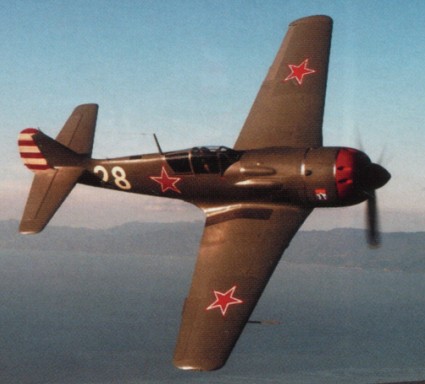
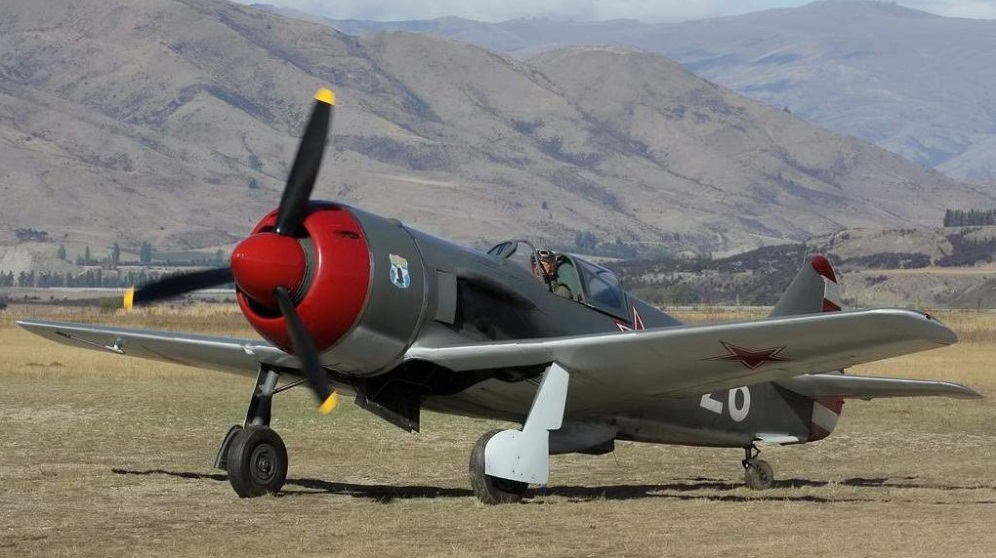
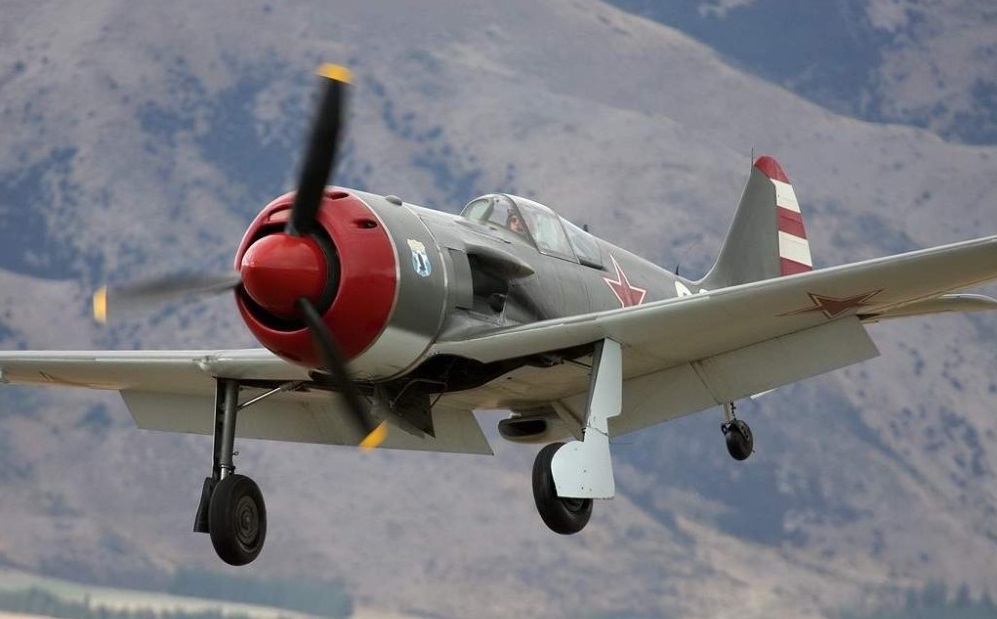
Lavochkin La-7 / La-120

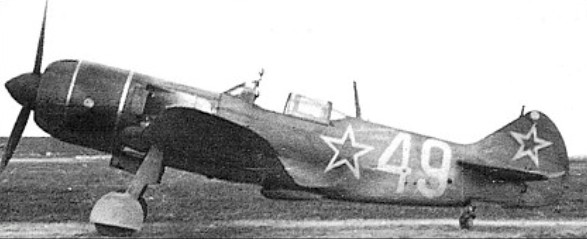
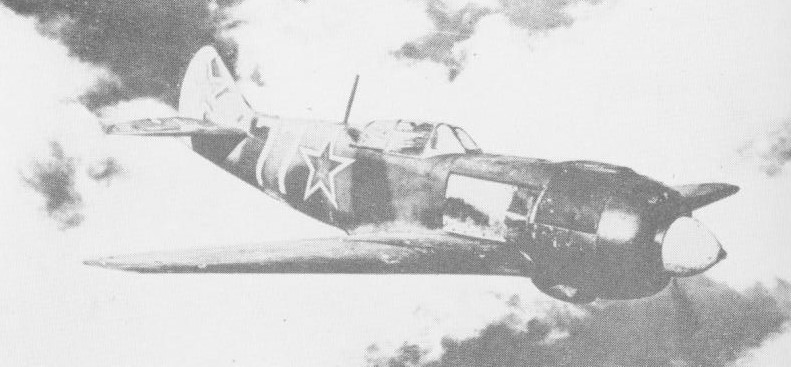
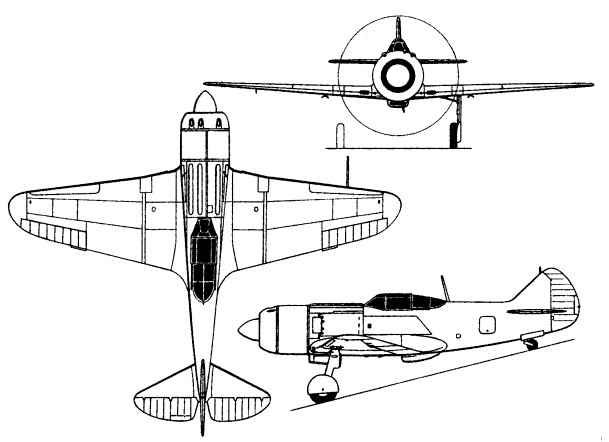
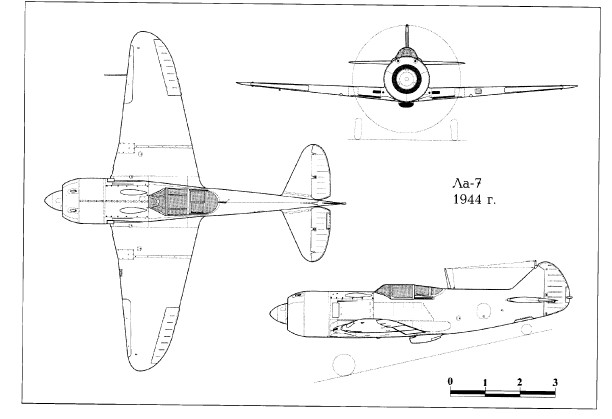
The La-7 was developed from the autumn of 1943 under the bureau designation of La-120. This embodied the results of a TsAGI wind tunnel programme aimed at defining areas in which the basic La-5FN could be aerodynamically improved. Incorporating the modified wing structure (metal spars replacing the wooden box spars) intended for application to the definitive La-5FN (but not to be introduced on that fighter until the late spring of 1944), a revised inboard wing leading edge and an entirely new cowling for the Shvetsov M-82FN engine, the La-120 was first flown in November 1943. In the following spring it entered production as the La-7.

The intended armament comprised three 20mm Berezina B-20 cannon, but while this armament was installed in aircraft built at Yaroslavl, those built at Moscow reverted to the twin ShVAK cannon of the La-5FN.

The first series production La-7 were produced in March-April of 1944. That Summer they were handed over to the pilots of 63 GIAP for operational trials. Though they had inferior performance to what was expected the pilots enjoyed great success with this aircraft until engine problems and wing spar failures forced Marshal Novikov to step in an ground all La-7s until the problems could be rectified. The causes were dirt getting into the supercharger air intake at the wingroots and improper execution of lightening holes in the structure. In November 1944 all production irregularities had been worked out and production resumed of the La-7.

La-7

The last war time production model was unchanged except the armament. In February 1945 3xB-20s became the standard armament. Weight was increased to 7,325 but performance was unchanged.

115 La-7 were lost to all military causes (less than half of these to aerial combat) and at the same time accounting for more than 3,100 aerial victories.

Roll rate was considered equal to any Fw-190A.

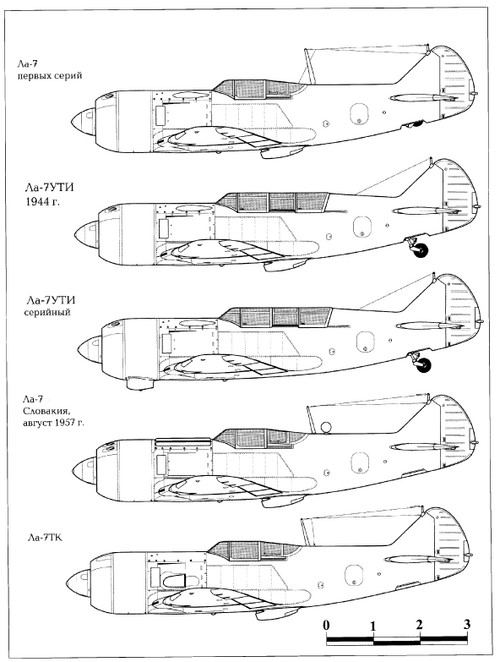
Variants included the tandem two-seat La-7UTI trainer, the La-7TK with a pair of TK-3 turbo-superchargers,
and the rocket-boosted La-7R. The La-7TK was test flown in July- August 1944, but was destroyed when a turbo-supercharger exploded. Another example was fitted with the 2000hp ASh-71TK, trials soon being discontinued owing to the erratic behaviour of this engine’s turbosuperchargers.

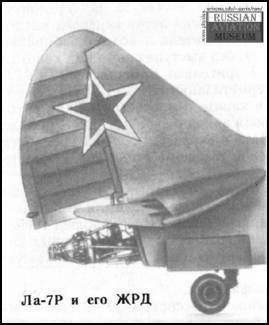
The La-7R, of which two prototypes were tested, was fitted in the rear fuselage with an RD-lKhZ liquid rocket motor of 300kg thrust, the first prototype being destroyed during the initial take-off run in October 1944. Flight testing of the second prototype continued until February 1945, and a further example – a conversion of one of the original prototype airframes and then referred to as the La-120R – entered test in January 1945, this having an improved rocket motor and local airframe structural changes. Testing of the La-120R continued until late 1946.

A total of 5,753 La-7s had been manufactured when production ended in 1946.

Gallery

Engine: Shvetsov M-82FN, 1850hp
Max take-off weight: 3400 kg / 7496 lb
Empty weight: 2620 kg / 5776 lb
Wingspan: 9.8 m / 32 ft 2 in
Length: 8.6 m / 28 ft 3 in
Height: 2.60 m / 8 ft 6 in
Wing area: 17.59 sq.m / 189.34 sq ft
Max. speed: 680 km/h / 423 mph
Cruise speed: 450 km/h / 280 mph
Ceiling: 11800 m / 38700 ft
Range: 990 km / 615 miles
Crew: 1

La-7
Engine: ASh-82FN, 1,850hp.
Max speed: 362mph/SL
Max speed: 413mph/20,200ft.
Climb: 4,000fpm/SL.
Climb to 16,400ft: 4.6min.
Ceiling: 31,000ft.
Armament: 2xShVAK.
Test weight: 7,179 lbs.

La-7
Engine: Shvetsov M-82FN, 1850hp
Max speed: 382mph/SL.
Max speed: 421-423mph/20,200ft.
Climb SL: 4,300fpm
Climb to 16,400ft: 4.2min.
Ceiling: 34,450ft.
Test weight 7,105 lbs.
Armament: 2xShVAK (20mm).

La-7
Engine: Shvetsov M-82FN, 1850hp
Max speed: 382mph/SL.
Max speed: 421-423mph/20,200ft.
Weight: 7,325
Armament: 3x20mm Berezina B-20 cannon

Lavochkin La-5

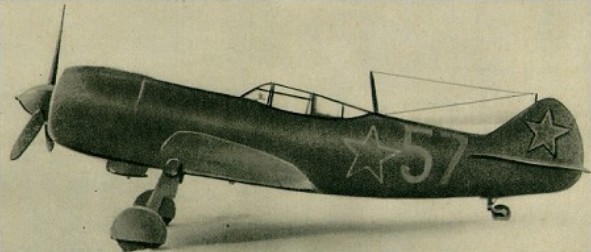
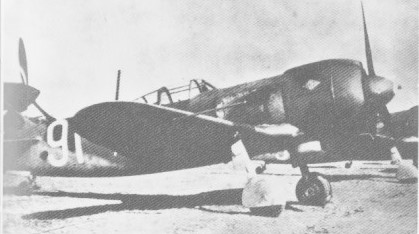
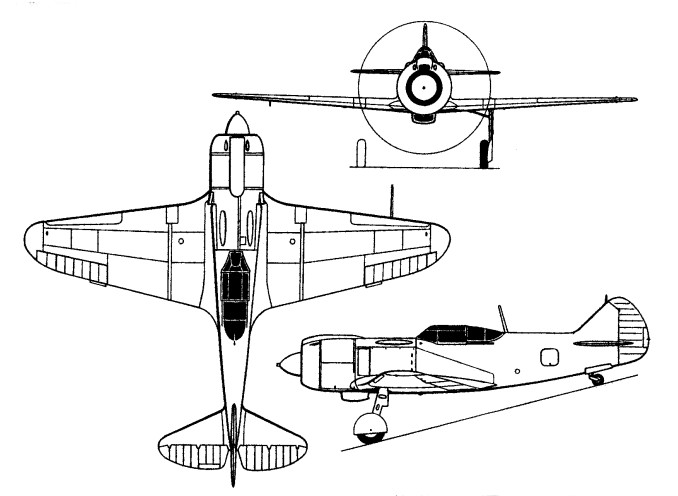
In late 1941 it was decided to improve the performance of the LaGG-3 by installing the more powerful 1600 hp Ash-82A radial engine. The basic LaGG-3 airframe was adapted for a 14- cylinder two-row radial Shvetsov M-82 engine without major redesign (examples converted from existing LaGG-3 airframes on the production line sometimes being referred to as LaG-5s). Despite its fractionally greater installed drag, 1%, it offered speed increase from 353 to 373 mph and improved all-round performance at height. The liquid-cooled fighter was cancelled in May 1942, all production switching to the new machine, designated LaGG-5. With in a few weeks this in turn was replaced om the assembly line by a further improvement, tested as a prototype early in 1942, with a new fuselage containing two 20mm guns and having a lower rear profile behind a canopy giving all-round vision. This was the La-5 which proved to be 28 mph faster than the Bf 109G-2 below 20,000 ft. But the German fighter could outclimb it and efforts were made to reduce weight.

Lavochkin La-5 Article

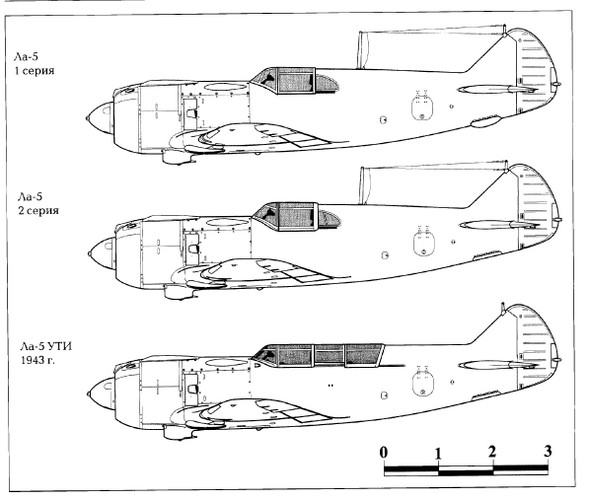
The prototype conversion was first flown in March 1942 with an M-82 rated at 1700hp for take-off, and the La-5 was cleared for service testing in the following September with an armament of two 20mm cannon. Early machines retained the cockpit and rear fuselage construction of the earlier fighter.

With completion of the conversion of existing LaGG-3 airframes, minor changes were introduced in new production aircraft, the principal of these being the cutting down of the aft fuselage decking and the introduction of a 360 degree vision canopy.

The designed earned Lavochkin the title of Hero of Socialist Labour, and the La-5 made its operational debut at the Battle of Stalingrad in October 1942.

A further development of the La-5AV became the La-7.

Late in 1942, the improved M-82F engine became available, producing 1650hp at 1650m, aircraft fitted with this engine being designated La-5F, and, from early 1943, fuel tankage was revised.

From late March 1943, the fuel injection M-82FN engine offering 1850hp for take-off replaced the carburettor-equipped M-82F, and with this power plant the fighter became the La-5FN. This version fought in the Battle of Kursk, and was produced in fairly substantial numbers.

La-5FN

When the La-5 was withdrawn from production late in 1944, a total of 9,920 aircraft of this type (including La-5UTI two-seat trainers) had been built.

Gallery

Prototype
Engine: Shvetsov M-82 14- cylinder two-row radial, 1700hp

La-5F
Engine: Shvetsov M-82F, 1650hp at 1650m

La-5FN
Engine: Shvetsov M-82FN, 1850hp
Max take-off weight: 3360 kg / 7408 lb
Empty weight: 2800 kg / 6173 lb
Wingspan: 9.8 m / 32 ft 2 in
Length: 8.60 m / 28 ft 3 in
Height: 2.54 m / 8 ft 4 in
Wing area: 17.50 sq.m / 188.37 sq ft
Max. speed: 648 km/h / 403 mph
Ceiling: 11000 m / 36100 ft
Range: 765 km / 475 miles

La-5FN
Engine: Shvetsov ASh-82FN, 1640hp
Wingspan: 9.8 m / 32 ft 2 in
Length: 27 ft 10 in
Height: 9 ft 3 in
Empty weight: 6085 lb
Loaded weight: 7406 lb
Max. speed: 402 mph at SL
Service ceiling: 11000 m / 36, 000 ft
Max range: 528 miles
Seats: 1
Armament: 2 x 20 mm ShVAK cannon
Bombload: 330 lb

La-5UTI
Seats: 2

Lavochkin LaGG-3

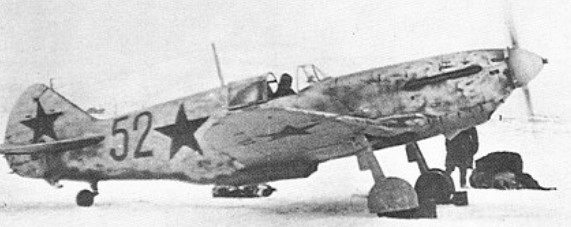
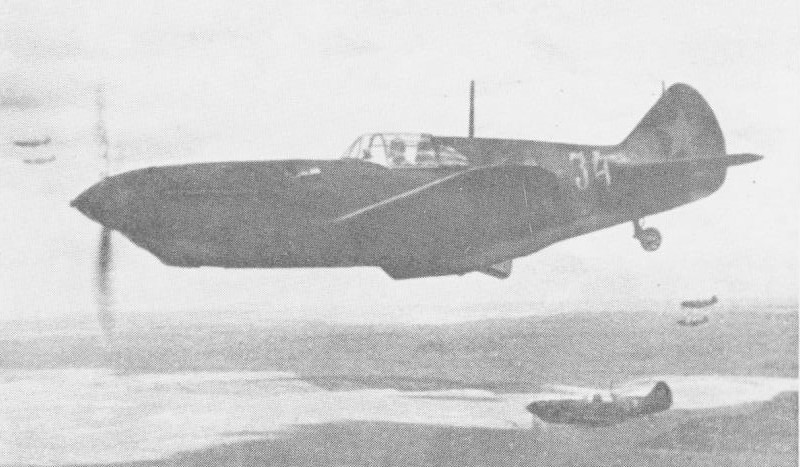
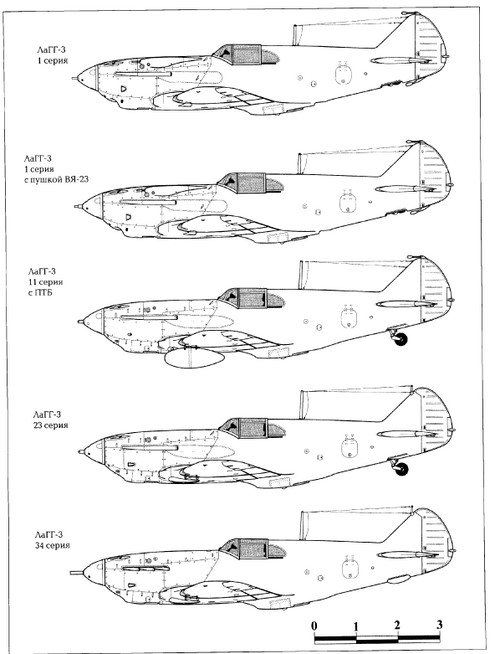
Various remedies for the handling shortcomings of the LaGG-1 were applied, and the first LaGG-1 prototype to introduce these changes was referred to as the I-301 (from the numerical designation of the factory – GAZ-301). This also featured redesigned outer wing panels incorporating additional fuel tanks. The I-301 entered flight test on 14 June 1940, the modified aircraft being assigned the designation LaGG-3 and most pre-series examples of the LaGG-1 being completed to the later standard.

Lavochkin LaGG-3 Article

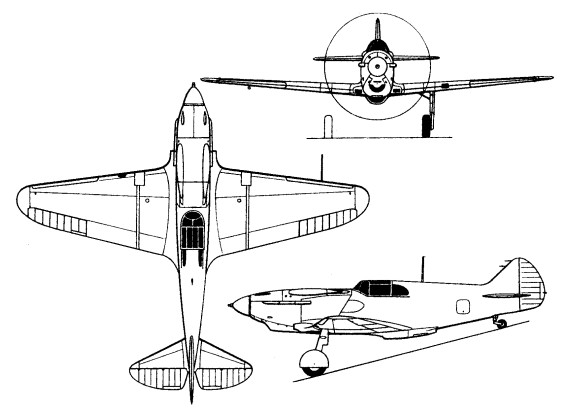
The LaGG-3 was essentially the series production version of the LaGG-1 with a revised outer wing incorporating fuel tanks, and an armament of one 20mm and two 7.62mm weapons. Fixed wing slats – later replaced by automatic slats – were introduced and balance weights were added on the elevators and rudder, but were later discarded in favour of statically and dynamically balanced surfaces. Weight was reduced as a result of a structural analysis. LaGG-3 deliveries commenced in the spring of 1941, initially with the M-105P engine, but, from late in the year, with the M-105PF of 1260hp at 800m.

Provision was later made to replace one or both machine guns by weapons of 12.7mm calibre, the 20mm hub-mounted cannon being replaced by one of 23mm calibre in some cases, and a pair of 12.7mm underwing guns was sometimes fitted. Three aircraft were each fitted with a 37mm cannon and referred to as LaGG-3K-37s, and one example was fitted with the 1650hp Klimov M-107A engine. Production of the LaGG-3 was completed in the late summer of 1942 with a total of 6,528 built, superseded by the La-5.

During 1941 Lavochin converted one LaGG-3 to have an M-82 radial engine. Despite its fractionally greater installed drag, 1%, it offered speed increase from 353 to 373 mph and improved all-round performance at height. The liquid-cooled fighter was cancelled in May 1942, all production switching to the new machine, designated LaGG-5.

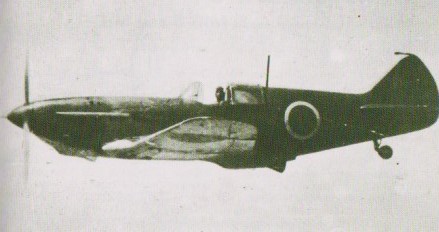
Flown to Manchuris by a Russian deserter and tested by Japanese in 1942 at Harbin

Gallery

LaGG-3
Engine: Klimov M-105, 1100 hp
Wingspan: 9.8 m / 32 ft 2 in
Wing area: 17.5 sq.m / 188.37 sq ft
Length: 8.9 m / 29 ft 2 in
Height: 8 ft 10 in
Empty weight: 2620 kg / 5776 lb
Max take-off weight: 3190 kg / 7033 lb
Max. speed: 570 km/h / 354 mph at 16,400 ft
Cruise speed: 450 km/h / 280 mph
ROC: 2953 fpm / 900 m/min
Ceiling: 9700 m / 31800 ft
Range: 800 km / 497 miles
Armament: 1 x 20 mm ShVAK cannon, 1 x 12.7mm Beresin mg, 2 x 7.62mm ShKAS mg

Lavochkin/Gorbunov/Gudkov LaGG-3