1945
Axial flow compressor turbojet
1250 kg thrust
Gu-VRD project
World War 2
Lyulka
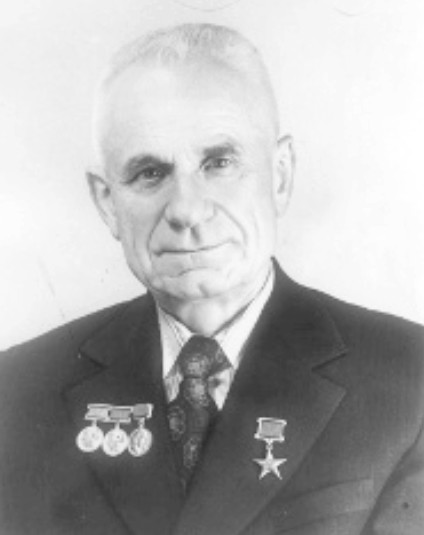
Born March 23, 1908, Kiev Oblast, Ukraine, Arkhip Mikhailovich Lyul’ka, was a Soviet scientist and designer of jet engines of Ukrainian origin, head of the OKB Lyulka, member of the USSR Academy of Sciences.
The Lyul’ka design bureau had its roots in the Kharkov Aviation Institute where Arkhip Mikhailovich Lyulka was working with a team designing the ATsN (Agregat Tsentralnovo Nadduva – Centralised supercharger) installation on the Petlyakov Pe-8 bomber. Lyul’ka was responsible for designing the first Soviet gas turbine engines. Preferring to steer away from copying captured German equipment, it succeeded in producing home grown engines.
Lyul’ka was a USSR aero-engine design bureau and manufacturer(OKB-165 started in 1946) from 1938 to the 1990s, when manufacturing and design elements were integrated as NPO Saturn based at Rybinsk.
Arkhip Lyulka died June 1, 1984, Moscow, Russia
Lycoming XR-7755
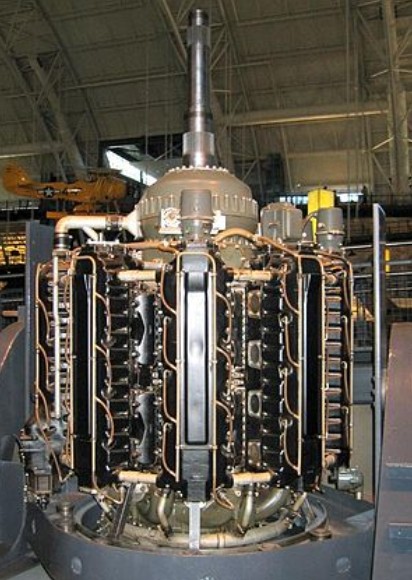
Lycoming had not been successful in designing a high-power engine. They had started with an attempt to make a hyper engine that led to the 1,200 hp (890 kW) O-1230; by the time the engine was ready, however, new aircraft designs were all calling for more power. They tried again by “twinning” the engine to produce the H block H-2470, which saw some interest in the Vultee XP-54 “Swoose Goose” project. Work on the H-2470 ended when the XP-54 was cancelled.
In one final attempt, Lycoming decided to go all out and build the largest engine in the world. They put together a team under the direction of VP of Engineering Clarence Wiegman at their main Williamsport factory in the summer of 1943 and started work.
The resulting design used 9 banks of 4 cylinders arranged around a central crankshaft with each cylinder bank at a 40 degrees angle to each adjacent bank, to form a four-row radial engine. Unlike most multi-row radials, which “spiral” the cylinders to allow cooling air to reach them, the R-7755 was water-cooled, and so each of the cylinder heads in a cylinder bank were in-line within a cooling jacket. Contrast this with the 24-cylinder Junkers Jumo 222, which looked similar from the outside, as both engines used banks of four cylinders each, but ran on a V-style cycle instead of a radial and only used six banks of cylinders. The XR-7755 was 10 ft (3 m) long, 5 ft (1.5 m) in diameter, and weighed 6,050 lb (2,740 kg). At full power it was to produce 5,000 hp (3,700 kW) at 2,600 rpm, maintaining that with a turbocharger to a critical altitude that was apparently never published.
Each cylinder bank had a single overhead cam powering the poppet valves. The camshaft included two sets of cams, one for full takeoff power, and another for economical cruise. The pilot could select between the two settings, which would shift the camshaft along its axis to bring the other set of cams over the valve stems. Interestingly, the design mounted some of the accessories on the “front side” of the camshafts, namely two magnetos and four distributors. The seventh camshaft was not used in this fashion, its location on the front of the engine was used to feed oil to the propeller reduction gearing.
The original XR-7755-1 design drove a single propeller, but even on the largest aircraft the propeller needed to absorb the power would have been ridiculously large. This led to a minor redesign that produced the XR-7755-3, using a new propeller gearing system driving a set of coaxial shafts to power a set of contra-rotating propellers. The propeller reduction gearing also had two speed settings to allow for a greater range of operating power than adjustable props alone could deliver. Another minor modification resulted in the XR-7755-5, the only change being the replacement of carburetors with a new fuel injection system.
The engine first started testing at 5,000 hp (3,700 kW) in 1944 with the XR-7755-3, but demonstrated terrible reliability problems. A second example was provided, as planned, to the United States Army Air Forces at Wright Field in 1946. However, by this time the Air Force had lost interest in new piston designs due to the introduction of jet engines, and the Lycoming delivery team was instructed to simply “dump it on the ground”. This engine has since disappeared. The original test engine was later delivered to the Smithsonian Institution, where it was restored.
Specifications:
Type: 36-cylinder turbosupercharged liquid-cooled “star” (9 banks at 40 deg angles, 4 cylinders in each bank) aircraft piston engine
Bore: 6 3⁄8 in (161.9 mm)
Stroke: 6 3⁄4 in (171.4 mm)
Displacement: 7,756.3 cu.in (127.1 L)
Length: 120 in (3,050 mm)
Diameter: 60 in (1,525 mm)
Dry weight: 6,050 lb (2,745 kg)
Valvetrain: Single overhead camshaft with separate cams for takeoff and economical cruise (Variable valve timing)
Cooling system: Liquid-cooled
Power output:
5,000 hp (3,730 kW) at 2,600 rpm takeoff
4,000 hp (2,985 kW) at 2,300 rpm cruise
Specific power: 0.64 hp/cu.in (29.3 kW/L)
Specific fuel consumption:
0.70 lb/(hp·h) (0.43 kg/(kW·h)) at takeoff power
0.485 lb/(hp·h) (0.29 kg/(kW·h)) at 70% power
0.37 lb/(hp·h) (0.22 kg/(kW·h)) at minimum cruise power
Power-to-weight ratio: 0.82 hp/lb (1.36 kW/kg)
Lycoming O-290
The Lycoming O-290 is a dual ignition, four-cylinder, air-cooled, horizontally opposed aircraft engine. It was first run in 1939, and entered production three years later.
A common variant of the type is the O-290-G, a single ignition model which was designed to drive a generator as part of a ground power unit.
Variants:
Civil models
O-290
Base model engine certified 27 July 1942. 125 hp (93 kW) at 2450 rpm, 6.25:1 compression ratio, dry weight 244 lb (111 kg)
O-290-A
Certified 27 July 1942. 125 hp (93 kW) at 2600 rpm continuous, 130 hp (97 kW) at 2800 rpm for 5 minutes, 6.5:1 compression ratio, dry weight 251 lb (114 kg) with SR4L-8 or N-8 magnetos, 245 lb (111 kg) with N-20 or N-21 magnetos.
O-290-AP
Certified 21 July 1944. 125 hp (93 kW) at 2600 rpm continuous, 130 hp (97 kW) at 2800 rpm for 5 minutes, 6.5:1 compression ratio, dry weight 251 lb (114 kg) with SR4L-8 or N-8 magnetos, 245 lb (111 kg) with N-20 or N-21 magnetos.
O-290-B
Certified 22 January 1943. 125 hp (93 kW) at 2600 rpm continuous, 130 hp (97 kW) at 2800 rpm for 5 minutes, 6.5:1 compression ratio, dry weight 247 lb (112 kg).
O-290-C
Certified 22 January 1943. 125 hp (93 kW) at 2600 rpm continuous, 130 hp (97 kW) at 2800 rpm for 5 minutes, 6.5:1 compression ratio, dry weight 238 lb (108 kg).
O-290-CP
Certified 21 July 1944. 125 hp (93 kW) at 2600 rpm continuous, 130 hp (97 kW) at 2800 rpm for 5 minutes, 6.5:1 compression ratio, dry weight 238 lb (108 kg).
O-290-D
Certified 13 December 1949. 125 hp (93 kW) at 2600 rpm continuous, 130 hp (97 kW) at 2800 rpm for 5 minutes, 6.5:1 compression ratio, dry weight 230 lb (104 kg).
O-290-D2
Certified 1 May 1952. 135 hp (101 kW) at 2600 rpm continuous, 140 hp (104 kW) at 2800 rpm for 5 minutes, 7.5:1 compression ratio, dry weight 233 lb (106 kg).
O-290-D2A
Certified 20 April 1953. 135 hp (101 kW) at 2600 rpm continuous, 140 hp (104 kW) at 2800 rpm for 5 minutes, 7.5:1 compression ratio, dry weight 236 lb (107 kg).
O-290-D2B
Certified 30 September 1954. 135 hp (101 kW) at 2600 rpm continuous, 140 hp (104 kW) at 2800 rpm for 5 minutes, 7.0:1 compression ratio, dry weight 236 lb (107 kg).
O-290-D2C
Certified 8 May 1961. 135 hp (101 kW) at 2600 rpm continuous, 140 hp (104 kW) at 2800 rpm for 5 minutes, 7.0:1 compression ratio, dry weight 235 lb (107 kg).
O-290-G
Non-certified, single ignition model intended for use driving a generator in a ground power unit, 125 hp (93 kW). Has been widely used in homebuilt aircraft, including the prototype Van’s Aircraft RV-3.
Military models
O-290-1
Identical to the O-290-B
O-290-3
Identical to the O-290-C
O-290-11
Identical to the O-290-D
Applications:
Adkisson SJ-1 Head Skinner
Aerocar
Aero Commander 100
Aquaflight Aqua I
Aydlett A-1
Chrislea Super Ace
Falconar F11 Sporty
Flying K Sky Raider
Isaacs Fury Mk 1
Mustang Aeronautics Midget Mustang
Pazmany PL-1
Pazmany PL-2
Piper PA-18 Super Cub
Piper PA-20 Pacer
Piper PA-22 TriPacer
Rogers Sportaire
Seibel S-4
Stolp Starduster
Thorp T-18
Toyo T-T.10
VanGrunsven RV-1
Van Lith VI
Van’s Aircraft RV-3
Warner Sportster
Specifications:
O-290-D2A
Type: 4-cylinder air-cooled horizontally opposed piston aircraft engine
Bore: 4.875 in (124 mm)
Stroke: 3.875 in (98 mm)
Displacement: 289 cu in (4.74 L)
Dry weight: 264 lbs (119.7 kg)
Valvetrain: Pushrod-actuated valves
Fuel system: Carburetor
Cooling system: Air-cooled
Power output: 140 hp (105 kW) at 2,800 rpm
Specific power: 0.48 hp/cu.in (22.2 kW/L)
Compression ratio: 7.5:1
Lycoming O-235
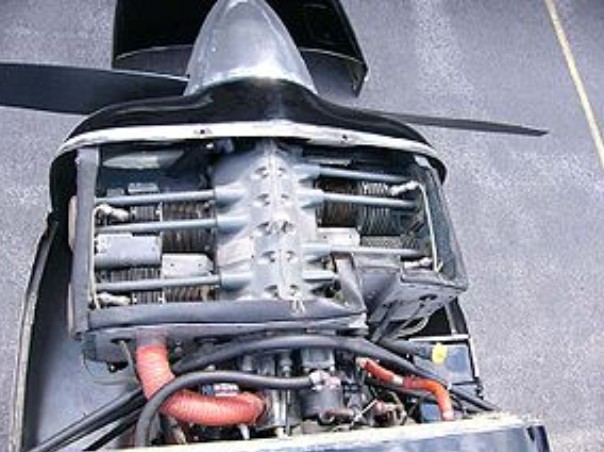
The Lycoming O-235 is a family of four-cylinder, air-cooled, horizontally opposed piston aircraft engines that produce 100 to 135 hp (75 to 101 kW), derived from the earlier O-233 engine.
The engines are all carburetor-equipped, feature dual magneto ignition and have a displacement of 233 cubic inches (3.82 L). The first O-235 model was certified on 11 February 1942.
The O-235 was developed into the lighter-weight Lycoming IO-233 engine for light sport aircraft.
Variants:
O-235-C1
Power 115 hp (86 kW) at 2800 rpm, dry weight 246 lb (112 kg) Provision for dual pump drives, tractor and pusher installation.
O-235-C1A
Power 100 hp (75 kW) at 2450 rpm, dry weight 236 lb (107 kg) Similar to O-235-C1 except ignition timing, lower rpm and power. Optional 2 position or automatic propeller governor drive.
O-235-C1B
Power 115 hp (86 kW) at 2800 rpm, dry weight 245 lb (111 kg) Similar to O-235-C1 except with retarded breaker magnetos.
O-235-C1C
Power 108 hp (81 kW) at 2600 rpm, dry weight 243 lb (110 kg) Similar to O-235-C1 except with Slick magnetos.
O-235-C2A
Power 115 hp (86 kW) at 2800 rpm, dry weight 246 lb (112 kg) Similar to O-235-C1 except with a type 1 propeller flange.
O-235-C2B
Power 115 hp (86 kW) at 2800 rpm, dry weight 247 lb (112 kg) Similar to O-235-C2A but with two S-1200 series magnetos.
O-235-C2C
Power 108 hp (81 kW) at 2600 rpm, alternate rated maximum continuous power rating of 100 hp at 2400 rpm, dry weight 244 lb (111 kg) Similar to O-235-C2B except with Slick magnetos and shielded ignition harness.
O-235-E1
Power 115 hp (86 kW) at 2800 rpm, dry weight 250 lb (113 kg) Similar to O-235-C1 except crankcase and crankshaft supply pressurized oil to a constant speed propeller. Accessory case changed to accommodate a standard propeller governor drive.
O-235-E1B
Power 115 hp (86 kW) at 2800 rpm, dry weight 249 lb (113 kg) Similar to O-235-E1 except for S4LN-200 series retarded breaker magnetos.
O-235-E2A
Power 115 hp (86 kW) at 2800 rpm, dry weight 250 lb (113 kg) Similar to O-235-E1 except Type 1 propeller flange.
O-235-E2B
Power 115 hp (86 kW) at 2800 rpm, dry weight 251 lb (114 kg) Similar to O-235-E2A except incorporates S-1200 series magnetos.
O-235-F1
Power 125 hp (93 kW) at 2800 rpm, dry weight 250 lb (113 kg) Similar to O-235-C1 except compression ratio, fuel grade and rating.
O-235-F1B
Power 125 hp (93 kW) at 2800 rpm, dry weight 249 lb (113 kg) Similar to O-235-F1 except retarded breaker magnetos.
O-235-F2A
Power 125 hp (93 kW) at 2800 rpm, dry weight 250 lb (113 kg) Similar to O-235-F1 except a Type 1 propeller flange.
O-235-F2B
Power 125 hp (93 kW) at 2800 rpm, dry weight 251 lb (114 kg) Similar to O-235-F2A but with S-1200 series magnetos.
O-235-G1
Power 125 hp (93 kW) at 2800 rpm, dry weight 253 lb (115 kg) Similar to O-235-F1 except provisions for using constant speed propeller.
O-235-G1B
Power 125 hp (93 kW) at 2800 rpm, dry weight 252 lb (114 kg) Similar to O-235-G1 except has retarded breaker magnetos.
O-235-G2A
Power 125 hp (93 kW) at 2800 rpm, dry weight 253 lb (115 kg) Similar to O-235-G1 except a Type 1 propeller flange.
O-235-G2B
Power 125 hp (93 kW) at 2800 rpm, dry weight 254 lb (115 kg) Similar to O-235-G2A except S-1200 series magnetos.
O-235-H2C
Power 108 hp (81 kW) at 2600 rpm, alternate rated maximum continuous power rating of 100 hp at 2400 rpm, dry weight 243 lb (110 kg) Similar to O-235-C2C except Type 1 dynafocal mounting.
O-235-J2A
Power 125 hp (93 kW) at 2800 rpm, dry weight 252 lb (114 kg) Similar to O-235-J2B except magnetos.
O-235-J2B
Power 125 hp (93 kW) at 2800 rpm, dry weight 253 lb (115 kg) Similar to O-235-F2B except Type 1 dynafocal mounting.
O-235-K2A
Power 118 hp (88 kW) at 2800 rpm, dry weight 252 lb (114 kg) Similar to O-235-F2A except ignition timing, lower power and reduced compression ratio.
O-235-K2B
Power 118 hp (88 kW) at 2800 rpm, dry weight 253 lb (115 kg) Similar to O-235-F2B except ignition timing, lower power and reduced compression ratio.
O-235-K2C
Power 115 hp (86 kW) at 2700 rpm, dry weight 248 lb (112 kg) Similar to O-235-K2A except Slick magnetos.
O-235-L2A
Power 118 hp (88 kW) at 2800 rpm, alternate ratings of 115 hp (86 kW) at 2700 rpm, 112 hp (84 kW) at 2600 rpm, 110 hp (82 kW) at 2550 rpm and 105 hp (78 kW) at 2400 rpm, dry weight 252 lb (114 kg) Similar to O-235-J2A except ignition timing, lower power and reduced compression ratio.
O-235-L2C
Power 115 hp (86 kW) at 2700 rpm, alternate ratings of 115 hp (86 kW) at 2700 rpm, 112 hp (84 kW) at 2600 rpm, 110 hp (82 kW) at 2550 rpm and 105 hp (78 kW) at 2400 rpm, dry weight 249 lb (113 kg) Similar to O-235-L2A except Slick magnetos and lower maximum continuous rating.
O-235-M1
Power 118 hp (88 kW) at 2800 rpm, alternate ratings of 115 hp (86 kW) at 2700 rpm, 112 hp (84 kW) at 2600 rpm, 110 hp (82 kW) at 2550 rpm and 105 hp (78 kW) at 2400 rpm, dry weight 255 lb (116 kg) Similar to -L2A except provision for controllable propeller and has AS-127 Type 2 propeller flange.
O-235-M2C
Power 118 hp (88 kW) at 2800 rpm, alternate ratings of 115 hp (86 kW) at 2700 rpm, 112 hp (84 kW) at 2600 rpm, 110 hp (82 kW) at 2550 rpm and 105 hp (78 kW) at 2400 rpm, dry weight 252 lb (114 kg) Similar to O-235-M1 except Slick 4200 series magnetos and Type 1 propeller flange.
O-235-M3C
Power 118 hp (88 kW) at 2800 rpm, alternate ratings of 115 hp (86 kW) at 2700 rpm, 112 hp (84 kW) at 2600 rpm, 110 hp (82 kW) at 2550 rpm and 105 hp (78 kW) at 2400 rpm, dry weight 252 lb (114 kg) Similar to O-235-M1 except Slick 4200 series magnetos.
O-235-N2A
Power 116 hp (87 kW) at 2800 rpm, alternate ratings of 113 hp (84 kW) at 2700 rpm, 110 hp (82 kW) at 2600 rpm, 108 hp (81 kW) at 2550 rpm and 103 hp (77 kW) at 2400 rpm, dry weight 252 lb (114 kg) Similar to O-235-L2A except reduced compression ratio and reduced power ratings.
O-235-N2C
Power 116 hp (87 kW) at 2800 rpm, alternate ratings of 113 hp (84 kW) at 2700 rpm, 110 hp (82 kW) at 2600 rpm, 108 hp (81 kW) at 2550 rpm and 103 hp (77 kW) at 2400 rpm, dry weight 249 lb (113 kg) Similar to O-235-L2C except reduced compression ratio and reduced power ratings.
O-235-P1
Power 116 hp (87 kW) at 2800 rpm, alternate ratings of 113 hp (84 kW) at 2700 rpm, 110 hp (82 kW) at 2600 rpm, 108 hp (81 kW) at 2550 rpm and 103 hp (77 kW) at 2400 rpm, dry weight 255 lb (116 kg) Similar to O-235-M1 except reduced compression ratio and reduced power ratings.
O-235-P2A
Power 116 hp (87 kW) at 2800 rpm, alternate ratings of 113 hp (84 kW) at 2700 rpm, 110 hp (82 kW) at 2600 rpm, 108 hp (81 kW) at 2550 rpm and 103 hp (77 kW) at 2400 rpm, dry weight 255 lb (116 kg) Similar to O-235-P1 except a Type 1 propeller flange.
O-235-P2C
Power 116 hp (87 kW) at 2800 rpm, alternate ratings of 113 hp (84 kW) at 2700 rpm, 110 hp (82 kW) at 2600 rpm, 108 hp (81 kW) at 2550 rpm and 103 hp (77 kW) at 2400 rpm, dry weight 252 lb (114 kg) Similar to O-235-M2 except reduced compression ratio and reduced power ratings.
O-235-P3C
Power 116 hp (87 kW) at 2800 rpm, alternate ratings of 113 hp (84 kW) at 2700 rpm, 110 hp (82 kW) at 2600 rpm, 108 hp (81 kW) at 2550 rpm and 103 hp (77 kW) at 2400 rpm, dry weight 252 lb (114 kg) Similar to O-235-M3C except reduced compression ratio and reduced power ratings.
Applications:
Aero Boero AB-115
AMD Alarus
Beechcraft Model 77 Skipper
Bushcaddy R-120
CEA DR-221
Cessna 152
Criquet Storch
Falconar F11 Sporty
Fisher Celebrity
Grumman American AA-1
Lucas L-6A
Lucas L7
Murphy Elite
Murphy Rebel
Nexaer LS1
Peña Joker
Piper PA-16 Clipper
Piper PA-22-108 Colt
Piper PA-29 Papoose
Piper PA-38 Tomahawk
Preceptor STOL King
Smith Miniplane
Van’s Aircraft RV-9
Specifications:
O-235C series
Type: 4-cylinder air-cooled horizontally opposed piston aircraft engine
Bore: 4.375 inches
Stroke: 3.875 inches
Displacement: 233.3 in³ (3.82 L)
Dry weight: 240.0 lbs (108.8 kg)
Valvetrain: Pushrod-actuated valves
Fuel system: Carburetor
Fuel type: 80/87 avgas
Cooling system: Air-cooled
Power output: 100 hp (75 kW)
Specific power: 0.57 hp/cu.in (26.0 kW/L)
Compression ratio: 6.5:1
Luscombe 50 / 8 Silvaire

The 1937-1938 Model 8a, of which 1,100 were built, and the 1940 Silvaire, of which production had reached 6,000 by 1961.
The Luscombe Model 8 was the result of the new Continental A-50, dual ignition, 50 hp, flat four engine of 171 Cu.in that became available in early 1937. To promote the new engine, Continental made arrangements with Don Luscombe to accept (on loan) one of the new engines, hoping he might consider designing an engine around it. He accepted and engineers Fred Knack and Jim Rising designed the craft.
The Luscombe 50 (named after the engine) was designed as a high wing monoplane of all metal construction but with metal framed two-seat all-metal light aircraft.
As this was taking place, the metal framed, fabric covered ailerons were changed to corrugated metal, as were the rudder and elevator.
The prototype featured a control wheel on the left side of the cockpit. This was later replaced with a stick after complaints of poor control inputs.
The first flight of the production prototype Luscombe Model 8, NX1327, was made on 6 June 1938. On 11 August 1938, CAA Certificate #693 was issued.
The first Model 8 was basic, with only a tachometer, engine oil temperature gauge, altimeter, and airspeed indicator. Optional was a compass. The series was delivered standard with a tail skid. Floorboards were covered with carpet. Behind the cockpit a baggage compartment was beneath a 14 US gallon fuel tank, the seat swinging forward for access. The seat sat on the cabin floor and wasn’t fastened in any way.
By the end of 1938, Luscombe had built 71 Model 8s. The first of the series, models A-C, were fitted with fabric covered wings on a metal frame. The Model E used a forward squared wingtip, while models A to C were rounded. Model F had squared tips for and aft. The model 8E of 1946 2 place side-by-side high wing metal monoplane.
In all there were 15 model, each differentiated by engine or other changes. Engines varied from 50 to 90 hp with cruise speeds ranging from 95-110 mph. 113 Luscombe 50 were built.
Late in 1938, Continental introduced the 65 hp A-65 engine, with increase power through raising the A-50 rpm to 2300.
One of the first A65s was installed in January 1939 proving successful, and the Luscombe Model 8A replaced the Luscombe 50, which was then phased out.
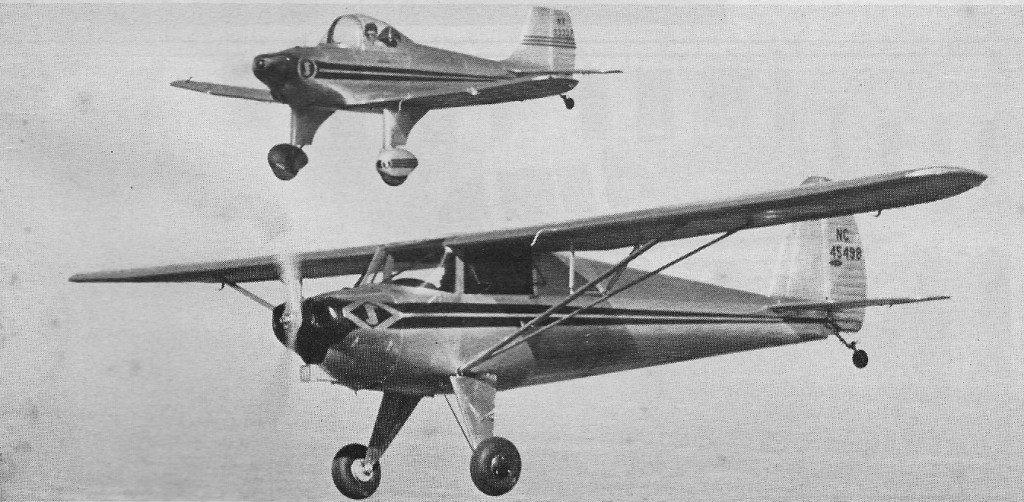
At end of Second World War production tooling for Model 8 Silvaire was moved by Luscombe Airplane Corporation to Dallas, Texas. The postwar company, based at Dallas, Texas, went bankrupt in 1949 and was brought by Temco Aircraft Corporation which built about 50 Silvaires under the old name. In 1955 the Silvaire Aircraft Company acquired rights and equipment for Model 8 Silvaire, inaugurated production at Fort Collins, Colorado, and flew first model 8-F aircraft off line September 1956, production continuing until 1960.
In 1962 Alaska International Corp acquired from Silvaire Aircraft Company all rights to the Luscombe Silvaire
In 1964 M.A.Larson, president of Larson, Luscombe Corp, Belleville, Michigan, announced that his firm purchased the type certificate and all rights for manufacturing Luscombe aircraft. First production models of 8-F and 8-G were due early in 1965.
Renaissance Aircraft announced in 2002 the plan to manufacture an updated version of the single engine, two seat, tail wheel Luscombe 8F, claiming improvements over the original version.

Luscombe Models 8A, 8B, and 8C meet the criteria for a Light Sport Aircraft.
50
Engine: Continental A-50, 50 hp
Model 8
Engine: 50 hp Continental A-50
Luscombe 8A
1946 Luscombe 8A
Engine: Continental A65, 65hp
Fuel type: 80
Propeller: Fixed/Pitch
Landing gear type: Fixed/Conventional
Max ramp weight:1260 lb
Gross weight: 1260 lb
Max landing weight:1260 lb
Empty weight: 750 lb
Useful load: 510 lb
Payload, full fuel: 360 lb
Usable fuel: 25 USgal
Oil capacity: 6 qt
Wingspan: 34 ft. 7 in.
Overall length: 20 ft.
Height: 5 ft. 10 in.
Wing area:140 sq. ft
Wing loading: 9.0 lbs./sq. ft
Power loading: 19.4 lbs./hp
Seating capacity: 2
Cabin width: 39 in
Cabin height: 41 in
Baggage capacity: 80 lb
Cruise speed 75% power: 78 kt
Max range (w/ reserve) 75% power: 390 nm
Fuel consumption 75% power: 4.0 USgph
Stall speed (flaps up): 37 kt
Best rate of climb: 550 fpm
Service ceiling: 14,000 ft
Takeoff ground roll: 1050 ft
Landing ground roll: 450 ft
Model 8B
Engine: 50 hp Lycoming
Model 8C
Engine: 75 hp Continental A-75
Model 8D
Engine: 75 hp Continental A-75
Luscombe Silvaire 8F
2008 Base Price: $89,700
Gross weight: 1320 lb
Empty weight, std: 880 lb
Fuel capacity: 30 USgal
Payload, full std. fuel: 250 lb
Stall: 48 mph
ROC SL: 900 fpm
Service ceiling: 17,000 ft
Cruise 75%: 120 mph
Take off dist: 600 ft
Landing dist: 500 ft
2001 Renaissance Luscombe 8F N999RA
Base/used Price: US$71,200
Engine: Lycoming O-320, 150 hp@2700@SL
TBO: 2000 hs
Fuel type: 100
Propeller type: Sensenich FP
Landing gear type: Fixed/Conv.
Max ramp weight: 1400 lb
Gross weight: 1400 lb
Landing weight:1400 lb
Empty weight, std: 990 lb
Useful load, std. (lbs.): 410
Payload, full std. fuel: 230 lb
Usable fuel, std: 30 USgal
Oil capacity: 8 qt
Wingspan: 35 ft.
Overall length: 20 ft.
Height: 7 ft.
Wing area:140 sq. ft
Wing loading: 9.3 lbs./sq. ft
Power loading: 10 lbs./hp
Seating capacity: 2
Cabin doors: 2
Cabin width: 40 in
Cabin height: 40 in
Cruise speed 75% power @ 8,000 ft: 126 kt
Cruise speed 75% power @ 1,000 ft: 120 kt
Cruise speed 65% power @ 8,000 ft: 120 kt
Cruise speed 55% power @ 10,000 ft: 110 kt
Max range (w/ reserve) 75% power: 375 nm
Max range (w/ reserve) 65% power: 420 nm
Max range (w/ reserve) 55% power: 440 nm
Fuel consumption (@ .42 lbs./hp/hr. sfc) 75% power: 7.9 USgph
Fuel consumption (@ .42 lbs./hp/hr. sfc) 65% power: 6.8 USgph
Fuel consumption (@ .42 lbs./hp/hr. sfc) 55% power: 5.8 USgph
Stall speed (flaps up): 41 kt
Stall speed (flaps down): 37 kt
Best rate of climb (SL): 1500 fpm
Service ceiling: 21,000 ft
Takeoff distance: 400 ft
Landing distance: 300 ft
8E
Engine: Webster 5-cyl radial, 90 hp.
Cruise: 110 mph.

Lombarda AL-12P / Ambrosini AL-12P
Wartime activities of the S.A.I.-Ambrosini concern included the construction of the AL-12P troop- and cargo-carrying glider designed by Aeronautica Lombarda S.A.
Lombarda AR / Assalto Radioguidato
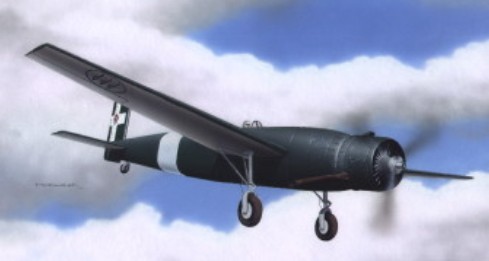
With Italy’s entry into World War II, the forces were facing the fleet of British Royal Navy. To meet the operational threat, the ARP (Aircraft Radio Piloted) program was conceived, proposed by engineer and official of the RA, Ferdinando Raffaelli.
The project consisted in the adaptation of older three-engine Savoia-Marchetti SM79 bombers, equipping them with radio remote control which, abandoned by the crew with parachutes, was remotely piloted from a second aircraft following him, designated plane “P” (Pilot).
The ARP was used experimentally on 12 August 1942 , during the battle of mid-August , however during the flight a transmitter system failure occurred at P causing the loss of control of the bomber who, exhausted the fuel , crashed into the mountains of’ Algeria .
Despite the failure, the weapon system continued to enjoy the confidence of the military leaders who advised the development, with the request to abandon the use of large aircraft in favor of an aircraft specially designed for this purpose. Given the certainty of the loss of the equipment during the action, the specifications included using simple construction materials as possible strategic choice would limit the costs of implementation.
Lombard Aviation was contacted and in November 1942 was entered into a contract for the supply of a prototype and five copies amounting to £ 4,200,000. The project was designed and developed by engineers Ermenegildo Preti and Stelio Frati . In accordance with the specifications, the aircraft was simplicity, a single-engine monoplane wing, mainly wooden except in some details, the surfaces of the wings , the landing gear. The engine was based a Fiat A. 80 RC.41 radial from 1 000 hp (735 kW), surplus coming from the twin-engine Fiat BR20 .
The prototype , serial MM.75576 characterized by double-cockpit, and fixed landing gear, was flown for the first time on 13 June 1943 by test pilot Valzania from Venegono airfield. Subsequent tests confirmed the overall performance which proved better than anticipated. After the prototype was transferred to flight are the Upper Management Studies and Experiences of Guidonia for continued flight tests, the supply order was confirmed and then started mass production.
The pre-series aircraft, which was assigned the MM.75577, was completed in August 1943. The military authorities in Germany suspended the program and subsequently cancelled it. The five examples are all destroyed.
At the end of the conflict among documents confiscated by the Allies of World War II and returned to the Italian Government, was found a plan that reported a composition between an AR and a fighter Macchi MC202 similar to the configuration of the type Mistel developed by the Luftwaffe .
The aircraft was characterized by a structure made entirely of wood, with a fuselage cross-section oval sloping to tail, made a series of frames and panels covered with current heavy plywood , with a simple, basic cockpit, closed by a dome accessible through a trap door on the bottom and allowed the pilot to escape.
The integrated structure of the tank of fuel on the capacity of 700 L and the load compartment, respectively, positioned behind and below the passenger compartment near the center of gravity, the latter incorporating the two side by side attachment points for bombs to be dropped from 1000 kg.
The two spar monoplane wing tapering at the ends and with marked dihedral, ailerons, and no flaps.
The undercarriage was fixed, releasable by the pilot after take-off, that could be recovered and reused.
The power was provided by a 1000 hp (735 kW) Fiat A.80 RC.41, radial 18-cylinder twin row air-cooled with gearbox to cruise at 4100 m. The engine was enclosed in an NACA cowling, with a three-blade propeller.
The only offensive weapons were 1000 kg each.
Aeronautica Lombarda AR
Length: 14.10 m
Wingspan: 8.20 m
Height: 3.22 m
Fuel Capacity: 700 lt
Engine: 1 x Fiat A.80 RC.41, 1 000 hp (735 kW )
Armament: 2 x 1 000 kg Bombs
Lombarda (Aeronautica) Sa
Italy
Most Aeronautica Vittorio Bonomi construction was carried out by Aeronautica Lombarda – hence the common use of Aeronautica Lombarda BS-28, etc
In 1937, Lombarda bought out Aeronautica Vittorio Bonomi, building light aeroplanes and gliders. After the Abyssinian War turned to military aircraft production. During Second World War built Heinkel He 111 and Loire 130.
Loire-Nieuport LN.40 / LN.401 / LN.411
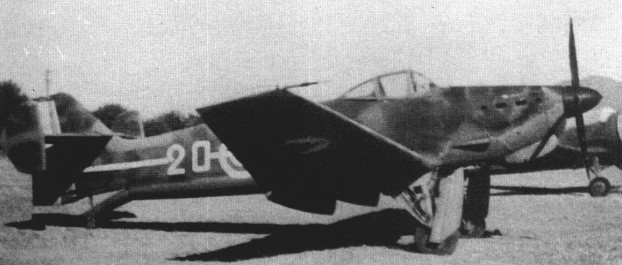
The LN.40 was evolved from the Nieuport 140 in response to a French naval requirement for a ship-borne dive-bomber, and emerged as a compact single-seater with inverted gull wings and a crutch to lever the single large bomb clear of the propeller before release. The prototype flew in June 1938, trials revealing the need for tail modifications. It was also decided to use the extended main landing gear legs as dive brakes, allowing the removal of the tail-mounted dive brakes. Some 42 LN.401 production aircraft were ordered, although only 23 or so had been delivered by the fall of France. The French Air Force also ordered 40 LN.411s, these having no arrester hook, wing-folding mechanism or flotation bags; again only about 23 had been delivered by the fall of France. After the Armistice SNCASO assembled another 24 LN.401s and LN.411s from components.
LN.401
Span: 14m (45ft 11.25 in).
Length: 9.75m (3l ft 11.75in).
Powerplant: l x Hispano-Suiza l2Xcrs, 515kW (690 hp)
Max TO weight: 2825 kg (6,228 lb).
Max speed: 236 mph at 13,125 ft.
Operational range: 746 miles.
Armament: 1 x 20-mm Hispano¬-Suiza cannon and two 7.5-mm (0.295-in) Darne mg plus provision for 1 x 225-kg (496-lb) bomb carried under the fuselage.
LN.411
 All Aero