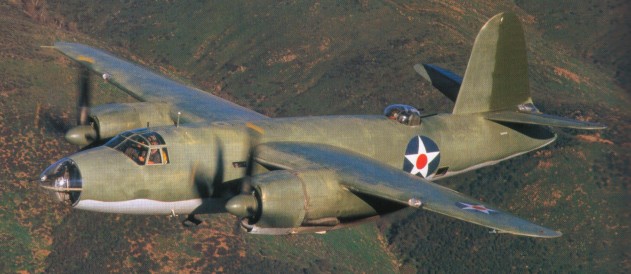
Martin 179 / B-26 Marauder / AT-23 / HM-1P

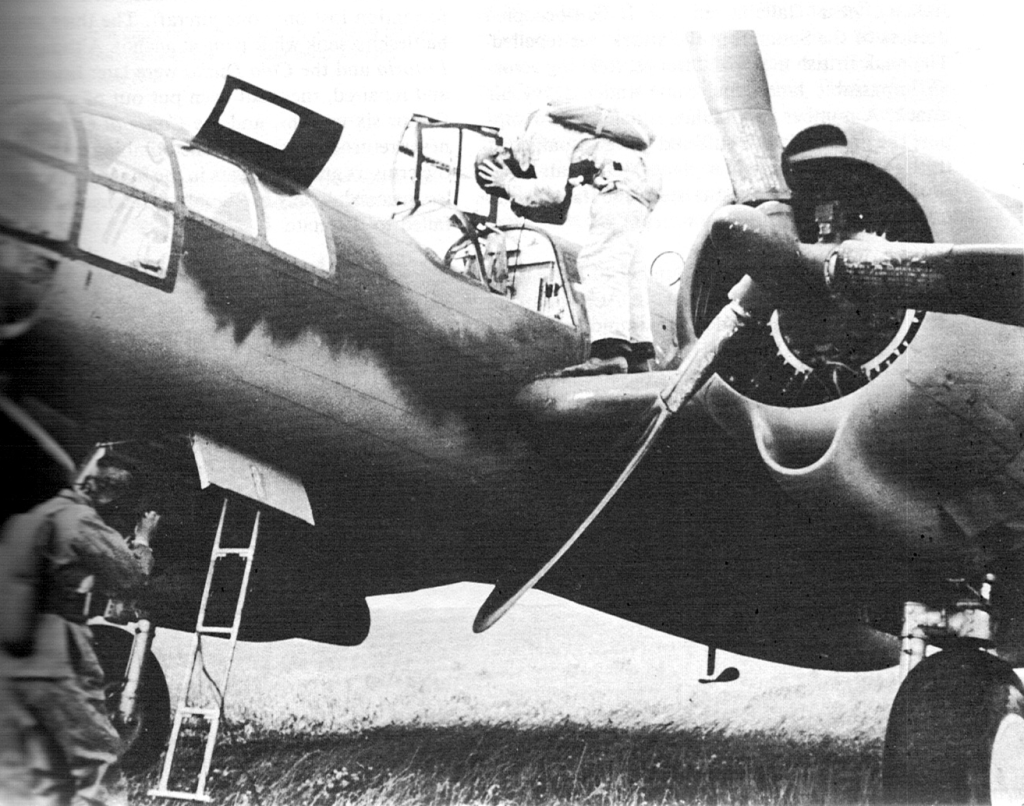
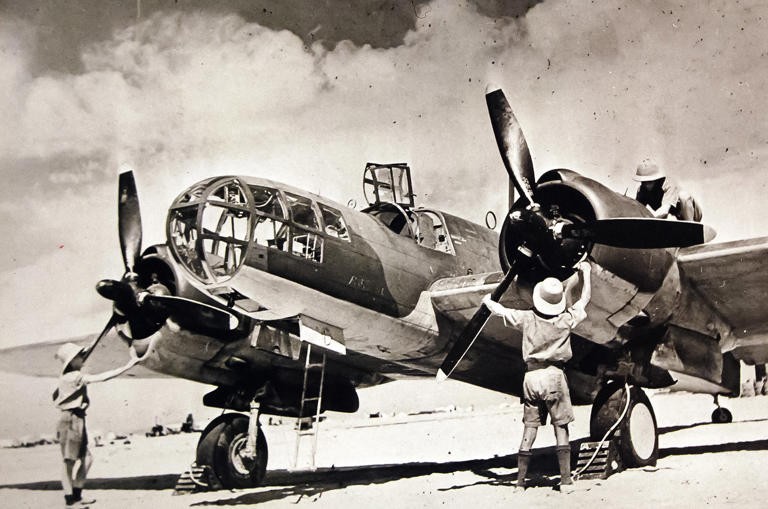
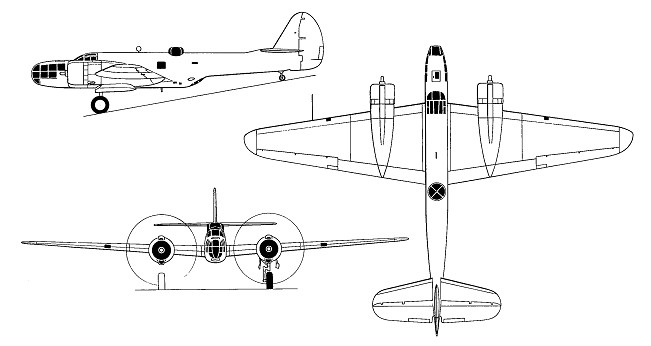
The projected design data for the Model 179 Medium Bomber were accepted by the USAAC on 5 July 1939 and the first Marauder flew on 25 November 1940. The flow of production Marauders began on 25 February 1941 and by the end of 1944 more than 5,150 had been delivered. The Marauder first went into action in the Australian theatre in April 1942.

Martin B-26 Article

The B-26 initial production version was powered by two 1,378.6kW Pratt & Whitney R-2800-5 radial engines and carried a defensive armament of five 12.7mm machine-guns in the nose, dorsal turret and tail. Normal bomb load was 907kg but up to 2,631kg could be carried in the tandem bomb bays. The B-26A was similar to the earlier version except for having R-2800-39 engines and minor changes. Similar Marauder I were delivered to the RAF and SAAF in 1942 under Lend-Lease.
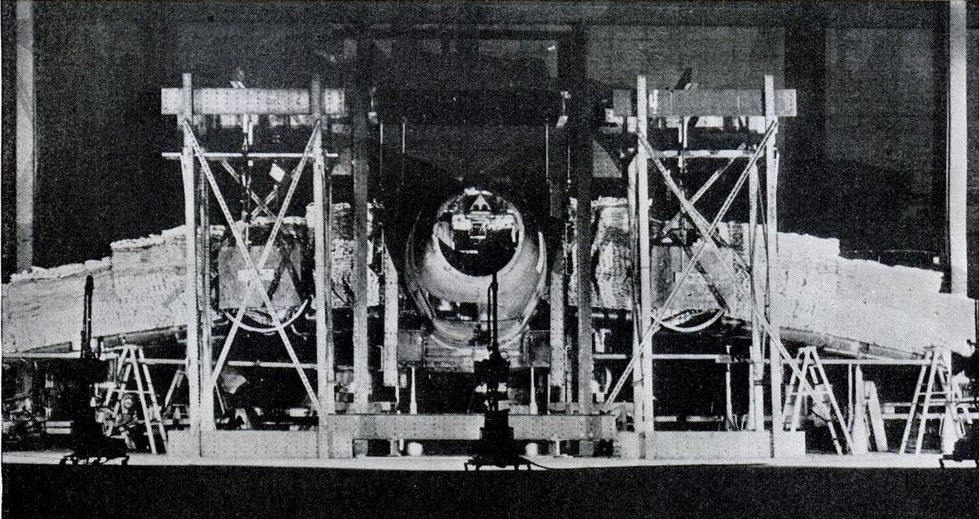
B-26 testing at 25% overload at Wright Field. A 60-ton load was reached.

The B-26B corresponded to the Lend-Lease Marauder IA and II and was produced in more than one form. Power was provided by R-2800-5 or 1,490.4kW R-2800-41/-43 engines and tail armament was increased to two guns. From B-26B-10 (Marauder II) the wing span was increased from 19.81m to 21.64m; the area of the vertical tail surfaces was also increased; and armament raised to include one fixed and one flexible gun in the nose, four ‘package’ guns on the sides of the forward fuselage, two guns in the Martin dorsal turret, two flexible waist guns, one ventral-tunnel gun and two tail guns. The front bay could carry two 900kg bombs on special carriers and use of the rear bomb bay was discontinued. The crew was increased from five to seven. The B-26B variants were the most produced of the series.
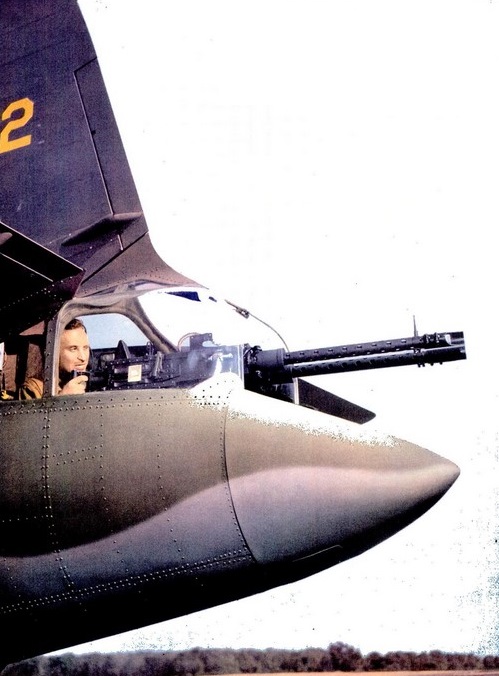
The B-26C (Marauder II) was the same as the B-26B-10 types but built at the Martin Omaha plant. The single experimental B-26D with exhaust-heated surface de-icing equipment and the single B-26E special stripped model were followed by the B-26F and G (Marauder III). These were similar to the B-26C except for having the incidence of the wings increased by 3.5 degrees, no provision for carrying a torpedo, and 11 guns fitted.
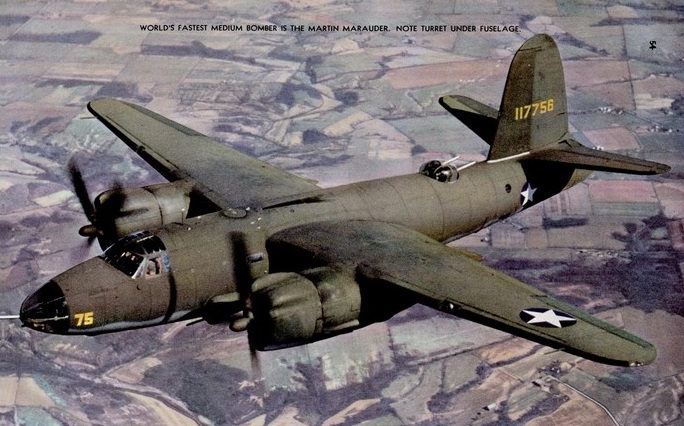
Certain examples of earlier B-26 were stripped of armament and adapted for training and general utility duties, particularly high-speed target-towing. These were originally known as AT-23 but were subsequently redesignated TB-26. A number of TB-26G were also built. The designations JM-1 and JM-2 applied to stripped versions of the B-26C and B-26G respectively, used by the US Navy for target-towing and other general utility duties. The JM-1P was equipped for photographic reconnaissance.

Gallery

Model 179
Engines: two 1,378.6kW Pratt & Whitney R-2800-5 radial
Wing span: 19.81m
Armament: 5 x 12.7mm machine-guns
Normal bomb load: 907kg
Max bomb load: 2,631kg

B-26A / Marauder I
Engines: two R-2800-39
Wing span: 19.81m

B-26B / Marauder IA
Engines: two R-2800-5 or 1,490.4kW R-2800-41
Wing span: 19.81m
Armament: 6 x 12.7mm machine-guns

B-26B-10 / Marauder II
Engines: two 1,490.4kW R-2800-43
Wingspan: 21.64 m / 70 ft 10 in
Length: 27.1 m / 88 ft 11 in
Height: 6.1 m / 20 ft 0 in
Wing area: 61.1 sq.m / 657.67 sq ft
Max take-off weight: 17300 kg / 38140 lb
Empty weight: 11340 kg / 25001 lb
Max. speed: 465 km/h / 289 mph
Cruise speed: 345 km/h / 214 mph
Ceiling: 6000 m / 19700 ft
Range w/max.fuel: 1770 km / 1100 miles
Armament: 13 x 12.7mm machine-guns
Bombload: two 900kg bombs
Crew: seven.

B-26C / Marauder II
Engines: 2 x P&W R-2800-43, 1410kW
Max take-off weight: 17300 kg / 38140 lb
Empty weight: 11340 kg / 25001 lb
Wingspan: 21.64 m / 70 ft 10 in
Length: 27.1 m / 88 ft 11 in
Height: 6.1 m / 20 ft 0 in
Wing area: 61.1 sq.m / 657.67 sq ft
Max. speed: 465 km/h / 289 mph
Cruise speed: 345 km/h / 214 mph
Ceiling: 6000 m / 19700 ft
Range w/max.fuel: 1770 km / 1100 miles
Crew: 7
Armament: 13 x 12.7mm machine-guns, 1800kg of bombs

B-26D

B-26E
Armament: 11 x 12.7mm machine-guns 11 guns

B-26F
Armament: 11 x 12.7mm machine-guns 11 guns

B-26G / Marauder III
Engines: 2 x Pratt&Whitney R-2800-43 Double Wasp, 1894 hp
Length: 56.07 ft / 17.09 m
Height: 20.341 ft / 6.2 m
Wingspan: 70.997 ft / 21.64 m
Wing area: 658.003 sq.ft / 61.13 sq.m
Max take off weight: 38206.0 lb / 17327.0 kg
Weight empty: 25304.6 lb / 11476.0 kg
Max. weight carried: 13141.8 lb / 5960.0 kg
Max. speed: 246 kts / 455 km/h
Cruising speed: 188 kts / 348 km/h
Initial climb rate: 1003.94 ft/min / 5.10 m/s
Wing load: 58.02 lb/sq.ft / 283.00 kg/sq.m
Range: 956 nm / 1770 km
Crew: 7
Armament: 11x cal0.50 MG (12,7mm), 1814kg Bomb.

AT-23 / TB-26
.
TB-26B

TB-26G

JM-1
Engines: 2 x P&W R-2800-43, 1410kW
Max take-off weight: 17300 kg / 38140 lb
Empty weight: 11340 kg / 25001 lb
Wingspan: 21.64 m / 70 ft 10 in
Length: 27.1 m / 88 ft 11 in
Height: 6.1 m / 20 ft 0 in
Wing area: 61.1 sq.m / 657.67 sq ft

JM-2

JM-1P
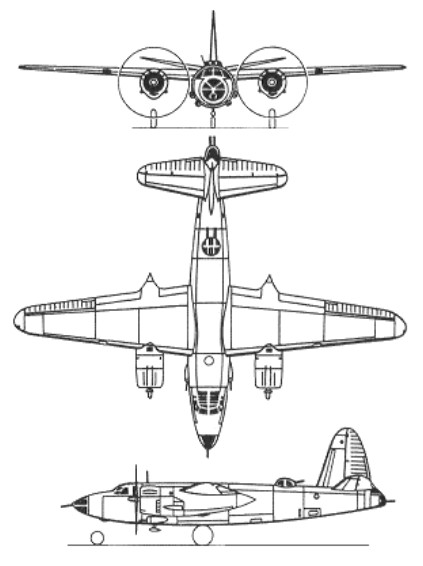
Martin B-26 Marauder

Martin 167 Maryland / XA-22

Designed to meet a US Army Air Corps specification for an attack bomber, the Martin XA-22 prototype was a twin-engine cantilever low/mid-wing monoplane with retractable tailwheel landing gear and accommodation for a crew of three. It was flown for the first time on 14 March 1939, but following official tests was rejected by the USAAC. However, the company had received a first production order for 115 aircraft from France even before the prototype had flown, but the start of delivery was delayed until the US arms embargo was lifted in October 1939; by that time France had contracted for an additional 100 aircraft. Only 140 of these Model 167F aircraft were delivered before the French armistice in June 1940, having the French designation Martin 167A-3 and seeing action against Axis forces until June 1940 and subsequently, with Vichy forces in West Africa and the Middle East, against the Allies.

With the collapse of French resistance in Europe, the outstanding 75 aircraft on order were diverted to the UK for service with the RAF and these, together with an additional 75 ordered by the RAF, were designated as Maryland Mk 1. All were powered by 783kW R-1830-SC3G Twin Wasp radial engines with single-stage superchargers. Further British orders followed for an improved Maryland Mk II with more powerful engines and two-stage superchargers, a total of 150 of this version being delivered to the RAF. Marylands were deployed initially for target towing and long-range reconnaissance, proving to be particularly valuable in this latter role, and were also used as light bombers. The first operational unit to receive the Maryland, in September 1940, was No. 431 Flight (later No. 69 Squadron) formed at Malta, and the type saw service in the Western Desert with Nos 39 and 223 Squadrons. Some 72 of the RAF’s Marylands were re-allocated to serve with Nos 12, 20, 21 and 24 Squadrons of the South African Air Force. Marylands also saw service with the Fleet Air Arm. Among the notable operations of the type were the reconnaissance sorties that preceded the successful Fleet Air Arm attack in November 1940 on the Italian fleet in harbour at Taranto. Another FAA Maryland reported that the Bismarck and Prinz Eugen were at sea in May 1941.

In 1942, South African Maryland’s performed long-range missions over Vichy-held Madagascar. One SAAF Maryland was downed but used its defensive guns to capture Vichy soldiers as prisoners on the ground.

Model 167F / Martin 167A-3 / Maryland Mk 1
Engines: 2 x Pratt&Whitney R-1830-SC3G Twin Wasp radial, 1036 hp / 783kW
Length: 46.654 ft / 14.22 m
Height: 14.993 ft / 4.57 m
Wingspan: 61.319 ft / 18.69 m
Wing area: 538.523 sq.ft / 50.03 sq.m
Max take off weight: 16810.9 lb / 7624.0 kg
Weight empty: 11214.6 lb / 5086.0 kg
Max. speed: 264 kts / 489 km/h
Cruising speed: 215 kts / 399 km/h
Service ceiling: 29495 ft / 8990 m
Wing load: 31.16 lb/sq.ft / 152.0 kg/sq.m
Range: 1130 nm / 2092 km
Crew: 3
Armament: 4x MG cal.30 (7,62mm), 2x cal.303 (7,7mm), 907kg Bomb.

Maryland Mk II
Engines: 2 x Pratt & Whitney R-1830-S3C4G Twin Wasp radial, 895kW
Max take-off weight: 7624 kg / 16808 lb
Empty weight: 5086 kg / 11213 lb
Wingspan: 18.69 m / 61 ft 4 in
Length: 14.22 m / 46 ft 8 in
Height: 4.57 m / 14 ft 12 in
Wing area: 50.03 sq.m / 538.52 sq ft
Max. speed: 447 km/h / 278 mph
Ceiling: 7925 m / 26000 ft
Range: 1738 km / 1080 miles

Martin 167 Maryland

Martin

After withdrawal from Wright Martin Aircraft Corporation, Glenn L. Martin formed his own company at Cleveland, Ohio, in 1917, occupying a new factory at Baltimore, Maryland, in 1929.

MB-1 twin-engined biplane bomber first flown 17 August 1918, followed by improved MB-2. Other inter-war military aircraft included MO-1 three-seat observation aircraft, PM-1 and PM-2 flying-boats for the U.S. Navy and the B-10 and B-12 bombers. Latter developed into Model 167, supplied to RAF from 1940 as Maryland, and Model 187 which RAF used as Baltimore. B-26 Marauder bomber, first flown November 25,1940, ordered from drawing board, of which total production exceeded 4,700.

During Second World War operated U.S. government plant at Omaha, Nebraska.

U.S. Navy flying-boats included five Mars transports, Mariner and Marlin patrol flying-boats, and XP6M-1 Seamaster four-jet flying-boat flown 14 July 1955. U.S. Navy acquired AM-1 Mauler carrier-attack and P4M Mercator patrol aircraft, USAF ordered English Electric Canberras license-built as Martin B-57 from 1953.
Civil production comprised Martin 130 26- seat flying-boats for Pan American 1934-1935, and Model 2-0-2 and 103 Model 4-0-4 airliners from 1947.

Aircraft production ceased December 20,1960 when the last P5M- 2 Marlin was handed over to U.S. Navy.
The Martin Company became Martin Marietta Aerospace in 1961.

Mansyu Ki-79

Ki.79a

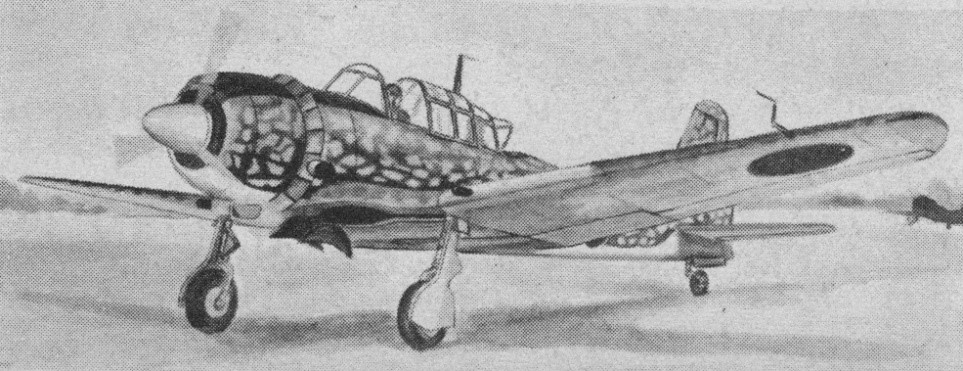
The Mansyu Ki-79 was an advanced trainer based on the Nakajima Ki-27 fighter. The Nakajima Ki-27 had been the first monoplane fighter to enter service with the JAAF, but by 1942 it was virtually obsolete, and a number had been converted to act as trainers. Mansyu went one step further, designing a dedicated training version of the aircraft, the Ki-79. Initiated in 1942 in China. It came out in four variants and remained in production until the end of the war.

The Ki-79 entered production in two versions. The Ki-79a (Army Type 2 Advanced Trainer Model A) was a single-seat trainer, while the Ki-79b (Army Type 2 Advanced Trainer Model B) was a two-seat trainer with tandem cockpits. The two separate cockpits took up about the same amount of space as the long canopy over the original single cockpit, with the front windscreen in the same place as on the single-seater. Both models shared the same all-metal construction as the Ki-27, were powered by the 510hp Hitachi Ha-13a engine and were armed with one forward firing 7.7mm machine gun.

During 1943 the Ki-79 was used to equip the Sendai and Tachiarai Army Flying Schools and the Tokorozawa Army Aviation Maintenance School. The Ki-79b was also used by the Tokyo, Otsu and Oita Army Boys Flying Schools, where they were used to give high school students a taste of flying. The Army designation was Mansyū Army Type 2 Advanced Trainer.

Ki.79a

During 1944 the JAAF founded a number of Flight Training Companies, and although a total of 1,329 Ki-79s were built numbers began to run short. Mansyu responded by designing the Ki-79c and Ki-79d. Theses aircraft used a new airframe, with a steel framework covered by a plywood skin, designed to reduce the amount of duralumin needed in their construction. The Ki-79c matched the Ki-79a, while the Ki-79d matched the Ki-79b. Both types had only just entered production at Mukden when the war ended.

In the post-war period the Ki-79 was used as a trainer by the Chinese Communists. A large number of aircraft were captured intact in Manchuria after the Soviet invasion. The Communists hired Manchurian and Japanese pilots to get the training programme under way, and the Ki-79 became the first standard training aircraft for the People’s Liberation Army Air Force.

The Ki-79 was also used by Indonesian forces fighting the Dutch on Java and Sumatra, where a number of aircraft were reconstructed after being found on Japanese scrap-heaps. A Ki-79b became the first aircraft to be flown by the Indonesians.

Mansyu Ki.79b (two-seat version) from Air Force of Indonesia, 1946.

Ki-79a
entirely built in metal.
Engine: Hitachi Ha.13a-I, 510 hp
Wing span: 11.50 m
Wing area: 18.56 m2
Length: 7,85 m
Height: 3.00 m
Empty weight: 1300 kg
Max speed: 340 km/h at 3500 m
Time to 5600m: 10m 24
Service range: 920 km
Armament: 1 x 7,7-mm Type 89 machine gun
Seats: 1

Ki-79b
made of metal
Engine: Hitachi Ha.13a-I, 510 hp
Seats: 2

Ki-79c
A single-seat trainer
made of wood and steel
Engine: Hitachi Ha.13a-III, 510 hp
Seats: 1

Ki-79d
made of wood and steel
Engine: Hitachi Ha.13a-III, 510 hp
Seats: 1

Maeda Ku-1

Professor Hirosho Sato of the Imperial university engineering college at Kyushu designed an assault glider for the Imperial Japanese Army (IJA) in response to news of airborne assaults in Europe.

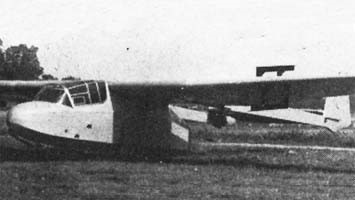
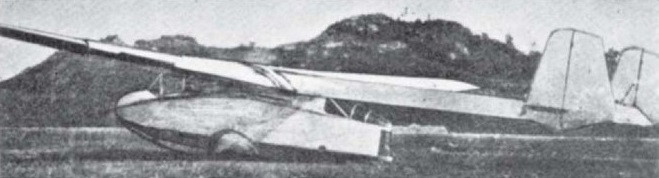
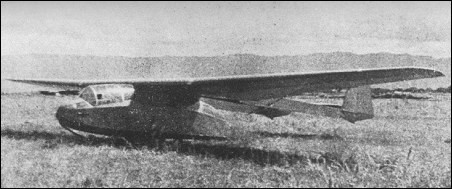
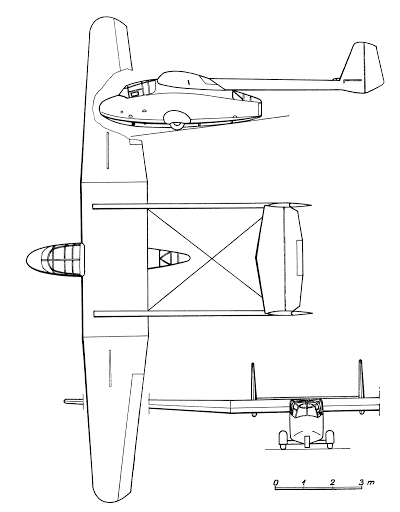
The Ku-1 was built almost entirely from wood / plywood and was a high-wing glider with twin boom tail sporting a fin and rudder at the end of each boom, with a tail-plane and elevator between the boom ends. The fuselage pod was given a streamlined shape, but with flat sides and a cockpit for two forward of the wing. The undercarriage consisted of two spatted main-wheels on short axles either side of the fuselage, with skids at nose and tail ends of the fuselage pod. The booms, attached to the wing centre-section, were wire-braced horizontally and the fins were braced by short struts on the inboard faces. Passengers and cargo were housed in the cabin below the wing, aft of the cockpit. The three-piece wing consisted of the centre-section, attached to the fuselage pod and two outer panels which were tapered and carried the ailerons for roll control.

Ku-1-I

The prototype was manufactured by Maeda Aircraft Corporation designated Ku-1 (Ku – from Kakku – to glide) and first flew on 9 January 1941. The Ku-1 was tested at the Tachiari military airfield at Kyushu on 1 September 1941. Once accepted for production the glider was given the long designation Maeda Army Type 2 Small Glider.

Maeda Ku-1 Type 2

It was primarily used for training, and was superseded by the Kokusai Ku-7, which was effectively a scaled-up version of the design. Approximately 100 were produced.

Variants:

Ku-1-I
Baseline production glider;100 built.

Ku-1-II
Transparent nose, single tail boom and longer fuselage, prototype only.

Ku-1-III
An aerofoil section fuselage with tapered wings, prototype only.

Specifications:

Ku-1
Capacity: 8 troops, equipped / 600 kg (1,320 lb) cargo
Length: 9.75 m (32 ft 0 in) fuselage
Wingspan: 16.76 m (55 ft 0 in)
Wing area: 30.1 m2 (324 sq ft)
Aspect ratio: 9.7
Empty weight: 698.5 kg (1,540 lb)
Gross weight: 1,297 kg (2,859 lb)
Never exceed speed: 177 km/h (110 mph, 96 kn)
Maximum towing speed: 129 km/h (80 mph; 70 kn)
Crew: 2
Payload: 6-8 paratroopers or 500 kg