(Emergency Fighter Program) in the middle of 1944. The Messerschmitt A.G.’s P.1104 was in the running. Heinkel won the contract.
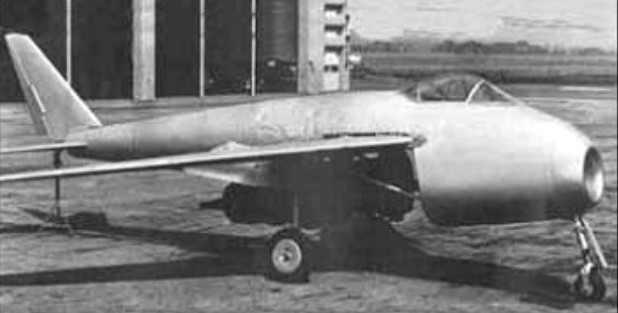
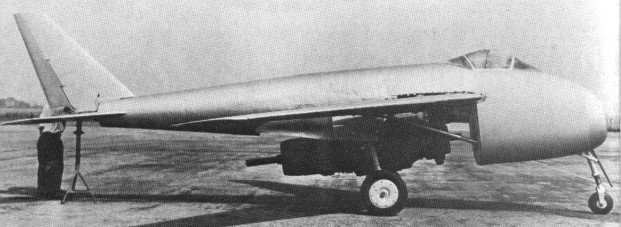
After two initial Messerschmitt designs were penciled, a finalized third design proposal was selected for development. The P.1101 was to have a deep fuselage to make room for the engine, applicable ductwork, the cockpit pressurization equipment, cannon armament and internal fuel. The fuselage would feature a nose-mounted intake to aspirate the Heinkel-Hirth He S 011 turbojet engine to be installed and wings were to be shoulder mounted assemblies with noticeable sweep. The single-seat cockpit would be fitted well ahead in the fuselage under a three-piece bubble canopy and a retractable tricycle undercarriage was utilized – the main landing gear legs coming from a Messerschmitt BF 109K fighter. The tail section was to be of a conventional type with a single vertical tail fin and applicable horizontal planes all made of wood. The tail assembly was fitted onto a tapered boom formed atop the engine exhaust port. Plans were made for cockpit armoring, carriage of four wire-guided missiles and a recessed centerline fuselage position for a single bomb.
To help speed development of the P.1101 along, it was decided to construct the P.1101 V1 prototype alongside the wind tunnel and other data collection still ongoing. The P.1101 V1 design was also given wings that would adjust their sweep preflight and could test wing sweep at 35- and 45-degree angles. The wings were eventually set to test sweep at positions of 35-, 40- and 45-degrees. changes to the wing sweep were to be made while the aircraft was still on the ground. First flight was slated for sometime in June 1945 if all went as planned. All development and construction was to take place at the largely unknown Messerschmitt facility at Oberammergau in the Bavarian mountains of Southern Germany.
For fear of the P.1101 data falling into enemy hands, Messerschmitt employees moved the information into microfilm form and hid them in four locations at neighboring villages. The Allies moved into the area on April 29th, 1945 with the Americans taking Oberammergau. The Me P.1101 V1 prototype was found in a tunnel and secured by the Americans. It was only later that Messerschmitt employees revealed the missing data and their locations. However, by this time, the French Army had moved in and found the hidden P.1101 data, subsequently shipping them back to French authorities. A joint American-German effort led by Robert Woods of Bell Aircraft and Woldermar Voight of Messerschmitt to secure the microfilm and finish the P.1101 fell on deaf ears – the French maintained little interest.
The P.1101 made its way to the US. Not only had exposure to the elements take their toll on the P.1011 airframe, the P.1101 airframe prototype fell off of her transporting railcar sustaining enough damage that ensured the V1 prototype would never be able to fly. Nevertheless, Bell Aircraft proceeded to break down the P.1101 and fitted the V1 with mock cannon armament along her fuselage sides and an American Allison J35 turbojet engine. The P.1101 V1 still served in valuable static ground tests before being scraped sometime in the 1950s.
On 14 April 1942, after about 200 Me 210s had been delivered, construction was halted in favour of a resumption of manufacture of the Bf 110 to give time to try to resolve some of the Me 210’s shortcomings. The stability problem was solved finally by introducing automatic wing leading-edge slots and redesign of the rear fuselage, which was lengthened by 3 ft 1 1/2 in (0.95 m) and made deeper. The improvements were tested and the design was submitted with the proposal that the 1,750 hp (1305 kW) Daimler-Benz DB 603A engine should be used to provide better performance, This appealed to the RLM, as a solution of this kind would allow a number of unfinished Me 210 airframes to be used, and Messerschmitt was given the go-ahead and the designation 410 assigned to the revised design.
In addition to embodying in its design all the modifications incorporated into the Me 210 – including the new cockpit canopy, lengthened fuselage and wing leading-edge slots. Initial tests were carried out with aircraft converted from Me 210As and these were followed by a true Me 410 prototype which flew for the first time at the end of 1942.
The Me 410 V1, originally the Me 210A 011, which, re engined with DB 603As and fitted with the new rear fuselage and revised wing, commenced its flight trials in the autumn of 1942, having first flown on 5 September 1939. The Me 410 performance was an advance over that of the Bf 110 which had had to be restored to full scale production as a result of the failure of the Me 210.
Several other Me 210As were generally brought Up to Me 410 standard but with DE 601F engines.
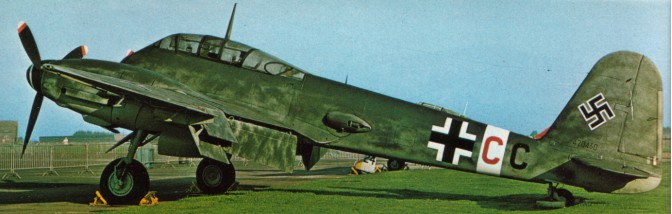
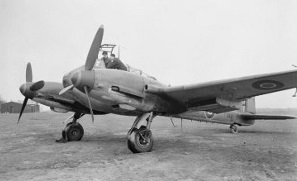
Improvements in handling characteristics made the Me 410 far more acceptable to the Luftwaffe which received the first five Me 410A-1 light bombers in 1943, this version being armed with two 20 mm MG 151/20 cannon, two 7.92 mm (0.31 in) MG 17 machine guns, and two 13 mm (0.51 in) MG 131 machine guns mounted one each side of the fuselage in an electrically powered barbette. Maximum internal bombload was 4,409 lbs (2000 kg). Demand for these more effective aircraft built up rapidly with the result that
Acceptances of the Me 410A-1 Schnellbomber and Me 410A 2 Zerstorer began in January 1943. The Me 410A-1 and A 2 were fundamentally similar to the Me 410 V1, both possessing a fixed forward firing armament of paired 20 mm MG 151 cannon and 7,9 mm MG 17 machine guns, plus the two barbette mounted remotely controlled 13 mm MG 131 machine guns. The internal weapons bay of both sub types could house a single 2,205 lb (1 000 kg) SC 1000 or SD 1000 bomb, two 1,102 1b (500 kg) SC 500 bombs, or up to eight 110 ¬lb (50 kg) SC 50 bombs, although anything over 1,102 lb (500 kg) was considered to be an overload.
The Me 410A 1 had tandem bomb carriers beneath each wing root permitting four 110 lb (50 kg) SC 50s to be carried externally and was fitted with a Stuvi 5B dive bombing sight.
Priority in production was assigned to the Me 410A 1 sub type. Two Factory Conversion Sets, or Umriist Bausdtze, had been developed to adapt this sub type as required for reconnaissance and Zerstbrer missions, and thus a proportion of the aircraft were to be delivered direct from the assembly lines with provision for a single vertical Rb 20/30, 50/30 or 75/30 camera in the centre fuselage as the Me 410A I/U1, or with provision for a Weapon Container (Waffenbehdlter) 151 as the Me 410A4/U2. The drum shaped Weapon Container augmented the fixed forward firing armament with an additional pair of 20 nun MG 151 cannon with 250 rpg and was inserted in the weapons bay fully loaded.
As Me 410A production expanded a number of sub-variants entered service, including the photo-reconnaissance Me 410A-1/U1, and Me 410A-1/U2 heavy fighter.
The Luftwaffe had taken delivery of 48 Me 410As from the Augsburg assembly line by the end of April 1943. The 11 Gruppe of KG 2 had a mix of 29 Me 410A 1s and 17 Do 217Es by 20 May, but shortly after the entire Gruppe reverted to the Dornier and the Messerschmitts were transferred to the newly created V Gruppe which was to mount the first operations with the Me 410A. The Stab of V/KG 2 was formed from the Stab of 11/KG 40, and its Staffeln (13, 14, 15 and 16/KG 2) were formed from personnel transferred from KG 40 and KG 101. In January 1944, this Gruppe was to be redesignated as 11/KG 51, and was to be joined in France by 1/KG 51 which completed conversion to the Me 410A 1 (from the Ju 88A4) in the late summer of 1943. From May 1943, the III Gruppe of Zerstbrergeschwader 1 in Tunisia began to supplement its Me 210As with Me 410A I/U2s, while 2. (Fernaujkldrung) / 122 based in Sardinia began to add Me 410A 1 /U1s to its complement of Ju 88s.
The Me 410A-1 was followed into service by the Me 410A-2 heavy fighter included two 30 mm MK 108 cannon in its armament, also built in sub-variants, including the Me 410A-2/U2 which was similar to the Me 410A-1/U1, the Me A-2/U2 SN-2 Lichtenstein radar carrying night-fighter and an ME 410A-2/U4 bomber destroyer similar to the Me 410 A-1/U4, and the last of the A series, the Me 410A-3 reconnaissance aircraft equipped with three cameras.
The Augsburg assembly line had delivered 457 Me 410As by the end of 1943, and from December of that year its output was augmented by that of a line established by Dornier, although the Dormer line was not really to get into its stride until the following February, in which month it was to deliver 11 aircraft. By this time, production emphasis had already switched from Schnellbomber to Zerstbrer, and a new variant for the latter role, the Me 210A 2/U4, had made its operational debut with 11 Gruppe of Zerstbrergesch wader 26, which, reactivated in the late summer of 1943 (having formerly been 111/ZG 1 with Me 210A 2s under Fliegerfiihrer Afrika) specifically for the intercept mission against USAAF day bomber formations. In this task, 11/ZG 26, popularly known as the Hornissengesch wader, enjoyed considerable success which was attended with no little publicity.
A very important innovation in the Me 210 design was the use of side rear firing 13 mm (0.51 in) MG 131 turret guns (barbettes) controlled by the rear crew member by the means of a Revi gun sight and a pistol grip with the firing trigger. These barbettes were delicate maintenance pieces and were not easy to handle. A famous victim of these guns was the American Ace Captain James Morris of the 20th Group. On 7 July 1944, over Halle and Bernburg, he was shot down and killed in his P-38 Lightning by an attacked Me 410.
The Me 410A 2/U4 was fitted with a 50 mm BK 5 cannon, which, complete with a 21 round cylindrical magazine, was fitted as Umrust Bausatz 4. The BK 5 was first mounted experimentally in the Me 410 V2 (originally Me 21-A 0 Werk¬Nr 0023) by the Deutsche Lufthansa workshops at Staaken at the beginning of August 1943 and delivered to the Waffen¬priifplatz at Tarnewitz for test firing. The success of these tests led to the hurried installation of this cannon in a batch of Me 410A 1s for operational evaluation by Erprobungskommando 25 which was formed at Wittmundhafen. The aircraft delivered to this unit had all forward firing armament other than the BK 5 removed and were fitted with a ZFR 4a gun sight. Some success in combat with USAAF day bomber formations led to the decision to install this very large weapon on the Me 410A 2 assembly line, although the standard model retained its normal forward firing armament after installation of the BK 5, entering service as the Me 410A 2/U4.
Meanwhile, work had been proceeding on a dedicated photo reconnaissance model, the Me 410A 3. The lower contours of the forward fuselage were deepened to permit the mounting of two Rb 20/30, 50/30 or 75/30 cameras in the space occupied by the weapons bay in other sub types, and the two forward firing MG 17 machine guns were discarded. By the beginning of 1944, the Me 410A 3 had been introduced into service by L(F)/121 at Orly (and subsequently at Toussus le Buc), later equipping L(F)/122 at Warsaw Okecie under Lufflotte 6 and part of 1(F)/122 at Riga.
From April 1944, deliveries of the Me 410A from the two assembly lines gave place to the Me 410B, which, structurally similar to its predecessor, differed in being powered by the DB 603G, which, by comparison with the DB 603A, had a higher speed supercharger and increased compression ratio boosting maximum output to 1,900 hp at 2,700 rpm for take off. The Me 410B 1 and B 2 were respectively the basic Schnellbomber and Zerstorer, similar Umrust Bausitzen being fitted to those applied to the A series, although the Me 410B 2/U4 with the BK 5 cannon had the standard forward firing combination of cannon and machine guns supplanted by a pair of 30 nun MK 103 cannon. Most Me 410B 2/U4 conversions were under¬taken by forward maintenance units to which the basic aircraft were delivered direct from the line and then mated with the Umrust Bausatz 4,100 of these sets being supplied for this purpose.
Various armament Rustsdtzen (Field Conversion Sets) were also produced to provide more potent anti bomber armament than provided by the Waffenbehdlter 151. These included Rfistsatz 2 consisting of two 30 mm MK 108 cannon, Rfistsatz 3 comprising two 30 nun MK 103 cannon, and Rustsatz 5 with a battery of four MG 151 cannon, and any one of these could be used in place of the Waff~nbehdlter 151, their application being accompanied by the. Addition of a further suffix to the sub type designation (eg, Me 410B 2/U2/R2). Yet a further variation was provided by Riistsatz 4 which consisted of a Waffentropfen (Weapon Drop) 151, this being an external container for two 20 mm MG 151 cannon which could be fitted as a supplement to the Waffenbehalter 15 1.
In attempts to improve the efficacy of the Me 410 as an anti¬bomber weapon, various other types of armament were tested with varying degrees of success, these including the 37 mm BK 3,7 cannon (Flak 18) which had been used with some effect by the Bf 110G 2/R 1 and R2, this being installed in April 1944 in several Me 410Bs for operational testing. A rather more exotic weapon was under test at this time, however, consisting of a rotating drum of six 21 cm rocket launching tubes which was mounted in the weapons bay. Initial testing had been conducted with an Me 410A 1 converted at Rechlin in January 1944, one tube of the drum being completely exposed beneath the weapon bay at a time and the drum rotating rapidly to launch all six missiles in quick succession. The first test firing, which took place on 3 February 1944, was a total failure, the airframe suffering extensive damage, but the weapon was believed to possess sufficient promise to warrant further testing and a standard of reliability sufficient to permit service trials with several Me 410Bs was eventually achieved, although, in the event, the rotating rocket magazine was to be discarded in favour of more conventional weaponry.
Escalating pressures on the air defences of the Third Reich dictated an order, issued on 8 May 1944 by the Oberkommando der Luftwaffe, that all Me 410A-1 and B 1 bombers be converted to A I/U2 and B4/U2 standards for the Zerstorer ro1e, but as only I and II Gruppen of Kampfgeschwader 51 operating from France under the IX Fliegerkorps were employing the Me 410 in any quantity as a bomber, this order applied to comparatively few machines, and KG 51 was in process of exchanging its remaining Me 410s for Me 262s by the late summer.
Apart from a brief excursion into the realm of nocturnal interception with 1 Gruppe of Nachtjagdgeschwader 1 in April and 1 Gruppe of Nachtjagdgeschwader 5 in May 1944, the activities of the Me 410 were thenceforth confined to the Zerstorergruppen and Aujklarungsstaffeln, the latter receiving the Me 410B-3, which, apart from engines, was similar to the Me 410A-3. In the spring of 1944, 1 Gruppe of Zerstbrergeschwader 1, which had been reactivated on Me 410s, was deployed in France and subordinated to the X Fliegerkorps. Based at Lorient for the anti-shipping strike task, with 2./ZG 1 detached to Vannes, the Gruppe was recipient of the Me 410B-6 before its withdrawal in the summer to augment home defence. The Me 410B-6 was fitted with FuG 200 Hohentwiel shipping search radar, had its forward-firing MG 17 machine guns replaced by larger calibre MG 131s and had the Waffenbehilter 103 fitted as standard.
The Me 410, less unwieldy than the Bf 110, possessing a high rate of climb and good speed at altitude, was an effective antiday bomber weapon and enjoyed very favourable results, the Hornissengeschwader, in particular, claiming a very considerable number of “kills”, but the twin-engined Messerschmitt was at considerable disadvantage when opposed by escorting single-seat fighters. On one occasion, on 13 May 1944, 11/ZG 26 engaged in intercepting a USAAF formation heading towards Poznan was bounced by escorting P-51D Mustangs and suffered such heavy casualties that it was forced to stand down, subsequently reforming on Fw 190s as II/JG 6. During that summer and autumn, the other surviving Gruppen der Zerst6rergeschwadern also suffered serious operational attrition while taking their toll of USAAF day bombers, the number of Me 410s dwindling and the process being accelerated from September 1944, when, in anticipation of the promulgation of the Jager-Notprogramm, production of this type was finally phased out.
During the course of 1944, a total of 702 Me 410s had been delivered, including 258 from Dornier, these deliveries bringing total production of the Hornisse, excluding conversions from the Me 210, to 1,160 aircraft. Thus, by the end of 1944, apart from those on the strength of W/W 26 based in Norway, which had been established after the remainder of this Zerstbrergeschwader had converted to single-seat fighters as Jagdgeschwader 6, the Me 410 was confined to the reconnaissance ro1e with the Aujklarungsstaffeln.
In April 1944 the first of the improved E-series were delivered, introducing the 1,900 hp (1417 kW) DE 603G engine, and produced in Me 410E-1 and Me 410E-2 sub-variants that were basically similar to those of the A-series. The Me 410E-3 was a reconnaissance version similar to the Me 410A-3, the Me 410E-5 a torpedo and anti-shipping bomber that was in the test stage when the war ended, and the Me 410E-6 a specialised anti-shipping variant, built in small numbers, which was equipped with FuG 200 Hohentwiel search radar, and had armament comprising two 20 mm Mg 151/20 cannon, two 3O mm MK 103 cannon, and two 13 mm (0.51 in) MG 131 machine guns.
With the termination of Me 410 production, the further development of the aircraft ended as a matter of course. At this time, several further sub types were on the stocks and production was planned of the Me 410B 5 torpedo bomber and anti shipping aircraft which had actually reached flight test status. The Me 410B 5 was equipped with FuG 200 Hohentwiel search radar, forward firing armament being restricted to a pair of 20 mm MG 151 cannon, and a considerable variety of external warloads were proposed, including various of the BT Korper (Bomb Torpedo) weapons that had attained an advanced stage in development. For maximum range, the lateral gun barbettes could be supplanted by a 154 Imp gal (700 lt) auxiliary fuel tank, a further auxiliary tank of 143 Imp gal (650 lt) being inserted in the weapons bay. The proposed external loads included either two 882 lb (400 kg) BT 400 or 441 lb (200 kg) BT 200 bomb torpedoes beneath the fuselage, the latter load permitting a further four BT 200s to be carried beneath the outer wing panels.
Other weapons proposed for the Me 410B 5 and tested by Me 410As included the 1,720 lb (780 kg) SB 800 RS Kurt rolling bomb, drop tests with which were carried out during the summer of 1944 at the Prufplatz Leba in Pomerania, and the 2,205 lb (1000 kg) thin walled SB 1000/410 bomb of elliptical cross section in order to minimise flight drag and stabilised during fall by an automatically deployed parachute. The 2,094 lb (950 kg) L 10 Friedensengel glide torpedo was also proposed, this being an LT 950 torpedo attached to a miniature glider, which, in turn, was attached to 33 ft (10 m) of cable. After release from the parent aircraft, the Friedensengel was intended to glide at an angle of 1:18, the torpedo being released from the carrier glider on making contact with the water surface, thus, theoretically, ensuring that it entered the water at the correct angle.
The Me 410B 7 and B 8 were projected reconnaissance variants respectively intended for diurnal and nocturnal operation, the latter carrying flares in its weapons bay and both having standard fighter armament, but more radical developments were represented by the Me 410C and D. The Me 410C was the end product of an extensive improvement programme to which the basic design was subjected, its aim being to increase both performance and versatility. Entirely new wings of high aspect ratio were envisaged, these embodying seven degrees of sweep on the centre section leading edge and making provision for alternative outer panels providing overall spans of 58 ft 11.5 in (17,97 m) and 67 ft 1.5 in (20,45 m). Other features were to include an aerodynamically refined forward fuselage and cockpit glazing, twin wheel main undercarriage members and DB 603JZ engines with annular radiators and TKL 24/26 turbo superchargers. Both multi-¬role and dedicated variants were envisaged, the latter including a night fighter with Lichtenstein C 1 and SN 2 intercept radar.
In the event, no genuine Me 410C prototype was completed, although several of the features that this sub type was intended to introduce were evaluated individually on various Me 410A test aircraft, these including the turbo supercharged engines with their annular cowlings, and development had been overtaken by the Me 410D which was intended to be essentially similar apart from having wooden outer wing panels. The Me 410D was the result of a programme to conserve strategic materials, but as it was obvious that at least a year must elapse before deliveries of this sub type could commence and the Luftwaffe was demanding improved altitude performance as a matter of urgency, Messerschmitt’s Konstruktionsleitung launched an interim model, the Me 410H. This was fundamentally an Me 410B 2 with DB 603G engines and an additional rectangular wing section inserted outboard of each engine nacelle, increasing overall span to 75 ft 5 in (22,97 m) and gross wing area to 500.52 sq ft (46,50 sq.m). Fixed forward firing armament was to comprise two 20 mm MG 151, two 30 mm MK 103 and two 30 mm MK 108 cannon. The conversion of an Me 410B airframe to serve as a prototype of the Me 410H was in process when the order to terminate all further development was received.
Production was finally phased out in September 1944 after 1,160 Me 410s had been built.
Versions:
Me 410A Engines: Two Daimler-Benz DB 603A, 1,750 hp at 2,700 rpm for take-off /1,850 hp at 2,700 rpm at 6,890 ft (2 100 m). Three-bladed VDM constant-speed electric propellers,11 ft 11 in (3,40 m) Internal fuel capacity, 532 Imp gal (2 420 lt) / six wing tanks.
Me 410A-1 High-performance light bomber Max speed, 315 mph (507 km/h) at sea level Max speed, 388 mph (624 km/h) at 21,980 ft (6 700 m) Max speed, 373 mph (600 km/h) at 26,250 ft (8 000 m) Max continuous cruise, 330 mph (530 km/h) at 19,685 ft (6 000 m) Vne: 466 mph (750 km/h) below 4,000 ft (1215 m) Range at max continuous cruise, 746 mls (1200 km), Range at econ cruise, 1,040 mls (1674 km) Empty equipped, 16,574 lb (7 520 kg) Normal loaded, 21,276 lb (9650 kg).
Me 410A-1/U1 Photo-reconnaissnce
Me 410A-1/U-2 Fighter conversion of the A-1 Engines: 2 x 1,850 hp (1,380 kw) DB603A 12 cyl Max Speed 388 mph at 21,980 ft Cruising Speed 364 mph (585 km/h) Service Ceiling 32,810 ft (10000 m) Max Range internal fuel: 1,050 miles (1690 km) Empty Equipped Weight: 16,574 lb (7518 kg) Loaded Weight 21,276 lb (9650 kg) Span: 53 ft. 7 3/4 in (16.35 m) Length: 40 ft. 11 1/2 in (12.48 m) Height: 14 ft. 1/2 in (4.28 m) Wing Area: 389.67 sq. ft. (36.20 sq m) Armament: 4 x 20mm MG151 cannon and 2 x 7.92mm MG17 mg’s, 2 x 13mm MG131 mg Optional Armament: Two 1,102 lbs (500 kg) bombs and external racks for two 1,102 lbs (500 kg) bombs plus two Ruestatz external packs housing 20 mm MG 151/20, 30 mm Mk 108 or Mk 103 cannons were fitted to some variants. Seats: 2
Me 410A-1/U4 Specialized bomber/destroyer Armament: includes 1 x 50 mm BK 5 gun
Me 410A-2 Destroyer
Me 410A-2/U1 Similiar to the Me 410A-1/U1
Me 410A-2/U2 Radar equipped night fighter
Me 410A-2/U4 Bomber/destroyer
Me 410A-3 Photo-reconnaissance Engines: 2 x Daimler Benz DB 603Á, 1750 HP Maximum speed: 507 km/h Range: 1200 km Ceiling: 9800 m Empty weight: 7518 kg Max weight: 9651 kg Length: 12,48m Height: 4,28m Wing area: 36,20m Wingspan: 16,35m Armament: Two 17/7,92mm, MG 151/20mm, MG dorsal turrets with MG 131/13mm
Me 410B Engines: Two Daimler-Benz DB 603G, 1,900 hp at 2,700 rpm for take-off / 1,560 hp at 2,700 rpm at 24,280 ft (7 400 m) Three-bladed VDM constant-speed electric propellers, 11 ft 11 in (3,40 m) Internal fuel capacity, 532 Imp gal (2 420 lt) / six wing tanks.
Me 410B-1 Improved “A” series Engines: 2 x Daimler-Benz DB 605G, 1,900 hp (1417 kW) Max speed: 362 mph (582 km/h) at 13,125 ft (4 000 m) Max speed: 377 mph (607 km/h) at 19,685 ft (6 000 m) Max speed: 391 mph (630 km/h) at 26,575 ft (8 100 m) Max continuous cruise, 362 mph (582 km/h) Endurance, 2.4 hrs Time to 26,250 ft (8 000 m), 22.5 min. Empty equipped, 17,598 lb (7 982 kg) Normal loaded, 24,772 lb (11236 kg).
Me 410B-2 Improved “A” series Engines: 2 x Daimler-Benz DB 605G, 1,900 hp (1417 kW)
Me 410B 2/U2/R4
Me 410B-3 Reconnaissance version similiar to the Me 410A-3 Engines: 2 x Daimler-Benz DB 605G, 1,900 hp (1417 kW)
Me 410B-5 Torpedo bomber Engines: 2 x Daimler-Benz DB 605G, 1,900 hp (1417 kW)
Me 410B-6 Anti-shipping strike aircraft Engines: 2 x Daimler-Benz DB 605G, 1,900 hp (1417 kW) Radar: FuG 200 Hohentwiel Armament: two 20 mm MG 151/20 cannon, two 30 mm MK 103 cannon, two 13 mm (0.51 in) MG 151 machine guns.
Me 410B-7 Day reconnaissance Engines: 2 x Daimler-Benz DB 605G, 1,900 hp (1417 kW)
Me 410B-8 Night reconnaissance Engines: 2 x Daimler-Benz DB 605G, 1,900 hp (1417 kW)
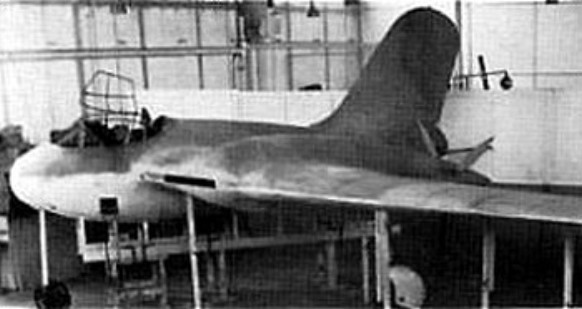
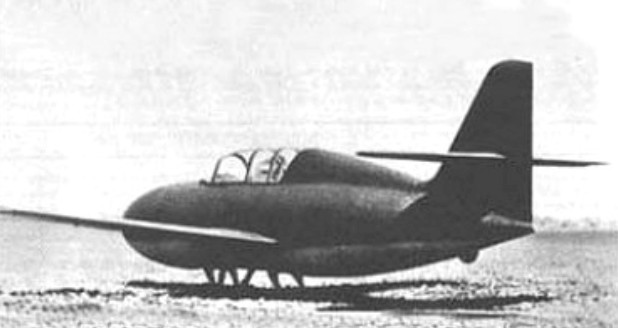
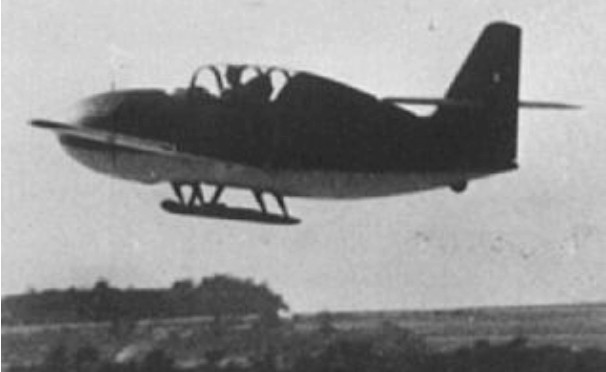
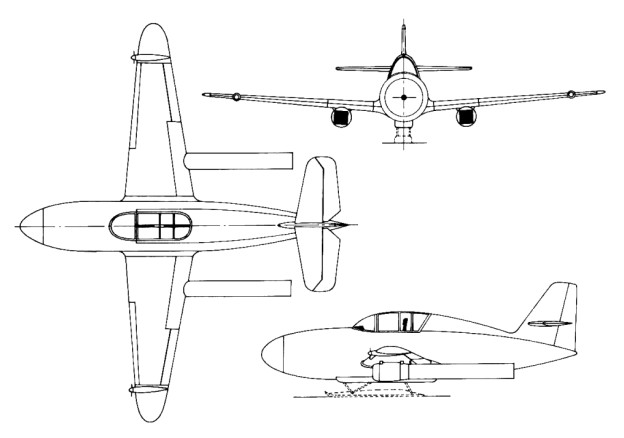
The Messerschmitt Me 328 was conceived in 1942 as a cheap and simple high-speed low-level bomber and emergency fighter. Smaller than the He 162, its construction was to be mainly of wood and power was to be provided by a pair of Argus pulsejet engines, similar to those used by the V-l flying bomb.
Two versions were proposed, the Me 328A fighter and Me 328B bomber. The single seat Me 328B was able to carry an under slung 1000 kg (2,205 1b) bomb, which reduced the speed at low level from 700 to 530 km/h (435 to 329 mph).
Powered by two Argus pulsejets, the Messerschmitt Me 328B 1 was designed as a fighter bomber armed with two 20 mm cannon and 1000 kg (2,205 lb) external load. The Me 328 started life as an escort fighter to be towed behind a He 177 or Me 264 bomber and as such the prototype underwent extensive gliding trials being air-launched from a Dornier 217.
Powered trials in 1944 proved disappointing. A further version, the Me 328C, was proposed, to be fitted with a Jumo 004 turbojet. This and a proposed piloted glider-bomb version did not eventuate.
Engines: 2 x 600kg Argus pulse-jets Max take-off weight: 2200 kg / 4850 lb Wingspan: 6.40 m / 20 ft 12 in Length: 6.83 m / 22 ft 5 in Height: 2.10 m / 6 ft 11 in Max. speed: 755 km/h / 469 mph Range: 770 km / 478 miles Armament: 2 x 20mm cannon
Before going to war in 1939 Germany had explored and developed the use of parachute and airborne troops. Early deployment of airborne forces had shown the need for gliders of greater capability than the DFS 230 used to capture the Belgian fort of Eben-Emael. There were advantages in using gliders as opposed to paratroops.
Messerschmitt’s Me 321 VI glide prototype flew first in March 1941 and Me 321A-1 production aircraft entered service in May of that year.
The Me 323 was, in effect, a powered version of the Me 321, basically similar except for strengthening and the installation of engines in nacelles of the same type as those designed for the Bloch 175: four in the original prototype and six in subsequent prototype and production aircraft (201 built). Versions included the Me 323D, E and F (plus variants), with a variety of engines, defensive armament and fuel capacity. The undercarriage was sprung to keep the floor level even on the roughest unprepared airstrips. Construction was mainly fabric-covered steel tubing.
They were no easy machines to fly, often needing rocket or towing assistance to get them airborne. Slow and vulnerable – despite heavy defensive armament – they suffered severe losses when ferrying supplies to the Afrika Korps in the closing stages of the North African campaign.
Even the six-engined Me 323 needed rocket assistance to get airborne with a full load. Maintaining supplies of rocket fuel at forward airstrips was a constant problem. The cabin could take loads as heavy as a Panzer IV tank or 120 soldiers or 60 stretcher patients. One was tested with a 17,700kg bomb, but it broke up in flight. Due to its low speed and vulnerability to attack, up to six machine guns were carried in various mounts and turrets. A proposed escort version with 11 cannon and four machine guns was tested.
Me-323D-1 Engines: 6 x G+R 14N, 730kW Max take-off weight: 43000 kg / 94799 lb Empty weight: 27330 kg / 60253 lb Wingspan: 55.0 m / 180 ft 5 in Length: 28.2 m / 92 ft 6 in Wing area: 300.0 sq.m / 3229.17 sq ft Max. speed: 285 km/h / 177 mph Cruise speed: 218 km/h / 135 mph Range: 1100 km / 684 miles Armament: 5 machine-guns Crew: 5
Me 323 E Gigant Engine : 6 x Gnome Rhône 14N, 1124 hp Length: 93.504 ft / 28.5 m Height: 31.496 ft / 9.6 m Wingspan : 180.446 ft / 55.0 m Wing area : 3229.2 sq.ft / 300.0 sq.m Max take off weight : 99225.0 lb / 45000.0 kg Payload : 108cu.m, 20000kg Weight empty : 64077.3 lb / 29060.0 kg Max. speed : 130 kts / 240 km/h Cruising speed : 121 kts / 225 km/h Service ceiling : 14764 ft / 4500 m Wing load : 30.75 lb/sq.ft / 150.0 kg/sq.m Range : 702 nm / 1300 km Crew : 2 Armament : 2x MG151 20mm, 7x MG131 13mm
Junkers and Messerschmitt competed in 1940 to design and develop a very large transport glider suitable for the delivery of men or materials. Junkers’ Ju 322 Mammut (Mammoth) spanned 62.0m and would have accommodated more than 100 fully equipped troops, but when tested proved to be unstable and was cancelled by the Reichsluftfahrtministeriurn.
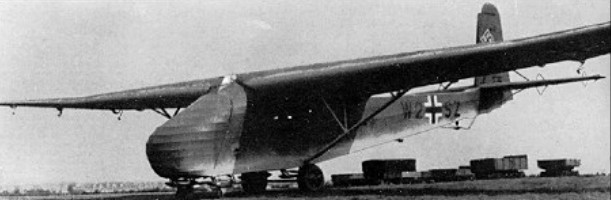
Messerschmitt’s Me 321 was a most successful design of braced high-wing configuration and with construction of welded steel tube, wood and fabric. The pilot was high on the fuselage in a single-seat cockpit, adjacent to the wing’s leading edge. Access to the main cabin was via large clamshell doors in the nose or by doors on each side of the rear fuselage.
The Me 321 VI prototype flew first in March 1941 and Me 321A-1 production aircraft entered service in May of that year. The later Me 321B-1 had a crew of three and defensive armament of four 7.9mm MG 15 machine-guns. Me 321 (175 built) were towed usually by a trio of Bf 110C or by the five-engined Heinkel He 111Z. Rocket units could be used to assist take-off from rough fields.
The Messerschmitt Me 321 spanned 54.68 m (180 ft), and was intended to ferry into combat 22.5 tonnes (22 tons) of equipment or a company of soldiers complete with 88 mm flak gun or tracked vehicle.
Proposed development of the Me 210, more advanced than the Me 410. The Me 310 would have had a pressurised cabin and long-span wings. Cancelled in favour of Me 410.
Designed as a replacement for the Bf 109 in 1940, the Me 309 was assigned a low priority. Advanced in concept, with tricycle landing gear, a pressurized cockpit, and cannon armament, the Me 309 was never satisfactory.
Me.309 V1
Four were built before the RLM cancelled the project.
In 1937, a long range aircraft was in the development stage, Projekt 1061, which was to be powered by four individual engines, and have a range of 20000 km (12428 miles). Due to more important projects in development at the time (mainly the Bf 109 and 110), Projekt 1061 was only sporadically worked on until late in 1940. The German Naval Warfare Department wrote to Reichsmarschall Göring on August 10, 1940 that long range aircraft with a range of at least 6000 km (3728 miles) would be needed to reach the planned German Colonial Reich in central Africa. Also, about this time the RLM issued a requirement for long range aircraft with a range of at least 12000 km (7457 miles), to reach from French bases to the United States, in anticipation of the coming war with the U.S. Therefore, the work on Projekt 1061 was stepped up, with Willy Messerschmitt on December 20, 1940 informing designers Wolfgang Degel, Paul Konrad and Waldemar Voigt of the requirements for this long range aircraft.
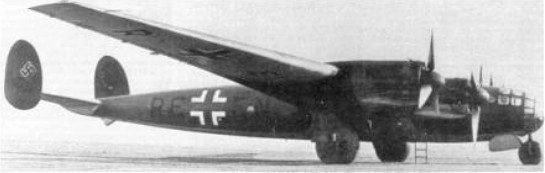
Three models were built. V1 (RE+EN) flew first in December 1942 with Junkers Jumo 211J-1 engines developing 1425 hp, it flew again on 2nd May 1944 with more definitive BMW 801G-2 engines. With a take off weight of 22000kg (48,400lb) it obtained a speed of 490km/h.at sea level. It spent a short time with Transportstaffel 5 and was eventually destroyed in an air raid at the end of the war.
V2 had BMW801G-2 engines, but was destroyed before it’s first flight in an air raid in 1943.
V3 was the forerunner for the Me264 A0 and was armed with MG131 and MG151 guns and had 3 Rb50/30 cameras, but was scrapped before the end of the war.
The “B” model was planned with 6 DB603 engines or with 4 BMW801E engines plus two BMW 018 turbojets.
The initial requirements were for a 20000 km (12428 miles) range, capability for military and civilian roles, at least a 5000 kg (11023 lbs) bomb load to be carried in an internal bomb bay, smaller bombs to be carried externally on under-wing pylons and to have a very clean airframe. In early 1941, Messerschmitt received an order to build six prototype Projekt 1061 aircraft, which were given the designation of Me 264. If the aircraft proved capable, a further 24 aircraft were to be built for “harassing attacks against the United States”. At the same time, Messerschmitt continued to work on a six engined version of the Me 264, Projekt 1075. Since the Messerschmitt design offices were running at full capacity, part of the design work was delegated to the Fokker Works in Amsterdam.
On January 22, 1941, the General Staff of the Luftwaffe demanded a long range aircraft for the submarine war. Because of its overoptimistic performance and weights data, the RLM chose the Me 264 as the best choice. Several schemes were proposed by the Messerschmitt design bureau to extend the range of the Me 264, including towing one Me 264 by another to altitude, in flight refueling by a second Me 264, adding two more engines bringing the total to six and using take-off rocket pods for overload takeoff conditions. With these recommendations, it was felt that a range of 18100 km (11247 miles) and a bomb load of 5000 kg (11023 lbs) could be achieved, and a range of 26400 km (16405 miles) without any bombload. Armament for both versions would have consisted of remote controlled turrets with either MG 131 or MG 151. In early 1942, GFM Milch canceled or reduced numerous development projects, including reducing the number of Me 264 prototypes from six to three, due to the worsening war situation. On February 28, 1942, the Me 264 development was to be temporarily turned over to the Dornier works, but they too were operating above their capacity. The Wesser Aircraft Works in southern Germany were also considered, but nothing came of this idea either. A commission headed by Lt. Col. Petersen arrived at the Messerschmitt-Augsburg complex on April 24, 1942 (at the orders of Milch) to check the actual performances of the Me 264, where it was found that the performances were about 90% of what Messerschmitt had been stating. Strangely enough, the very same day Willy Messerschmitt was cleverly presenting the RLM with the idea of using the Me 264 in “Atlantic Missions”, and harassing attacks on the American east coast. Shortly afterwards, on May 7, 1942, another detailed report was yet again submitted stating that the Me 264 with a takeoff weight of 45000 kg (99207 lbs) and powered by four Jumo 211J engines could attain a range of 13000 km (8078 miles), and with four BMW 801 engines a range of 14000 km (8700 miles) could be reached. To add to the confusion again, on May 16, 1942 a meeting was held concerning all long range aircraft. It was decided that any flights over 13500 km (8389 miles) would need in flight refueling, and General Jeschonnek had already turned down this option in February 1942 (even though initial in flight refueling tests with a Fw 58 and a Ju 90 had been successful). This ended (at this time) all discussions of harassing attacks against American targets, also reconnaissance missions over the Trans-Siberian railroad and even Equatorial Africa.
According to a study dated April 27, 1942, the long distance aircraft should be able to fly reconnaissance missions as far as Baku, Grosnyj, Magnitogorsk, Swerdlowsk, Tiffis or Tshejabinsk in the USSR, and flights to Dakar, Bathurst, Lagos, Aden and southern Iran were also reachable. Not only were New Jersey and New York in the U.S. within range, but also targets in Ohio, Pennsylvania and even Indiana; in addition, there were plans to station some Me 264s on Japanese bases on islands northeast of the Philippines, to fly reconnaissance missions as far as Australia, India and much of the Pacific area.
By mid-July of 1942, three Me 264 prototypes were being constructed. It was hoped that the Me 264 V1 could be ready for flight testing by October 10, 1942, but again this was optimistic due to delayed and sometimes missing component deliveries. By the end of August 1942 it was obvious that the October maiden flight could not be attained because of the excessive delay in the main landing gear delivery from VDM and the promised Junkers engines were also late. A general skepticism was creeping in concerning the numerous delays in getting the first Me 264 in the air, and again the consensus from the RLM and General Staff of the Luftwaffe was leaning towards the Junkers Ju 290 and the six engined Ju 390.
Meanwhile, the construction of the first prototype V1 was progressing very slowly at Augsburg. At last, on December 23, 1942, the Me 264 V1 was ready for its first test flight, which lasted 22 minutes. The landing gear was left down due to safety concerns. The test flights were later made at Lechfeld, because it had a sufficiently long concrete runway to accommodate the large Me 264, but could test only the first prototype due to the fact that the airfield facilities only had one hanger large enough to house the Me 264 V1.
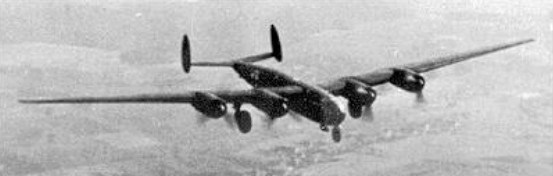
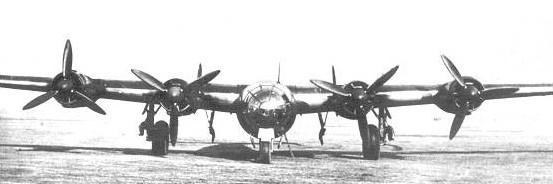
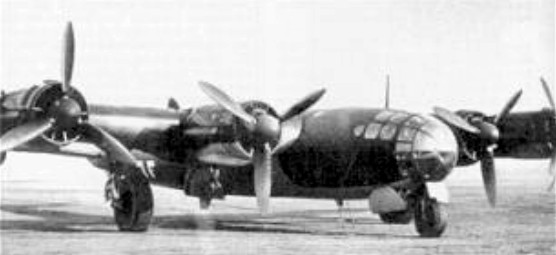
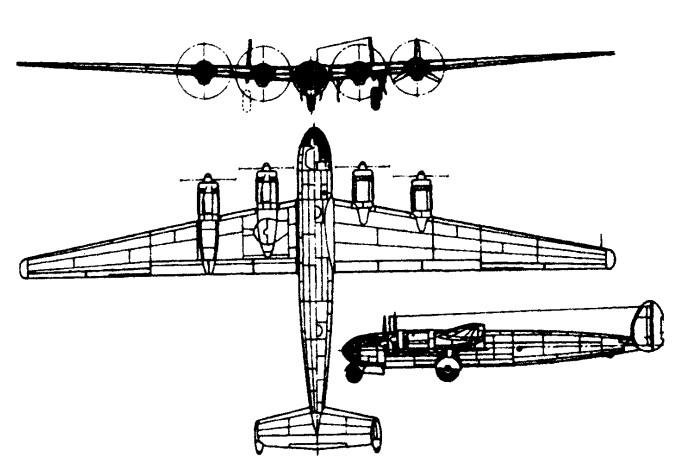
The Me 264 V1 had a very “clean”, all metal fuselage with a circular cross section throughout. Just behind the extensively glazed nose and cockpit was a galley, crew rest area and walkway to the rear of the plane above the lower, enclosed bomb bay. The wings were shoulder mounted, slightly swept back and tapered. They contained a single main spar and one auxiliary spar, with the wing loads being transferred through the main spar and two auxiliary bulkheads into the fuselage. The entire fuel supply was stored in the large wings. All control surfaces were conventional, including split flaps on the inner wing. The tailplane, with its twin fins and rudders, was electrically adjustable during flight. A tricycle landing gear system was designed, which was unusual for such a large aircraft at this time. A single nose wheel was used, although testing had been done for a twin nose wheel configuration using a converted Bf 109 (work number 5603). The test showed a loss of manoeuvrability, but no shimmying. Because of the ever increasing weight demands, the main landing gear was also to be strengthened, and even a droppable auxiliary main gear was considered. The exterior of the Me 264 V1 was puttied and sanded all over, to give the smoothest possible finish. The engines used on the first prototype were the 12 cylinder, liquid cooled Junkers Jumo 211J-1 . These were the same engines used on the Junkers Ju 88A-4 models, and to save time even the Ju 88 nacelles and radiators were utilized. The Me 264 V2 was to have extended wing tips and 1000 kg (2200 lbs) of armor added around the more vital parts of the aircraft. It was reportedly being readied for preflight ground tests when it, too, was destroyed in an air raid.
During the flight testing in 1943, the fate of the Me 264 still hung in the balance. Admiral Dönitz and the Supreme Naval War Staff favored the Focke-Wulf Ta 400. However, since this aircraft wasn’t supposed to be ready before 1946, it was decided that the Ju 290, He 177 and the Ju 390 should be produced in the interim to provide maritime reconnaissance. A teletype message reached Messerschmitt in May 1943, stating that the Me 264 should be abandoned. This caused some astonishment, because just a week earlier the RLM had insisted upon the completion of the Me 264 prototypes. In June 1943, Messerschmitt contacted Hitler to inform him on how well the Me 264 development was progressing, hoping that Hitler would intervene in his behalf. On July 8, 1943, at a meeting in the Supreme Headquarters, Hitler promised his support for the continued production of the Me 264 to Messerschmitt, but only for maritime uses. At the same time he dropped his decision to bomb the east coast of the U.S., because “the few aircraft that could get through would only provoke the populace to resistance”. Only one day later, GFM Milch agreed to continue the construction of the three Me 264 prototypes for the purpose of studies only. Göring, Milch, Friebel and Messerschmitt met on October 14, 1943 to discuss further development possibilities. According to Messerschmitt, the components for the first five prototypes were completed, but he lacked the necessary space and facilities in which to construct them. To get the space for the Me 410 production, all the Me 264 final assembly building jigs were moved from the Augsburg plant and stored at Gersthofen. Later that day, GFM Milch wanted to stop the Me 264 completely, in order to concentrate on the Me 262 jet fighter, to which Göering agreed. One day later, the production orders for the Focke-Wulf Ta 400 was cancelled, mainly because the Focke-Wulf resources were needed for the Fw 190D-9 and Ta 152 production.
On June 29, 1944, the Trial Establishments Headquarters definitely stated that the Me 264, as well as the Ju 390, would be unsuitable for operational deployment since its fitting with the entire military equipment and payload would excessively increase the takeoff weight and the wing load. Then on July 18, 1944 the only Me 264 prototype was destroyed in an air raid along with the assembled components of the following two prototype and 80% of the production facilities. Although numerous attempts were made to save the Me 264 program, Admiral Dönitz got Hitler to agree on September 23, 1944 that all work on the Me 264 project should be stopped. Less than a month later, on October 18, 1944 an unmistakable directive was received. The “Reichsmarschall Technical Order Nr. 2” stated: “The production of the Me 264 is herewith cancelled”. This confirmed the end of the eight year development program that led to only one test aircraft that was far from being operationally ready.
The V4 model was planned to use four high performance BMW 801 E engines with turbochargers and GM-1 boost system. Another idea was a provision as a long range transporter, which would carry 12 to 17 paratroopers and be armed with one FLH 151Z remote controlled turret. It was considered that two additional drop tanks could extend the Me 264’s range to 13600 km (8451 miles) and a top speed of 580 km (361 mph) at an altitude of 6300 meters (20700 feet), with an estimated flight time of 41 hours. Another version was to add two Jumo 004 jet engines outboard of the four radial BMW engines, and was submitted to the Luftwaffe for evaluation. It was even considered to include a towed Me 328 pulsejet powered fighter for protection.
A variety of engines were considered for the Me 264, including a four Jumo 004C jet engined version, a two or four BMW 028 turboprop engined version and a twin BMW 018 turbojet powered version. Another project was to have used Ritz heat exchangers to greatly increase range. The most unusual powerplant idea was for a steam turbine that was to develop over 6000 horsepower. Fed by four boilers and driving one of two forms of propeller – the first, of 17.5 ft (5.4 m) diameter, revolving at 400 500 rpm, the second, only 6.5 ft (2.0 m), turning at 6,000 rpm, fuel would have been in a mixture of powdered coal and petroleum. The main advantages to this engine would be constant power at all altitudes and simple maintenance. The Me 264 so allocated was destroyed in an air raid.
An armed long distance reconnaissance version (Me 264A) would have been equipped with three Rb 50/30 cameras, and armed with one MG 130/2, one DHL 151Z, one MG 151 and perhaps two MG 131 for the lateral positions.
The long range bomber version (Me 264B) was supposed to be fitted with four BMW 801E radial engines and an additional two Jumo 004C jet engines. The armament was similar to the above reconnaissance model, except the single MG 151 would be replaced with one MG 131. Its total weight would be 48100 kg (106041 lbs), or 49900 kg (110010 lbs) with the two Jumo 004C jet engines. The range would have been, with a 3000 kg (6614 lbs) bomb load, 11600 km (7208 miles) without the Jumo jet engines and 8500 km (5282 miles) with the jets. With the jet engines installed, the aircraft should have been able to reach a top speed of 655 km/h (407 mph) at 6700 meters (21981 feet). A top ceiling of 14500 meters (47572 feet) could be reached due to the pressurized cockpit. A naval version would be equipped with four Jumo 222E/F high altitude engines, plus the two Jumo 004C turbojets. the maximum offensive load was calculated to be 6000 kg (13228 lbs). It was also recommended at this point that the fully glazed cockpit should be replaced with a stepped cockpit, also, the defensive armament was being continually revised until all the turrets were remotely controlled, and revolved through 360 degrees. A new turret was even developed, armed with two MG 213 revolver cannon, then under development.
There was also a high altitude bomber version being designed, which would have been equipped with four BMW 801 E/F radial engines with superchargers. The cockpit was planned to be pressurized from the beginning. Since the rest of the plane would not be pressurized, remote controlled defensive armament would have to be installed. According to factory documents of July 9, 1943, this version was based on a 39000 kg (85979 lbs) takeoff weight, which included a 3000 kg (6614 lbs) bomb load, and was to utilize the jettisonable additional landing gear. The minimum penetration distance would have been 3500 km (2175 miles) at an altitude of 12000 meters (39370 feet), at a cruising speed of 640 km/h (398 mph). It would have required a climbing time of 70 minutes to reach this altitude. Again, the Jumo 222 E/F would have been the most efficient engines for high altitude operations, and it was planned to re-equip this aircraft when these engines became available.
5100 kg (11243 lbs) drop tanks were designed in September 1944, and were ready to be manufactured when the cancellation order arrived. Even after the cancellation order was received, work continued by many Messerschmitt engineers and designers in December 1944 on a courier version of the Me 264, with a range of 12000 km (7457 miles) and a load of 4000 kg (8818 lbs). At this point in time, the work done was merely a way to protect the Messerschmitt employees from being conscripted into the army.
Messerschmitt Me 264 V1 Flight Tests
December 23, 1942 Test Pilot: Karl Baur Airfield: Augsburg After extensive taxiing trials, the Me 264 made its maiden flight. The duration of this first flight was 22 minutes, and for safety reasons the landing gear was left down. On landing, the airframe was damaged in the area of the flap mounts when the aircraft rolled over the end of the runway due to the failure of the brake system.
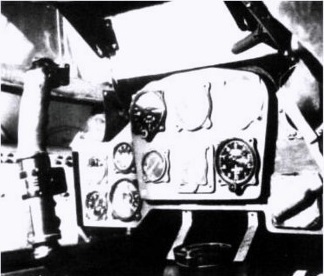
January 20, 1943 Test Pilot: Karl Baur Airfield: Augsburg The second test flight was made. Karl Baur complained that the forces on the controls were too high, about the poor placement of the instruments and of exhaust fumes penetrating into the cockpit.
January 22, 1943 Test Pilot: Karl Baur Airfield: Augsburg The Me 264 was transferred to Lechfeld.
January – February, 1943 Test Pilot: Karl Baur Airfield: Lechfeld On the fifth test flight, the underside of the fuselage was damaged when it accidentally contacted the ground. Also, the hydraulic system of the landing gear failed, making it impossible to retract the gear.
February, 1943 Test Pilot: Karl Baur Airfield: Lechfeld Baur reported some problems with the inner flaps and a defective nose wheel. Despite some changes to the control surfaces, the forces against them were still too high and the changes had displaced the center of gravity. The nose wheel problems were fixed, and now the retraction functioned properly. Also, some minor defects were found in the electrical cables of the intercom system.
February, 1943 Test Pilot: Gerhard Caroli Airfield: Lechfeld Caroli also found that the forces against the control surfaces were still too high, especially at high speed. Small defects were still present in the radio system and landing gear.
February, 1943 Test Pilot: Karl Baur Airfield: Lechfeld During two flights by Baur, a speed of 600 km/h (373 mph) was reached. The faulty trimming and controls revealed that an eventual change in the entire control system would be inevitably needed. Flights with two or three engines were found to be satisfactory, but in flights with the automatic controls it was found that the servos were too low powered to control such a heavy aircraft.
March 2, 1943 Test Pilot: Karl Baur Airfield: Lechfeld Stability tests were continued.
March 4, 1943 Test Pilot: Karl Baur Airfield: Lechfeld A test of the polare system was cut short when after 15 minutes of flying time, the third engine began to smoke and had to be cut out. At this time, 11 test flights had been made totaling 12 hours flight time.
March 23, 1943 Test Pilot: Karl Baur Airfield: Lechfeld After the faulty engine was changed, the critical altitude tests were made. Several other test flights were made this day, mainly to check the longitudinal stability. Also, the first measures to improve the rudder effect was made.
March 23, 1943 Test Pilot: Karl Baur Airfield: Lechfeld During landing, the left oleo leg broke, which was probably not fully locked down, causing some damage.
March 23 – May 21, 1943 Airfield: Lechfeld During repairs, a new steering column, a reinforced wing skin, a modified nosewheel drive and a complete radio were added. Also, a new emergency tail skid was added, a changed tailplane and four new Jumo 211J engines were installed.
May 22 – June 5, 1943 Test Pilot: Karl Baur Airfield: Lechfeld Continued high forces against the ailerons and rudder surfaces were found. Six flights were made totaling 12 hour 16 minutes.
June 2, 1943 Test Pilot: Flight Capt. Wendel Airfield: Lechfeld Serious problems arose when the nosewheel jammed during retraction.
June 10, 1943 Test Pilot: FBM Böttcher Airfield: Lechfeld Reported that the cockpit excessively heated up in the summer sun.
August 11, 1943 Airfield: Lechfeld The Me 264 V1 was taken out of service, and re-equipped with BMW 801 twin row radial engines.
March 18, 1944 Airfield: Lechfeld The Me 264 V1 was slightly damaged in an air raid, and was quickly repaired.
April 14, 1944 Airfield: Lechfeld During the first test roll with the new engines, the brake shoes tore off.
April 16, 1944 Airfield: Lechfeld The Me 264 V1 was transferred to Memmingen.
April, 1944 Airfield: Memmingen During the 38th test flight, the emergency skid was torn out after a rough landing. When the rudders were fitted with balances, the excessive vibrations almost ceased.
late April, 1944 Test Pilot: FBM Scheibe Airfield: Lechfeld Scheibe, from the Rechlin Trial Establishment, complained about the canopy reflections during his test flight. He also indicated that the excessive airframe vibrations were the number one problem to fix.
late April, 1944 Test Pilot: Colonel Barsewich Airfield: Memmingen Barsewich, from the Chief Reconnaissance Department, judged the Me 264 V1 too slow for combat missions, even though the aircraft was about 10% faster than with the Jumo 211J engines.
early May, 1944 Test Pilot: Lt. Colonel Knemeyer Airfield: Memmingen After an uneventful flight, Knemeyer was completely enthusiastic about the Me 264, in his opinion all problems could be overcome in the further testing and refinement of the aircraft.
April 17 – May 17, 1944 Test Pilot: Karl Baur Airfield: Memmingen Flight testing was performed for tailplane flutter and the emergency tail skid. The rear of the plane was found to be too heavy.
April 26 – May 3, 1944 Test Pilot: Captain Nebel Airfield: Memmingen Three test flights were made by Capt. Nebel of the Rechlin Test Establishment to finally redress the tail vibrations. To avoid building an entire new tail, balance weights were added to get the vibration problems under control. Since the problem was not solved, a larger tail plane seemed inevitable.
June 5, 1944 Test Pilot: Karl Baur Airfield: Memmingen More stability tests were made, with a small improvement. However, the flights were complicated by the continuous problems with the Patin system.
June 6, 1944 Test Pilot: Karl Baur Airfield: Memmingen Extreme rudder fluttering was found in the 380 – 450 km/h (236 – 280 mph) range. Also criticized were the too soft automatic controls, which had to be adjusted again.
June 26, 1944 Test Pilot: Karl Patin Airfield: Memmingen A climb flight with combat performances was prematurely cut short when the fuel pressure of both inner engines fell to zero. After checking the fuel pumps, several defects were found. Also, the failure of the Patin, radio and electrical systems caused intensive repairs.
July 18, 1944 Airfield: Memmingen The Me 264 (RE+EN, work number 264000001) was damaged during an air raid. The extent of the damages was too severe for the damage to be repaired.
Specifications:
Messerschmitt Me 264 V1 Span: 38.9 m /127 ft 7 in Length: 20.115 m / 66 ft Height:4.3 m / 14 ft 1 in Wing Area: 127.7 sq.m / 1374.56 sq.ft Fuselage Diameter: 2.2 m / 7 ft 3 in
Messerschmitt Me 264 V3 Span: 43 m / 141 ft 1 in Length: 20.115 m / 66 ft Height:4.3 m / 14 ft 1 in Wing Area: 127.7 sq.m / 1374.56 sq.ft Fuselage Diameter: 2.2 m / 7 ft 3 in Empty Equipped Weight: 23360 kg / 51500 lbs Crew (6) Weight: 540 kg / 1191 lbs Fuel Weight: 19700 kg / 43438 lbs Oil Weight: 1260 kg / 2778 lbs Nitrous Oxide Weight: 680 kg / 1500 lbs Normal Loaded Weight: 45540 kg / 100416 lbs Max. Auxiliary Fuel & Tanks Weight: 10500 kg / 23152 lbs Max Overload Weight: 56040 kg / 123568 lbs Jettisonable Takeoff Equipment Weight: 4300 kg / 9481 lbs Cruising Speed: 350 km/h / 218 mph Max Speed: 545 km/h / 339 mph Service Ceiling: 8000 m / 26240 ft Max Range: 15000 km / 9315 miles Max Endurance: 45 hours Climb Rate (overload): 120 m/min / 393 ft/min. Landing Speed: 160 km/h / 99 mph Takeoff Run (Normal Load w/ RATO): 1500 m / 4920 ft
The Me 163D was developed with retractable tricycle undercarriage, then moved to Junkers as the Ju 248, and then renamed again Me 263. Compared with the Me 163, the Me 263 had a larger, longer fuselage, retractable wheeled landing gear, a larger fuel tank, and a new rocket engine with a ‘cruise chamber’.
The V1 prototype built by Junkers was tested as a glider (after aero-towed) before being returned to Messerschmitt for powered flight trials. The aircraft flew for the first time on 31 December 1944.
Construction of two more prototypes was started but they were captured by Russian forces.
There is no evidence that the Me 263 ever made a powered flight.
Power: Walter 109-509C rocket Fuel: T-Stoff and C-Stoff Armament: 2 x 30mm MK.103 cannon / 150 rds Max speed at 9840 ft: 590 mph Climb rate: 13,800 fpm Service ceiling: 52,500 ft approx Endurance max pwr: 15 min Range: 100 miles Wingspan: 31 ft 2 in Length: 25 ft 10.25 in Wing area: 193 sq.ft Empty weight: 4410 lb Max weight: 11,687 lb








 All Aero