Before the issue of Air Ministry Specification 12/41, it had been standard RAF practice to use out-dated aircraft, however unsuitable, for the task of target towing. The outbreak of World War II had highlighted this short-sighted policy, leading to the procurement of an aircraft designed specifically for such a role.
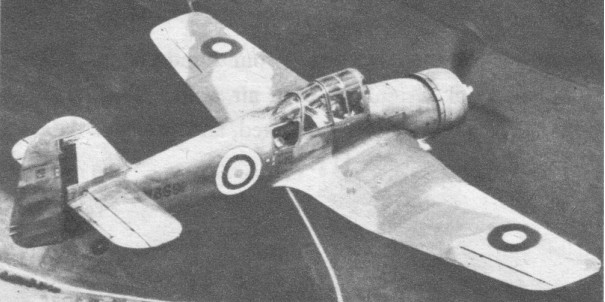
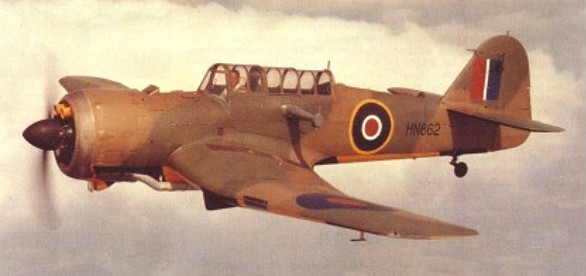
The Miles M.25 prototype (LR241) was flown for the first time on 24 April 1942, the aircraft being based on the Miles Master Mk II but with a lengthened nose to compensate for the weight of target-towing equipment. Incorporated within a modified cockpit was the drogue cable winch, which could be powered by an electric motor or wind-driven propeller, and there was comfortable space for the operator and stowage of the drogue targets.
The type entered service as the Miles Martinet and between 1942 and 1945 a total of 1,724 was built; the type was complemented in 1946 by the M.50 Queen Martinet which had been developed to Specification Q.10/43. This was a radio-controlled pilotless target version of the Martinet, 11 being built as new and the remaining 54 being conversions of M.25s. Planned variants included a glider-tug version of the Martinet, similar to the Master GT Mk II, and the M.37 two-seat trainer of which two prototypes were built. Six surplus Martinets received civil registrations after the war, four of them sold to Sweden and operated by the civil target-towing company Svensk Flygjarst.
M.25 Martinet Engine: 1 x Bristol Mercury XX/XXX, 649kW / 858 hp Wingspan: 11.89 m / 39 ft 0 in Length: 9.42 m / 30 ft 11 in Height: 3.53 m / 11 ft 7 in Wing area: 22.48 sq.m / 241.97 sq ft Max take-off weight: 3062 kg / 6751 lb Empty weight: 2105 kg / 4641 lb Wing loading: 27.88 lb/sq.ft / 136.0 kg/sq.m Max. speed: 208 kts / 386 km/h / 240 mph Range: 603 nm / 1117 km / 694 miles Crew: 2
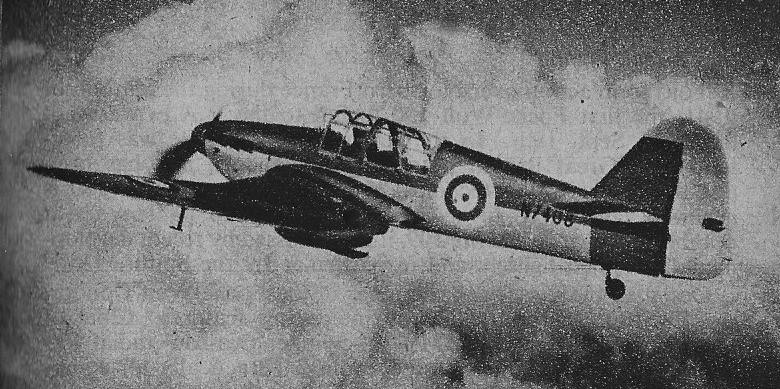
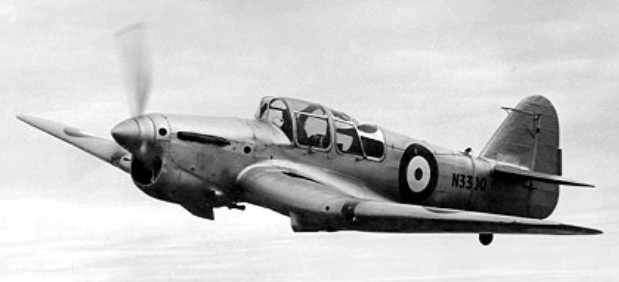
The possibility that the RAF would run short of fighters during the Battle of Britain prompted adaptation of the 750hp Rolls-Royce Kestrel 30-engined M.9 tandem two-seat advanced trainer as an emergency single-seat fighter. The rear seat was removed, together with part of the rear cockpit glazing, a gunsight was installed and six 7.7mm machine guns were mounted in the wings. Assigned the designation M.24 retrospectively, a total of 23 fighter conversions was produced, but, in the event, no need arose for their operational use.
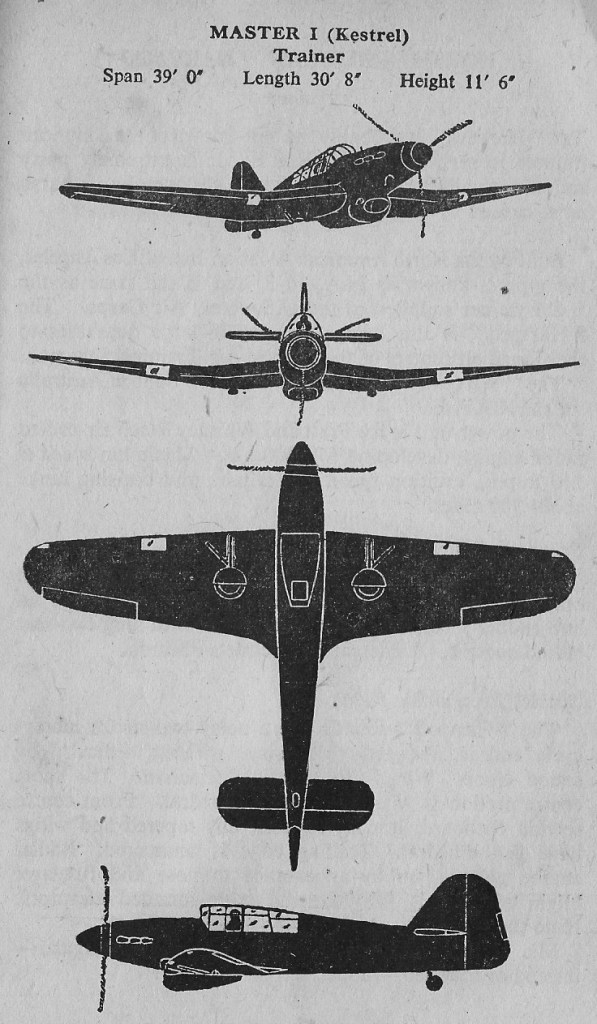
Miles Master I
Engine: 750hp Rolls-Royce Kestrel 30 Wingspan: 11.89 m / 39 ft 0 in Wingspan clipped: 35 ft 8 in Length: 9.27 m / 30 ft 5 in Height: 3.05 m / 10 ft 0 in Wing area: 30.19 sq.m / 324.96 sq ft Max take-off weight: 2563 kg / 5650 lb Empty weight: 2142 kg / 4722 lb Max. speed: 369 km/h / 229 mph Range: 500 mi at 196 mph
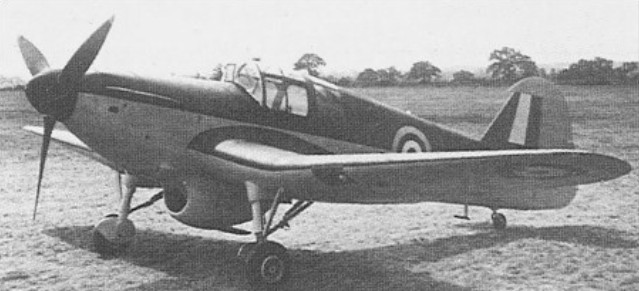
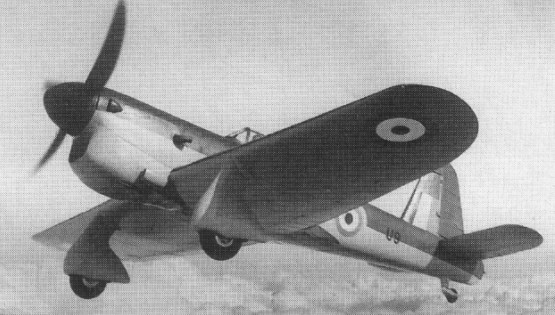
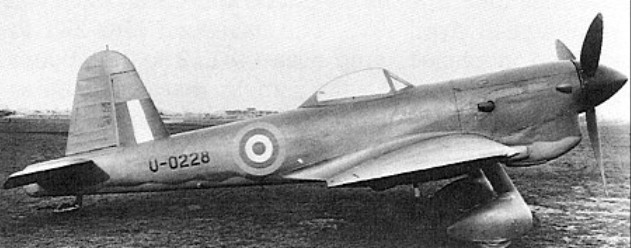
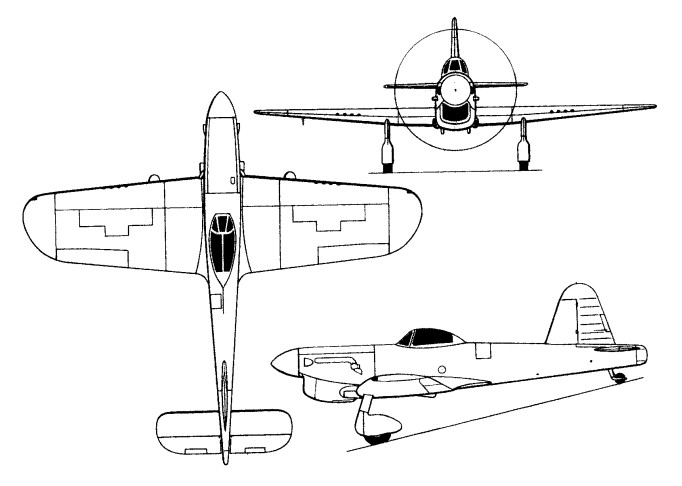
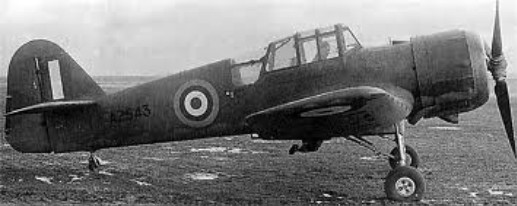
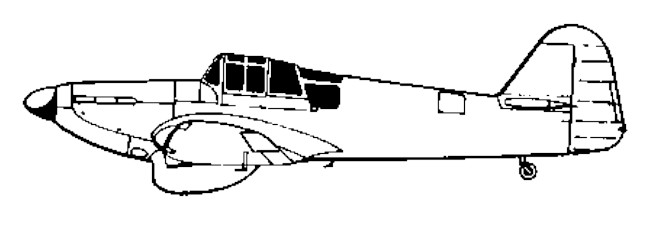
Conceived as an emergency fighter for production in the event that the RAF began to run short of more orthodox fighting aircraft, the M.20 was designed by Walter Capley to specification F.19/40. Of wooden construction with all emphasis placed on rapidity of manufacture, the M.20 dispensed with a retractable undercarriage, eliminating hydraulics, utilised a one-piece wing, adopted a standard Rolls-Royce Merlin XX installation interchangeable with that of the Beaufighter II and employed standard Master cockpit equip¬ment.
The first prototype was designed, built and flown in 65 days. Using many Master components and powered by a 1,300 hp Merlin XX engine and fitted with eight 0.303-in (7.7-mm) machine guns (but having provision for up to 12 guns), the M.20 was first flown from Woodley on 14 September 1940.
Despite its fixed tailwheel undercarriage it proved faster than the Hurricane, with a maximum speed of 350 mph. The M.20 was not placed in production, however, issue of specifica¬tion N.1/41 for a single-seat shipboard fighter led to construc¬tion of a second prototype in 1941 which was submitted to service trials, this differing essentially in the shapes of the mainwheel and leg fairings and spinner. No further development was undertaken.
Engine: Rolls-Royce Merlin XX Wingspan: 10.54 m / 34 ft 7 in Length: 9.17 m / 30 ft 1 in Height: 3.81 m / 12 ft 6 in Wing area: 21.74 sq.m / 234.01 sq ft Loaded weight: 7,758 lb / 3519 kg Empty weight: 5,870 lb / 2 663 kg Max. speed at 20,600 ft (6 280 m): 536 km/h / 333 mph Initial climb: 3,200 fpm / 16,25 m/sec Ceiling: 6280 m / 20600 ft Range: 885 km / 550 miles
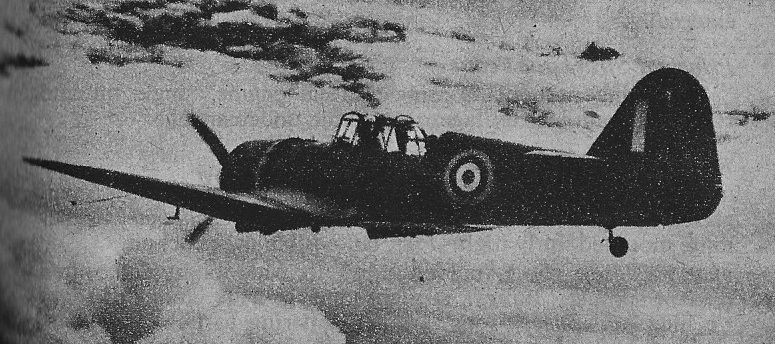
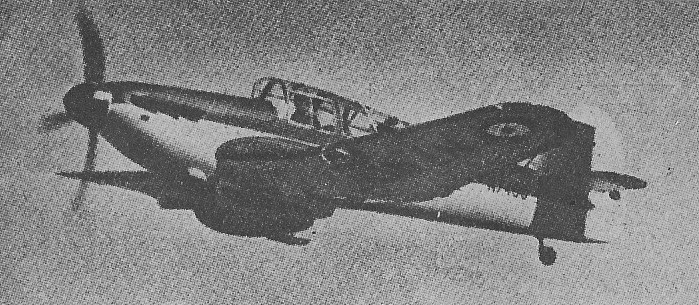
Soon after the outbreak of World War II, the prototype Master II flew for the first time. It was based on the M.9 Master I but powered by a 648kW Bristol Mercury XX radial engine.
Miles Master II
Production amounted to approximately 1,800 aircraft, a number of which were sent to South Africa. Master IIs were also acquired by the air forces of Egypt, Portugal and Turkey.
One Master II was used in connection with rocket experiments.
The M.27 Master III was a further development of the Master series
Miles turned out 3,249 of the 1940 Master I, II, and III advanced trainers.
M.19 Master Mk II Engine: 1 x Bristol Mercury XX, 649kW / 858 hp Max take-off weight: 2528 kg / 5573 lb Empty weight: 1947 kg / 4292 lb Wing loading: 23.78 lb/sq.ft / 116.0 kg/sq.m Wingspan: 11.89 m / 39 ft 0 in Length: 8.99 m / 29 ft 6 in Height: 2.82 m / 9 ft 3 in Wing area: 21.83 sq.m / 234.98 sq ft Max. speed: 210 kts / 389 km/h / 242 mph Service ceiling: 7650 m / 25100 ft Range: 341 nm / 632 km / 393 miles Crew: 2 Armament: 1x cal.303 MG
In January 1939 large extensions to the Miles factory were completed and opened by the Secretary of State for Air. These were necessary to cope with a large contract for the Master I high-speed advanced training monoplane: a two-seater powered by a 536kW Rolls-Royce Kestrel 30 engine. Nine hundred were built.
Soon after the outbreak of World War II, the prototype Master II flew for the first time.
Miles turned out 3,249 of the 1940 Master I, II, and III advanced trainers.
Phillips & Powis Aircraft was formed in 1935 to take over the aircraft manufacturing business operated by Phillips & Powis Aircraft (Reading) Ltd., which had produced the initial Miles Hawk series of light aircraft.
The name changed in October 1943 to Miles Aircraft, as successor to Phillips & Powis Aircraft Ltd. at Woodley, Reading.
Developed M.33 Monitor target tug. Manufacture included M.38 Messengers, some at Newtownards, Northern Ireland, M.57 Aerovan light freighters, M.65 Gemini light twins. Also developed M.68 Boxcar, with detachable freight container; M.71 Merchantman, which was enlarged four-engined Aerovan, and M.60 Marathon feederliner, later produced by Handley Page.
Miles met financial demise and went into liquidation in November 1947, and was acquired by Handley Page (Reading) Ltd in 1947.
Mikhail Leontyevich Mil (died January 1970) began developing helicopters and autogyros in 1929. Mil was a contemporary of Nikolai Kamov at the TsAGI (Central Aero and Hydrodynamic Institute) during the 1930s, was given charge of his own design bureau in March 1947 and became responsible for the first Soviet helicopter to go into quantity production. The GM-1 / Mi-1.
Mi-1 first flown 1948, also manufactured by PZL-Swidnik in Poland 1956-1965. Mi-2 first flown in Soviet Union but production transferred to Poland. Enlarged Mi-4 introduced 1952, also built in China. Mi-6 with detachable wings to provide up to 20 percent of required lift in cruise flight first flown June 1957, then world’s largest helicopter, and 864 built at Rostov-on-Don (now Rostvertol) factory 1959-80, plus 50 at Moscow-Fili 1960-62. Mi-6 formed basis for Mi-22 airborne command post. Mi-8 first flown June 1961, becoming much produced medium civil and military helicopter (well over 7,000 built since 1965 and continuing), as turbine replacement for Mi-4; Mi-8 derivatives include Mi-9 tactical airborne command post (first flown 1977) and Mi-19 variant for use by commanders of tactical rocket units, Mi-17 (first flown August 1975) with change of engines and other modifications and Mi-171/Mi-172 export models, and lengthened Mi-173. Mi-10 flying crane development of Mi-6 first flown 1960, produced up to 1971. Two Mi-6 rotor/power packages used on giant Mi-12 with an overall rotors span of 67m, then the largest helicopter in world. Mi-14 became shorebased amphibious anti-submarine, SAR and mine-countermeasures helicopter (first flown August 1967). Mi-26 first flown December 1977 as very heavy lift helicopter with two powerful turboshaft engines and single eightblade main rotor, with Mi-27 as airborne-command-post derivative. Series of helicopter gunships began with Mi-24 (first flown September 1969) and joining Soviet armed forces from 1970s, with Mi-25 as export version of Mi-24D tandem-cockpit variant and Mi-35 as second and improved export variant based on upgraded versions of Mi-24; most of over 2,500 built between 1970 and 1989, though smallscale production up to 1996. The Mi-28 attack helicopter was first flown November 1982. Mi-34 first flown November 1986 as piston-engined lightweight sporting and training fourseat helicopter. Proposed new types include Mi-40 eighttroop armoured and armed assault helicopter, Mi-46 heavy transport helicopter, Mi-52 three-seat light piston helicopter, Mi-54 utility helicopter, Mi-58 medium civil helicopter, and Mi-60MAI two-seat light training helicopter. Approximately 25,000 Mil helicopters have been built. Became Mil Moscow Helicopter Plant. Has 25 percent shareholding in Euromil.
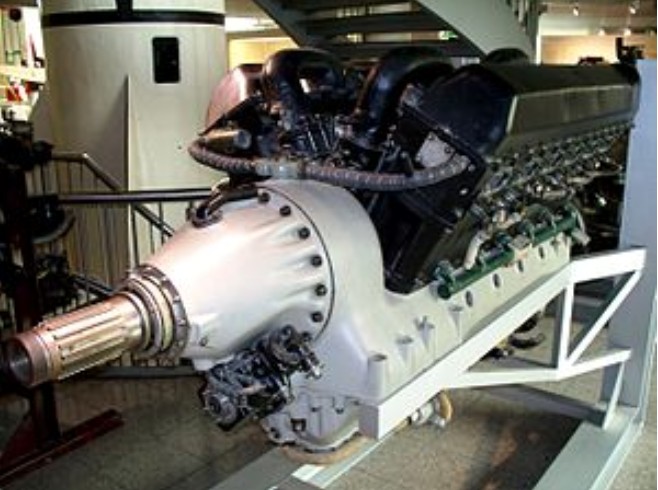
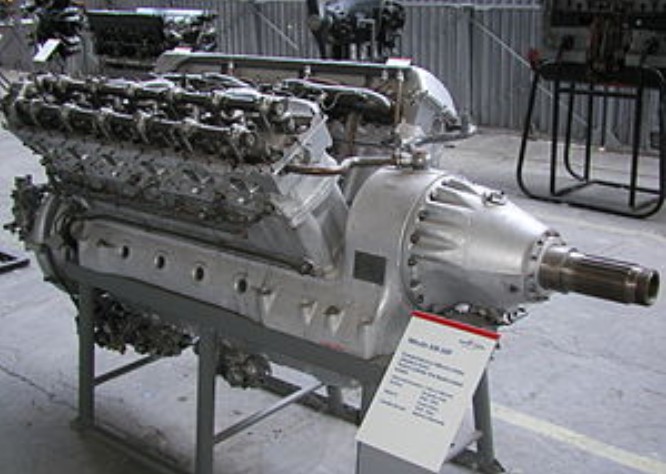
The Mikulin AM-38 was a Soviet liquid-cooled V-12 aircraft engine first run in 1941. It was a further development of the Mikulin AM-35 design. The AM-38 was used on the Il-2 Shturmovik and Il-10 ground attack aircraft. The engine may also have been installed in MiG-3 aircraft, as a field modification, to improve the speed and performance
Approximately 36,163 were built.
Variants: AM-38F Low-altitude version with greater takeoff power and a 10 minute forsazh (war emergency power) mode.
Applications: Ilyushin Il-2 Ilyushin Il-10
Specifications: AM-38F Type: 12-cylinder 60 deg Vee aircraft piston engine Bore: 160mm (6.30 in) Stroke: 190mm/196.7mm (7.48 in/7.744 in) Displacement: 46.66 L (2,847 cu.in) Dry weight: 880 kg (1,940 lb) Supercharger: Single speed centrifugal Cooling system: Liquid-cooled Power output: 1,270 kW (1,700 hp) at 2,350 rpm Specific power: 27.2 kW/L (0.60 hp/in³) Compression ratio: 6.0:1 Power-to-weight ratio: 1.53 kW/kg (0.93 hp/lb)

 All Aero