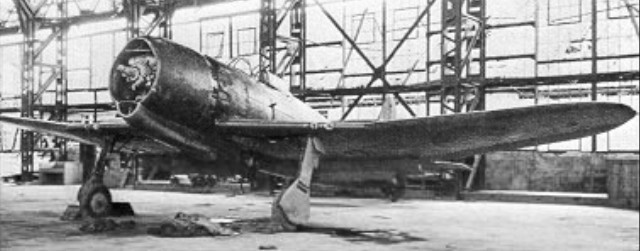
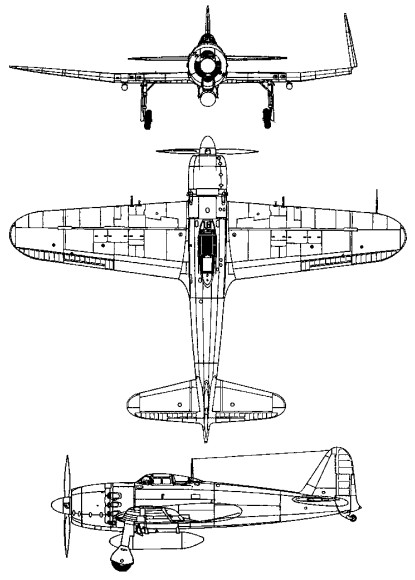
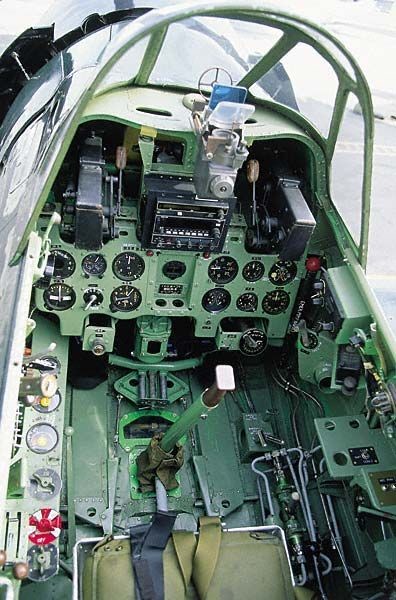
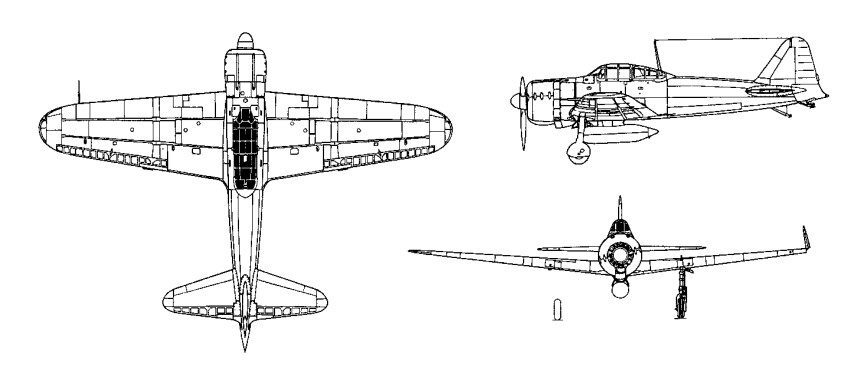
The Reppu (Hurricane) was designed to the requirements of a 17-Shi specification as an A6M successor, and was the responsibility of Jiro Horikoshi. It was not until 1942 that design of the M-50 Reppu (hurricane) began, but the continuing pressure on Mitsubishi for developments of the ABM meant that it was not until 6 May 1944 that the first prototype, which by then had the company designation Mitsubishi A7M1, was flown for the first time.
The first of two A7M1 prototypes was powered with a Nakajima NK9K Homare 22 engine rated at 2,000 hp for take¬off.
A cantilever low-wing monoplane with retractable tailwheel landing gear, and hy¬draulically-operated outer wing panels, the A7M1 revealed excellent flight characteristics, but as predicted by Mitsubishi the type’s maximum speed on the power of the installed Nakajima NK9K Homare 22 engine was below specification.
Further testing was abandoned until availability of the 1641kW / 2,200 hp for take-off Mitsubishi MK9A radial engine made it possible to build seven A7M2 prototype and service trials aircraft, the first prototype being flown on 13 October 1944. Plans for large-scale production were immediately initiated, and it was proposed that series aircraft would have either four 20-mm cannon or two cannon and two 13,2-mm machine guns.
The Reppu had a maximum speed of 630km/h at optimum altitude and was ordered into production as the Navy Carrier Fighter Reppu Model 22. A further six A7M2 prototypes and one production aircraft had been completed by the time hostilities terminated, at which time work was proceeding on the extensively modified A7M3-J which was to have been powered by a turbosupercharged version of the MK9A engine and carry an armament of four wing-mounted and two oblique-firing fuselage-mounted 30-mm cannon.
Allied air attacks and an earthquake limiting production to only one aircraft. Development of similar land-based fighters was planned under the designations A7M3 and A7M3-J, but neither was built before the war ended.
A7M1 Engine: Nakajima NK9K Homare 22, 2,000 hp
A7M2 Engine: Mitsubishi MK9A, 2,200 hp / 1650kW Max speed, 390 mph (628 km/h) at 21,655 ft (6 600 m) Time to 19,685 ft (6 000 m), 6.15 min Range (internal fuel), 570 mls (917 km) Cruise speed: 410 km/h / 255 mph Ceiling: 10900 m / 35750 ft Empty weight, 7,112 lb (3 226 kg) Max take-off weight, 10,406 lb (4720 kg) Span, 45 ft 11¼ in (14,00 m) Length, 36 ft 1¼ in (11,00 m) Height, 14 ft ½ in (4,28 m) Wing area, 332.17 sq ft (30,86 sq.m) Armament: 4 x 20mm cannons, 2 x 250-kg bombs Crew: 1
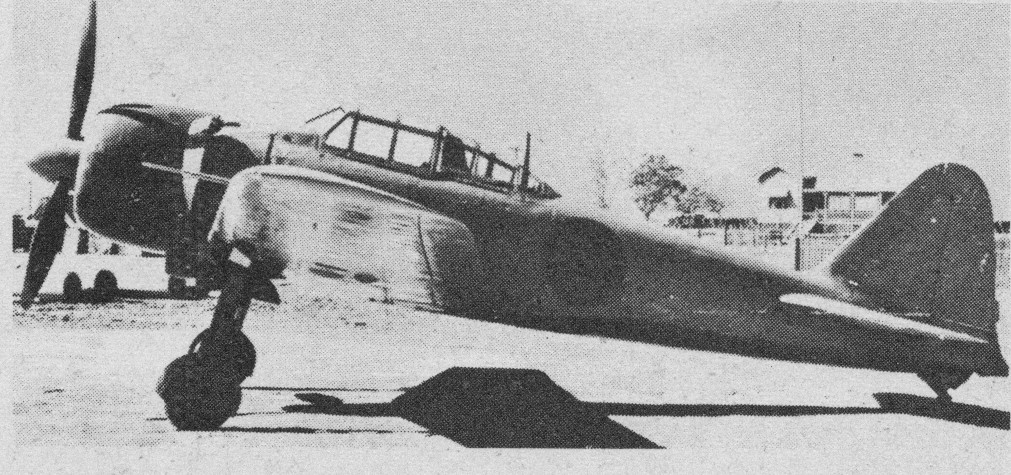
On 5 October 1937 the Japanese Navy furnished the Mitsubishi and Nakajima companies with its requirements for a new fighter. Mitsubishi alone accepted the task and design work began under the direction of Jiro Horikoshi. The power plant for the new navy fighter, on which work began in 1938, was the Mitsubishi MK2 Zuisei 13, a fourteen cylinder radial of 780 hp / 582kW, later known as the Ha.31/13. Care was given to structural weight and extensive use was made of Extra-Super Duralumin. In March 1939, at Mitsubishi’s Nagoya plant, the first prototype was completed.
The prototype A6M1 was first flown on 1 April 1939 by Katsuzo Shima with a 780 hp Mitsubishi Zuisei 13 radial, and accepted by the Navy as the A6M1.
With a Nakajima NK1C Sakae 12 engine of 925 hp / 708kW, the third prototype became the A6M2 Model 11, first flying on 18 January 1940. At the end of July 1940 the A6M2 was officially adopted as the Type 0 Carrier Fighter, Model 11, or Zero-Sen. Production A6M2 fighters (64 built) were fitted with two wing-mounted 20mm guns and two nose-mounted 7.7mm guns. It was with this version that the Japanese navy escorted the raiding force sent against Pearl Harbor, and gained air superiority over Malaya, the Philippines and Burma. The reporting name ‘Zeke’ was given to the A6M.
The major production version was the A6M2 Model 21 which featured folding wingtips for carrier stowage. About 2/3 of the 740 Model 21s (also built by Nakajima) were in service when Japan entered the war.
During 1942, 508 of a two-seat training variant, the A6M2-K, were manufactured by Hitachi and Sasebo.
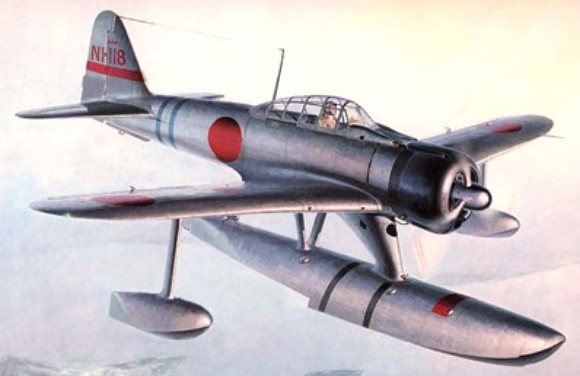
A Japanese Navy specification was issued in 1940 for a single seat fighter seaplane to cover early phases of amphibious landings and for the defence of small islands where hard runways were unnecessary or impracticable. The Nakajima firm was building the Mitsubishi A6M2 Zero under licence and was ordered in February 1941 to develop a float seaplane version.
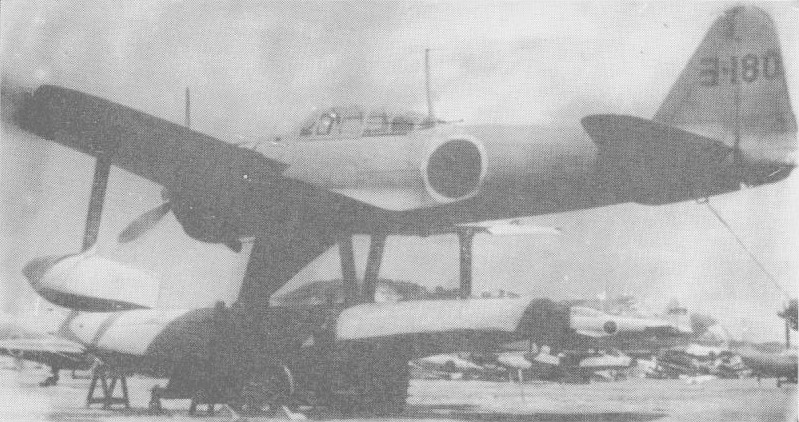
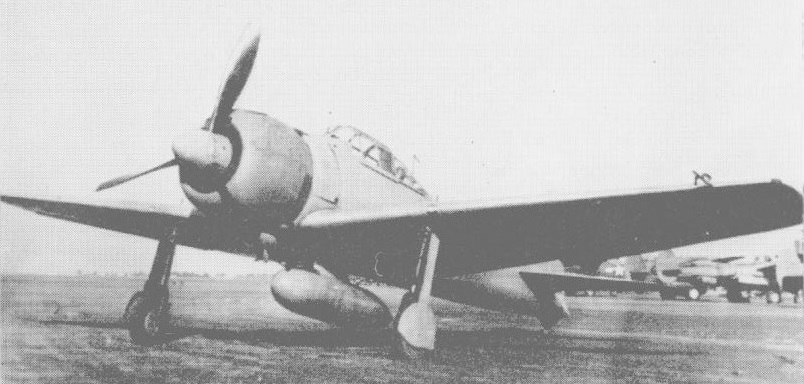
After removing the wheel landing gear and fairing over the wheel wells of a standard A6M2, Nakajima mounted a large float under the fuselage by means of a forward-raked central pylon and a pair of V-struts below the cockpit; two cantilever stabilizing floats were also mounted under the wings. The standard Zero gun armament was retained, and the first prototype was flown on 7 December 1941, the day on which the Japanese navy attacked Pearl Harbor.
Nakajima A6M2-N
Entering production as the Nakajima A6M2-N and codenamed ‘Rufe’ by the Allies, the new fighter still displayed a creditable performance, being first issued to the Yokohama Kokutai and deployed to Tulagi in the Solomons where the Japanese had first landed during the Battle of the Coral Sea. Almost all the ‘Rufes’ were destroyed in a strike on the seaplane base by 15 Grumman F4Fs from USS Wasp on 7 August 1942.
A6M2-N
Better success attended the ‘Rufes’ which fought in the later Aleutian campaign, but losses soared as soon as American fighter strength could be built up. During the final year of the war, when American heavy bombers and naval aircraft opened their great attacks on the Japanese homeland, ‘Rufes’ of the Otsu Kokutai, based on Lake Biwa, were thrown into the battle as interceptors in defence of Central Honshu but suffered very heavy losses. Total production of ‘Rufe’ amounted to 327 before being halted in September 1943.
In the Spring of 1942 the A6M3 with 1130 hp two-stage supercharged Sakae 21 entered service. Shortcomings revealed during testing led to the clipping of the folding 1 ft 8 in off each wingtip before entering production as the A6M3 Model 32.
Code-named Hap in honour of Gen. Hap Arnold, Arnold requested his name not be used. It was re-coded Hamp before its identity was established as a Zero variant (Zeke 32). The A6M3 Model 32 became operational in 1942 and 343 were built be Mitsubishi. A further 560 A63 Model 22, with normal full-span wing were also completed by Mitsubishi.
A6M3
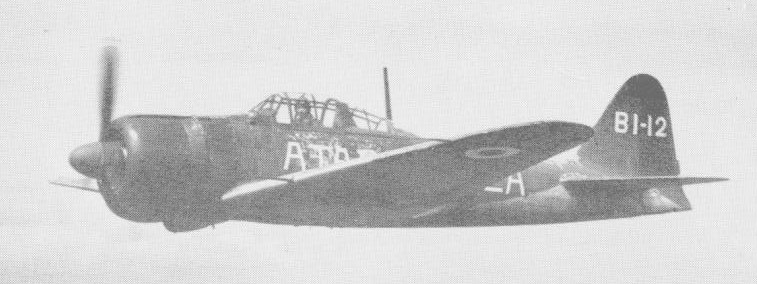
By 1943 the A6M5 Model 52, which ultimately accounted for more than half the overall Zero production, was in production. The short-span wing of the Zeke 32 were used, but with its tips rounded off, and the Sakae 21 engine was modified to boost the top speed to 358 mph. Various refinements were the A6M5a, 5b and 5c, with differing degrees of firepower, armour protection and other features. A trainer version, the A6M5-K, did not pass beyond the pre-production stage.
A6M5
The Sakae 32-powere A6M6 did not meet expectations, but a further adaptation of the A6M5 produced the A6M7, which entered production, as the European war ended, for the dive bombing role.
Difficulties over the supply of Sakae engines enabled Mitsubishi, late in 1944, to introduce the 1560 hp Mitsubishi Kinsei 62 engine in the A6M8. Only two prototypes were ever flown.
The Battle of Midway represented the Zero’s combat zenith; thereafter the fighter found itself outclassed by the American F6F Hellcat and P-38 Lightning. To counter the new American fighters the A6M5 was rushed to front-line units. This version, with Sakae 21 engine and improved exhaust system, possessed a top speed of 565km/h, more A6M5s (and subvariants) were produced than any other Japanese aircraft.
It was five A6M5s of the Shikishima kamikaze unit that sank the carrier St Lo and damaged three others on 25 October 1944.
Other versions were the A6M6 with water-methanol boosted Sakae 31 engine and the A6M7 fighter/dive-bomber.
Total production of all A6Ms was 10,939, including 327 Rufe floatplanes, of which Mitsubishi built 3879 and Nakajima 6215.
A6M1 Engine: Mitsubishi MK2 Zuisei 13, 780 hp Armament: 2 x 20mm cannon & 2 x 7.7mm mg
A6M2 Engine: 1 x Nakajima NK1F Sakae 12, 705kW Max take-off weight: 2410-2796 kg / 5313 – 6164 lb Empty weight: 1680 kg / 3704 lb Wingspan: 12.0 m / 39 ft 4 in Length: 9.06 m / 29 ft 9 in Height: 3.05 m / 10 ft 0 in Wing area: 22.44 sq.m / 241.54 sq ft Max. speed: 525 km/h / 326 mph Cruise speed: 330 km/h / 205 mph Ceiling: 10000 m / 32800 ft Range w/max.fuel: 3050 km / 1895 miles Range w/max.payload: 1850 km / 1150 miles Crew: 1 Armament: 2 x 20mm cannons, 2 x 7.7mm machine-guns, 60kg of bombs
A6M2 Model 11 Engine: Nakajima NK1C Sakae 12, 925 hp
A6M2 Model 21 Max speed: 317 mph @ 16,400 ft Time to 19,680 ft: 7 min 27 sec
A6M2-N Engine: Nakajima Sakae 12, 925 hp Wingspan: 39 ft 4.5 in Max speed: 270 mph at 14,110 ft
A6M5 Wingspan 11 m (36 ft. 1 in.) Length 9.12 m (29 ft. 11 in.) Height 3.51 m (11 ft. 6 in.) Empty weight 1,876 kg (4,136 lb.)
A6M5b Engine: Nakajima Sakae 21, 1139 hp Span: 36 ft 1 in Length: 29 ft 9 in Height: 9 ft 2 in Empty weight; 4175 lb Loaded weight: 6047 lb Max speed: 351 mph at 19,685 ft Service ceiling: 35,100 ft Max range: 975 mi Armament: 2 x 20mm cannon, 1 x 12.7 mm mg, 1 x 7.7 mm mg Bombload: 700 lb Seats: 1
A6M6c Model 53C Engine: Nakajima NK1P Sakae 31 Power: 1120 hp @ 2800 rpm (T/O), 1210 hp (war emergency @ 8000 ft), 1055 hp @ 20,400 ft. Wing span: 36 ft 1 in (10.99m) Length: 29 ft 9 in (9.06m) Height: 9 ft 2 in (2.79m) Empty wt: 3920 lbs (1778 kg) Operational wt: 6026 lbs (2733 kg) Max speed: 346 mph (556 kph) @ 19680 ft (5998m) Service ceiling: 35,100 ft (10698m) Range: 1130 sm (1818 km) @ 152 mph (244 kph), 875 sm (1408 km) @ 212 mph (341 kph) Max range: 635 sm (1022 km) Armament: 2 x Type 99 (Oerlikon) 20 mm cannon, 3 x 13.2 mm mg & 1 x 7.7 mm mg.
Nakajima A6M2-N Engine: 1 x Nakajima “Sakae-12”, 705kW Wingspan: 12 m / 39 ft 4 in Length: 10.1 m / 33 ft 2 in Height: 4.3 m / 14 ft 1 in Wing area: 22.44 sq.m / 241.54 sq ft Max. speed: 435 km/h / 270 mph Cruise speed: 300 km/h / 186 mph Ceiling: 10000 m / 32800 ft Range: 1150 km / 715 miles Range w/max.fuel: 1780 km / 1106 miles Armament: 2 x 20mm cannons, 2 x 7.7mm machine-guns Crew: 1
Mitsubishi Jukogyo Kabushiki Kaisha Mitsubishi Heavy Industries Ltd
After World War 1 several members of the former Sopwith Aviation Company’s technical staff had joined Mitsubishi and produced designs to meet the specifications of the Air Supply Section of the I.J.N. In this way, Herbert Smith became chief designer for Mitsubishi. W. L. Jordan, D.S.C., D.F.C., an ex RNAS and RAF fighter pilot, was appointed their chief test pilot.
Mitsubishi Heavy Industries Ltd. formed April 11,1934, through the merger of Mitsubishi Shipbuilding and Engineering Co Ltd. and Mitsubishi Aircraft Co Ltd. Long association with Japanese Navy, commencing with Type 10, operational 1922. Most notable aircraft were 1937 A5M4 “Claude”; 1942 J2M3 ‘Jack’; 1939 A6M3 ‘Zeke’ (Zero), which were all fighters; 1941 Ki-46 ‘Dinah’ reconnaissance aircraft; 1940 G3M1 “Nell” and 1941 G4M1 “Betty” medium bombers; 1940 Ki-21 “Sally” heavy bomber; and its replacement, 1944 Ki-67″Peggy.”
Mitsubishi built 80,000 aircraft between 1920 and 1945. After the pre¬dominant role Mitsubishi played in Japa¬nese aviation during the 25 years that preceded the termination of World War II, MHI was prohibited from engaging in aircraft manufacture until 1955.
Post-war built North American F-86F Sabres, Sikorsky S-55s, S-62As, and S-61s, and 177 Lockheed F-104J and 19 two-seat F-104D-Js Starfighters with Kawasaki, with which company it also manufactured McDonnell Douglas F-4EJ Phantoms. They will be fitted with arrester gear
Mitsubishi completed the assembly of 300 F-86F Sabres for the JASDF, but modifed 18 of these aircraft into RF-86F reconnaissance-fighters, each carrying two K-22 cameras in the forward fuselage and one K-17 camera under the centre fuselage.
Licence production of Sikorsky S-55 helicopters began in 1958, and was to be followed by manufacture of the HSS-2 Seadragon anti-submarine helicopter, of which Mitsubishi were to build 10 for the JMSDF by November 1966.
Shin Mitsubishi Jukogyo Kabushiki Kaisha 1962: Shin Mitsubishi Building, No 10, 2-Chome, Marunouchi, Chiyoda-ku, Tokyo
Produced 90 T-2 supersonic jet trainers, the first Japanesedeveloped supersonic aircraft (first flown 1971 and all delivered by 1988) and 77 F-1 single-seat close-air-support derivatives (all delivered by 1987). Developed MU-2 turboprop executive aircraft (first flown 1963), built in Japan and assembled and marketed in U.S.A. by subsidiary Mitsubishi Aircraft International, followed by the MU-300 Diamond (first flown 1978), which later became the Beech Model 400 Beechjet.
Produced 213 McDonnell Douglas F- 15J/DJ fighters for JASDF by 1998, and in October 1995 first flew new Japanese-developed F-2 fighter support aircraft, intended to replace F-1 and based on F-16 but incorporating new technologies. Currently modernizing F-4EJ fleet, is a partner in the Bombardier Global Express program, has a 20% share in the Kawasaki OH-1 helicopter program, constructs Sikorsky S-70B-3 helicopters for the JMSDF as SH-60JS (the first flew 1991) plus UH-60Js for SAR with JMSDF and JASDF and UH-60JAS for JGSDF, has developed the new MH2000 twin-turbine multipurpose helicopter (first flown July 1996), and constructs components forthe Dash 8, various Boeing airliners and Sikorsky S-92. Also has engine and space activities.
Its overhaul and repair organization handles all types of aircraft and aero-engines. In particular, it is responsible for component manufacture and repair of Pratt & Whitney engines in Japan.
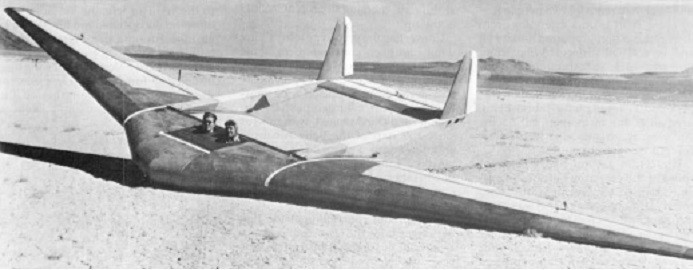
During WW II, Don Mitchell became responsible for the construction of the wings of the CG-4A. In 1943 he had responsibility for the building of the XCG-16 prototype. At the same time he was working on his own flying wing, model 278.
One of Don Mitchells projects was the conversion of a 1/2 scale XCG-16 which he converted into a flying wing using external stabilators for control and stability. He, along with Hawley Bowlus and Paul Tuntland, flew the wing many times at the various dry lakes. They towed with both auto and airplane with no major problems.
Later it had an engine attached.
Side-by-side two seater. Wingspan: 50 ft Glide ratio: 38-1
The M.35 was completed and flown in six weeks but proved to be unstable. Wind tunnel tests showed the problems to be curable and George Miles conceived a heavy bomber, the M.39, to be powered by three turbojet engines, or in its initial form with two high-altitude Rolls-Royce Merlin 60s or Bristol Hercules VIIIs.
A five-eighths scale model of the bomber was built and designated M.39B, flying for the first time on 22 July 1943 and proving to be aerodynamically stable. Flight trials were initially on a private basis, but in 1944 the M.39B went to the Royal Aircraft Establishment at Farnborough, where it suffered two accidents. After extensive repairs the work ended.
M.39B Libellula Engines: 2 x de Havilland Gipsy Major 1C, 104kW Wingspan: 11.43 m / 37 ft 6 in Length: 6.76 m / 22 ft 2 in Height: 2.82 m / 9 ft 3 in Wing area: 23.15 sq.m / 249.18 sq ft Max take-off weight: 1270 kg / 2800 lb Empty weight: 1091 kg / 2405 lb Max. speed: 264 km/h / 164 mph
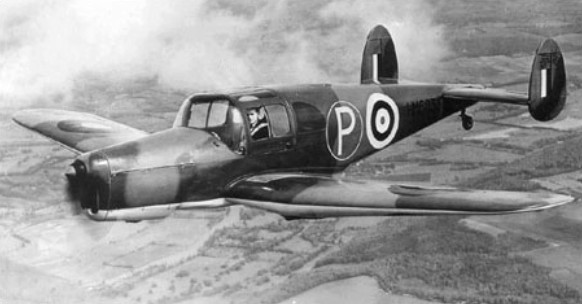
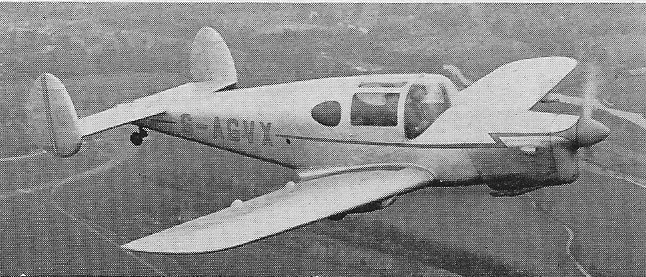
At the private request of certain army officers in June 1942, George Miles designed and built the prototype of an air observation post (AOP) aircraft. It was required to carry a crew of two, radio, armour protection and other military equipment, and to be able to operate out of and into small tree-surrounded fields in all weathers. The resulting Miles M.38 prototype was a cantilever low-wing monoplane with fixed tailwheel landing gear, powered by a 104kW de Havilland Gipsy Major inline engine. The wing incorporated fixed aerofoil trailing-edge flaps and when flown on 12 September 1942 it was found that these provided the requisite STOL performance. Great enthusiasm for its capability was shown by an AOP squadron which Miles allowed to flight test the aircraft, but shocked by the design, construction and testing of a military aeroplane without its knowledge, the Ministry of Aircraft Production refused to order this prototype into production for the AOP role.
In late 1943 a small order was placed for the aircraft for use in a VIP transport role under the designation M.38 Messenger and eventually a total of 21 was built. Among VIP operators allocated personal Messengers were Field Marshal Sir Bernard Montgomery and Marshal of the RAF Lord Tedder.
An additional 71 were built post-war for civil use, some at Newtownards, Northern Ireland, bringing total production to 92. One aircraft was modified jn 1944 by introducing conventional trailing-edge flaps and installing a 112kW Blackburn Cirrus Major engine. When tested this machine, designated M.48 Messenger 3, was found to offer so little improvement in performance over the standard M.38 that no production followed. In its role as a VIP transport the 11.02m span Messenger had a maximum speed of 187km/h and range of 418km.
The M.38 Messenger IIA is certified in the UK to Manufacturer’s Type Record.
M.38 Messenger Engine: Blackburn Cirrus Major III, 150 hp Range: 460 mi
M.38 Messenger Engine: De Havilland Gipsy Major, 138 hp Length: 24.016 ft / 7.32 m Height: 9.514 ft / 2.9 m Wingspan: 36.155 ft / 11.02 m Wing area: 190.953 sq.ft / 17.74 sq.m Max take off weight: 1900.7 lb / 862.0 kg Weight empty: 1519.2 lb / 689.0 kg Max. speed: 101 kts / 187 km/h Cruising speed: 83 kts / 153 km/h Service ceiling: 15174 ft / 4625 m Wing loading: 10.05 lb/sq.ft / 49.0 kg/sq.m Range: 226 nm / 418 km Crew: 2 Payload: 2pax
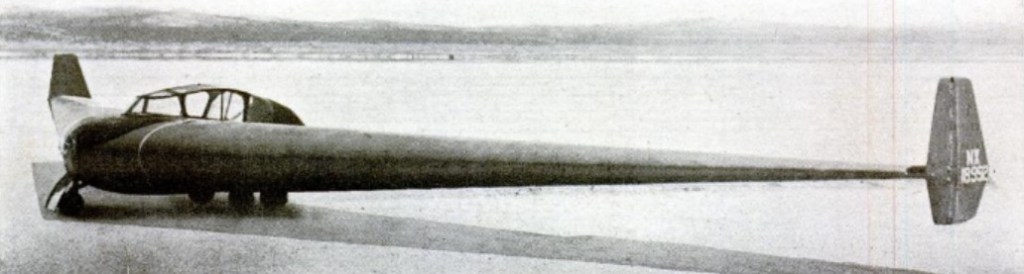
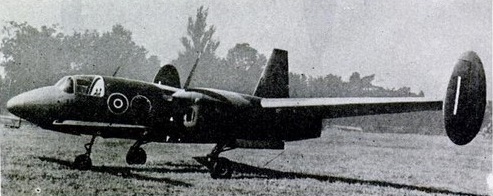
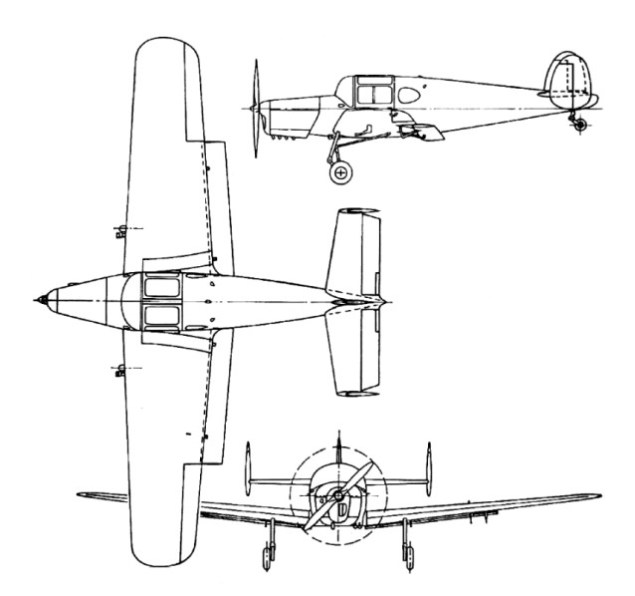
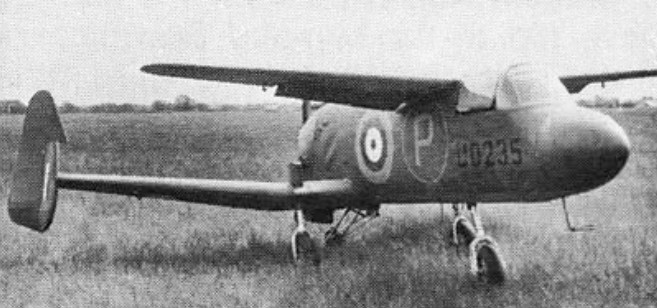
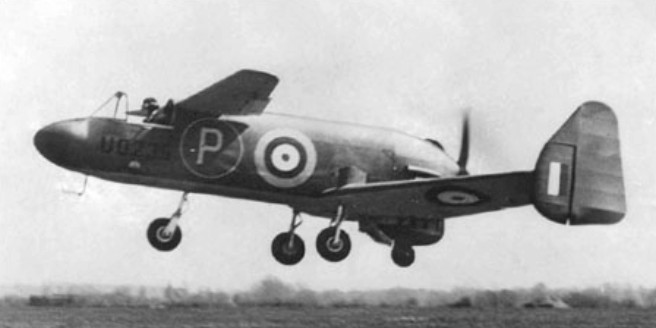
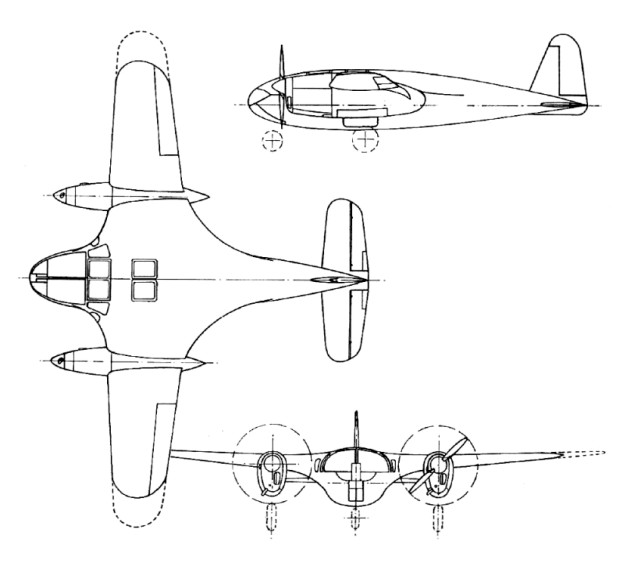
George Miles thought a tail first aircraft would give the pilot the best possible for¬ward view for landing on an aircraft carrier. With lift provided by two wings, span could be short and there would be no need for wing-folding.
In six weeks Miles had built a full size flying test bed of his concept, the Miles M.35 Libellula, but Miles’ chief test pilot refused to fly the peculiar aircraft, so George Miles made the first test himself in May 1942.
The Libellula proved catastrophically unstable in pitch; subsequently the aircraft was ballasted to improve its stability, but when the project was shown to ministry officials they told Miles: it will never fly.’ When he pointed out that the aircraft had flown, they reprimanded him for building it without permission, while their Lordships of the Admiralty reminded him that in wartime lives had to be sacrificed.
Another Libellula was built as a five-eighths scale model of a projected high-altitude, high speed bomber and proved perfectly stable over a wide range of centre of gravity positions, but the bomber was never ordered because de Havilland’s Mosquito was by then (1943) in full production.
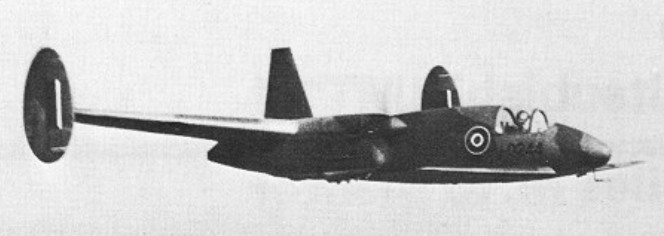
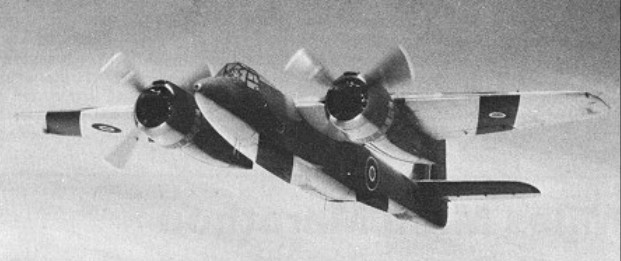
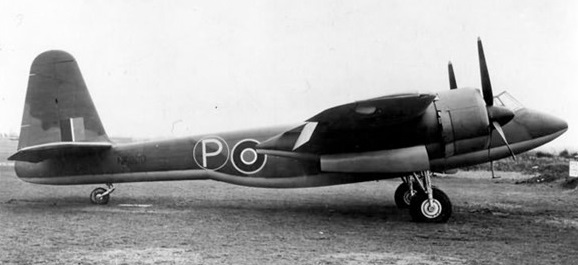
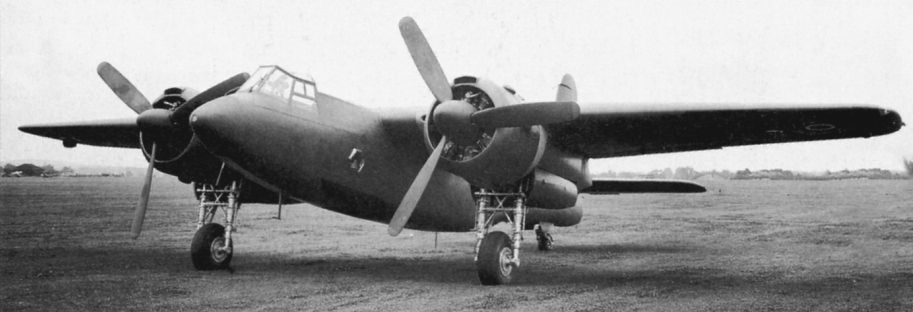
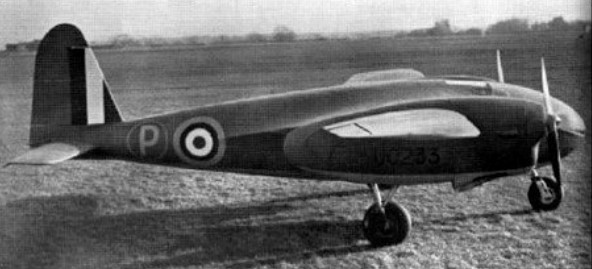
Designed to Air Ministry Specification Q.9/42 for a high-speed target tug, the Miles M.33 Monitor was a clean-looking cantilever high-wing monoplane with retractable landing gear and power provided by two wing-mounted engines.
The Miles proposal was at first rejected as it was considered there were no suitable engines available, but with agreement to use the 1268kW Wright Cyclone R-2600-31, Miles received a contract for 600 aircraft.
The prototype (NF900) was flown for the first time on 5 April 1944 and handled well, but the end of the war was approaching before development was completed and the contract was reduced first to 200 and then to 50, and was finally cancelled after 20 had been delivered.
Even these were not used by the RAF as intended, only 10 Monitors entering service with the Royal Navy for operation briefly as the Monitor TT.Mk II before replacement by de Havilland Mosquito TT.Mk 39s.
M.33 Monitor Engines: 2 x Wright Caclone R 2600 31, 1677 hp Length: 47.671 ft / 14.53 m Height: 14.239 ft / 4.34 m Wingspan: 56.299 ft / 17.16 m Wing area: 501.172 sq.ft / 46.56 sq.m Max take off weight: 21077.6 lb / 9559.0 kg Weight empty: 15851.7 lb / 7189.0 kg Max. speed: 287 kts / 531 km/h Cruising speed: 230 kts / 426 km/h Service ceiling: 29003 ft / 8840 m Wing loading: 42.03 lb/sq.ft / 205.0 kg/sq.m Range: 2390 nm / 4426 km Crew: 2
Engines: 2 x 130hp de Havilland Gipsy Major I Series II Wingspan: 10.06 m / 33 ft 0 in Length: 8.00 m / 26 ft 3 in Height: 2.74 m / 9 ft 0 in Wing area: 18.58 sq.m / 199.99 sq ft Take-off weight: 1920 kg / 4233 lb Empty weight: 1230 kg / 2712 lb Crew: 1-2
The Miles M28 was designed to fulfill two major functions, a two seater ab-initio/intermediate trainer and a three seat communications aircraft.
Construction of the prototype was suspended in 1939 but recommenced in 1941, the prototype flying on 11 July 1941. The prototype had an R.A.F. Service Number of U-0232.
It was designed to be powered by either a Cirrus Major 150 HP engine or a Gypsy Major IIA with fixed pitch propeller or a Gypsy Major III with a constant speed propeller. With Miles low drag flaps and drooping ailerons as well as a fuselage air brake, landing speeds were as low as 40 miles per hour.
Three prototypes were produced during the war: the Mk.1 two-seat dual-control trainer, the Mk.2 three-seater with hydraulic undercarriage retraction, and the Mk.3 triple-control trainer.
Three additional machines were produced after the war: one Mk.4 and two Mk.6.
M.28 Mercury Mk.1 two-seat dual-control trainer
M.28 Mercury Mk.2 three-seater
M.28 Mercury Mk.3 triple-control trainer
M.28 Mercury Mk.4 Engine: 145 hp Gipsy Major IIA
M.28 Mercury 6 Engine: 155 hp Blackburn Cirrus Major III Wingspan: 30 ft 8 in Length: 24 ft Height: 8 ft 3 in Empty weight: 1460 lb Loaded weight: 2427 lb Max speed: 157 mph Cruise: 139 mph ROC: 890 fpm Range: 410 mi
Engine: Gypsy Major III Top speed: 176 mph Span: 30 ft 6 in Length: 22 ft 1.5 in Height: 8 ft 6 in Wing area: 160 sq. ft





 All Aero