Formed at San Bernardino County Airport, California, by Howard Morrow, factory completed April 1, 1941. Developed Model 1-L tandem two-seat trainer for Civil Pilot Training Program. Employed plastic-bonded plywood construction and was powered by a Lycoming O-435A engine.
World War 2
Morane-Saulnier Ms.470 Vanneau / MS.472 / MS.474 / MS.475 / MS.479
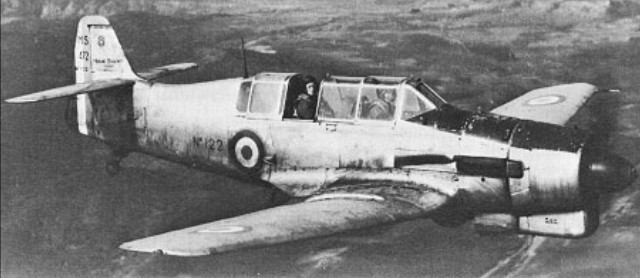
Developed under the Vichy regime by Morane-Saulnier chief designer Gauthier, the Morane-Saulnier M.S.470.01 Vanneau two-seat advanced trainer prototype made its first flight on 22 December 1944. Successful tests led to a decision by the Armee de I’Air to buy the Vanneau (Plover) to train its new generation of pilots, and three prototypes of the revised M.S.472 were ordered, M.S.472.01 flying on 12 December 1945.
In configuration the M.S.470 was an all-metal low-wing cantilever monoplane with pupil and instructor housed under a long glazed canopy. The main landing gear legs retracted inwards to lie partially exposed in the fuselage underside, a feature which was intended to reduce damage in the event of ‘wheels-up’ landings. The M.S.472 replaced the 515kW Hispano-Suiza 12X engine of the M.S.470 with a 522kW Gnome-Rhone 14M radial. The M.S.472 first flew on 12 February 1945.
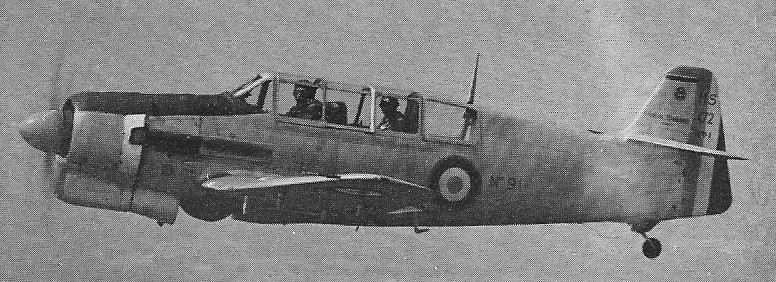
230 Series M.S.472s were delivered from December 1946 onwards, and 69 series M.S.474 aircraft, modified for carrier operations, were delivered to the Aeronavale from December 1947, an M.S.472 having been temporarily converted to serve as the prototype M.S.474 in February of that year.
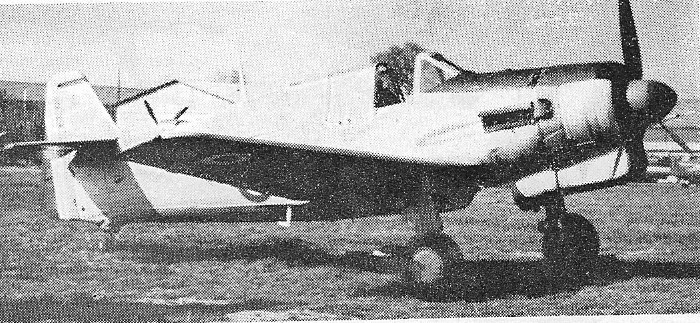
Total production of the M.S.472 Vanneau II was 230 and of the M.S.474 Vanneau IV 70. Another series version was the M.S.475 Vanneau V, the prototype making its maiden flight on 8 August 1947. Production deliveries of the 200 series aircraft to the Armee de I’Air began in March 1950, the M.S.475 differed only in detail from its predecessors except for installation of a 634kW Hispano-Suiza 12Y-45 V-12 engine.
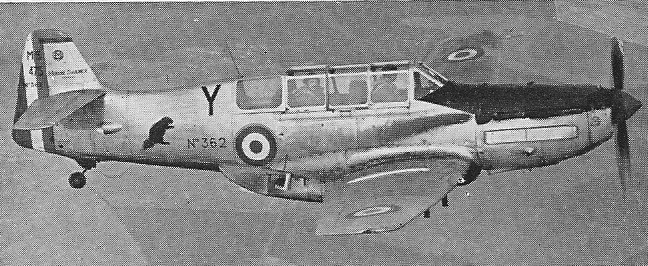
The M.S.475 proved superior to its predecessors in manoeuvrability, speed and rate of turn, incorporating a wing of improved design, but a more radical modification with an increase in wing surface area was incorporated in one production machine, which was then re-designated M.S.476.01. Another M.S.475 was re-engined with an SNECMA Renault 12S-02 of 433kW and became the M.S.477.01, flown in November 1950. The M.S.478.01 project, to be powered by an Italian Isotta Fraschini Delta engine, was not built, and the last experimental development of the Vanneau was M.S.472 no. 295 modified as the M.S.479.01 to take an SNECMA 14X Super Mars engine of 611kW. It began its flight test programme in March 1952, but development was soon abandoned. The Vanneau II, IV and V remained in service at training bases of the Armee de I’Air and Aeronavale into the late 1960s.
M.S.470
Engine: Hispano 12X, 720 hp
M.S.472
Engine: Gnome-Rhone 14N-9, 700 hp
Wingspan: 34 ft 11 in
Length: 28 ft 3 in
Height: 11 ft 10.5 in
Empty weight: 3717 lb
Loaded weight: 5290 lb
Max speed: 290 mph
Cruise: 258 mph
Range: 950 mi
Armament: 2 x 7.5mm mg
Seats: 2
M.S.475
Engine: 1 x Hispano-Suiza 12Y 45 V-2, 641kW
Max take-off weight: 3125 kg / 6889 lb
Empty weight: 2351 kg / 5183 lb
Wingspan: 10.65 m / 34 ft 11 in
Length: 9.05 m / 29 ft 8 in
Height: 3.62 m / 11 ft 11 in
Wing area: 17.30 sq.m / 186.22 sq ft
Max. speed: 445 km/h / 277 mph
Ceiling: 8500 m / 27900 ft
Range: 1500 km / 932 miles
Armament: 2 x MAC 1934 7.5mm wing-mounted machine-guns, light bombs
M.S.479
Engine: 800hp SNECMA 14X-04

Morane-Saulnier MS 450 / Dornier-Werke D-3802A
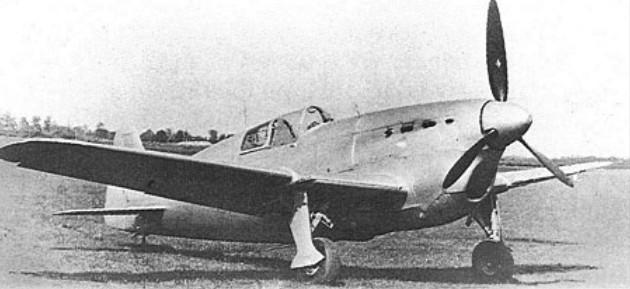
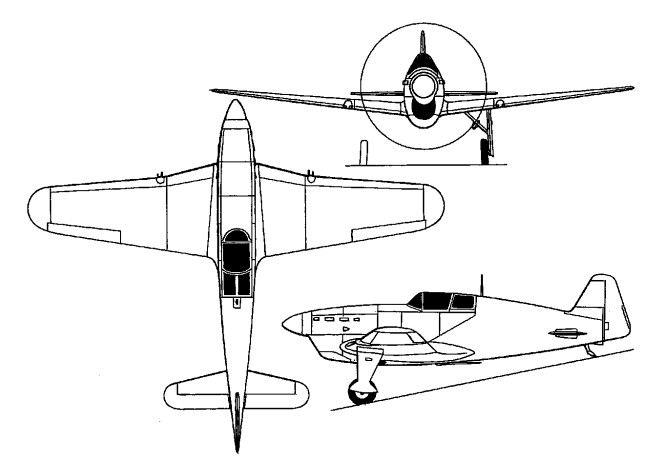
On 27 January 1937, a new requirement was issued by the Service Technique Aéronautique and one of the fighters designed to conform with its requirements was the MS 450. Featuring a dural monocoque fuselage and Plymax-skinned metal wings, the MS 450 was powered by an Hispano-Suiza 12Y51 engine affording 1,050 hp for take-off and carried an armament of one 20-mm engine-mounted cannon and two wing-mounted 7,5-mm machine guns. The first of three prototypes of the MS 450 was flown on 14 April 1939, but a month earlier, an initial production order had been placed for the competitive Dewoitine D 520, and although the MS 450 test programme was continued the second prototype being completed in November 1939 its failure to display any marked advantage prevented the placing of a production order for the Armée de l’Air. Development of the basic design was continued, however, culminating in the MS 540 which was built in Switzerland by the Dornier-Werke AG (Doflug) as the D-3802A.
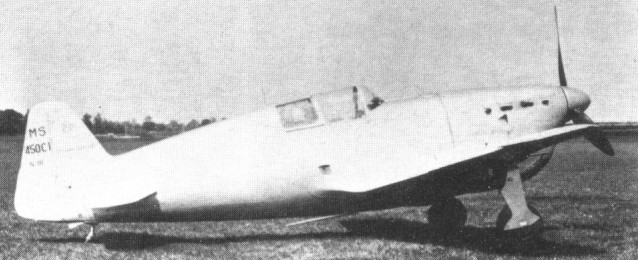
Engine: Hispano-Suiza 12Y51, 1,050 hp
Span, 34 ft 9 5/8 in (10,62 m)
Length, 28 ft 11¼ in (8,82 m)
Height, 9 ft ¼ in (2,75 m)
Wing area, 184.07 sq ft (17,10 sq.m)
Max speed, 348 mph (560 km/h) at 16,405 ft (5 000 m)
Range, 466 mls (750 km)
Loaded weight, 5,813 lb (2 637 kg)
Morane-Saulnier MS 430 / MS.435
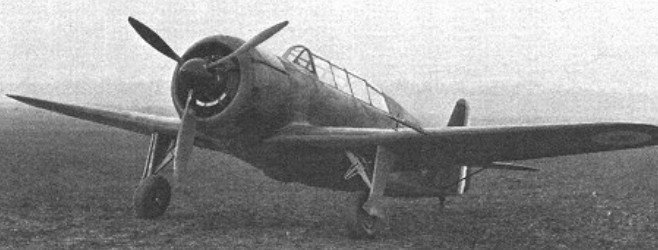
Drawing heavily on components of the M.S.405 fighter, the Morane-Saulnier design team put forward an advanced trainer under the designation Morane-Saulnier M.S.430, the prototype flying for the first time on 3 March 1937. A cantilever low-wing monoplane with inward-retracting landing gear, the M.S.430 located its pupil and instructor in tandem cockpits beneath a continuous glazed canopy, and power was provided by a 291kW. Salmson 9Ag radial engine. Tests continued into 1939, and a single-seat version was evaluated with the designation M.S.408A version with a Gnome-Rhone 7Kfs radial, designated M.S.433, was never completed.
The M.S.435.01 took off for the first time on 6 December 1939. Powered by a 410kW Gnome-Rhone 9Kdrs engine, it had a redesigned fuselage of increased cross-section. An order for 60 series machines had been received from the French air ministry six months earlier, but priority in production went to the M.S.406 fighter, with the result that no series M.S.435 P.2 category (two-seat advanced trainer) aircraft were delivered before the French collapse in June 1940.
M.S.435.01
Wingspan: 10.71 m / 35 ft 2 in
Max. speed: 395 km/h / 245 mph
Morane-Saulnier MS 412 / D-3801
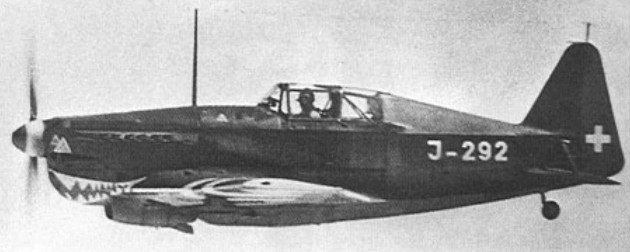
Prior to the Franco-German Armistice, the M.S.412, an improved version of the M.S.406, was under development primarily to fulfil a Swiss requirement. As an interim development aircraft, the twelfth pre-series M.S.405 had been fitted with the more powerful Hispano-Suiza 12Y45 engine and flown as the M.S.411, but a prototype of the M.S.412 with the still more powerful HS 12Y51 engine was not completed in France, the programme continuing in Switzerland as the D-3801. Flown for the first time in October 1940, the D-3801 had an HS 12Y51 rated at 1,050hp for take-off, a fixed radiator bath similar to that developed for the M.S.410 and the same armament as that of the D-3800. Although protracted teething troubles were suffered by the Saurer-built HS 12Y51 engine, series production of the D-3801 was undertaken by the Eidgenossisches Flugzeugwerke, the Dornier-Werke AG (Doflug) and SWS, deliveries commencing in 1941 and continuing until 1945, and a total of 207 being manufactured. These were augmented by a further 17 built in 1947-48 from spare assemblies remaining from the main production run. After withdrawal from first-line service, some D-3801s remained in use as advanced trainers and target- tugs until 1959.
Max take-off weight: 2 720 kg
Empty weight: 2124 kg / 4683 lb
Wingspan: 3.32 m / 10 ft 11 in
Length: 8.17 m / 26 ft 10 in
Height: 2.71 m / 8 ft 11 in
Wing area: 17.10 sq.m / 184.06 sq ft
Max. speed: 535 km/h / 332 mph
Range: 1200 km / 746 miles
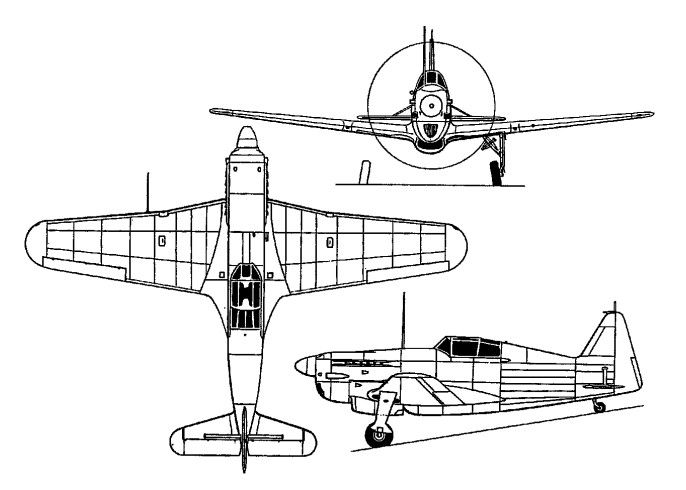
Morane-Saulnier MS 410
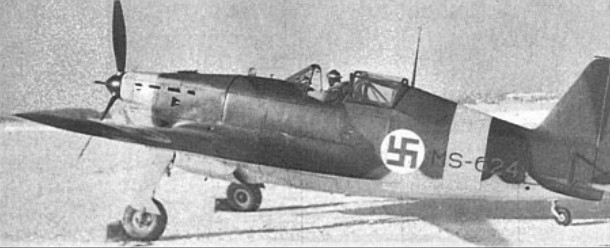
During the winter of 1939-40, development of an upgraded version of the M.S.406 was begun as the M.S.410. The programme was based on the use of existing M.S.406 airframes which were to be fitted with a fixed radiator bath to overcome problems presented by the standard semi-retractable radiator and a revised wing permitting installation of two belt-fed 7.5mm guns rather than one drum-fed weapon. It was also proposed to fit ejector exhausts. The radiator bath and modified wing were flight tested during January and February 1940, 500 pairs of two-gun wings being ordered, and the ejector exhausts were tested in April 1940, these boosting max speed to 509km/h at 4000m. The events of May 1940 interrupted the programme when only five M.S.410s had been completed. At the time, a further dozen conversions were virtually complete and some 150 sets of modified wings had been produced. After the Armistice, a modification centre was established under the auspices of the German authorities, repairable M.S.406s being sent to this centre for conversion to M.S.410 standard. In the event, 74 aircraft were fitted with the new wings, but some were completed as hybrids in that they retained the semi-retractable radiator, and none was fitted with the ejector exhausts. Eleven M.S.410s were delivered to Finland and otherswere included among the Morane-Saulnier fighters supplied to the Croat Air Force.
Max take-off weight: 2581 kg / 5690 lb
Empty weight: 1923 kg / 4240 lb
Wingspan: 10.62 m / 34 ft 10 in
Length: 8.17 m / 26 ft 10 in
Height: 2.71 m / 8 ft 11 in
Wing area: 17.10 sq.m / 184.06 sq ft
Max. speed: 470 km/h / 292 mph
Ceiling: 8500 m
Range: 1100 km
Morane-Saulnier MS.405 / MS.406 / Mörkö
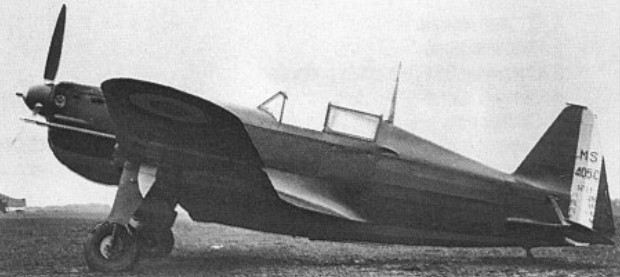
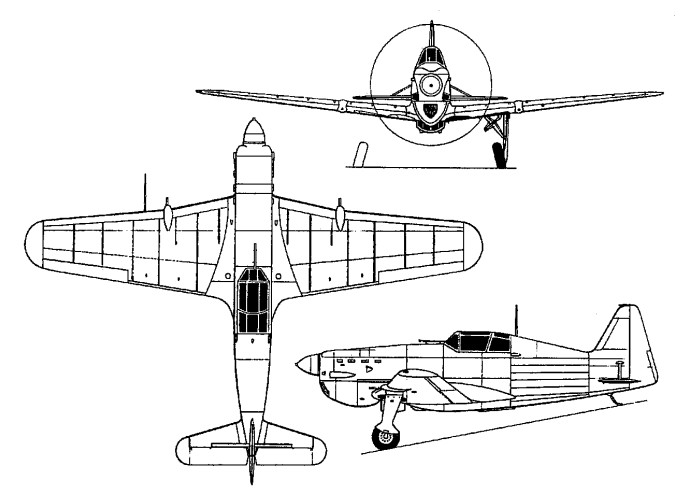
Designed in response to a French Air Force C1 requirement initially issued in September 1934, the M.S.405 was of tubular metal construction, but other than the fabric-covered rear fuselage, it had Plymax – okoume plywood bonded to aluminium – stressed skinning. Powered by an 641-kW / 860hp Hispano-Suiza 12Ygrs engine, the M.S.405.01 first prototype flew on 8 August 1935, and the second, the M.S.405.02, with a 900hp HS 12Ycrs, on 20 January 1937.
Morane-Saulnier MS.405 / MS.406 Article
A pre-series of 15 aircraft was ordered on 1 March 1937, the first flying on 3 February 1938 with an HS 12Ygrs engine and an armament of one 20mm and two 7.5mm guns. Various changes had been proposed meanwhile for the series model to which the designation M.S.406 was assigned, the new features being progressively introduced on successive M.S.405s (eg, the second featured an enlarged fuel tank, the fourth was fitted with the HS 12Y31 engine and the 12th had a simplified and lightened wing structure).
The HS 12Y31-engined 13th and 15th aircraft were delivered to Switzerland (as M.S.406Hs) in September 1938 and April 1939 as pattern aircraft for a licence-built version (D-3800). The 12th was subsequently re-engined with a 910hp HS 12Y45 and fitted with a fixed rather than semi-retractable radiator as the M.S.411 to provide a basis for the HS 12Y51-engined M.S.412 built in Switzerland as the D-3801. The final M.S.405 was flown on 21 June 1938 as a pattern aircraft for the series M.S.406.
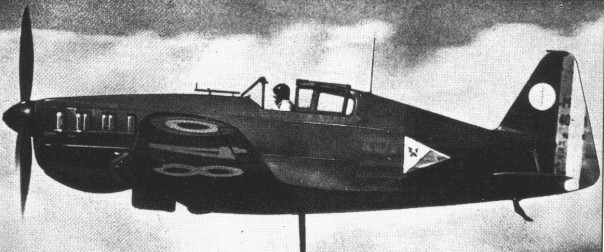
The production version was the M.S.406 with a number of detail improvements, a lightened wing structure, and a more powerful engine: 1,077 of this variant were built. As a first-generation ‘modern’ fighter, the M.S.406 was obsolescent at the beginning of World War II, but was numerically the most important fighter deployed by the French Air Force. Deliveries commenced late in 1938, a production tempo of six daily being attained by April 1939, and 11 daily four months later. Possessing an armament of one engine-mounted 20mm cannon and two 7.5mm machine guns, the M.S.406 had an 860hp Hispano-Suiza 12Y31 engine with which it was markedly underpowered.

The MS.406 was also assembled by SNCAO at St Nazaire-Bouguenais.
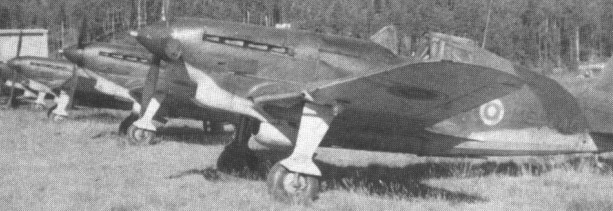
Production terminated in March 1940, at which time the Armee de l’Air had taken on charge 1,064 M.S.406s, of which 30 had been supplied to Finland during December 1939- January 1940, and 30 had gone to Turkey during February-March 1940. Subsequent purchases from the German authorities between late 1940 and late 1942 brought total procurement of the Morane-Saulnier fighter by Finland to 87 aircraft (including a number of M.S.410s). With the occupation of Vichy France in November 1942, German forces acquired a further 46 M.S.406s which (apart from two delivered to Finland) were supplied to the Croat Air Force. The Italians obtained 52 M.S.406s of which the 25 airworthy examples were delivered to the Regia Aeronautica.
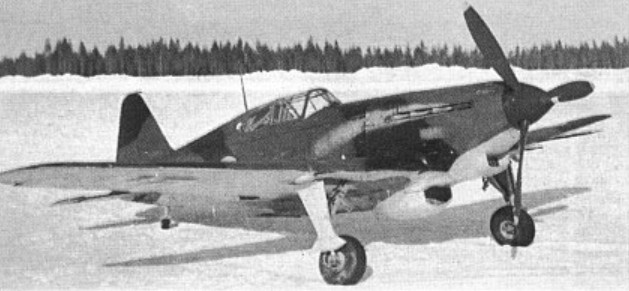
The Finns later re-engined some of their aircraft with the 820-kW (1,100-hp) Klimov M-105P under the revised name Mörkö Moraani. The increasing obsolescence of the MS 406 led the Finnish Air Force to order, on 22 October 1942, the installation of a Klimov M-105P in an MS 406 airframe. The M-105P engine derived from the HS 12Y, afforded 1,100 hp for take-off, and a substantial quantity of this power plant, together with suitable VISh-61P propellers, had been captured by the Wehrmacht and was available to the Finns. A 20-mm MG 151 cannon was mounted between the cylinder banks, a Bf 109G oil cooler was adopted, an aerodynamically-improved engine cowling was introduced, and, with some local structural strengthening, the prototype conversion was flown on 4 February 1943 as the Mörkö (Ghost) or Mörkö-Moraani. Successful trials resulted in the decision to bring all surviving MS 406 and MS 410 fighters to Mörkö standard, but only two more were completed before termination of the Finnish-Soviet conflict. Nevertheless, the conversion programme continued, and by 21 November 1945, the remaining Morane-Saulnier fighters had been modified, bringing the total number of Mörkös delivered into the Finnish inventory to 41 aircraft. These retained the two or (in the case of the MS 410 conversions) four wing-mounted 7,5-mm machine guns, but shortages of the MG 151 cannon necessitated this engine-mounted weapon being replaced by a 12,7-mm Berezina UB machine gun in some aircraft. The Mörkö remained in service until 11 September 1948, when the survivors were placed in storage and scrapped four years later.
MS.405
Engine: 1 x Hispano-Suiza HS 12Ycrs, 900hp
Max take-off weight: 2440 kg / 5379 lb
Wingspan: 10.62 m / 34 ft 10 in
Length: 8.17 m / 26 ft 10 in
Height: 2.71 m / 8 ft 11 in
Wing area: 17.10 sq.m / 184.06 sq ft
Max. speed: 443 km/h / 275 mph
Range: 1000 km / 621 miles
M.S.406
Engine: l x Hispano-Suiza 12Y-31, 641 kW (860 hp)
Span: 10.6m (34 ft 9.25 in)
Length: 8.15m (26ft 9in)
Height: 2.71 m / 8 ft 11 in
Wing area: 17.10 sq.m / 184.06 sq ft
Empty weight: 1893 kg / 4173 lb
Max T/O weight: 2470 kg. (5,445 lb)
Max speed: 302 mph / 486 km/h at 16,405 ft
Max range: 1000 km / 621 miles
Operational range: 497 miles
Ceiling: 9400 m / 30850 ft
Crew: 1
Armament: 1 x 20-mm Hispano-Suiza cannon and 2 x 7.5-mm (0.295-in) MAC mg
Mörkö
Engine: Klimov M-105P, 1,100 hp
Propeller: VISh-61P
Max take-off weight: 2 849 kg / 6,280 lb
Empty weight: 2106 kg / 4643 lb
Wingspan: 10.62 m / 34 ft 10 in
Length: 8.38 m / 27 ft 6 in
Height: 2.71 m / 8 ft 11 in
Wing area: 17.10 sq.m / 184.06 sq ft
Max. speed: 525 km/h / 326 mph at 13,125 ft (4 000 m)
Initial climb, 4,921 ft/mm (25 m/sec)
Morane-Saulnier
Société Anonyme des Aeroplanes Morane Saulnier
Societe d’Exploitation Etablissements Morane-Saulnier
Société Anonyme des Aeroplanes Morane Saulnier was established in 1911, by brothers Robert and Leon Morane and Raymond Saulnier at Puteaux, Seine, France.
Developed series of parasol-winged fighters and training aircraft, beginning with 1913 Type L or MS.3; principal production aircraft throughout 1920s and 1930s included MS.130, MS.230, and MS.315 two-seat trainers. Series of single-seat monoplane fighters introduced from 1935, including MS.406s built for French Air Force up to Occupation; development of basic design continued by Morane-Saulnier design bureau and derived MS.450 built by Dornier Werke AG in Switzerland as D-3802A.
Also built Fieseler Storch for Germans as MS.500 Criquet. After liberation developed MS.470 series of advanced trainers, several light aircraft and then MS.733 Alcyon basic trainer. MS.760 Paris introduced into French Air Force service in 1958. MS.880 Rallye touring aircraft first flown June 10,1959.
Societe D’exploitation Des Etablissements Morane-Saulnier was the provisional name for the Morane-Saulnier company after it had been acquired in 1963 by the Potez Group. MS760 Paris jet-propelled communications aircraft was developed further into 6-seat Paris III of 1964. Production also included Rallye-Club, Super-Rallye and Rallye Commodore, the latter first flown in February 1964 after formation of SEEMS.
Reorganized as Gerance des Etablissements Morane-Saulnier in May 20, 1965, subsidiary of Sud Aviation.
M.L. Aviation Rotabuggy / Rotajeep
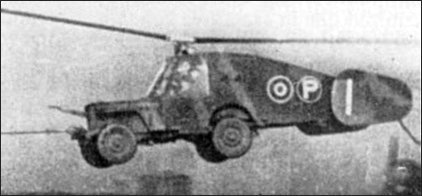
Raoul Hafner, an Austrian expatriate engineer, was working for the British Airborne Forces Research Establishment when he developed the idea of using free¬wheeling rotors to deliver airborne personnel into enemy territory. Having proved that his Rotochute could support a combat ready soldier, Hafner suggested that much heavier loads might also be delivered by rotor; a jeep, perhaps, or a truck, possibly a tank.
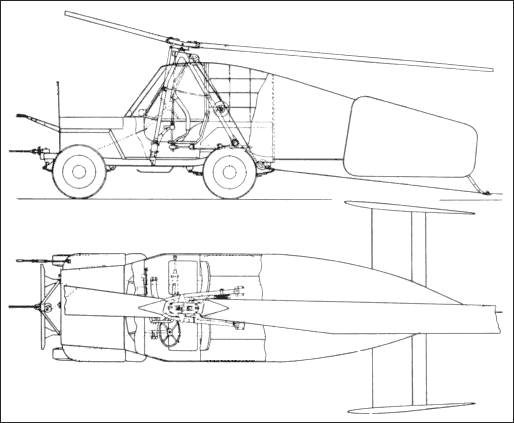
The scheme had a naive simplicity; take a vehicle, add a suitably sized rotor and tail surfaces, tow it to altitude behind an aircraft, then cast it free at the planned landing point for landing. M.L. Aviation at White Waltharn airfield in Berkshire, were awarded a development contract for the first Rotabuggy to Specification 10/42, which appeared in 1943. The basic vehicle was a US Army jeep, to which was attached a fuselage extension with a twin finned tailplane (no rudders), and a 14 m (46 ft 8 in) diameter rotor. The jeep was equipped with a rotor control column which hung from the roof, a rotor tachometer, and a rudimentary set of flight instruments, but was otherwise quite standard. Preliminary tests were conducted with the Rotabuggy, or Rotajeep as it was otherwise known, ballasted with concrete to 1430 kg (3150 lb) and dropped from a height of about 2.1 m (7 ft) to test its impact absorption.
This demonstrated that the standard model could absorb impacts of 1lg without damage, and a two blade rotor with a diameter of 46 ft 8in (12.4 m) was then fitted.
Camouflaged in the wartime fashion and sporting a prototype “P” and RAF roundels, a 4½ litre super charged Bentley sports car was hitched to the jeep and towed the combination at speeds up to 105 kph (65 mph). The Rotabuggy becoming airborne for the first time on 16 November 1943. These trials took place at Sherburn-in-Elmet, near Leeds.
By November 1943 the Rotajeep was ready for air testing from Sherburn in Elmet airfield towed by a Whitley bomber. Seven flights were made, one flight crashed nearly killing the pilot. The combination made one very short circuit on the final flight.
Mary de Bunsen with the Air Transport Auxiliary witnessed one of the flights: “We all stood and watched while an old Whitley taxied out on to the runway and took off, with a jeep in tow. They made a very short circuit, and when the Whitley touched down, the jeep, which had not cast loose, remained airborne for some seconds a few feet above the runway. It was at this juncture that we realized that the occupants were unhappy. The pilot held the control column, which was directly connected with the rotor and was suspended from the roof. The driver sat beside him and held the steering wheel. Up and down, up and down, it wandered, white we all stood and prayed that it would stall on a “down” rather than an “up”. This it fortunately did, landing plop on all four wheels, and the motor driver took over and steered it down the track like Stirling Moss. When it stopped, nobody got out for a while, and then the pilot was assisted out and laid down flat beside the runway to recover. Apparently the joystick had whipped round and round in circles all the time they were in the air and only sheer strength had kept the jeep under control, so the poor man was completely exhausted.”
Not all the flights were as nerve shattering as this had apparently been. The handling and flying qualities of the Rotabuggy have been described officially as “highly satisfactory”, especially after larger fins had been fitted and greater blade articulation provided. However, the development of the Horsa and Hamilcar vehicle carrying gliders made further development of the idea unnecessary, before a 47.25 m (155 ft) rotor could be tested on a Valentine tank.
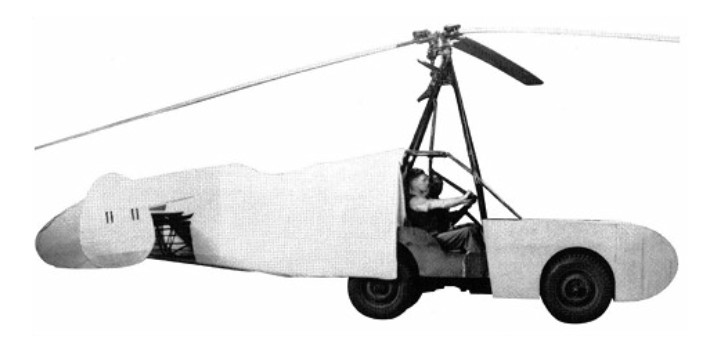
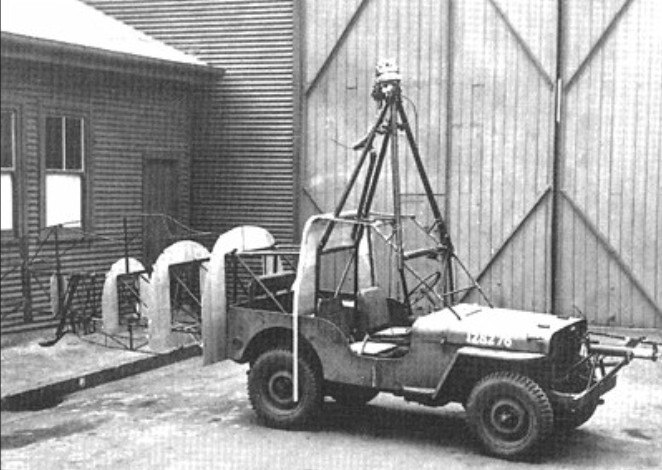
Rotabuggy
Rotor diameter: 12.40m
Gross weight: 1411kg / 3,110 lb
Empty weight – Jeep: 964kg
Weight – rotor unit and tail: 249kg / 550 lb
Design max speed: 241kph / 150 mph
Rates of descent – est: 4.9 – 10m/s / 960 1,980 fpm
Minimum take-off and landing speed: 58kph
Basic rotor speed: 230 rpm
Max rotor speed: 260 rpm
Crew: 2
M.L. Aviation
The origins of M. L. Aviation began during the mid 1930s with two separate companies, mainely Wrightson Aircraft Sales (formed May 34). The name was changed to Malcolm and Farquharson (formed May 36) and again changed to R. Malcolm Company (founded in Dec 36). Malcolm & Farquharson became a holding company in December 1939 with aircraft product work carried out by R. Malcolm. About this time, Marcel Lobelle, who had been Chief Designer of Fairey Aviation joined the company. He had designed many Fairey aircraft including the Swordfish.
At the beginning of WW2, both Malcolm & Farquharson and R. Malcolm suffered financial problems and turned to the Mobbs family for assistance. During 1940, control of both companies was taken over by the Mobbs through United Motor Finance Corporation.
Under Marcel Lobelle, a drawing office was opened on the Slough Trading Estate (owned by the Mobbs family) with rapidly expanding work for the Ministry of Aircraft Production. To allow for expansion the drawing office and experimental work was moved to White Waltham, leaving production on the Slough Trading Estate and still under the name of R. Malcolm. An additional firing site was also established on the airfield perimeter for development work.
In 1943, Malcolm & Farquharson’s services were dispensed with and control was taken over by Eric Mobbs as Managing Director and Marcel Lobelle as Chief Designer. The company continued to trade under the name of R. Malcolm. Finally in October 1946 the name was changed to M. L. Aviation for the White Waltham site and M. L. Engineering at Slough, the initials presumably being taken from the leading figure heads.
Spurred on by the advent of the Cold War the company expanded rapidly from the 1950s with a considerable work force of Design Engineers designing and manufacturing a large range of aviation products.
Expansion required further finance and in 1958 M. L. went public through the creation on M. L. Holdings. Subsequently the Holding Company diversified with non-aerospace business introducing further finance and therefore gradually reducing the influence of the Mobbs family
The 1980s saw the reducing aerospace industry having considerable impact on MLA with an ever diminishing workforce until in 1990 the Holdings Board, having recently brought Wallop Industries based in Andover, deciding to merge and sell the White Waltham site. The move was completed by early 1991, leaving the Airfield test site still operating. The White Waltham site was eventually sold in 1996.
In mid 1996, the Holding Board acquired the remains of arch rivals Fraser Nash and merged it with MLA producing a formidable aircraft equipment company which should have augured well for the future.
M. L. (Engineering) in Slough finally moved to Andover in early 1997 enabling design and production to join under one roof, thereby almost severing links with Berkshire.
Finally Cobham plc acquired M. L. Aviation & Marine for £37 million.
 All Aero