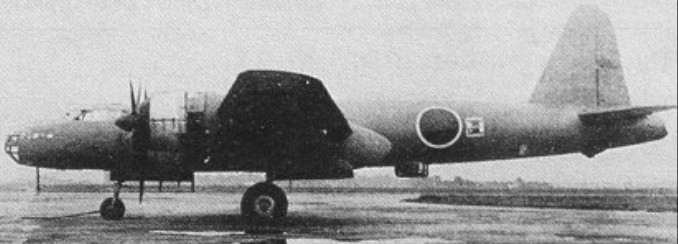
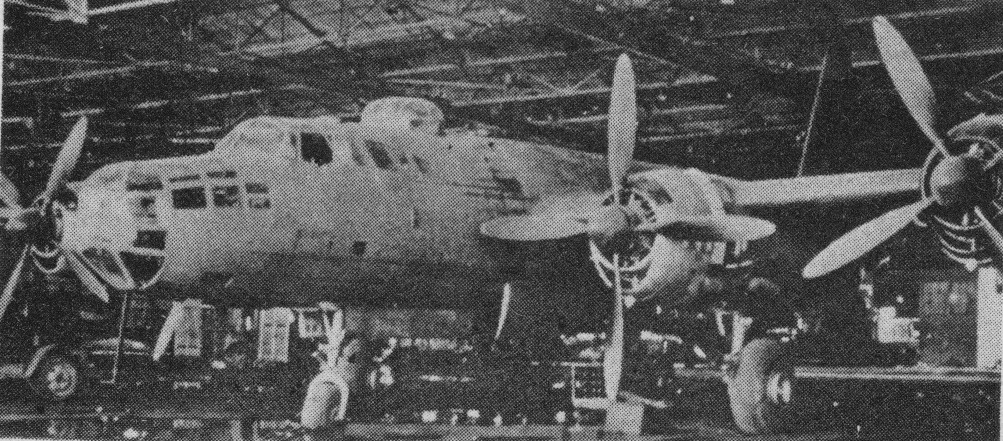
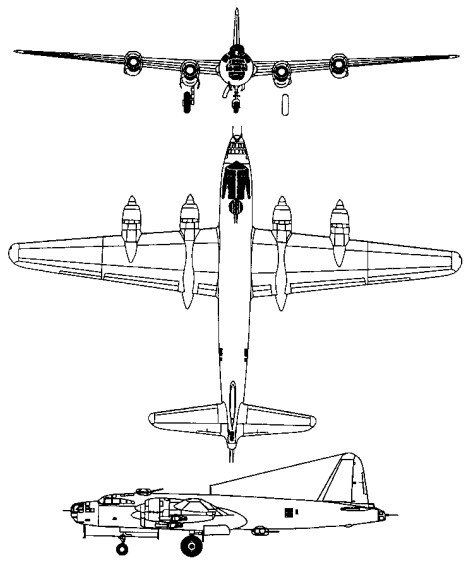
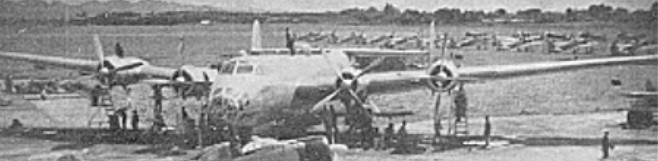
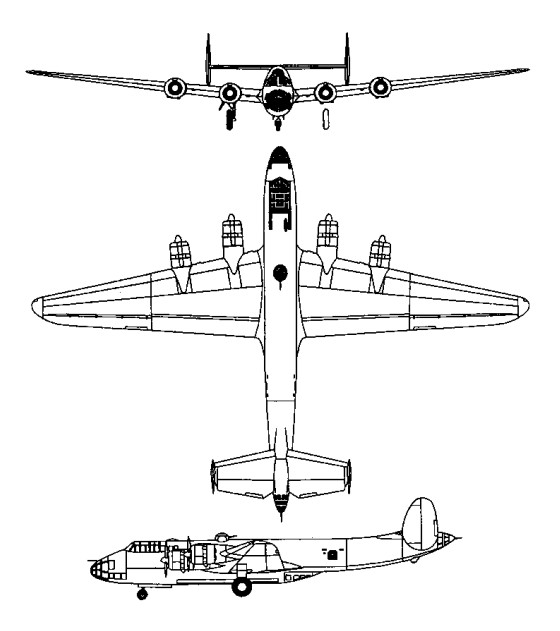
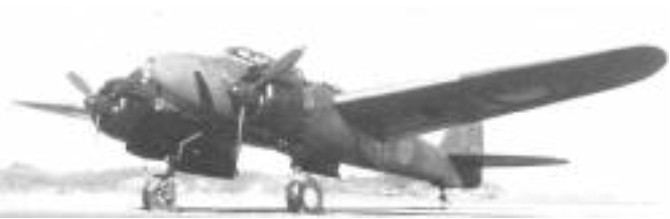
Developed as the Experimental 18-Shi Heavy Bomber Renzan (Nakajima G8N1), this was a very advanced long-range bomber powered by four 1491kW Nakajima Homare 24 radials which gave it a maximum speed of 592km/h at 8000m. Maximum range was 7465km. Armament consisted of six 20mm cannon in twin power-operated dorsal, ventral and tail turrets, two 13mm machine-guns in a power-operated nose turret, and single machine-guns of similar calibre in port and starboard beam positions. A maximum bombload of 4000kg could be carried over short ranges.
Four prototypes were built up to June 1945, but the proposed production programme was disrupted by Allied bombing and was abandoned when the navy’s role became defensive rather than offensive. These prototypes were allocated the Allied codename ‘Rita’.
G8N1 Engine: 4 x Nakajima NK9K-L “Homare-24”, 1500kW Wingspan: 32.54 m / 106 ft 9 in Length: 22.94 m / 75 ft 3 in Height: 7.2 m / 23 ft 7 in Wing area: 112 sq.m / 1205.56 sq ft Max take-off weight: 26800-32150 kg / 59084 – 70879 lb Empty weight: 17400 kg / 38361 lb Max. speed: 590 km/h / 367 mph Cruise speed: 390 km/h / 242 mph Ceiling: 10200 m / 33450 ft Range: 4000 km / 2486 miles Range w/max.fuel: 7500 km / 4660 miles Armament: 6 x 20mm cannons, 4 x 12.7mm machine-guns, 1000-4000kg of bombs
The first application of the Nakajima Mamoru engines was on the first prototype of the G5N1 Genzan, first flying on April 10, 1941. The G5N1 had been designed on the basis of the Douglas DC-4E as Japan’s first four-engine bomber, and proved to be a disappointment. These problems were compounded by the unreliability of the early Mamoru engines, which had to be de-tuned and left the G5N1 underpowered. The G5N1’s maiden flight was on 10 April 1941, and a further four prototypes were built with the Mamoru. In an attempt to salvage the project, two additional airframes were fitted with 1,530 hp Mitsubishi MK4B 12 “Kasei” engines and redesignated G5N2s. Although the Mitsubishi engines were more reliable than the original Mamoru 11s, further development was halted. Of the six completed Shinzans, four of them (two G5N2s and two G5N1s re-engined with the Kasei 12) were relegated for use as long-range Navy transports under the designation Shinzan-Kai Model 12 Transport G5N2-L.
First spotted by an Intelligence Officer from AAF Headquarters in Washington, the bomber was coded ‘Liz’ after his daughter.
G5N1 Engine: 4 x Nakajima NK7A Mamoru-11, 1400kW Max take-off weight: 28150-32000 kg / 62060 – 70548 lb Empty weight: 20100 kg / 44313 lb Wingspan: 42.12 m / 138 ft 2 in Length: 31.02 m / 101 ft 9 in Wing area: 201.8 sq.m / 2172.16 sq ft Max. speed: 420 km/h / 261 mph Cruise speed: 370 km/h / 230 mph Ceiling: 7450 m / 24450 ft Range: 4260 km / 2647 miles Crew: 7 Armament: 2 x 20mm cannons, 4 x 7.7mm machine-guns Bombload: 2000-4000kg
G5N2 Engines: 4 x 1,530 hp Mitsubishi MK4B 12 Kasei Wingspan: 42.12 m / 138 ft 2 in Length: 31.02 m / 101 ft 9 in Wing area: 201.8 sq.m / 2172.16 sq ft
G5N2-L Shinzan-Kai Model 12 Engines: 4 x 1,530 hp Mitsubishi MK4B 12 Kasei Wingspan: 42.12 m / 138 ft 2 in Length: 31.02 m / 101 ft 9 in Wing area: 201.8 sq.m / 2172.16 sq ft
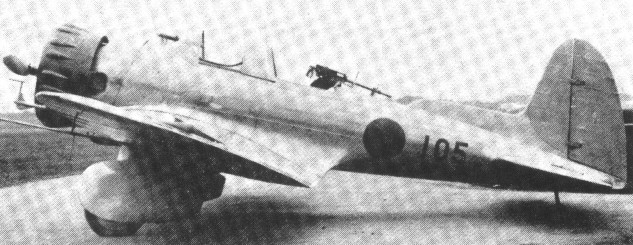
Although the Imperial Navy had discarded the two-seat fighter requirement that had resulted in the NAF-1 and -2, western developments in this category of aircraft stimulated some interest on the part of the Army to which, in 1933, Nakajima offered an advanced company-funded two-seat fighter project. Designed by Shigejiro Owada and Toshio Matsuda, and assigned the designation Ki-8 by the Army, the aircraft was an all-metal low-wing cantilever monoplane with a monocoque fuselage and spatted cantilever fixed under-carriage. Powered by a Nakajima Kotobuki 3 engine rated at 710 hp for take-off and carrying an armament of two fixed forward-firing 7,7-mm guns and one 7,7-mm gun on a flexible mount, the Ki-8 was conceptually advanced and five proto¬types were built between March 1934 and May 1935. Army evaluation revealed stability and other problems, and al¬though these were subsequently rectified, doubts concerning the practicability of the two-seat fighter concept led to the discontinuation of further development.
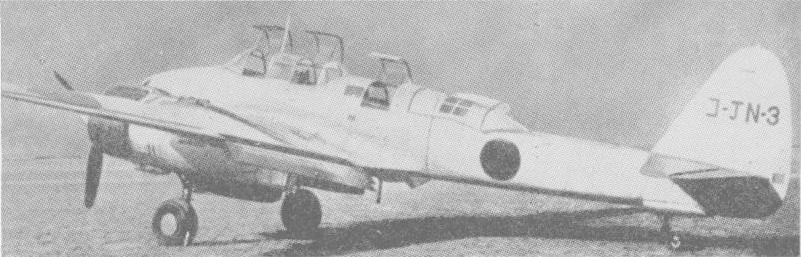
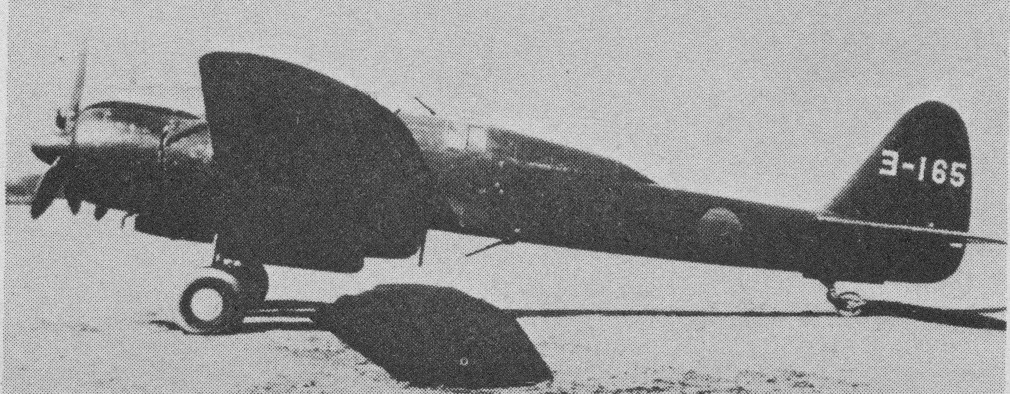
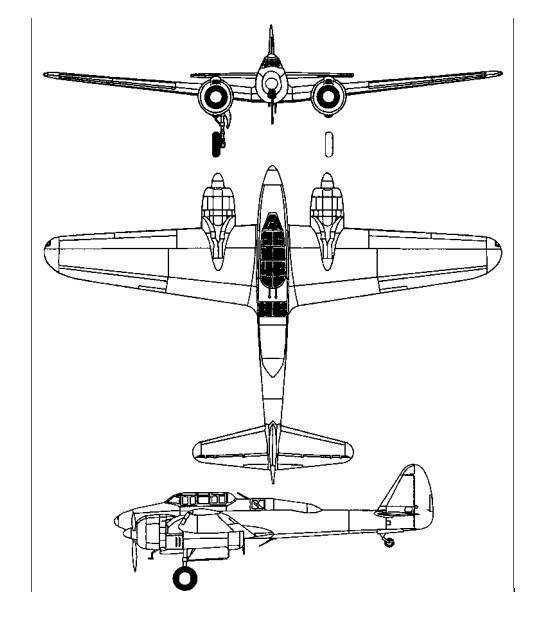
Work on the Nakajima J1N Gekko (Moonlight) design began in 1938 to a Navy specification for a long range escort fighter, and the prototype J1N1 made its maiden flight in May 1941. Flight test revealed several factors against its suitability as a fighting aircraft but in July 1942 it was ordered into production for the reconnaissance role as the J1N1-C.
When first encountered in action during the Solomons campaign the aircraft was mistakenly thought to be a Naval ‘Nick’. Codenamed ‘Irving’ by the Allies covering many different model, it soon narrowed down to the reccon and night fighter versions, J1NC-1 Type 2 and J1N1-S Gekko respectively.
As night air attacks were stepped up by the Americans it was the commanding officer of the 251st Kokutai, Commander Yasuna Kozono, then based at Rabaul, New Guinea, who first suggested adaptation of the J1N as a night-fighter by installing two 20mm cannon in the observer’s cockpit, fixed to fire obliquely forward and upward at an angle of 30 degrees, and another pair firing forward and downward. When two Consolidated B-24s were quickly destroyed, the modifications came to the attention of the Japanese naval staff and an order was placed with Nakajima to go ahead with a dedicated night-fighter version, designed and built as such from scratch.
These were followed by a few turret-mounting J1N1-F and later by the J1N1-S Gekko, built from the onset for night-fighting, some later bearing primitive centimetric AI radar in the closing stages of the war, and some aircraft also carried a small nose searchlight.
This version, the J1N1-S, entered production in August 1943 and continued until December 1944, during which period a total of 420 J1Ns were produced, the great majority of them J1N1-S night-fighters. These differed from the earlier reconnaissance version in having the crew reduced from three to two, the observer’s cockpit being eliminated and faired over. All aircraft retained the upward-firing cannon, but the downward firing guns (found difficult to aim and seldom used) were omitted from later aircraft, while a third upper gun and a forward-firing 20mm cannon was fitted in the J1N1-Sa.
Total production of the J1N, including prototypes, amounted to 479. Some of these were employed on bombing duties with an offensive load of up to 2432 lb.
In service with the 251st, 302nd and 322nd Kokutais, the J1N1-S night-fighters proved fairly effective against the B-24, which was not in any case well-suited to night operations, but with the appearance of the Boeing B-29 the Japanese night-fighters proved too slow and were seldom able to make more than a single firing attack. Most of them were expended during the final months of the war when, equipped to carry two 250kg bombs, they were employed in kamikaze attacks against ground targets.
J1N1-S Engines: 2 x Nakajima “Sakae-21”, 843kW / 1130 hp Wingspan: 16.98 m / 55 ft 9 in Length: 12.77 m / 41 ft 11 in Height: 3.99 m / 13 ft 1 in Wing area: 40 sq.m / 430.56 sq ft Max take-off weight: 8185 kg / 18045 lb Empty weight: 4850 kg / 10692 lb Max. speed: 507 km/h / 315 mph at 19,030 ft Service ceiling: 9320 m / 30600 ft Normal range: 1584 mi Range w/max.fuel: 3780 km / 2349 miles Armament: 4 x Type 99 20mm cannons Crew: 2
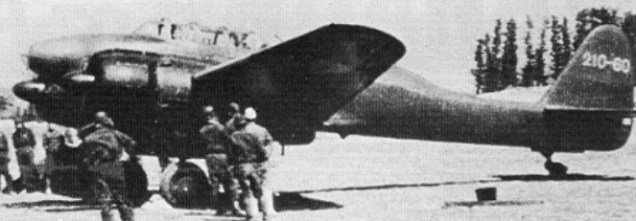
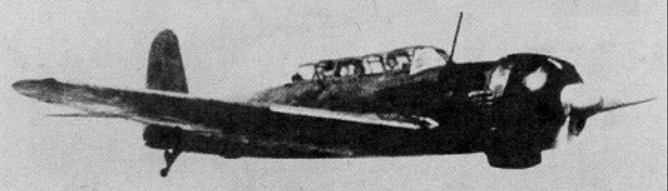
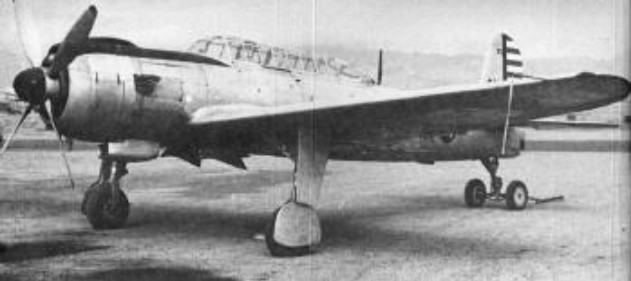
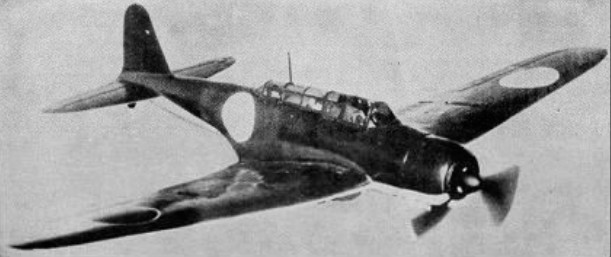
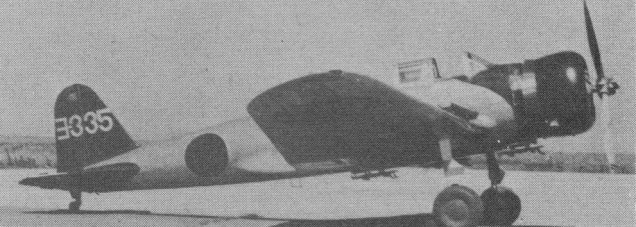
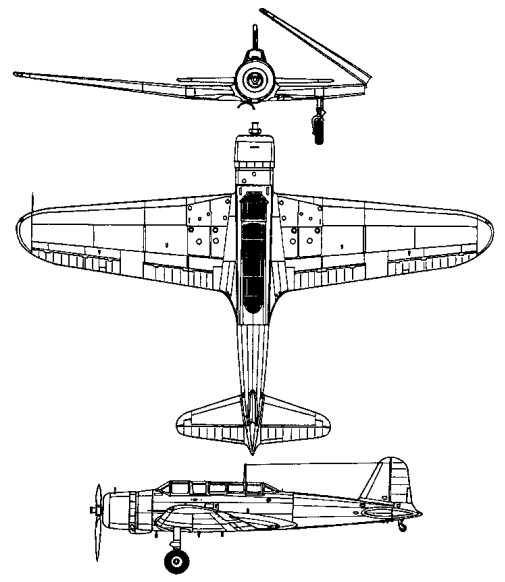
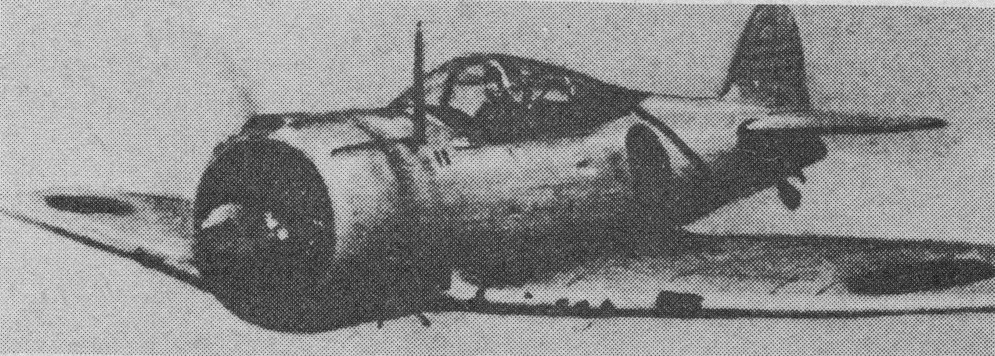
At a time when the triumphs of the B5N were still almost three years in the future, the Japanese navy issued a specification for a replacement, recognizing that only limited overall design improvement of the B5N could be achieved in the B5N2. Accordingly design went ahead in 1939 of the Nakajima B6N and, despite the Navy’s preference for the Mitsubishsi Kasei radial, a Nakajima Mamoru was selected for the prototype which flew on 14 March 1941, demonstrating several problems, notably the poor engine reliability. With the delay of 2 years, by 1943 the engine had improved to the point where serial production was allowed to start, but after only 133 B6N1s had been delivered the Navy ordered the switch to the 1,850 hp (1380 kW) Mitsubishi MK4T Kasei 25. The rest of the 1,268 B6N2s were Kasei powered.
B6N2
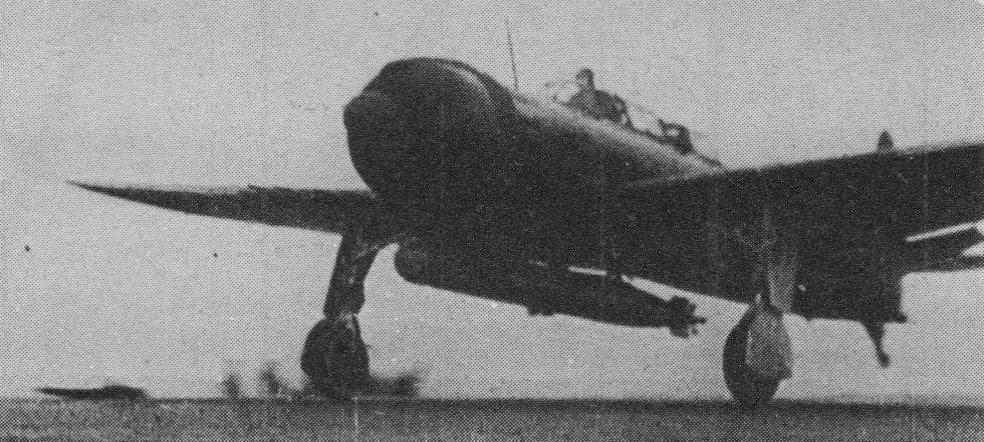
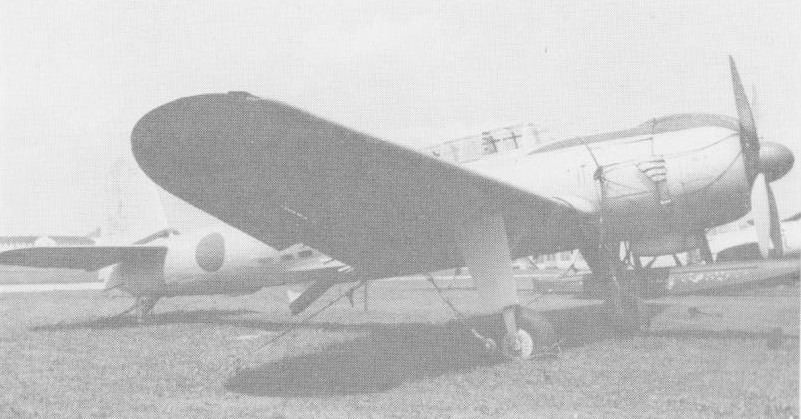
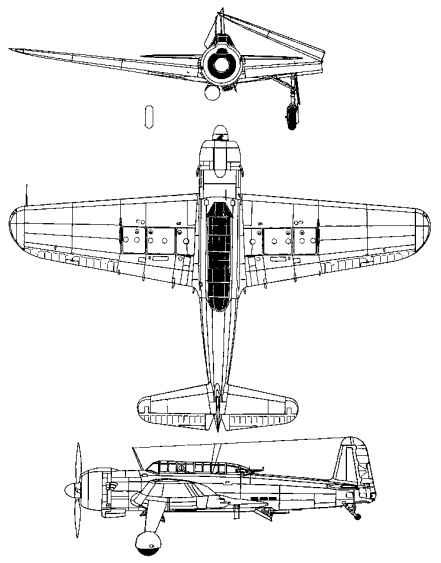
Superficially the B6N Tenzan (Heavenly Mountain) resembled the earlier aircraft, but the much increased power and torque of the big engine and four-blade propeller was found to impose considerable directional stability problems, demanding that the vertical tail surfaces be offset to one side. Flight trials dragged on, and were further delayed by troubles during carrier acceptance tests. Then Nakajima was ordered to stop production of the Mamoru engine, so modifications had to be introduced to suit installation of the Kasei.
In due course B6N1 aircraft (of which only 133 were built) were embarked in the carriers Shokaku, Taiho, Hiyo, Junyo and Zuikaku, and took part in the Battle of the Philippine Sea of June 1943, many being lost when the three Shokaku, Taiho, and Hiyo were sunk.
In that month production started of the slightly improved B6N2 (of which 1,133 were produced before the end of the war), but the heavy losses among Japanese carriers resulted in the ‘Jill’ being largely deployed ashore, particularly after the Battle of Leyte Gulf. Thereafter many BsNs were consigned to the kamikaze role.
B6N2
B6N2 Engine: 1 x Mitsubishi MK4T “Kasei-25”, 1850 hp Wingspan: 14.9 m / 48 ft 11 in Wing area: 37.2 sq.m / 400.42 sq ft Length: 10.87 m / 35 ft 8 in Height: 3.8 m / 12 ft 6 in Empty weight: 3010 kg / 6636 lb Max take-off weight: 5650 kg / 12456 lb Max. speed: 480 km/h / 298 mph at 16,076 ft Ceiling: 9040 m / 29650 ft Service ceiling: 26,660 ft Range w/max.fuel: 3045 km / 1892 miles Armament: 1 x 13 mm, 2 x 7.9mm machine-guns Bomb load: 1 x 1764 lb torpedo or 6 x 220 lb bombs Crew: 3
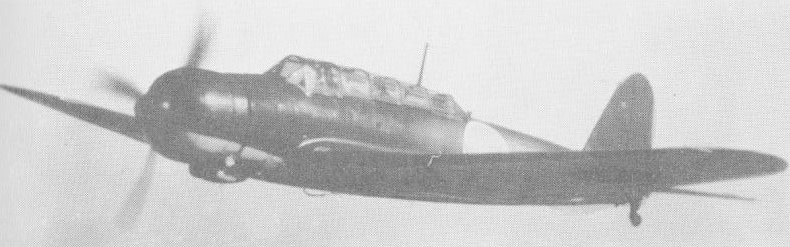
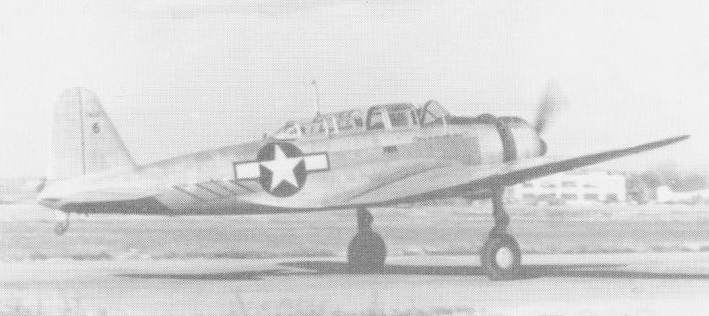
Designed to a 1935 requirement, and already in service for four years when Japan entered the war, the prototype B5N first flew in January 1937. A low-wing three-crew monoplane with inwards-retracting wide-track landing gear, powered by a 770 hp Hikari engine, and entered production as a 1000 hp Nakajima Sakae 11-powered light or torpedo-bomber. The following year production B5N1 aircraft were embarking in Japan’s carriers and shore-based units were deployed in China.
In 1939 the improved B5N2 appeared with a more powerful Sakae 11 engine in a smaller cowling, although armament and bombload were unchanged, and this version remained in production until 1943.
Many were converted to B5N1-K trainers when production switched to B5N2.
When Japan attacked the USA the B5N2 had wholly replaced the B5N1 with operational units, and 144 B5N2s were involved in the attack on Pearl Harbour, and within the next 12 months aircraft of this type sank the American carriers USS Hornet, Lexington and Yorktown.
B5N2
Given the reporting name ‘Kate’ by the Allies, with its defensive armament of a single machine-gun and laden with a large bomb or torpedo, the B5N began to suffer very heavily, and although the type was fully committed during the Solomons campaign the survivors were withdrawn from combat after the Philippine battles of 1944.
Thereafter, on account of their excellent range, they were assigned to antisubmarine and maritime reconnaissance duties in areas beyond the range of Allied fighters. Production of all B5Ns reached 1,149.
Nakajima B5N1 Engine: 1 x 840 hp Nakajima Hikari 3 Prop: 3 blade Constant speed Wingspan: 50 ft 11 in Length: 33 ft 9.5 in Height: 12 ft 1.5 in Wing area: 405.8 sq.ft Wing loading: 20.1 lb/sq.ft Loaded weight: 4640 lb Max weight: 8150 lb Max speed: 229 mph at 6,500 ft Cruise speed: 159 mph at 6500 ft Climb to 10,000 ft: 8 min Service ceiling; 24,280 ft Normal range: 590 nm Max range: 1220 nm
Nakajima B5N2 Engine: 1 x Nakajima NK1B “Sakae”, 746kW Wingspan: 15.52 m / 50 ft 11 in Length: 10.3 m / 33 ft 10 in Height: 3.7 m / 12 ft 2 in Wing area: 37.7 sq.m / 405.80 sq ft Max take-off weight: 4100 kg / 9039 lb Empty weight: 2279 kg / 5024 lb Max. speed: 378 km/h / 235 mph Ceiling: 8260 m / 27100 ft Range w/max.fuel: 1990 km / 1237 miles Armament: 1 x 7.7mm machine-guns, 800kg of bombs Crew: 3
Confusion over pre-war Japanese fighters was so complex many fictional or misidentified types received code names.
After the Pearl Harbor attack military intelligence gathered every piece of downed Japanese aircraft they could find. From that operation they came up with this aircraft. They found a manufacturing plate with the words Nogoya Sento, they thought that was a manufacturer, it was a plant location. From the wings and tail group, it looks like they found parts of an Aichi type 99 Val.
Given the allied code name ‘BEN’ after one of the 5th Air Force Intelligence officers, the code was dropped in less than a year.
It was 1943 before the war department figured out there was no such a plane.
Development of the NR 55 concept continued in 1941 with the generally similar NR 54 V1, in which reductions were made in size and weight. The engine power was reduced to 24hp and the rotor diameter to 7.8m with the engines mounted 1.2m from the centerline driving the propellers, which were 1.8m further out along rotor blade. The carburetor was never perfected to work satisfactorily and due to this no test flights were ever made. Performance with empty and loaded weights of 80 and 175kg respectively, was estimated to have a 55 mph cruising speed.
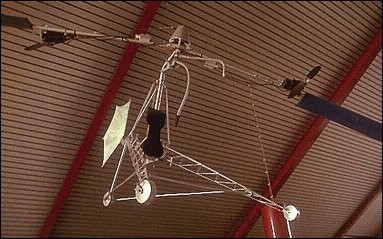
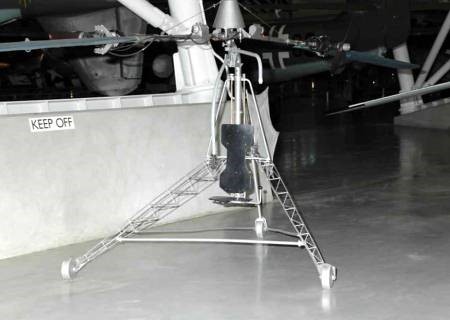
The NR 54 V2 was produced in 1941. The single-seat helicopter flew on remarkably little power. The 6.9m rotor consisted of two single blades, each of which had an 8hp motor driving a small airscrew at 6000rpm to give a torqueless drive, and the pilot’s controls consisted of two levers, one to alter rotor blade pitch and the other to control the engines. The entire airframe broke down for transporting and could carried by a single man. The little ship was said to cruise at 80km/h and climb at 140m/min.
Four of the NR 54V2 machines were built before the war ended, but it is not known how close the NR 54 was to being ready for production at that point. At least one of them was brought to the USA for evaluation and is now in the collection of the National Air and Space Museum.
NR 54 V2 Engine: 2 x 8hp Main rotor diameter: 7.92m Max take-off weight: 140kg Empty weight: 36.5kg Cruising speed: 80km/h Ceiling: 457m Range: 48kg Crew: 1
The Nagler-Rolz Flugzeugbau built a helicopter similar in configuration to the RI and RII. This ship had an empty weight of 700 pounds and though it was flown in hover, it could not be lifted out of ground effect. With the coming of World War II, the company received contacts from the German Government for the development of small single-seat helicopters.
In 1940 the first machine from the new company appeared as the NR 55, which had a single-blade rotor. This rotor blade was counterbalanced by a 40hp engine which applied to it a torqueless drive by means of two small airscrews which pulled it round at about 135rpm. Because of gyroscopic forces at the engine location, the carburetor was mounted on the centerline of the rotor hub and fuel-air mixture was piped out to the engine cylinders. The rotor diameter was 10.5m, and the machine weighed about 338kg loaded, but, although a cruising speed of 97km/h was thought feasible, only hovering and lift test were undertaken because the machine was built purely for testing the rotor system.
Development of the NR 55 concept continued in 1941 with the generally similar NR 54 V1.
With the outbreak of war, Nagler joined with Franz Rolz to form the Nagler-Rolz Flugzeugbau.
The new company built a helicopter similar in configuration to the RI and RII. This ship had an empty weight of 700 pounds and though it was flown in hover, it could not be lifted out of ground effect. With the coming of World War II, the company received contacts from the German Government for the development of small single-seat helicopters.

 All Aero