Wright went on to develop two-row engines with 14 cylinders in two rows of 7, called the Cyclone 14, R-2600. This was installed in the Boeing 314, Grumman TBM/TBF Avenger, North American B-25 Mitchell, and some models of the Douglas A-20 Havoc (RAF Boston).
World War 2
Wright R-2160 Tornado
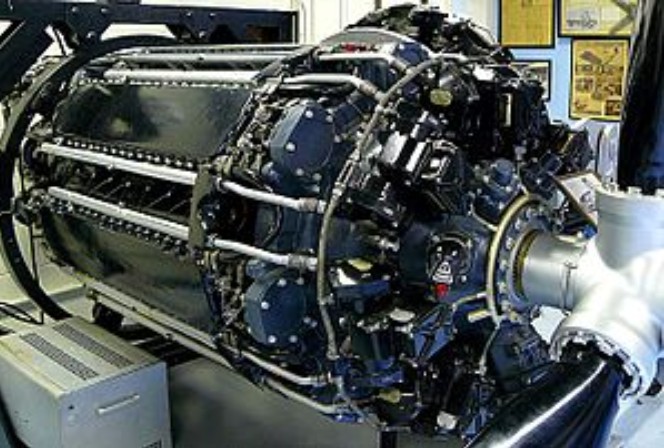
The Wright R-2160 Tornado was an experimental 42-cylinder, 7-bank liquid-cooled inline radial aircraft engine. It was proposed in 1940 with 2,350 hp (1,752 kW) for experimental aircraft such as the Republic XP-69.
Type: 7-bank, 42 cylinder inline radial engine. (7-banks with 6 cylinders in each bank)
Bore: 4.25 in (107.9 mm)
Stroke: 3.625 in (92 mm)
Displacement: 2,160 cu.in (35.39 l)
Length: 96 in (2438 mm)
Diameter: 35.5 in (901.6 mm)
Dry weight: 2,400 lb (1088.6 kg)
Valvetrain: Pushrod, two valves per cylinder
Supercharger: 2 x turbosuperchargers
Fuel system: Direct injection
Fuel type: 100/130
Oil system: Dry sump
Cooling system: Liquid cooled
Power output: 2,350 hp (1,752 kW)
Specific power: 1.08 hp/cu.in
Power-to-weight ratio: 0.97 hp/lb
Wright R-2600 Cyclone 14
Wright went on to develop two-row engines with 14 cylinders in two rows of 7, called the Cyclone 14, R-2600. This was installed in the Boeing 314, Grumman TBM/TBF Avenger, North American B-25 Mitchell, and some models of the Douglas A-20 Havoc (RAF Boston).
Wittman Big X
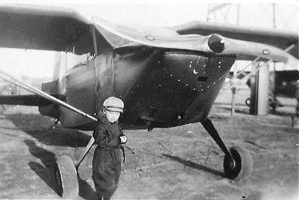
On a cross-country fuel stop at Hagerstown, Maryland with Wittman’s design, the Buttercup, Fairchild engineers expressed an interest in the design and even entered in negotiations for possible production of the aircraft. With the onset of WWII, production plans were shelved, but Fairchild contacted Wittman and proposed that a four-seat version would be marketable. Wittman designed the four-place “Big X” soon afterward, which first flew on 6 January 1945.
The Big X was steel tube fuselage with fabric covering and all-wood wings. The original Big X featured a 130 hp Franklin 6AC engine, later upgraded to a 150 hp 6A4 in 1950.
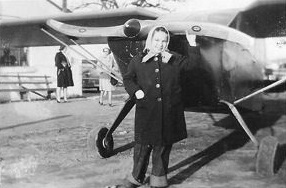
Big X was used as a companion plane and baggage hauler during Wittman’s years as an air racer. When Fairchild did not follow up on production offers, Wittman was contacted by Cessna in Wichita, Kansas, to demonstrate the lightweight and strong spring steel landing gear of the Big X. Cessna bought the plane and its production rights in order to use the gear on its new Cessna 195 taildragger. The Big X was rebuilt in 1962 with variable-camber wing and full-span flaps. Wittman later produced an updated version in a two-place configuration called the Wittman Tailwind that became a popular homebuilt aircraft.
The original aircraft (the ony Big X built) was rebuilt by Forrest Lovley in 1980.
Wittman Big X
Engine: 1 × Franklin 6A4-150-B3, 150 hp (110 kW)
Length: 24 ft 10 in (7.57 m)
Wingspan: 29 ft (8.8 m)
Empty weight: 1,150 lb (522 kg)
Gross weight: 2,200 lb (998 kg)
Fuel capacity: 36
Cruise speed: 130 kn; 241 km/h (150 mph)
Stall speed: 48 kn; 89 km/h (55 mph)
Rate of climb: 900 ft/min (4.6 m/s)
Capacity: 4
Wittman
Sylvester Joseph “Steve” Wittman was born April 5, 1904, at Byron, Wisconsin, and attended Fond du Lac High School.
Wittman gained his pilot’s certificate in 1924 (signed by Orville Wright) in a Standard J-1 and built his first aircraft, the Harley powered “Hardly Abelson” later that same year.
From 1925 to 1927, he had his own flying service, giving joyrides and during this time also became a demonstration and test pilot for the The Pheasant Aircraft Company and Dayton Aircraft Company, flying the Pheasant H-10 in multiple events. He also began his air-racing career, designing, building, and piloting his own aircraft, including Chief Oshkosh in 1931 and Bonzo in 1934. Wittman’s first race in his first aircraft design was in “Bonzo” in the 1935 Thompson Trophy race, where he placed second.
In 1937, piloting his second homebuilt, “Chief Oshkosh”, Wittman placed second in the Greve Trophy Race. Wittman flew “Bonzo” in the Thompson Trophy race, and he led for the first 18 laps of the 20 lap race, at an average speed of over 275 mph (442.57 km/h). Suddenly his engine began to run rough, and Wittman was forced to throttle back to remain in the race, finishing in 5th place. In 1938, he was awarded the Louis Blériot medal by the Fédération Aéronautique Internationale (FAI).
Possibly the Tailwind W-8 had its real beginnings in 1937 as the “Buttercup,” a ship that featured many innovations pioneered by Wittman on his racing aircraft, such as spring steel gear and welded steel frame. A high wing design built to outperform the Cubs, Chiefs, T-Crafts, and Luscombes of the day. The Tailwind bore a striking resemblance to the ’37 Buttercup except for Buttercup’s obvious outward differing features, like the two lift struts and wire braced tail feathers. But the W-5 and W-8 are sister ships, or at the very least, cousins. (At last report, the W-5 is still airworthy.) Another cousin is the Wittman Big-X, the four-place, Franklin-powered machine based on the Buttercup design. The Big-X flew for the first time in 1945 and was another Wittman winner. The Big-X and the Tailwind have all the same things going for them: speed, efficiency and ease of handling. It has recently been restored and is going strong.
Steve’s spring steel landing gear used on the pre-World War II “Bonzo” racer was the last word in simplicity and low drag, ail the while remaining strong and flexible. The Wittman landing gear appeared on all postwar Cessnas another plus for Yankee engineering.
Wittman’s “Buster” racer of the late ’40s was typical of the small postwar racers that were hitting 240 mph with little 85-hp engines. Steve reasoned that you could scale up a racer by widening the cockpit, move the wing topside and only lose about 75 mph in the process. The result was a simple, flat-sided cabin ship whose fuselage resembled an airfoil; it had small, wellbalanced control surfaces, and the only thing sticking out in the wind was the paint job. Steve liked his two-placer that could hit 150 mph cruise so much that he brought out the Tailwind in the early ’50s – not as a projected prototype for-selling plans, but as a peron’al airplane to carry two people comfortably with a Continental C-85 up front. It worked.
During World War II, his Wittman Flying Service was part of the Civilian Pilot Training Program, training pilots for the Army Air Corps.
After the war, Wittman finished eighth in the 1946 Thompson Trophy race with a clipped wing Bell P-63 Kingcobra fighter. In 1947, Bill Brennand won the inaugural Goodyear class race at the National Air Races piloting Wittman’s ‘Buster’. ‘Buster’ was a rebuild of the pre-war “Chief Oshkosh”, went on to win many more Goodyear/Continental Trophy races, and was retired after the 1954 Danville, New York air races. It is now on display at the National Air and Space Museum in Washington, D.C.
Wittman built an entirely new ‘Bonzo’ for the 1948 National Air Races, and flying it himself, finished third. Wittman raced ‘Bonzo’ through the 1950s and 1960s, including the first few Reno National Championship air races, before retiring from Formula One competition in 1973. ‘Bonzo’ is now displayed next to Wittman’s prewar ‘Bonzo’ in the EAA AirVenture Museum along with several other Wittman airplanes.
Wittman was manager of the Oshkosh, Wisconsin airport from 1931 to 1969 – which is now named after him (Wittman Regional Airport). Wittman became involved in the newly formed Experimental Aircraft Association in 1953 and was instrumental in bringing the EAA’s annual fly-in to the Oshkosh Airport in 1970.
He designed and built the Wittman V-Witt to compete in the new Formula V Air Racing class. He competed in races with that aircraft until 1979. Winners of the Formula V National Championship are presented with the Steve Wittman Trophy.
Wittman remained active in aviation his entire life. For Wittman’s 90th birthday a celebration, Wittman demonstrated aerobatic maneuvers in his V-Witt and Oldsmobile powered Tailwind. He also used “Buttercup” to give Young Eagles flights. Letters of appreciation were given by President Bill Clinton and Wisconsin Governor Tommy Thompson.
Steve married Dorthy Rady in 1941. He taught her to fly and she accompanied him to most of his races. Dorthy died in 1991 and Wittman married Paula Muir in 1992. On April 27, 1995, Wittman and Muir took off for a routine cross-country flight from their winter home in Ocala, Florida to their summer home in Oshkosh, Wisconsin. The Wittman “O&O” N41SW (41 for 1941, year of his first marriage, plus SW, his initials) crashed five miles south of Stevenson Alabama, killing both Steve and Paula. The cause was improper installation of the wing fabric, causing it to debond, resulting in aileron/wing flutter.
In 2014, Wittman was inducted into the National Aviation Hall of Fame.
Wittman Designed Aircraft:
Wittman Hardley Ableson
Wittman Chief Oshkosh
Wittman D-12 Bonzo
Wittman DFA Little Bonzo
Wittman Buttercup
Wittman Big X
Wittman Tailwind
Wittman V-Witt
Wittman O & O Special
Wiener-Neustadter / WNF
Wiener-Neustadter Flughafen Betriebs GmbH
Wiener-Neustadter Flugzeugwerk GmbH
Germany
Originally Wiener-Neustadter Flughafen Betriebs GmbH, after the Anschluss of 1938 was amalgamated with Hirtenberg, whose manufacturing department it absorbed under the name Wiener-Neustadter Flugzeugwerk GmbH. Light two-seat biplane in production 1937, later undertook subcontracts on Bf 109. In 1943-1944 built the world’s first tip-jet helicopter, designed by team under Friedrich von Doblhoff. Four built and tested. Conventional piston-engine provided compressed air which, mixed with fuel, was fed to tip-mounted combustion chambers through rotor blades. System adopted by other designers.
Widerues Flyveselskap As
Norway
The oldest flying company in Norway, established in 1933 a repair department for aircraft and engines. In 1945 built the C.5 Polar monoplane, a five-seat general-purpose or ambulance aircraft which took part in the Norwegian- British-Swedish Antarctic expedition of 1951.
White Aircraft PT-7
The 1939 White Aircraft PT-7 two place open cockpit biplane was a planned primary trainer for CPTP with acquisition of rights to the 1930 Verville AT, but production never got under way.
The “PT” was White’s designation, not the military’s (actual PT-7 was a Mohawk product).
Engine: Warner Super Scarab, 200 hp
Wingspan: 31′ 0″
Length: 24′ 3″
Seats: 2
White Aircraft Gull
The 1939 White Aircraft Gull was a design modified from Argonaut. A four place cabin, high wing monoplane amphibian, one was built powered by a 160hp Menasco pusher engine.
The project was shelved when a market failed to materialise.
White Aircraft D-25B
The 1940 White Aircraft D-25B (108 2-557) was New Standard D-25 production, bought from Jones Co, and repowered with a 285hp Wright J-6 for use as a crop duster.
Five were built, of which two were destroyed in a 1940 hangar fire at Monroeville AL, NR25317 and NR25318, and two went to the Dept of Agriculture in 1941 (NR25319, NR25320). The fifth, actually a D-25A airframe, was delivered to White Co in 1942 as NR25313.
 All Aero