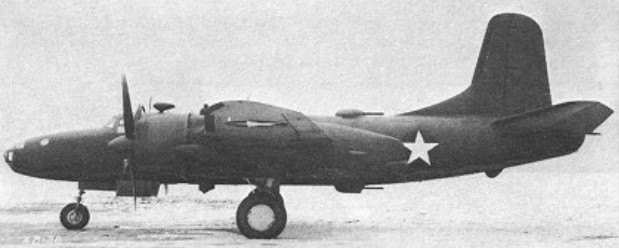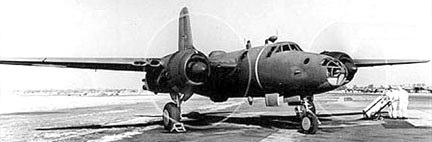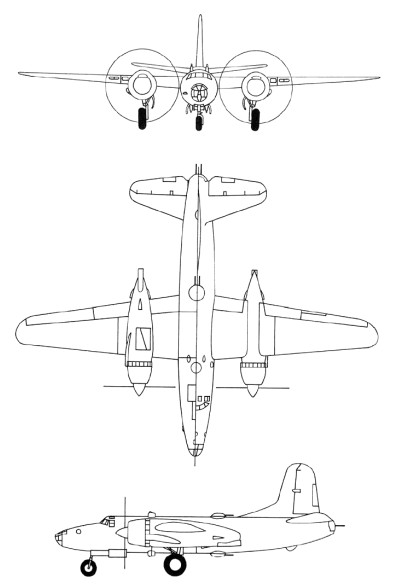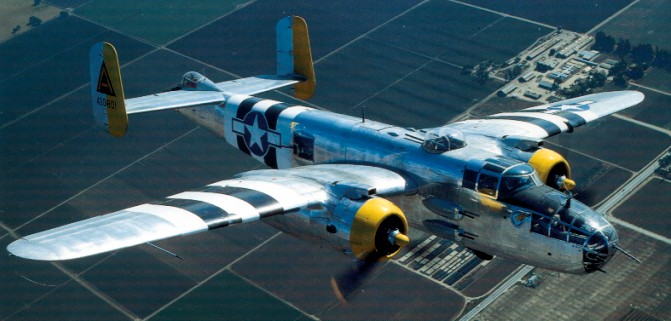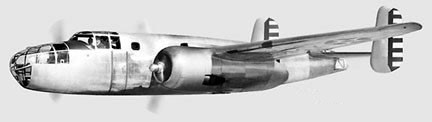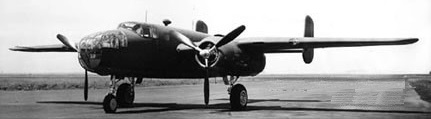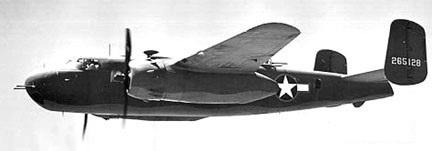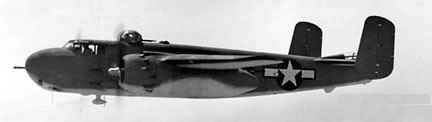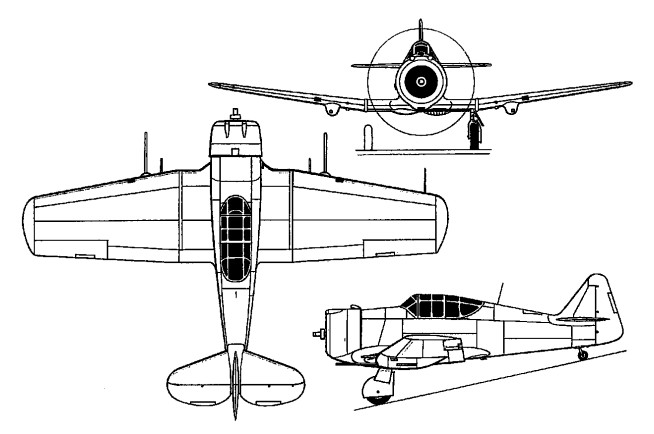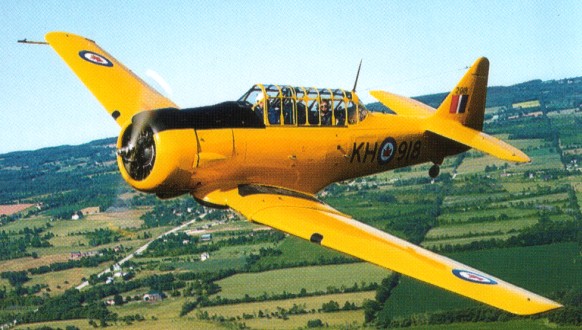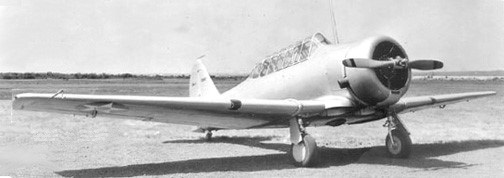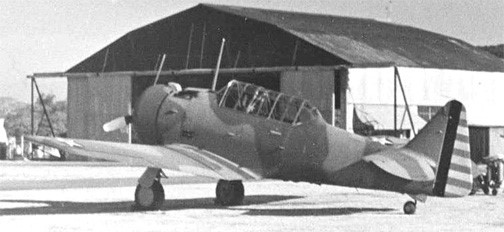
North American P-51 Mustang / A-36 Apache / P-78

P-51D, P-51C, P-51D

Early in 1940 J.H.Kindelberger, president of North American Aviation, and J.L.Atwood, executive vice-president of the company, were called into conference with the British Purchasing Commission in New York. The British requested they build the Curtiss P-40. Kindelberger suggested they could build a better airplane, and faster. The ‘go ahead’ was given.

Kindelberger and Atwood conferred with Ray H. Rice, then chief engineer; Edgar Schmued, design engineer; E.J.Horkey, aerodynamicist, and others. The first conferences started on 5 April 1940 with Ken Bowen serving as project engineer. Others soon became involved.
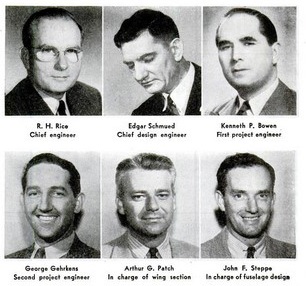
Rice ordered a low-drag, high-lift wing. Horkey had what was then considered a radical idea on airfoils and went to work with his assistants.

The prototype was not built from production drawings but design layouts, so fast was the work done. It was ready to fly and awaiting the installation of its 1150 hp Allison engine just 100 days from the time the first drawings were made.

A month before the first flight, design for production was started. In September, Bowen was assigned the job of production engineer, assisted by George Gehrkens.

With certain unorthodox designs involving compound curves, flush shin joints for absolute smoothness, the job of tooling up for thousands of planes fabricated by unskilled workers became a problem.

As no production drawings had been made it became necessary for more than 100 men to devote themselves to this job. Each part had to be considered for re-design or simplification to make it adaptable to mass production methods. Those used in production of T-6 and B-25 were brought in. In all, 2990 design drawings were made. Others were used in making flight tests and wind tunnel tests.

Lieut.Gen. James Dolittle would call in and try out the experimental model. Immediately the throttle was moved closer to the pilot’s seat to make operation easier for short arms.
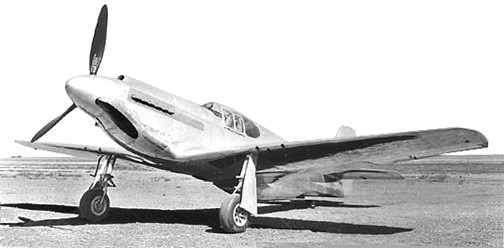
North American NA-73X NX19998

North American had designed and built the NA-73X prototype in 102 days. Late delivery of the Allison V-1710 engine delayed the first flight for another 20 days.

First flying on 26 October 1940, piloted by Vance Breese. Flights of the prototype revealed the need for many changes. Wind tunnel tests conducted by Horkey at California Institute of Technology revealed the need for more changes. For instance, flight tests showed that the air scoop intake had to be lowered to increase and alter air flow. Wind tunnel tests revealed to need to raise the carburettor air intake. A combination of tests showed that 50 pounds could be whittled off the flaps without any loss in aerodynamic efficiency. Flight test disclosed that a change in windshield design was in order.

P-51 Mustang Article

NAA hired Vance Breeze to make the first three test flights. Then NAA test pilot Paul Balfour took over. He selected and empty fuel tank, resulting in a forced landing.

NA-73X prototype

Nine months after design for production was started the first production airplane rolled off the line.
The X-73 had been built in accordance with United States Army specifications but without Army supervision, as the contract was with the British.

The first production NA-73 RAF Mustang I flew on 1 May 1941 and was delivered to the British in October 1941. The fifth and tenth off the production line went to the United States Army (41-038/039 for testing and experimentation. The next 150 were known as P-51’s.

Fitted with the same Allison V-1710 engine as the P 40, the Mustang proved to be a useful close support fighter and tactical reconnaissance aircraft. The aeroplane was soon ordered by the British and Americans as the Mustang and P-51 respectively.
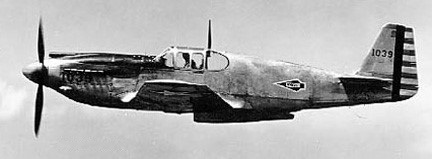
North American XP-51 41-039

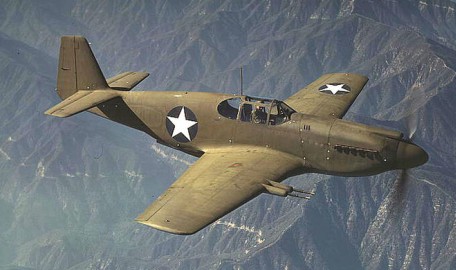
In June 1942 engineering on the A-36 began. It was equipped with dive brakes, bomb racks and six .50 calibre machine guns. It was found that it could dive and climb almost vertically, powered by a 1350 hp Allison. The A-36 order was the first from the United States Army. The first was tested in September 1942 and production was completed by March 1943.
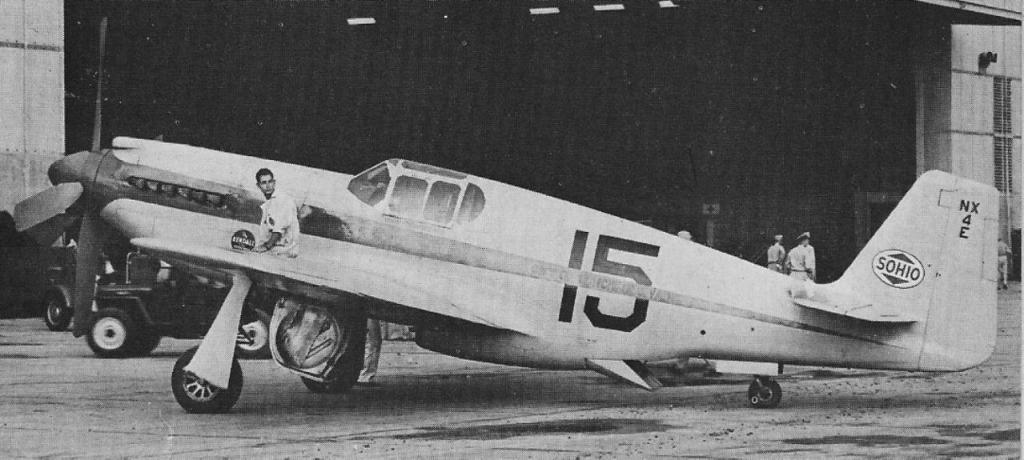
A-36 NX-4E owner/pilot Woody Edmundson, 1947 3rd in Kendall Trophy Race at 372.392mph
Destroyed in non-fatal crash during Thompson Trophy Race

Two Mustangs sank an Italian cruiser and another sank an Italian transport which had been one of the world’s greatest luxury liners.

In 1941 one hundred and forty eight P-51 NA-91 (41-37320-37351, 41-37353-37420, 41-37422-374690 were built, of which 2 became test beds for Packard V-1650 as XP-51B (XP-78), and of which many early models became A-36A, plus 650 NA-73/NA-83 for RAF as Mustang I/IA (many were converted in England to Rolls-Royce Merlin).
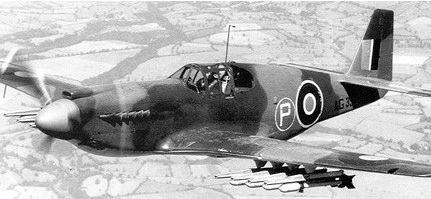
North American Mustang I

The design showed promise and AAF purchases of Allison-powered Mustangs began in 1941 primarily for photo recon and ground support use due to its limited high-altitude performance. A total of 310 P 51As were built. The 1942 P-51-1 armed recon adaptation with four wing cannon and two K-24 cameras was briefly designated F-6A at first, the unique final designation signified a batch of 57 withdrawn from an RAF Mustang I contract for USAAF duty. Fifty P 51As were allocated to the RAF as Mustang Mk IIs, while 35 were converted to F 6B tactical reconnaissance planes. Top speed was 390 mph.

P-51A

The initial P-51 and P-51A variants proved only moderately successful but in 1942, tests of P-51s using the British Rolls-Royce “Merlin” engine revealed much improved speed and service ceiling.

After some Allisom-powered P-51A were built, the Rolls-Royce Merlin, developing 1650 hp and equipped with two-stage, two-speed supercharger with a critical altitude of better than 30,000 ft, was in production and available to North American. The P-51B emerged with the Merlin and a four-blade propeller, the conversion first flying on 13 October 1942. It went into production in the late spring of 1943 with the first production aircraft flying in December 1942. The P-51B carried four .50 calibre machine guns and bomb racks. Dive brakes were eliminated. The radiator installation was redesigned and bubble canopy fitted. The plane was strengthened to carry the larger engine. New ailerons gave improved performance. The plane was cleaned up from spinner to rudder.

Wind tunnel model tests new tail fairing

Changes were being made daily, even while the planes flowed from the final assembly. Improved manufacturing methods resulted in each unit being produced with only 3300 man-hours.

P-51B

The first P-51B’s were delivered to a combat group early in November 1943. Seventeen days later, on 1 December, they conducted their first operation over enemy territory. Early in January, the group knocked down 18 German combat planes without a single loss, which was a record. A week later, the group accounted for 15 aircraft without loss. They netted a total of 103 German aircraft 83 days after starting operations, beating the Thunderbolt record of 100 planes in 85 days.

The P-51C was built in the newly constructed North American factory in Dallas, Texas, and was essentially the same as the P-51B.

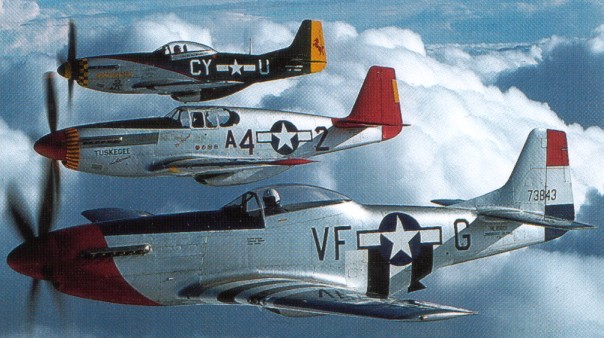
In 1943 a bubble canopy was adopted for the P¬51D, which became the main version of the famous fighter and entered combat over Europe in March 1944.

The aircraft is stressed for aerobatics and is capable of most all maneuvers with the exception of sustained inverted flight, snap rolls, outside loops, and inverted spins.

There are a number of variables regarding engines. The basic engine is the Packard built V-1650-7. The V-1650-9 was also used and is interchangeable. This V-12 engine is designed with 2 removable Cylinder bank assemblies of 6 cylinders each. These are referred to as head and banks. There are a number of engines that have been fitted with the” Transport Heads.” “Transport Heads” refer to British built assemblies that were used on a commercial aircraft engine and were designed for long life.

The basic V-1650-7 engine lower end will have a TBO in civil use of about 600 hours. The V-1650-7 heads and banks will probably require some rework at about 300 hours. The transport heads will normally last to TBO and beyond.

The P-51D holds 184 US gallons. The military used drop tanks of a maximum capacity of 110 gallons each and had a 85 gallon rear fuselage tank. Most civil operators do not use drop tanks and have a rear jump seat in place of the fuselage tank. With a normal cruise fuel burn of 65 GPH, this gives a 2 2 hour endurance with a small reserve.

A steerable type system uses an interconnect from the rudder pedals to the tailwheel steering system. This allows the pilot to steer the aircraft by use of the rudder pedals. Full forward stick movement unlocks this system. When unlocked the tailwheel becomes full swivel and steering is accomplished by differential braking.

The aircraft uses a low-pressure 1000 psi hydraulic system. The pressure is controlled and maintained by a regulator. The pilot simply operates the flaps or the gear and it works automatically. The wheel brakes are non-boosted, hydraulically actuated from individual master cylinders. The aircraft use standard MIL-5060 (red) fluid.

The aircraft has a 24 Volt D.C. system with a 100-amp generator. Some aircraft have an alternator installed. Normal aircraft have no AC electrical devices installed. A standard battery is used to provide starting and back up power. The aircraft does not require a ground power cart for normal use.

The definitive P-51D variant amounted to 7,966 of the 15,469 Mustangs. Unit cost in 1945 $50,985.
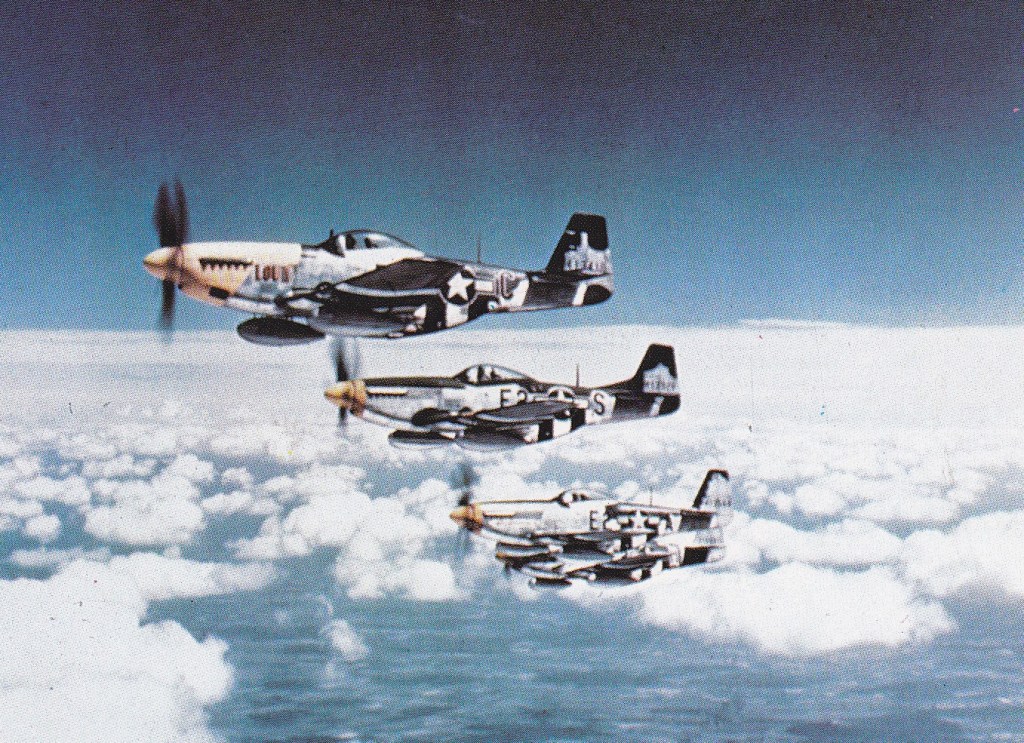
Four P-51D of the 8th Army Air Force’s 361st Fighter

The only AD on the P-51 is 81-13-01. The AD calls for inspection of the Hamilton Standard prop for corrosion. This AD starts out with an 18 month inspection interval and the interval lengthens to 60 months as the prop builds a history.

The RNZAF received 30 P-51Ds as NZ2401 to NZ2430 in late 1945 of what would have been 370 replacements for Corsairs. War’s end led to the cancellation of the remainder. The RNZAF operated P-51D until 1957.

Providing high-altitude escort to B-17s and B-24s, they scored heavily over German interceptors and by war’s end, P-51s had destroyed 4,950 enemy aircraft in the air, more than any other fighter in Europe.

North American P-51 Mustang & Republic P-47 Thunderbolt Article

Mustangs served in nearly every combat zone, including the Pacific where they escorted B-29s to Japan from Iwo Jima. Between 1941-5, the AAF ordered 14,855 Mustangs (including A-36A dive bomber and F-6 photo recon versions), of which 7,956 were P-51Ds.

On 4 October 1944 the US 8th Air Force Headquarters announced that for several days the German Luftwaffe had been using allied Mosquito and Mustang aircraft furnished with German national emblems. On 3 October 1944 a Mosquito flown by Germans was shot down near Aachen. Aerial combats had taken place over Holland between allied and German Mustang fighters. These machines in German hands were aircraft which had been forced to land behind German lines.
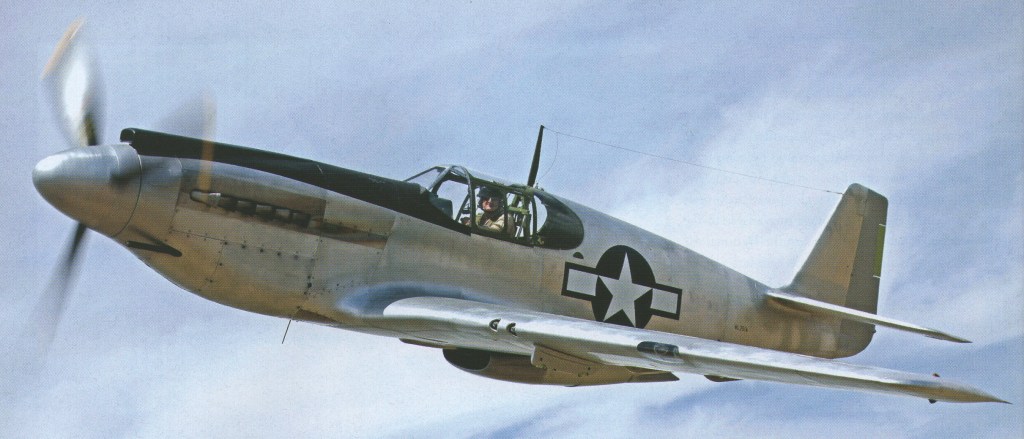
A-36 Apache

The final delivery, a P-51H, was made in November 1945. A total of 15386 aircraft were built including 500 A-36As and 120 P-51Ds assembled in Australia (CAC CA-17). 620 were exported to the RAF for a total to the USAAF/USAF of 14,365.

During the Korean War, P-51Ds were used primarily for close support of ground forces until withdrawn from combat in 1953.

The U.S. Military and the Royal Canadian Air Force made the largest surplus release of these aircraft in the late 50’s and early 60’s. A number of aircraft previously served with the forces of over seas countries. The aircraft sold as surplus in 1958 for prices ranging from $800-1500. The Mustang is probably the most recognized fighter of World War II and has proven to be a popular and widely used civilian Warbird.

Many people refer to the “Cavalier” Mustang as the ultimate conversion for civilian use. This conversion was performed by Trans Florida Aviation of Sarasota in the mid 60’s to the early 70’s. While this conversion was very nice at that time, most restorations done in the last 10-15 years are of superior quality. The Executive Mustang, or Cavalier, rebuild and conversion involved plush, soundproofed cockpit, IFR electronics, baggage compartments in former gun bays, 402-gal fuel tanks, and zero-time majored 1500hp Packard-Merlin V-1650-7 engine.

Cavalier P-51 Mustang Article

Successor to Trans-Florida Aviation, acquired during 1960s type certificate for North American F-51 Mustang, producing tandem two-seat business/sport conversions of F-51D as Cavalier 2000 series, and building new single-seat F-51Ds for the USAF counterinsurgency Military Assistance Program. Prototype of Mustang II, two-seat COIN patrol/attack version equipped with heavier armament, flew December 1967; prototype Turbo Mustang III (with Rolls-Royce Dart) in 1969. Second prototype flew in April 1971, equipped with Lycoming T55 engine, by which time the program had been sold to the Piper Aircraft Corporation, but then the company was dissolved.

Priced at $32,500 less radio 19 were reportedly under way by the end of 1959 (44-11558=N6175C, -72844=N5076K, -73027, -73260=N5075K, -73411=N550D, -73584=N51Q, -73656=N5073K, -73843=N351D, -74427, -74441, -74453, -74458/74459, -74469=N7723C, -74831, -74854, -84658=N7724C, 45-11381=N5471V, -11489=N5421V).

Executive Mustang / Cavalier variants:
Cavalier 750
1959
No tip tanks.

Cavalier 1200
1960
As 750
with two additional 45-gal internal wing tanks.

Cavalier 1500
1960
As 750, with two additional 63-gal internal wing tanks.

Cavalier 2000
1967
110-gal tip tanks.

Cavalier 2500
As 2000, with two additional 63-gal internal wing tanks.

Cavalier Mustang II
1967
F-51D modified for counter-insurgency duties
1760hp RR Merlin 620.
2 built.

Turbo Mustang III
1968 or 1971
Prototypical COIN design for production by Piper Co as PA-48 Enforcer.

The TF-51D was originally built by TEMCO aircraft and incorporated a full rear cockpit with Dual Controls. In the last several years this conversion has been produced by a California company and is very popular. It added about $250,000 to the price of a Mustang.
Bob Hoover’s P-51 Mustang had the wings rebuilt with thicker aluminium skins so that they would be strong enough to handle the extra weight of fuel.

P-51 Mustang Restorations

Gallery

Gallery II

Ultralight Replicas:
Loehle Aviation 5151
FK Lightplanes FK51 Mustang

Experimental Replicas:
Stewart S-51D
Papa 51 Inc Thunder Mustang
Thunder Builders Group Thunder Mustang
Titan Aircraft P-51
Falconair SAL Mustang P-51
Cameron & Sons P-51
Bonsall Mustang MkII

North American P-51 Mustang variant production history & performance

Production –

XP-51
Number built/Converted 2
Model NA-73; Developed for UK

P-51
Number built/Converted 150
Prod. model; 4 20mm cannon

P-51A
Number built/Converted 310
Fitted w/ bomb racks; 4 .50-cal. mgs

XP-51B
Number built/Converted 2
Imp. P-51; was XP-78

P-51B-NA
Number built/Converted 1988
Prod. model; Blks 1-15; Inglewood

P-51C-NT
Number built/Converted 1750
Dallas Plant; Blks 1-11

P-51D-NA
Number built/Converted 6502
Bubble Canopy; Blks 1-30

P-51D-NT
Number built/Converted 1454
Blks 5-30; 6 .50-cal. mgs.

TP-51D-NT
Number built/Converted 10
2-place trainer variant

P-51E
Number built/Converted 0
Model not assigned

XP-51F
Number built/Converted 3
Exp. lt. weight test model

XP-51G
Number built/Converted 2
Mod. XP-51F w/ new eng.

P-51H-NA
Number built/Converted 555
Prod. model; Blks 1-10

XP-51J
Number built/Converted 2
Mod. XP-51F w/ new eng.

P-51K-NT
Number built/Converted 1337
Imp. -D; Aeroprop; Blks 1-15

P-51L-NA
Number built/Converted 0
Imp. -H w/ new eng.

P-51M-NT
Number built/Converted 1
Imp. -H w/ new eng.

Specifications –

NA-73X
Engine: Allison V-1710, 1100 hp
Wingspan: 37’0″
Length: 32’2″
Useful load: 2250 lb
Max speed: 387 mph
Cruise speed: 307 mph
Stall: 120 mph
Range: 350 mi
Seats: 1

XP-51 / NA-73
Engine: Allison V-1710-39, 1100hp
Wing span: 37’0″
Length: 32’3″
Useful load: 1687 lb
Max speed: 382 mph
Cruise speed: 300 mph
Range: 625 mi
Ceiling: 30,800 ft

P-51
Engine: Allison V-1710-F3R, 1150 or -81, 1125 hp
Wingspan: 37 ft 0.5 in / 11.29 m
Length: 32 ft 2.5 in / 9.81 m
Height: 12 ft 2 in / 3.72 m
Empty weight: 6300 lb / 2858 kg
Max loaded weight: 8600 lb / 3901 kg
Max speed: 390 mph / 628 kph
ROC: 2600 fpm / 792 m/min
Service ceiling: 30,000 ft / 9144 m
Range: 450 mi
Armament: 4 x .20mm Hispano

P-51A / Mustang Mk.II
P-51A
Engine: Allison V-1710-F3R, 1150 or -81, 1125 hp
Wingspan: 37 ft 0.5 in / 11.29 m
Length: 32 ft 2.5 in / 9.81 m
Height: 12 ft 2 in / 3.72 m
Empty weight: 6300 lb / 2858 kg
Max loaded weight: 8600 lb / 3901 kg
Max speed: 394 mph @ 15,000 ft.
ROC: 2600 fpm / 792 m/min
Service ceiling: 30,000 ft / 9144 m
Range: 450 mi
Armament: 4 x .50 mg

P-51B
Engine: Packard Merlin V-1650-9, 1520 hp
Wingspan: 37 ft 0.5 in / 11.29 m
Length: 32 ft 2.5 in / 9.81 m
Height: 13 ft 8 in / 4.1 m
Empty weight: 6300 lb / 2858 kg
Max loaded weight: 8600 lb / 3901 kg
Max speed: 390 mph / 628 kph
ROC: 2600 fpm / 792 m/min
Service ceiling: 30,000 ft / 9144 m
Range: 450 mi
Max range: 1300 mph
Armament: 4 x .50 in Browning mg
Bomb load: 2 x 1000 lb

P-51C
Engine: Packard Merlin V-1650-9, 1520 hp
Wingspan: 37 ft 0.5 in / 11.29 m
Length: 32 ft 2.5 in / 9.81 m
Height: 13 ft 8 in / 4.1 m
Empty weight: 6300 lb / 2858 kg
Max loaded weight: 8600 lb / 3901 kg
Max speed: 390 mph / 628 kph
ROC: 2600 fpm / 792 m/min
Service ceiling: 30,000 ft / 9144 m
Range: 450 mi
Max range: 2700 miles
Armament: 4 x .50 in Browning mg
Armament: 6 x .50 Browning MG53-2 270 or 400 rds each
Bombload: 2 x 1000 lb / 454 kg

P-51D
Engine: Packard Merlin V-1650-7 or V-1650-9, 1450 hp / 1,695 hp
Propeller: Hamilton Standard 4-Blade 24D50, 134″
Span: 37 ft 0.25 in / 11.89 m
Length: 32 ft 3.25 in / 9.85 m
Height: 13 ft 8 in / 4.16 m
Wing area: 21.65 sq.m / 233.04 sq ft
Frontal Area: 13.4 sq.ft.
Max take-off weight: 5488 kg / 12099 lb
Normal Gross Weight: 9450 lb
Empty weight: 3232 kg / 7125 lb
Wing Loading: 49.2 lbs/sq.ft.
Power Loading: 7.78 lbs/hp
Drop tank maximum capacity: 2 x 110 USG
Rear fuselage tank capacity : 85 USG
Maximum speed: 703 km/h / 437 mph at 25,000 ft
Speed @ Sea Level: 326 kts (375 mph, 603 kph)
Normal cruise: 240 kt at 65 USgph at 8000 ft
Cruise Speed @ 75% Power: 250 kts (300 mph, 483 kph)
Range normal: 950 sm,
Range max: 1710 sm
Service Ceiling: 12770 m / 41,900 ft.
Rate of Climb @ gross: 2800 ft/min
Climb to 30,000 ft / 9,145 m: 13 minutes 0 seconds
Vx (best angle of climb): 87 kts
Vy (best rate of climb): 148 kts
Va (design maneuvering): 226 kts
Vfe (max flaps extended): 143 kts
Vle (max landing gear extended): 148 kts
Vne (never exceed): 439 kts
Vsl (stall, clean): 92 kts
Vso (stall, in landing config.): 88 kts
Best Glide: 152 kts
Armament: Six .50-cal. machine guns / 2,000 lb external
Design Limit Load Factor: +8g / -4g @ 8000 lbs / +5.5g / -2.5g @ 11600 lbs.
Crew: 1
Cost: $54,000

P-51H
P-51H
Engine: Packard Merlin V-1650-9, 2218 hp
Height: 13 ft 8 in / 4.1 m
Wingspan: 37 ft 0.5 in / 11.29 m
Length: 33 ft 4 in
Max speed: 487 mph @ 25,000 ft
Armament: 6 x .50 Browning MG53-2 270 or 400 rds each
Bombload: 2 x 1000 lb / 454 kg

P-51J
Engine: Allison 119/F32, 1700 hp @ 20,700 ft
Max speed: 492 mph @ 27,400 ft.

F-6A
Engine: Allison V-1710-F3R, 1150 or -81, 1125 hp
Wingspan: 37 ft 0.5 in / 11.29 m
Length: 32 ft 2.5 in / 9.81 m
Height: 12 ft 2 in / 3.72 m

F-6B
Engine: Allison, 1200 hp
Max speed: 390 mph.

RAF Mustang I
Armament: 4 x .303 mg / 4 x .50 mg

Mustang IA
Armament: 4 x .20mm Hispano

Mustang 4
Engine: 1,520 h.p. Packard Merlin V1650-3
Span: 37 ft
Weight: 10,000 lb
Max. Speed: 445 mph

A-36
Engine: Allison V-1710-F3R, 1150 or -81, 1125 hp
Wingspan: 37 ft 0.5 in / 11.29 m
Length: 32 ft 2.5 in / 9.81 m
Height: 12 ft 2 in / 3.72 m

A-36A
Armament: 6 x .50 mg
Bombload: 2 x 500 lb / 227 kg

North American P-51D Mustang

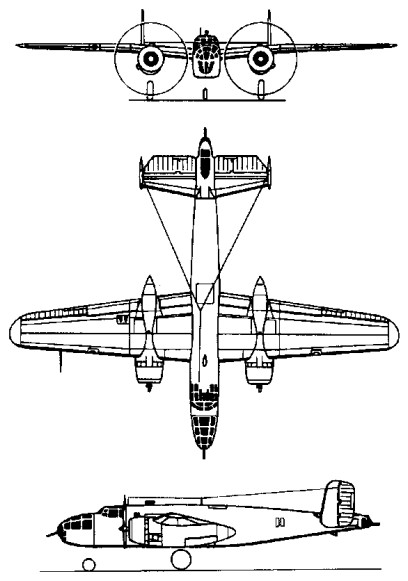
North American NA-63 / XB-28

Envisaged originally as a high-altitude version of the B-25 Mitchell, the North American NA-63 (XB-28) emerged finally as an almost entirely different aircraft. With single vertical tail surfaces and a circular-section fuselage with a pressure cabin for the five-man crew, the XB-28 was powered by two 1491kW Pratt & Whitney R-2800 radials and bomb bay capacity was 1814kg and -28A with R-2800-27. Dorsal, ventral and tail turrets, each containing two 12.7mm machine-guns, were remotely controlled from the cockpit; three similar forward-firing weapons were also fitted.

North American XB-28 40-3056

Of three prototypes ordered in February 1940, the first flew in April 1942 (40-3056), the second (40-3058), with a reconnaissance camera installation, crashed during the test programme and the third was cancelled. Although the XB-28 achieved a maximum speed of 599km/h at 7620m and could carry a 272kg bomb load for 3283km, production orders were not placed when no particular need for such a plane was found. A third prototype was unbuilt.

XB-28 / NA-63
Engines: two Pratt & Whitney R-2800-11, 11491kW / 2000 hp
Wingspan: 22.12 m / 72 ft 7 in
Length: 17.20 m / 56 ft 5 in
Wing area: 62.80 sq.m / 675.97 sq ft
Max take-off weight: 16226 kg / 35772 lb
Empty weight: 11611 kg / 25598 lb
Useful load: 10,165 lb
Max speed: 372 mph
Cruise speed: 411 km/h / 255 mph
Stall: 86 mph
Ceiling: 34,600 ft
Range: 3284 km / 2041 miles

XB-28A / NA-67
Engines: two Pratt & Whitney R-2800-27, 11491kW / 2000 hp
Wingspan: 22.12 m / 72 ft 7 in
Length: 17.20 m / 56 ft 5 in
Wing area: 62.80 sq.m / 675.97 sq ft

North American B-25 Mitchell / PBJ

B-25J

Built as a private venture, the NA-40-1 prototype flew in January 1939. The design was extensively modified as NA-62 after Wright Field testing and 1700hp R-2600s installed.

North American B-25 Article

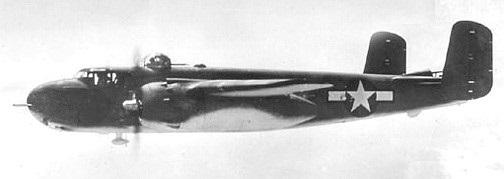
Ordered into production in 19 August 1939 it took just fifty-three weeks after receiving the initial contract before the first prototype took to the air. The initial order for 24 as B-25: 40-2165 to 40-2188. The prototype of the B-25 was flown for the first time on August 1940. The first of these 184 B-25 Mitchell entered service in 1941.

North American B-25 Straight-wing, narrow tails 40-2165

Flying the B-25 Mitchell

It and the first few B-25s off the production line had wings with a constant dihedral from the fuselage to the tips. Only after the 10th one were the wings redesigned with the characteristic gull configuration. Its armament included four .30-caliber machine guns, one in the nose and three amidships, and a single .50-caliber gun in the tail. The usual bomb load was 2,000 pounds with a maximum overload of 3,600 pounds. Large scale production began immediately and early models were in service by the time America entered the war in December 1941.

North American B-25A

The B-25A was fitted with self-sealing fuel tanks and armor for the pilot. The B replaced the midship and tailguns with electrically operated turrets. Each turret had two .50-caliber machine guns. The lower turret was remote-controlled. 120 of the 1941 B-25B (NA-62B) were built; 40-2229 to 40-2242, and 40-2244 to 40-2348, of which 23 to went to the RAF/RAAF.

North American B-25B 40-2321

The C and D were provided with automatic flight control equipment.

North American B-25C 41-12800

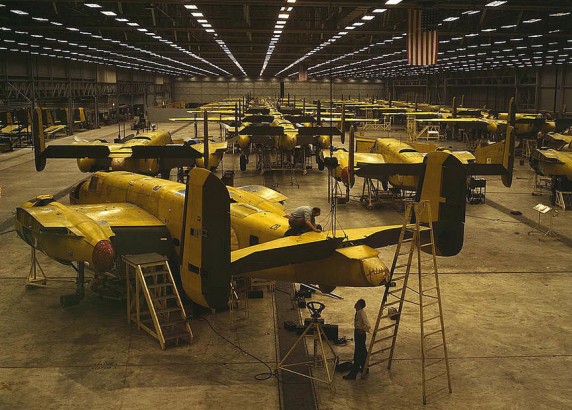
The B-25C was the first version of the Mitchell to be mass-produced. Following the completion of the initial B-25, B-25A, and B-25B contracts, a number of contracts were awarded to North American for 1625 B-25Cs to be built at its Inglewood factory. At the same time, an additional contract was issued for 2290 essentially identical B-25Ds, to be built at a new North American plant in Kansas City, Kansas.

The first B-25C contract was approved on September 24, 1940 for 863 aircraft under the company designation NA-82. On June 24, 1941, the Netherlands government ordered an additional 162 aircraft under the designation NA-90 which were later built as the B-25C-5. Lend-Lease funds financed contracts signed on January 23, 1942 for 150 NA-94 (B-25C-10) for Britain and 150 NA-93 (B-25C-15) for China. However, these allotments were not followed in the delivery of actual aircraft.

The B-25C was outwardly almost identical to the B-25B. It introduced the R-2600-13 Double Cyclone engine with Holley 1685HA carburetors in place of the earlier Bendix Stromberg PD-13E-2 units. The Bendix carburetors were favored because of their easier maintenance, but they required more careful anti-icing procedures. De-icer and anti-icing systems were added, and a Stewart-Warner cabin heater was added in the left wing. A 24-volt electrical system was also added.

The armament of the B-25C was the same as that of the B-25B, namely a single 0.30-inch machine gun in the nose, two 0.50-inch machine guns in the dorsal turret, and two 0.50-inch machine guns in a retractable ventral turret. The ventral turret was often removed in the field.

The B-25C introduced a new type of tail skid underneath the extreme rear fuselage, a solid unit which replaced the spring-loaded tail skid of earlier versions. This type of tail skid was retained throughout the Mitchell production run.

On the earlier B-25s, the exhaust pipe coming out of the back of the engines extended all the way to a position underneath the forward leading edge of the wing. On the B-25C, the exhaust pipes were considerably shortened, and terminated immediately behind the engines.

The fuel was carried in four tanks in the inner wing panels, with a total capacity of 670 US gallons. In addition, a 515-gallon tank could be installed in the bomb bay for ferrying purposes, bringing total fuel capacity to 1255 US gallons.

Beginning with B-25C serial number 41-12817, a small transparent scanning blister was installed above the navigator’s station. At this time, the turrets were changed to Bendix Amplidyne type, and a carbureter air filter was added. Changes were made so that an additional 304 US gallons of fuel could be carried in auxiliary cells in the outer wing panels, for a total of 974 US gallons.

The B-25C-1 production block introduced under-wing bomb racks which could accommodate six to eight 100- to 325-pound bombs. In addition, provisions were made for a rack underneath the fuselage capable of carrying a short 22.4-inch torpedo weighing 2000 pounds. If the torpedo was carried, no bombs could be, although a bomb bay fuel tank could be used. The Mitchell was employed only in limited numbers as a torpedo plane against Japanese shipping. However, extensive use was made of the external wing racks, which could carry six to eight bombs of 100-325 pounds in weight.

Beginning with the B-25C-5 production block, the 0.30-inch nose gun was removed and replaced by a flexible 0.50-inch machine gun in the extreme nose and a fixed 0.50-inch machine mounted on the starboard side of the nose and firing through a hole cut into the side of the Plexiglas glazing. At the same time, better winterization provision were made.

The B-25C-5 production block also introduced a new type of engine exhaust. The B-25B and earlier C versions had a problem with bright spurts of flame being emitted from the exhaust, a dead giveaway during night operations. This problem was so bad that the Mitchell had to be restricted from night operations where enemy aircraft could be expected. In these earlier versions, the exhaust from each cylinder head was gathered by a collector ring, which directed the exhaust to the outside via a single pipe on the side of the nacelle away from the fuselage. Several different exhaust modifications were tried out in an attempt to alleviate this problem. The most effective arrangement was found to be a the replacement of the single exhaust pipe by a set of “finger”-type flame dampening exhaust collectors which ported the exhaust through groups of small rectangular outlets that stuck out underneath the trailing edge of the cowl flaps. These “finger”-type flame dampeners were installed on the production line beginning with the B-25C-5 production block. These were fairly effective flame quenchers, but they suffered considerable cracking and few B-25Cs reached combat zones without the replacement of these finger exhausts by full collector rings or by the later Clayton S-shaped stacks that were introduced on the -15 production block.

The B-25C-10 production block introduced an AM remote reading compass, provisions for additional cabin heating, and an improved scanning lens for the sig.

Beginning with the B-25C-15 production block, the exhaust collector ring was replaced with Clayton “S”-shaped flame dampening stacks attached to each individual cylinder. Cutouts and fairings were added to the cowling panels where each of the stacks protruded, creating a rather cluttered cowling shape. These protrusions introduced a slight speed penalty, but this was considered an acceptable tradeoff in view of the better flame dampening that was achieved. This feature was provided on all subsequent Mitchells. However, the new exhaust system was not all that popular with Mitchell crews, since it resulted in an increase in cockpit noise as compared to the old arrangement in which collector rings ported the exhaust to the outboard side of the nacelles.

At the same time, emergency hydraulic landing gear lowering devices were provided. The fuel capacity consisted of four tanks in the inner wing panels, with a total capacity of 670 US gallons. In addition, a 515-gallon tank could be installed in the bomb bay for ferrying purposes, bringing total fuel capacity to 1255 US gallons. Later versions had additional auxiliary fuel tanks in the outer wing panels. Later versions could also have 125-gallon tanks fitted in side waist positions, a 215-gallon self-sealing fuel tank installed in the bomb bay, and provisions could be made for a droppable 335-gallon metal bomb-bay fuel tank. Armament: Two 0.50-inch machine guns in dorsal turret. Two 0.50-inch machine guns in retractable ventral turret. One 0.30-inch machine gun in flexible mount in the nose. Starting with B-25C-5 the 0.30-inch nose gun was removed and replaced by a flexible 0.50-inch machine gun in the extreme nose and a fixed 0.50-inch machine mounted on the starboard side of the nose and firing through a hole cut into the side of the Plexiglas glazing. Normal bomb load was 3000 pounds but could be increased on the B-25C-1-NA with external underwing racks to a maximum of 5200 pounds.

Deliveries on a new contract (NA-96) began in February 1943 with the similar B-25C-20.

Beginning with production block B-25C-25, a “clear-vision” windshield was installed. Provisions were made for the fitting of additional fuel tanks for ferrying purposes. 125 gallons of fuel could be carried in side-mounted tanks in the waist position. A 215-gallon self-sealing fuel tank could be installed in the bomb bay, and provisions for a droppable 335-gallon metal bomb-bay fuel tank were made on every second airplane.
B-25C serial number 43-32732 was fitted with a special bomb bay rack to carry an airborne flame thrower. The results of tests with this unusual feature are unknown.

The first B-25C was accepted in December of 1941, with the 1619th and last one being delivered in May of 1943. The B-25C; 42-32233 to 42-32280, 42-32282 to 42-32383, 42-32389 to 42-32532, 42-53332 to 42-53493, and 42-64502 to 42-64901, were built as NA-82, NA-90, NA-93, and NA-94. The NA-93 and -94 were exports to China and RAF, respectively.

B-25 Mitchell in the USSR

The 1942 XB-25E and -25F were fitted with experimental deicing equipment. One each were conversions from -25C with new s/n; 43-32281 and 43-32282.

The G was the first model to carry a 75mm Army M-4 cannon in the nose. One conversion from a B-25C with new s/n, 43-32384, was completed in 1942 as the XB-25G.

North American B-25G Cannon installation

The B-25G (NA-96) of 1942 was a four-crew production model with the M-4 cannon. 405 were built; 42-64902/65201, and -64802/65201.

North American B-25G 42-65128

The 1943 B-25H (NA-98) increased its armament to four .50-caliber guns in an armored nose and two pairs of .50-caliber guns on each side of the fuselage. It was the precision bomber version of the H; the crew increased to six to include a bombardier.

North American B-25H

1,000 B-25H were built: 42-4105/5104.

The B-25J, built at the Kansas plant, was the most widely produced version, 4318 being produced 1943-45.

More than 700 B 25s were acquired by the U.S. Navy and Marines, as the PBJ. USN/USCG transfers of USAAF B-25 for use in mine-laying, harassing night raids, and bombing and torpedoing ships in the Southwest Pacific theatre.

The US Marine Corp operated B-25s as the PBJ-1C (1943 50 ex-B-25Cs; 34998-35047), PBJ-1D (1943 152 ex-B-25Ds; 35048-35096, 35098-35193, 35196-35202), PBJ-1G (1 ex-B-25G; 42-65031/35097), PBJ-1H (248 ex-B-25Hs; 35250-35297, 88872-89071), and PBJ-1J models (255 ex-B-25Js; 35194-35195, 35203/35249, 35798-35920, 38980-39012, 64943-64992).

North American PBJ-1H

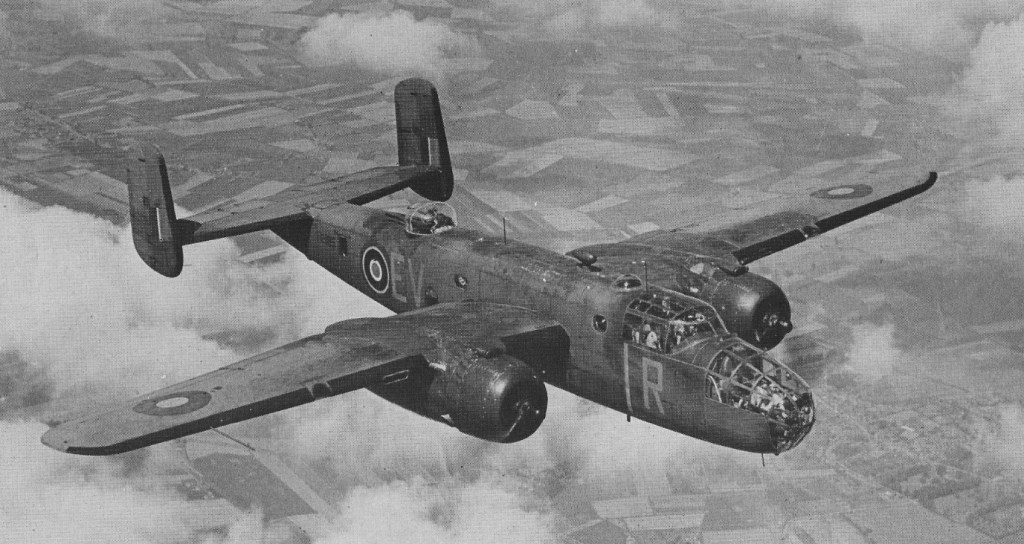
The Royal Air Force received about 800, and the airplane was flown more than a dozen other countries. Top speed only reached about 270 mph but the Mitchell’s 1,350 mile range made it very useful.

The Americans did not use Mitchells operationally from the United Kingdom but based them with the 12th United States Army Air Force in the Mediterranean. However the British, Dutch and Russians received large numbers.

Mitchell II

Training aircraft were the AT-25, later designated the TB-25.

All B-25 models were powered by Wright R-2600 Cyclone 14 engine. More than 12000 aircraft built.

In April 1942 sixteen Mitchells, operating from the American aircraft carrier USS Hornet, made one of the most daring bomber raids in the Second World War, on Tokyo.

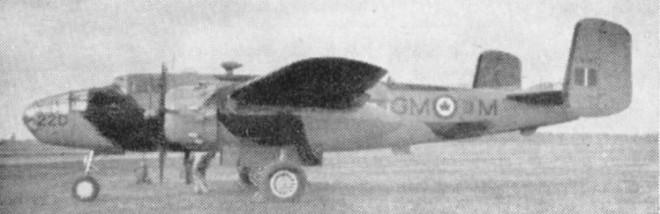
In 1955 large numbers of these wartime medium bombers were still used by the R.C.A.F. for a variety of duties. The target towing version shown here is powered by two 1,700 h.p. Wright R2600-13 engines.

B-25D

About 100 B-25Js, with glazed noses, are used for all weather crew training and guided weapon development. Other B-25Ds and Js were used by Reserve squadrons. TB-25s were in service with the U.S.A.F.

The Mitchell was used in all theatres and a total of 9816 were built, essentially unaltered in airframe and engines, but revised in armament, armour and fuel. There were 1619 B-25C built, and 1000 B-25J. A total of 9,816 were delivered to USAAF, and about 2,000 more exported to Allied air services. The USN version was the PBJ. The last, a TB-25, was finally retired from USAAF duty in Jan 1959.

Serials of North American B-25C Mitchell
B-25C
41-12434-13038 / c/n 82-5069/82-5673
B-25C-1
41-13039-13296 / c/n 82-5674/82-5931
B-25C-10
42-32233-32382 / c/n 94-12641/94-12790
B-25C-15
42-32383-32532 / c/n 93-12491/93-12640
B-25C-5
42-53332-53493 / c/n 90-11819/90-11980
B-25C-20
42-64502-64701 / c/n 96-16381/96-16580
B-25C-25
42-64702-64801 / c/n 96-16581/96-16680

Gallery

B-25
Initial model

B-25A / NA-62A
Max speed: 315 mph
Cruise speed: 262 mph
Stall: 90 mph
Range: 1350 mi
Ceiling: 27,000 ft

B-25B
Dorsal & ventral turrets

B-25C / PBJ-1C
Engines: Two Wright R-2600-13 Double Cyclone, 1700 hp takeoff, 1500 hp at 2400 rpm.
Wingspan: 67 ft 67.7 in
Length: 53 ft 0 in
Height: 15 ft 9 in
Wing area: 610 sq.ft
Empty weight: 20,300 lb
Maximum weight: 34,000 lb
Maximum speed: 284 mph at 15,000 ft.
Cruising speed: 233 mph at 15,000 ft.
Initial climb rate: 1100 fpm
Time to 15,000 ft: 16.5 min
Service ceiling: 24,000 ft
Range: 1500 miles with 3000 lb bombs.
Internal fuel capacity: 670 US gal
Ferry fuel capacity: 1255 US gal
Opt fuel later mods: 800 US gal
Armament B-25C: 4 x 0.50-inch machine guns, 1 x 0.30-inch machine gun
Armament B-25C-5: 6 x 0.50-inch machine guns
Normal bomb load: 3000 lb
Underwing bomb load B-25C-1-NA: 2200 lb
Max bomb load B-25C-1-NA: 5200 lb

B-25D Mitchell / PBJ-1D
Ventral bomb racks
Engines: two 1,700 h.p. Wright R2600-13
Span: 67 ft. 7 in
Max Weight: 33,500 lb
Max Speed: 303 m.p.h.

B-25G / PBJ-1G / NA-96
Length: 51’0″
Max speed: 281 mph
Cruise speed: 248 mph
Stall: 105 mph
Range: 1560 mi
Ceiling: 24,300 ft
Armament: 75 mm M-4 cannon
Crew: 4

B-25H / PBJ-1H / NA-98
Improved B-25G
Engines: Wright R-2600-13 Cyclone, 1700 hp / 1268 kW
Wingspan: 67 ft 7 in / 20.60 m
Length: 51 ft 0 in / 13.34 m
Height: 15 ft 9 in / 4.80 m
Wing area: 610,0 sq.ft / 56.67 sq.m
Empty weight: 19,975 lb / 9061 kg
MTOW: 36,047 lb / 16,351 kg
Max speed: 275 mph / 442 kph at 13,000 ft / 3960 m
Cruise speed: 230 mph
Stall: 105 mph
Climb to 15,000 ft / 4570 m: 19 min 0 sec
Service ceiling: 23,800 ft / 7255 m
Range: 2700 mi / 4344 km
Armament: 1 x 75mm T-13E1 cannon, 12 x .50 in mg
Bomb load: 3200 lb / 1452 kg or 1 x 2000 lb / 907 kg torpedo
Seats: 5

B-25J / PBJ-1J
Improved B-25H initially with B-25D glazed nose, later solid 8 gun nose
Engines: 2 x Wright R-2600-92 Cyclone, 1268kW / 1700 hp
Wingspan: 20.6 m / 67 ft 7 in
Length: 16.13 m / 52 ft 11 in
Height: 4.98 m / 16 ft 4 in
Wing area: 56.67 sq.m / 609.99 sq ft
Max take-off weight: 15876 kg / 35001 lb
Empty weight: 8836 kg / 19480 lb
Fuel capacity: 811 gal
Max. speed: 237 kts / 438 km/h / 272 mph at 13,000 ft
Cruising speed: 200 kts / 370 km/h
Ceiling: 7375 m / 24200 ft
Cruising altitude: 12992 ft / 3960 m
Wing load: 57.4 lb/sq.ft / 280.0 kg/sq.m
Range: 2173 km / 1350 miles with 3000 lb bombload
Armament: 12 x 12.7mm / .50 machine-guns, 1300-1800kg of bombs
Crew: 5

TB-25

North American NA-50 / NA-68 / P-64

P-64

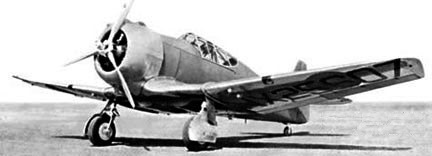
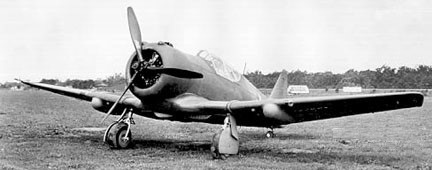
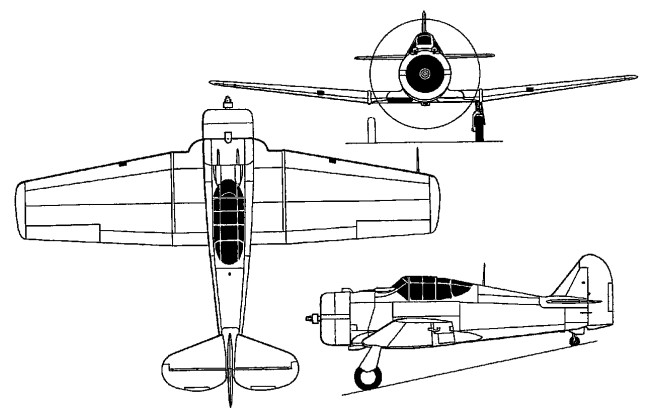
North American engineers designed two variants of the BC-1 to sell to overseas buyers as fighters and attack planes. One was a single-seat fighter and the other a two-seater; both had five .30-caliber ma¬chine guns in the wings and nose.

Conceived as a low-cost fighter for use by smaller nations demanding comparatively simple warplanes, yet embodying such modern features as an enclosed cockpit and a retractable undercarriage, the NA-50 was a single-seat derivative of the NA-16 tandem two-seat basic trainer. Of all-metal construction with semi-monocoque fuselage, the NA-50 was powered by an 870hp Wright R-1820-77 Cyclone radial.

First flying on 1 September 1940 piloted by Lewis Waite, one prototype was built for the USAAF (NX25607).

North American P-64 NX25607

The first order, from the Siamese air force, was for 10, including both versions. Brazil, Peru and Chile ordered 49 single-seat fighters.

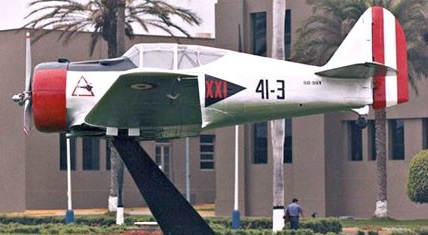
In January 1938, a contract was placed on behalf of the Cuerpo de Aeronautica del Peru for seven NA-50s, delivery being completed in May 1939. In Peruvian service, the NA-50s were equipped with racks for up to 249kg of bombs, and the type saw active service in 1941 during a conflict with Ecuador. The last Peruvian NA-50 was withdrawn in 1961.

North American NA-50

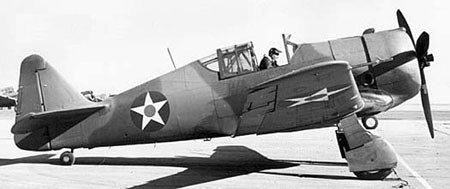
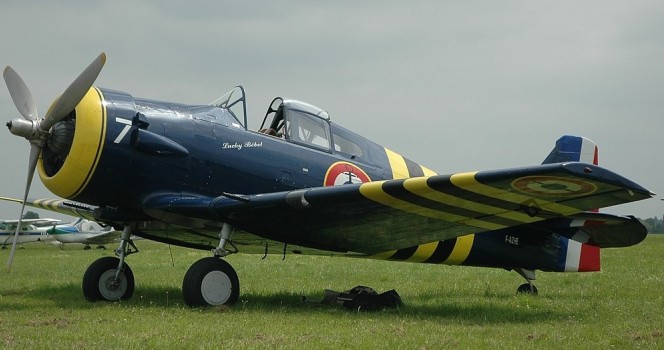
The company Model NA-50A P-64 ordered by Siam on 30 December 1939, was little more than a single-seat pursuit ship patterned after the Harvard trainer and developed from the NA-50 used by Peru. Tension was increasing at the time between Siam and French Indochina, and the State Department prohibited the transfer. The six examples of this strictly export craft were built at Inglewood and painted in Siamese markings, and were en route to Siam when the US Army confiscated them. The aircraft were diverted to the Philippines, where they were taken over by the U.S. Army Air Corps (41-18890/18899). They removed the armament, and assigned them to training duties at Luke Field, Arizona, designated the P-64.

North American P-64 8300

A widely-published report that the Siam-bound aircraft were caught at Pearl Harbour during the 7 December 1941 Japanese attack is inaccurate: the NA-50As were apparently embargoed in October 1940 and a camouflaged example in USAAF markings was noted at Luke as early as 16 September 1941.

Never really a fighter in USAAF service, the six P-64s were essentially base ‘hacks’ and possibly never received American serial numbers. A privately-owned survivor in civil registry as N840 was airworthy in the US as recently as 1975.

North American NA-68

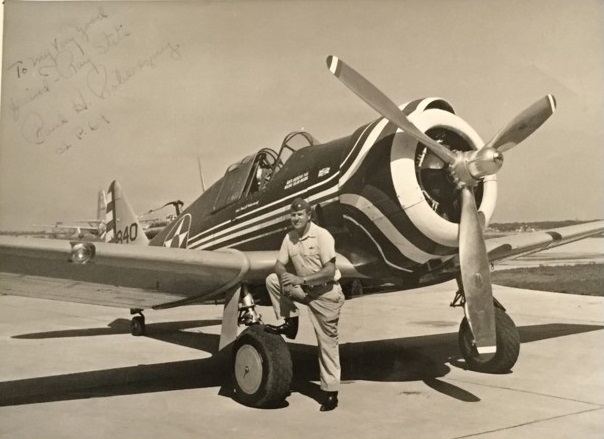
One survives in the EAA collection (41-19085, NX37498, XBKUU, N686220).

Courtesy Don Stits

In early 1964, a North American P64 was ferried from San Diego to Flabob Airport in Riverside Ca. Once we realized it’s rarity, Ray contacted Paul Poberezny and a deal was made to acquire the P64 for the EAA Museum. I spent over two months working on the P64 to get it airworthy so Paul could ferry it to Wisconsin. Attached pictures are the P64 as it sat on Flabob Airport and after Paul finished the restoration (Paul in uniform with his pride and joy). Don Stits

Courtesy Don Stits

Gallery

NA-50
Max take-off weight: 2585 kg / 5699 lb
Empty weight: 2028 kg / 4471 lb
Wingspan: 11.35 m / 37 ft 3 in
Length: 8.21 m / 26 ft 11 in
Height: 2.67 m / 8 ft 9 in
Wing area: 21.93 sq.m / 236.05 sq ft
Max. speed: 475 km/h / 295 mph
Range: 1038 km / 645 miles

NA-50A
Engine: Wright R1820-77 Cyclone 9, 870 hp
Wing span: 37 ft 3 in
Wing area: 236 sq.ft
Length: 26 ft 11 in
Empty weight: 4470 lb
MAUW: 6800 lb / 3084 kg
Max speed: 270 mph at 9500 ft
Cruise: 255 mph at 16,500 ft
Range: 645 mi
Armament: 2 x .30 mg & 2 x 20mm cannon + 4 bombs underwing.

P-64
Engine: Wright R-1820, 875hp
Max take-off weight: 2717 kg / 5990 lb
Empty weight: 2113 kg / 4658 lb
Wingspan: 11.35 m / 37 ft 3 in
Length: 8.23 m / 27 ft 0 in
Height: 2.74 m / 8 ft 12 in
Wing area: 21.18 sq.m / 227.98 sq ft
Max. speed: 434 km/h / 270 mph
Cruise speed: 235 mph
Stall: 71 mph
Ceiling: 4260 m / 14000 ft
Range: 1380 km / 858 miles
Seats: 1

NA-50
North American P-64

North American NA-26 / BC-1 / T-6 / Harvard / SNJ

Harvard Mk.II

Derived from the 1935 NA-16 prototype, the North American NA-26 design was first flown in 1938. This aircraft was designated the Basic Combat Trainer, BC-1. The BC-1 (basic combat, type 1) had the same basic airframe design as the BT-9 but with a retractable main landing gear and more power. It was equipped with one nose-mounted .30-caliber machine gun that fired through the propeller and a second .30-caliber gun on a flexible mount in the rear cockpit.

The first one flew on February 11, 1938. The Edward G. Budd Manufacturing Co. was subcontracted to experiment with stainless steel in the wing panels to determine its structural feasibility in the aircraft. It had seven inches more wing span, larger tanks and a higher gross weight (by approx 155 pounds) when compared to the later T-6.

NA Harvard Article

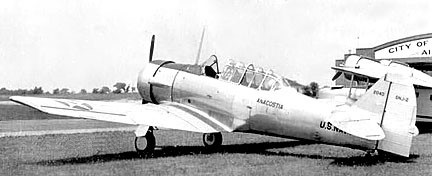
In 1939, the U.S. Army Air Corps ordered an additional 200 of the advanced BC-1A type, and the U.S. Navy a number of the same type but designated as SNJ-1.

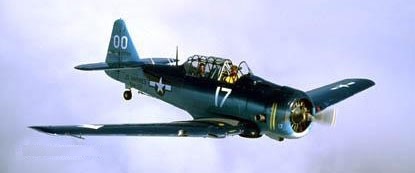
The Navy had been searching for a trainer for pilots destined to fly its scout aircraft, such as the Douglas SBD dive bomber, and it chose the BC-1. The BC-1 was ordered in 1937 to the extent of 41 aircraft with the R-1340-45 radial. Blunt wing tips and a straight-edged rudder characterised the BC-lA, of which 92 were ordered and the last six delivered as AT-6s after a change in designation policy during 1940. AT-6 orders covered an extra 85 aircraft, and production then switched to 1,429 AT-6As with the R-1340-49 engine and modified fuel tankage. The full production flood now saw 400 AT-6B gunnery trainers with the R-1340-AN-1, 2,970 AT-6Cs with a high proportion of non-strategic materials, 3,713 AT-6Ds with the original structure and 24-volt electrics, and 25 AT-6Fs with a strengthened airframe. US Navy variants equivalent to the BC-1, AT-6, AT-6A, AT-6C, AT-6D and AT-6F were the SNJ-1 to -6 respectively, of which 4,765 were delivered.

SNJ-1

The 1937 SNJ-1 was as the Army BC-1A with retractable gear and metal-covered fuselage. Sixteen very operated a 1552-1567.

A total of 2,068 wartime aircraft were remanufactured as T 6G.

North American engineers designed two variants of the BC-1 to sell to overseas buyers as fighters and attack planes. One was a single-seat fighter and the other a two-seater; both had five .30-caliber ma¬chine guns in the wings and nose. The attack version (NA-44, -69, -72) also had a flexible machine gun in the rear cockpit. The first order, from the Siamese air force, was for 10 A-27 (NA-69), including both versions.

North American A-27

Brazil, Peru and Chile ordered 49 single-seat fighters. Brazil received 30 NA-72 with P&W R-1340 in 1940 and one armed prototype NA-44 went to the RCAF in 1940.

Siam never received any of the aircraft, however. Tension was increasing at the time between Siam and French Indochina, and the State Department prohibited the transfer. The aircraft were diverted to the Philippines, where they were taken over by the U.S. Army Air Corps, re-designated A-27 (41-18890/18899), where they were destroyed in Japanese bombings during Dec 1941. Several A-27s saw action in the Philippines on December 8, 1941, against invading Japanese forces. The single-seat version was stripped of armament, returned to the States for fighter-pilot training and designated the P-64.

The Navy later requested several modifications to the SNJ-1, including a more powerful engine. That changed the designation to SNJ-2.

Sixty-one 1940 SNJ-2 were operated as 2008-2043 and 2548-2572.

North American SNJ-2 2040

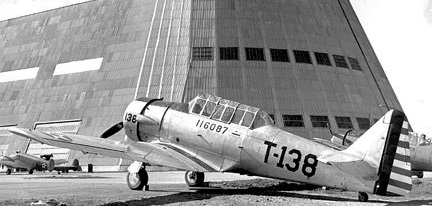
The 1940 AT-6 (NA-59) first flew on 6 February 1930 and 85 were built, plus 9 from BC-1B (40-717/725, -2080/2164).

A total of 1549 of the 1941 AT-6A (NA-77) were built: 41-148/785, -15824/16228, 16259/16403, -16439/16457, 41-16474/16578, -16616/16653, -16693/16778, -16821/16878, -16924/16939, -16994/17033.

North American AT-6A 41-16087 from Mather Field at Moffett Field CA.

The Air Corps asked for other modifications, and the AT¬6A/SNJ-3 emerged as the standard advanced single-engine trainer for both services. (It was used for basic pilot training and even for primary training toward the end of World War II, when Nationalist Chinese students were sent to the States for pilot instruction.)

North American SNJ-3

270 SNJ-3 were produced in 1941 (6755-7024) plus 296 AT-6 obtained from the USAAF (01771-01976, and 05435-05526). Fifty-five SNJ-3 were converted to SNJ-3C deck-landing trainers.

The SNJ-4 (NA-88) of 1942 were the same as USAAF AT-6C, 2,400 produced (05527-05674, 09817-10316, 26427-27851, and 51350-51676). 85 were converted in 1942 to SNJ-4C deck-landing trainers.

North American SNJ-4

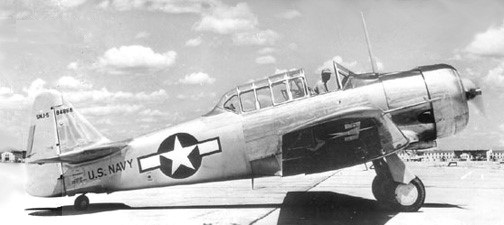
The SNJ-5 (NA-88) of 1943 were 1,573 USAAF AT-6D transferred to the USN (43638-44037, 51677-52049, 84819-85093, and 90582-91101). Some were converted to SNJ-5C deck-landing trainers.

North American SNJ-5 84968

The 411 SNJ-6 of 1944 were from USAAF production of AT-6F (111949-112359).

In 1952 earlier models were modernised to T-6G standards as SNJ-7s. The SNJ-7B was an armed version.

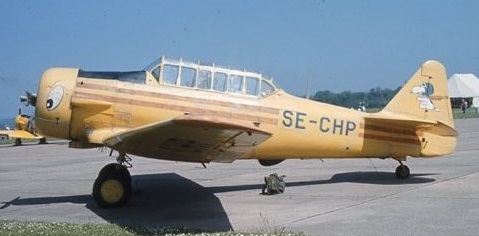
AT-6A SE-CHP

To accommodate orders that amounted to more than 600 aircraft when war began, North American opened a new plant in Dallas in 1942 to supplement the aircraft being turned out in the Los Angeles area.

The Dallas plant became the main point of manufacture – hence the name ‘Texan.” New model suffixes were assigned as minor changes were made. To save alu¬minum, some of the AT-6/SNJs were turned out with plywood fuselages and internal stringers made from spruce. The Navy added tail hooks for carrier train¬ing. Bomb racks and belly fuel tanks were also added.

A number of Texans were either built or modified for experimental purposes. The Army Air Forces ordered one XAT-6E in 1944 with an in-line, air-cooled engine installed. On test flights it reached a top speed of 244 mph and climbed to 30,000 feet – 50 mph faster and 6,000 feet higher than the Texans flying with radial en¬gines. Unfortunately, the in-line engine proved to be a maintenance headache, and only one XAT-6E was built.
Another experimental Texan was des¬ignated the ET-6F in 1950, when a swivel landing gear was installed to assist in making crosswind landings. The Northrop Co. experimented with automatic pilots in the T-6. Cameras were installed aft of the rear seat in a few aircraft for aerial photography; flares were added to make photography possible at night as well.

When the British realized they could not build enough trainers in the United Kingdom at the beginning of World War II, they ordered the BC-1, which they designated the Harvard Mark I. A single British machine gun for the right wing was specified, as well as British instru¬ments and a circular control stick called a “spade.” The Canadians also ordered the Mark I, and one variant was labeled the AT-16. Since British engine mixture controls were reversed as far as Americans and Canadians were concerned, a warn-ing plaque was installed that read: “This airplane has British carburetor mixture control. Lean—forward. Rich—back.”

The Harvard II was the equivalent to the USAAC’s AT-6A. The Harvard IIA was the equivalent to the USAAC’s AT-6C. Some were overhauled to a Mk.II* standard. This differed from the Mk.II in having a plywood and low alloy steel rear fuselage instead of the previous light alloy monocoque construction. This was said to save over 1200 lb of aluminium. The Mk.IIB was a version of the Mk.II built in Canada by the Noorduyn Aircraft Company, and known in the USA as the AT-16. The Harvard Mk.III reverted to all metal construction and had a 24volt electrical system. Two hundred and thirty five AT-6s were operated by Sweden and designated Sk-16.

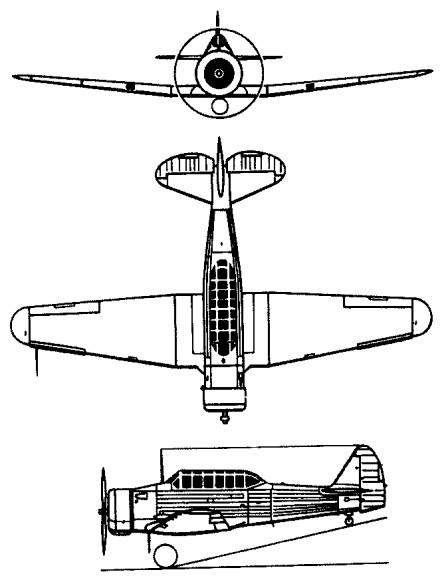
The Harvard II (AT-6C), North American NA-16-1A, or North American NA-16-3 has a low-wing cantilever monoplane, the wing section varies from N.A.C.A. 2215 to 2209, in five sections, consisting of centre-section, two outer-sections and two wing-tips. The centre-section has parallel chord and thickness, outer-sections have back-swept leading-edge and straight trailing-edge and taper in thickness. Single-spar structure with spaced ribs and covered with a stressed aluminum alloy skin. Dynamically balanced ailerons, with aluminum-alloy frames and fabric covering. Split trailing-edge flaps inside ailerons and under fuselage. The fuselage is a welded chrome-molybdenum steel-tube framework with fittings integrally welded. The fuselage is constructed in four sections, engine-mounting, control-section, tail-section and monocoque bottom aft of wing. All sections bolted together. Side covering in form of fabric-covered aluminum-alloy frames bolted to fuselage. Cowling all metal and quickly removable.

Fitted with a cantilever tailplane and fin of metal, with sheet covering, the rudder and elevators have light-alloy frames, with fabric covering. Right and left sides of tail-plane and elevators are interchangeable. Metal surfaces are removable by externally-accessible bolts for internal inspection. Non-reversible trimming tabs on elevators. Fixed tab, adjustable of ground only, on rudder.

The undercarriage consists of two cantilever oleo struts, with the upper ends built into the ends of the centre-section by sleeves held by four bolts. The right and left units are interchangeable. Each unit enclosed in duralumin fairing, which does not enclose the streamline wheel, so that it is accessible for brake adjustment or removal. Hydraulically-operated wheel-brakes. Oleo-sprung steerable tail-wheel.

Power is from a Pratt & Whitney 600 hp radial, 9 cylinder or one Pratt & Whitney Wasp S3H1 nine-cylinder radial air-cooled engine, developing 550 hp at 5,000 ft (1,525 m) on welded chrome-molybdenum steel-tube mounting. NACA cowling. Fuel tanks (two), of welded aluminum alloy, in centre-section, one on each side of fuselage. Normal fuel capacity 104 U.S. gallons. Oil tank (9.5 U.S. gallons) in engine compartment and detachable with it. Alternative engines are the Pratt & Whitney Wasp R-1340-S1H1, Pratt & Whitney Wasp-Junior R-985 or the Wright Whirlwind R-975-E3.

Accommodation: Tandem cockpits, with sliding enclosures. Dual controls, with rear control quickly removable. Equipment may be installed to suit machine for training, fighting or light bombing. Provision made for installation of two fixed guns firing forward through airscrew and one gun on a movable mounting in back cockpit, bomb-rack below fuselage.

When it took over Noorduyn Aviation in 1946, CCF also acquired the production rights to the North American AT 16 Harvard trainer. Between 1941 and 1945 Noorduyn produced Harvard IIBs as advanced trainers, used to allow those who had become proficient on elementary trainers to graduate to single engined operational aircraft. At the peak of production 83 Harvards per month were leaving the Noorduyn works and by the end of the war 2,800 had been completed, most being used by the RAF and RCAF, but some going as far afield as India, Australia and New Zealand.

North American Harvard 3*

In 1951, after a gap of six years, the Harvard was again put into production when Can Car’s Fort William plant began to turn out the Harvard 4 to be used in training the pilots who might be needed in the Korean War or its aftermath. In total, 555 were built between 1951 and 1955, initially for the RCAF, but later for the USAF where they were designated T 6J. Some of the T 6Js were subsequently released for service with the West German Air Force.

Harvard 4 / T.6J

The North American Aviation Co. granted rights to the Australians to man¬ufacture the two-seat BC-1, which they called the “Wirraway,” a native word meaning “challenge.” It had twin ma¬chine guns in the nose, a flexible gun in the rear cockpit and could carry up to 500 pounds of bombs on underwing racks. The first Wirraways were rolled out in 1939. They saw heavy service during the first days of World War II as interceptors, fighter-bombers and long-range patrol aircraft, as well as observation craft.

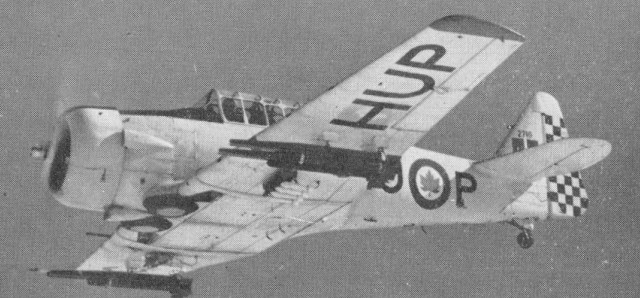
After World War II, the U.S. Air Force changed many of its plane designations, and the “A” was dropped from the Texan’s identification. The T-6s were extremely active during the Korean War as spotter planes. Their pilots were officially known as forward air controllers, but their planes were popularly called “Mosqui¬toes,” since they harassed the Communist forces and specialized in locating enemy targets and guiding fighter-bombers in for airstrikes. They were also flown for air rescues and leaflet-dropping missions. Several were used as interceptors against the North Koreans, who were flying Soviet-made Polikarpov PO-2 night raiders. Numbers of T-6G’s were being converted to LT-6G liaison aircraft by Ternco Corp in 1955. When remanufactured T-6s ar¬rived with improved radios, underwing bomb and smoke-rocket racks and two pod-mounted machine guns, they were designated LT-6Gs. By the end of hostil¬ities, the LT-6Gs had flown more than 40,000 sorties and logged about 117,500 combat hours.

The first Harvard Mk II used by the RCAF was delivered to Camp Borden in the summer of 1940. It was an anglicized version of the AT-6A, the differences being a lengthened exhaust stack, a fixed rear canopy section, an altered instrument panel and a British style control column. The Mk II was also fitted with the capability to hold a .303 calibre air operated machine gun on the starboard wing and a cine-camera in the port wing, with a gun-sight for the front cockpit. The plane was equipped with hardpoints under the wings in order to carry 8 practice bombs. The N.A. Harvard Mk.II was one of the most important single engine training aircraft of the British Commonwealth Air Training Plan. It was known as “the pilot maker” because of its important role in preparing pilots for combat.

After World War 2 the Mk.II Harvard was relegated to armament training and reserve squadron use, as the more modern Mk.IV came along. At the end of WW2, Harvard Mk.II’s were used for Naval training in Nova Scotia. The approval for a Canadian Fleet Air Arm was not given by the government of the day until 1946. In January of 1947 Harvard Mk.II’s began arriving in Dartmouth Nova Scotia for their stint as training aircraft for the newly formed Canadian Naval Air Arm. Much of the training was on gunnery exercises to prepare pilots for the deflection shots necessary with the gyro gun-sight of the Supermarine Seafire. Harvard Mk.II’s were the planes chosen again for the training task. The course was similar to the one used to train RCAF pilots, with the exception of gunnery and formation training which was done on Seafires.

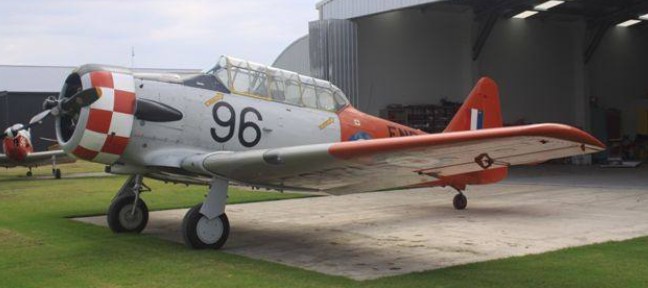
In December 1939, the RNZAF was allocated 105 Harvards, but the first aircraft didn’t arrive until March 1941. The Harvard served in a wide variety of roles with the RNZAF, including flight training schools (2 FTS at Woodbourne being the biggest user), fighter squadrons, fighter operational training units, army co operation squadrons, the Central Flying School and the Fighter Gunnery School. The RNZAF operated Harvard II, IIA, IIB and III as NZ901 to NZ1102 until 1977.

After World War II, T-6s and SNJs were supplied to NATO nations such as France, West Germany, Italy and Bel¬gium. Latin American pilots ferried many of the trainers home after they completed their training in the United States. For use in brush-fire wars, Texans were remanufactured with rocket and bomb racks and designated FT-6Gs. They were sent to such nations as Spain, Por¬tugal, France and Brazil for counterin¬surgency missions.

The Texan was phased out of U.S. Air Force and Navy inventories in 1958, but a number of T-6s were flown by the Civil Air Patrol into the 1960s. Although the American inventory during the Vietnam War showed no T-6s, armed Texans were flown briefly by Laotian and Cambodian pilots against Viet Cong targets along the Ho Chi Minh Trail.

A total of 17,096 of all models were built by North American in California, Texas, Montreal (by Noorduyn), Fort Frances, Ontario (by Canadian Car and Foundry), and in Australia as the Wirraway.

The aircraft is stressed for aerobatics and is capable of most maneuvers with the exception of sustained inverted flight, snap rolls, outside loops, and inverted spins.

The T-6/SNJ/Harvard aircraft have been produced in a number of model designations. Most of the changes are small. Fuel Capacity – The T-6 has 110 gallons on all models except the T-6G and Harvard MK IV, which have 140 gallons. With a cruise fuel burn of 30 GPH, 110 gallons is adequate for most operators. Tail wheel steering/locking systems- The Navy type is lockable only. The pilot is able to lock the tailwheel to a straight-ahead position for take-off and landing. Steering is accomplished by differential braking. The steerable type system (also called P-51 type) uses an inter-connect from the rudder pedals to the tailwheel steering system. This system allows the pilot to steer the aircraft by use of the rudder pedals. Full forward stick movement unlocks this system. When unlocked the tailwheel becomes full swivel and steering is again by differential braking. Either of these systems is adequate for most civilian operators. Hydraulic system – The original system incorporated a pilot controlled bypass. In order to use the gear or flaps, a small button must first be pushed before activation of the system. This button pressurizes the system and a time delay circuit depressurizes the system after approximately 45 seconds. Later aircraft (T6-G/Harvard MK-4) had a modified linkage that engaged the system automatically. For practical purposes, either system is satisfactory. There are several variations in other areas such as instrument panel layout and cockpit glass. Many aircraft have been modified to incorporate various combinations of the above systems.

Variation:
Stroop AT-6
Bacon Super T-6

Gallery

Specifications:

BC-1A
Engine: R-1340-45
Wingspan: 47 ft
Length: 27 ft
Max speed: 209 mph @ 5000 ft

A-27
Engine: 775hp Wright R-1820F
Wingspan: 42’0″
Length: 29’0″
Useful load: 1486 lb
Max speed: 250 mph
Cruise speed: 220 mph
Stall: 70 mph
Ceiling: 28,000′
Armament: 2x .30 nose guns and one flexible .30 rear cockpit
Bombload: 4 x 100 lb bombs underwing

AT-6A (NA-77)
Engine: Pratt & Whitney R-1340-49 Wasp, 600 hp
Wingspan: 42’0″
Length: 29’0″
Useful load: 1255 lb
Max speed: 230 mph / 205 kt
Cruise: 120-145 kt
Range: 630 mi
Ceiling: 24,200′
Seats: 2

Harvard II / AT-6C / NA-16-1A / NA-16-3
Span 42 ft (12.8 m)
Length 27 ft. 5 3/16 in (8.38 m)
Height 8 ft 9 in (2.67 m)
Wing area 248 sq. ft (23 sq. m)
Weight empty 3,340 lb (1,515 kg)
Fuel and oil: 695 lb (315 kg)
Armament 141 lb (64 kg)
Weight loaded 4,556 lbs (2,065 kg)
Wing loading 185 lbs./sq. ft. (90 kg./sq. m)
Power loading 8.3 lbs./h.p. (3.71 kg./hp)
Speed at sea level 200 m.p.h. (324 kph)
Cruising speed at 12,000 ft. (3,660 m.) 185 mph. (298 kph)
Landing speed 61 mph (98 kph)
Maximum rate of climb 1,800 fpm (590 m/min.)
Service ceiling 26,000 ft. (7,930 m.)
Cruising range 680 miles (1,102 km)

T 6 / AT-6 Texan / Harvard
Engine: Pratt & Whitney Wasp R-1340 AN1, 542 hp
Length: 29.003 ft / 8.84 m
Height: 11.483 ft / 3.5 m
Wingspan: 41.995 ft / 12.8 m
Wing area: 252.954 sq.ft / 23.5 sq.m
Max take off weight: 5578.7 lb / 2530.0 kg
Weight empty: 4101.3 lb / 1860.0 kg
Max. weight carried: 1477.4 lb / 670.0 kg
Redline speed: 230 mph / 205 kt
Max. speed: 181 kt / 335 km/h
Initial climb rate: 1358.27 ft/min / 6.9 m/s
Service ceiling : 21654 ft / 6600 m
Ceiling: 24,200′
Wing load: 22.14 lb/sq.ft / 108.0 kg/sq.m
Range: 405 nm / 750 km
Endurance: 3 h
Crew: 2
Armament: 2 MG
Loading: +5.67 / – 2.33G

T-6G
Engine: Pratt and Whitney R 1340 AN 1, 550 hp
Max speed, 212 mph (341 kph) at 5,000 ft (1524 m)
Cruise, 146 mph (235 kph)
Initial climb, 1,643 fpm. (8.3 m/sec)
Ceiling, 24,750ft (7 544 m)
Range, 870 mls (1400 km)
Empty weight, 4,271 lb (1937 kg)
Loaded weight, 5617 lb (2548 kg)
Span, 42 ft 0.25 in (12.8 m)
Length 29 ft 6 in (9 m)
Wing area 253.7 sq.ft (23.56 sq.m)

Harvard II
Engine: P&W R-1340-AN 1 Wasp, 550 hp
Span: 42ft (12.8m)
Length: 29ft(8.8m)
Max wt: 5617 lb (2547kg)
Speed: 212mph (341 kph)
Range: 870 sm(1400 km).

Harvard IIA
Engine: P&W R-1340-AN 1 Wasp, 550 hp.

Noorduyn Harvard Mk IIB
Engine: 600 hp Pratt & Whitney Wasp R-1340-AN-1
Maximum speed: 212 mph (341 km/h)
Service ceiling: 21,500 ft (6553 m)
Empty weight: 4,158 lb (1,886 kg)
Loaded weight: 5,617 lb (2,548 kg)
Span: 42 ft (12.8 m)
Length: 29 ft (8.8 m)
Height: 11 ft 8 in (3.5 m)
Wing area: 253.7 sq ft (23.6 sq m)

Harvard IIB
Engine: P&W R-1340-AN 1 Wasp, 550 hp.

Harvard III
Engine: P&W R-1340-AN 1 Wasp, 550 hp.

Harvard IV
Engine : Pratt & Whitney R-1340-AN-1, 600 hp
Wing Span : 42 ft 4 in
Length : 27 ft 11 in
Speed : 180 Mph (289 km/h)

Canadian Car and Foundry Harvard IV
Engine: Pratt & Whitney R-1340AN-1, 600 HP
Propeller: Hamilton Standard Two Blade 12D40
Wing Span: 42′ 5″
Length: 29′ 6″
Height: 11′ 9″
Normal Gross Weight: 5300 lb
G Loading: +5.67, -2.33
Controls: Dual
Normal cruise: 155 MPH at 8000 ft
Fuel flow at cruise: 30 USGPH

Harvard 4 / T.6J
Basic trainer
Engine: 550 h.p. Pratt & Whitney R1340-ANI
Wingspan: 42 ft
Length: 29 ft.
Loaded weight: 5,617 lb.
Max. speed: 212 m.p.h.
Ceiling: 21,500 ft.
Range: 870 miles at 146 m.p.h.
Crew: 2.

SNJ-5 Texan
Powerplant: l x Pratt & Whitney R-1340-AN-1 Wasp, 410kW (550 hp)
Span: 12.81 m (42ft 0.25 in)
Length: 8.99m (29ft 6in)
Height: 3.58 m / 11 ft 9 in
Wing area: 23.57 sq.m / 253.71 sq ft
Armament: 2 or 3 x 7.62-mm (0.3-in) mg
Empty weight: 1886 kg / 4158 lb
Max T/O weight: 2404 kg (5,300 lb)
Max speed: 330 km/h / 205 mph at 5,000 ft
Ceiling: 6555 m / 21500 ft
Max range: 1200 km / 746 miles
Operational range: 750 miles
Crew: 2

North American

Formed originally as a holding company in 1928, North American did not manufacture any airplanes; it was a holding company division of General Motors which had absorbed Atlantic Fokker as General Aviation.

In 1933, North American Aviation Co., Inc., took over the assets of Berliner/Joyce, changing its corporate name to the B/J Co.

In 1935 General Aviation became North American Aviation.

The manufacturing facilities were moved from Dundalk, Maryland, to the West Coast in 1936 and a new modern production plant was erected on the Los Angeles Municipal Airport where the firm has a site of approximately 24 acres. Originally the plant covered an area of 172,000 sq. ft. but it has since been increased to approximately 500,000 sq. ft. The firm maintains one of the most complete laboratories for aircraft production tests and for research in materials.

North American’s first product was the O-47 Army observation aircraft of 1937. The NA-16 Yale two-seat military trainer followed, being developed through fixed- and retractable-landing-gear variants into the T-6 Texan/Harvard trainer which continued in production in Canada until 1954 and served with virtually every non-Communist air arm in the world.

North American’s best known aircraft was the P-51 Mustang fighter, and significant aircraft evolved by North American include the B-25 Mitchell twin-engined medium bomber; the B-45 Tornado, the first American four-jet bomber; the F-86 Sabre, the USAF’s first swept-wing fighter; the F-100 Super Sabre, the world’s first operational fighter capable of supersonic speed in level flight; the T-28 Trojan/Fennec trainer and light ground-attack aircraft which succeeded the T-6; the A-5 Vigilante carrier-based jet bomber/reconnaissance aircraft; the XB-70 Valkyrie supersonic bomber with Mach 3 speed capability; and the X-15 rocket research craft, which attained an altitude of 107,960m in 1963 and was flown at a speed of 7,298km/h in 1967. In the same year

Around 1960 Fokker was looking for and American partner. Lockheed turned down the proposal because they thought it could not be profitable, but Northrop agreed to by a twenty-one percent share.
North American and Rockwell merged in 1967, to form the Rockwell Corporation in 1972.

The Aero Commander company was taken over by North American Rockwell.

Noordyun

In 1935 R.B.C.Noorduyn, experienced from the US Fokker company, went to Canada and organised the Noorduyn Aviation Company at Longue Pointe, Quebec.

Noorduyn designed and manufactured the Norseman eight/ten-seat cargo-transport aircraft, which first flew in 1935 and was delivered to the RCAF and the USAF; with the latter service it was designated C-64A. Norsemans were especially popular as bushplanes in the northern regions of Canada and with civilian operators in northern Europe.

The infant company’s elation over the initial acceptance of its new airplane was soon eclipsed by the emergencies of war. The Noorduyn factory became a natural for con¬version to production of North American Har¬vard (AT 6) trainers the Norseman and the Harvard both used the Pratt & Whitney R 1340. Although Norsemans converted into military airplanes continued in production, the emphasis was on the Harvards. From a staff of 150 employees, World War II changed the company almost traumati¬cally.

The Canadian Car & Foundry Company acquired Noorduyn’s assets in 1946 and produced an improved Norseman Mark V until 1950.

Nord / SNCAN

Societe Nationale De Constructions Aeronautiques Du Nord
Nord-Aviation

In France, the Socialist Government of the so called Popular Front brought all the companies building military aircraft, aero engines and ar¬mament under its control in 1936. The im¬mediate result was the socialized oblivion of such established companies as Marcel Bloch, Bleriot, Nieuport, Potez, Dewoitine, Hanriot and Farman within half a dozen nationalized groups or Societies Nationales, named ac¬cording to their geographical location (Nord, Ouest, Centre, Midi and so on). Les Mureaux, CAMS, and part of Breguet, Amoit and Potez formed SNCAN in 1938.

Dominant concern was production of Potez 630 series of twin-engined multipurpose aircraft. Peak output reached in May 1940. Development of basic type (e.g. Potez 671 specialized fighter with elliptical wing) was also SNCAN concern.

After World War II, although four of the nationalized groups continued operating un¬der state control, private companies were al¬lowed to resume the design and manufacture of both civil and military aircraft. Some of the pioneering names of French aviation, such as Breguet and Morane Saulnier, returned to prominence, and by 1950 a new one had been added Avions Marcel Dassault.

Caudron joined SNCAN in 1947.

Aerocentre / SNCAC went into liquidation during 1949, its plants and work being shared by SNCAN (Nord), SNCASO (Sud-Ouest) and engine form SNECMA.

In 1954, when company flew prototypes of trainers later built in quantity, amalgamated with Societe Frangaise d’Etudes et de Constructions de Materiels Aeronautiques Speciaux (SFECMAS, formerly Arsenal de I’Aeronautique).

From January 1958 called Nord-Aviation. Under new name continued development of Nord/SFECMAS Gerfaut delta-wing fighter; also Griffon, with fuselage forming outer casing of very large ramjet with turbojet in center for take-off and to ignite ramjet. Noratlas twin-boom transport, though first flown September 1949, continued in production and development under new name, achieving wide success. Nord name was emphasized in Noroit flying-boat and Noreclair shipboard aircraft.

Max Holste joined Nord in 1961.

On January 1st, 1970 three French nationalised aircraft companies – Sud-Aviation, Nord Aviation and the missile manufacturing company, SEREB – were merged into Aérospatiale.

Nord-Aviation produced a version of the Messerschmitt Bf 108 Taifun, known as the Nord 1002 Pingouin, for the French military service immediately after the Second World War. A tricycle landing gear variant, the Nord 1101 Noralpha, and a redesigned civilian four-seat derivative, the Nord 1203 Norecrin, were also produced in quantity, together with Nord NC-853/856 Norvigie liaison/trainer aircraft delivered to the French army and to aero clubs in the mid-1950s. A batch of N.1402 Noroit twin-engined amphibians were built for the French navy; and the N.2501 Noratlas twin-boom, twin-engined transport, first flown 1952, was subsequently produced in France and Germany. Nord took over the Max Holste Super Broussard twin-engined transport design and developed it as the Nord 262 airliner, delivered to European and U.S. airlines and to the French navy by Aerospatiale.

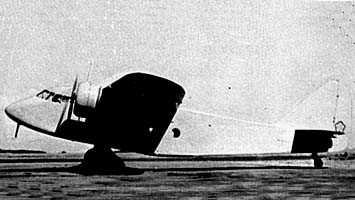
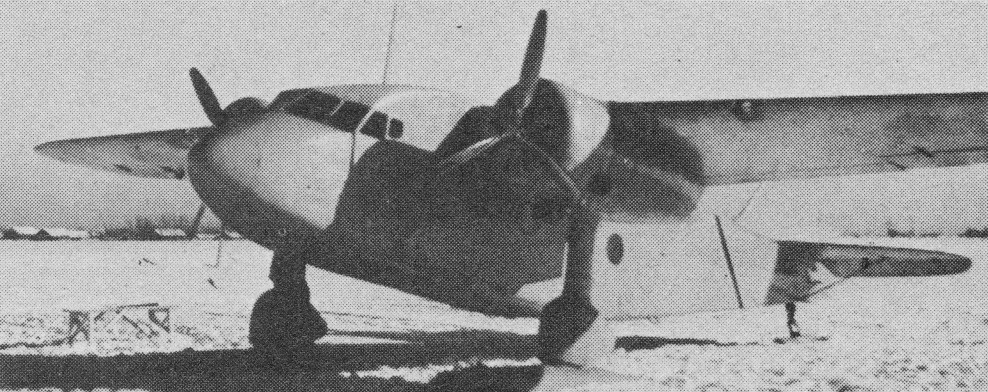
Nippon Teradako-ken TK-3 / Ki-59 / Ku-8-I / Kokusai Ki-59 / Teradakoken TK-3

Ki-59

The Teradako-ken TK-3 was a prototype eight-to-ten passenger light transport monoplane built by Nippon Koku Kogyo Kabushiki Kaisha as a short-range transport for civil use at the request of Imperial Japanese Airways to replace its aging fleet of Airspeed Envoys and Fokker Super Universals. The first of two prototypes flew in June 1938, but was unable to meet the required performance requirements and the project was cancelled. In 1939, the Imperial Japanese Army revived the project to meet its urgent requirement for a light transport and liaison aircraft and instructed Nippon to develop the design as the Kokusai Ki-59 (一式輸送機, Isshiki-yusōki).

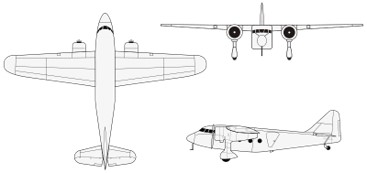
The Ki-59 was a high-wing cantilever monoplane with a fixed tailwheel landing gear and conventional single vertical tail surfaces. It was powered by two 450 hp (336 kW) Hitachi Ha-13a radial engines and other modifications to the design were made to meet Army requirements. The Ki-59 was ordered into production in 1941 with the designation Army Type 1 Transport, and an additional 59 units were produced. After the start of World War II, the aircraft was given the Allied reporting name Theresa. Despite the more powerful engines and modifications sponsored by the Japanese Army, the Ki-59 remained a poor performer and saw little service before being replaced by the more capable Tachikawa Ki-54. A small number were transferred to Manchukuo National Airways.

Near the end of 1941 one Ki-59 was modified into a glider with the removal of the engines and the landing gear replaced by underfuselage skids. It was designated the Ku-8-I or Army Experimental Glider.

Variant:
Nippon Kokusai Ku-8

TK-3
Engines: 2 x 640 hp (477 kW) Nakajima Kotobuki 3
two built.

Ki-59 (Army Type 1 Transport) / Theresa
Engines: 2 x 450 hp (336 kW) Hitachi Ha-13a
Wingspan: 17 m (55 ft 9¼ in)
Wing area: 38.4 m2 (413 ft2)
Length: 12.5 m (41 ft 0⅛ in)
Height: 3.05 m (10 ft 0 in)
Empty weight: 2,880 kg (6,349 lb)
Gross weight: 4,120 kg (9,083 lb)
Cruising speed: 300 km/h (186 mph)
Range: 800 km (497 miles)
Crew: 3
Capacity: Eight passengers
59 built.