The Pratt & Whitney PT1 (US military designation T32) was a Free-piston gas turbine project first run in 1943. The project never progressed beyond ground test units, and was cancelled in 1945 in favor of developing the PT2 (T34) turboprop. The development of the PT1 gave Pratt & Whitney engineers valuable experience in designing gas turbines that it would later apply to projects that resulted in the Pratt & Whitney JT3 turbojet engine.
World War 2
Pratt & Whitney R-4360
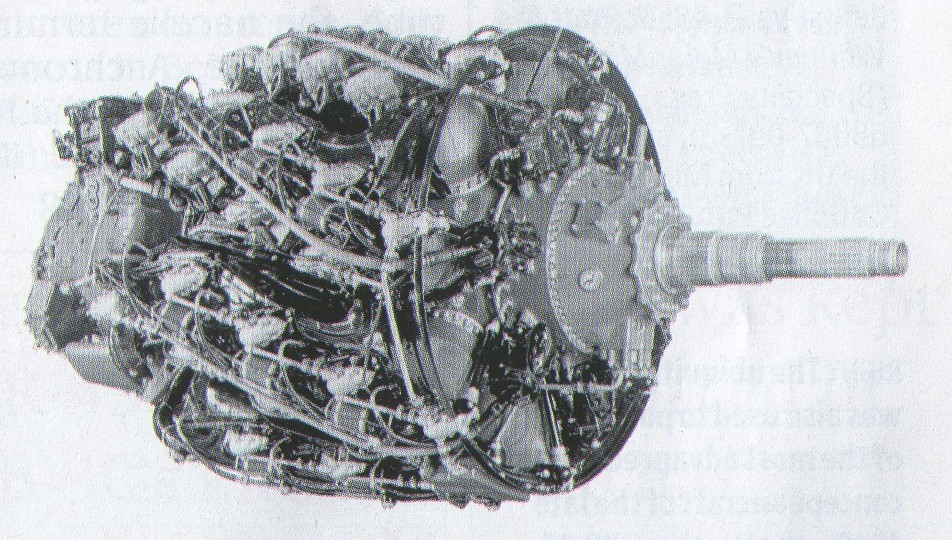
Starting in 1940, and production begining in 1945, just too late for the Second World War, the engineers at P&W were tasked with developing a 3,000 h.p.-plus engine. At the beginning of the R-4360’s development, state-of-the-art engines were struggling to achieve 2,000 h.p. P&W decided on air cooling and, after a number of variations and permutations of cylinder arrangement had been investigated, the final concept, which went into production, was four rows of seven cylinders, giving a total of 28.
Cooling high-performance air-cooled engines was always a challenge, for the R-4360. Each row of pistons was slightly offset from the previous, forming a semi-helical arrangement to facilitate efficient airflow cooling of the successive rows of cylinders, with the spiraled cylinder setup inspiring the engine’s “corncob” nickname. Seven plenums, one between each cylinder bank, created the necessary cooling air path. A complex tight baffling system ensured that cooling air was forced through the cylinders in a quasi-cross-flow pattern. To ensure an unobstructed path, intake manifolds were routed over the top of the cylinders, terminating in a downdraught flow into the hemispherical combustion chamber.
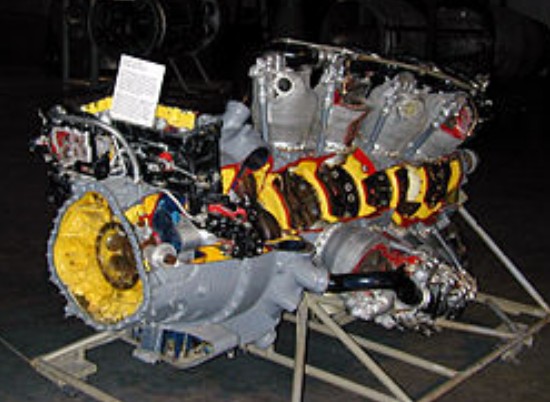
A mechanical supercharger geared at 6.374:1 ratio to engine speed provided forced induction, while the propeller was geared at 0.375:1 so that the tips did not reach inefficient supersonic speeds. General Electric (GE) had designed most previous P&W superchargers, but this time P&W decided to do it in-house. According to former R-4360 engineers, P&W’s supercharger was more efficient than GE’s. Most superchargers were single-stage, with variable speed or single speed. Additionally, most R-4360 applications were augmented by GE turbosuperchargers with intercooling, A two-stage gear-driven supercharger was also developed.
Inevitable teething problems arose when the R-4360 entered service, such as frying the ignition system, intake manifold problems and, perhaps most seriously, poor oil scavenging owing to aeration of the oil. The disarmingly simple solution for the last of these problems was to incorporate perforated sheet-metal plates in the rear housing, which took out much of the entrapped air.
Although reliable in flight, the Wasp Major was maintenance-intensive. Improper starting technique could foul all 56 spark plugs, which would require hours to clean or replace. As with most piston aircraft engines of the era, the time between overhauls of the Wasp Major was about 600 hours when used in commercial service.
Engine displacement was 4,362.50 cu.in (71.5 lt), hence the model designation. Initial models developed 3,000 hp (2,240 kW), and later models 3,500 hp, but one model delivered 4,300 hp (3200 kW) using two large turbochargers in addition to the supercharger. Engines weighed 3,482 to 3,870 lb (1,579 to 1,755 kg), giving a power-to-weight ratio of 1.11 hp/lb (1.83 kW/kg), which was matched or exceeded by very few contemporary engines.
Designed for military use, the R-4360 also saw commercial use as the “Wasp Major”. The R-4360 was used for a number of applications, including commercial aviation, military aircraft and air racing. The R-4360-8 powered the Douglas XTB2D-1 Skypirate, the contra-rotating propeller shafts each drove a Hamilton Standard four-bladed propeller. The Skypirate was cancelled after one prototype.
Wasp Majors were produced between 1944 and 1955; 18,697 were built.
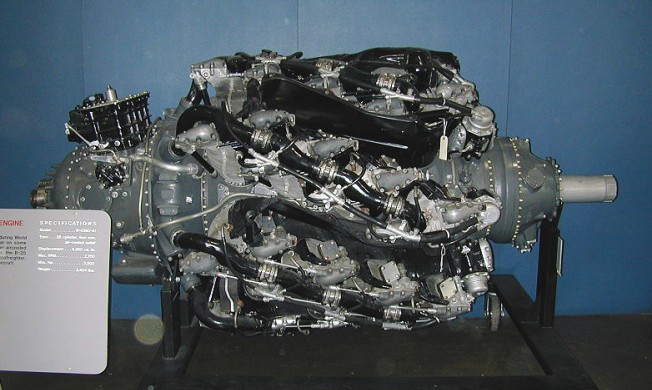
A derivative engine, the Pratt & Whitney R-2180-E Twin Wasp E, was essentially the R-4360 “cut in half”. It had two rows of seven cylinders each, and was used on the postwar Saab 90 Scandia airliner.
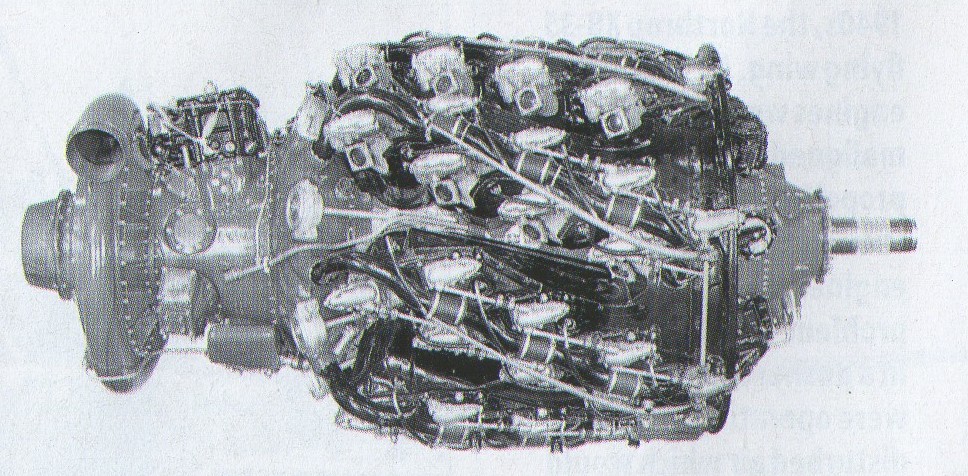
The R-4360-33 powered the Boeing XB-44, essentially a B-29 converted to carry R-4360s. Note auxiliary gear driven supercharger on the rear of the engine. Some R-4360s utilised both contra-props and two-stage supercharging.
Applications:
Aero Spacelines Mini Guppy
Aero Spacelines Pregnant Guppy
Boeing 377 Stratocruiser
Boeing B-50 Superfortress
Boeing C-97 Stratofreighter
Boeing KC-97 Stratotanker
Boeing XF8B
Boeing XB-44 Superfortress
Convair B-36
Convair XC-99
Curtiss XBTC
Douglas C-74 Globemaster
Douglas C-124 Globemaster II
Douglas TB2D Skypirate
Fairchild C-119 Flying Boxcar
Fairchild C-120 Packplane
Goodyear F2G Corsair
Hughes H-4 Hercules (“Spruce Goose”)
Hughes XF-11
Lockheed R6V Constitution
Martin AM Mauler
Martin JRM Mars
Martin P4M Mercator
Northrop B-35
Republic XP-72
Republic XF-12 Rainbow
SNCASE SE-2010 Armagnac
Vultee A-41
Variants:
R-4360-4 – 2,650 hp (1,976 kW)
R-4360-20 – 3,500 hp (2,610 kW)
R-4360-25 – 3,000 hp (2,237 kW)
R-4360-41 – 3,500 hp (2,610 kW)
R-4360-51 VDT – “Variable Discharge Turbine” 4,300 hp (3,210 kW). Intended for B-36C. Used on Boeing YB-50C Superfortress. Turbo-supercharger exhaust used to augment thrust.
R-4360-53 – 3,800 hp (2,834 kW)
R-4360-B3 – 3,500 hp (2,610 kW)
R-4360-B6 – 3,500 hp (2,610 kW)
Specifications:
R-4360-51VDT
Type: 28-cylinder supercharged air-cooled four-row radial engine
Bore: 5.75 inches (146 mm).
Stroke: 6.00 inches (152 mm).
Displacement: 4,362.5 cubic inches (71.489 lt).
Length: 96.5 inches (2,450 mm).
Diameter: 55 inches (1,400 mm).
Dry weight: 3,870 pounds (1,760 kg).
Valvetrain: Poppet, two valves per cylinder
Supercharger: Gear-driven single stage variable speed centrifugal type supercharger
Turbocharger: General Electric CHM-2
Fuel system: Bendix-Stromberg PR-100E2 pressure carburetor
Fuel type: 115/145 Aviation gasoline
Cooling system: Air-cooled
Power output: 4,300 hp (3.2 MW)
Specific power: 0.99 hp/cu.in (44.9 kW/lt)
Compression ratio: 6.7 : 1
Power-to-weight ratio: 1.11 hp/lb (1.83 kW/kg)
Pratt & Whitney R-2180-A Twin Hornet / R-2180-E Twin Wasp E
Pratt & Whitney R-2180 was the designations for two closely related radial engines developed in the United States by Pratt & Whitney. They had two rows of seven cylinders each.
Pratt & Whitney R-2180-A Twin Hornet – first run in 1936
Pratt & Whitney R-2180-E Twin Wasp E – first run in 1945
Pratt & Whitney R-2000 Twin Wasp
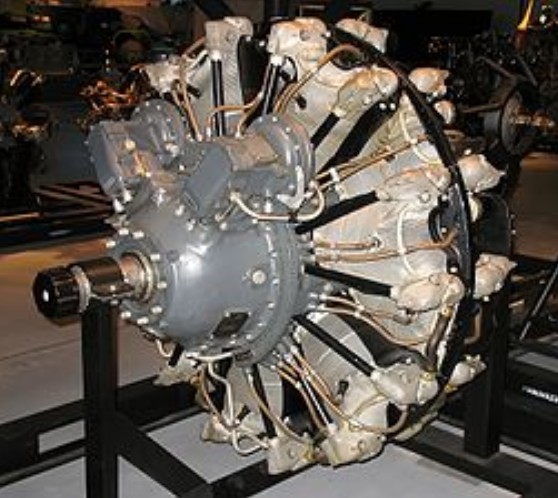
The R-2000 was an enlarged version of the radial Pratt & Whitney R-1830 Twin Wasp developed in 1942, with focus on reducing the manufacturing costs and fuel requirements. The bore was increased to 5.75 inch, while it still retained the 5.5 inch stroke. This brought displacement up to 2,000 cu.in. There were a number of detail changes from the R-1830, such as front-mounted instead of rear-mounted magnetos, plain bearings for the crankshaft rather than roller bearings, and 87 octane fuel (specified because there were fears wartime supplies of 100 octane might fall short, but those fears were groundless). The R-2000 produced 1,300 hp @ 2,700 rpm with 87 octane, 1,350 hp with 100 octane and 1,450 hp @ 2,800 rpm with 100/130-grade fuel.
Applications:
Douglas C-54 Skymaster
Douglas DC-4
Douglas Super DC-3
de Havilland Canada DHC-4 Caribou
Vought XF5U
Specifications:
R-2000-3
Type: Twin-row radial engine, 14 cylinder
Bore: 5.75 in (146 mm)
Stroke: 5.5 in (139.7 mm)
Displacement: 2,004 cu in (32.8 lt)
Length: 61.02 in (1550 mm)
Diameter: 49.49 in (1257 mm)
Dry weight: 1570 lb (714 kg)
Fuel system: Stromberg carburetor
Fuel type: 100/130 grade gasoline
Cooling system: Air-cooled
Reduction gear: 2:1
Power output: 1,350 hp at 2,700 rpm (sea level)
Compression ratio: 6.5:1
Pratt & Whitney
In 1925, Frederick Rentschler established the Pratt & Whitney Aircraft Company in Hartford, and Connecticut. Former president of the Wright Aeronautical Corporation of New Jersey, Rentschler was an astute businessman and visionary. Rentschler believed that the future of aviation lay in aircraft capable of carrying a large number of passengers’ great distances at ever-faster speeds. To do so required a more reliable, more powerful aircraft engine than was currently available, and this was where Rentschler focused his energies.
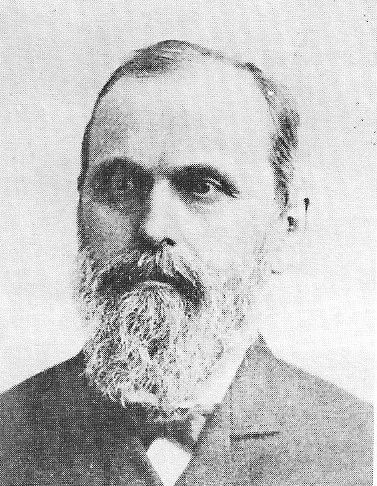
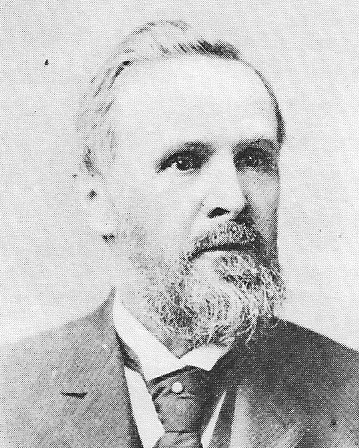
Within a year, Rentschler and his team had designed the air-cooled, radial Wasp engine, which together with its successor, the Hornet, provided increased power and reliability at a low relative weight. Both engines proved extremely successful. By 1929, Pratt & Whitney Aircraft had outgrown its Capitol Avenue plant in Hartford, and Rentschler moved the company to new headquarters on a 1,100-acre site in East Hartford, which included room for further expansion and an airfield to flight test his engines. Pratt & Whitney Aircraft was on its way to becoming one of the state’s largest employers.
Air power played a significant role in the Allied victory during World War II, and Pratt & Whitney Aircraft supplied much of that power. By the end of the war, Pratt & Whitney Aircraft had produced more than 350,000 engines for military use – more in number than any other American manufacturer and, in total horsepower, one half that of America’s combat air forces. In the meantime, Pratt & Whitney Aircraft became a division of the United Aircraft Corporation, which also manufactured the latest in aviation technology, the helicopter, invented by Igor Sikorsky in 1939.
During the post-war decades, Pratt & Whitney Aircraft continued to manufacture aircraft engines for commercial use and was also involved in the development of jet engines. During the 1950s, when government optimism in the peaceful uses of nuclear power was at its peak, Pratt & Whitney even investigated the possibility of using nuclear power in commercial aircraft at its Connecticut Aircraft Nuclear Engine Laboratory in Middletown.
Power Jets W.1 / Whittle W.1
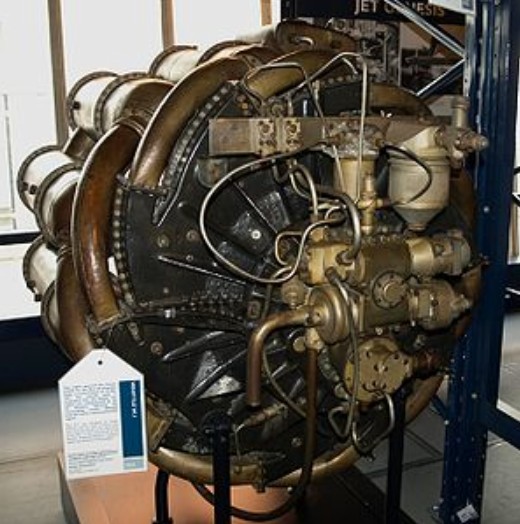
After a period of indifference, in June 1939 a demonstration of the Power Jets WU was made before a delegation of the Air Ministry, notably Dr Pye, Director of Scientific Research. The demonstration was so successful that the Ministry quickly arranged to buy the engine to give Power Jets working capital, lending it back to them for testing.
At the same time, a contract was placed for a “flight engine”, the W.1 (sometimes called the Whittle W.1). Designed by Frank Whittle and Power Jets, the W.1 was built under contract by British Thomson-Houston (BTH). Unlike the Whittle WU, that began bench testing in 1937, the W.1 was a symmetrical engine designed to facilitate, after development, installation in an aircraft. The W.1 used a double-sided centrifugal compressor of Hiduminium RR.59 alloy, reverse-flow combustion chambers and a water-cooled axial-flow turbine section; this was later modified to use air-cooling. The turbine blades were of Firth-Vickers Rex 78, a stainless steel developed under Dr. W. H Hatfield.
As development of the new design dragged on, it was decided to build a test unit “early engine” using any components that were deemed unairworthy along with test items. This was assembled to become the one-off W.1X.This officially unairworthy unit powered the Gloster E.28/39 on a short ‘hop’ during taxiing trials in April 1941, with flight trials taking place on 15 May 1941 at RAF Cranwell with a definitive W.1 engine.
After a visit to England in 1941, General Henry H. Arnold arranged for the W.1X to be shipped to the U.S, along with drawings for the more powerful W.2B engine. The former became the prototype of the General Electric I-16 and by April 1943 had been developed to produce 1,650 pounds force (750 kgf).
The Gloster E.28/39 and the Power Jets W.1 engine that powered it are both on public display at the Science Museum (London).
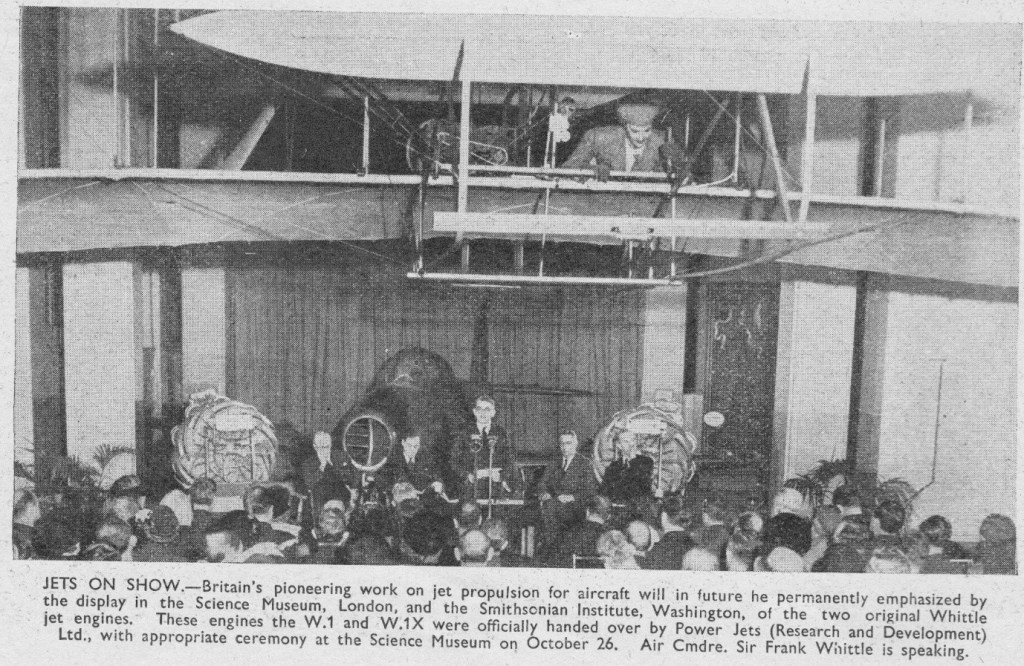
The W.1A is preserved at the RAF College Cranwell, and the W.1X is at the Smithsonian Institution, Washington DC.
Variants:
W.1(T)
Bench-testing only.
W.1(3)
W.1X
Intended for ground use only (aircraft taxi tests).
W.1A
1,450 lbf (6.45KN) air-cooled turbine disc
Variation:
General Electric I-16
American-built version of W.1A. This is the only version of the W.1 to go into mass production.
Specifications:
W.1 early development engine
Type: Centrifugal flow turbojet
Dry weight: 700 lb (320 kg)
Compressor: Single-stage double-sided centrifugal flow
Combustors: 10 reverse-flow can
Turbine: Single stage axial flow
Fuel type: Kerosene
Maximum thrust: 850 lbf (3.8 kN) at 16,500 rpm
Fuel consumption: 1,170 lb/hr (531 kg/h)
Specific fuel consumption: 1.376 lb/hr/lb (38.98 g/s·kN)
Thrust-to-weight ratio: 1.214:1
W.1 later development engine
Type: Centrifugal flow turbojet
Dry weight: 700 lb (320 kg)
Compressor: Single-stage double-sided centrifugal flow
Combustors: 10 reverse-flow can
Turbine: Single stage axial flow
Fuel type: Kerosene
Maximum thrust: ~1,032 lbf (4.59 kN)
Overall pressure ratio: ~3.8:1
Turbine inlet temperature: ~1,430 °C (2,610 °F)
Fuel consumption: ~1401 lb/hr (~636 kg/h)
Specific fuel consumption: ~1.358 lb/hr/lb (~38.47 g/s·kN)
Thrust-to-weight ratio: ~1.474:1
Potez 4D
The Potez 4D was a four-cylinder, inverted inline aircraft engine. It was first built shortly before World War II, but did not enter full production until 1949. The cylinders had a bore of 125 mm (4.9 in) and a stroke of 120 mm (4.7 in). Power for different models was in the 100 kW-190 kW (140 hp-260 hp) range.
Variants
4D-01
4D-31
164 kW (220 hp)
4D-33
119 kW (160 hp)
4D-34
Applications:
Morane-Saulnier MS.700 Petrel
S.N.C.A.C. NC-840 Chardonneret
Nord 3202
Nord 3400
Specifications:
Potez 4-D 01
Type: Four-cylinder air-cooled inverted inline engine
Bore: 125 mm (4.92 in)
Stroke: 120 mm (4.72 in)
Displacement: 5.85 L (352 cu.in)
Length: 1,207.5 mm (47.5 in)
Width: 510 mm (20.1 in)
Height: 668.5 mm (26.3 in)
Dry weight: 143 kg (314.6 lb)
Valvetrain: Two valves per cylinder with sodium cooled exhaust valves
Fuel system: One Zenith carburettor
Fuel type: 80 octane minimum
Oil system: Dry sump with one pressure and two scavenge pumps
Cooling system: air-cooled
Power output: 119 kW (160 hp) at 2,520 rpm (take-off), 97 kW (130 hp) at 2,360 rpm (Max cruise)
Compression ratio: 7:1
Specific fuel consumption: 245 gram/hp/hour (take-off)
Power-to-weight ratio: 0.83 kW/kg (0.51 hp/lb) (take-off)
Potez 63 / 630 / 631 / 637
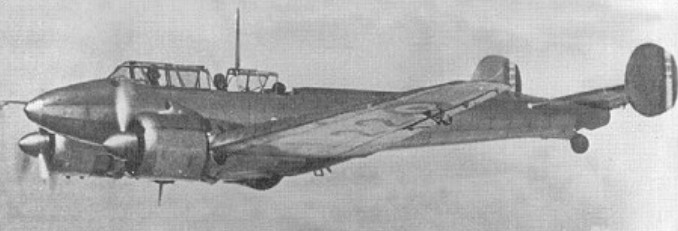
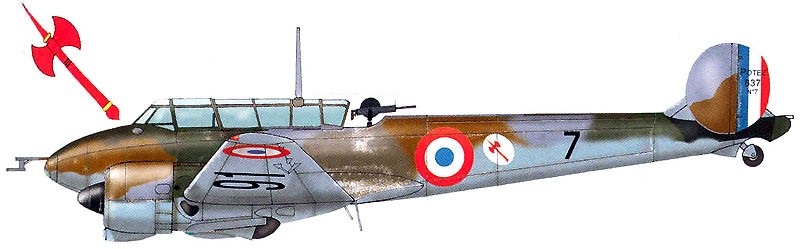
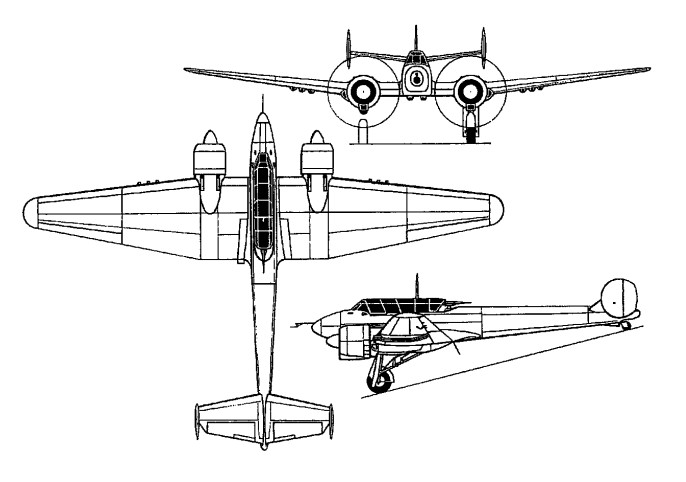
The Potez 63 was built originally to a 1934 French Air Ministry programme calling for a ‘Multiplace legere de Defense’, literally a light multi-seat defensive aircraft. In practice the specification called for an aircraft to perform the three roles of fighter control (three-seat C3); daylight interception (two-seat C2); and night-fighter (two-seat Cn2). The Potez 630 was a twin engine, monoplane, fully metallic three-seater with efficient aerodynamic lines and twin tailplanes. The long glasshouse hosted the pilot, an observer or commander who was only aboard if the mission required it, and a rear gunner who manned a single flexible light machine gun.
The Potez 63.01 first prototype flew on 25 April 1936. It was an all-metal stressed-skin cantilever monoplane with two 432-kW (1580-hp) Hispano-Suiza 14AB10/11 radials, and a retractable landing gear.
French re-equipment policies were blurred by lack of purpose (being confused by the likely form of warfare being studied by Germany), with the result that orders for development aircraft included four-general purpose two/three-seat day/night fighters, three two-seat night-fighters, one light bomber, one reconnaissance aircraft and one close-support aircraft.
Ten further prototypes were tested (including use of the Gnome-Rhone 14 radial) before production orders were placed in 1937 for 80 Potez 630s (two 432kW Hispano-Suiza 14 radials) and 80 Potez 631 C3 fighters (Gnome-Rhone 14 Mars radials). The production in three main streams was started by the nationalised SCAN organisation.
Fifty additional Potez 631s were ordered in 1938 of which 20 were diverted to Finland (these aircraft did not arrive in Finland). A typical feature of the 630 and 631 was the frontal armament, which originally consisted of two 20 mm Hispano-Suiza HS.404 cannons in gondolas under the fuselage, though sometimes one of the cannons was replaced by a MAC 1934. Later in their career, 631s received four similar light machine guns in gondolas under the outer wings, though it was theoretically possible to fit six.
The heavy fighter stream included the Potez 630 (82 with Hispano-Suiza engines) and Potez 631 (202 with Gnome¬-Rhone engines). The light bomber stream included the Potez 633 (71 mostly for export but mainly retained by France) and Potez 637 (60 for reconnaissance). The tactical reconnaissance and army co-operation stream included the Potez 63.11 (925 aircraft) and a number of experimental fighters and dive-bombers.
Dissatisfied with its strategic reconnaissance aircraft such as the troublesome Bloch MB.131, the Armée de l’Air ordered the development of a derivative of the Potez 631 heavy fighter for this role. The observer was to be housed in a gondola under the fuselage. While particularly uncomfortable, this arrangement resulted in a Potez 637 that retained most of the qualities of the 631. 60 examples were ordered in August 1938 and delivered. Unlike many contemporary French aircraft, production of the Potez aircraft was reasonably prompt and the first deliveries were effected before the end of 1938. The 63 had been designed with mass production in mind and as a result, one Potez 630 was cheaper and faster to manufacture than one Morane-Saulnier M.S.406. As production tempo increased, a number of derivatives and experimental models were also developed and produced with exceptional rapidity.
The Potez 633 B2 was a light bomber version with a partially glazed nose, 40 of which were ordered by Romania and others by Greece. In the event only 21 of the Romanian aircraft were delivered, the rest retained by France. The Potez 637 A3 was a three-seat reconnaissance version with a ventral gondola for the observer, 60 of which were built.
The Armée de l’Air was desperate to re-equip its army cooperation units which had particularly antiquated equipment, but since the development of the Potez 637, had completely changed its mind about how the observer position should be arranged. Potez was therefore required to develop a variant that, while retaining the wings, engines and tail surfaces of the 631, hosted the observer in a more conventional nose glasshouse. Because the pilot needed to be seated above the observer, the Potez 63.11’s fuselage was taller, which resulted in top speed degradation and reduced manoeuvrability. As a result the final production version, the Potez 63.11 proved very vulnerable, despite being protected with some armour and a basic self-sealing coating over the fuel tanks.
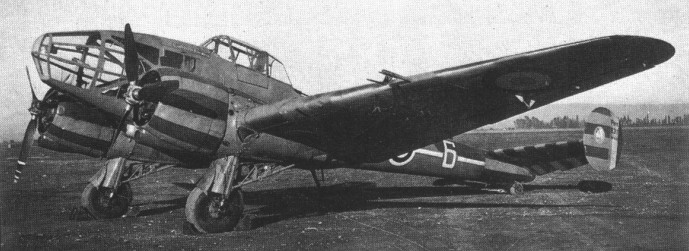
As a secondary light bomber capability was part of the requirements (though it was rarely if ever used), the fuselage accommodated a tiny bomb bay, carrying up to eight 10kg-class bombs. This bomb bay was replaced by an additional fuel tank on late examples. Additionally, two 50kg-class bombs could be carried on hardpoints under the inner wings. Frontal armament was originally one, then three MAC 1934s under the nose, and many 63.11s were equipped with additional MAC 1934 guns in wing gondolas as the 631s. The first Potez 63.11 No.1 and second No.2 prototypes first flew in December 1938, and no less than 1,365 examples were on order in September 1939, of which 730 were delivered.
Potez 63-11s were delivered from November 1939 and served with 40 GAO (observation Groupes) and 13 reconnaissance Groupes by May 1940.
Although a night-fighter prototype had flown in March 1937 as the Potez 631-0, relatively little importance was placed on the Potez 631 night-fighter, and it was not until June 1938 that production orders totalling 207 were confirmed.
The Ilmavoimat / Maavoimat evaluation team looked at a number of diferent variants of the Potez 630 in early 1938. There report indicated that all members of the family (possibly except the Potez 63.11) shared pleasant flying characteristics. They were well designed for easy maintenance and could be fitted with a heavy armament for the time (up to 12 light machine guns for the Potez 63.11 design that was being worked on). Although not heavily built they seemed capable of absorbing considerable battle damage. Unfortunately the Potez 63 family, like many French aircraft of the time, simply did not have sufficiently powerful engines to endow them with an adequate performance. However, while the aircraft was considered reasonably good, it by no stretch met the STOL Observation / Medical Evac requirements of the aircraft that was being looked for.
By 1 April 1939 the Armee de l’Air had taken delivery of 88 aircraft, of which 20 were in service; in May two night-fighter units, Groupes de Chasse de Nuit GCN III/l and II/4, and one day fighter unit, GC II/8, were equipped with about 30 aircraft; four other Potez 631s were serving at Djibouti. At the outbreak of war a total of 206 aircraft had been delivered, and the type had also joined GCN 1/13 and GCN 11/13, as well as seven escadres de chasse. Some aircraft were later transferred to the Aeronavale. When the German attack opened in the West the various Potez 631 units were in constant action both by day and night, although lack of radar prevented much success during the hours of darkness. In the first 11 days of the campaign Aeronavale’s Flotille F 1C shot down 12 German aircraft for the loss of eight, but the Armee de l’Air night-fighter units were ordered to assume day ground-attack duties, losing heavily to enemy flak. Moreover, losses were exceptionally heavy to Allied guns and fighters as a result of the Potez 631’s superficial similarity to the German Messerschmitt Bf 110; it has been estimated that as many as 30 of the French aircraft were shot down in error. In all, Potez 631 night-fighters destroyed a total of 29 German aircraft in the Battle of France, but for a loss of 93 of their own number. Of the remainder about 110 were in the Free French Zone (Vichy France) at the time of the armistice, but their number dwindled quickly because of a chronic lack of spares, although ECN 3/13 moved to Tunisia with a small number of Potez 631s in June 1941.
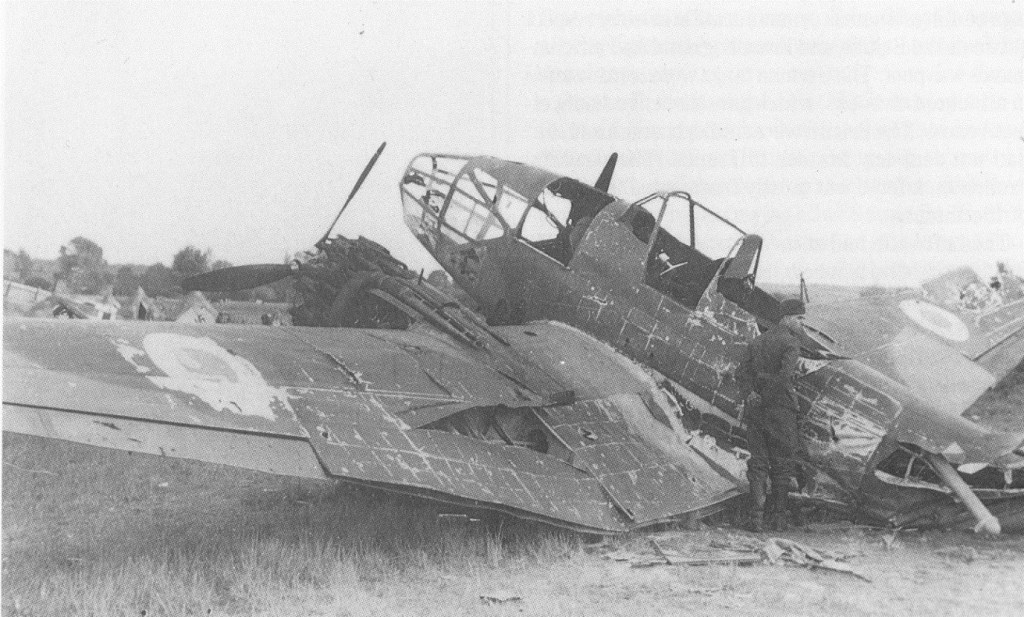
Armament comprised two forward-firing and one rear-mounted 7.7mm machine-guns. Potez 637s equipped five reconnaissance Groupes and during the battle for France suffered heavy losses.
After the outbreak of the Winter War, 20 Potez 631s were ordered diverted to Finland. These aircraft arrived in mid-April 1940, having been flown to the UK where they were picked up by Ilmavoimat Ferry Pilots and flown via Norway and Sweden to Finland. In Ilmavoimat service, they were found to be underpowered and slower than many of the Soviet bombers, as well as undergunned. A rush project was undertaken to replace the engines with the Finnish-built and more powerful Hispano-Suiza 12Y’s, and every one of the aircraft was fitted with two nose-mounted 20mm cannon and four machine guns under the wings. In addition, the internal bomb bay was replaced with an additional fuel tank to extend the range.
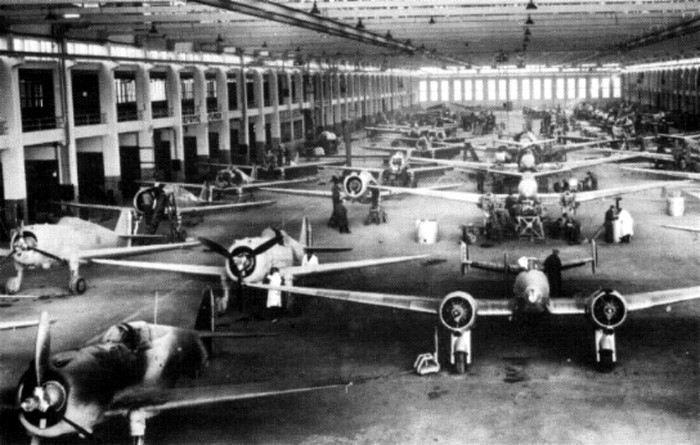
The aircraft finally entered service in August 1940, by which time the war was almost over. The Ilmavoimat went on to use them in the night-fighter role that the French had intended them for. They were not particularly successful in this role and were retired from active service and used as trainers from 1941.
A total of 748 examples were built.
John Garric recreated an example of the long extinct Potez 63-11 twin-engined reconnaissance aircraft.
Replica:
Garric Potez 63-11
Potez 63.01
Engines: 2 x Hispano-Suiza l4Hbs, 1580 hp.
Potez 630
Engines: 2 x Hispano-Suiza 14AB, 725 hp
Max speed: 273 mph / 440 kph
ROC: 1800 fpm / 550 m/min
Service ceiling: 32,800 ft / 10,000 m
Empty weight: 5730 lb / 2600 kg
Span: 52 ft 6 in / 16 m
Length: 36 ft 4 in / 11.07 m
Height: 11 ft 9.75 in / 3.6 m
Seats: 2-3
Potez 631
three-seat heavy fighter and night-fighter
Powerplant: 2 x Gnome-Rhone 14M-4/5or 14M-6/7, 522kW (700 hp)
Span: 52 ft 6 in / 16 m
Length: 36 ft 4 in / 11.07 m
Height: 11 ft 9.75 in / 3.6 m
Empty weight: 5730 lb / 2600 kg
Max loaded weight: 8235 lb / 3735 kg
Max speed: 275 mph at 14,765ft
ROC: 1800 fpm / 550 m/min
Service ceiling: 32,800 ft / 10,000 m
Operational range: 758 miles.
Armament: 2×20-mm Hispano¬Suiza cannon and 1 or 5 x 7.5-mm (0.295-in) MAC mg
Seats: 2-3
Potez 633
Engines: 2 x Gnome-Rhone 14M, 700 hp
Span: 52 ft 6 in / 16 m
Length: 36 ft 4 in / 11.07 m
Height: 11 ft 9.75 in / 3.6 m
Empty weight: 5730 lb / 2600 kg
Max loaded weight: 9285 lb / 4210 kg
Max speed: 273 mph / 440 kph
ROC: 1800 fpm / 550 m/min
Service ceiling: 26,250 ft / 8000 m
Seats: 2
Potez 637
Engines: two Gnome-Rhône 14M, 700 hp
Span: 52 ft 6 in / 16 m
Length: 36 ft 4 in / 11.07 m
Height: 11 ft 9.75 in / 3.6 m
Empty weight: 6390 lb / 2900 kg
Max loaded weight: 9285 lb / 4210 kg
Max speed: 267 mph / 430 kph
ROC: 1800 fpm / 550 m/min
Range: 932 miles
Service ceiling: 26,250 ft / 8000 m
Armament: 1x fixed, forward-firing 7.5 mm MAC 1934 machine gun, 1x fixed, rearward-firing 7.5 mm MAC 1934 machine gun, 1x flexible, rearward-firing 7.5 mm MAC 1934 machine gun
Bombload: 4x 50 kg (110 lb)
Crew: 3
Potez 63.11
Engines: 2 x Gnome-Rhone 14M, 700 hp
Span: 52 ft 6 in / 16 m
Length: 36 ft 1 in / 11 m
Height: 11 ft 9.75 in / 3.6 m
Empty weight: 6912 lb / 3205 kg
Max loaded weight: 9987 lb / 4530 kg
Max speed: 264 mph / 425 kph
ROC: 1800 fpm / 550 m/min
Service ceiling: 26,250 ft / 8000 m
Seats: 3
Potez, Henry / Societe d’Etudes Aeronautiques
Founded in 1916 as Societe d’Etudes Aeronautiques at Aubevillers. Made series of two-seat biplanes, notably SEA 4 reconnaissance aircraft and SEA 7, the latter a “limousine” first flown December 1919. Built a two-seat tractor biplane, the Type 4C.2.
Post-war the company became known as Henry Potez and established itself as a major French aircraft manufacturer with a long series of civil and military aircraft.
Starting in 1920 and starting with a small 50 hp engine derived from the automobile, the Potez company manufactured a range of engines of various powers from 60 hp to 410 hp, including a series based on the Anzani radial engine, whose company Potez bought, based in Courbevoie.
In France, the Socialist Government of the so called Popular Front brought all the companies building military aircraft, aero engines and ar¬mament under its control in 1936. The im¬mediate result was the socialized oblivion of such established companies as Marcel Bloch, Bleriot, Nieuport, Potez, Dewoitine, Hanriot and Farman within half a dozen nationalized groups or Societies Nationales, named ac¬cording to their geographical location (Nord, Ouest, Centre, Midi and so on).
In 1937 Potez, with Liore-et-Olivier, and Romano, became part of the nationalized French aircraft industry in the SNCAN group.
At that time it was producing the 56 twin-engine light transport, the 63 fighter-bomber and the Potez-CAMS 141 four-engine reconnaissance flying-boat, together with prototypes of the 661 12-passenger four-engine monoplane and the Potez-CAMS 160 six-engine flying-boat, a scale model of the proposed Type 161 transatlantic flying-boat.
For 16 years the company was not involved in aviation, but in 1953 produced the Potez 75 single-engine twin-boom ground-attack aircraft, built by SNCAN. A contract for 500 for the French Army was awarded in 1956, but was canceled later because of military cutbacks.
Took over Air-Fouga in 1958, and continued production of that company’s Magister jet trainer. Built two prototype turboprop transports, Potez 840, flying first in 1961. Proposed versions were 841 with PT6A engines and 842 with Astazou Xs, but production did not proceed beyond six aircraft. Also built Paris III twin-jet executive aircraft developed by Morane-Saulnier. Potez was absorbed by Sud Aviation in 1967, which in turn became part of Aerospatiale in 1970.
Polikarpov MP
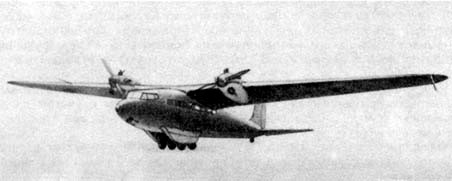
The excellent results obtained during Aeroflot’s experimental use of the BDP-2 prototype as cargo transport made Polikarpov think about the possibility of developing a motorized model, especially that there was talk of the possibility of producing a small series.
To achieve this goal, two cowled 145 hp M-11F engines were installed on the wing leading edge. The new model was called MP (Russian: Поликарпов М П), short for Motoplanior (motor glider).
In the MP operation, the autonomous take-off variant was envisaged, but with the full load capacity the low power of the engines was unable to guarantee take-off. Generally, the MP had to take off and even arrive at the site of operations dragged by a tow plane, but after dropping its load, unlike conventional gliders, it could return to its airfield using the installed motive power.
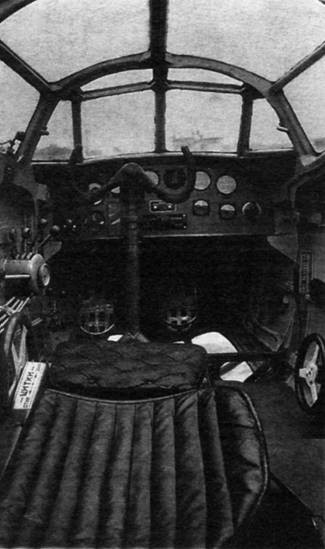
As a small capacity transport aircraft, the MP could carry 12 equipped soldiers or a similar weight capacity.
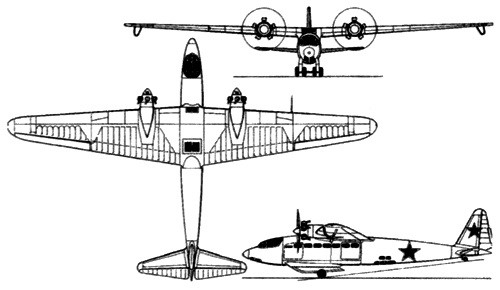
The MP motor glider generally maintained the constructive characteristics of the BDP glider. It was designed as a monoplane with a high wing of 20 meters of wingspan and a fuselage with an aerodynamic design. The entire construction was made of wood.
The fuselage was entirely made of wood and featured monocoque construction.
The exit of personnel and cargo was carried out through two doors of 860 x 900 and 850 x 950 mm, one located in the front region on the right and the other in the rear on the left. In the lower part of the fuselage, behind the cargo area, a hatch was prepared to leave the parachute glider.
The pilot had an emergency cover with a structure also in wood. To improve visibility during landing, the lower area of the cabin was glazed. People sat on benches located on the sides of the glider, attached to the fuselage frame. Between the two benches there was a 600 mm wide corridor.
The wing of the BDP was made of wood and featured a double-spar centre and single-spar consoles. The coating of the leading edge and the force points was done with plywood. The rest of the wing was covered with fabric. The wing profile used was the NACA 230. In order to reduce the landing speed in the section between the ailerons and the fuselage, Shrenk-type flaps were installed.
The tail was monoplane and cantilever, constructed of wood covered with plywood and fabric.
The landing gear on this model was modified with the addition of wheels to the basic glider ski gear. These wheels were installed in two rows under the fuselage and featured rubber cushioning.
The powerplant consisted of two 145-hp M-111M-11F engines located on the wing leading edge and cowled, moving 2.35-meter propellers from Polikarpov U-2 training aircraft. The fuel capacity allowed for 7 hours.
The glider did not have its own weapons, but did have attachment points for seven DP-type infantry machine guns. Two machine guns could be installed in special hatches located in the area of the leading and exit edges of the wing to defend the upper hemisphere. To defend the tail a section of the upper rear fuselage could be raised and become a firing point for the gunner. Two other positions were located to the sides.
Inside the fuselage were 12 5.5 mm armored plates of 480 x 550 mm. The pilot had armor on the back of the seat. All this armor added 127 kg to the weight of the glider.
The motor glider was built ay the Novosibirsk Factory No.51 in the summer of 1943. The acceptance tests were carried out at the Moscow Central Airfield with flights to the Air Landing Forces (VDV) airfield at Medvied Lake and to the LII airfield in Ramenskoye. These flights were developed by the chief of flights and test pilot of the OIAE VDV Captain SA Anojin.
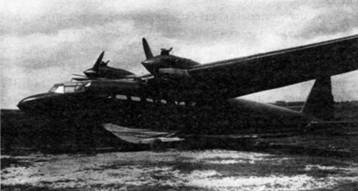
Between July 12 and September 10 of 1943 70 flights with a total duration of 40 hours and 10 min were performed. In flights towed by an SB bomber, heights of 4500 meters and speeds of 270 km / h were reached.
As a conclusion of the tests the pilots VN Yuganov, VL Rastorguyev, GM Shiyanov, AN Grinchik, PF Fedrova, PM Stefanovski, VV Shevchenko, AK Dolgov, PG Savtsov, Gavrilov, Romanov and Borodin wrote that the MP had good stability, it was simple in the piloting, accessible to pilots of low qualification. With a single engine and a flight weight of 3000 kg the aircraft was easily controllable, keeping its flight horizontal and responding to turns.
Between September 10 and 13, 1943 the MP was tested by the VDVs. Load tests were carried out with 4000 kg in different variants:
11 armed infantry soldiers with light weapons;
A group of anti-tank artillery made up of 6 soldiers with a 45 mm piece and two shell boxes (40 units). Assembly of the barrel to its operational state took 8-10 minutes;
A DShK antiaircraft battery with its 5 servers and ammunition;
A light anti-tank group with 10 soldiers and three anti-tank weapons;
Two or three motorcycles (3 of the Velosiet type or 2 Indiana).
The excellent layout of the motor glider for these configurations was highlighted and its use was recommended for VDV units and transport aviation. Series production of the model was also proposed.
Despite these results, the MP was never produced. By that time the Red Army had liberated a large part of the territory occupied by the Germans and the supply needs of the guerrilla groups had diminished.
Only the prototype was produced.
Polikarpov MP
Engines: Two 145 hp M-11F
Wingspan: 20.00 m
Wing area: 44.72 m²
Length: 13.60 m
Height: 3.20 m
Empty weight: 2420 kg
Normal loaded weight: 3500 kg
Payload capacity: 1280 kg
Wing loading: 78.5 kg / m²
Maximum speed at sea level: 185 km / h
Maximum speed at 1000 m: 179 km / h
Range: 390 – 700 km
Endurance: 7 h
Time to 1000 m: 12.5 min
Service ceiling: 2,700 m
Take-off run with 3500 kg: 480 m
Crew: 1
 All Aero