SAAB 17

In the late 1930s, ASJA and Saab in Trollhättan (operating under the joint title of AB Förenade Flygverkstäder) competed with each other to build a reconnaissance aircraft for the Swedish Air Force. Although the order went to ASJA, its activities were taken over by Saab in early 1939 and Aircraft 17 became exclusively a Saab project.

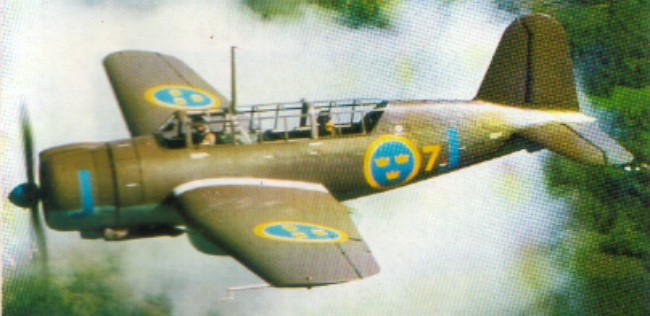
Developed in close collaboration with American engineers, the aircraft was a mid¬wing monoplane equipped with retractable landing gear. The SAAB B17 was first designed as a reconnaissance aircraft but was mainly used as a dive-bomber.

Production was under Swedish direction, the Americans being responsible for the drafting work.
The first test flight took place on 18 May 1940, six months after the end of the American involvement in the project. Not unexpectedly, teething troubles were encountered – the cockpit canopy blew off, spin was difficult to correct and the engine stalled in a right-hand spin. However, when the Air Force came to test the plane, they found that “the aircraft and its equipment are of a generally excellent standard”.

Following the first flight the company made the proposal that its development as a bomber should be given consideration by the Flygvapen. Evaluation of the prototype led to the aircraft being developed for this role as well as for reconnaissance.
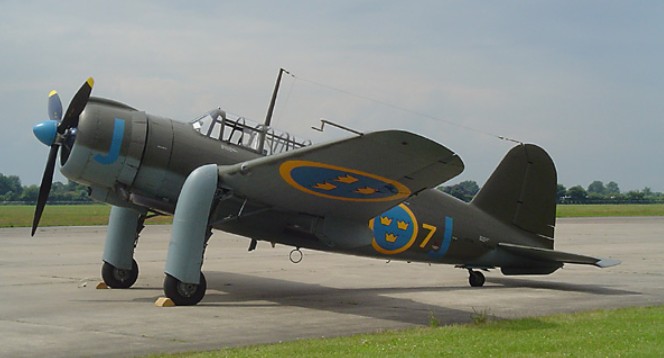
B17

In 1940, the Swedish Air Force ordered 322 aircraft that were delivered in the period December 1941 – 1944.
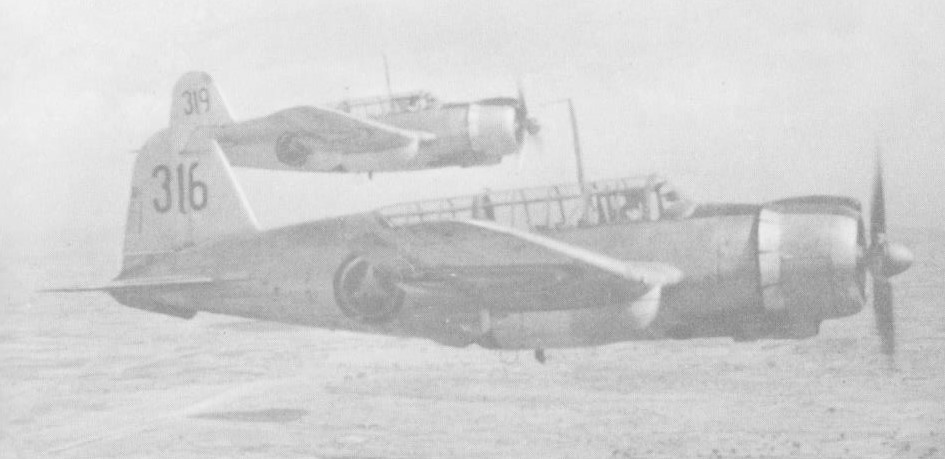
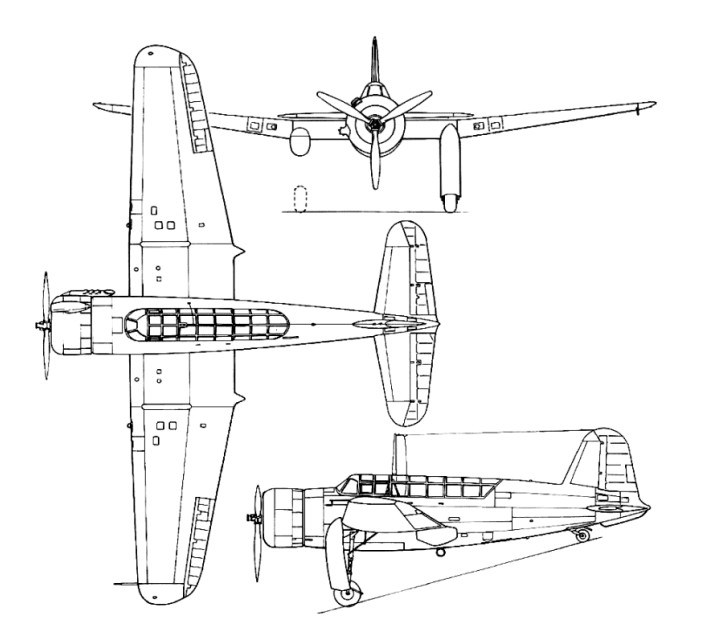
Five versions were developed out of the basic SAAB B17. A cantilever mid-wing monoplane with retractable tail-wheel landing gear, the Saab-17 had its crew accommodated beneath a long continuous canopy. Powerplant varied, the B17A dive-bomber having the 794kW / 1065 hp Svenska Flygmotor-built Pratt & Whitney R-1830-SC3G Twin Wasp radial. A light bomber, the B 17A armament consisted of two fixed 8 mm machine-guns m/22 in the wings and a moveable 8 mm machine-gun at the observers place behind the pilot. A bomb-load of 500 kg could be carried. 132 SAAB B 17A were manufactured.

The B17B dive-bomber and similar S17B (equipped for the reconnaissance role) powered by the 731kW Swedish-built Bristol Pegasus XXIV radial, and the B17C dive-bomber (which differed from the B17B only in its engine, the Piaggio P.XIbis). Included in the total production were 38 examples of the S17BS, a maritime patrol version of the B17B on twin floats. Many of the landplane versions were later given retractable ski landing gear for operation from snow-covered surfaces.

325 were built.

Entering service with the Flygvapen in 1941, the Saab-17 was notable for the robust construction that has since been a feature of the company’s designs, and the type remained in service until 1948. Although retired from active operation in 1948, the Saab 17 continued to fly as a target towplane until 1968.

After World War II 47 were delivered to the Ethiopian air force.

17A
Engine: STWC 3 Pratt & Whitney Twin Wasp/ 1065 hp
Span: 13.7 m (45 ft 1 in)
Length: 9.8 m (35 ft 1.75 in)
Height: 14 ft 6 in
Wing area: 307 sq.ft
Take-off weight: 3790 kg (8355 lb)
Maximum speed: 435 kph (270 mph)
Cruising speed: 390 kph (242 mph)
Landing speed: 125 kph (77 mph)
Range: 1800 km (1120 miles)
Max altitude: 8700 m (28550 ft)

17B
Engine: Bristol Mercury XXI V/980 hp
Span: 13.7 m (44 ft 11.25 in)
Length: 9.8 m (35 ft 1.75 in)
Take-off weight: 3605 kg (7948 lb)
Maximum speed: 395 kph (245 mph)
Cruising speed: 375 kph (233 mph)
Landing speed: 125 kph (77 mph)
Range: 1400 km (870 miles)
Max. altitude: 8000 m (26250 ft)

17BS
Engine: Bristol Mercury XXI V/980 hp
Span: 13.7 m (44 ft 11.25 in)
Length: 9.8 m (35 ft 1.75 in)
Take-off weight: 3825 kg (8433 lb)
Maximum speed: 330 kph (205 mph)
Cruising speed: 315 kph (196 mph)
Landing speed: 125 kph (77 mph)
Range: 2000 km (1240 miles)
Max. altitude: 6800 m (22300 ft)

17C
Engine: Piaggio PXI bis RC40D, 1040 hp / 761kW
Span: 13.7 m (44 ft 11.25 in)
Length: 9.8 m (35 ft 1.75 in)
Height: 4.40 m / 14 ft 5 in
Wing area: 28.50 sq.m / 306.77 sq ft
Take-off weight: 3870 kg (8532 lb)
Maximum speed: 435 kph (270 mph)
Cruising speed: 370 kph (230 mph)
Landing speed: 125 kph (77 mph)
Range: 1700 km (1060 miles)
Max. altitude: 9800 m (32150 ft)
Armament: 2 x 13.2mm + 1 x 7.9mm machine-guns
Bomb load: 680kg
Saab 17

SAAB

Svenska Aero
AB Svenska Järnvägsverkstäderna (ASJA)
Svenska Aeroplan Aktiebogalet (SAAB)

Svenska Aero, as a subsidiary of Heinkel, was taken over by AB Svenska Järnvägsverkstäderna (ASJA) in 1932.

The Bofors Company at Trollhattan formed in 1937 Svenska Aeroplan Aktiebogalet (SAAB). Following its merger in 1939 with the AB Svenska Jarnvagsverkstadernas Aeroplanavdelning (AJSA). In 1939 amalgamated with Aircraft Division of Svenska Jarnvagsverkstaderna and moved main establishment to Linkoping. From 1950 acquired other important facilities, including underground factory at Linkoping.

Built 82 Tiger Moth, 43 Hawker Hart, 11 NA-16-4M, FW-44, and Northrop 8A-5 under licence.

In 1945, in the hope of a lasting peace, the Company decided to scale down its production of military aircraft and to develop its civilian operations – a change in policy signified by the ap¬pearance of the Saab 90 Scandia airliner and the Saab 92 car.

Name changed to Saab Aktiebolag May 1965; Malmo Flygindustri became a subsidiary in 1967; in 1968 merged with Scania-Vabis group to became Saab-Scania. Current name Saab Group, comprising five main divisions: Saab AB, Saab Dynamics AB for guided weapons and electronics, Saab Training Systems AB, Saab Aircraft AB for marketing and supporting commercial aircraft, and Saab Combitech AB. Saab AB parent division established January 1997 to combine activities of previous Saab Military Aircraft, Saab Aircraft and Saab Service Partner, and develops and manufactures military and commercial aircraft within business units known as Gripen, General Military Aircraft, Future Products and Technology, Operations Commercial Aircraft, and Collaborative Programs.

First airplanes were license-built Junkers Ju 86K twin-engined bombers, Northrop-Douglas dive-bombers (Douglas 8A-1, similar to the US Army Air Corps’ A-17) and North American NA-16 trainers. First own-design production aircraft was Saab 17 dive-bomber of 1940, used widely and 60 delivered to Ethiopia from 1947. Saab 18 was twin-engined bomber of 1942, some late examples of which had ejection seats. Saab 21A of 1943 was piston-engined single-seat fighter, and 21-R was jet development of the same aircraft. Saab 29 was the so-called “flying barrel” swept-wing jet fighter, in production until 1956, while Saab 32 Lansen of 1952 was swept-wing fighter/attack/reconnaissance two-seater. Saab 35 Draken “double-delta” fighter appeared in 1955, and a squadron remained active as interceptors until 1999. Saab 105 of 1963, a twin-jet light side-by-side two-seater armed multipurpose aircraft, still in use as a trainer in 1999; Swedish Air Force aircraft have just undergone an upgrade with new engines and thus redesignated Sk 60W. Saab 37 Viggen multirole combat aircraft, first flown February 1967, has foreplane and delta wings, and with its STOL capability remains a very potent weapon system. Produced for service between 1971 and 1990, it has been continuously upgraded; redelivered in latest upgraded form 1998 for continued service in JA 37 interceptor and AJS 37 attack/interceptor/maritime-reconnaissance variants. Latest combat aircraft is Saab AB Gripen JAS 39 Gripen, first flown December 1988 and taken into Swedish Air Force service from 1996. Grippen is the world’s first combat aircraft of the new-generation type and the first to combine the roles of interceptor, attack, and reconnaissance in a single aircraft (all as primary roles) by the adoption of push-button control to select the required function in the computer programs of the totally integrated avionics suite.

Civil types have included Saab 90 Scandia twin-engined 32-passenger transport (first flown November 1946); Saab 91 Safir all-metal 3/4-seater (first flown November 1945); two/three-seat high-wing Safari (first flown in July 1969) and its military Supporter development (first flown 1972). In production until 1999 has been the Saab 340 turboprop regional transport (first flown January 1983, and finally produced in 340B and BPIus variants with accommodation for up to 37 passengers) and the Saab 2000 50/58-seat turboprop regional airliner (first flown March 1992). Saab has also developed an airborne early warning and control variant of the 340B airliner as the S100B Argus (first flight of AEW&C prototype with overfuselage radar July 1994), plus a search-and-rescue variant for the Japanese Maritime Safety Agency as the SAR-200 (delivered 1997).

Ryan FR-1 Fireball / Model 29

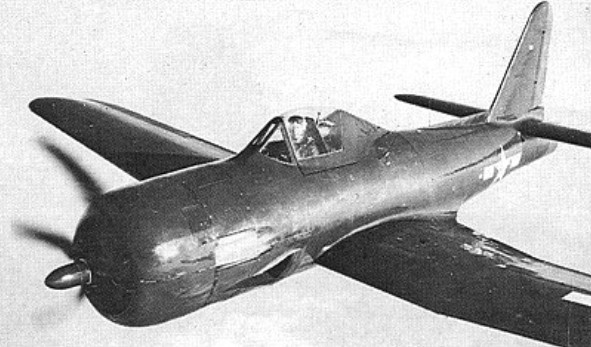
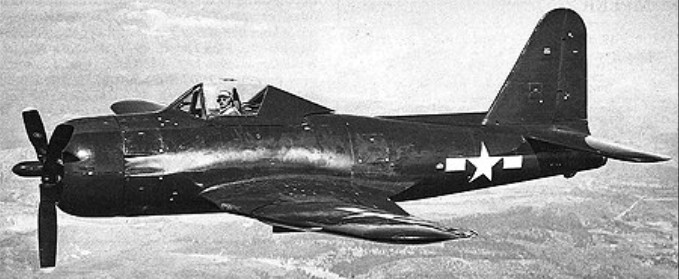
In December 1942, nine US aircraft manufacturers received a Request for Proposals from the Bureau of Aeronautics for a single-seat shipboard fighter combining piston engine and turbojet, the former to be the main power source and the latter to provide boost in climb and combat. The Ryan Model 28, designed by Benjamin T Salmon and William T Immenschuh, was selected as winning contender by the Bureau and three prototypes were ordered on 11 February 1943 as XFR-1s.

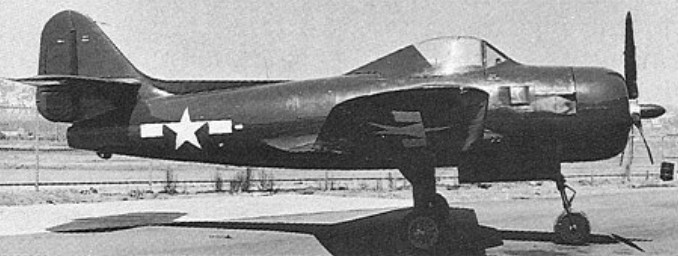
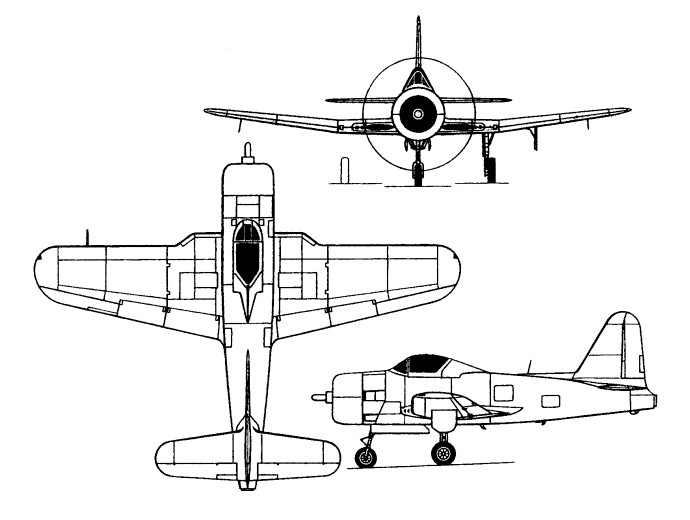
A low-wing, cantilever monoplane of classic design, the XFR-1 was the first carrier aircraft designed from the outset to use a laminar-flow aerofoil and the first US Navy aircraft to have an entirely flush-riveted exterior and metal-skinned movable control surfaces. Power was provided by a 1,350hp Wright R-1820-72W Cyclone nine-cylinder air-cooled radial and, in the rear fuselage, a 726kg General Electric I-16 (later redesignated J31) turbojet. Proposed armament consisted of four 12.7mm machine guns with provision for a 454kg bomb under port inboard wing panel. Other features were hydraulically-folding outer wings and a tricycle undercarriage.

A contract for 100 production FR-1s was placed on 2 December 1943, the first XFR-1 flying seven months later, on 25 June 1944, with only the piston engine installed. The turbojet was added a few days later. Initial flight tests led to the major redesign and enlargement of the vertical tail and lowering of the horizontal tail. On 31 January 1945, by which time a number of series FR-1s had been completed and were under test, a contract was placed for 600 FR-2s which were to differ in having the R-1820- 74W engine of 1,500hp with water injection. In the event, neither the FR-2 nor the XFR-3 was to be built, the latter being intended to mate the 907kg General Electric I-20 turbojet with the -74W piston engine.

XFR-4

The XFR-4 entered flight test in November 1944. Utilising the 19th FR-1 production airframe, this replaced the J31-GE-3 turbojet with a 1542kg Westinghouse J34-WE-22, discarded the wing root intakes of the FR-1 in favour of flush inlets in the sides of the forward fuselage, and had the aft fuselage extended by 20cm. It was found, however, that the thrust of the J34 was too great to permit efficient use of both engines and the XFR-4 programme was discontinued accordingly.

Due to its (relatively) high-speed dash capability, the Fireball was considered for use in defence against kamikaze attacks. The war ended just as the first squadron was becoming operational. .Deliveries of the FR-1 to the US Navy began in March 1945, the Fireballs equipping one squadron (VF-66) and completing carrier qualification in May (aboard the USS Ranger). After VJ-Day, the 34 FR-1s remaining to be delivered were cancelled, together with all 600 FR-2s. On 18 October 1945, VF-66 was de-commissioned and its FR-1s transferred to VF-41 (redesignated VF-1E on 15 November 1946) which continued to fly them until mid- July 1947. Only 17 of the 66 FR-1s built saw squadron usage, the remainder being assigned for various test programmes.

FR-1
Engines: 1 x GE J31-GE-3 turbojet, 1600 lbs (726 kg) thrust & 1 x Wright Cyclone R1820-72W, 1425 hp piston.
Wingspan: 12.19 m / 40 ft 0 in
Length: 9.85 m / 32 ft 4 in
Height: 4.24 m / 14 ft 11 in
Wing area: 25.54 sq.m / 274.91 sq ft
Max take-off weight: 5285 kg / 11651 lb
Empty weight: 3488 kg / 7690 lb
Max speed: 370 kts, (piston power only: 255 kts).
Range: 1658 km / 1030 miles

Ryan FR-1 Fireball

Ryan / Mahoney-Ryan Aircraft Corporation

Mahoney-Ryan Aircraft Corporation
Ryan Aeronautical Corporation

Founded 1928 at St Louis, Missouri, as Mahoney-Ryan Aircraft Corporation, deriving from Ryan Airlines, which began operations on U.S. West Coast in 1922.

Ryan was in partnership with B.F. Mahoney. Conflict between the two led Ryan to sell out of the company that bore his name, only to see it become world famous less than a year later as the builder of Lindbergh’s Spirit of St. Louis, a larger descendant of the M 1.

In 1926 began manufacture of Ryan M-1 mailplane from which Charles Lindbergh’s transatlantic Ryan NYP Spirit of St Louis was developed in 1927. Commercial version of the latter, Ryan Brougham, was built in quantity.

Ryan merged with Detroit Aircraft Corporation in 1929, but DAC did not survive the slump in 1930-1931.

T. Claude Ryan formed Ryan Aeronautical Company in 1933-1934 and produced the S-T training monoplane, forerunner of a series of successful Ryan trainers. The S T became the Army’s basic trainer; his school won contracts to train thousands of Army pilots, and his subsidiary bases multiplied. During the war, his business grew from $1 million to $55 million.

The YO-51 Dragonfly of 1940 was observation monoplane built for the USAAC. A new fighter for the U.S. Navy in 1943 reflected a “belt and braces” outlook on the new gas turbine engine, having a mixed powerplant comprising a conventional piston engine and rear-fuselage jet. Known as the FR-1 Fireball, it was too late to see operational service in Second World War.

The end of the war came as a blow to Ryan, as it did to all airframe manu¬facturers whose lucrative contracts were abruptly cancelled. For a while, the company went into the lugubrious business of building metal coffins; then it took over the Navion from North American in 1947 and built the plane until the Korean War.

Ryan developed to a mid-1950s USAF contract the X-13 Vertijet, a delta-wing vertical-take-off jet with Rolls-Royce Avon engine. A flex-wing research aircraft was built in 1961, and the XV-5A lift-fan research aircraft followed in 1964. Development of the “fan-in-wing” VTOL principle continued with two prototype aircraft, later restyled XV-5B.

Roteron XM-1

In 1945 William Thomas, President of the Roteron Corporation, began work on a midget helicopter of an original design. By placing its 5-cylinder engine between the two co-axial rotors, he had more space available in the fuselage, and considerable saving in construction also resulted because power was directly transmitted to the rotors.

The rotors each had two sets of blades, a longer set below a shorter set which, produced an anti-torque effect. Both sets of blades were made of solid laminated maple wood. The pitch and speed of either rotor could be controlled and in case of engine failure they could turn by auto-rotation.

The fuselage consisted of a steel tubing frame covered with an aluminium skin and plastic covering. The rudder, supported at the end of two tubes, could pivot from the vertical to the semi-horizontal position. The tricycle undercarriage had three fully swivelling wheels.

Weight: 104kg
Rotor span: 4.72m
Length: 3.25m
Seats: 1