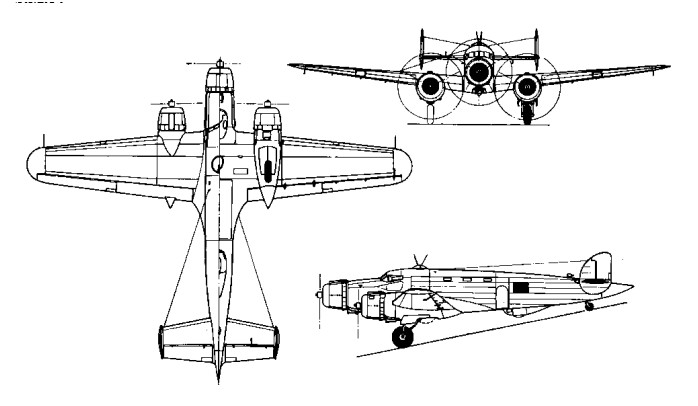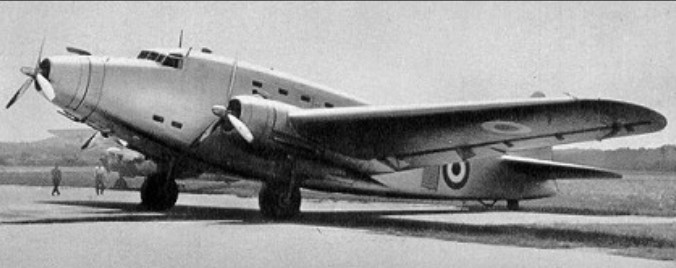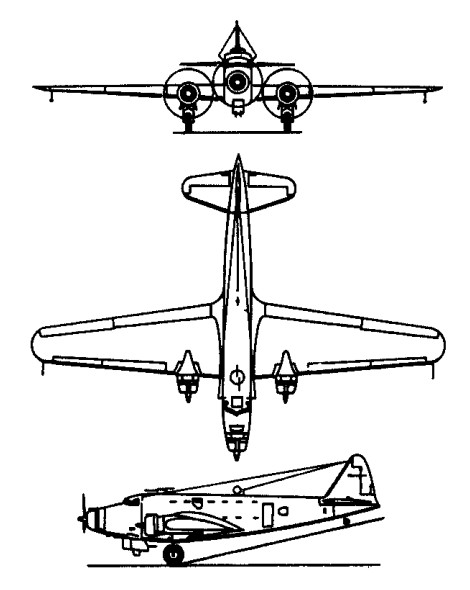
Savoia-Marchetti SM.93

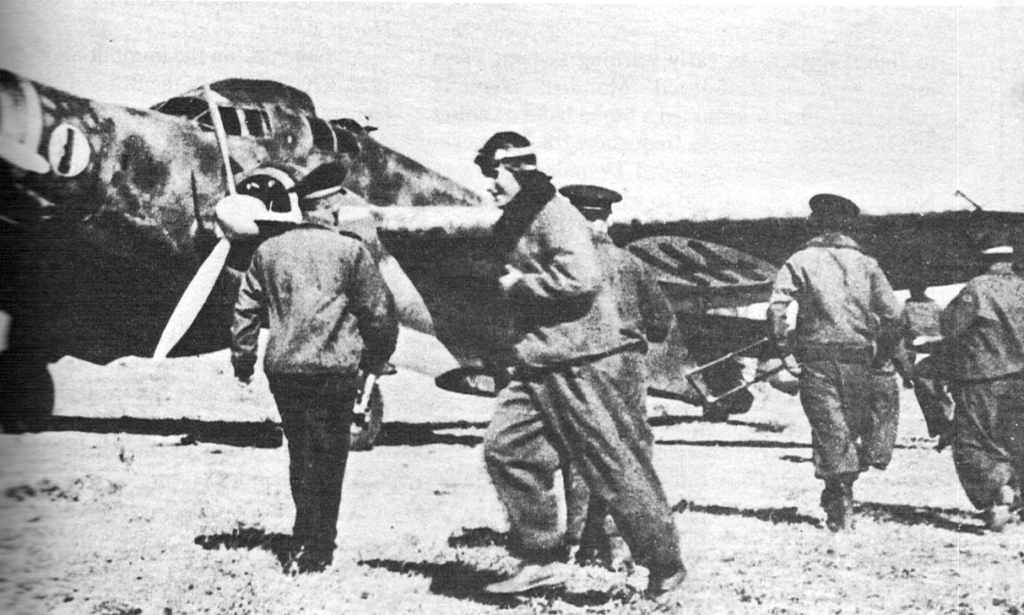
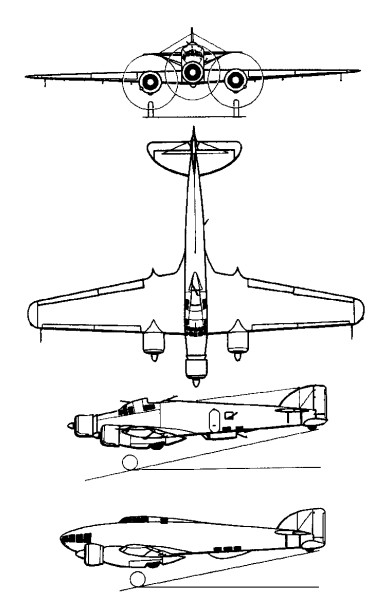
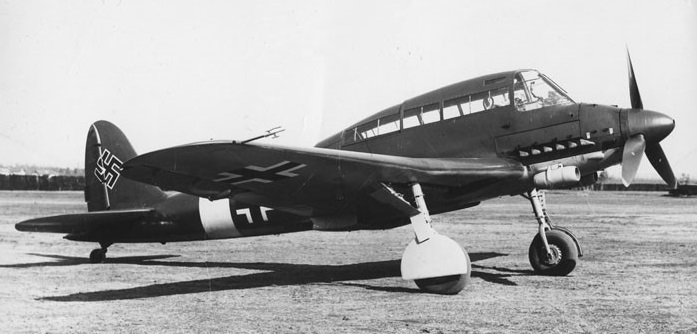
The SM-93 was an all-wood single-engined low-wing monoplane with retractable undercarriage. The fuselage had a monocoque structure, with a single fin and low-set tailplane. The crew of two were accommodated under a long greenhouse-style canopy, with the pilot lying in a prone position above the rear of the engine, a Daimler-Benz DB 605A liquid-cooled V12 engine, while the gunner/radio-operator sat facing rearwards on a conventional seat. The two-spar wings were in three parts with the inner wings sharply tapered to the join, outboard of the landing gear attachments, and the outer wings moderately tapered to the rounded wingtips. The prone position for the pilot was intended to enable the pilot to resist the onset of g-induced loss of consciousness, but the position was uncomfortable for normal flight and severely limited the rearwards view of the pilot.

The SM.93 made its maiden flight on 31 January 1944, and up to 29 March 1944 the SM-93 had made 16 test-flights with speeds up to 900 kilometres per hour (560 mph) achieved in a dive, demonstrating the low drag and clean aerodynamics.
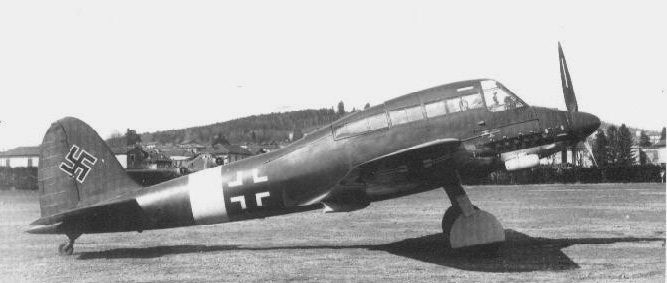
Flight testing was carried out under the aegis of the Luftwaffe and despite the good performance, the prone position was found to be unsatisfactory, being uncomfortable and restricting rearward vision. The programme was halted by the German control Commission that was running weapons production in the Repubblica Sociale Italiana – RSI after the 1943 armistice.

SM.93
Powerplant: 1 × Daimler-Benz DB 605A, 1,100 kW (1,475 hp)
Wingspan: 13.900 m (45 ft 7+1⁄4 in)
Wing area: 31.09 m2 (334.7 sq ft)
Length: 11.017 m (36 ft 1+3⁄4 in)
Height: 3.797 m (12 ft 5+1⁄2 in)
Empty weight: 3,544 kg (7,814 lb)
Gross weight: 5,500 kg (12,125 lb)
Maximum speed at 4,500 m (14,764 ft): 580 km/h (360 mph, 310 kn)
Maximum speed at 7,000 m (22,966 ft) with bombload: 542 km/h (337 mph)
Maximum speed at 7,000 m (22,966 ft) clean: 580 km/h (360 mph)
Cruise speed: 505 km/h (314 mph, 273 kn)
Never exceed speed: 950 km/h (590 mph, 510 kn)
Range: 1,600 km (994 mi, 864 nmi)
Service ceiling: 10,000 m (32,800 ft)
Time to 4,000 m (13,123 ft): 5 min 10 sec
Wing loading: 176.9 kg/m2 (36.2 lb/sq ft)
Power/mass: 0.2 kW/kg (0.122 hp/lb)
Crew: 2
Guns:
1 × 20 mm MG 151/20 cannon (150 rounds) firing through the propeller hub
2 × 12.7 mm (.50 in) Breda-SAFAT machine guns (with 350 rpg) in the wings
1 × 12.7 mm (.50 in) Breda-SAFAT machine gun on a flexible mounting in the rear cockpit
Bombs: Total 1,451.5 kg (3,200 lb)
816.5 kg (1,800 lb)1800 lb. below the fuselage
317.5 kg (700 lb)1400 lb. under each wing
Savoia-Marchetti SM.85 / SM.86

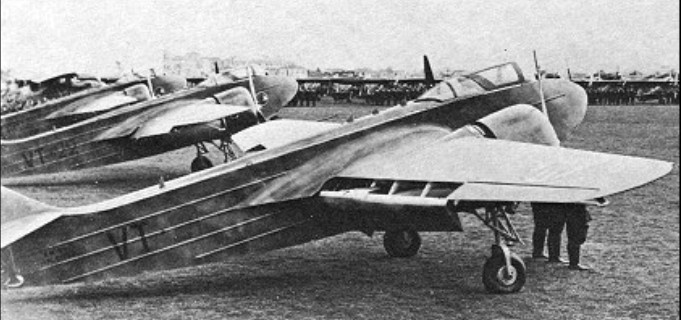
Single-seat twin-engined dive bomber and ground-attack monoplane. Power was provided by two 373kW Piaggio P.VII RC.35 engines. A small number served with the Regia Aeronautica.

S.M.85
Loaded weight: 2950 kg / 6504 lb
Empty weight: 4190 kg / 9237 lb
Wingspan: 14 m / 46 ft 11 in
Length: 10.4 m / 34 ft 1 in
Height: 3.3 m / 11 ft 10 in
Wing area: 25.8 sq.m / 277.71 sq ft
Max. speed: 368 km/h / 229 mph
Ceiling: 6500 m / 21350 ft
Range: 827 km / 514 miles
Armament: 1 x 12.7mm or 1 x 7.7mm machine-gun, 1 x 800kg bomb

Savoia-Marchetti SM.84

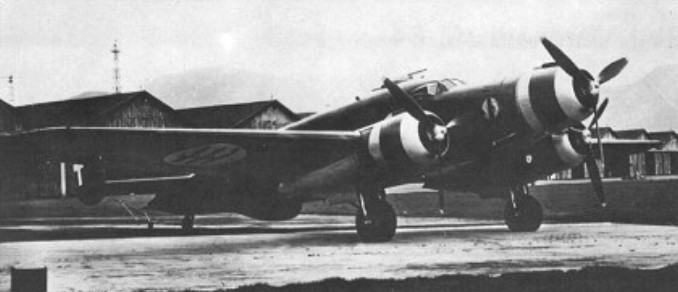
When it was realized that the S.79 could no longer measure up to foreign medium bombers, SIAI Marchetti designed a version initially called the SM.79bis and then SM.84. With respect to the S.79, the 1940 SM.84 featured a different and more rational internal fuselage design and had twin fins to improve the gunner’s field of fire to the rear. The aircraft suffered from various difficulties and never equalled the performance of its predecessor.

SM.84
Engine: 3 x 746kW Piaggio P.XI piston radials
Max take-off weight: 13288 kg / 29295 lb
Wingspan: 21.13 m / 69 ft 4 in
Length: 17.93 m / 58 ft 10 in
Height: 4.59 m / 15 ft 1 in
Wing area: 61 sq.m / 656.60 sq ft
Max. speed: 432 km/h / 268 mph at 11,500 ft
Ceiling: 7900 m / 25900 ft
Range: 1830 km / 1137 miles at 225 mph
Armament: 4 x 12.7m machine-guns, 1600kg of bombs
Crew: 4/5

Savoia-Marchetti SM.82 Canguro

The S.M.82 of 1938 was a development of the S.M.75, from which it differed by having a deeper fuselage, greater loaded weight, redesigned fin and rudder, and the addition of a hydraulically operated retractable gun turret on top of the fuselage to the rear of the pilot’s cockpit. Initially powered by three 633kW Alfa Romeo 128 engines, it could accommodate up to 40 fully armed troops or be used as a long-range heavy bomber. It was widely used by the Regia Aeronautica and some were operated by the Luftwaffe from 1943.

In their 1941 battles against the advancing British and their allies in East Africa, the numbers of Italian fighter planes equipped to ward off bombing raids was melting away day by day. The dense sea and land blockade surrounding Italian East Africa made it impossible for the Italians to supply their troops with fresh aircraft from Italy. Soon they had no fighters left except for a dozen Fiat CR.42 Falco biplanes which although they had outstanding flight characteristics were powerless against superior numbers oft the British Gladiator fighters. In this desperate situation they seized on an inspiration of Colonel Galante, and transported the needed fighter planes in dissembled pieces inside the fuselage of Savoia-Marchetti SM.82 Canguro (Kangaroo) transport planes whose range made it possible for them to ferry their cargo to East Africa from Libya. By the Spring of 1941, over 50 Falco fighters had landed in Ethiopia by this method.

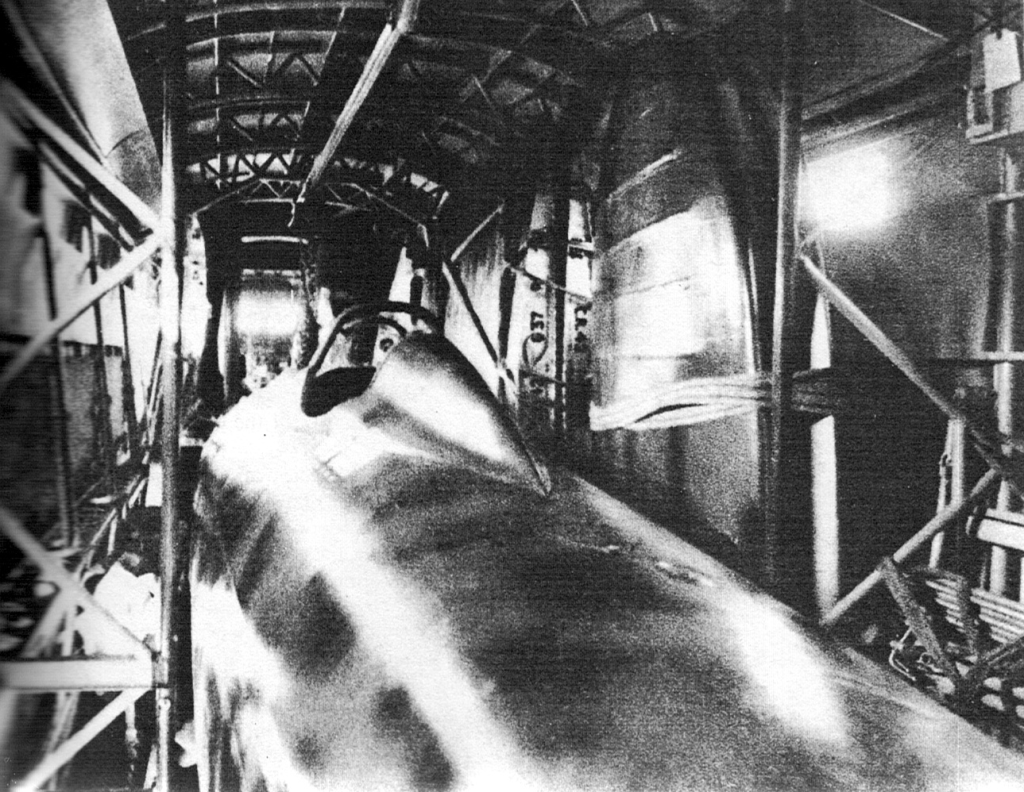
Fiat CR.42 inside a Savoia Marchetti SM.82 on the way to East Africa

Engines: 3 x Alfa Romeo 128 RC.21, 708kW / 937 hp
Wingspan: 29.68 m / 97 ft 5 in
Length: 22.9 m / 75 ft 2 in
Height: 6.0 m / 20 ft 8 in
Wing area: 118.6 sq.m / 1276.60 sq ft
Max take-off weight: 18020 kg / 39728 lb
Loaded weight: 10550 kg / 23259 lb
Wing loading: 31.16 lbs/sq.ft / 152.0 kg/sq.m
Max. speed: 200 kts / 370 km/h / 230 mph
Cruising speed: 162 kts / 300 km/h
Service ceiling: 19685 ft / 6000 m
Range: 1620 nm / 3000 km / 1864 miles
Armament: 1 x 12.7mm machine-guns, 4 x 7.7mm machine-guns
Bombload: 4000kg
Crew: 5-6

Savoia-Marchetti S.M.82 Canguro

Savoia-Marchetti SM.79 Sparviero

Developed from an eight-seat commercial airliner of 1934, the three-engine Savoia-Marchetti S.M.79 Sparviero entered service as a conventional medium bomber with the Regia Aeronautica in 1937, and served operationally with the Aviacion del Tercio alongside the Nationalist forces during the Spanish Civil War.

Savoia-Marchetti S.M.79 Sparviero Article

In 1937 the S.M.79 embarked on trials at Gorizia as a torpedo bomber, being equipped to launch a single 450mm naval torpedo from an offset rack under the fuselage. The following year trials with paired torpedoes led to the adoption of the S.M.79-II aircraft as standard torpedo bomber equipment. Following Italy’s entry into the war in June 1940, when Sparvieri (Sparrowhawks) equipped 14 stormi based in Italy, Sicily, Sardinia and Libya, the aircraft was constantly in action in the anti-shipping role, its first action being an attack by 19 S.M.79s of the 9° and 46° Stormi on French shipping off the Riviera coast on 13/14 June.

During the invasion of Crete S.M.79s of the 92° Gruppo and the 28la Squadriglia were active against Allied shipping in the Aegean, after which most aircraft were redeployed to Libya for operations against British naval forces and convoys in the Central Mediterranean as well as the naval base at Malta. Among the ships of the Royal Navy sunk by S.M.79s in the Mediterranean were the destroyers HMS Husky, HMS Jaguar, HMS Legion, and HMS Southwall, while the battleship HMS Malaya and the carriers HMS Indomitable and HMS Victorious were all struck by torpedoes launched by the Italian torpedo bombers; the majority of these ships were hit during the attacks on the Operation ‘Pedestal’ convoy which sailed with 14 merchant ships and heavy escort for the relief of Malta. Among the famous Italian pilots of the Sparviero were men such as Capitani Buscaglia, Cimicchi, di Bella and Melley, An improved version was the S.M.79-III without the ventral gondola but with a forward-firing 20mm cannon.

Savoia Marchetti SM.79 10 October 1942

The SM.79 was blooded in the Spanish Civil War as a level bomber with four gruppi of the Italians’ Aviazione Legionaria and 3-, 4-, 5- and 6-G-28 of the Nationalists’ Agrupacion Espanola. Total deliveries to Spain were some 135 SM.79-ls, and as they pulled out at the end of the war the Italians donated 80 of their surviving aircraft to the victorious Nationalists. In the war the SM.79-ls had proved decisive, for they comprised one of the few homogeneous forces able to undertake an effective offensive role, in this instance long-range bombing without the need for fighter escort because of their performance and good defensive firepower. The Sparviero also proved reliable, and remained in service with the Spanish air force for many years after World War II.

The aircraft suffered from poor servicing facilities, and it was unusual for even as much as half the available strength of Sparvieri to be fit for operations at any given time. Nevertheless the S.M.79 was acknowledged as being among the best torpedo aircraft to serve in the Mediterranean theatre during World War II.

Gallery

Savoia Marchetti SM 79 Sparviero
Engines: 3 x Piaggio P XI R C 40, 986 hp
Length: 53.15 ft / 16.2 m
Height: 13.451 ft / 4.1 m
Wingspan: 69.554 ft / 21.2 m
Wing area: 664.139 sq.ft / 61.7 sq.m
Max take off weight: 24916.5 lb / 11300.0 kg
Weight empty: 16758.0 lb / 7600.0 kg
Max. weight carried: 8158.5 lb / 3700.0 kg
Max. speed: 234 kt / 434 km/h
Cruising speed: 173 kt / 320 km/h
Service ceiling: 22966 ft / 7000 m
Wing loading: 37.52 lb/sq.ft / 183.0 kg/sq.m
Range: 1890 nm / 3500 km
Range (max. weight): 1075 nm / 1990 km
Crew: 5
Armament: 4x MG
Bombload: 2200kg

SM.79-l Sparviero
Type: four/five-seat medium bomber
Powerplant: 3 x Alfa Romeo 126 RC 34, 582 kW (780 hp)
Span: 21.2m (69ft 6.7 in)
Length: 15.80m (51ft l0in)
Height: 4.3 m / 14 ft 1 in
Wing area: 61.7 sq.m / 664.13 sq ft
Empty weight: 6800 kg / 14992 lb
Max T/O weight: 10480 kg (23,100 lb)
Max speed: 267 mph at 13,125 ft
Ceiling: 6500 m / 21350 ft
Operational range: 1,180 miles
Armament: 1 x 7.7-mm (0.303-in) and 3 x 12.7-mm 0.5-in) m¬g
Bombload: 1250 kg (2,756 lb) internally
Crew: 5

Savoia-Marchetti S.M.79 Sparviero

Saunders-Roe A.37 Shrimp

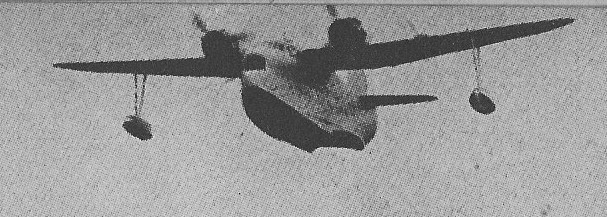
After designing the S.38 four-engined patrol flying-boat to Specification R.5/39, Saro built, as a private venture, a two-seat half-scale model as the Saro A.37, often called the Shrimp. The R.5/39 programme did not go ahead, but the Saro A.37 was completed in time to make its first flight in October 1939. Powered by four 63kW Pobjoy Niagara III engines, it was later modified to have a single fin and rudder, and other features representative of the Shetland flying-boat jointly developed by Shorts and Saro. In this guise, it acquired the serial TK580, and was tested from early 1944 until after the war had ended. The Shrimp was dismantled in Felixstowe in 1949.

Saunders-Roe A.37
Engines: 4 × Pobjoy Niagara III, 95 hp / 71 kW
Length: 42 ft 3.25 in / 12,89 m
Wingspan: 50 ft / 15,24 m
Wing area: 340 sq.ft / 31,6 sq.m
Height: 12 ft 8.75 in / 3,88 m
Empty weight: 4,362 lb / 1,983 kg
Loaded weight: 5,700 lb / 2.591 kg
Maximum takeoff weight: 6,200 lb / (2,818 kg
Maximum speed: 113 kt / 130 mph / 209 km/h
Climb rate: 635 m/min / 3,22 m/s
Wing loading: 16,8 lb/sq.ft / 82 kg/sq.m
Power loading: 0,067 hp/lb / 0,11 kw/kg
Endurance: 3 hours
Seats: 2

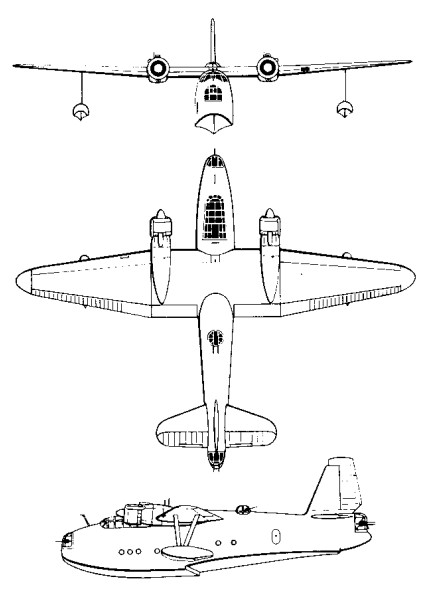
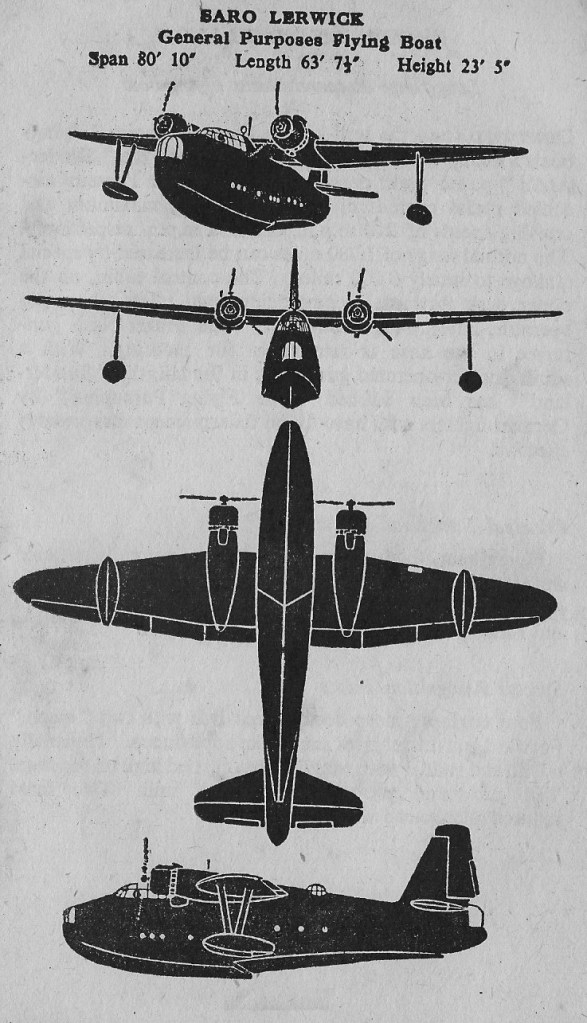
Saunders-Roe S.36 Lerwick

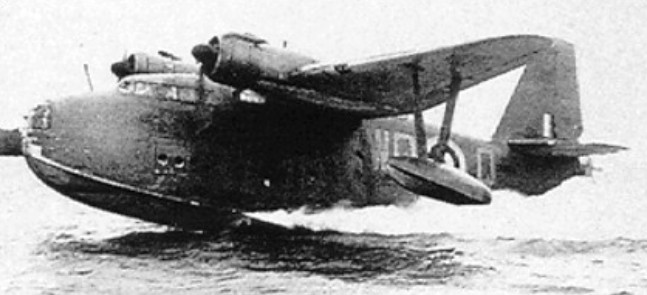
The twin-engine Sarò Lerwick was intended to meet a medium-range maritime reconnaissance requirement, Specification R. 1/36. First flown before the end of Ì938, the prototype featured twin fins and. rudders but from the outset was found to be lacking m lateral stability, and displayed a determination to roll and yaw in cruising flight, making the aircraft impossible to fly ‘hands off”. In due course a single fin and rudder was fitted, but not until this was considerably enlarged was there any improvement in the handling.

Starting with the seventh production example, wing incidence was increased and enlarged propellers fitted to the Hercules II radials, but the propellers were found unsuitable for operating on rough water. Stalling tests showed the Lerwick to have vicious traits, the stall under alighting conditions being accompanied by sharp wing-drop.

Twenty one examples were produced and the Lerwick was first delivered for service with No, 209 Squadron in December 1939 at Oban, but after the type had flown a small number of semi-operational patrols it was decided to abandon further efforts to rectify its problems. The last eight aircraft were powered by Hercules IVs and the final example was completed in November 1940. One aircraft was flown by No, 240 Squadron but was lost on 20 February of that year, and some flew with No. 4 Operational Training Unit at Invergordon.

Saunders Roe S 36 Lerwick
Engines: 2 x Bristol Hercules II, 1356 hp
Length: 63.615 ft / 19.39 m
Height: 20.013 ft / 6.1 m
Wingspan: 80.84 ft / 24.64 m
Wing area: 844.974 sq.ft / 78.5 sq.m
Max take off weight: 33205.1 lb / 15059.0 kg
Max. speed: 188 kts / 348 km/h
Cruising speed: 144 kts / 267 km/h
Service ceiling: 13993 ft / 4265 m
Wing loading: 39.36 lb/sq.ft / 192.0 kg/sq.m
Crew: 6
Armament: 7x cal.303 MG (7,7mm), 907kg Bombs

Saunders-Roe S.36 Lerwick

Saunders-Roe

In 1928 pioneer pilot/constructor A. V. Roe (later Sir) acquired an interest in S. E. Saunders Ltd and firm was reconstituted as Saunders-Roe. First new product was Cutty Sark flying-boat, with Fokker-type wing, built in small numbers; also larger Cloud (1931) of which RAF had 16.

Most successful product was twin-engined London biplane flying-boat of 1934 which served with RAF until 1941. Shrimp two-seat four-engined aircraft was built to serve as research vehicle for larger types. Company built the Supermarine Walrus and Sea Otter in quantity. SR/A1 of 1947 was world’s first jet-propelled flying-boat fighter, but was not ordered into service. Princess ten-turboprop commercial flying-boat of 1952 was a great technical achievement, but never entered service. SR.53, first flown in 1957, was experimental turbojet/rocket interceptor which demonstrated climb of about 15,240m/min.

1955

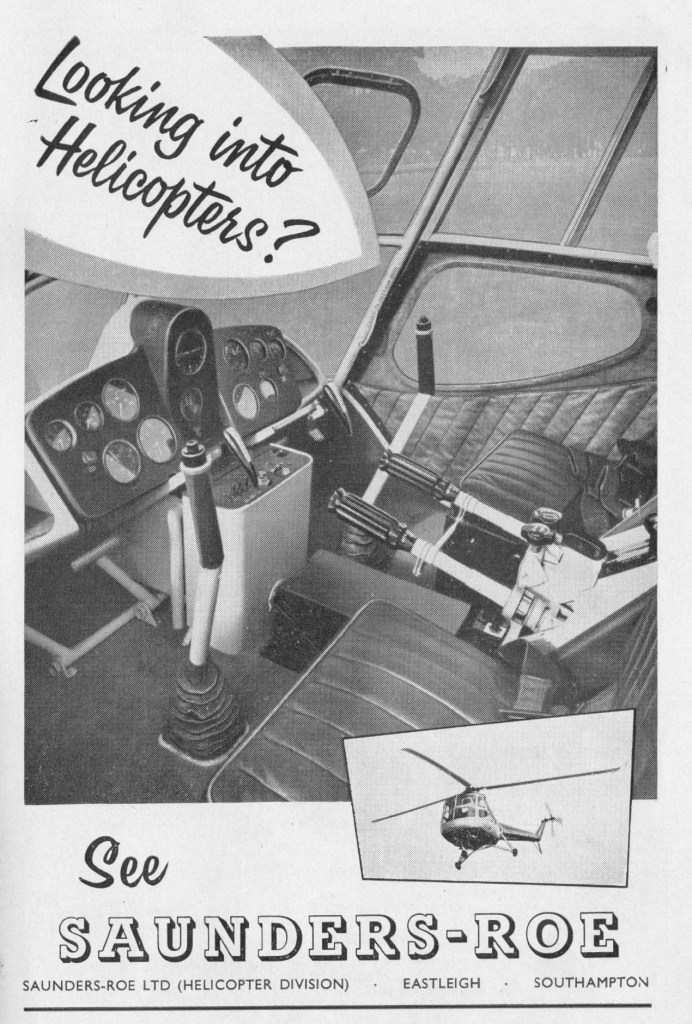
Cierva joined Saunders-Roe in 1957.

Promising SR.177 development was abandoned despite international interest. Company entered helicopter field in early 1950s with small Skeeter (originally Cierva), though in 1928 S.E. Saunders had made Isaaco Helicogyre (which never flew) for the Air Ministry. Five-seat P.531 built 1958, but in 1959 company was acquired by Westland Aircraft, which developed the P.531 as the Wasp/Scout.