Sikorsky VS-316A / S-47 / R-4 Hoverfly / HNS / H-4

R-4B

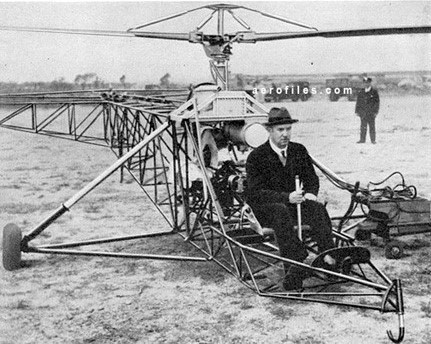
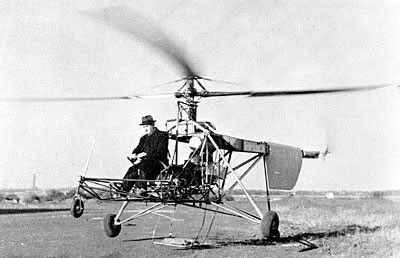
In 1941, the Vought Sikorsky Division of United Air¬craft was awarded a development contract for an experimental helicopter, designated XR 4. With an uncovered fuselage, it featured the first tail rotor configuration.

Sikorsky VS-316A / S-47 / R-4 Hoverfly Article

Designed by Igor Sikorsky and Michael Gluhareff, the prototype VS-316A first flew on 14 January 1942. The sole prototype (41-18874) was the first helicopter built expressly for military service (USAAF).

Sikorsky XR-4 41-18874

The XR-4 was delivered by air with Sikorsky along as a passenger. During the trip, they hovered low to read highway signs and once asked an astonished motorist for directions to the Army airfield. It arrived at Wright Field, Ohio, on 18 May 1942, having completed, in stages, the 1225km trip from Bridgeport, Connecticut, in 16 hr 10 min flying time.

It became XR-4C in 1943.
Sikorsky VS-316 NX28996

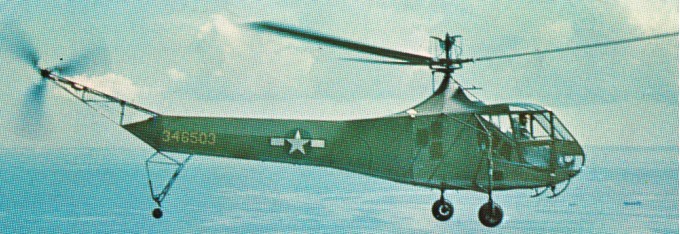
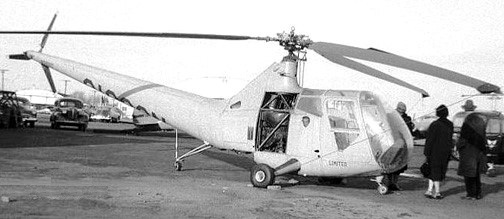
The Sikorsky R-4, or VS-316A, was a definitive development of Igor Sikorsky’s successful pre-war VS-300. Like the VS-300, it had a framework of heavy-gauge steel tube, and all but the extreme rear end of the fuselage was fabric-covered, as were the 10.97m diameter main rotor blades. It retained the single three-¬blade rotor and anti torque rotor of the VS 300, driven through transmission shafts and gearboxes. A completely new feature was the fully-enclosed cabin, with side-by-side seating and dual controls for the 2-man crew.
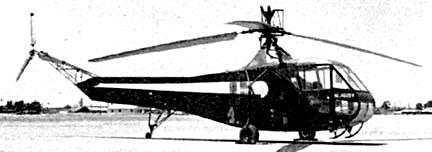
Sikorsky VS-316A

Les Morris, was the Chief Test Pilot on the Sikorsky VS-300 starting in March, 1941 (and on the XR-4, XR-5 and XR-6 which followed).

An experimental R-4 was fitted with a tilting tail rotor.

Later in 1942 an order was placed for three service test YR-4A’s (42-107234 to 107236) with 180hp R-550-1 engines and main rotors of 11.58m diameter, and similar changes were made to the XR-4 in 1943, after which it was redesignated XR-4C.

These were generally similar to the XR-4 except for an enlarged cabin, and were used inter alia for winterisation and tropical trials in Alaska and Burma. The first helicopter in the history of warfare were used during Operation Thursday, Burma, in 1944. They were Sikorsky R-4Bs. With a range of about 75 miles and cruise of 75 mph, they were used to transport wounded Chindits out of the stronghold.

Other 1943 developments included the first-ever landing by a helicopter on a ship at sea (by Colonel Frank Gregory on 7 May 1943) on the tanker Bunker Hill in Long Island Sound, USA, and the production of twenty-seven pre-series YR-4B’s for further evaluation by the USAAF, the U.S. Navy (three), U.S. Coast Guard (three) and the RAF (seven). The Navy designation was HNS.
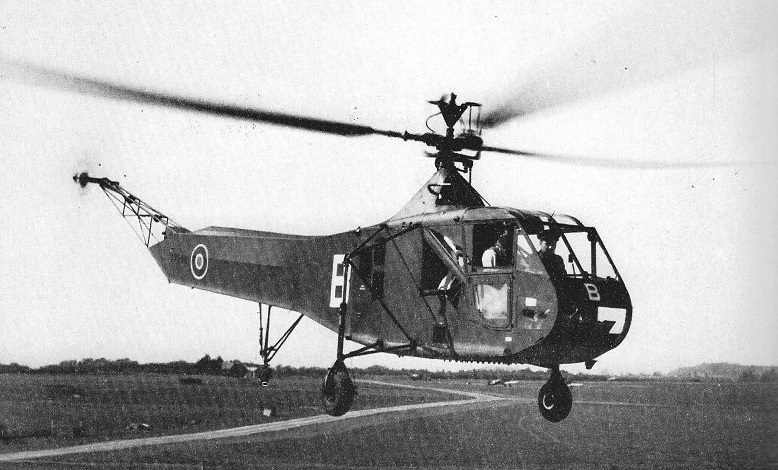
RAF R-4 1945

Thirty production machines (YR-4As and YR-4Bs) were ordered in total.

In 1944 the R-4 became the first helicopter in the world to be placed in series production.

Twenty-seven YR-4B were produced, 42-107237/107248, 43-28223/28235, -28247, -47953, of which 3 to USCG and 7 to Great Britain as Hoverfly I. Additionally, 15 were produced for USN as HNS-1. They were fitted with bomb racks for anti-sub duty.

Three YR-4Bs and 22 R-4Bs were transferred from the USAAF as HNS-1 (39033 to 39052, 46445, 46699 to 46700, and 75727 to 75728).
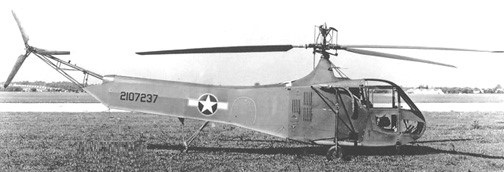
Sikorsky YR-4B 42-107237

One hundred production R-4B’s were built, 43-46500 to 46599, similar to the YR-4B except for a more powerful engine; thirty-five were delivered to the USAAF for observation and liaison duties, and twenty to the U.S. Navy as HNS-1 reconnaissance and air/sea rescue aircraft. Twenty or twenty-two went to USCG as HNS-1 and 45 to RAF. The US Navy established its first helicopter squadron, VX-3, at Floyd Bennett Field NAS.

The YR-4B were redesignated as YH-4B in 1948.
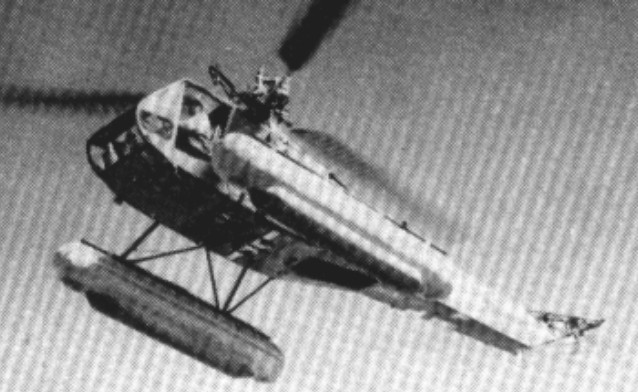
HNS-1

The remaining forty-five were supplied to Great Britain under Lend-Lease, most of them going to the Royal Navy. The R-4B was known in British service as the Hoverfly I. In the RAF the Hoverfly I replaced the Rota (Cierva C.30A) autogiros of No.529 Squadron from August 1944, and some were supplied to the Helicopter Training School at Andover early in 1945. By the end of the year the type had passed out of RAF service, some aircraft being allocated for radar calibration work with the Telecommunications Research Establishment; others undertook snow and flood reporting duties, and one was allocated to the King’s Flight to carry mail and freight. The Joint Experimental Helicopter Unit, established in 1954, was equipped initially with R-4B and R-6A helicopters handed on from the Royal Air Force and Fleet Air Arm.

A U.S. Navy HNS-1 was flown by the Coast Guard, which was given responsibility for Navy helicopter development and operations during World War II. A float-equipped HNS-1 operated the icebreaker Northwind (AG-89) during Rear Admiral Richard E. Byrd’s 1947 expedition to the Antarctic.

USCG Northwind March 1947 Wellington New Zealand – Grumman J2F-6 Duck & Sikorsky HNS-1 BuNo 39043, the first helicopter to fly in New Zealand

It was not long before Sikorsky’s predictions about the lifesaving capabilities of the helicopter came true. U.S. Coast Guard Cdr. Frank Erickson flew the R-4 on the first helicopter mercy mission in January 1944, delivering blood plasma for injured sailors after an explosion occurred aboard a U.S. Navy destroyer outside of New York City’s harbor.

The first helicopter rescue during combat occurred in March 1944. Army Air Corps Lt. Carter Harman flew an R4 in Burma to rescue four men from behind enemy lines.

A Navy-Coast Guard HNS-1 was “stuffed” into a C-54 transport of the Air Transport Command at the Coast Guard air station in Brooklyn, N.Y. The helicopter was flown 1,000 miles on 29 April 1945, to Goose Bay, Labrador. It was then reassembled and rescued 11 Canadian airmen from two separate crashes in rugged territory, carrying them to safety one man per flight.

The first civilian helicopter rescue took place in November 1945, in Long Island Sound near Fairfield, Conn. An Army R-5 flown by Sikorsky pilot Viner rescued two men from an oil barge during a storm.
The R-4 did not enjoy a long service career, either in Britain or the United States, being supplanted in the early post-war years by the Sikorsky S-51 and its British-built equivalent, the Westland Dragonfly. Those still in American service were redesignated H-4B in 1948.

By the time production switched to the improved R-5/S-51 series, a total of 130 Sikorsky R-4s had been built.

VS-316A / XR-4
Engine: 165hp Warner R-500-3
Main rotor: 36’0″
Length: 35’5″
Max speed: 102 mph
Cruise: 85 mph

XR-4C
Engine: 180hp R-550-1

YR-4A
Engine: 180hp R-550-1
Main rotor: 38’0″
Length: 35’5″
Max speed: 75 mph

YR-4B / YH-4B 1943
Engine: 180hp R-550-1
Main rotor: 38’0″
Length: 48’2″
Useful load: 515 lb
Max speed: 75 mph
Range: 130 mi
Ceiling: 8,000′

R-4B / H-4B
Engine: Warner R.550-3, 180 hp / 134kW
Rotor dia: 38 ft (11.58 m)
Fuselage length: 10.35 m
Length: 48 ft 2 in (14.68 m)
Height: 12 ft 5 in (3.78 m)
Empty weight: 952kg
Max TO wt: 2535 lb (1150 kg)
Max level speed: 75 mph (121 kph)
Max speed @ 1150 kg: 65 kts
Rate of climb: 3.3m/s
Seats: 2

HNS
Engine 180hp Warner R-550-3
Main rotor: 38’0″
Length: 35’5″
Max speed: 77 mph
Sikorsky VS.300

Sikorsky VS-300 NX28996 on tether

Russian-born Igor Sikorsky built his first helicopter, powered by a 25hp Anzani engine, in 1909. It would not leave the ground, and a second machine, completed in 1910, was little better; it did rise a short distance, but was incapable of lifting a pilot, and Sikorsky turned his attention to fixed-wing aeroplanes. After the 1917 Revolution he left the country, settling in the United States some two years later, and soon entering the aircraft industry of his new country.

As the era of flying boats faded, lgor Sikorsky revived the idea of developing the helicopter. Once again he was involved in “advanced pioneering work . . . where extremely little reliable information and no piloting experience whatever were available.” By the late 1930s changing requirements for military and commercial air transport forecast the termination of the large flying boat, and Sikorsky returned to his first love, the helicopter. The essential aerodynamic theory and construction techniques that had been lacking in 1910, however, were now available. In a memo to the general manager of Vought-Sikorsky (the new name of the company) dated Aug. 10, 1938, he wrote:

“Besides having considerable possibilities as a privately owned aircraft, the direct-lift ship [helicopter] will be a very important service type for the army and navy. For the army, this type of ship would render excellent services for communication, fire control, short-range reconnoitering and bombing operations. For the navy, the ship would be extremely useful as the only aircraft that could take off and land without catapulting from any surface vessel….”

Even though an official manufacturing order had not been issued to begin work on a “new” type of aircraft, helicopter development continued throughout the fall of 1938. lgor Sikorsky and a handful of engineers and production personnel spent lunch breaks and off hours sketching, designing, fabricating and testing various components and systems for what would become known as the VS-300 (“V’ for Vought, “S” for Sikorsky and “300” for Sikorsky’s third helicopter design).

Rotor tests were encouraging enough for Sikorsky to request a meeting with Eugene Wilson, a senior vice president of United Aircraft, at which he received the go-ahead to construct a prototype helicopter. Sikorsky’s argument for building the rotorcraft had been compelling.

“So important is this development to the future of society that it becomes our responsibility to undertake it. While admittedly radical, and possibly ‘impossible,’ the helicopter is wholly rational. Like no other vehicle, it will operate without regard to prepared landing surfaces. Thus, it will free us of the serious handicap to progress imposed by fixed-wing aircraft-airport limitations. It is not competitive with the airplane, but complementary to it. If Sikorsky does not create this craft of the future, another [company] will. By training and expedence, we are best equipped to do it. And finally, unlike the airplane, the helicopter will be used not to destroy but to save lives!”

Early in 1939, with a well trained engineering group at his disposal, he started the construction of the VS-300 helicopter. As he said later, “There was a great satisfaction in knowing that, within a short period of time, good engineering along a novel line produced encouraging results.”

Sikorsky VS-300 First flight

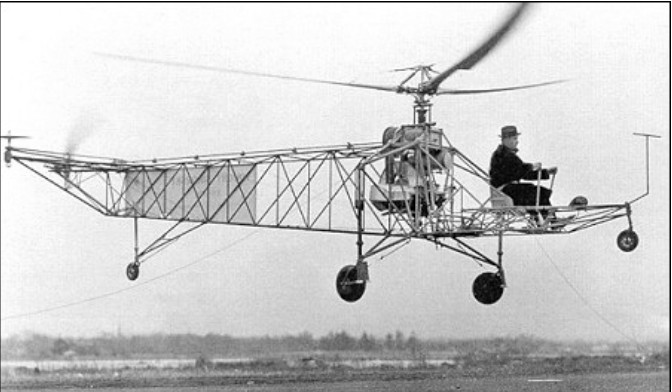
On September 14, 1939, the plane lifted off the ground on its first flight. Its designer was at the controls; during his entire career Sikorsky always insisted on making the first trial flight of any new design himself. At this stage the aircraft was still tethered to the ground and had weights suspended underneath it to help keep it stable.

It was powered by a 4-cylinder Franklin engine of 75hp, had full cyclic pitch control for the 28’0″ three-blade main rotor and a single anti-torque tail rotor at the end of a narrow enclosed tailboom which also supported a large under-fin.

The VS-300 had a three-bladed main rotor, 28 ft / 8.53 m in diameter, a welded tubular steel frame; a power transmission consisting of V-belts and bevel gears; a two-wheel landing gear arrangement and a completely open pilot’s seat. A single foot pedal controlled the antitorque tail rotor.

The cyclic control was not fully satisfactory, however, and by the time the VS-300 made its first free flight on 13 May 1940, 3 feet off the ground for 10 sec with 35 foot long ropes. By now powered by a 90hp Franklin motor, the configuration had changed to an open-framework steel-tube fuselage with outriggers at the tail end. Each of these mounted a horizontally-rotating airscrew to provide better lateral control; the vertical tail screw was retained. Sikorsky tried 19 different configurations before he was satisfied with the final design of the VS-300.

By mid-1940 the VS-300 was staying airborne for 15 min. at a time. Various modifications were made during 1940-41 with three tail rotors, and the replacement of the tail outriggers in June 1941 by a short vertical pylon carrying a single horizontal tail rotor, and the reinstatement in December of a now fully satisfactory cyclic pitch control for the main rotor. Other alterations concerned the arrangement of the main undercarriage and the fitting of nose and tail wheels in place of skids.

On July 18, 1940, a 15-min. flight was made during which the ship hovered. On Jan. 10, 1941, the VS-300 made a flight that lasted more than 25 min., which was believed to be the longest flight ever made by a helicopter in America at that time.

During 1940, Sikorsky removed the cyclic pitch control, which varies the pitch angle of each blade as it rotates so that the helicopter can be manoeuvred, and substituted two small horizontal ro¬tors on outriggers for pitch and lateral control. The modifications proved successful, and on May 6, 1941, this version of the VS 300 had surpassed the Focke ¬Achgelis’s duration record with a flight of 1 hr. 32 min. 26.1 sec. Able to climb vertically, fly sideways and backward, it could not safely fly forward until 1941. For publicity photos, mechanics changed wheels on the hovering VS300A.

Les Morris, was the Chief Test Pilot on the Sikorsky VS-300 starting in March, 1941 (and on the XR-4, XR-5 and XR-6 which followed).

On Apr. 17, 1941, the VS-300 recorded another first by making the world’s initial helicopter water landings by fitting pneumatic flotation bags under the main undercarriage wheels.

Sikorsky VS-300A NX28996

In its final form the VS-300 had a 150hp Franklin engine, a fabric-covered fuselage and a tricycle undercarriage.

During its lifetime, the VS-300 logged more than 100 hr. of flight time and demonstrated the concepts and principles that were later utilized in the design of the Sikorsky R-1, the worlds first production helicopter.

In 1943 the VS-300 was delivered to the Henry Ford Museum in Dearborn, Michigan, where it is still housed.

The general manager of Sikorsky Aircraft, Lee S. Johnson, summed up its contribution twenty years later when he said: ‘Before Igor Sikorsky flew the VS-300, there was no helicopter industry; after he flew it, there was.”

VS-300
Engine: 75hp Franklin
Rotor: 28’0″ three-blade
Seats: 1

VS-300A
Engine 90hp Franklin

Sikorsky S-43 / JRS / OA-8 / OA-11

S-43H

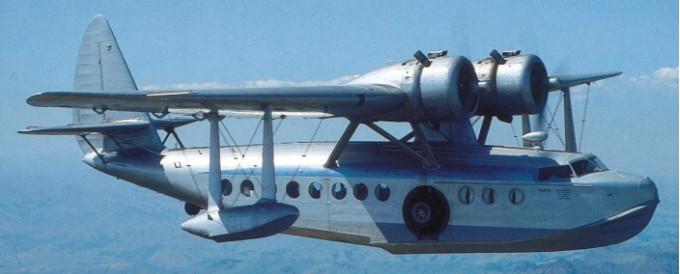
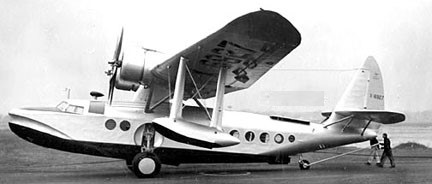
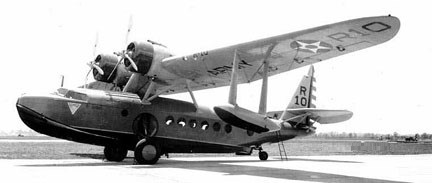
The S-43 was originally designed for a Pan American requirement for a twin-engined amphibian for secondary Latin American routes.

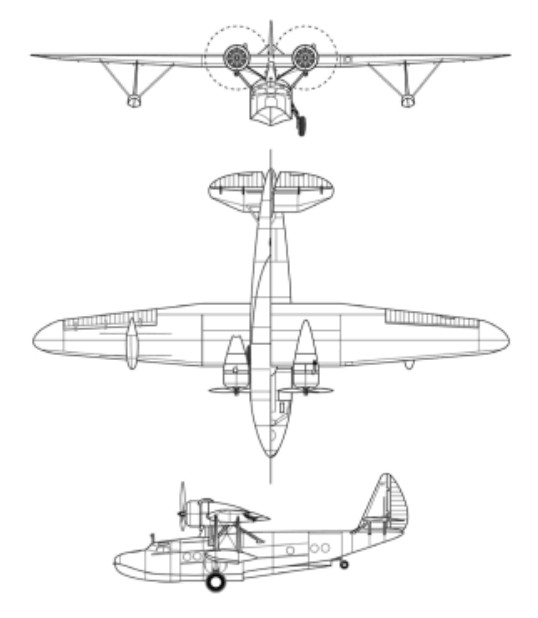
Essentially a scaled-down version of the S-42, the S-43 employed a single-step hull and a single tail group. The wing rested on a central pylon, supported on either side by N-struts. Wing flaps covering 48% of the span reduced the stall speed to 65 mph.

The S-42 had twin vertical tails. Many of the S-43s had the same arrangement, but some had a single tail. Biggest difference other than size and the S-43’s amphibious capabilities (although some S-43s were built as flying boats) were the powerplants, only two 750hp Pratt & Whitney Hornets on the S-43. The smaller airplane had a gross weight of 19,5001b (8,845kg) and could seat 16 to 24, depending on the legroom. Both transports were certificated in 1935.

After the first flight on 5 June 1935 (piloted by Boris Sergievsky), the first of fourteen S-43s delivered to Pan American (ATC 593) entered Latin American service in April 1936, though most were subsequently turned over to Panair do Brasil and other subsidiary operations.

Sikorsky Aircraft built 53 S-43 twin engined amphibians in the mid 1930s.

In 1938 Pan American used one of its S-43s on survey flights for planned route extensions to Alaska.

Additionally, four were sold Inter-Islan Airways Airways (later renamed Hawaiian, Airlines) in the Hawaiian Islands, four to Aeromaritime – an Air France affiliate, in West Africa, KLM’s Netherlands East Indies associate, and one to DNL-Norwegian Airlines.

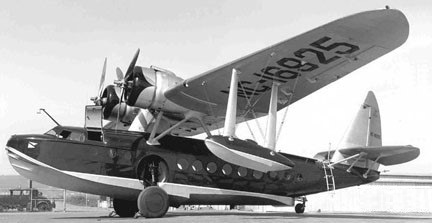
Twenty-two amphibians were delivered as S-43s (NC15061-15068, NC16925, NC16928, NC16934, and NC20698), plus one S-43-A and three S-43-Bs (NC16926-16927, and NC16931-16933) with minor detail changes.

Sikorsky S-43-B NX16927

Three delivered in 1937-8 for inter-island operations in the Phillipines were registered as S-43-W’s (ATC 623) with a one-foot fuselage extension and Cyclone engines, plus one as the S-43-WB witthout amphibious landing gear (NC16929-16930, and PK-AFT, PK-AFU). Two S-43s were custom built in 1937 as personal transports, one to Howard Hughes and another to Harold Vanderbuilt.

Sikorsky S-43 Harold Vanderbilt 1938 flying yacht NC16925

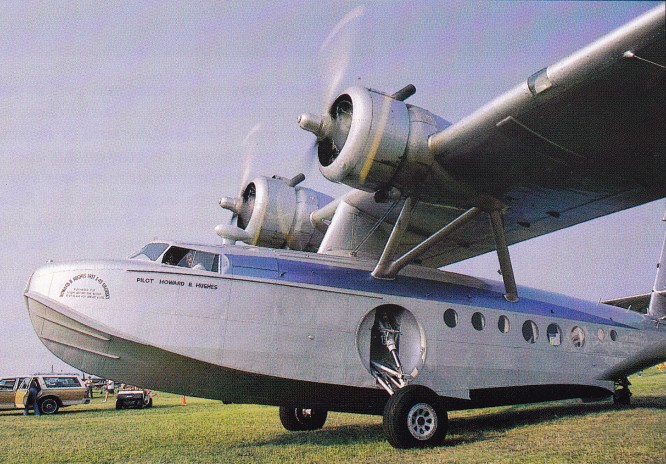
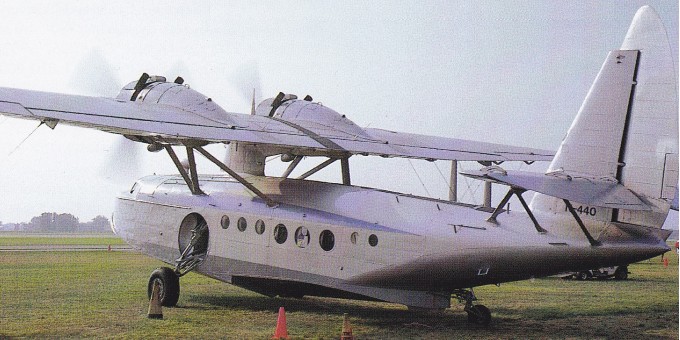
One ‘Baby Clipper’ was ordered in 1937 by Howard Hughes especially equipped for a proposed 1938 around the world flight. Registered NR440, it was fitted with larger 900hp Wright GR-1820 Cyclone radials and additional fuel tanks in the cabin. However, it proved too slow and Hughes made his flight in a Lockheed 14.

Hughes had a mishap with his S-43H, modified with twin tails in 1941, flying NC440 into Lake Mead, Nevada, in May 1943 while practicing alightings in preparation for flying the HK4 Hercules flying boat. Raised by a US Navy diving team, the airplane was rebuilt as a S-43W with a single tail, fitted out as a ten-seat executive transport. Manufacturer’s serial number 4327 served only briefly in this capacity and spent most of its time in storage at Hughes Tool Co in Houston TX until 1977.

Ronald Van Kregten, an acquaintance of both Hughes and lgor Sikorsky, purchased the S-43 from the Hughes estate in 1977 and restored it essentially to its executive configuration, obtaining certification. The airplane was based at Houston. Van Kregten planned to flying it occasionally to air shows.

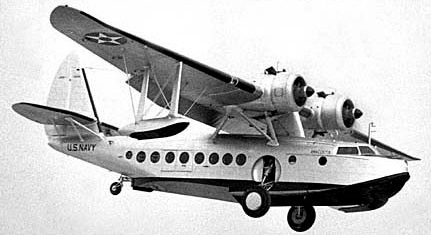
Between 1937 and 1939 the Navy acquired seventeen S-43s that entered service under the designation JSR-1 (0504-0506, 1054-1063, and 1191-1194), two being assigned to the Marine Corp.

Sikorsky JRS-1 0505

During the same time, five were delivered to the US Army Air Corp as the Y10A-8, 37-370 to -374, and in 1942, a commercial S-43, after being re-equipped with 875 hp R-1690-S2C engines, was impressed into the USAAF as OA-11 serial 42-01 VIP transport.

Sikorsky Y1OA-8

Military craft remained in service throught World War II. One S-43 was sold to the Soviet Union and several ex-Pan American examples were used in Brazil along the rubber river routes. Reeve Aleution Airways acquired an S-43 which it operated in Alaska and Catalina Island until the early 1960s.

One (a JRS) was in storage at the National Air & Space Museum’s facility at Silver Hill, Maryland.

Gallery

S-43
Engine: 2 x 750hp Pratt-Whitney R-1680-52 Hornet
Props: 3 blade variable pitch, metal
Wingspan: 26.21 m / 86 ft 0 in
Length: 15.60 m / 51 ft 2 in
Height: 5.38 m / 18 ft 8 in
Wing area: 781 sq.ft
Empty weight: 12,750 lb
Max take-off weight: 8662 kg / 19097 lb
Max. speed: 306 km/h / 190 mph
Cruise speed: 167 mph
Ceiling: 6310 m / 20700 ft
Range: 1247 km / 775 miles
Crew: 3-4
Passengers: 15

S-43
Engine: two 750hp P&W Hornet
Wingspan: 86’0″
Length: 51’2″
Useful load: 6750 lb
Max speed: 194 mph
Cruise: 167 mph
Stall: 65 mph
Range: 775 mi
Ceiling: 17,500′
Passengers: 16-25

S-43-A
Engine: two 750hp P&W Hornet
Wingspan: 86’0″
Length: 51’2″
Useful load: 6750 lb
Max speed: 194 mph
Cruise: 167 mph
Stall: 65 mph
Range: 775 mi
Ceiling: 17,500′
Passengers: 16-25

S-43-B
Engine: two 750hp P&W Hornet
Wingspan: 86’0″
Length: 51’2″
Useful load: 6750 lb
Max speed: 194 mph
Cruise: 167 mph
Stall: 65 mph
Range: 775 mi
Ceiling: 17,500′
Passengers: 16-25

S-43-H
Engine: two 750hp P&W Hornet
Wingspan: 86’0″
Length: 51’2″
Useful load: 6750 lb
Max speed: 194 mph
Cruise: 167 mph
Stall: 65 mph
Range: 775 mi
Ceiling: 17,500′
Passengers: 16-25

S-43-W
Engines: two 760hp Wright Cyclone
Wingspan: 86’0″
Length: 52’3″
Useful load: 6040 lb
Max speed: 186 mph
Cruise: 177 mph
Stall: 65 mph
Range: 775 mi
Passengers: 19-25

S-4-WB
Engines: two 760hp Wright Cyclone
Wingspan: 86’0″
Length: 52’3″
Useful load: 6040 lb
Max speed: 186 mph
Cruise: 177 mph
Stall: 65 mph
Range: 775 mi
Passengers: 19-25

JRS-1
Engines: 2 x P&W R-1690-23, 750 hp
Wingspan: 86’0″
Length: 52’1″
Max speed: 185 mph
Ceiling: 20,700′
Seats: 2-12

Sikorsky

Igor Sikorsky
Sikorsky Aero Engineering Corporation

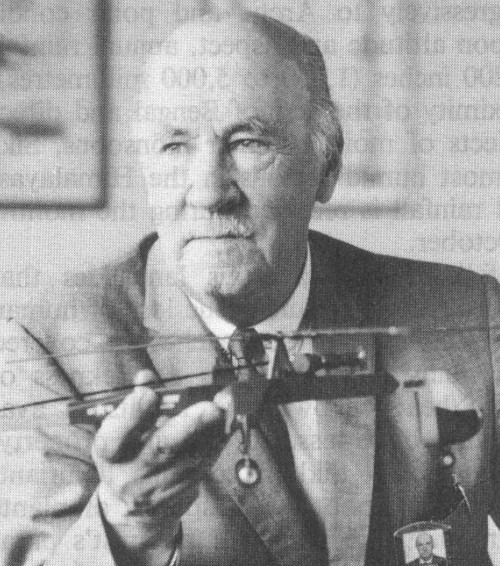
lgor Ivan Sikorsky was born in Kiev, Ukraine, on May 25, 1889. His father was a graduate physician and professor of psychology. His mother also was a physician but never practiced professionally. Her interest in art and in the life and work of Leonardo da Vinci stimulated her son’s early interest in model flying machines; when he was 12 years old he made a small rubber-powered helicopter that could rise in the air.

Sikorsky Article

In 1903 Sikorsky entered the Naval Academy in St. Petersburg, with the intention of becoming a career officer, but his interest in engineering led to his resignation from the service in 1906. After a brief period of engineering study in Paris, he returned to Kiev and entered the Kiev Polytechnic Institute. Following a reasonably successful academic year, however, he concluded that the abstract sciences and higher mathematics as then taught had little relationship to the solution of practical problems, and he left the school, preferring to spend his time in his own shop and laboratory.

A trip through Europe in the summer of 1908 brought him into contact with the accomplishments of the Wright brothers and the group of European inventors who were trying to match their progress in flight. Returning to Kiev, Sikorsky came to the conclusion that the way to fly was “straight up,” as Leonardo da Vinci had proposed, a concept that called for a horizontal rotor. Assisted financially by his sister Olga, he returned to Paris in January 1909 for further study and to purchase a light-weight engine.

Back in Kiev in May of 1909 he began construction of a helicopter, the H-1. Its failure revealed some of the practical obstacles. Powered by a three-cylinder, 25-hp Anzani engine that drove coaxial, twin blade rotors, the H-1 shook wildly but did not have enough power to lift itself off of the ground. A second machine with a larger engine was tested in 1910, but also failed to fly. He then made a major decision: “I had learned enough to recognize that with the existing state of the art, engines, materials, and-most of all-the shortage of money and lack of experience … I would not be able to produce a successful helicopter at that time.” In fact, he had to wait 30 years before all conditions could be met.

For the time being Sikorsky decided to enter the field of fixed-wing design and began construction of his first airplane. His S-1 biplane was tested early in 1910, and, although its 15-horsepower engine proved inadequate, a redesigned airframe with a larger engine (S-2) carried him on his first short flight. The S-3, S-4, and S-5 followed in quick succession, each a refinement of its predecessor, and each adding to his piloting experience. Finally, by the summer of 1911, in an S-5 with a 50-horsepower engine, he was able to remain in the air for more than an hour, attain altitudes of 1,500 feet (450 metres), and make short cross-country flights. This success earned him International Pilot’s License Number 64.

The subsequent S-6 series established Sikorsky as a serious competitor for supplying aircraft to the Russian Army. Characteristically, he soon took a giant step: the first four-engined airplane, called “Le Grand,” the precursor of many modern bombers and commercial transports, which he built and flew successfully by 1913. Among its innovative features, not adopted elsewhere until the middle 1920s, was a completely enclosed cabin for pilots and passengers.

Although he was now an internationally known aircraft designer and pilot, Sikorsky decided to leave Russia for France in 1918 following the Bolshevik Revolution. On Mar. 30, 1919, Sikorsky came to New York City to begin his career anew. Initially unable to land a job with a U.S. airplane manufacturer, Sikorsky supported himself by teaching mathematics to Russian emigees in New York and giving lectures on aviation and astronomy until Mar. 5, 1923, when he received enough financing to launch the Sikorsky Aero Engineering Corp.

They set up shop in an old barn on a farm near Roosevelt Field on Long Island. Sikorsky became a U.S. citizen in 1928. From 1925 to 1926, the company produced one-of-a-kind, fixed-wing designs built to customer needs. In 1924, using junkyard parts and war-surplus materials, Sikorsky constructed his first S-29A, a twin-engine, 14 passenger design. By 1929 the company, having become a division of United Aircraft Corporation, occupied a large modern plant at Bridgeport, Connecticut, and was producing S-38 twin-engined amphibians in considerable numbers. In 1931 the first S-40, the “American Clipper,” pioneered Pan American World Airways mail and passenger routes around the Caribbean and to South America. By the summer of 1937 Pan American began transpacific and transatlantic service with the first four-engined S-42 “Clipper III” the last of the Sikorsky series, the ancestor of which had been “Le Grand” of 1913.

As the era of flying boats faded, lgor Sikorsky revived the idea of developing the helicopter. Once again he was involved in “advanced pioneering work . . . where extremely little reliable information and no piloting experience whatever were available.” By the late 1930s changing requirements for military and commercial air transport forecast the termination of the large flying boat, and Sikorsky returned to his first love, the helicopter. The essential aerodynamic theory and construction techniques that had been lacking in 1910, however, were now available. In a memo to the general manager of Vought-Sikorsky (the new name of the company) dated Aug. 10, 1938, he wrote:

“Besides having considerable possibilities as a privately owned aircraft, the direct-lift ship [helicopter] will be a very important service type for the army and navy. For the army, this type of ship would render excellent services for communication, fire control, short-range reconnoitering and bombing operations. For the navy, the ship would be extremely useful as the only aircraft that could take off and land without catapulting from any surface vessel….”

Even though an official manufacturing order had not been issued to begin work on a “new” type of aircraft, helicopter development continued throughout the fall of 1938. lgor Sikorsky and a handful of engineers and production personnel spent lunch breaks and off hours sketching, designing, fabricating and testing various components and systems for what would become known as the VS-300 (“V’ for Vought, “S” for Sikorsky and “300” for Sikorsky’s third helicopter design).

Rotor tests were encouraging enough for Sikorsky to request a meeting with Eugene Wilson, a senior vice president of United Aircraft, at which he received the go-ahead to construct a prototype helicopter. Sikorsky’s argument for building the rotorcraft had been compelling.

“So important is this development to the future of society that it becomes our responsibility to undertake it. While admittedly radical, and possibly ‘impossible,’ the helicopter is wholly rational. Like no other vehicle, it will operate without regard to prepared landing surfaces. Thus, it will free us of the serious handicap to progress imposed by fixed-wing aircraft-airport limitations. It is not competitive with the airplane, but complementary to it. If Sikorsky does not create this craft of the future, another [company] will. By training and expedence, we are best equipped to do it. And finally, unlike the airplane, the helicopter will be used not to destroy but to save lives!”

Early in 1939, with a well trained engineering group at his disposal, he started the construction of the VS-300 helicopter. As he said later, “There was a great satisfaction in knowing that, within a short period of time, good engineering along a novel line produced encouraging results.” On September 14, 1939, the plane lifted off the ground on its first flight. Its designer was at the controls; during his entire career Sikorsky always insisted on making the first trial flight of any new design himself. On May 6, 1941, in an improved machine, he established an international endurance record of 1 hour, 32.4 seconds.

Sikorsky regarded it as a useful tool for industry and air commerce but primarily as an effective device for rescue and relief of human beings caught in natural disasters, such as fire, flood, or famine. He estimated that over 50,000 lives had been saved by helicopters.

lgor Sikorsky only complained that of all his past predictions, those that he lived to regret were on the “too conservative” side.

Sikorsky retired as engineering manager tor his company in 1957 but remained active as a consultant until his death on October 26, 1972, at Easton, Connecticut. In addition to his wife (married in 1924), he left one daughter and four sons, all of whom have professional careers. Sikorsky received many honorary doctorates in science and engineering, honorary fellowships in leading scientific and technical societies in the United States and Europe, and the highest medals and awards in aviation, including the Cross of St. V1adimir from Russia; the Sylvanus Albert Reed Award for 1942 from the Institute of Aeronautical Sciences in New York; the United States Presidential Certificate of Merit in 1948; the Daniel Guggenheim Medal and Certificate for 1951; the Elmer A. Sperry Award for 1964; and the National Defense Award in 1971.

Apparently, when he checked in for a Sabena S-58 flight, Igor Sikorsky was asked if his name was spelt like the helicopter’s.

Dean C. Borgrnan, who took over as president and CEO of Sikorsky Aircraft in October 1998, said: “As we approach a new millennium, a new generation of helicopter pioneers is designing and building aircraft that will revolutionize the industry. The S-92 and the RAH-66 represent two of the most advanced helicopters in the world today. Technical achievements from these two programs are being incorporated on the Black Hawk and its derivatives.”

Sikorsky also was retooling its design and engineering computers. Sikorsky selected IBM and Dassault Systemes to provide the Enovia PM (Product Manager) solution as its enterprise~wide computer system.

1923: (Igor I) Sikorsky Aero Engr Corp.

1925: Sikorsky Mfg Co, Bridgeport CT (company funded in part by composer-pianist Sergei Rachmaninoff).

1926: Leased former L-W-F plant, College Point, Long Island NY.

1928: Sikorsky Aviation Div, United Aircraft & Transport Corp, Bridgeport.

1939: (Chance) Vought-Sikorsky Div, United Aircraft Corp.

1943: Sikorsky Aircraft Div, United Aircraft Corp.

1975: Sikorsky Aircraft Div, United Technologies Corp, Stratford CT.

199?: Sikorsky Aircraft Corp, United Technologies Corp

Sikorsky was sold to Lockheed Martin in 2015

Siebel / Flugzeugwerke Halle GmbH

Siebelwerke-ATG GmbH

Siebelwerke-ATG GmbH name was that of F. W. Siebel (1891-1954), associated with early sport-flying in Germany and who helped form the Klemm company, for which he took charge of new works at Halle (Saale). In 1937 Siebel established own company as Flugzeugwerke Halle GmbH, later renamed Siebelwerke-ATG GmbH. First aircraft was Fh 104 5-passenger monoplane of 1937. Si 201 was experimental military reconnaissance aircraft; Si 202 Hummel of 1938 a sideby- side 2-seater. In Second World War Siebel contributed to production of standard German military types; also built own Si 204 communications aircraft, though this was mainly built by SNCAC in France.

Klemm joined Siebel in 1940.

ATG joined Siebel in 1945 to become Siebel ATG (SIAT).

After war produced Si 222 Super-Hummel and 3-seat Si 308. As member of Nordflug group helped with Noratlas.

Siebel ATG (SIAT) joined MBB in 1973.

SIAI-Marchetti / Savoia-Marchetti

Societa Idrovolanti Alta Italia
Siai-Marchetti Societa Per Azioni

The original company was founded in 1915 as SIAI (Società Idrovolanti Alta Italia – Seaplane company of Northern Italy). After World War I gained the name Savoia, when it acquired the Società Anonima Costruzioni Aeronautiche Savoia, an Italian aircraft company founded by Umberto Savoia in 1915.

The name Marchetti was added when chief designer Alessandro Marchetti joined the company in 1922. Savoia-Marchetti gained prominence with the successful S.55 flying boat. Savoia-Marchetti became famous for its flying boats and seaplanes, which set numerous endurance and speed records. Favoured by Air Marshal Italo Balbo, the company began rapidly prototyping and developing a number of other aircraft, increasingly focusing on warplanes in the lead-up to World War II. However, most of S.M.’s manufacturing capabilities were destroyed in World War Two. It was renamed SIAI-Marchetti in 1943.

Since 1946 engaged in overhaul and repair work and developed new aircraft. SIAI-Marchetti only survived in postwar Italy by building trucks and railway equipment. However it still struggled with insolvency for 6 years after the war before declaring bankruptcy in 1951.

In 1953, the company reopened. Types have included SA.202 Bravo trainer produced jointly with FFA in Switzerland; S.205 four-seater and S.208 development. First flew SF.250 aerobatic trainer in July 1964; became highly successful SF.260 production aircraft for civil and military use (initials in SF.260 denoted design by Stelio Frati). In 1968 company formed a Vertical Flight Division, but increasing helicopter work became associated with Agusta and Elicotteri Meridionale. SM.1019 light multipurpose high-wing monoplane followed 1969, SF.600 Canguro transport 1979 (recently taken over by VulcanAir), and S211 jet trainer and light attack aircraft 1981.

Agusta, which had acquired 30% of SIAI-Marchetti in 1970, had increased its stake to about 60% by 1973 and reached complete ownership in 1983.

Company taken over by Aermacchi January 1997.

Shvetsov M-82 / ASh-82 / ASh-2TK / ASh-2K (ASh-4K) / Dongan / Harbin HS-7 / HS-8

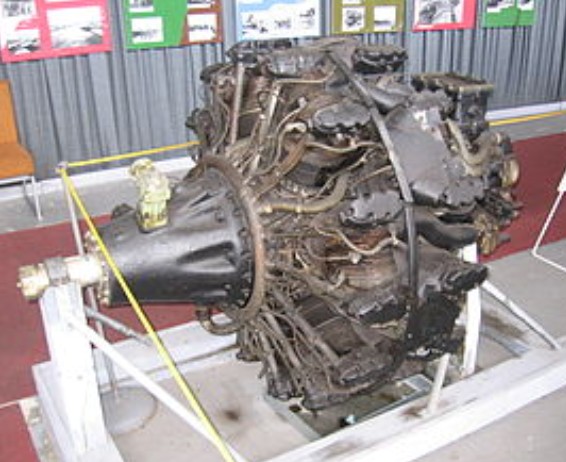
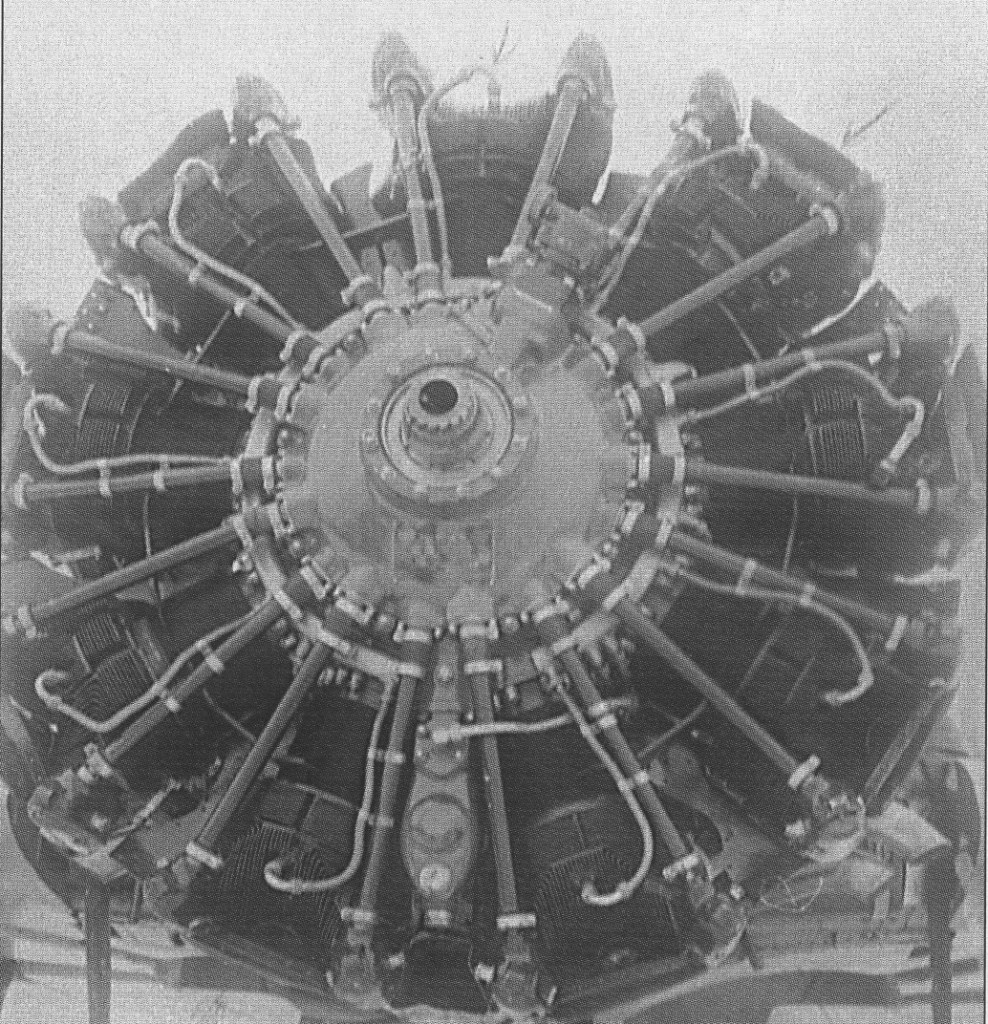
The Shvetsov ASh-82 (M-82) is a 14-cylinder, two-row, air-cooled radial aircraft engine developed from the Shvetsov M-62 and first run in 1940. The M-62 was the result of development of the M-25, which was a licensed version of the Wright R-1820 Cyclone.

Arkadiy Shvetsov developed the Wright Cyclone design, reducing the stroke, dimensions and weight. This allowed the engine to be used in light aircraft, where a Twin Cyclone could not be installed. It entered production in 1940 with Shvetsov & Evich, OKB-19 in Perm, and saw service in a number of Soviet aircraft. It powered the Tupolev Tu-2 and Pe-8 bombers and the inline engine-powered LaGG-3 was adapted for the ASh-82, additionally the famous Lavochkin La-5, Lavochkin La-7 fighters, and the Ilyushin Il-14 airliner were created around the engine. Over 70,000 ASh-82s were built (57.898 of Ash-82, 82F & 82FN in wartime).

Variants:
ASh-82-111 (M-82-111) – First mass-produced ASh-82, with carburettors and one two-speed supercharger. This engine had lubrication and carburettor problems in extreme cold conditions.

ASh-82-112 (M-82-112) – Improved M-82-111 with longer Time between overhaul (TBO) and better reliability. Redesigned carburettors, oil pumps, gear, turbocharger and reinforced pushrods. This engine worked better in the harsh Russian winter.

ASh-82F (M-82F) – Identical to ASh-82 except for longer Time between overhaul and improved cooling and lubrication which allowed unlimited operation at takeoff power.

ASh-82FN (M-82FN) – ASh-82F with gasoline direct injection, power output increased to 1,230 kW (1,650 hp) for takeoff with only a 30 kg (65 lb) increase in engine weight, used by Pe-8 long-range bombers and Lavochkin La-7 fighters.

ASh-82FNU (M-82FNU) – Improved M-82FN with more boost pressure and RPM, power output increased to 1,380 kW (1,850 hp). After all the improvements, the ASh-82FN and ASh-82FNU were two of the most sturdy radial engines of the war.

ASh-21 (M-21) – Single-row 7-cylinder version of ASh-82 for Yakovlev Yak-11 trainer, entered production in 1946.

ASh-82T (M-82T) – New version of the Ash-82FNU developed in the early fifties for civilian aircraft. Previous version twin superchargers were replaced with a large single-speed compressor attached to an after-cooler (the critical altitude was 2,000 m, 6,561 ft). Optionally, the engine was provided with a two-speed supercharger (with a critical altitude of 4,000 m, 13,123 ft, the robustness of the engine allowed to take off in second speed). New alloys were used and some components were upgraded, thus reducing maintenance operations. Special care was put into reducing the engine noise level and an optional exhaust double silencer was available. The engine had a new fuel injection system and improved specific fuel consumption (a 16% reduction at cruise speed compared to 82FNU). A four-blade high efficiency propeller, the Typ AB-50m, was developed for the 82T version. This radial engine had an excellent reputation for its reliability and simple maintenance; there are still aircraft in service with this engine thanks to the inexpensive spare parts and the possibility to use automotive gasoline. The power was 1,900 hp (1,417 kW) at 2,600 RPM for takeoff, with 95 or 100 octane Avgas. Maximum continuous power was 1,630 hp (1,215 kW). Lower octane fuel, 90 octane Avgas or equivalent automotive gas, was allowed with minor modifications and turbocharger Manifold Pressure restrictions that limited the power to 1,700 hp (1,268 kW).

ASh-82V (M-82V) – Helicopter version of the ASh-82T developed in 1952, with axial-flow fan mounted in the fuselage’s front. The engine was connected to a R-5 two-stage planetary primary gearbox with the help of a shaft (which was between the pilots seats). This engine was used in the Mi-4 and Yak-24 helicopters

ASh-2TK and ASh-2K (ASh-4K) – Four-row versions of the ASh-82, developed in the late ’40s. The Shvetsov design bureau took into consideration all available information about the Pratt & Whitney R-4360 and developed an engine with less maintenance operations, longer time between overhaul, direct fuel injection and a simpler supercharging system. The ASh-2TK had a two-stage two-speed supercharging system with intercooler (similar to the ASh-73) that compromised the engine’s long TBO. Finally the ASh-2TK was discarded and a new version was developed, the ASh-4K, with an experimental variable-speed turbocharger and after-cooler, which allowed a cruising altitude of 11,000 m (36,089 ft). The engine had 82.4 litres (5,030 cu in) and 4,000 HP (2,985 kW) at 2,600 RPM (dry). The Ash-2K (ASh-4K) version had 4,700 HP (3.507 kW) wet, with a water-methanol system. For political reasons, these engines were prematurely installed in Tupolev Tu-4LL testbeds at the end of 1950, when the prototypes’ initial tests had barely begun. The engines had various teething and overheating problems, and required a long testing period. Most of the flaws were fixed in the mid-fifties, but the production was cancelled: in those days, the priority for the Soviet Air Force were the turboprop and jet engines.

Dongan HS-7 A Chinese license built copy of the ASh-82V, and the chosen engine for powering modern 21st century reproductions of the Focke-Wulf Fw 190A built in Germany.

Dongan HS-8 A modified version of the Dongan HS-7 which “combined the main body and supercharger of the HS-7 with the reduction gear and propeller drive of the Shvetsov ASh-82T”. Built by Dongan Engine Manufacturing Company (aka Harbin Engine Factory)

Applications:
Amtorg KM-2 (Improved PBY Catalina, built under Consolidated license)
Gudkov Gu-82 (Prototype)
Ilyushin Il-2 (prototype)
Ilyushin Il-12
Ilyushin Il-14
Kocherigin OPB-5 (prototype)
Lavochkin La-5
Lavochkin La-7
Lavochkin La-9
Lavochkin La-11
MiG-5
MiG-9 I-210 (1941 Prototype)
Mikoyan-Gurevich I-211 prototype
Mil Mi-4
Petlyakov Pe-2
Petlyakov Pe-8
Polikarpov I-185 (Prototype)
Sukhoi Su-2
Sukhoi Su-7
Sukhoi Su-12
Tupolev Tu-2
Yakovlev Yak-24

Specifications:
ASh-82
Type: 14-cylinder two-row radial engine
Bore: 155.5 mm (6.122 in)
Stroke: 155.0 mm (6.102 in)
Displacement: 41.2107 L (2,515.3 cu in)
Length: 2.01 m (6ft 7.1 in)
Diameter: 1.26 m (49.6 in)
Dry weight: M-82-112 model: 860 kg (1,894 Ib), M-82FN model: 890 kg (1,962 Ib), M-82FNU model: 900 kg (1,984 lb), M-82T model: 1,020 kg (2,246 lb)
Valvetrain: Pushrod, two valves per cylinder with sodium-cooled exhaust valve.
Supercharger: Single-stage, One TK-2 two-speed centrifugal type supercharger on early production. Two TK-3 two-speed exhaust gas-driven forced-induction compressor on FN and FNU models. For the M-82T: Single-speed centrifugal supercharger with after-cooler. The gear ratio was 7.27:1. Critical altitude: 2,000 m (6,561 ft). Optionally, the M-82T had a two speed supercharger with after-cooler; the second speed gear ratio was 10,2:1. Critical altitude: 4,000 m (13,123 ft). Manifold pressure limit: 1.64 Atm (49.2″) for takeoff and 1.34 Atm (40.15″) at second speed.
Fuel system: Carburettors (early production), direct fuel injection with automatic mixture control. Petrol pump: BNK-10KT.
Fuel type: 90 octane (minimum grade allowed), 92, 95 or 100 octane
Oil system: Two pumps: geared rotation pump MSH-6SV (rear) and swarm pump PMN-T (front). Normal oil temp: 40 to 90°C. Limit temp: 115°C. Minimum oil pressure at low gas: 3 kg/cm2 (42.7 PSI). Minimum oil pressure at cruise: 4.5 kg/cm2 (front pump), 5.5 kg/cm2 (rear pump) (64 PSI front and 78.2 PSI rear)
Cooling system: Air-cooled. Minimum permissible cylinders temp for operation: 120°C. Maximum permissible cylinders temp: 250°C. Maximum permissible at cruise: 225°C. Normal cylinders temp at cruise: 160 to 180°C
Reduction gear: 11:16 (prototypes & M-82-111), 9:16 (M-82-112 and later models)
Power output:
M-82-111 with carburettors:
1,570 hp (1,170 kW) at 2,400 RPM for take-off (Dry), boost rated at 1.55 Atm (46.3″)
1,540 hp (1,148 kW) at 2,400 RPM at 6,656 ft (2,050 m)
1,330 hp (992 kW) at 2,400 RPM at 17,716 ft (5,400 m), boost rated at 1.29 Atm (38.6″)
820 hp (612 kW) at 2,400 RPM at 27,887 ft (8,500 m)

M-82FN with direct fuel injection:
1,650 hp (1,230 kW) at 2,400 RPM for take-off (Dry), boost rated at 1.55 Atm (46.3″)
1,430 hp (1,067 kW) at 2,400 RPM at 16,404 ft (5,000 m)
800 hp (597 kW) at 2,400 RPM at 32,808 ft (10,000 m)

M-82FNU:
1,850 hp (1,380 kW) at 2,500 RPM for take-off (Dry), boost rated at 1.60 Atm (47.88″)
1,650 hp (1,230 kW) at 2,400 RPM at 5,413 ft (1,650 m), boost rated at 1.36 Atm (40.7″)
1,450 hp (1,082 kW) at 2,400 RPM at 15,156 ft (4,650 m), boost rated at 1.36 Atm (40.7″)
810 hp (604 kW) at 2,400 RPM at 34,448 ft (10,500 m)

M-82T with two speed supercharger:
1,900 hp (1,416 kW) at 2,600 RPM for take-off, boost rated at 1.64 Atm (49.2″)
1,630 hp (1,215 kW) at 2,400 RPM at 6,561 ft (2,000 m), boost rated at 1.34 Atm (40.1″)
1,530 hp (1,082 kW) at 2,400 RPM at 13,123 ft (4,000 m), boost rated at 1.34 Atm (40.1″)
721 hp (537 kW) at 2,400 RPM at 31,167 ft (9,500 m)
Specific power: M-82FN: 29.84 kW/L (0.655 hp/in³), M-82FNU: 33.48 kW/L (0.735 hp/in³)
Compression ratio: 7.05:1 (6.90:1 for M-82T)
Specific fuel consumption:
M-82FN: 355 g/hp/hr (0.78 Ib/hp/hr) for take-off, 320 g/hp/hr (0.70 Ib/hp/hr) at nominal power
M-82FNU: 360 g/hp/hr (0.79 Ib/hp•hr) for take-off, 325 g/hp/hr (0.71 Ib/hp•hr) at nominal power
M-82T: 350 to 325 g/hp/hr (0.76 to 0.71 Ib/hp/hr) for take-off, 260 to 280 g/hp/hr (0.568 to 0.611 Ib/hp/hr) at cruise power
Power-to-weight ratio: 1.46 kW/kg (0.89 hp/lb)

Shvetsov M-71

The M-71 radial engine was developed from the Shvetsov M-70, a failed attempt at a two-row version of the single-row Wright R-1820 Cyclone. It used components from the Shvetsov M-63, which was an improved version of the M-25 with more horsepower than the original. Development began at the beginning of 1939 and it was bench tested that August, but did not pass its State acceptance tests until the autumn of 1942. It weighed 970 kg (2,100 lb) and produced 2,000 hp (1,500 kW). Despite this it was flight-tested in a Polikarpov I-185 prototype fighter in March–April 1942. A boosted version, the M-71F, was built in small numbers. It was flown in the prototypes of the single-engined Su-6 and the twin-engined Su-8 ground-attack aircraft in 1943–44 as well as the La-7 fighter in 1944. A version of the M-71F was developed with two TK-3 turbochargers and flight tested in the DVB-102 high-altitude bomber designed by Vladimir Myasishchev during the summer of 1943. Evaluations of the M-71 were generally favorable, but no production capacity was available to use for a brand-new engine during the war.

Applications:
Polikarpov I-185
Sukhoi Su-6
Sukhoi Su-8
Myastichev DVB-102

Specifications:
M-71F
Type: 18-cylinder, two-row, radial engine
Bore: 155.5 mm (6.12 in)
Stroke: 174.5 mm (6.87 in)
Displacement: 59.7 l (3,643 cu in)
Dry weight: 970 kg (2,100 lb)
Supercharger: geared, 1-speed centrifugal supercharger
Cooling system: air-cooled
Power output: 2,200 hp (1,641 kW)
Power-to-weight ratio: 1.05 hp/kg

Shvetsov M-62 / Ash-62 / Ash-63 / Harbin / Dongan HS-5 / PZL-Kalisz ASz-62

M-62

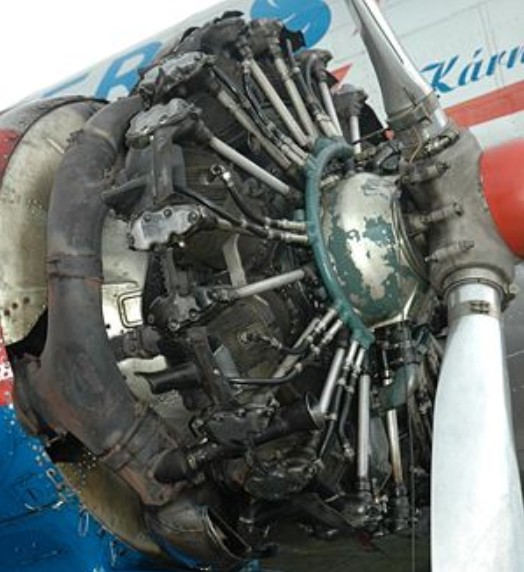
The ASh-62 (designated M-62 before 1941) was a development of the Wright R-1820 Cyclone that had been built in Russia under licence as the Shvetsov M-25. A nine-cylinder, air-cooled, radial aircraft engine, the main improvements included a two-speed supercharger and a more efficient induction system. Power was increased from the Cyclone’s 775 hp to 1,000 hp.

First run in 1937, licenced versions were still in production by WSK “PZL-Kalisz” in Poland as the ASz-62 (as of 2007). The Ash-62 was also produced in China as the HS-5. It is estimated that 40,361 were produced in the USSR.

Polish-built ASz-62IR engines are compatible with FAR-33 requirements. Further developments in Poland are the K9-AA, K9-BA and K9-BB engines, with take-off power of 1178 hp (860 kW), indicated power 698 kW.

The M-63 was an improved version of the M-62 with power output increased to 821 kW (1,100 hp) at 2,300 rpm for takeoff and 671 kW (900 hp) at 2,200 rpm at 4,500 m (14,764 ft) due to a greater compression ratio of 7.2:1 and a higher redline.

Shvetsov Ash-62 installed in a Lisunov Li-2

Applications:
Antonov An-2
Antonov An-6
Lisunov Li-2
de Havilland Canada DHC-3
Neman R-10
Polikarpov I-153
Polikarpov I-16
PZL-106 Kruk (some variants)
PZL-Mielec M-18 Dromader
PZL M-24 Dromader Super (K-9AA)
Sukhoi Su-2
Sukhoi Su-12

Specifications:
M-62
Type: Nine-cylinder single-row supercharged air-cooled radial engine
Bore: 156 mm (6.12 in)
Stroke: 175 mm (6.87 in)
Displacement: 29.8 l (1,819 in³)
Length: 47.76 in (1,213 mm)
Diameter: 54.25 in (1,378 mm)
Dry weight: 560kg (1,235 lb)
Valvetrain: Overhead valves
Supercharger: Two-speed centrifugal type supercharger
Fuel system: Carburetor
Fuel type: 92 RON, 87 (R+M)/2 (AKI) octane rating gasoline
Cooling system: Air-cooled
Power output: * 746 kW (1,000 hp) at 2,200 rpm for takeoff
634 kW (850 hp) at 2,100 rpm at 4,200 m (13,780 ft)
Specific power: 25.03 kW/l (0.55 hp/in³)
Compression ratio: 6.4:1
Specific fuel consumption: 469 g/(kW•h) (0.77 lb/(hp•h))
Power-to-weight ratio: 1.3 kW/kg (.81 hp/lb)

ASz-62 IR
Cylinder: 9
Capacity: 1823 cu.in
Take-Off Power: 1000 HP at 2200 RPM
Max TO power: 5 min
Fuel flow at Max TO pwr: 110 gph
Rated Power: 820 HP at 2100 RPM
Max. Continuous: 738 HP at 2030 RPM
75% Power: 615 HP at 1910 RPM
50% Cruise: 410 HP at 1670 RPM
Fuel flow at 50% Cruise: 45 gph
Propellor Gear Ratio: 0.637 to 1 / 11:16
Typical climb: 1800 RPM and 800 mm Hg manifold pressure
Typical cruise: 1600 RPM and 700 mm Hg
Fuel: 100 Octane Aviation Grade minimum