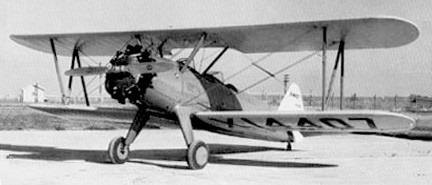
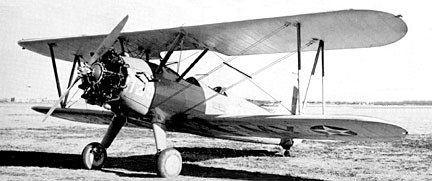
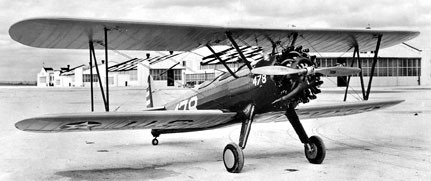
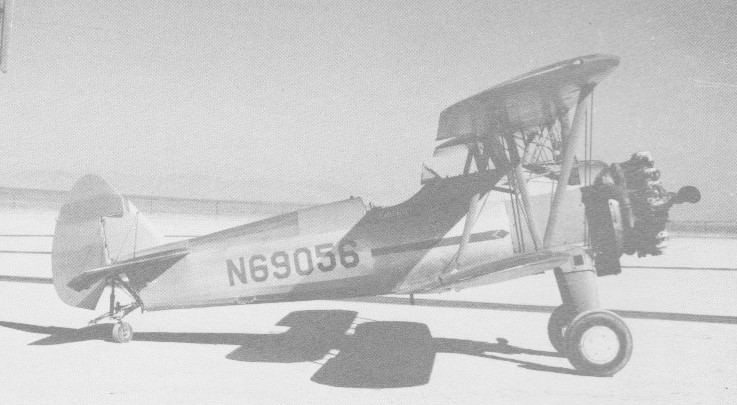
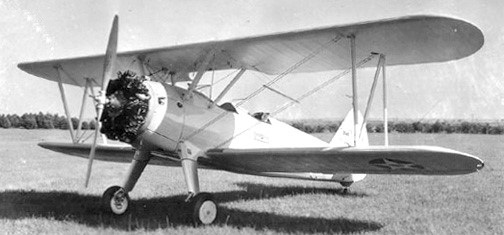
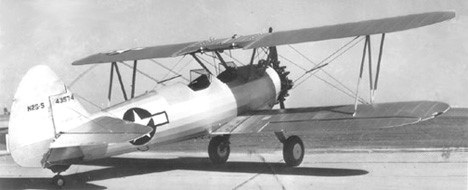
The Stearman models X-90 and -91 of 1940 were two-place primary/basic trainer. They featured a metal fuselage, and metal-framed fabric-covered wings and tail.
One prototype as the X-90 42-8726 went for military evaluation.
The model 91 was the final model with a 450hp P&W Wasp engine as the XBT-17.
90 Engine: Lycoming R-680, 225 hp Length: 28 ft 6 in Wing span: 35 ft 9 in Wing area: 200 sq.ft. Max weight: 2810 lb Useful load: 709 lb Ceiling: 15,000 ft Max speed: 140 mph Cruise: 115 mph Stall: 58 mph Seats: 2
X-91 / XBT-17 Engine: Pratt & Whitney Wasp Jr, 450 hp Wing span: 35 ft 9 in Wing area: 200 sq.ft. Length: 28 ft 6 in Max weight: 2810 lb Useful load: 1070 lb Max speed: 190 mph Cruise: 160 mph Stall: 68 mph Ceiling: 15,000 ft Seats: 2
In 1934, the Stearman Aircraft Company became a Boeing subsidiary and placed its Model 73 into production. It was a variation of both the Stearman Model C series that was produced between 1926 and 1930 and the Model 70 prototype that was completed in 1933. Out of this biplane grew a family of primary trainers, of which more than 2,000 were produced by 1945. The Model 76 was simply a larger version of the Model 75, which was the most prominent member of the family.
The 1934 Model X75 prototype was built for Army evaluation powered by a 225hp Wright engine.
Stearman X75L3 prototype NX14407
Similar to the X75, the 1937 Mac Short and Harold Zipp designed X75L3 (A75-N1) NX/NC14407 (ATC 2-536) prototype for PT-13 was powered with a 225hp Lycoming R-680 engine. They were priced at $7,710-10,412.
Boeing-Stearman A75-N1 N57173
The Model 75 was powered by a 215 hp Lycoming and was designated by the military as the PT-13.
The Model 75 was soon replaced by the 220hp Lycoming R-680-7 powered Model A75, which became the PT-13A, B and C with the army, then in order to avoid a shortage of Lycoming engines the army requested the 220hp Continental R-670-5 be fitted in 1940. The repowered aircraft on to become the PT-17.
Stearman A75J1
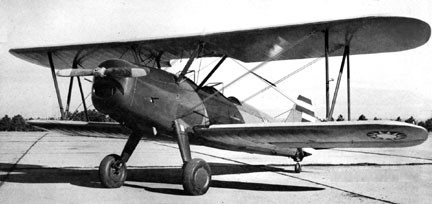
Designed by Mac Short and Harold Zipp, the PT-13 was priced at $7,710-10,412. Twenty-six were built; 36-002 to 36-027.
Stearman PT-13
Ninety-two of the 1937 PT-13A were built, powered by a 220hp R-680-7 engine; 37-071 to 37-114, 37-232 to 37-259, and 38-451 to 38-470.
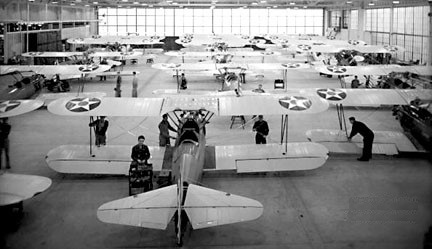
Two hundred and fifty-five of the 1940 PT-13B, were built, powered by a 280hp R-680-11 engine; 40-1562 to 40-1741, and 41-787 to 41-861.
PT-13B Final assembly
In 1942 six PT-13A were repowered with 280hp R-680-11 engines as PT-13C.
The PT-13D of 1943 were the first of the standardized Army-Navy trainers. Three hundred and fifty-three were built; 42-16846 to 42-17163, 49-1458 to 49-1490, and 51-16084 to 51-16085.
The 1940 A75L3 was an export version of the PT-13 with a 220hp Lycoming R-680 engine. Forty-three were sold to Parks Air College, Brazil, the Philippines, and five of the similar 1941 A75B4 were sold to Venezuela.
The 1947 A75L5 were modified from N2S-4 with a 190hp Lycoming engine. Two were sold to China, along with manufacturing license for that country.
Stearman A75L5
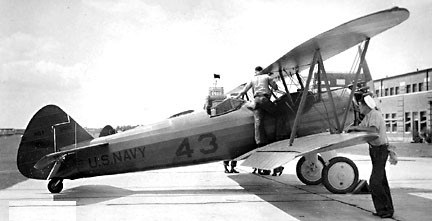
The series that was produced in the largest numbers was the Model A75NI. It was similar to the PT-13 but was powered by a 220 hp Continental radial engine; its military designation was PT-17. The Navy named the Boeing 75 the NS-1, later evolved into the N2S series.
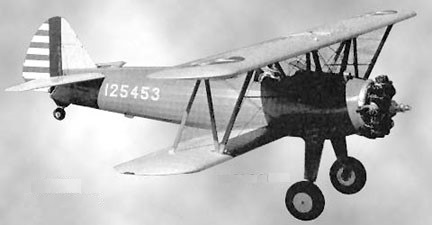
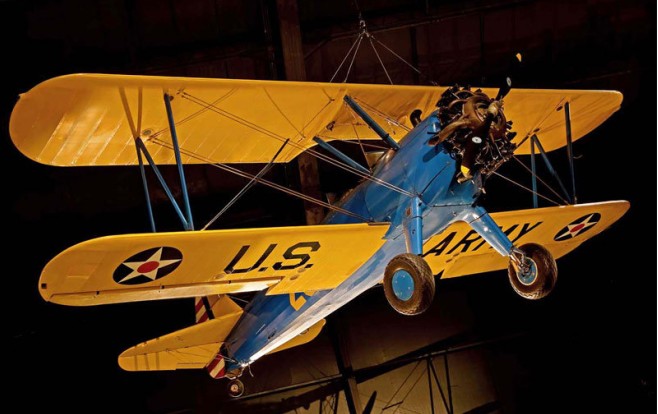
The 1940 PT-17 was basically a PT-13 with a 220hp Continental R-670 engine. 3,519 were built; 40-1742 to 40-1891, 41-0862 to 40-1068, 40-7867 to 40-9010, 40-25202 to 40-26251, and 42-15896 to 42-16845, of which the 42- batch became export PT-27, plus USN models and exports.
Boeing-Stearman PT-17 41-25453
The PT-17A of 1941 had blind-flying equipment. Eighteen were modifications of PT-17.
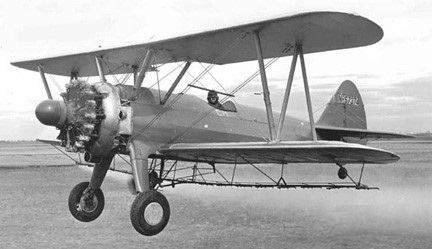
The 1943 PT-17B were three modifications to single-place crop-sprayer with hopper.
The Royal Canadian Air Force ordered 300 winterized versions of the PT-17 and unofficially changed the name to Kaydet, a name that has come to apply to the entire family of Stearmans. These aircraft were modified to PT-27 standard, which included an engine crankcase cowl with movable temperature louvres and a cockpit canopy and heating system for winter flying conditions. A full electrical system, landing lights in the lower wings and the addition of night flying equipment and full instrumentation were also requested.
Production delays with the modifications meant that almost all the aircraft delivered were produced to the basic PT-17 standard. Although they were accepted by the RCAF and introduced into service, the lack of the necessary modifications meant they were unsuitable for the task and in November 1942 the decision was made to withdraw them from service. Over a period of six months in 1943 they were returned to the United States for use by the US Army and Navy.
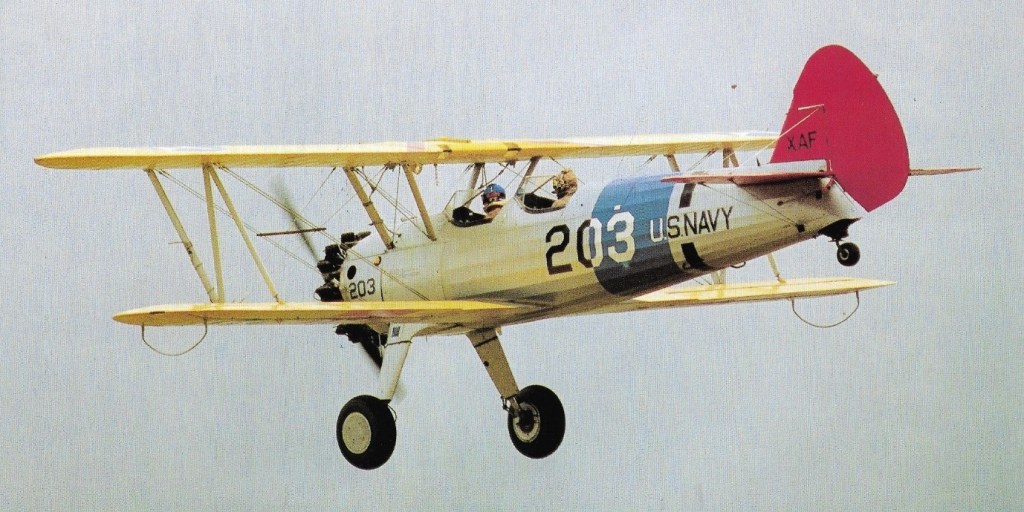
The last of the 75 series to be produced was the Model E-75 powered by a 220 hp Lycoming engine. When production was terminated on V-J Day, its production totaled more than 1,700 as both the PT-13D and the N2S-5.
E75 ZK-XAF
The Stearman Model 75 design evolved out of the X-70 prototype produced in 1934 and the Model 73 (the US Navy NS-1). A prototype X-75 was built, and this was soon followed by an order for 32 as the PT-13, known as the Stearman Kaydet, in 1936. This aircraft was powered by a 215-hp Continental R-680-5. The Model A-75 appeared in 1937 as the PT-13A (92 ordered) and fitted with an R-680-7 of 220 hp.
Boeing-Stearman Model 75 PT-17
The Model A-75N1 appeared in 1940 as the PT-17BW, of which 3,064 were delivered to the USAAF. This model was powered by a 220 hp Continental R-670-5. Even in wartime the aircraft had an agricultural role – three were converted to PT-17B-BW and fitted with hoppers and spray booms for mosquito control.
Then came 220 PT-13Bs with the 209-kW (280-hp) R-680-11s of which six became blind-flying PT-l3Cs, and 895 PT-13Ds with R-680-1 engines.
A change to the R-670 engine produced the PT-17, of which 2,942 were built including 136 blind-flying PT-17As.
Boeing-Stearman PT-17A Kaydet
The PT-18, the model A-75J1, was fitted with a Jacobs R-755-7 of 225 hp, and these 150 aircraft, 40-1892 to 40-2041, included six blind-flying PT-18As.
PT-18
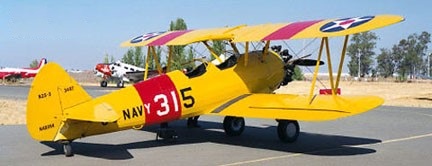
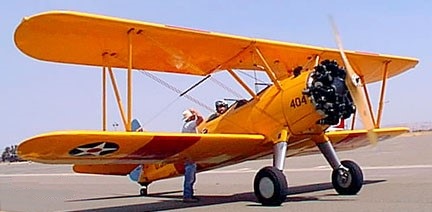
The US Navy also operated over 4,500 Kaydets as trainers and they were designated N2S-1 through to N2S-5: the X70 with the Wright R-790-8 became the NS-1, sixty-one of which were used.
Stearman NS-1 9681
The propellers generally in use on Stearmans are the Sensenich wooden prop; the ground adjustable McCauley steel blade prop and the fixed pitch Hamilton Standard propeller.
Following the NS-1 were 50 N2S-1s, 3145-3394, with the R-670-14 engines. The N2S were dubbed “Midshipman,” but the name never caught on.
Stearman N2S-1
The 125 N2S-2 of 1941, 3520-3644, were the same as PT-13A with 220hp Lycoming R-680-8 engines, night- and blind-flying equipment, and taken from Army production.
Stearman N2S-2
1,875 N2S-3 were purchased in 1942 with R-670-4 engines; 3395-3519, 4252-4351, 05235-05434, 07005-08004, and 37988-38437.
Stearman N2S-3
The 455 1942 N2S-4, 27960-28058, 29923-30146, 34097-34101, 34107-34111, and 55650-55771, were the same as the PT-17 and taken from Army production.
Stearman N2S-4
The 1,618 N2S-5 from 1943 were the same as PT-13D, 43138-43637 and 38438-38610, and from AAF PT-17D, 42-109026-109775, and 52550-52626 and 61037-61904 with the R-680-17 engine.
Stearman N2S-5
The primary difference between the Army and Navy airplanes, other than engines installed, was the tail wheel. Army airplanes had a fully steerable tail wheel while the Navy airplanes were equipped with a full swivel type with a lock. Most Stearmans today have subsequently been modified with the steerable tail wheel.
Three hundred PT-27s (Model D-75N1s) were built for Royal Canadian Air Force with enclosed cock¬pits. A A winterised version of PT-13 with canopied cockpits and 220hp Continental R-670-5 and -6 engines.
Boeing-Stearman PT-27
The RCAF’s 300 Model PT-27’s, 42-15570 to 42-15869, were ordered with special modifications for air training, particularly in Canada’s winter weather conditions. The PT-27 required navigation lights, an enclosed, heated cockpit and a blind-flying hood; however, only one Stearman arrived with the enclosed cockpit. After four months of active service with the BCATP, the PT-27s were traded to the US for Fairchild Cornells because of the unsuitability of the open cockpit for winter training.
Boeing-Stearman PT-27 Ag conversion NX57374
Exports of a PT-16 batch as PT-26 were 150 to China; 42-15896 to 42-16045, 3 to Cuba 42-16274 to 42-16276, 2 to Guatemala 42-16375 to 42-16376, 2 to Colombia 42-16496 and 42-16497, and 3 to Dominican Republic 42-16648 to 42-16650.
The first production Model 75s were built by the Stearman Aircraft Company, but most were built by Boeing at their Wichita plant in the state of Kansas until 1943. 8,428 aircraft were produced at Wichita, purchased by the US Government for around US$8,600 each until produc¬tion ended in 1943.
The final version of the Stearman was the E75, designated PT-13D/N2S-5. It was the only complete standardization of an Army and Navy production design during WWII and was totally the same for both services. The last Stearman built (c/n 755963, USAAC serial 42-17794) was a modified E75 that was fitted with additional instrumentation, an electrical system and radio at the request of the US Army. After a production run of 10,346 aircraft, a special factory roll-out ceremony for 42-17794 was held in February 1945 before it was delivered to Headquarters personnel of the Army’s Midwest Procurement District. Following the end of the second world war effort was made by Boeing to obtain this particular aircraft for company use at the Srearman plant. The aircraft returned to the plant and was given the civil registration N41766 in June 1946. It was used for publicity and utility purposes until 28 September 1958 when it was donated to the US Air Force Museum in Dayton, Ohio.
This tandem two seat biplane was of mixed construction with fabric covering over wooden wings and fuselage of welded steel tube.
The Stearman 76 primary trainer was based on the Model 73. Five of the 1941 model 76B4 export version powered by a 320hp Wright engine, were exported to Venezuela.
Thirty of the 1938 model 76C3 two-place open/cabin armed conversion with 320hp P&W Wasp engine were exported to Brazil.
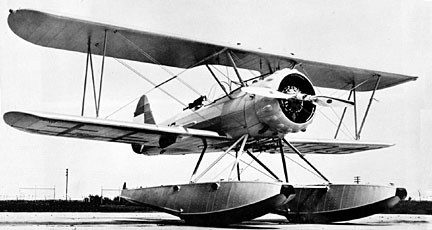
Nineteen of the 1937 float-equipped model S76D1 armed trainer, powered by a 320hp P&W Wasp engine, were exported the Argentina and the Philippines.
Stearman S76D1
The 1938 model 76D3 was an armed advanced trainer powered by a 400hp P&W Wasp engine. Twenty-four went to Cuba, plus 15 as A76DC3 and 15 as B76DC3 (with 420hp Wright Cyclone) to Brazil.
In 1946, the surplus trainers were sold at prices between US$250 and US$875, many in new condition with zero-timed engines. They were soon modified for agricultural use, retaining the Continental engines but the following year an operator fitted a PT- 17 with a 300-hp R-680 Lycoming and a 140 US gallon hopper. During the 1950s the Stearman began appearing with the 450-hp Pratt & Witney R-985s, and various changes in the wings and fuselage also started to appear. The traditional open cockpit was replaced with a windshield and support structure, and some aircraft had an enlarged rudder. The wings came in for change as well, with extensions or end plates. The late 1960s saw further modifications with the original top wing fitted with ailerons. Into the ‘70s, an en¬closed cockpit was installed. This did not have side doors – the whole canopy was lifted up and slid rearwards. All these modifications were local STCs, and it was apparent travelling around California that not only were some modi¬fications strictly within the company, but some mods were also confined to within a few counties, and moving on to another county the aircraft would return to stock standard configuration.
Post-war civil requirements for surplus military Stearmans is covered by Aircraft Specification A-743. This document lists all the approved equipment allowed on a standard category Stearman and the items that must have been removed, replaced or modified when the military surplus Stearman was first licensed as a civilian airplane. It was required that all Continental R-670 engines, when transferred to civilian use, be re-designated and have the engine identification plate changed to show the civilian designation.
Boeing built 8584 Kaydets in all versions, plus the equivalent of 2000 more in spares. It was manufactured by the Stearman Aircraft Company in Wichita, Kansas from 1934 through 1945. The actual total of Model 75’s that were completed from the prototype X-75 to the final E75 built in 1945 was 8,428.
Stearman Aircraft Company Stearman Aircraft Division of the Boeing Aircraft Company
The Travel Air Manufacturing Company was in es¬sence Walter Beech, Lloyd Stearman and Clyde Cessna, all backed by Walter P. Innes. In 1926, Stearman quit to go it alone. Originally Stearman Aircraft Company, formed at Venice, California, by Lloyd Stearman in 1927. Stearman was already known in connection with Laird, Swallow, and Travel Air; the new company was formed by consolidating Lyle-Hoyt Aircraft Corporation (formerly West Coast distributor of Travel Air) and technical ability of Stearman.
Factory soon moved to Wichita, Kansas, building private and commercial aircraft and becoming part of United Aircraft and Transport Corporation. Types built included three-seaters, trainers and mailplanes.
In 1929 Lloyd Stearman sold his company to the ‘United Aircraft and Transport Corporation’. In September 1934 the group was split up and Boeing Air Transport, pulled out of this group and took the Stearman Aircraft Company with it as wholly owned subsidiary as the Wichita Division of Boeing.
Nevertheless, biplane trainers built throughout Second World War were persistently called Stearman. Basic type was Model 75, dating from 1936 and having numerous service designations; production totaled about 10,000. Name Kaydet (originally Canadian) not favored in U.S.A., where Army models had PT and Navy models NS designations. Some versions had enclosed cockpits. After Second World War some 4,000 of Model 75 converted for cropdusting.
1929: Absorbed Hamilton Metalplane Co.
1931: L C Stearman resigned to join Lockheed Corp, Burbank CA.
1931: Northrop Aircraft, Burbank, and Stearman Aircraft Corp, Wichita.
1936: Stearman-(Dean B) Hammond, Oakland CA.
1941: Stearman Aircraft Div, Boeing Airplane Co, Wichita.
July 1968: Reformed as Stearman Aircraft Corp, Washington DC.
One other military aircraft project was undertaken by St. Louis Aircraft during the Second World War. Having already placed large-scale aircraft production contracts with the major airframe builders, the Army sought to employ secondary sources when it decided in 1941 to develop a significant glider assault capability. Not being burdened at the time with aircraft production contracts, St. Louis Aircraft was invited to participate in the Army’s glider program, obtaining contracts to develop eight-place and fifteen-place troop-carrying gliders. The eight-place XCG-5 demonstrated serious aerodynamic flaws during its first test flights (at Lambert Field) in 1942. The redesign necessary to correct the aerodynamic, as well as significant structural, problems doomed the XCG-5. The larger, heavier XCG-6 was never built.
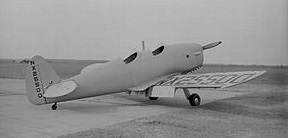
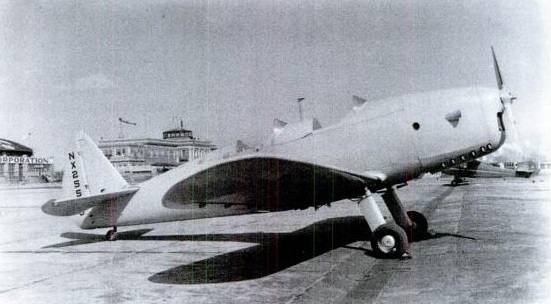
The 1940 PT-LM-4 was a low-wing, open cockpit, tandem seat, trainer with conventional landing gear, powered by a 180 hp (134 kW) Ranger 6-440C-3 engine. The fuselage was constructed of welded steel tubing with aluminum skins. The wings used aluminum construction with aircraft fabric covering.
The St. Louis PT-LM-4 was a primary trainer designed for use in the Civilian Pilot Training Program of World War II. Fairchild won the training contract, with St. Louis Aircraft Company building licensed versions of the PT-19 instead. Only one, NX25500, was ever built.
PT-LM-4 Engine: 1 × Ranger 6-440C-3, 180 hp (130 kW) Length: 24 ft 9 in (7.54 m) Wingspan: 30 ft (9.1 m) Height: 7 ft 10 in (2.39 m) Wing area: 157 sq ft (14.6 m2) Gross weight: 2,012 lb (913 kg) Maximum speed: 119 kn; 220 km/h (137 mph) Cruise speed: 109 kn; 201 km/h (125 mph) Stall: 55 mph Range: 345 mi Service ceiling: 18,000 ft (5,500 m) Rate of climb: 1,000 ft/min (5.1 m/s) Crew: 2
1929: St Louis Aircraft Co 8000 N Broadway St Louis MO USA
The St. Louis Aircraft Corporation was incorporated as a subsidiary of the St. Louis Car Co. during the First World War, in response to the Army’s urgent need for large quantities of aircraft to support the training of military aviators needed to meet American commitments to the Allies. But St. Louis Car (a highly successful manufacturer of railway cars and streetcars) had already been actively exposed to the new world of aviation. In late 1915, Tom Benoist, St. Louis’ earliest aeronautical entrepreneur, had arranged to construct his large Type 15 twin engine, six-seat flying boat in the St. Louis Car shops, lacking sufficient room in his own facilities. Sensing an opportunity to sell flying boats to Allied combatants in the War, Benoist contracted with St. Louis Car in October, 1915 for the production of large numbers (lots of 1000) of similar flying boats. However, Benoist’s sales efforts in Europe were eclipsed by those of Glenn Curtiss, and consequently no flying boat production occurred at St. Louis Car.
Later, when the U.S. did enter the War, Edwin B Messner of the St. Louis Car joined with AJ Seigels’ Huttig Sash and Door Co. (also of St. Louis) to form the St. Louis Aircraft Corporation, which went on to manufacture 450 JN-4D Jenny trainers (a Curtiss design) for the U.S. Army. The company became one of six across the country to produce the Curtiss JN 4D Jenny with first deliveries in 1918. The first order was for 200 planes, the company delivered 30 aircraft per month, and 57 JN 4D October 1918.
Although St. Louis Aircraft continued to exist (as a wholly-owned subsidiary of St. Louis Car) after World War I, its hopes of producing aircraft for private use were stymied by the glut of surplus military aircraft that became available. The company remained dormant until the so-called “Lindbergh Boom” in aviation developed in the wake of Lindbergh’s heroic solo flight from New York to Paris in May, 1927. An ingredient of this surge in aviation activity was the advent of powerful, reliable, air-cooled radial powerplants to replace the bulkier W.W. I-vintage water-cooled OX-5 and Liberty engines. St. Louis Aircraft seized the opportunity afforded by the “Lindbergh Boom” in 1928 to produce a line of light, enclosed-cabin, two-seat, single radial-engine monoplanes christened Cardinals. At 1929 Detroit Aircraft Show exhibited the Cardinal high-wing monoplane, the company’s first airplane. Cardinal Senior which followed had more power.
Unfortunately, the Cardinal’s timing was not ideal: having been beaten into production by such highly successful similar private aircraft as the Monocoupe, Curtiss Robin, and others, the Cardinal did not sell well, becoming an early victim of the Depression-era aeronautical slump. The last of 21 Cardinals was delivered in 1931.
The company had ordered 100 100 hp Kinner radial engines to power the KT monoplane light, but production ceased in 1931 at the height of the depression.
Having survived for several years on development and production contracts for military aircraft parts and equipment, St. Louis Aircraft didn’t produce another airplane until it brought out a biplane primary trainer in 1935, hoping to win an Army production contract. Initially unsuccessful, St. Louis Aircraft continued to develop the airplane and demonstrate it (including a crash at Wright Field in 1936) for the Army, which eventually acquired a trial batch of 14 trainers in 1939. The Army identified these trainers as PT-15. The hoped-for big production orders were not forthcoming, however, being won instead by the now-famous Boeing/Stearman PT-13/PT-17/N2S Army/Navy primary trainer.
While continuing to manufacture crew cars for motorized Army observation balloons (many of which operated at nearby Scott Field), St. Louis Aircraft renewed its efforts to get into the trainer-production business, especially with the World-War-I -fueled major buildup in military pilot-training programs. With its own funds, St. Louis Aircraft developed and flew in 1940 the PT-LM-4, a low-wing, all-metal primary trainer with a Ranger in-line engine. Although tested by NACA, the Army, and in Canada, the PT-LM-4 was not put into production. Instead, the Army gave St. Louis Aircraft production contracts for the similar Fairchild designed PT-19 trainer. During 1942-44, St. Louis Aircraft built and delivered 350 of these primary trainers, in two versions: the PT-19A (44), with a Ranger in-line engine, and PT-23/PT-23A (306), with a Continental radial. These trainers were all test-flown at St. Louis Aircraft’s own flying field, adjacent to the St. Louis Car factory on North Broadway in St. Louis. (This field was operated as a private airfield, Ross Airport, for a time after W.W. II.)
St. Louis PT-LM-4 trainer at Lambert Field, ca. 1940
Having already placed large-scale aircraft production contracts with the major airframe builders, the Army sought to employ secondary sources when it decided in 1941 to develop a significant glider assault capability. Not being burdened at the time with aircraft production contracts, St. Louis Aircraft was invited to participate in the Army’s glider program, obtaining contracts to develop eight-place and fifteen-place troop-carrying gliders. The eight-place XCG-5 demonstrated serious aerodynamic flaws during its first test flights (at Lambert Field) in 1942. The redesign necessary to correct the aerodynamic, as well as significant structural, problems doomed the XCG-5. The larger, heavier XCG-6 was never built.
St. Louis Aircraft once again went dormant following the end of World War II. It disappeared forever when the parent company, St. Louis Car, closed its doors for the last time in 1973. The historical record, the St. Louis Car and St. Louis Aircraft corporate archives were given to Washington University, where they now reside.







 All Aero