THK THK-1

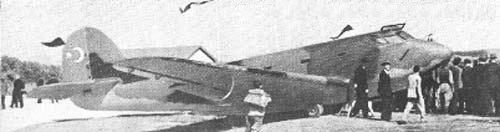
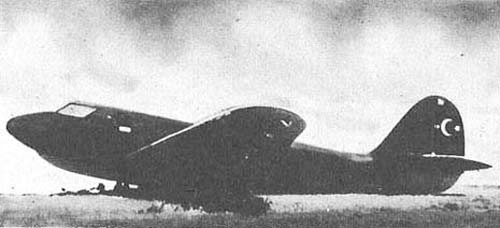
The Turk Hava Kurumu TNK-1 transport glider, built in 1943 was intended for military.

A 12-seat troop transport glider of wooden construction, the need for mass production was considered redundant and TNK-1 remained only a prototype.

THK-1
Wingspan: 26.00 m
Length: 12.50 m
Height: 4.60 m
Wing area: 56.00 sq.m
Weight empty equipped: 1100 kg
Maximum take-off weight: 2260 kg

THK / Turk Hava Kurumu Ucak Fabrikasi

As a forerunner of the nowadays Turkish Aeronautical Association, the Turkish Aircraft Foundation was founded on 16.02.1925. In accordance with the statute, the TTaC was to collect donations to buy new aircraft for the Turkish Air Force. In the years 1925-1935, 250 new aircraft could be procured by the actions of the TTaC. Some aircraft (like e.g. the Bréguet XIX B-2) was TTaC. In 1935 the statute of the foundation was modified. From that time it was supposed to function not as procurement organ for the Air Force, but rather execute sports activities in civilian aviation.

Upon reorganisation, the civil flying school, Turkish Bird (Türkkusu), was founded on 03.05.1935. Finally the association assumed its new name Türk Hava Kurumu (THK) on 24.05.1935. In 1936 the THK began to manufacture gliders for internal demand. Therefore a carpenter plant was built at Akköprü near Ankara. Then in 1939, when World War II began, some German and Polish aircraft designers were able to save themselves by detouring into Turkey. As the Turkish Government was also pressed badly in distress because of the world-political situation, it was decided that aircraft under license be manufactured, with the help of the experienced foreign designers. As a result a new aircraft plant was built at Etimesgut near Ankara in 1941.

Aircraft factory of the Turkish Air League formed 1941 at Etimesgut, near Ankara. At first the Miles Magister 1A Mk.I primary training aircraft was manufactured under license. Later Turkish designed aircraft were added. Built several gliders, including the THK-1 12-seat troop transport glider, and five types of light aircraft: the THK-2 single-seat aerobatic trainer; THK-5/5A twin-engined light transport/ambulance; THK-11 three-seat pusher-engined twin-boom light tourer; THK-15 tandem two-seat primary trainer; and THK-16 twin-jet trainer. Also built about 100 Miles M.14s under license, Turkish Air League control ceased 1952.

After World War II, the Turkish Government’s interest in its own aircraft production program, rapidly decreased. In addition, enormous aircraft supplies had come from the USA. Therefore it is not surprising that at the beginning of the fifties the THK aircraft plants were experiencing great difficulties. In order to prevent the worst of it, the government decided to transfer the available plants to the Mechanical and Chemical Industries Corporation (Makine ve Kimya Endüstrisi Kurumu, MKEK).

In 1952 Makina ve Kimya Endustrisi Kurumu / MKEK / Mechanical and Chemical Industry Corporation took over THK factory at Ankara, together with existing designs. THK-15 became the MKEK Model 1, THK-16 the Model 2, THK-5 and 5A the Models 5 and 5A, THK Prototype 14 the Model 6 and THK-2 the Model 7.

Türk Hava Kurumu Uçak Fabrikası – Turkish Air Agency Aircraft Factory

Numbered THK Uçak Fabrikası aircraft designations were applied only to original designs. So, for example, the licensed THK-Miles 14 Magister bears no relationship to the THK-14 (a 2-seat training glider).

Designations may be rendered as T.H.K.1 or THK.1 but the most common style seen in modern Turkish publications is THK-1.

THK designs were taken over by MKE with added ‘MKEK’ designations.

Thalman T-3

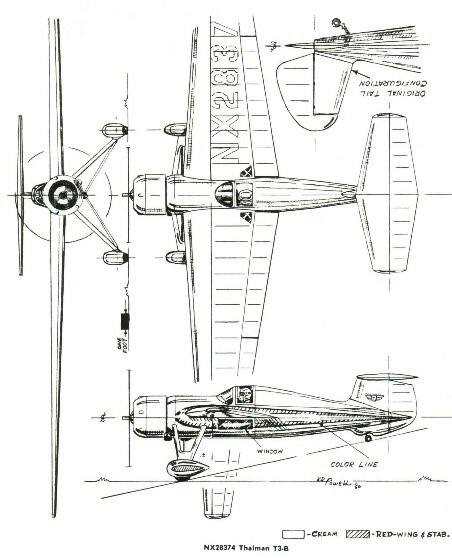
Thalman T-3B NX28374

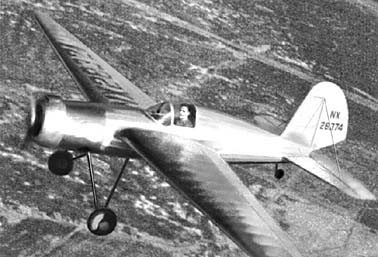
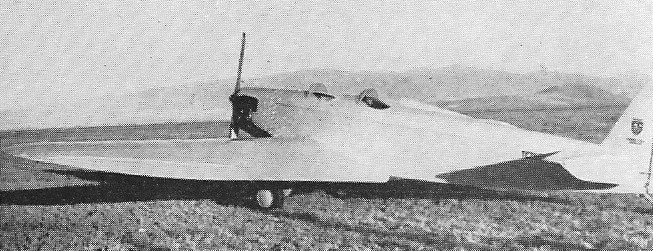
The 1941 T-3B was a single-place cabin monoplane of fabric-covered wood geodetic construction by Harry J. Thalman. One was built, registered NX28374.

The T-3B was a revised airframe with a T-tail and spats fitted to main wheels.

Engine: Velie M-5, 55hp
Wingspan: 41’0″
Max speed: 130 mph
Cruise: 120 mph
Stall: 38 mph
Seats: 1

Thalman-T-3B

Thalman, Harry J

Harry J. Thalman: born 25 March 1911 at Challis, Idaho, USA.

George Yates of Beaverton, Oregon had been the mentor of Harry J. Thalman’s designs, Yates had been wooden geodetic construction pioneer, Thalman made several trips from Salt Lake City to Beaverton to learn about geodetic construction techniques from from Yates.

Thalman and Player were joined by a third geodetic aircraft builder – John Greenleaf of Portland, OR, to form the Plxweve Aircraft Company in 1940. Greenleaf then arranged financing through Ralph Hemphill of Los Angeles. As a result, the Plxweve Aircraft Co. became a division of another Hemphill-controlled firm – Aero Industries Technical Institute, Incorporated (Aero ITI). Ralph Hemphill became President of the Plexweve division but refused further investment. The money was run through quickly and much legal wrangling ensued.

The T-3 had first flown in 1941

At some point, the partners went their separate ways. In 1949, Harry formed Thalman Aircraft Inc. at Salt Lake City. In the same year, he designed the Talman T-4 which, flew in 1951.

By 1957 Thalman Aircraft Corp. had relocated to Mount Pleasant, UT, with plans to establish T-4 production there. In a letter to Flying Magazine (March 1957, pages 6 & 8), Mount Pleasant resident Rex C. Staker writes that the production T-4 was to be offered with 150-, 170-, or 180 hp engines. According to Aerofiles, Thalman Aircraft also took over a concept from Van Nuys-based ATS (Aircraft Technical Services Inc., Floyd E. Snow) in 1959. That ATS design was described as a 4-place mid-winged cabin monoplane (“reportedly 50 percent complete”).Thalman Aircraft then began reworking this laminar-flow winged design as a “twin-engine development”.

By 1960, Thalman Aircraft Corp. was doing business as Thalman Industries (sometimes given as Thalman Aircraft Industries). However, the firm was now planning to relocate to Roseburg, OR – 900 miles to the west. Roseburg businessman Lynn Andreas had become president and it was Andreas who was announcing the construction of a new factory on 5 acres of leased land at the Roseburg municipal airport. Early reports said that site ground preparation work had begun and that a “plywood plane” would be built. Harry Thalman is quoted, saying that his aircraft will sell for less than $14,000.

According to local media reports, the production type’s structure – under its fiberglass shell – would be an aluminum honeycomb. That jives with an article in Sport Aviation August 1961 – Geodetic Aircraft Structure by Keith D. Powell, EAA. On page 22, Powell writes that Thalman was “now working on another midwing featuring a plastic bonded honeycomb sandwich airframe.” Reportedly, circa 1958, Harry began losing interest in geodetic structures. Lynn Andreas was also president of the Oregon Red Cedar Co.

Contemporary reports say that Thalman was “working on a fifth model which will include a number of modifications, such as a more powerful motor, sweptback tail assembly, and electrically-operated landing gear and flaps.” These all sound like sensible updated for a production variant. But the The News-Review report says that an “all-hydraulic retractable landing gear” was to equip the production type. Needless to say, that Roseburg factory never materialized. In the early ’60s, some airport was holding the parked Thalman T-4 until storage fees in the order of $800 were paid.

By 1963, Harry Thalman was working as a mechanic for Kelsey-Ellis Air Service at Salt Lake City Airport. The T-4 was in storage (and possibly disassembled by then) but Harry was still flying the T-3B. On 15 March 1963, Harry was doing flying cross-country when he flew into a blinding snowstorm. Harry Thalman died instantly when he crashed his T-3B monoplane in a gully outside of Grantsville, UT.

Harry J. Thalman: died 15 March 1963.

Taylorcraft D / DL / L-2 / O-57

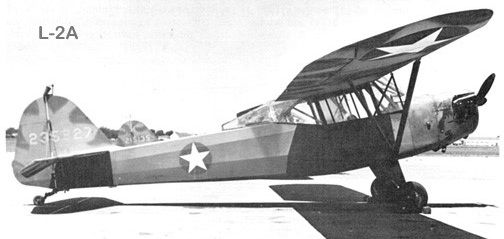
L2A

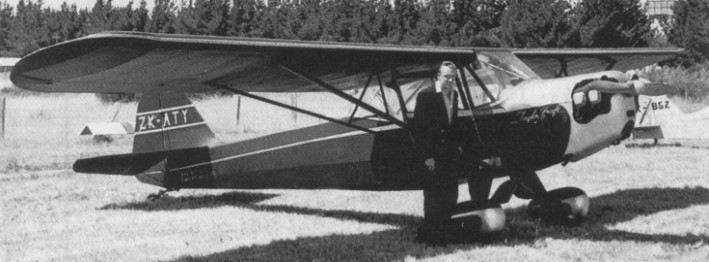
The 1941 DC and DF models (ATC 746) were tandem-seat trainers, priced at $1,685-1,995.

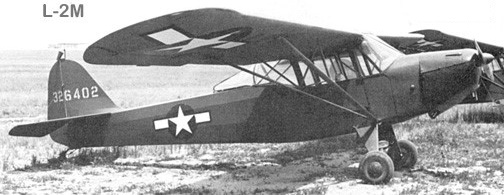
The 1941 Taylor DL (ATC 746) production totalled 2,348 D models, of which 2,119 DC and DL models went to the USAAF as L-2 and O-57. The L-2A with open cowling, L-2M with closed cowling, and observation as O-57.

L-2M 43-26402

The Auster Mk.I design originated with a pre-war American light cabin monoplane of 1938 built in England under licence. Successful trials with impressed civilian Taylorcraft Plus D aircraft by the Army for artillery spotting duties led to the introduction of the first fully militarised Taylorcraft, the unarmed two-seat Auster I.

L-2A 42-35927

In England, Taylocraft Ltd built 822 D models as Auster AOP-1 Mk III (130hp Cirrus Major) and IV/V (125hp Lycoming O-290).

Taylor D
Engine: Lycoming O-145, 65hp
Seats: 2

DC
Engine: Continental A-65, 65hp
Wingspan: 35’5″
Length: 22’9″
Useful load: 480 lb
Max speed: 102 mph
Cruise speed: 92 mph
Stall: 35 mph
Range: 270 mi
Seats: 2

DF
Engine: Franklin 4AC, 65hp
Seats: 2

Taylorcraft Aviation Corporation / Taylorcraft / Taylor Brothers Aircraft Corp

Taylor Aircraft Company
Taylorcraft Aviation Company
Taylor-Young Airplane Company
Taylorcraft Aviation Corporation

C. Gilbert Taylor and his brother had first established the Taylor Brothers Aviation Corporation- slogan; “Buy Your Airplane Taylor Made” – in Rochester, New York, in 1926 to market the Taylor Chummy lightplane, a two-seat high-winged monoplane, priced at $4,000.

The Chummy failed to sell, and after Gordon died flying another Taylor design in 1928, Clarence moved to Bradford, Pennsylvania, where the townsfolk had offered him a new factory at the local airfield plus $50,000 to invest in the company. One of the investors was William Thomas Piper, who had made his money from oil wells.

More concerned about solvency than perpetuating his name, he re-organized the assets into the Taylor Aircraft Com¬pany, giving C. Gilbert Taylor half inter¬est in the new enterprise as an induce¬ment to stay on board. Piper handled the finances as the firm’s secretary and trea¬surer, while Taylor served as president and chief engineer.

After continuing with the Chummy for a time, Taylor abandoned the design and began work on a new inexpensive aircraft to compete with the heavier craft common at the time. A battle between engineer and businessman caused a rift between the two. Piper took advantage of Taylor’s absence during an illness, and instructed Taylor’s junior engineer Walter Jamouneau to modify the Cub, in Models E-2 and F-2, to be more attractive and marketable. Taylor returned from his illness and left the company in 1936; and Walter Jamouneau took over as chief engineer.

A disastrous factory fire brought production of the Cub J-2 to a halt. When the company ran into financial difficulties, manufacturing and marketing rights for the Taylor Cub, which had first flown in September 1930, were acquired by W. T. Piper in 1935 for $761, who in 1937, formed Piper Aircraft Corporation to continue production of this aircraft. It was placed back in production as the Piper J-3 Cub.

Taylor vowed to build a personal aircraft superior to the Cub. Taylor formed his own company in 1935 as Taylor Aircraft Company at Alliance, Ohio, renamed Taylor-Young Airplane Company, then Taylorcraft Aviation Corporation in 1940. In 1936 Taylor rented facilities at Pittsburgh-Butler Airport and first manufactured the “Taylorcraft” plane. Main pre-war lightplanes were Models B, C and D, of which C and D formed basis for formation of Taylorcraft Aeroplanes (England) Ltd. Taylor gave his airplane a closed cabin with doors and a control wheel instead of a stick. The fat, side by side T Craft was faster than a tandem Cub. It set speed, distance and altitude records for light airplanes. No Taylorcraft has a number below 25. They figured nobody would want an airplane from a company that had built only three or four.

During WWII, light aircraft were used for training, liaison, and observation purposes. Taylorcraft’s DCO-65 model was called the L-2 by the United States Army Air Forces and served alongside the military version of the Piper Cub in WW2. Built over 1,900 similar L-2 Grasshoppers for USAAF, TG-6 training gliders based on L-2, and components for Consolidated PBY, Curtiss C-46 and Douglas A-26.

In November 1938 the company established its Taylorcraft Aeroplanes (England) Ltd as its British subsidiary, based in Thurmaston, Leicestershire, England. British production was mainly of the Plus C and Plus D models, and in 1939 the Royal Air Force impressed 24 of the 32 aircraft for evaluation as observation and artillery spotter aircraft. The evaluation confirmed the soundness of the concept, and a derivative of the Plus D was ordered into production as the Auster Mk 1. This entered service in August 1942. The military chose the name “Auster”, which translates as a warm or gentle breeze, possibly from the south. Thus Taylorcraft Plus D built for the army became Auster Mk 1. After the war, Auster Aircraft Ltd was formed and commenced a series of variations on the basic theme until 1960 when it was absorbed into Beagle Aircraft Ltd.

Taylorcraft Aeroplanes Ltd developed the Taylorcraft Model ‘D’ and the Auster Mk. I through Mk. V, which became the backbone aircraft of the British AOP (Air Observation Post) and the three Canadian AOP squadrons, No. 664 Squadron RCAF, No. 665 Squadron RCAF, and No. 666 Squadron RCAF.

Built some 2,800 Model B-12Bs in 1945-1946, but in the fall of 1946 production was halted following a fire in the Taylorcraft factory at Alliance, Ohio and the company went into bankruptcy. Re-formed in 1947 as Taylorcraft Inc, producing models BC-12D, Ace, Traveler, Topper, Ranch, Wagon, Tourist, Sportsman and Special de Luxe.

In 1949 C.G. Taylor bought the assets from the former company, and started a new company Taylorcraft, Inc. at Conway, Pennsylvania. The company restarted production of the BC-12D Traveller and the BC-12-85D Sportsman. The company produced few aircraft and the type certificates were sold to Univair and production was halted.

The factory moved to Pittsburgh in 1954 but then ceased manufacture four years later. It was re-formed again in April 1968 as Taylorcraft Aviation Corporation, and from 1973 resumed production of an updated two-seat Sportsman 100.

In 1971 the Taylorcraft Aviation Corporation, owned by Charles Feris put the Model 19 back into production as the F-19 Sportsman and added the F-21 model. Feris died in 1976 and the production continued at a low rate until 1985. Charles Ruckle bought the company in 1985 and he moved the operation to Lock Haven, Pennsylvania, where the company produced 16 aircraft before it went bankrupt in 1986 and the company was offered for sale.

Company ceased trading 1986, and in 1989 was purchased by West Virginia based Aircraft Acquisition Corporation, developed a series of two/three-seat lightplanes under the F22 designation. From 1992 operated independently of AAC and took name of Taylorcraft Aircraft. The assets were sold to key investor East Kent Capitol.

1990: Taylorcraft Aircraft corporation, PO Drawer 3350, Morgantown, WV 26505, USA.

John Polychron, former CEO of Del Monte Foods purchased Taylorcraft and operated it for approximately one year until he sold it to Philadelphia Attorney Phillip O’Rielly. O’Rielly never reopened and the company became deeply in debt resulting in a Sheriff’s sale in 1996.

Taylorcraft was saved from extinction by Lee Booth, a former Marine and an engineer from Seaford Delaware. Booth renamed the Company Booth-Taylorcraft Aerospace, Inc. Booth-Taylorcraft Aerospace paid all creditors in full and relocated the entire company in 88 53 ft long truck trailers to Greensboro, North Carolina.

Booth, as Chairman and President, directed the Corporation through an extensive recertification of all type certificates, engineering, FAA audits up to the Aircraft Certification Office level, production procedures, complete re-tooling and certification of tooling and work processes. Booth enlisted the assistance of Darrell C. Romick, former Chief Engineer of Taylorcraft Airplane Company and of BF Goodrich. Romick was a close associate of Wernher von Braun and worked for Goodyear Aircraft in the 1950s.

Booth-Taylorcraft Aerospace, Inc became a contractor to numerous governments for military aircraft, weapons systems and firearms. Booth was the first Taylorcraft owner in the company’s history to keep the company debt free the entire time he operated it. In March 2000, Booth formed a strategic partnership by selling half of the Civil Aircraft Division to Harvey Patrick of Pats, Inc. Booth retained all military items, UAVs, several type certificates, designs and patents. The Small Aircraft Division was moved to Georgetown, Delaware at the Sussex County Airport. Booth and Patrick then formed Taylorcraft 2000, LLC and served as Co-chairmen. Booth eventually sold his half to Harvey Patrick and Taylorcraft 2000, LLC was owned by the Harvey and Vera Patrick Foundation. In 2003 The Harvey and Vera Patrick Foundation sold the company to Harry Ingram, with 100% financing.

Harry Ingram, moved the plant to La Grange, Texas in 2003 and on April 25, 2005 it was announced that the factory was moving again to Brownsville, Texas and outsourcing the labour.

On February 21, 2008 the company was repossessed by its former owner, Taylorcraft 2000 LLC. The previous owners had taken orders for new struts for existing aircraft to alleviate a repetitive inspection Airworthiness Directive and was delivering struts to customers. The design’s type certificates, drawings, jigs, templates and parts were put up for sale.
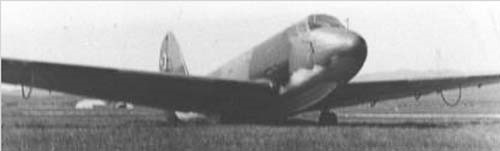
Talleres Tezuitlan

September 1942, a new Mexican primary trainer, the Tezuitlan designed by Antonio Sea and making extensive use of mahogany ply in its construction, commenced flight testing.

Powered by a 125 hp Lycoming engine. The Teziutlan was designed to operate from Mixico’s high-altitude airfields and utilised 95% nationally-produced materials. Construction is all-wood.

Forty five were ordered for the FAM, but, in the event, the considerable infusion of training aircraft from the USA that commenced at this time rendered the Tezuitlan surplus to requirements, only five being completed.

Engine: 125 hp Lycoming
Wingspan: 38 ft 5 in
Length: 23 ft 10.5 in
Height: 6 ft 2.75 in
Empty weight: 986 lb
Loaded weight: 1633 lb
Max speed: 108 mph
Cruise: 102,5 mph
ROC: 1380 fpm
Service ceiling: 22,960 ft

Talleres Nacionales De Construcciones Aeronauticas / TNCA / Talleres Generales De Aeronautica Militar

Mexico
National Aircraft Manufacturing Workshops, established November 1915 at Valbuena, near Mexico City. Began by building Bleriot, Morane-Saulnier and other foreign types under license. Own first products were the Microplane Veloz single-seat fighter biplane of 1918 and the Series A two-seat general-purpose biplane. Followed in late 1920s by the Azcarate-E training and reconnaissance sesquiplane. Aircraft design halted by Government 1930, but shortly afterwards built Chance Vought O2U Corsairs under license. Later products included Teziutlan primary trainers in 1942 and, in late 1940s, the prototype TTS-5 six-seat twin-engined general-purpose transport.

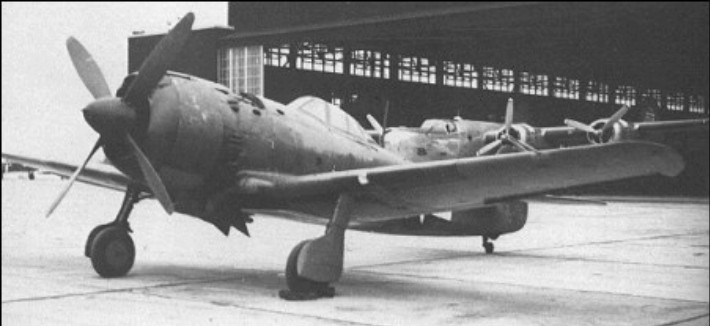
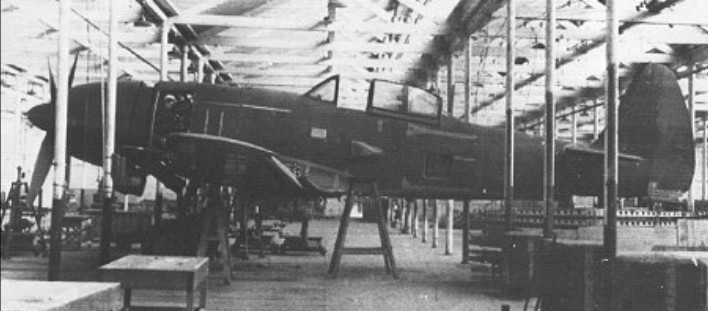
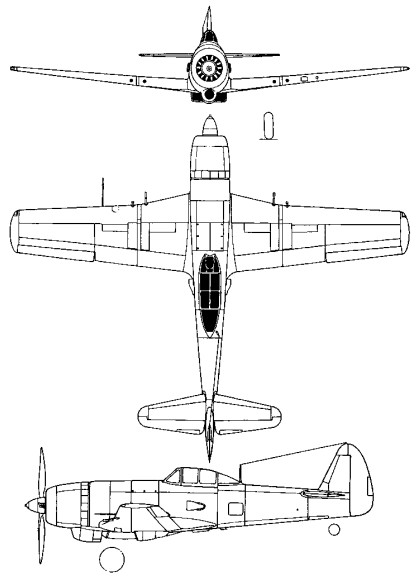
Tachikawa Ki-106

On 8 September 1943, instructions were issued to redesign the Nakajima Ki-84 Hayate all-metal single-seat fighter for wooden construction because of the increasingly critical light alloy supply situation. The task of redesigning the airframe was assigned to the Tachikawa Hikoki which was to collaborate with the Army Aerotechnical Research Institute at Tachikawa.

Assigned the designation Ki-106, the wooden fighter was intended to utilise a high proportion of semi-skilled labour in its construction and to be broken down into components to be built by small wood-working shops grouped around designated assembly points.

Prototype construction was sub-contracted to Ohjo Koku, but the first of three prototypes was not flown until July 1945. The external characteristics of the Ki-84 were faithfully retained by the Ki-106, apart from some minor revision of the vertical tail, the first prototype being powered by the 2,000 hp Nakajima Ha-45-21 engine and carrying an armament of four 20-mm cannon. Appreciably heavier than the standard Ki-84, the Ki-106 was subjected to various weight saving measures, one of these being a reduction in the armament to two 20-mm cannon, and the second prototype flew with this armament during the last week of the war.

Engine: 2,000 hp Nakajima Ha-45-21
Length 32 ft 7 in (9.92 m)
Wing span: 36.8 ft (11.21 m)
Height: 3.59 m / 11 ft 9 in
Wing area: 21 sq.m / 226.04 sq ft
Max take-off weight: 3900 kg / 8598 lb
Empty weight: 2948 kg / 6499 lb
Max. speed: 620 km/h / 385 mph at 21,325ft (6 500m)
Range (+1.5 hr res): 800 km / 497 miles
Time to 16,405ft (5 000m): 7.85min

Tachikawa Ki-94-II

Defeat in the Battle of Midway essentially left Japan without means to project their aerial power over distant territories and started the three-year long retreat towards their home islands. Since 1942, US strategic bombers began regularly raiding imperial territories, and it culminated with the raid on Tokyo on the night of 9-10 March 1945 that included 334 B-29 heavy bombers and resulted in the almost total obliteration of mostly wooden civilian structures over 40 km2 of the Japanese capital, and the death of over 100,000 people.

The Japanese army command had considered such possibilities beforehand, and the means to deter long-range bombing raids were being developed from 1942. Koku Hombu, the aviation HQ of the Imperial Army, placed an order with the Tachikawa Hikoki HK company for a high altitude interceptor that would be able to destroy enemy bombers.

The initial requirements were the fighter was supposed to have a range of 3,000 km, up to 800 km/h speed, and a pressurized cockpit. Tachikawa started the Ki-94 project that was later split into two completely different designs – the Ki-94-I and Ki-94-II.

The Ki-94-I was a large twin-boom monoplane with two tandem 18-cylinder Mitsubishi Ha-211 Ru piston engines located in the front and rear sections of the fuselage. The rear-pushing propeller was located between the tail booms. The designers expected that this scheme would provide speeds of up to 780 km/h at a 10-kilometer altitude. The Ki-94 was supposed to carry two 37-mm Ho-204 and two 30-mm Ho-155 cannons, located in the wings.

By the end of 1943, Tachikawa had a wooden model built but the Koku Hombu technical department considered it to be exceedingly difficult to produce, and the high expectations of the aircraft’s characteristics were deemed overly enthusiastic. As a result, the design was discarded and the role of the fighter-interceptor was handed over to Nakajima Ki-87, while Tachikawa focused on the sister Ki-94-II design.

Ki-94
Engine: 1 x Nakajima Ha-44, 1835kW
Max take-off weight: 6450 kg / 14220 lb
Empty weight: 4690 kg / 10340 lb
Wingspan: 14 m / 45 ft 11 in
Length: 12 m / 39 ft 4 in
Height: 4.65 m / 15 ft 3 in
Wing area: 28 sq.m / 301.39 sq ft
Max. speed: 712 km/h / 442 mph
Cruise speed: 440 km/h / 273 mph
Ceiling: 14680 m / 48150 ft
Range: 2100 km / 1305 miles
Crew: 1
Armament: 2 x 30mm cannons, 2 x 20mm cannons, 500kg of bombs

Tachikawa Ki-94-II