The first prototype flew in September 1940 and a total of 30 were built.
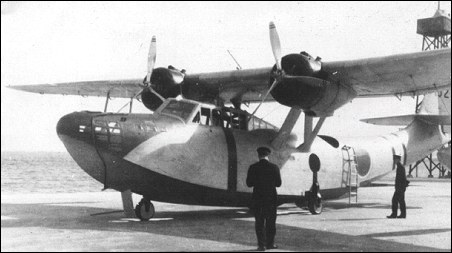
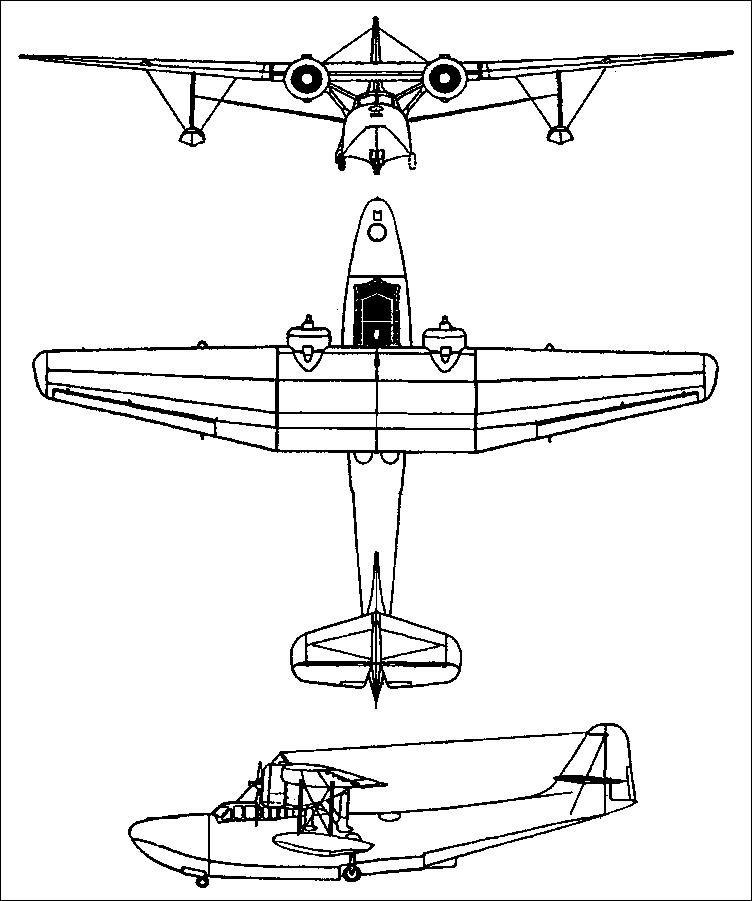
H9A1 Engine: 2 x Nakadjima Kotobuki-42, 530kW Wingspan: 24.0 m / 78 ft 9 in Length: 16.95 m / 55 ft 7 in Height: 5.25 m / 17 ft 3 in Wing area: 63.3 sq.m / 681.35 sq ft Take-off weight: 7500 kg / 16535 lb Empty weight: 4900 kg / 10803 lb Max. speed: 315 km/h / 196 mph Cruise speed: 220 km/h / 137 mph Ceiling: 6780 m / 22250 ft Crew: 5 Passengers: 3 Armament: 2 x 7.7mm machine-guns, 250kg of bombs
Aichi (along with Nakajima and Mitsubishi) submitted their monoplane design designed by a team under Tokuhishiro Goake to a 1936 Japanese Navy specification (11-Shi) for a carrier-based dive-bomber to replace the aging D1A biplane series. Only Aichi’s and Nakajima’s submissions were pressed for further development with the request for a full working prototype.
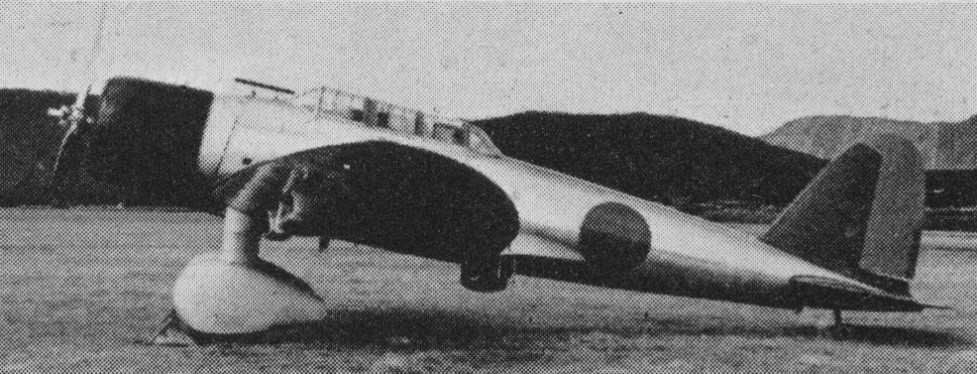
The initial prototype was completed in December of 1937 and first flew in 1938 and fitted with Nakajima Hikari 530kW / 710 horsepower engines. Despite a poor showing, a second improved prototype was made in an attempt to address issues in stability, strength and power. The second prototype was selected for production over the Nakajima model.
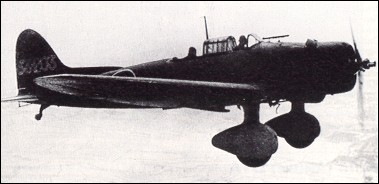
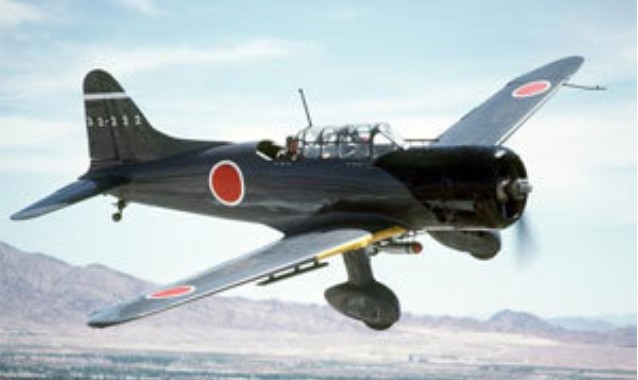
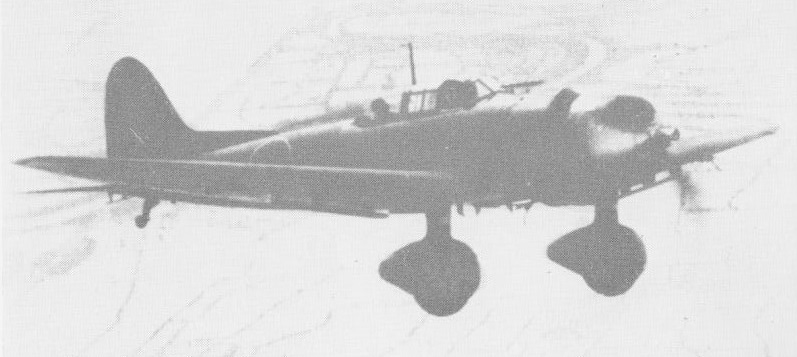
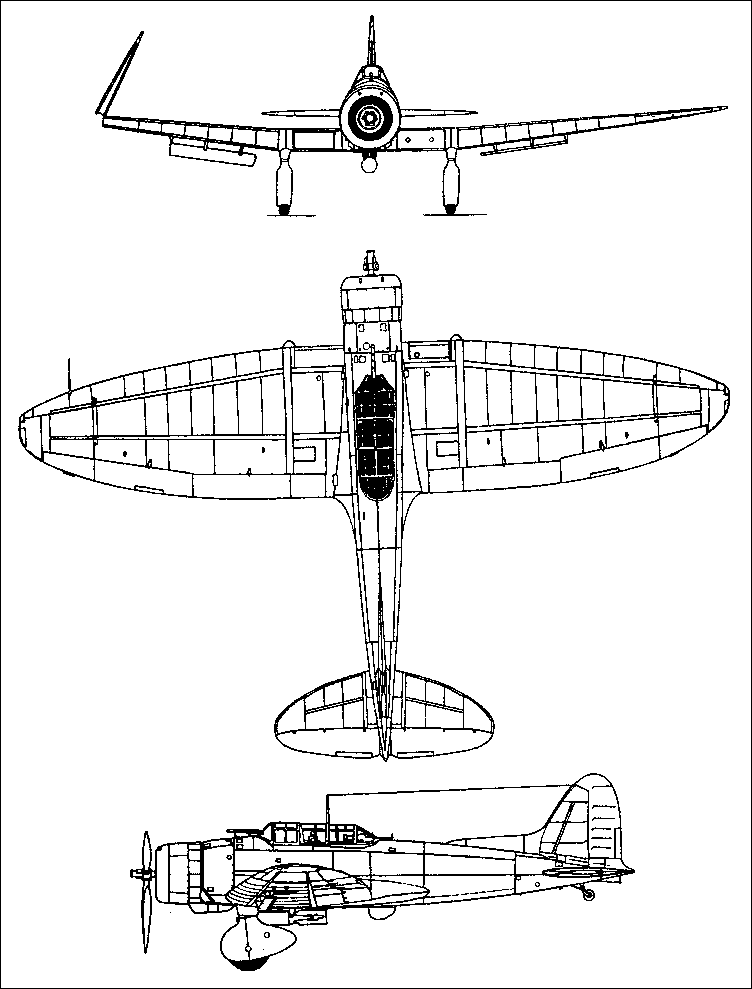
Production D3A1 aircraft features included slightly smaller elliptical wings, with narrow dive brakes and carrying spatted landing gears, a 1000 hp / 745kW Mitsubishi Kinsei 43 radial in a redesigned cowling, tandem cockpits under transparent canopies, one movable and two fixed machine guns, and normal bombload of one 250 kg (551 lb) weapon on swinging arms, plus two 60 kg (132 lb) under the outer wings. A dorsal fin extension considerably improved the aircraft’s manoeuvrability. Carrier trials were flown in August 1940, and substantial numbers of D3Als were operational from land bases in China and Indo China from October 1940.
Standard armament of production models was 3 x 7.7mm machine guns. Two Type 97 Light Machine Guns were fixed to fire forward and controlled by the pilot while a single Type 92 Heavy Machine Gun was fitted in a flexible mount in the rear cockpit.
Early “Vals” were flown in limited land-based operations in the Indo-China theatre though the rest of the war would see them operating in unison with her Imperial Japanese Navy carrier-based counterparts. The D3A series of aircraft (code named “Val” by the Allies) were thought to be all but extinct when the war in the Pacific began. The awakening came in the form of the surprise attack on Pearl Harbour as D3A’s made up the principle attack air arm in that assault.
At Pearl Harbor, 126 aircraft dive bombed targets with great accuracy, and were the only type in the first wave of attackers. Subsequently the D3A1, or Type 99 carrier based bomber Model 11, was in the forefront of Pacific battles, receiving the Allied code name ‘Val’. In April 1942 a very small force sank the cruisers HMS Dorsetshire and Cornwall and the carrier Hermes, achieving direct hits with more than four bombs out of five. But in the battles of the Coral Sea, off Guadalcanal, Santa Cruz and the Solomons, both the D3A1 and the Japanese aircraft carriers suffered such crippling losses and forced withdrawal by most of the survivors to land bases.
In June 1942 production of the D3A1 ended after 478 were built, replaced by the more powerful and better streamlined D3A2 with 1300 hp Kinsei 54, and increased fuel capacity.
D3A2
Aichi built a total of 816 of this model, the Type 99 Model 22, by June 1944, and Showa also built 201 by the end of the war. Like all Japanese warplanes of the post 1942 period, the D3A2 had no chance. Nearly all operated from land airstrips, suffered severe losses and accom¬plished little. By mid 1944 most were in use as trainers (D3A2 K), but large numbers were then reassigned to front line duty in the Kamikaze role focusing in and around the areas of Leyte and Okinawa during the final year of the war.
Production amounted to 476 D3Als and 1,016 D3A2. The Allied reporting name was ‘Val’.
D3As would end up being responsible for the destruction of more Allied shipping vessels than any other Axis aircraft during the war.
Prototype Nakajima Hikari 1 Radial, 530kW
D3A1 Engine: Kinsei 44, 1075 hp
D3A1 Engine: 1 x Mitsubishi Kensei-53, 750kW Wingspan: 14.36 m / 47 ft 1 in Length: 10.20 m / 33 ft 6 in Height: 3.85 m / 12 ft 8 in Wing area: 34.9 sq.m / 375.66 sq ft Take-off weight: 3650 kg / 8047 lb Empty weight: 2408 kg / 5309 lb Max. speed: 385 km/h / 239 mph Cruise speed: 295 km/h / 183 mph Ceiling: 9300 m / 30500 ft Range: 1500 km / 932 miles Crew: 2 Armament: 3 x 7.7mm machine-guns, 1 x 250-kg bomb, 2 x 60-kg bombs
D3A2 Engine: 1 x Mitsubishi Kinsei 54 radial, 1,300 horsepower. Span: 14.365 m / 47 ft 1.5in Length: 10.195 m / 33 ft 5.5 in Height: 12.63ft (3.85m) Gross weight: 3800 kg / 8377 lb Empty Weight: 2,570kg / 5,666 lb Maximum speed: 430 km/h (267 mph / 232kt) at 18,536 ft Maximum Range: 840miles (1,352km) Rate-of-Climb: 1,640ft/min (500m/min) Service Ceiling: 34,449ft (10,500m) Max range: 970 mi Bombload; 816 lb Armament: 2 x 7.7mm fixed forward-firing machine guns 1 x 7.7mm trainable machine gun in rear cockpit position. Bombload: 1 x 551lb bomb under-fuselage OR 2 x 132lb bombs under wings Accommodation: 2 Hardpoints: 3
D3A Engine: 1 x Mitsubishi Kinsei, 1,045 hp Length: 34.75 ft / 10.57 m Wing span: 47.7 ft / 14.53 m Weight empty: 5,770 lb / 2,617 kg Max speed: 270 mph / 430 kph Range: 840 miles / 1,350 km Crew: 1 pilot and 1 gunner Armament: 2 x mg Bomb load: 550 lb / 250 kg
Aichi Tokei Denki Kabushiki Kaisha, which was to become a significant aircraft design and construction company during World War II, had been established in Japan during 1899 as a manufacturer of electrical equipment and watches.
Aichi established a working relationship with Ernst Heinkel Flugzeugwerke in Germany and wishing to contend in early 1931 for an Imperial Japanese navy requirement for a two-seat carrier-based dive-bomber, requested Heinkel to design and build an aircraft to meet the navy’s specification. Required for operation with float or wheel landing gear, the resulting Heinkel He 50 prototype flew in the summer of 1931 with twin floats. A second version, with wheel landing gear, was supplied to Aichi under the export designation He 66.
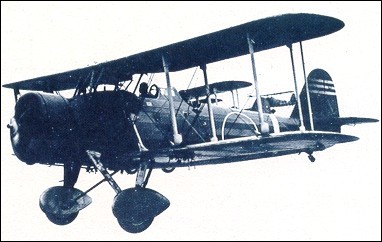
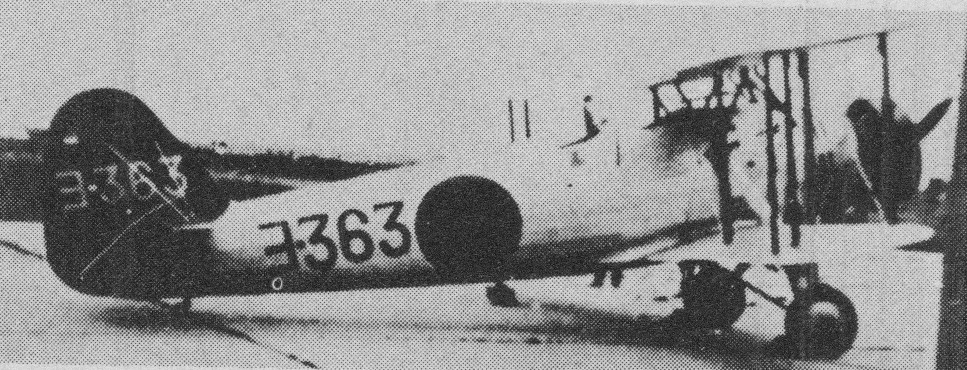
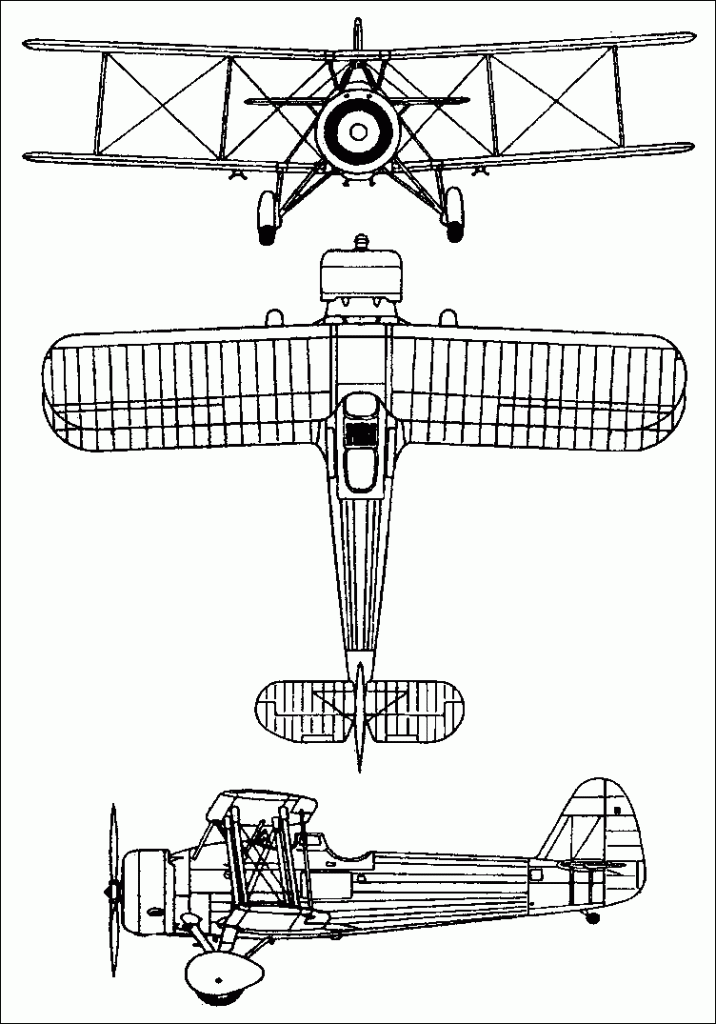
The He 66 was a two-bay biplane of metal construction with metal and fabric covering. The braced tail unit was conventional, and landing gear of fixed tailskid type. As supplied it was powered by a 365kW Siemens SAM-22B (Jupiter VI) radial engine. Modifications carried out by Aichi included strengthening of the landing gear, and installation of a 418kW/580 hp Nakajima Kotobuki 2 Kai 1 radial engine. In this form the Aichi Special Bomber was successful in trials against competing prototypes from Nakajima and Yokosuka, and was ordered into production as the Navy Type 94 Carrier Bomber (Aichi D1A1) in 1934. By 1937 162 production aircraft built, had the radial engine enclosed by a Townend ring, and other modifications included the introduction of slightly swept wings, and replacement of the tailskid by a non-castoring tailwheel. The last 44 had 433kW Kotobuki 3 engines.
Aichi’s design team under Goake created an improved D1A2 with 730¬hp Nakajima, Hikaru 1 engine in a full length NACA cowl, spats and improved windshields. Production of this version totalled 428.
Aichi D1A2
The first A2 flew late in 1936 and by 1940 Aichi had delivered no fewer than 428 as Type 96 carrier bombers. Most saw action in China, one unit dive bombing and sinking the US gunboat Panay in the Yangtze in 1937. Only a small number of D1A1s remained in use with training units at the time of Japan’s attack on Pearl Harbor, on 7 December 1941. By December 1941 only 68 D1A2s were the serving in second-line units, and these were allocated the Allied codename ‘Susie’.
D1A1 Engine: Nakajima Kotobuki 2 Kai 19 cylinder radial 580 hp Span: 11.4 m / 37 ft 4.75 in Length: 9.3 m / 30 ft 6 in Armament: two synchronized 7.7 mm (0.303 in) Type 92 machine guns, one 7.7 mm (0.303 in) Type 92 machine gun in the rear cockpit. 1 x 250 kg (551 lb) bomb under fuselage, 2 x 30 kg (66 lb) bombs under wings.
D1A2 Engine: 1 x Nakadjima “Hikari 1”, 545kW Wingspan: 11.1 m / 36 ft 5 in Length: 9.3 m / 30 ft 6 in Height: 3.41 m / 11 ft 2 in Wing area: 34.7 sq.m / 373.51 sq ft Take-off weight: 2610 kg / 5754 lb Empty weight: 1516 kg / 3342 lb Max. speed: 310 km/h / 193 mph Ceiling: 6800 m / 22300 ft Range: 930 km / 578 miles Crew: 2 Armament: 3 x 7.7mm machine-guns, 1 x 250-kg bomb, 2 x 30-kg bombs
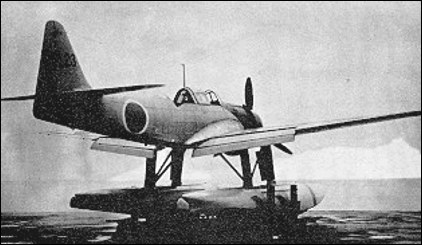
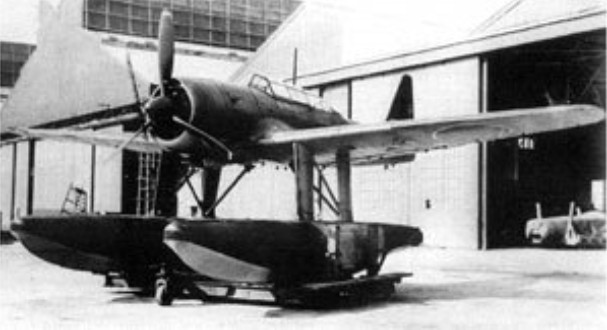
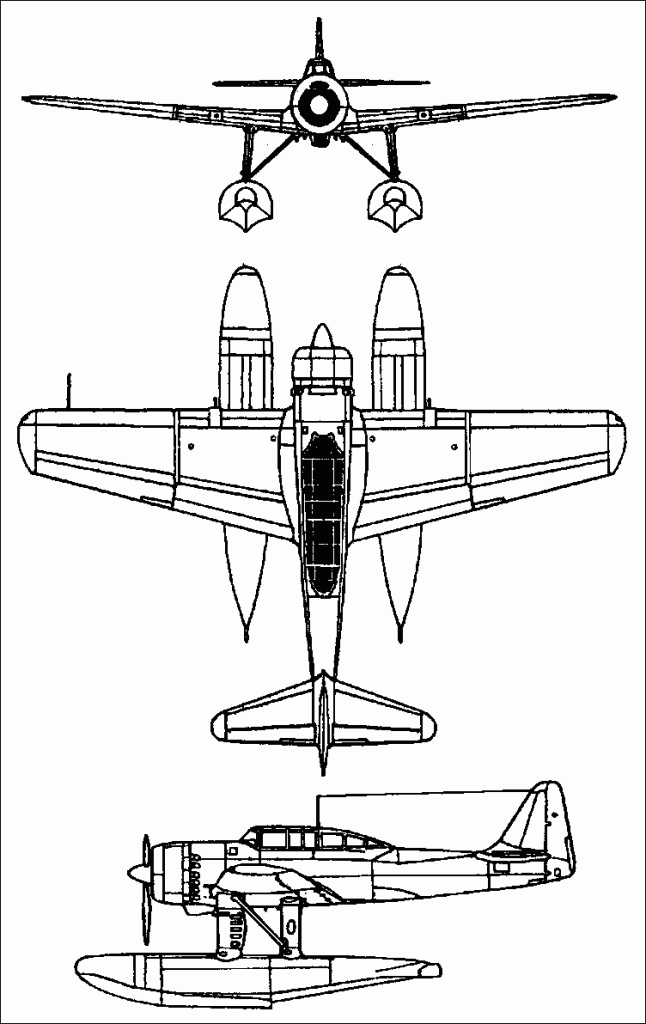
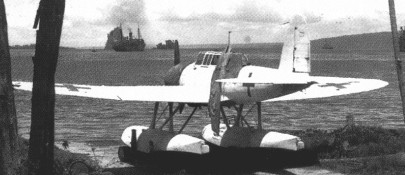
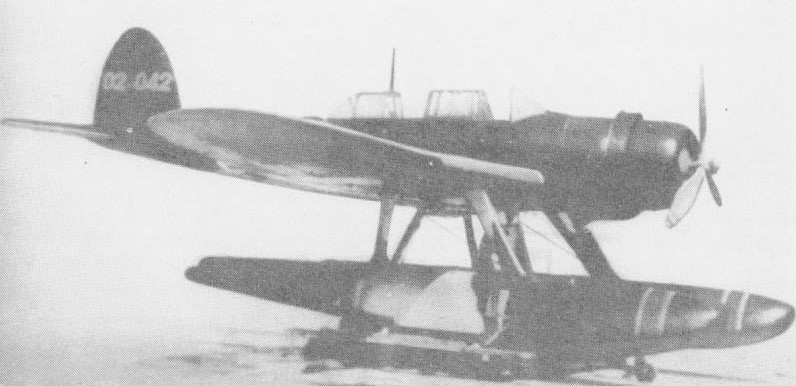
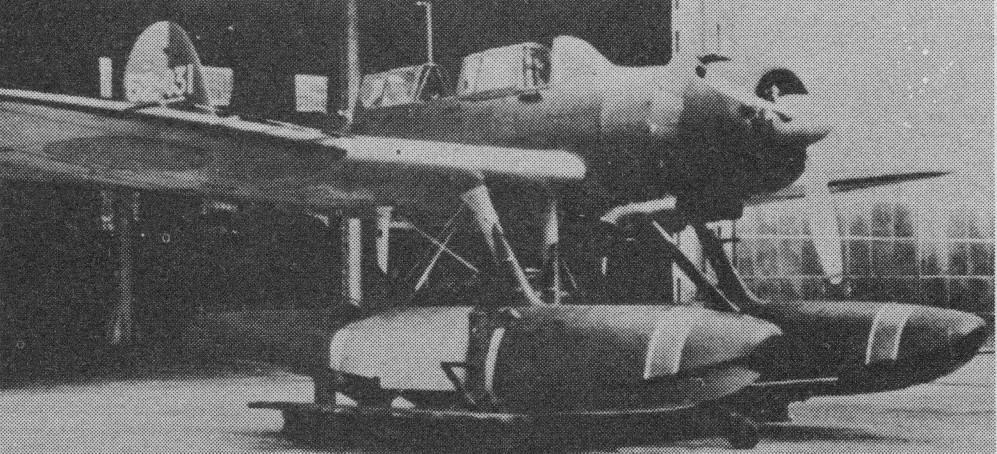
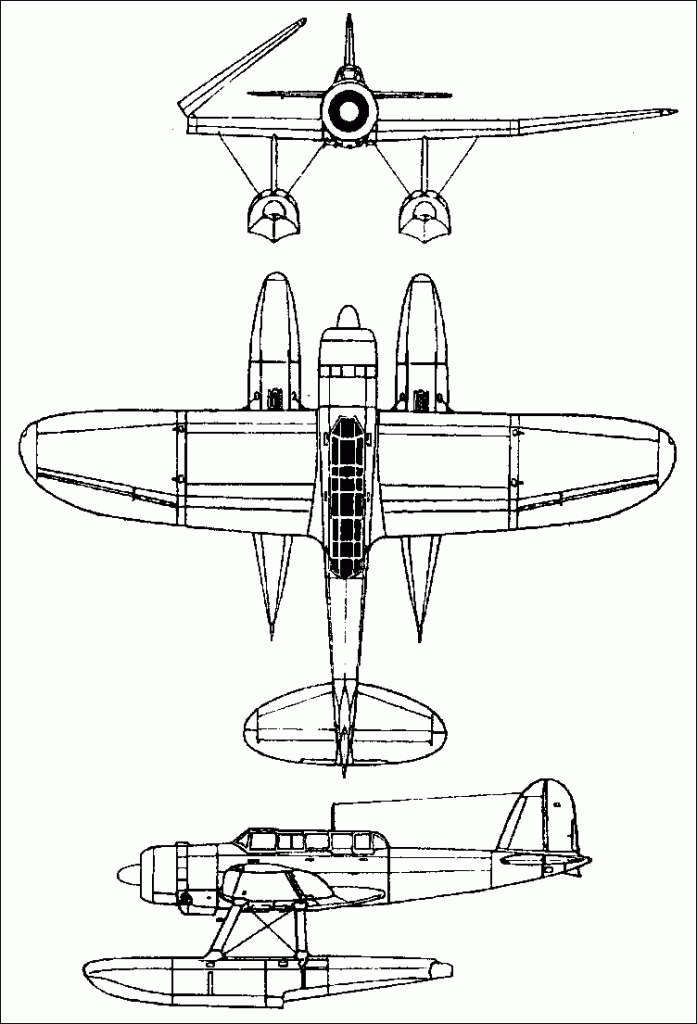
The E16A (“Auspicious Cloud”) floatplane was devised as a direct successor to the E13A “Jake” series. The E16A has crew accommodations for a pilot and a rear-cockpit gunner. Pontoons were fitted underside in place of traditional landing gears. Standard armament was 2 x 20mm forward-fixed cannons in the wings and a single 7.7mm machine gun for the rear gunner. An under fuselage position was utilized for strike runs, though the primary use of the aircraft was of carrier-based reconnaissance.
The first prototype flew in 1942, entering service in 1943, and first saw service during the Philllipines campaign. The E16A was intended as a reconnaissance type, but was often used as a ground attack aircraft and dive bomber. Allied code named ‘Paul’.
E16A1
The Aichi E16A was powered by a single Mitsubishi three-blade MK8D Kinsei 54 14-cylinder radial piston engine and could achieve a service ceiling of nearly 33,000 feet while reaching speeds of over 270 miles per hour. 256 total examples of the E16A were ever produced and of only made up of the single E16A-1 model designation.
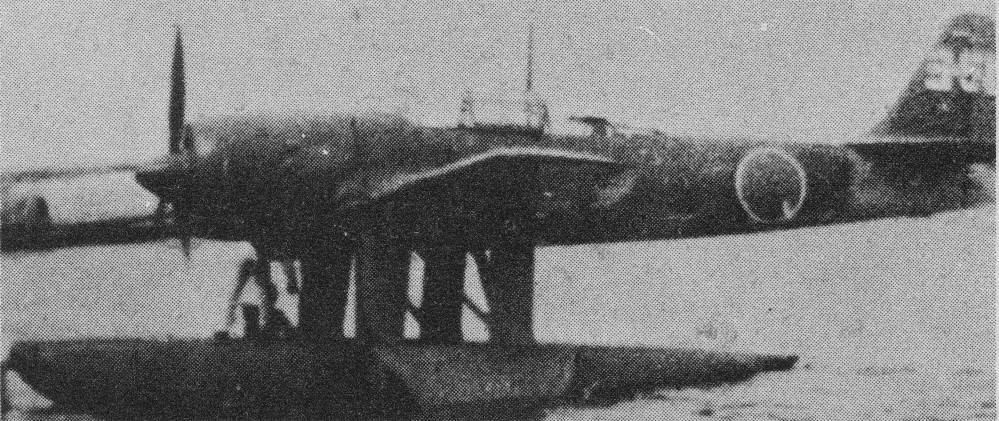
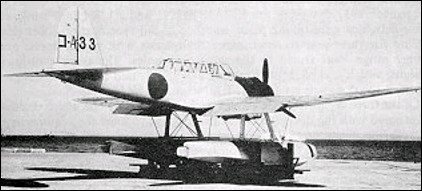
A naval staff specification issued to Aichi, Kawanishi and Nakajima in 1937 for a three-seat reconnaissance seaplane to replace the six-year-old Kawanishi E7K2 float biplane resulted in the Aichi E13A monoplane (of which 1,418 were produced). A prototype was completed late in 1938 and after competitive trials with the Kawanishi E13K in December 1940 was ordered into production as the Navy Type 0 Reconnaissance Seaplane Model 1.
The E13A was a three-crew low-wing monoplane aircraft with pontoons fitted in place of traditional landing gear systems.
Japanese cruisers and seaplane tenders carried the first aircraft from 1941, carrying a single 250kg bomb. The E13 flew a series of raids on the Hankow-Canton railway and soon afterwards E13A1 floatplanes accompanied the Japanese 8th Cruiser Division for reconnaissance patrols during the strike against Pearl Harbour in December 1941.
Though limited in number at first, the E13A series made some initial carrier-based land-strikes and reconnaissance missions that promoted the use of this aircraft type. As such, the floatplane would be fielded regularly with future cruiser groups and mounted to catapults on Japanese battleships. Standard armament would consist of 1 x 20mm downward-firing cannon and a single 7.7mm machine gun in the rear cockpit. External stores were limited to a single 551lb bomb or depth charge as needed.
As production switched to Kyushu Hikoki KK at Zasshonokuma and accelerated, the seaplanes (codenamed ‘Jake’ by the Allies) were embarked in the battleships and cruisers of the Kantais (fleets), including the battleship Haruna and cruisers Chikuma and Tone of Vice Admiral Nagumo’s Carrier Striking Force at the Battle of Midway.
In all, it is estimated that by mid-1943 more than 250 E13A1s were at sea aboard Japanese ships.
The Aichi E13A would serve through to the end of the war, though limited by the power of the new generation of American carrier-based fighters. “Jakes would later be relegated to Kamikaze attacks. In the end, there were 1,418 production models.
Aichi E13A — Palau
First coded ‘June’ when it was thought to be a bomber, ‘Jake’ wasn’t identified as a reconnaissance aircraft until examples were captured. For a while both names were used but ‘Jake’ seemed easier to remember and became the sole code identification.
The Imperial Japanese navy drew up the specification for a large torpedo/ dive-bomber to replace the Nakajima B6N and Yokosuka D4Y in 1941
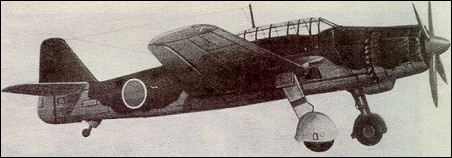
The experimental Nakajima Homare 11 twin-row radial powerplant developing around 1342kW was selected as the specification called for an internal bombload of up to 500kg or the carriage of an 800kg torpedo externally. Aichi began work and its AM-23 prototype flew in mid-1942. This aircraft, then designated Navy Experimental 16-Shi Carrier Attack Bomber (Aichi B7A1), was a mid-wing monoplane of inverted gull-wing configuration, with the main units of the retractable tail-wheel landing gear, mounted at the ‘elbows’ of each wing. A section of each outer wing panel folded for carrier stowage. The fuselage and tail unit were conventional, providing enclosed accommodation for a crew of two. An underside provision was allowed for the carrying of a single 1,764lb torpedo. Additionally, two forward-firing fixed 20mm cannons were mounted in the leading wing edges. A single defensive 13mm machine gun was allotted for the rear cockpit position.
It was almost two years before the type was ordered into production as the Navy Carrier Attack Bomber Ryusei (Shooting Star), or Aichi B7A2. Apart from nine prototype B7A1s, only 80 examples were completed by Aichi before its factory was destroyed in the serious earthquake of May 1945; an additional 25 were built by the Navai Air Arsenal at Omura.
By the time these aircraft entered service, when they were allocated the Allied codename ‘Grace’, the Japanese navy no longer had any carriers from which they could operate, with the result that they saw only limited use from land bases.
B7A1 Engine: Nakajima Homare 11, 1875 hp Wingspan: 47 ft 3 in Max speed: 337 mph at 20,345 ft
B7A2 Engine: 1 x Nakajima NK9C Homare-12, 1370kW / 2,000hp Wingspan: 14.4 m / 47 ft 3 in Length: 11.5 m / 37 ft 9 in Height: 4.08 m / 13 ft 5 in Wing area: 35.4 sq.m / 381.04 sq ft Take-off weight: 5625-6500 kg / 12401-14330 lb Empty weight: 3810 kg / 8400 lb Max. speed: 565 km/h / 351 mph / 306kt Service Ceiling: 11250 m / 36900 ft Range w/max.fuel: 3300 km / 2051 miles Range w/max.payload: 1800 km / 1118 miles Crew: 2 Armament: 2 x 20mm cannons, 13mm machine-gun, 800-kg torpedo or 800kg of bombs
The Aichi Watch and Electric Machinery Co, Nagoya, Japan. Aichi Tokei Denki Kabushiki Kaisha was established in 1899 as a manufacturer of electrical equipment and watches, but first built airplanes in 1920 and aero engines in 1927. From 1920s essentially a supplier to the Japanese Navy, but built civil types also, including a mail plane for the Japan Air Transport Company. Aichi established a working relationship with Ernst Heinkel Flugzeugwerke in Germany. Wishing to contend in early 1931 for an Imperial Japanese navy requirement for a two-seat carrier-based dive-bomber, Aichi requested Heinkel to design and build an aircraft to meet the navy’s specification. Required for operation with float or wheel landing gear, the resulting Heinkel He 50 prototype flew in the summer of 1931 with twin floats. A second version, with wheel landing gear, was supplied to Aichi under the export designation He 66. The aircraft DIA type of 1934 sank US gunboat Panay in 1937. Later D3A monoplane was perhaps the most famous of the company’s types, duplicating German interest in dive-bombers. Code-named “Val” by the Allies, this type attacked Pearl Harbor December 7,1941, and was also successful against British warships in the Indian Ocean. H9A1 twin-engined flying-boat was built in numbers; also notably E16A reconnaissance floatplane; B7A attack bomber; and the M6A catapultlaunched submarine-borne bomber, intended to attack such targets as the lock gates of the Panama Canal.
The company was founded by Count Giovanni Agusta in 1923, who flew his first airplane in 1907 and several more were built before the First World War. The firm was revived in 1923, specialising in light aircraft. The MV Agusta motorcycle manufacturer began as an offshoot of the Agusta aviation company at the end of the Second World War as a means to save the jobs of employees of the Agusta firm.
In 1952 Agusta was granted a license to build Bell Model 47 helicopters, the first Agusta-built example flying in May 1954, and over 1,200 were built before production ended in mid-1970s. The company also produced Bell Iroquois models as Agusta-Bell 204B and 205, 212 and 206 JetRanger helicopters. In 1967, under Sikorsky license, production of SH-3D helicopters began, and in 1974 production of HH-3F (S-61R); production of final HH-3F Combat SAR version lasted into mid-1990s. Together with Elicotteri Meridionali, SIAI-Marchetti, and other Italian companies, Agusta became involved in production of the Boeing Vertol CH-47C Chinook. Other license-built helicopters include AB-412EP/Griffon/Maritime Patrol versions of the Bell 412EP and Griffon, AMD-500E version of the McDonnell Douglas MD 500E, and Agusta-Boeing 520N NOTAR helicopter.
The company also had ambitions to design and build its own helicopters. The Agusta A.101 and the Agusta A.106 can be considered the best of its earlier attempts. Others included the AB.102, A.103, A.104, and A.115. Agusta-designed helicopters include the twin-turboshaft A109 civil/military multipurpose type (flown August 1971), A 119 Koala single-turboshaft wide-body helicopter (first flown February 1995), and A129 Mangusta tandem two-seat attack helicopter (first flown September 1983) and its more-powerful International variant with five-blade main rotor as standard (first flown January 1995).
It also produced a small line of aero engines such as the GA.70 and GA.140.
Developed in the 1970s, the Agusta A109 has undoubtedly been the company’s biggest success. The A109 is a commercial and military twin turbine helicopter, of which the latest variants are still in production, hundreds having already been sold.
Agusta acquired 30% of SIAI-Marchetti in 1970, increased its stake to about 60% by 1973 and reached complete ownership in 1983.
In 1983 the Agusta A129 Mangusta anti-tank helicopter partook in its first official flight engagement. It was the first attack helicopter to be designed and produced in Western Europe. However, this helicopter has been a limited commercial success so far, seeing service with the Italian Army, and only now has a modernized variant being developed for the Turkish Army.
The 1980s saw the start of several collaborative projects for Agusta. In 1981 Agusta and Westland of Britain started the EH101 medium-lift naval helicopter project in order to satisfy the requirements of the Royal Navy and the Italian Navy. In 1985 the company started a collaborative programme with the aeronautic industries of Eurocopter Deutschland; Eurocopter, and Fokker in order to develop and produce the NHI NH90, a 9-ton twin engine multi-role medium helicopter in order to satisfy the requirements of their respective countries’ armed forces.
1990s projects include the Agusta A109 Power, an improved version of the A109 (1994) and the Agusta A119 Koala (1997), a single-engine design based on the A109.
Agusta became involved in a notorious Belgian bribery scandal when it was revealed that the company had paid the two Belgian socialist parties who were then (1988/1989) in the government to assist the company in getting the contract for attack helicopters for the Belgian army.
1995: 520 Via Giovanni Agusta, Cascina Costa di Samarate, Varese I-21017, Italy.
In 1998 Agusta formed a joint venture with Bell Helicopter Textron called the Bell/Agusta Aerospace Company. Its aim was to develop the Bell/Agusta AB139 helicopter and the Bell/Agusta BA609 tiltrotor aircraft. Bell later withdrew from the AB139 project, which is now known as the AgustaWestland AW139.
In July 2000 Finmeccanica and GKN plc agreed to merge their respective helicopter subsidiaries (Agusta and GKN-Westland Helicopters), forming AgustaWestland.





 All Aero