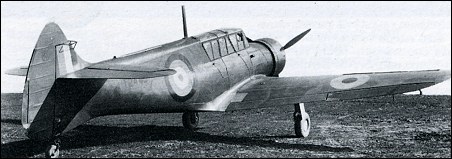
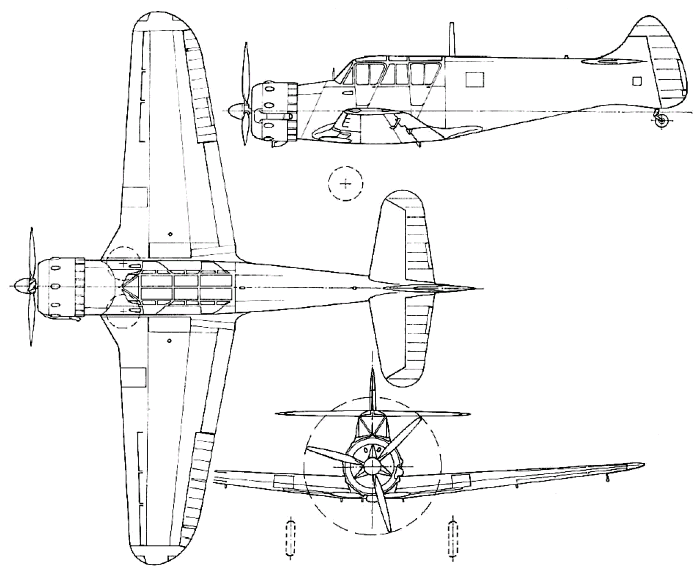
Designed to Air Ministry Specification 134/39 for an advanced trainer, the Airspeed AS.45 design was a conventional low-wing monoplane having retractable tailwheel type landing gear, and powered by a 544kW Bristol Mercury VIII radial air-cooled engine. Following Air Ministry approval of the design, which was given the provisional name Cambridge, two prototypes were ordered, the first of these making a maiden flight on 19 February 1941. The wings and tail unit were wood with plywood skins, except for control surfaces which were fabric-covered. The trailing edge of each wing was shared almost equally by ailerons and flaps. Four doors were provided, two on each side, so that exit in emergency could be made on either side. The main units of the Dowty landing gear retracted inwards, the wheels lying flush in the undersur¬face of the wing centre-section. Instructor and trainee were seated in tandem beneath a glazed canopy. Flight testing of these two prototypes was to show that low-speed flight characteristics were poor, and speed was below estimates. Both of the aircraft were handed over to the RAF in July 1942, following a decision not to proceed with production.
Engine: 1 x Bristol Mercury VIII radial piston, 544-kW (730-hp) Propeller: three-blade constant-speed Maximum speed at 4875 m (16,000ft): 381 km/h (237 mph) Service ceiling: 7560m (24,800ft) Range: 1094 km (680 miles) Wing span: 12.8m (42ft 0in) Length: 11 m (36ft 1 in) Height: 3.51 m (11ft 6in) Wing area: 26.94sq.m (280sq,ft) Armament: none Seats: 2
In 1936 Airspeed submited a proposal to meet Air Ministry Specification T.23/36, for a twin-engined trainer. Airspeed’s design for this was based on the AS.6 Envoy, which may have helped the Air Minis-try’s decision to order an initial quantity of 136 AS.l0s.
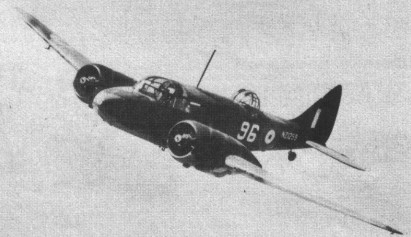
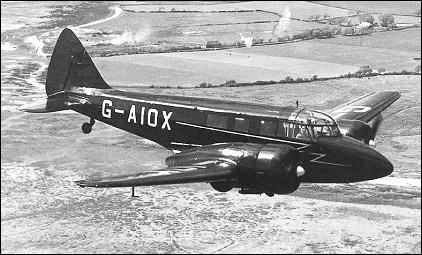
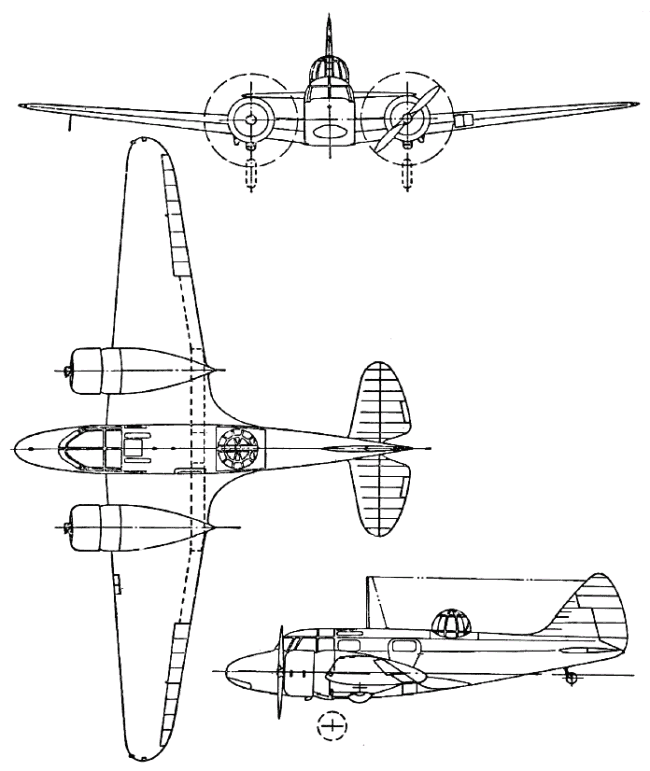
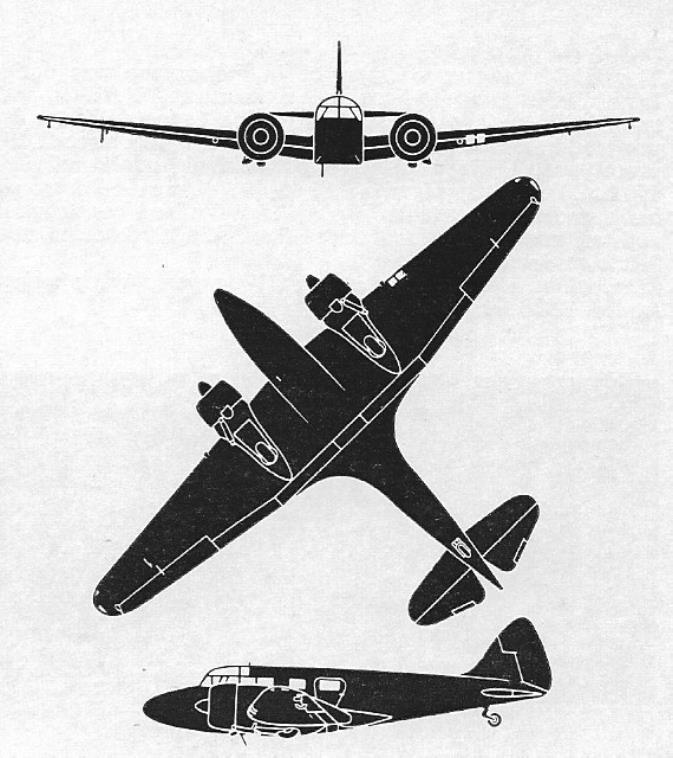
Sharing the AS.6 Envoy wooden construction, tailwheel type retractable landing gear and basic air¬frame, normal accommodation was for a crew of three at any one time, but in addition to seats for a pilot/pupil and co-pilot/instructor, there were positions for the training of an air-gunner, bomb-aimer, camera operator, navigator, and radio operator. Dual controls were standard, making the Oxford suitable for use as a twin-engined trainer; with the dual-control set removed from the co¬pilot’s position, a bomb aimer could take up a prone position and drop practice smoke bombs which were carried in the centre-section well; or the seat could be slid back and a chart table, hinged to the fuselage side, erected for use by a trainee navigator; an aft-facing seat behind the co-pilot position was available for a radio operator; and, in the Oxford 1, an Armstrong Whitworth dorsal gun turret was provided for an air-gunner’s training. The turret was removed from later versions and they were used mainly for pilot training. A hood was also available so that the Oxford could be used for instrument training.
Oxford
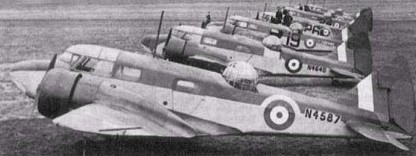
The prototype AS.10 Oxford made its first flight on 19 June 1937, and deliveries began in November of that year, with four of the first six going to the RAFs Central Flying School, the other two to No.11 Flying Training School.
One example of a Mk II aircraft was fitted experimentally with two 186-kW (250-hp) de Havilland Gipsy Oueen inline engines. Odd variants included an early Oxford I equipped with special McLaren landing gear, the main units of which could be offset to cater for a reasonable degree of crosswind at both take-off and landing, and one with a tail unit which included twin endplate fins and rudders, especially installed for a series of spin recovery tests.
The outbreak of World War II created a demand for these trainers, not only for use by the RAF, but also by those nations which were involved in the Commonwealth Air Training Scheme. These included Australia (nearly 400 Oxfords), Canada (200), New Zealand (300), Rhodesia (10), and South Africa (700). Examples went also to the Free French air force and, under reverse Lend-Lease, a number were used by USAAF units in Europe. A number were equipped to serve as air ambulances. The Fleet Air Arm also had one training unit, No. 758 Instrument Flying Squadron, equipped with Oxfords from June 1942.
The demand for Oxfords was beyond Airspeed’s productive capacity, the company building a total of 4,411 at Portsmouth, Hants, and 550 at Christchurch, Hants. Other construction was by de Havilland at Hatfield (1,515), Percival Aircraft at Luton (1,360), and Standard Motors at Coventry (750), to give a total of 8,586. Airspeed built its last example in July 1945, and the Oxford remained in service with the RAF at No. 10 Advanced Flying Training School, Pershore, until 1954. Many were supplied after the war to the Dutch air force.
Consul
During 1946-1948 many were converted to Consul civil version status post-war as civilian six passenger aircraft. About 150 were sold worldwide, some conversions and some new builds.
Mk I – Weapons trainer, usually fitted with a Armstrong Whitworth dorsal gun turret Engines: 2 x Armstrong Siddeley Cheetah IX (335hp) or Cheetah X, 280-kW (375-hp). Propellers: Fixed-pitch Length: 34.48ft (10.51m) Wingspan: 53.31ft (16.25m) Height: 11.09ft (3.38m) Maximum Speed: 186mph (300kmh; 162kts) Cruise: 140 mph Maximum Range: 932miles (1,500km) Service Ceiling: 19,199ft (5,852m) Armament: 1 x 7.7mm (0.303-in) Vickers K machine gun in dorsal turret Bombload: 250lbs internal Accommodation: 3 Empty Weight: 5,379lbs (2,440kg) Maximum Take-Off Weight: 7,599lbs (3,447kg)
Mk II – Pilot, radio-operator and navigator trainer Engines: 2 x Armstrong Siddeley Cheetah IX (335hp) or Cheetah X, 280-kW (375-hp) Propellers: Fixed-pitch Top speed: 185 mph Cruise: 140 mph
Mk.II Engine: 2 x Armstrong Siddeley Cheetah 10, 395 hp Span: 43 ft 4 in Length: 35 ft 4 in Height: 10 ft 1.5 in Wing area: 348 sq.ft Empty weight: 6047 lb Loaded weight: 8250 lb Top speed: 185 mph Max cruise: 156 mph ROC: 1180 fpm Max range: 900 mi
Mk III – Radio and navigation trainer Engines: 2 x Armstrong Siddeley Cheetah XV 318-kW (425hp) Propellers: Rotol constant-speed Number built: 1
Mk IV – Testbed for the De Havilland Gipsyqueen IV (Gipsy-Six IIIS, Turbocharged, 6 cylinder inline engine).
Mk V – Radio and navigation trainer Engines: 2 x Pratt & Whitney R 985-AN6 Wasp Junior, 335kW (450-hp) Propellers: Constant-speed Wingspan: 16.26 m / 53 ft 4 in Length: 10.52 m / 34 ft 6 in Height: 3.38 m / 11 ft 1 in Wing area: 32.33 sq.m / 348.00 sq ft Max take-off weight: 3269 kg / 7207 lb Empty weight: 2572 kg / 5670 lb Wing load: 22.96 lb/sq.ft / 112.0 kg/sq.m Max. speed at 1250m (4,l00ft): 325 km/h / 175 kts / 202 mph Service ceiling: 6400 m / 21000 ft Range: 1127 km / 609 nm / 700 miles Seats: 3-4
Following the collapse of the British airship programme after the crash of the R101 in France on 5 October 1930, two of the R100 design team based at Howden, near York, established a new company in York to produce light aircraft. They were A. Hessell Tiltman and Nevil Shute Norway and they named the ne company Airspeed Ltd. Tiltman and Norway spent much time seeking capital but with the small capital they had it was decided to build and fly an advanced sailplane to capture as many British gliding records as it could.
A factory was set up in an empty bus garage in Piccadilly, York, and the Tern sailplane was completed by August 1931. It was successful and captured all the available records of height and distance, flown by Carli Magersuppe, and the required capital began to flow into the company.
Airspeed then entered the light aircraft field, moved the factory to Portsmouth.
The Airspeed company was established in February 1931 in York to build the Ferry 3-engined low-performance biplane, designed specifically for short-range pleasure flying (“joy riding”). The prototype Ferry, built to Sir Alan Cobham’s specification, went on tour with his National Aviation Day Displays 1932 and 1933; joined by second example 1932. In 1933 two more Ferries (four only built) acquired by John Sword of Midland and Scottish Air Ferries Ltd.
CEO of the original Airspeed was novelist Neville Shute (real name of Neville Shute Norway), and by the end of 1933 Airspeed had built two Tern sailplanes, four Ferry short-range ten-seat airliners and five Couriers. Airspeed Ltd moved to Portsmouth in 1934 following an adavantageous agreement for new, free premises in that town’s airport. The company Airspeed Ltd was established in 1934 at Portsmouth, Hants, in association with shipbuilding interests of Swan, Hunter and Wigham Richardson.
In 1940 a transport glider was designed to carry two pilots and 25 troops. This was put into production as the Horsa.
In June 1951, the final merger of Airspeed into de Havilland Enterprise was announced.
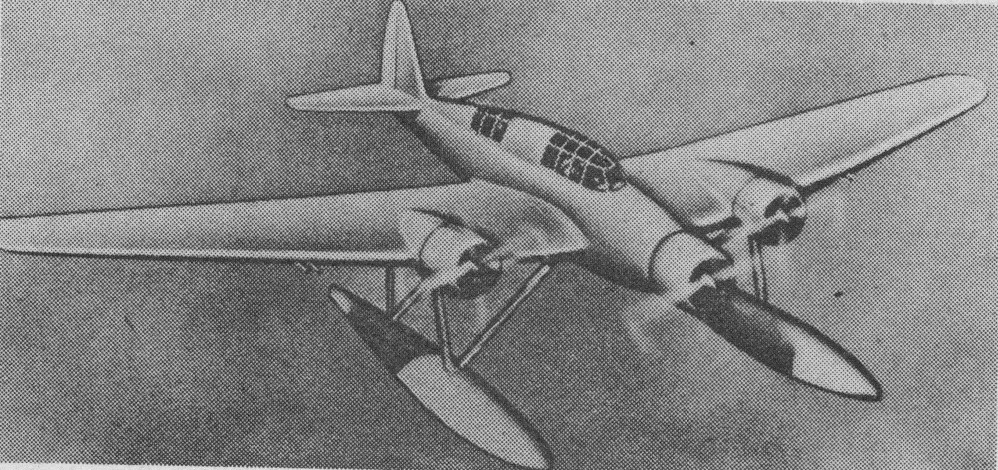
The Aichi AI-104 Type 98 Reconnaissance Floatplane never existed, yet it was described in detail in recognition manuals as late as February 1943. It may have been a mis-identified Italian CANT Z.506B that was illustrated in December 1938 Japanese magazines.
Described in the original WW2 code lists as the Type 97 Floatplane, later as a Kawasaki Type 97 fighter, the allied name ‘Bob’ was dropped early in 1943.
Its original assignment was a so-called Aichi Type 97, in reality a mis-identified Nakajima E2N Type 15 of the 1920s, an obsolete type.
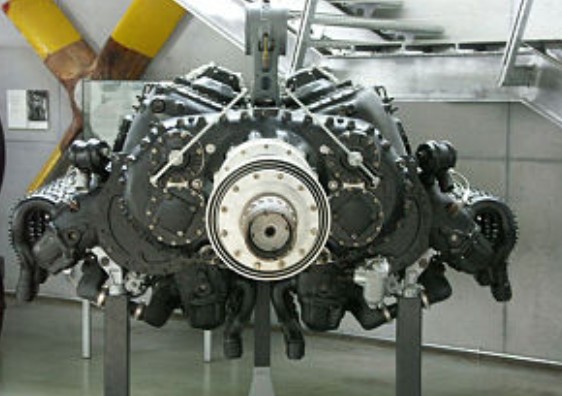
DB 610 gearbox end showing same two-engine arrangement
The Aichi Kokuki KK Ha-70 was a compound engine composed of two 1,700 hp 12-cylinder liquid-cooled inverted V-12 Aichi Atsuta aircraft engines mounted to a common gearbox, first run in 1945. The only aircraft powered by the Ha-70 was the Yokosuka R2Y, an Imperial Japanese Navy Air Service (IJNAS) prototype reconnaissance aircraft that was designed and built near the end of World War II. Contents
In common with Daimler-Benz, Aichi Kokuki KK joined two Aichi Atsuta engines to drive a single propeller through a combining gearbox in very similar fashion to the Daimler Benz DB 606 (two Daimler-Benz DB 601 engines coupled to a gearbox),
The Yokosuka R2Y prototype reconnaissance aircraft required a new engine of 3,400 hp (2,535 kW) and after studying the Daimler-Benz DB 606A-2 engine that powered the Heinkel He 119 single-engine reconnaissance bomber, Aichi determined that the required horsepower could be attained by coupling two Atsuta engines with a common gearbox. To obtain the required power the Atsuta would require up-rating by at least 300 hp (224 kW) horsepower; Aichi continued to improve the Atsuta 32, eventually extracting the required 1,700 hp (1,268 kW)
The two inverted Vee Atsuta engines were mounted side-by-side, each rotated outboard from the centre-line so that the inner banks were upright, with sufficient room between them for the exhaust manifolds. The engines were attached to a gearbox that combined the two separate engine drives into a single output shaft.
Fitted to the R2Y the Ha-70 was mounted behind the pilot, requiring a long drive shaft to drive the nose-mounted gear box that mounted the six-bladed propeller.
Type: Two coupled twelve-cylinder liquid-cooled supercharged 60° inverted Vee aircraft piston engines Bore: 150 mm (5.91 in) Stroke: 160 mm (6.30 in) Displacement: 33.93 L (2,070.5 in³) each, 67.86 L (4141 in³) total Valvetrain: Two intake and two sodium-cooled exhaust valves per cylinder actuated via a single overhead camshaft per cylinder block. Supercharger: Gear-driven single-speed centrifugal type supercharger[3] Fuel system: Direct fuel injection Oil system: Dry sump with one pressure and two scavenge pumps Cooling system: Liquid-cooled Power output: Takeoff: 2,500 kW (3,400 horsepower)
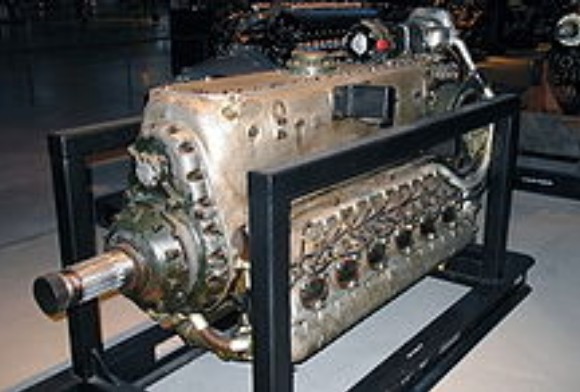
The Aichi Kokuki KK AE1A Atsuta (Japanese:アツタ or 熱田) was a Japanese licensed version of the German Daimler-Benz DB 601A 12-cylinder liquid-cooled inverted-vee aircraft engine. The Atsuta (first rn in 1942) powered only two models of Imperial Japanese Navy Air Service (IJNAS) aircraft aircraft in World War II. The Imperial Japanese Army Air Service (IJAAS) used the same engine (manufactured by Kawasaki as the Ha-40) to power its Kawasaki Ki-61 Hien (Allied reporting name “Tony”) fighter. Contents
Daimler-Benz granted Aichi Kokuki KK, a part of the Aichi Clock and Electric Co. (Aichi Tokei Denki KK), a license to manufacture the DB 600A through D models in November, 1936. At that time the Aichi Aircraft Company was building only the Nakajima Kotobuki 9-cylinder air-cooled radial engine at its Atsuta Engine Plant, located in south central Nagoya. It was necessary to re-tool the factory for the production of the new Daimler-Benz engine. Two DB-600 series engines were imported that year and three the next, all to be used as production patterns.
It was the Imperial Japanese Navy’s common practice to use a coded designation while an engine was in experimental or pre-production status. This engine was coded “AE1A”, which decodes as: A=Aichi Tokei Denki KK, E=Liquid-cooled, 1=Aichi’s first liquid-cooled engine model, and A=first version of that engine model. It was the Imperial Japanese Navy’s common practice to refer to its engines by name, while the Imperial Japanese Army referred to its engines by their engine (Japanese: Hatsudoki abbreviated Ha) model number. Ha numbers were assigned in sequence as the engine design was accepted.
The Japanese method of identifying model numbers of aircraft engines is unique in that the model number always has two digits and may be followed by one or more letters. The first digit represents the major version of the engine and the second number represents the minor version of that model engine. The model number follows the name (IJNAS engines) or the Ha number (IJAAF engines).
The first model number assigned to an engine is always 11, meaning the first major design and first minor version of that design. A major change to the design increments the first number and resets the second number to one. A minor change to the engine model increments the second number by one. If a very minor change is made, suffix letters are added after the model number.
When the AE1A engine was accepted by the IJNAS, its coded designation was dropped and a name was chosen. It is from the Atsuta factory that the engine name was derived.
The first production engine was the Atsuta 12 rated at 1200 hp. The model number 12 indicates this was the first model with one minor change.
By early 1938 the Japanese Navy had also acquired the German He 118 V4 two-seat dive bomber aircraft, along with its production rights. This aircraft was powered by the DB 601A. By 1939, eleven of the more advanced model DB 601A engines were imported. Manufacturing rights were updated for Aichi and granted to Kawasaki to build this model. The new engine received AE1P as its experimental designation.
When the AE1P design was accepted, Aichi’s version became the Atsuta 32 and Kawasaki’s version became the Ha-40.
The Atsuta 12 rated at 1200 hp was chosen to power the Yokosuka D4Y1 when it went into production. The D4Y2 was powered by the 1400 hp Atsuta 32 when it became available. The success of both airplanes was attributed to the slender lines of the high powered liquid-cooled engine.
A new top-secret aircraft that was to be transported and launched from a large submarine was ordered by the IJN in the spring of 1942 as the 17-Shi Special Attack Bomber. That aircraft became the Aichi M6A Serian (Shisei-Seiran), along with its M6A1-K Ninzan (Shisei-Seiran Kai) land-based trainer version.
Four preproduction M6A aircraft were completed, a firsthand account stating that one had a 1,200 hp Atsuta 12 engine, while the others three had Atsuta 32’s. The first aircraft’s engine was later changed to an Atsuta 32.
Eighteen M6A1 Special Attack Bomber versions followed, and these had the Atsuta 32 engine as well. Lastly, two of the original M6A1 prototypes were converted into M6A1-K Nanzan land-based training aircraft.
Aichi manufactured 873 Atsuta series engines during World War II. These were shared between the twenty-two M6A1/M6A1-K and all D4Y1/2 aircraft. Peak production of the Atsuta 32 engine was in May, 1944, when 107 engines were produced.
A serious problem with the Aichi and Kawasaki version of the Dailmer-Benz engine was that that of holding a close tolerance fit between the crankshaft and its bearings on this fairly long engine. The result was that the engine proved to be prone to crankshaft failure. Additionally, there was often great difficulties obtaining engine components which, along with repeated air attacks on the Atsuta engine plant, eventually brought engine production to a standstill.
Maintenance difficulties with the Atsuta and Ha-40 engines eventually led to the installation of the more reliable Mitsubishi Kinsei 62 radial engine for the D4Y3 model 33, and the Mitsubishi Ha-112 radial air-cooled engine for the Army’s Kawasaki Ki-61, which then became known as the Ki-100 Type 5 Fighter. Such a modification was not possible for the M6A1 as it could only use the liquid-cooled inverted-vee type engine, as it had to fit the submarine’s confined hangar. The M6A1 Seiran then became the only Japanese airplane that retained the inverted-vee engine installation throughout the war.
Postwar evaluation by the Air Technical Service Command’s Foreign Aircraft Evaluation Center for the Air Force (located at Wright Field and Freeman Army Airfield) found the Atsuta engine’s standard of workmanship was not as good as that of the Army’s Kawasaki Ha-40, and far worse than Mitsubishi and Nakajima.
Type: Twelve-cylinder liquid-cooled supercharged 60° inverted Vee aircraft piston engine Bore: 150 millimetres (5.91 in) Stroke: 160 millimetres (6.30 in) Displacement: 33.93 L (2,071 cu in) Length: 215 cm (84.65 in) Width: 71.2 cm (28.03 in) Height: 106 cm (41.73 in) Dry weight: 715 kg (1,576 lb) Valvetrain: Two intake and two sodium-cooled exhaust valves per cylinder actuated via a single overhead camshaft per cylinder block. Supercharger: Gear-driven single-speed centrifugal type supercharger[10] Fuel system: Direct fuel injection Oil system: Dry sump with one pressure and two scavenge pumps Cooling system: Liquid-cooled Reduction gear: 0.532:1 (AE1A); 0.4:1 (AE1P) Power output: Takeoff: At sea level: 1,400 hp (1,419 PS) at 2,800 rpm Cruise: At 1,700 m (5,600 feet): 930 kW (1,250 hp) at 2,600 rpm (AE1A) Cruise: At 1,000 kW (1,340 hp) at 2,600 rpm (AE1P) Cruise: At 5,000 m (16,000 feet): 960 kW (1,290 hp) at 2,600 rpm (AE1A) Compression ratio: 7.2:1 (AE1A); 7.5:1 (AE1P)
The Aichi AC-1 was an experimental 330 hp nine-cylinder air-cooled radial engine. First run in 1929, it was used to power the newly designed Aichi AB-2, a catapult-launched reconnaissance seaplane.
The AB-2 with its AC-1 engine is noted for being the first shipboard reconnaissance seaplane and engine combination designed and manufactured entirely in Japan, without foreign assistance. This was a major turning point, not only for Aichi, but for all of the other Japanese aircraft and engine manufacturers, as they no longer need rely on foreign designs.
The engine proved to be a disappointment by not performing as expected. On one test flight, an exhaust fire spread to the airframe and the aircraft was lost, and, soon after, the project ended.
Specifications Type: Nine-cylinder, air-cooled, Radial aircraft piston engine Valvetrain: Two overhead valves per cylinder Supercharger: gear driven single-speed centrifugal Fuel system: Carburetor Oil system: Dry sump with scavenging pump and pressure pump Cooling system: Air-cooled
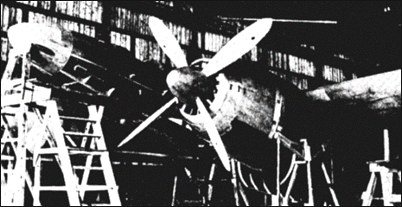
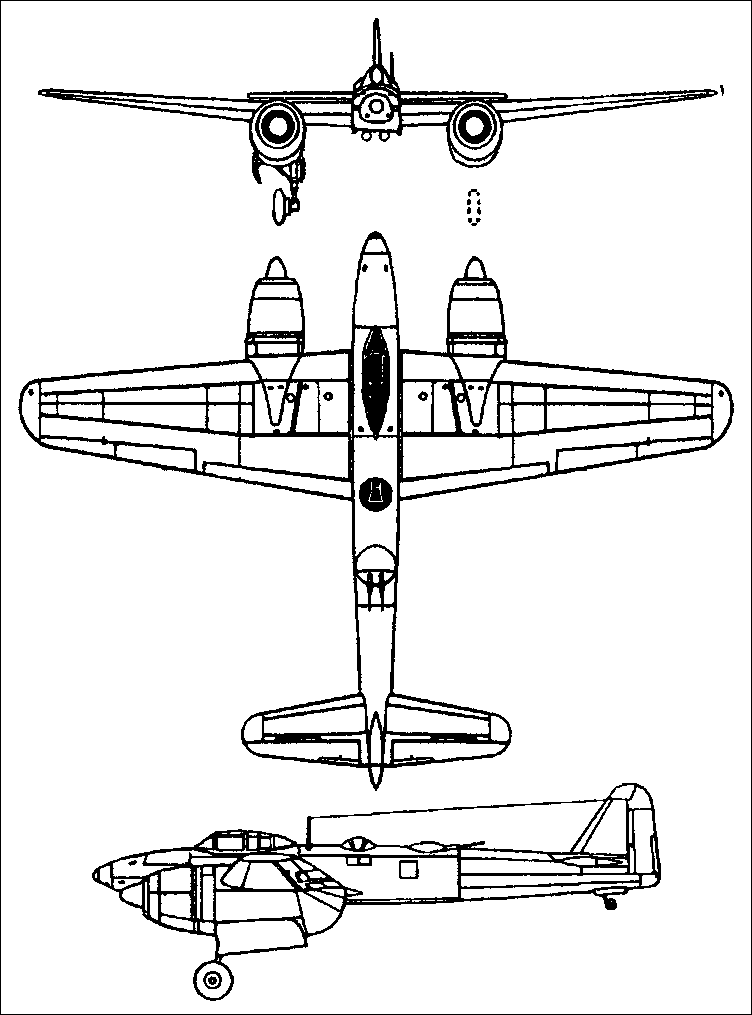
The Aichi S1A Denko of 1945 was never flown. Both prototypes of the Homare 22-powered night interceptor were destroyed during bomb attacks.
S1A Engine: 2 x Nakajima NK9K-S “Homare-22”, 1500kW Wingspan: 17.5 m / 57 ft 5 in Length: 15.1 m / 49 ft 6 in Height: 4.61 m / 15 ft 1 in Wing area: 47.0 sq.m / 505.90 sq ft Take-off weight: 10180-11510 kg / 22443 – 25375 lb Empty weight: 7320 kg / 16138 lb Max. speed: 580 km/h / 360 mph Cruise speed: 440 km/h / 273 mph Ceiling: 12000 m / 39350 ft Range w/max.fuel: 1670 km / 1038 miles Range w/max.payload: 2500 km / 1553 miles Crew: 2
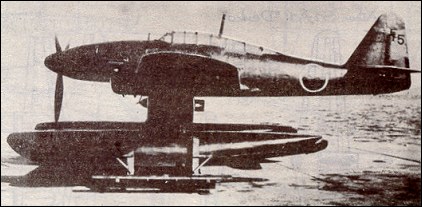
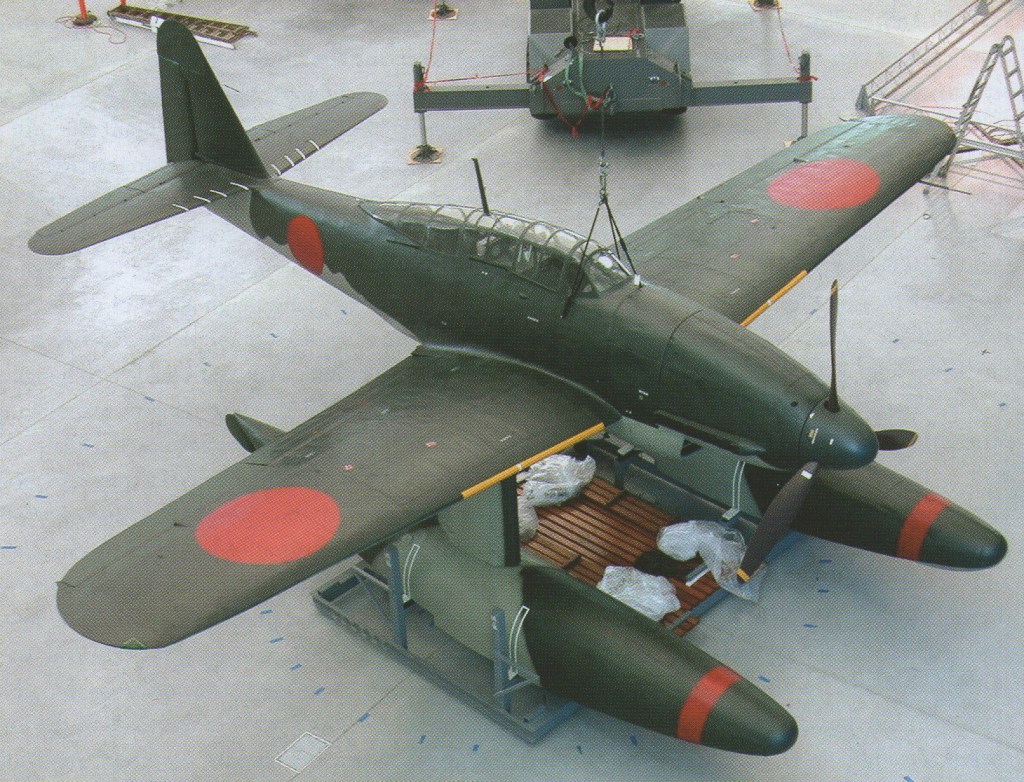
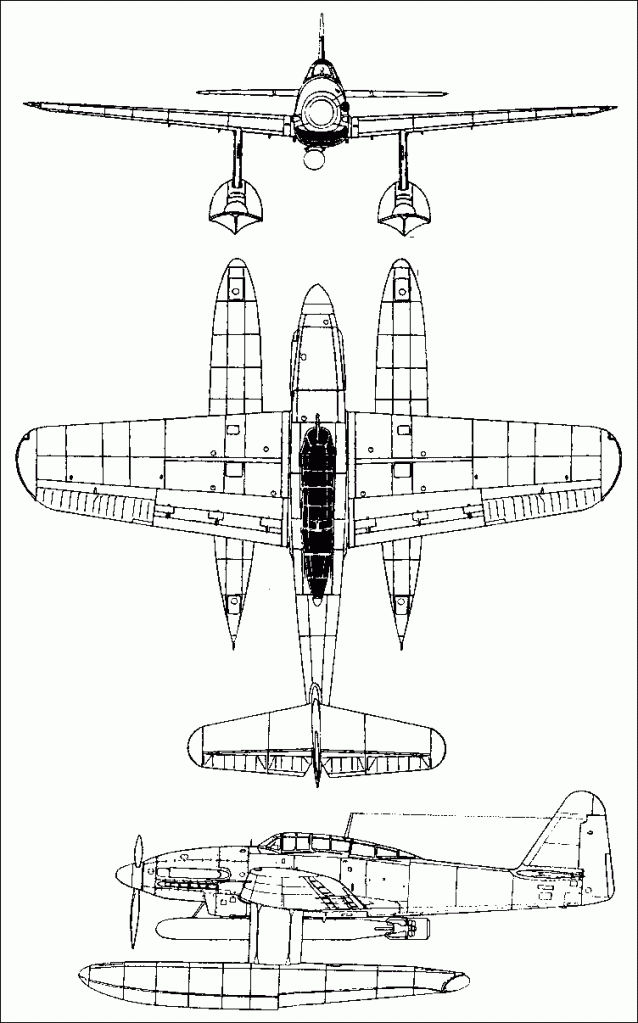
The Aichi M6A-1 Seiran attack floatplane was to be housed in water-tight containers and released from Japanese Navy I-400 class submarines. The wings rotated back and folded flat against the fuselage. Part of the horizontal and vertical stabiliser also folded.
The first prototype flew in November 1943 and a total of 28 were built. The design was in full production in 1945, with the aircraft and its submarine counterparts being readied for an attack on the Panama Canal when the war ended.
The Aichi M6A Seiran (translated as “Mountain Haze”) was a single engine design, powered by a Atsuta 32 inline piston engine of 1,400 horsepower driving a three-blade propeller. Crew accommodations amounted to one personnel and standard armament is known to consist of a single 500lb bomb, mounted under the fuselage presumably. Design of the aircraft consisted of a low-monoplane type with a single rudder aft. The cockpit was situated at center above the wing roots.
At the end of May 1945, at the instigation of Admiral Yamamoto, a series of I-400 submarines were ordered, each able to carry three special duty aircraft. A catapult stretched from the cylinder hangers in the starboard hold, forward to the bow.
The aircraft were twin seater Aichi M6A1 Seiran seaplanes specially designed for a bombing raid on the Panama Canal. The Seirans were powered by German Daimler-Benz DB601A of 1400 hp. They were designed to drop off the crew after the raid, be ditched beside the submarine and sink at once. On 25 June 1945 the plan was halted.
On 25 June 1945, Imperial Japanese Headquarters halted preparations for the Japanese 1st Submarine Flotilla to attack the Panama Canal, and issued new orders: In view of the American threat to the main Japanese islands, the 12 Seiran aircraft were ordered to find a suitable opportunity to launch a kamikaze raid (operation Hikari) against US aircraft carrier, but the surrender came before the operation could be carried out.
A land-based derivative known as the M6A1K “Seiran Kai” was utilized for pilot training purposes. Landing gear was of the standard two-front with a tail wheel at rear for this land-based variant.
Aichi M6A1 Seiran Engine: 1 x Aichi Atsuta Type 32 inline radial, 1,400hp. Wingspan: 12.26 m / 40 ft 3 in Length: 11.64 m / 38 ft 2 in Height: 4.58 m / 15 ft 0 in Wing Area: 27.0 sq.m / 290.63 sq ft Take-Off Weight: 4040-4445 kg / 8907 – 9800 lb Empty Weight: 3300 kg / 7275 lb Maximum Speed: 295mph (474kmh; 256kts) Cruise Speed: 300 km/h / 186 mph Maximum Range: 1,243miles (2,000km) Service Ceiling: 32,480ft (9,900m) Armament: 1 x 13mm machine-gun, 850-kg torpedo or 1 x 800-kg bomb or 2 x 250-kg bombs Crew: 2 Hardpoints: 1
 All Aero