Félix Amiot started his firm Amiot – S.E.C.M in 1916, building Bréguet and Morane-Saulnier machines under licence.
Avions Amiot products were known formerly by SECM prefix, latterly as SECM-Amiot or generally, Amiot, after founder Felix Amiot. In 1929 Amoit amalgamated with Avions Latham. The firm concentrated on large all-metal multi-engined aircraft, using light-metal stampings, though well before 1940 introduced stressed-skin construction. In the 1930s works at Colombes and Caudebec were reconditioning several types of metal aircraft for French Government. Changes in structural techniques were matched by aerodynamic advances; thus, the Amiot 143.
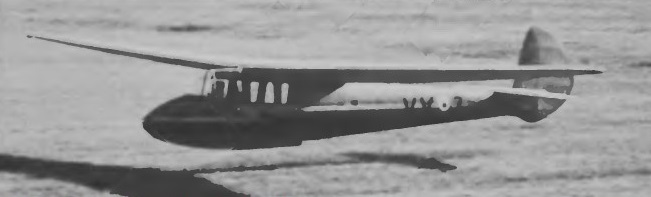
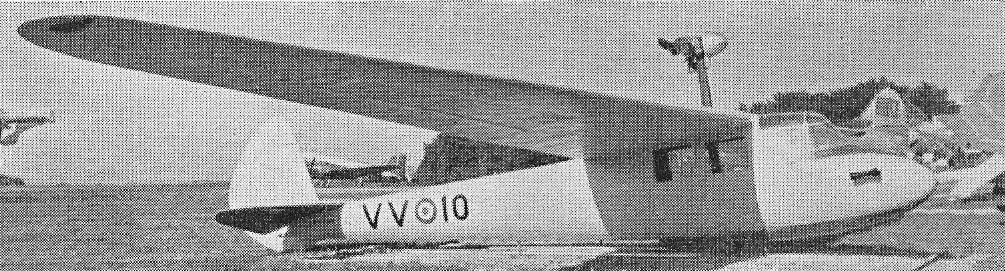
The Canguru was designed in 1939 by the Gliding Institute Polytechnic of Milan (Centro Volo a Vela del Politecnico Di Milano) under the direction of the Engineer Ermenegildo Preti.
The Canguru two-seater is of conventional all-wood and fabric construction, with a high cantilever wing which has a single main spar with a torsionally stiff D-type leading edge; the wing is in two halves and can easily be detached for transport. CVV-type air brakes limit the maximum diving speed to 137mph. The oval-section fuselage is a monocoque structure and the two pilots are seated in tandem, an unusual feature being the location of the second pilot actually beneath the wing rather than ahead of it or in line with the leading edge. The cantilever tail unit has a low-set tailplane.
The CVV 6 Canguru two-seater was developed by the CVV (Centre Volo a Vela del Politecnico di Milano) and built in small numbers by Ambrosini – or Societa Aeronautica Italiana, Ing A. Ambrosini & C. It was also built under licence by Meteor SpA, Costruzioni Aeronautiche.
In addition to the prototype, the Italian air force has ordered 32 copies. The first flew in 1940, only two copies were built during the duration of the war. Others were produced between 1953 and 1955.
A powered prototype Ambrosini CVV6 Canguro, with Italian military number MM100028, was built with a 20 hp flat-twin engine.
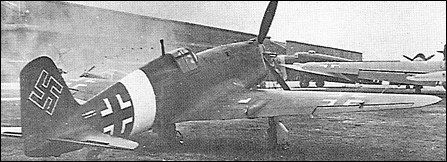
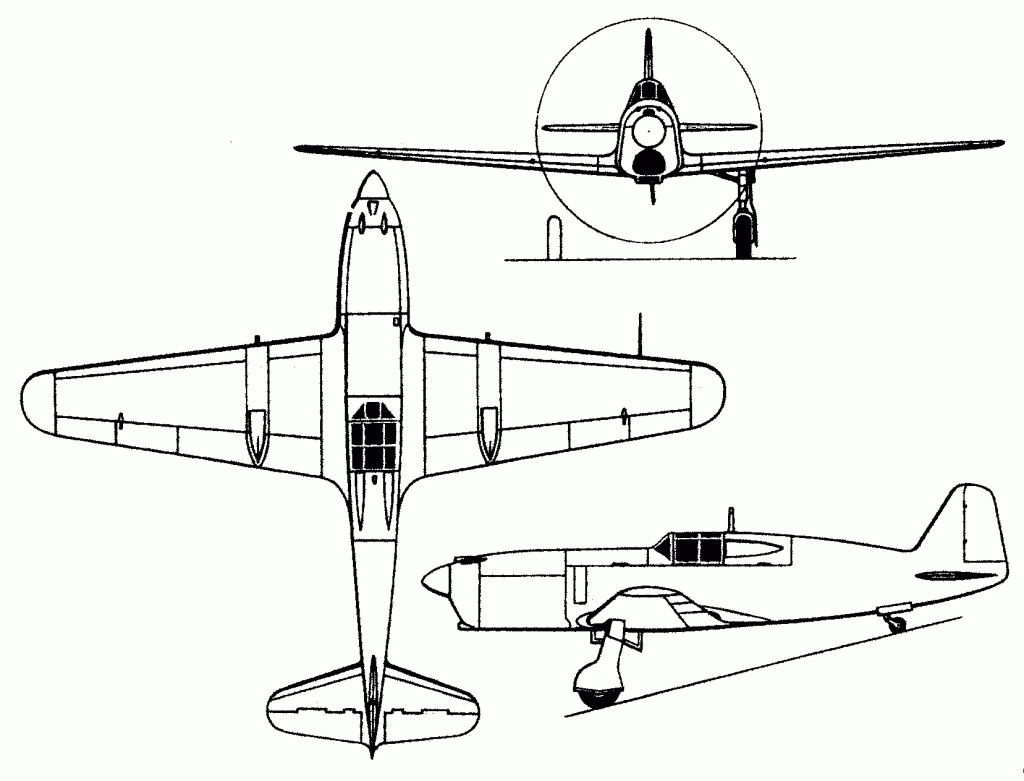
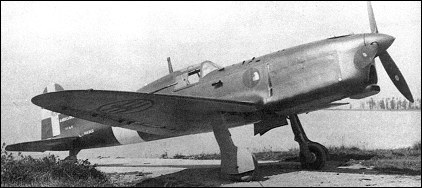
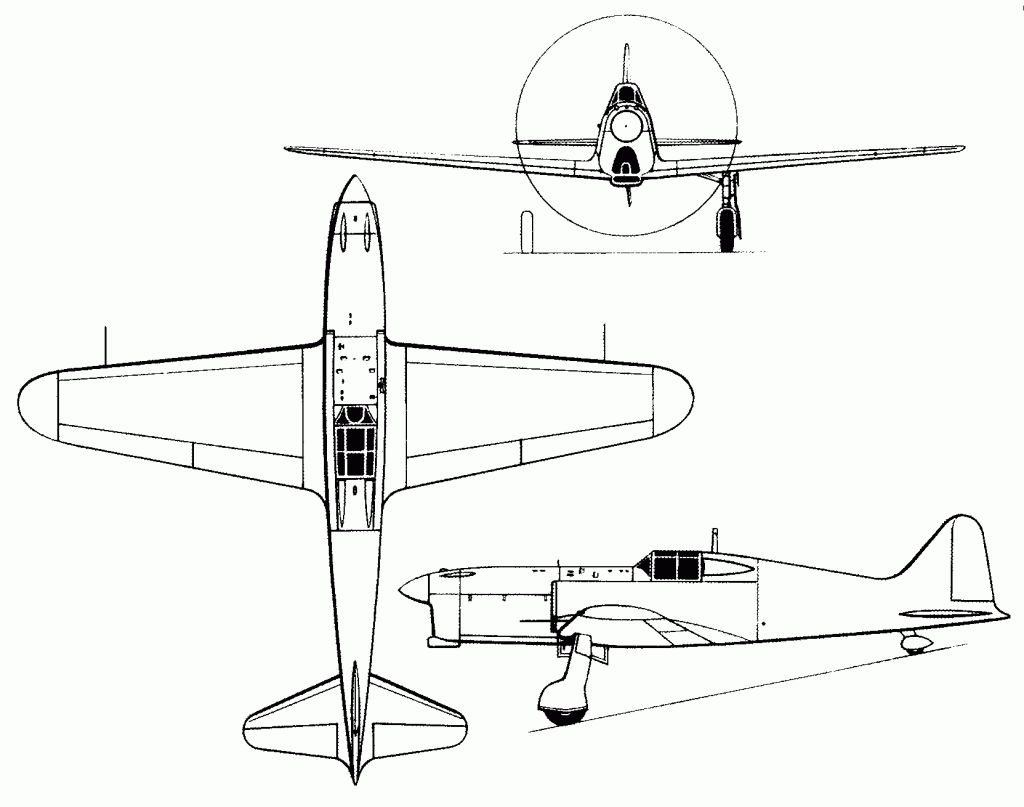
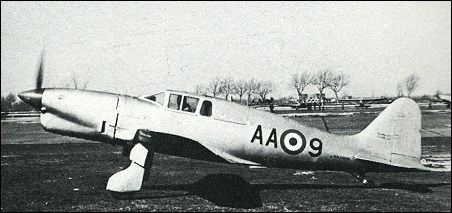
A lightweight single seat fighter by Societa Aeronautica Italiana (Ambrosini), the Type 403 Dardo (Arrow) appeared in late 1942, developed from the S.A.I.207. The 403 differed by having a later series of 750 hp Isotta Fraschini Delta inverted V 12 aircooled engine, and constant speed Piaggio propeller. The airframe was of similar all-¬wood form but had a new wing profile, greater area, redesigned tail surfaces – the incidence of the tailplane being variable in flight – a redesigned rear fuselage, a fully-retractable tailwheel, provision for wing guns and a more robust structure.
The Stefanutti-designed S.403 flew for the first time in January 1943, powered by an Isotta-Fraschini R.C.21/60 engine of 750hp which provided a maximum speed of 403 m.p.h. In the final two years of the programme all that happened was the first few items of production tooling, but no Dardos.
The armament was two 20 mm (0.79 in) Mauser MG 151 cannon in the wings and two 12.7 mm (0.5in) Breda SAFAT heavy machine guns above the engine. The Dardo¬-C was to be a long range version with increased internal fuel and two drop tanks. An order for 3000 was placed with S.A.I. (800), Savoia Marchetti (1,200) and Caproni (1,000), but only the prototype flew as the Armistice ended all further work.
S.A.I.403 Engine: Isotta-Fraschini Delta HG 21/60, 559-kW (750-hp). Take-off weight: 2640 kg / 5820 lb Empty weight: 1983 kg / 4372 lb Wingspan: 9.80 m / 32 ft 2 in Length: 8.20 m / 26 ft 11 in Height: 2.90 m / 9 ft 6 in Wing area: 14.46 sq.m / 155.65 sq ft Max. speed: 648 km/h / 403 mph Range: 937 km / 582 miles Ceiling: 10000 m Crew: 1 Armament: two 20 mm (0.79 in) Mauser MG 151 cannon and two 12.7 mm (0.5in) Breda SAFAT machine guns
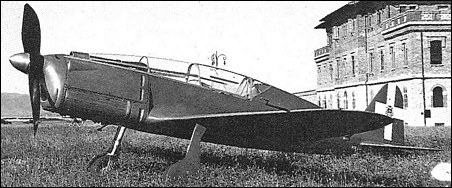
Developed from the S.107 lightweight single-seat fighter and featuring a similar wooden structure with monocoque fuselage, the S.207 was essentially a more powerful, productionised version of the basic design. The first of two prototypes of the S.207 was flown in 1940, and was powered by an Isotta-Fraschini Delta R.C.35 12-cylinder inverted-Vee air-cooled engine rated at 705hp.
The second prototype was powered by the R.C.40 version of the engine rated at 750hp at 4000m. In dives the S.A.I.207 attained an indicated air speed of 466 m.p.h. at 10,000 ft. (representing a true air speed of 596 m.p.h., or Mach 0.86), and maximum level speed was 357 m.p.h., with the 750 h.p.
Armament was two synchronised 12.7mm machine guns, and a pre-series of 12 S.207s was built during March-July 1943, several of these being assigned to the 83a Squadriglia (18° Gruppo, 3° Stormo) for evaluation, and six being assigned in August 1943 to the 162a and 163a squadriglie (161° Gruppo). The Ministero dell’Aeronautica placed orders for 2,000 of the S.A.I.207 production version, but only 13 pre-production aircraft were completed, the order then being switched to the improved S.A.I.403 Dardo (Dart).
One pre-series S.207 was fitted with an armament of two 20mm cannon.
S.A.I.207 Engine: 1 x Isotta-Fraschini Delta HG 40, 559kW (750 hp). Wingspan: 9m (29 ft 6.3 in) Length: 8.02 m / 26 ft 4 in Height: .40 m / 7 ft 10 in Wing area: 13.90 sq.m / 149.62 sq ft Empty weight: 1750 kg / 3858 lb Max T/O weight: 2415 kg (5,324 lb). Max speed: 398 mph at 14,765 ft Operational range: 590 miles Ceiling: 12000 m Climb to 6000 m: 7 min 34 sec Armament: 2 12,7 mm machine-guns Max Dive speed: 960 km/h Armament: 2 x 12.7-mm (0.5-in) mg.
Despite highly enthusiastic flight test reports, the need for increased production of combat aircraft necessitated the shelving of the S.A.I.7 trainer, but the aerodynamic qualities of the basic design were such that Stefanutti contemplated its adaptation as a lightweight interceptor fighter. The initial single-seat model, the S.A.I.I07, was built for research purposes and, powered by a 540-h.p. Isotta-Fraschini Gamma, was flown early in 1942
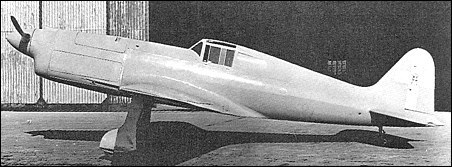
Working at the Societa Aeronautica Italiana of Ing Angelo Ambrosini, Sergio Stefanutti developed the S.107 lightweight fighter from the S.7 tandem two-seat aerobatic trainer and competition aircraft. Flown for the first time early in 1940, the S.107 was powered by a 515hp Isotta-Fraschini Gamma R.C.35-I 12-cylinder inverted-Vee air-cooled engine and armament was one 7.7mm machine gun. As initially flown, the S.107 was fitted with a long, faired windscreen extending over the engine in an attempt to reduce aerodynamic drag. This was found to impair vision from the cockpit, and it was replaced by a stepped windscreen. Performance was demonstrated at Guidonia, and progressive development of the basic design led to the S.207, the sole example of the S.107 being lost in an accident on 18 July 1941.
Engine: Isotta-Fraschini Gamma RC.35-I, 515 hp Take-off weight: 1600 kg / 3527 lb Empty weight: 1280 kg / 2822 lb Wingspan: 9.00 m / 29 ft 6 in Length: 8.00 m / 26 ft 3 in Height: 2.40 m / 7 ft 10 in Wing area: 13.10 sq.m / 141.01 sq ft Max. speed: 500 km/h / 311 mph Range: 800 km / 497 miles
Designed between October 1938 and April 1939 by Sergio Stefanutti as a two-seat high-speed tourer monoplane, the Ambrosini S.A.I.7 was a low-wing cantilever monoplane of wooden construction with fully retractable landing gear. The first two aircraft were specifically intended to take part in the IV Avio Raduno del Littorio contest for touring aircraft, and they flew within days of each other, only shortly before the competition opened at Rimini aerodrome on 15 July 1939. Both aircraft had an additional streamlined glazed section added between the nose and the normal cabin enclosure for the contest. The S.A.I.7s did not win the contest, but one machine captured an international speed record over the 100km closed circuit on 27 August 1939. The F.A.I. Category I aircraft with a speed of 244 m.p.h Ten of the S.A.I.7 militarised two-seat fighter trainer version appeared during 1943, and the experimental S.A.I.107, S.A.I.207 and S.A.I.403 light fighters were developed from it. In 1949 S.A.I. Ambrosini placed the S.A.I.7 in full-scale production. The post-war version replaced the 209kW Hirth HM.508D engine of the record-breakers and the 209kW Isotta-Fraschini Beta RC.10 of the wartime version with an Alfa Romeo engine, but apart from improved constructional detail there were few major changes. Most of the 145 post-war Ambrosini S.7s, some of them completed in single-seat configuration, formed the equipment of various flight training centres attached to the Aeronautica Militare zone headquarters. The military service was terminated in 1956 The S.7 participated in numerous competitions and Leonardo Bonzi established international records over the 100km and 1000km distances on 21 December 1951, with average speeds of 367.36km/h and 358.63km/h respectively.
Engine: 1 x Alfa Romeo 115ter, 168kW Take-off weight: 1317 kg / 2904 lb Empty weight: 1105 kg / 2436 lb Wingspan: 8.79 m / 28 ft 10 in Length: 8.17 m / 26 ft 10 in Height: 2.8 m / 9 ft 2 in Wing area: 12.8 sq.m / 137.78 sq ft Max. speed: 358 km/h / 222 mph Cruise speed: 264 km/h / 164 mph Ceiling: 5250 m / 17200 ft Range: 1000 km / 621 miles
After incorporation of Societa Aeronautica Italians with Ing A. Ambrosini & Cie, they specialised in fast tourers and sporting monoplanes, though SA11 was biplane. In the immediate pre-war years its Passignano plant was responsible for a successful series of light cabin monoplanes. In 1939, the chief designer, Sergio Stefanutti, developed an unorthodox tail-first, single-seat fighter, the S.S.4.
The series of light monoplanes had culminated in the S.A.I.7, The series of light monoplanes had culminated in the S.A.I.7 which, of exceptionally clean design and powered by a 280-h.p. Hirsh H.M.508D air-cooled engine, gained the 100-km. closed circuit record for F.A.I. Category I aircraft with a speed of 244 m.p.h. in 1939. The S.A.I.7 possessed excellent flight characteristics. Stefanutti had designed the aircraft with the alternative role of fighter trainer in mind, and a fully militarized trainer prototype flew in 1941. The original prototype featured a long, faired windscreen which extended to the front of the engine cowling to reduce drag, but the military trainer had an orthodox cockpit canopy for the tandem-seated pupil and instructor, and the German Hirsh was replaced by a 280-h.p. Isotta-Fraschini Beta R.C.I0.
The S.A.I.7 trainer basic design were such that Stefanutti contemplated its adaptation as a lightweight interceptor fighter. The initial single-seat model, the S.A.I.I07, was built for research purposes.
The S.A.I.I07 was externally similar to the S.A.I.207, which was built to full fighter requirements and carried an armament of two 20-mm. cannon and two 12.7-mm. machine guns. In dives the S.A.I.207 fighter attained an indicated air speed of 466 m.p.h. at 10,000 ft. (representing a true air speed of 596 m.p.h., or Mach 0.86), and maximum level speed was 357 m.p.h., which was attained on the 750 h.p. provided by an Isotta-Fraschini Delta R.C.40 engine. 2,000 were ordered, though only 13 completed. The type being replaced by proposed production of the SAI 403, work on which finished at war’s end.
Encouraged by the performance of the S.A.I.207, Sergio Stefanutti developed the more ambitious S.A.I.403 Dardo, which featured increased wing area and redesigned tail surfaces. Carrying a similar armament to that of its predecessor, the Dardo was powered by a 750-h.p. Delta R.C.21/60 engine which provided a maximum speed of 403 m.p.h. Large-scale production of the Dardo was planned, but the armistice precluded further development.
Other wartime activities of the S.A.I.-Ambrosini concern were the construction of the AL-12P troop- and cargo-carrying glider designed by Aeronautica Lombarda S.A., and the development of the Ambrosini AR “flying bomb”. Conceived by General Ferdinando Raffaelli as an anti-shipping weapon, the flying bomb was powered by a 1,000-h.p. Fiat A.80 radial engine and was to have been flown off the ground by a pilot who would then bail out, the bomb being directed to its destination by remote radio-control. Flight tests began on 13th June 1943, and four further examples were built at the Venegono plant. Flight trials were successful and a speed of 225-230 m.p.h. was expected, but the bomb was too late to see operational service.
In 1948 the S1001 Grifo broke more records. The S 7 was delivered in small numbers and developed into the Super S 7 (1950s). The F 7 Rondone was 3/4-seat cabin tourer.
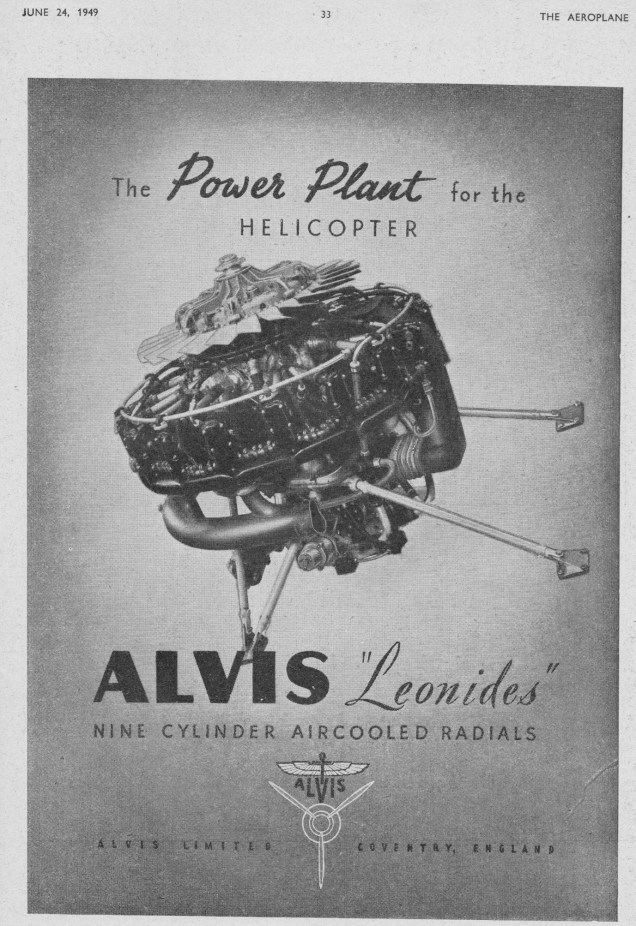
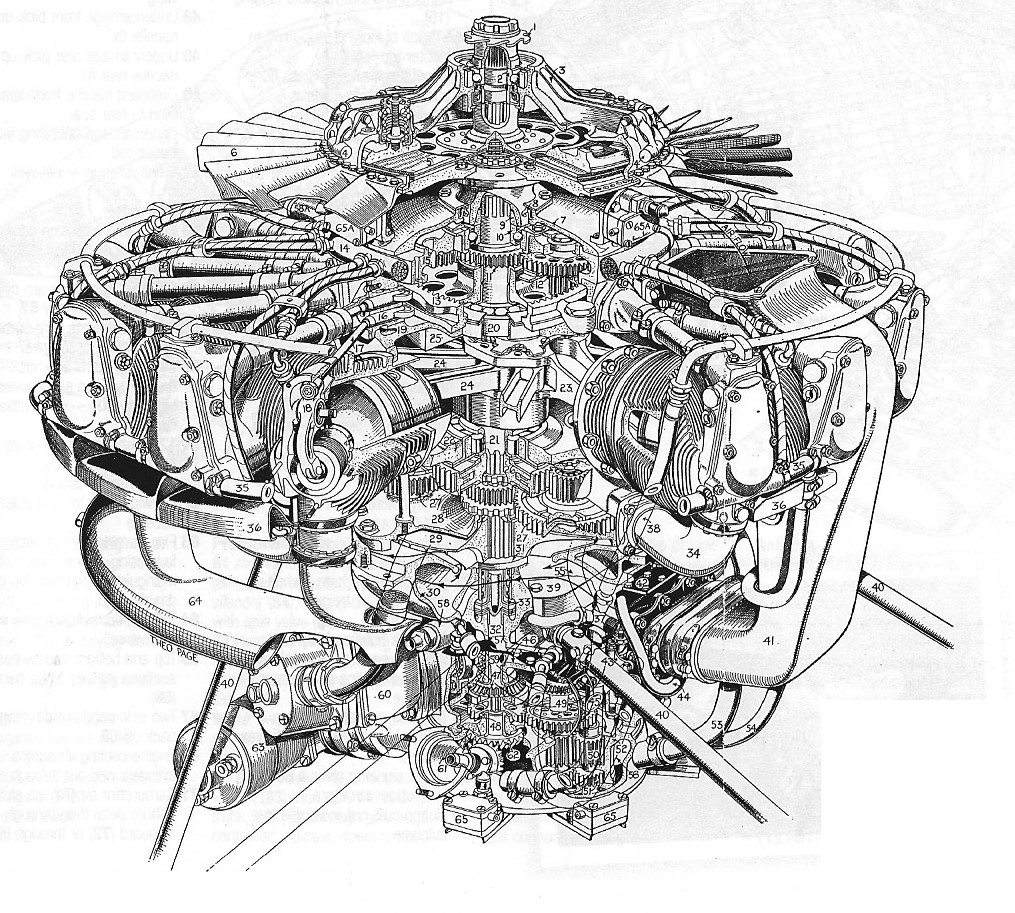
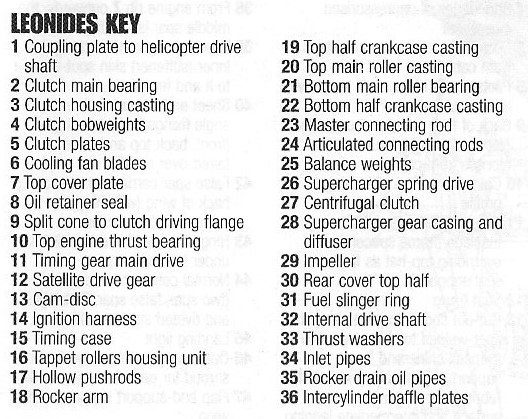
The Alvis Leonides was a British air-cooled nine-cylinder radial aero engines first developed by Alvis in 1936. Development of the nine-cylinder engine was led by Capt. George Thomas Smith-Clarke. The prototype engine, called 9ARS and which weighed 693 lb and developed 450 hp, was run in December 1936.
In 1938 Airspeed (1934) Ltd lent their test pilot, George Errington, and their much rebuilt Bristol Bulldog (K3183), to carry out test flights. Development was continued at a reduced pace during the Second World War and following testing in an Airspeed Oxford and an Airspeed Consul (VX587) Alvis was ready to market the engine in 1947 as the Series 500 (502, 503 and sub-types) for aeroplanes and Series 520 for helicopters. (Most helicopter engines were direct drive – no reduction gearbox – with a centrifugal clutch and fan cooling).
The first production use was the Percival Prince which flew in July 1948 and the Westland Sikorsky S-51 and Westland Dragonfly helicopters.
From 1959 the stroke was increased to 4.8 inch for the Series 530 (mainly the Mk. 531 for Twin Pioneers) rated at 640 hp. It was Britain’s last high-power production piston aero-engine when manufacture ceased in 1966.
Production – Bristol Sycamore – 1x Mk. 173, 550 hp (410 kW) Percival P.66 President/Prince – 2 x 503/7A, Mk 128 01/2, 540/560 hp (RAF: Pembroke, RN; Sea Prince) Percival Provost – 1x 126, 550-hp (410 kW) Scottish Aviation Pioneer – 1 x 503/7A, Mk 128 01/2, 540/560 hp Scottish Aviation Twin PioneerCC1 – 2 x 514/8, 550 hp Scottish Aviation Twin PioneerCC2 – 2 x 531/8,Mk138, 640 hp Westland Dragonfly – 1x 521/1, 520shp (388 kW) Westland Widgeon – 1x 521/1, 520shp (388 kW)
Conversions Harker Leo-cat – 1x 560 hp (418 kW) Server-Aero Leo-cat – 1x 560 hp (418 kW)
Prototypes Agusta AZ8-L 4x 503/2 de Havilland Canada DHC-2 Beaver Mk.2 – 1x 502/4, 520 hp Fairey Gyrodyne – one 525 hp to drive rotor and propeller Fairey Jet Gyrodyne – one 525 hp to drive air compressor and propellers Handley Page H.P.R.2 (WE505 only) – 1 x 502/4 550 hp SR-N1 Hovercraft – the first hovercraft
Specifications Type: 9-cylinder supercharged air-cooled radial piston engine. Bore: 4.8 inch (122 mm) Stroke: 4.41 inch (112 mm) Displacement: 718.6 in3 (11.8 L) Diameter: 41 inch (1.04 m) Dry weight: 815 lb (370 kg) Valvetrain: Two pushrod-actuated poppet valves per cylinder with sodium-cooled exhaust valve. Supercharger: Single speed, single stage, boost pressure automatically linked to the throttle. Fuel system: Hobson single-point fuel injection unit. Fuel type: Petrol, 115 Octane Oil system: Dry sump Cooling system: Air-cooled. Power output: 550 hp (410 kW)
The Allison Division of General Motors began developing the ethylene glycol-cooled engine in 1929 to meet a US Army Air Corps need for a modern, 1,000 hp (750 kW), engine to fit into a new generation of streamlined bombers and fighters. To ease production the new design could be equipped with different propeller gearing systems and superchargers, allowing a single production line to build engines for various fighters and bombers.
The V-1710 has 12 cylinders with a bore and stroke of 5.5 by 6 inches (140 by 150 mm) in 60° V-format, for 1,710.6 cu in (28.032 L) total displacement, with a compression ratio of 6.65:1. The valvetrain has overhead camshafts and four valves per cylinder.
The engine design benefited from the General Motors philosophy to build-in production and installation versatility. The engine was constructed around a basic power section from which different installation requirements could be met by fitting the appropriate accessories section at the rear and an appropriate power output drive at the front. A turbosupercharger could be used, if desired.
The accessory end had a one- or two-speed engine-driven supercharger that might have a second stage with or without an intercooler, the ignition magnetos and the customary assortment of oil and fuel pumps, all dictated by the application requirements. The front of the engine could have one of a number of different output drives. The drive might be a “long-nose” or close coupled propeller reduction gear, an extension drive to a remote gearbox, or a gearbox that could drive two wing-mounted propellers from a fuselage-mounted engine. The engine could be set up for right-hand or left-hand rotation, and could be used with a “tractor” or “pusher” propeller. This approach allowed easy changes of the supercharger(s) and supercharger drive-gear ratio. That gave different critical altitude ratings ranging from 8,000 to 26,000 feet (2,400 to 7,900 m).
The P-39, P-63, and XB-42 used V-1710-Es, exchanging the integral reduction gear for an extension shaft driving a remotely located reduction gear and propeller. Aircraft such as the P-38, P-40, P-51A, and P-82 used close-coupled propeller reduction gears, a feature of the V-1710-F series.
Another feature of the V-1710 design was its ability to turn the output shaft clockwise or counter-clockwise by assembling the engine with the crankshaft turned end-for-end, by installing an idler gear in the drive train to the supercharger and accessories, and installing a starter turning the proper direction. There was no need to re-arrange the ignition wiring, firing order, or the oil and Glycol circuits to accommodate the direction of rotation.
The U.S. Navy purchased the first V-1710s, the B model (the only V-1710 that did not have a gear-driven supercharger) in 1931 and installed them on the airships Akron and Macon with delivery on 12 Febuary 1935. The U.S. Army Air Corps purchased its first V-1710 in December 1932. They were the first aircraft engine specifically designed to use glycol as a coolant.
The Great Depression slowed development, and it was not until December 14, 1936 that the engine next flew in the Consolidated XA-11A testbed. The V-1710-C6 successfully completed the Army 150 hour Type Test on April 23, 1937 at 1,000 hp (750 kW), the first engine of any type to do so. The engine was then offered to aircraft manufacturers where it powered the Curtiss X/YP-37. All entrants in the new pursuit competition were designed around it, powering the Lockheed P-38, Bell P-39 and Curtiss P-40. When war material procurement agents from England asked North American Aviation to build the P-40 under license, NAA instead proposed their own improved aircraft design, using the V-1710 in their P-51A.
The Allison V-1710 aircraft engine was the only indigenous US-developed V-12 liquid-cooled engine to see service during World War II. The U.S. Army preference for turbosuperchargers early in the program meant that less effort was spent on developing suitable superchargers, and when smaller or lower-cost versions of the engine were desired, they generally had poor performance at higher altitudes. The V-1710 nevertheless gave excellent service when turbosupercharged, notably in the P-38 Lightning, which accounted for much of the extensive production run.
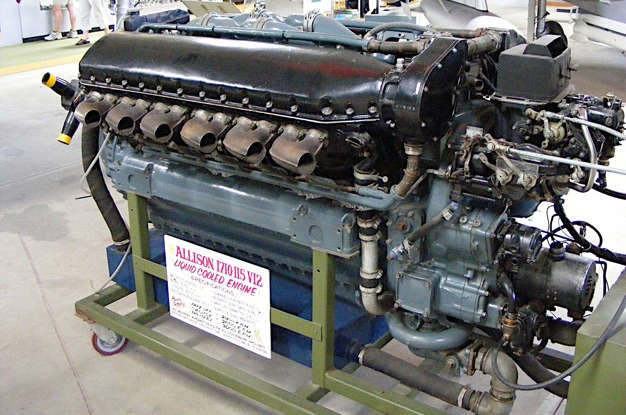
V-1710-115
Allison V-1710 models Allison’s internal model designation for the V-1710 started with the letter A and proceeded to the letter H. Each letter designated a family of engines that shared major components, but differed in specific design details. Each of these designs were identified by a number, starting with number 1. The last letter, which was introduced when both right hand turning and left hand turning engines were built, identified by the letter R or L respectively. The military model numbers were identified by a “dash number” following the engine description “V-1710”. The United States Army Air Corps models were the odd numbers, starting with “-1” and the United States Navy models were the even numbers, starting with “-2”.
V-1710-A “A” series engines were early development engines for the US Navy and US Army. The first military model was a single V-1710-2, which was first sold to the US Navy on June 26, 1930. The “A” engines had no counterweights on the crankshaft, 5.75:1 compression ratio, 2:1 internal spur gear-type reduction gear boxes, 8.77:1 supercharger ratio, 9 1/2 inch impeller, SAE #50 propeller shaft, a float-type carburetor, and produced 1070 hp at 2800 rpm on 92 octane gasoline.
V-1710-A1 / Military Model GV-1710-A 1 built. Rebuilt 2 times as XV-1710-2.
V-1710-A2 / Military Model GV-1710-1 Long reduction gear housing. 1 built.
V-1710-B “B” series engines were designed for US Navy airships. The military model was V-1710-4. They differed from the “A” series engines in that they did not have a supercharger, had two float-type down-draft carburetors were mounted directly to the intake manifold, an SAE #40 propeller shaft, and could be brought from full power to stop and back to full power in the opposite rotation in less than 8 seconds. They produced 600 to 690 hp at 2400 rpm.
V-1710-B1R, B2R / Military Model XV-1710-4 Quick reversing, remote 90 degree gearbox. 3 built for airships
V-1710-C “C” series engines were developed for highly streamlined pursuit aircraft for the US Army, and are easily identified by the long reduction gear case. The military models were V-1710-3, -5, -7, -11. -13, -15, -19, -21, -23, -33, producing between 750 and 1050 hp at 2600 rpm. These engines came in two groups, one group rated at full power at sea level, the other rated at full power at high altitude. The altitude rating difference was in the supercharger gear ratio, four of which were used: 6.23:1, 6.75:1, 8.0:1 and 8.77:1. These engines received heavier crankcases, a stronger crankshaft, SAE #50 propeller shaft, and Bendix pressure carburetors.
V-1710-C1, C2, C3, C4, C7, C10, C15 Military Model XV-1710-3, -5, -7, -9, -21, -33 Type test engines. 16 built. C2 rebuilt from -5 to -7. C4 first flight engine in A-11A and later in XP-37
V-1710-C8, C9 Military Model XV-1710-11, -15 Long nose. 3 built. C8 RH turn for XP-37, XP-38, C9 LH turn for XP-38 Redesigned by R M Hazen -C8 Tested in a modified Curtiss P-36 (XP-37) 1937
V-1710-C13 Military Model V-1710-19 Long nose. Early production P-40 engine
V-1750-D “D” series engines were designed for pusher applications using propeller-speed extension shafts and remote thrust bearings mounted to the airframe. The military models were V-1710-9, -13, -23, and -41, producing 1000 to 1250 hp at 2600 rpm. Supercharger ratios were 6.23:1, 8.0:1 or 8.77:1, depending on altitude rating. These engines had the compression ratio increased to 6.65:1. Marvel MC-12 fuel injection, which was unsatisfactory and quickly replaced by a float-type carburetor on -9 and -13 models. Later dash number engines used Bendix pressure carburetors. These engines were being designed at the same time as the V-3420 engine, and shared many assemblies as they were developed. The “D” series engines were the last of the “early” V-1710 engines.
V-1710-D1, D2 / Military Model YV-1710-7, -9, XV-1710-13 Pusher with extension shaft. 6 built for XFM-1
V-1710-E “E” series engines were designed for remote gearbox applications using crankshaft-speed extension shafts and remote 1.8:1 gearboxes with SAE #60 hollow propeller shafts. The military models were V-1710-6, -17, -31, 35, -37, -47, -59, -63, -83, -85, -93, -103, -109, -117, -125, -127, -129, -133,-135 and -137, producing 1100 to 2830 hp at 3000 rpm. Supercharger gear ratios were: 6.44:1, 7.48:1, 8.10:1, 8.80:1 and 9.6:1 depending on altitude rating. These engines were a complete redesign, and did not share many components with the earlier engine series. Almost all components were interchangeable with later series engines and the V-3420, and could be assembled as right hand or left hand turning engines in either pusher or tractor applications.
V-1710-E1, E2, E5 / Military Model V-1710-6, -17, -37 Remote gearbox. 5 built for XFL-1 and XP-39
V-1710-E4, E6 / Military Model V-1710-35, -63 Remote gearbox. P-39A/C engine
V-1710-E11, E21, E22, E27, E30, E31 Military Model V-1710-47, -93, -109, -117, -133, -135 Remote gearbox. P-63/A/C/D/E/F/G/H engine
V-1710-E23RB, E23LRB / Military Model V-1710-129 Remote gearbox. Douglas XB-42 dual installation with combining gearbox and extension shafts
V-1710-F
Allison V-1710-F
“F” series engines were designed for late model pursuit aircraft, and are identified by the compact external spur gear-type reduction gear box. Military models were V-1710-27, -29, -39, -45, -49, -51, -53, -55, -57, -61, -75, -77, -81, -87, -89, -91, -95, -99, -101, -105, -107, -111, -113, -115, -119, producing 1150 to 1425 hp at 3000 rpm. The V-1710-101, -119 and -121 models has an auxiliary supercharger, some with a liquid cooled aftercooler. Supercharger gear ratios were: 6.44:1, 7.48:1, 8.10:1, 8.80:1 and 9.60:1 depending on altitude rating. These engines had either a six or twelve weight crankshaft, revised vibration dampeners that combined to allow higher engine speeds, SAE #50 propeller shaft, and higher horsepower ratings. The “E” series and “F” series engines were very similar, the primary difference being the front crankcase cover, which was interchangeable between the two series engines.
V-1710-F1 / Military Model V-1710-25 Short nose. 1 built Development engine for XP-38
V-1710-F2R, F2L / Military Model V-1710-27, -29 Short nose. P-38D/E engines
V-1710-F3R / Military Model V-1710-37 Short nose. 2 built for NA-73X Mustang prototype
V-1710-F3R / Military Model V-1710-39 Short nose. P-40D/E and P-51A Production engine
V-1710-F4R / Military Model V-1710-73 Short nose. P-40K engine
V-1710-F5R, F5L / Military Model V-1710-49, -53 Short nose. P-38F engine
V-1710-F10R, F10L / Military Model V-1710-51, -55 Short nose. P-38 engine
V-1710-F30R, F30L / Military Model V-1710-111, -113 Short nose. P-38L engine
V-1710-F32R / Military Model V-1710-119 Short nose and two stage supercharger. XP-51J
V-1710-G “G” series engines were designed for high-altitude pursuit aircraft, and are identified by the auxiliary supercharger with a Bendix “Speed-Density” fuel control. Military models were V-1710-97, -131, -143, -145, and -147, producing 1425 to 2000 hp at 3000 rpm. Supercharger gear ratios were: 7.48:1, 7.76:1, 8.10:1, 8.80:1 and 9.60:1 depending on altitude rating. These engines were equipped with an SAE #50 propeller shaft and a single power lever to regulate engine performance, reducing the pilot’s workload when managing this very complex engine.
V-1710-G1R / Military Model V-1710-97 WER test engine
V-1710-G3R / Military Model V-1710-131 geared drive
V-1710-G4R remote extension shaft drive version of G3R
V-1710-G6R, G6L / Military Model V-1710-145 -147 P-82E/F engine
V-1710-H “H” series engines were to use a two-stage supercharger driven by a two-stage air-cooled power recovery turbine. The engine was to have an aftercooler and port-type fuel injection. Not built.
Supercharger The V-1710 has often been criticized for not having a “high-altitude” supercharger. The comparison is usually to the later, two-stage, versions of the Rolls-Royce Merlin built by Packard as the V-1650 and used in the P-51B Mustang and subsequent variants. The US Army had specified that the V-1710 was to be a single-stage supercharged engine and, if a higher altitude capability was desired, the aircraft could use their newly developed turbosupercharger as was featured in the P-37, P-38, and XP-39.
The benefits of a two-stage supercharger eventually became so clear that Allison did make some efforts in this direction. Allison attached an auxiliary supercharger in various configurations to the existing engine-mounted supercharger and carburetor. Early versions of these two-stage supercharger engines were used on the P-63. No intercooler, aftercooler, or backfire screen (flame trap) were incorporated into these two-stage V-1710 engines (except for the V-1710-119 used on the experimental P-51J, which had an aftercooler). The two-stage Merlin engines had all of these features, which were designed to prevent detonation from charge heating and backfire into the supercharger. The G-series V-1710s installed on the F-82 E/F/G models had only anti-detonation injection to deal with these problems, and not surprisingly had severe reliability and maintenance problems. In one record, it was stated that the F-82 required 33 hours of maintenance for each hour of flight.
Although the early V-1710 powered P-39, P-40 and P-51A airplanes were limited to combat operations at a maximum of about 15,000 feet (4,600 m) they were available in comparatively large numbers and were the mainstay of some Allied Air Forces in all but the European theater of war. The engines proved to be robust and little affected by machine-gun fire. In total, over 60 percent of the US Army Pursuit aircraft operated during WWII were powered by the V-1710.
Allison continuously improved the engine during the war. The initial rating of 1,000 hp (750 kW) was incrementally increased; the final V-1710-143/145(G6R/L) was rated for 2,300 hp (1,700 kW). By 1944, the War Emergency Power rating on the P-38L was 1,600 hp (1,200 kW).
The most powerful factory variant was the V-1710-127, designed to produce 2,900 hp (2,200 kW) at low altitude and 1,550 hp (1,160 kW) at 29,000 feet (8,800 m). This engine was static tested at 2,800 hp (2,100 kW) and was planned for installation in an XP-63H aircraft. The end of the war ended this development, so this promising experiment never flew. The extra power of this version was derived from using exhaust turbines, not to drive a turbosupercharger, but to return that energy to turning the crankshaft. This was called a “turbo-compound” arrangement.
Improvements in manufacturing brought the cost to produce each engine from $25,000 down to $8,500 and allowed the installed lifetime of the engine to be increased from 300 hours to as much as 1,000 hours for the less stressed powerplants. Weight increases needed to accomplish this were minimal, with the result that all models were able to produce more than 1 hp/lb (1.6 kW/kg) at their takeoff rating. Comparisons between Allison engine and the Rolls-Royce Merlin engine are inevitable. What can be said for the Allison is that it made more power at less boost with a longer time between overhauls and the part count was nearly half that of the Merlin engine which facilitated mass production greatly. The British-made Merlin engines were still reliant upon hand-crafted and fitted parts from skilled craftsmen, something which was corrected by the redesign and success of the Packard V-1650 license-produced version of it in the United States, built with American production-line techniques. There also was a high degree of commonality of parts throughout the series. The individual parts of the Allison series were produced to a high degree of standardization and reliability, using the best technology available at the time. Even after the War, racing Merlins used Allison connecting rods. Allison employed a modular design, so that it was capable of being mated to many different styles of turbo-superchargers and various other accessories, although the variety of turbo-superchargers available for installation was limited due to the constraints of single-engine fighter design. Since it was produced in large numbers and was highly standardized, the engine has been used in many postwar racing designs. Its reliability and well-mannered operation allowed it to operate at high rpm for extended periods. Following the war, North American built 250 P-82E/F for air defense roles into the early 1950s. This was the final military role for the V-1710.
Turbocharger
The Army had earlier decided to concentrate on turbosuperchargers for high altitude boost, believing that further development of turbochargers would allow their engines to outperform European rivals using superchargers. Turbosuperchargers are powered by the engine exhaust and so do not draw power from the engine crankshaft, whereas superchargers are connected directly by gears to the engine crankshaft. Turbosuperchargers do increase the exhaust back-pressure and thus do cause a decrease in engine power, but the power increase due to increased induction pressures more than make up for that decrease. Crankshaft-driven superchargers require an increasing percentage of engine power as altitude increases (the two-stage supercharger of the Merlin 60 series engines consumed some 230-280 horsepower at 30,000 ft). General Electric was the sole source for research and production of American turbosuperchargers during this period.
Turbosuperchargers were successful in U.S. bombers, which were exclusively powered by radial engines.
Mating the turbocharger with the Allison V-1710 proved to be problematic. As a result, designers of the fighter planes that utilized the V-1710 were invariably forced to choose between the poor high-altitude performance of the V-1710 versus the increased problems brought on by addition of the turbosupercharger. The fates of all of the V-1710 powered fighters of World War II would thus hinge on that choice.
The original XP-39 was built with a V-1710 augmented by a Type B-5 turbosupercharger as specified by Fighter Projects Officer Lieutenant Benjamin S. Kelsey and his colleague Gordon P. Saville. Numerous changes were made to the design during a period of time when Kelsey’s attention was focused elsewhere, and Bell engineers, NACA aerodynamicists and the substitute fighter project officer determined that dropping the turbocharger would be among the drag reduction measures indicated by borderline wind tunnel test results; an unnecessary step, according to aviation engineer and historian Warren M. Bodie. The production P-39 was thus stuck with poor high-altitude performance and proved unsuitable for the air war in Western Europe which was largely conducted at high altitudes. The P-39 was rejected by the British, but used by the U.S. in the Mediterranean and the early Pacific air war, as well as shipped to the Soviet Union in large numbers under the Lend Lease program. The Soviets were able to make good use of P-39s because of its excellent maneuverability and because the air war on the Eastern Front in Europe was primarily short ranged, tactical, and conducted at lower altitudes. In the P-39, Soviet pilots scored the highest number of individual kills made on any American, or British fighter type.
The P-40, which also had only the single-stage, single-speed-supercharged V-1710, had similar problems with high-altitude performance.
The P-38 was the only fighter to make it into combat during World War II with turbosupercharged V-1710s. The operating conditions of the Western European air war – flying for long hours in intensely cold weather at 30,000 feet (9,100 m) – revealed several problems with the turbosupercharged V-1710. These had a poor manifold fuel-air distribution and poor temperature regulation of the turbosupercharger air, which resulted in frequent engine failures (detonation occurred in certain cylinders as the result of persistent uneven fuel-air mixture across the cylinders caused by the poor manifold design). The turbosupercharger had additional problems with getting stuck in the freezing air in either high or low boost mode; the high boost mode could cause detonation in the engine, while the low boost mode would be manifested as power loss in one engine, resulting in sudden fishtailing in flight. These problems were aggravated by suboptimal engine management techniques taught to many pilots during the first part of WWII, including a cruise setting that involves running the engine at a high RPM and low manifold pressure with a rich mixture. These settings can contribute to overcooling of the engine, fuel condensation problems, accelerated mechanical wear, and the likelihood of components binding or “freezing up.” Details of the failure patterns were described in a report by General Doolittle to General Spatz in January 1944. In March 1944, the first Allison engines appearing over Berlin belonged to a group of P-38H pilots of 55FG, engine troubles contributing to a reduction of the force to half strength over the target. It was too late to correct these problems in the production lines of Allison or GE, and so the P-38s were steadily withdrawn from Europe until they were no longer used for bomber escort duty with the Eighth Air Force by October 1944. A few P-38s would remain in the European theater as the F-5 for photo reconnaissance.
The P-38 had fewer engine failures in the Pacific Theater, where operating techniques were better developed (such as those recommended by Charles Lindbergh during his P-38 flight testing in the PTO) the fuel quality was consistently superior and the Japanese did not operate at such high altitudes.
Using the same P-38Gs which were proving difficult to maintain in England, Pacific-based pilots were able to use the aircraft to good advantage including, in April 1943, Operation Vengeance, the interception and downing of the Japanese bomber that was carrying Admiral Isoroku Yamamoto. New P-38 models with ever-increasing power from more advanced Allisons were eagerly accepted by Pacific air groups.
When Packard started building Merlin V-1650 engines in America, certain American fighter designs using the Allison V-1710 were changed to use the Merlin. The P-40F, a Lend Lease export to Britain, was one of the first American fighters to be converted to a Packard-Merlin engine. However, the installed engine was the V-1650-1 with a slightly improved single-stage, two-speed supercharger, yielding only modest gains in performance.
The first production P-51A had the Allison V-1710 without turbosupercharger and thus, poor high altitude performance. At low altitudes, the P-51A was substantially faster than the Spitfire, which very much impressed the British when they first received the plane; they quickly realized the P-51 had an outstanding low-drag airframe and the airplane could become one of the best of the war if the Allison V-1710 engine were replaced by the two-stage-supercharged Merlin. Conversion proceeded on both sides of the Atlantic, with North American Aviation engineers making the definitive changes to the airframe to fully integrate the Packard-Merlin V-1650-3 into the P-51B. Ironically, because the P-51 was not originally developed for the USAAF, this was allowed to proceed rapidly with no Army input (or interference). A similar attempt to cure the problems of the P-38 by replacing its Allisons with Merlins was quashed by the USAAF, after protests from Allison.
Starting with the V-1710-45 around 1943, Allison attached an auxiliary supercharger to some of its engines in an effort to improve high-altitude performance, with limited success. Although described as a two-stage supercharger, it was essentially an afterthought and did not have the full refinements of the two-stage Merlin, such as the pressure-altitude governed two-speed gearbox and the intercooling system. Various configurations of this auxiliary supercharger were used in production versions of the V-1710 that powered aircraft such as the Bell P-63 and North American P-82E/F/G series. In addition, it was tried or studied as the powerplant for many experimental and test aircraft such as variants of the Boeing XB-38, Republic XP-47A, both with turbo-superchargers (AP-10), Curtiss XP-55 Ascender, and Douglas XB-42 Mixmaster.
Post-war The V-1710-powered F-82 did not arrive in time for World War II, but did see brief action in the Korean War, although the type was completely withdrawn from Korea by the end of 1950. It had a short service life that was probably due to a combination of factors: poor reliability from the G-series V-1710 engines, low numbers of F-82s produced, and the arrival of jet fighters. The initial production P-82B had Merlin engines, but North American was forced to use the Allison V-1710 for the E/F/G models when Packard stopped production of the Merlin engine.
In total, over 70,000 V-1710s were built by Allison during the war, all in Indianapolis, Indiana.
Other uses The V-1710’s useful life continued, as thousands were available on the surplus market. In the 1950s, many drag racers and land speed racers, attracted by its reliability and good power output, adopted the V-1710; Art Arfons and brother Walt in particular used one, in Green Monster. It proved unsuccessful as a drag racing engine, being unable to accelerate rapidly, but “could taxi all day at 150”.Unlimited hydroplane racing also became a big sport across the U.S. at this time and V-1710s were often tuned for racing at up to 4,000 hp (3,000 kW)—power levels that were beyond design criteria and significantly reduced durability.
Later, the warbird movement began to restore and return to the air examples of the classic fighters of the war and many V-1710-powered pursuit airplanes began to fly again, with freshly overhauled engines. The reliability, maintainability, and availability of the engine has led others to use it to power flying examples of aircraft whose original engines are unobtainable. This includes newly manufactured Russian Yak-3 and Yak-9 airplanes, originally powered by Klimov V-12s in World War II, as well as projects such as a replica Douglas World Cruiser and Focke-Wulf Fw 190D by Flug Werk of Germany.
Applications:
Bell P-39 Airacobra Bell P-63 Kingcobra Boeing XB-38 Flying Fortress Curtiss P-40 Warhawk Curtiss-Wright XP-55 Ascender Curtiss XP-60A Curtiss YP-37 Douglas XB-42 Mixmaster Lockheed P-38 Lightning North American A-36 Apache North American F-82 Twin Mustang North American P-51 Mustang Republic XP-47
Specifications:
V-1710-F30R Type: 12-cylinder supercharged liquid-cooled 60° “Vee” piston aircraft engine Bore: 5.5 in (139.7 mm) Stroke: 6.0 in (152.4 mm) Displacement: 1,710 cu in (28 L) Length: 85.81 in (2,180 mm) Width: 29.28 in (744 mm) Height: 37.65 in (958 mm) Dry weight: 1,395 lb (633.5 kg) Valvetrain: Two intake and two exhaust valves per cylinder with sodium-cooled exhaust valves, operated by a single gear-driven overhead camshaft per each bank of cylinders Supercharger: Centrifugal-type, single-stage, 15-vane impeller, 10.25 in (260 mm) diameter Fuel system: Bendix Stromberg carburetor with automatic mixture control Fuel type: 100 octane Oil system: Dry sump with one pressure and two scavenge pumps. Cooling system: Liquid-cooled with a mixture of 70% water and 30% ethylene glycol, pressurized. Power output: 1,475 hp (1,100 kW) at 3,000 rpm Specific power: 0.86 hp/cu in (39.3 kW/L) Compression ratio: 6.65:1 Power-to-weight ratio: 1.05 hp/lb (1.76 kW/kg)
The Allison Engine Company has its roots in September 1904, when the Concentrated Acetylene Company was founded by James Allison, Percy C. ‘Fred’ Avery and Carl G. Fisher. Avery was the holder of the patent for the product. This company was the predecessor of the Prest-O-Lite Company, a manufacturer of acetylene headlights. An explosion at the acetylene gas works in downtown Indianapolis caused the company to relocate out of town, near the race track in Speedway, Indiana. Allison and Fisher raced automobiles at that track, each owning a race car team. This hobby resulted in Allison building a shop at the track in Speedway where he maintained his fleet of race cars. This shop became the site for Allison Plant #1. Fisher and Allison sold their interest in Prest-O-Lite to Union Carbide for $9,000,000.
Allison started as an engine and car “hot rodding” company servicing the Indianapolis Motor Speedway in Indianapolis. James Allison was the owner of the Indianapolis Speedway Team Company, a race car business in Indianapolis, Indiana. While it was originally known as the Indianapolis Speedway Team Company, its name changed numerous times, first to the Allison Speedway Team Company, then the Allison Experimental Company and last as the Allison Engineering Company before becoming a division of General Motors.
The company’s only regular production item was a patented steel-backed lead bearing which was used in various high performance engines. It also built various drive shafts, extensions and gear chains for high power engines, on demand. Later its main business was the conversion of older Liberty engines to more powerful models, both for aircraft and marine use.
Allison needed a place where his race car engines could be modified and repaired. On January 1, 1917 Allison moved into a building at what in later years was to become the Indianapolis Motor Speedway. Along with the move, Allison hired engineer Norman H. Gillman, from a competing race team as his Chief Engineer.
Allison moved to Florida to invest in real estate after the war, leaving Gillman in charge. Allison did not want the company to wither, so he asked Gillman to build a V-12 marine engine worthy of the Allison name. Gillman then proceeded to build an engine that relied on what was learned from building and modifying the Liberty engine.
Allison’s company was sold to Captain Eddie Rickenbacker in 1927 for $700,000 after Allison moved to Florida. In 1929, shortly after the death of James Allison, the company was purchased by the Fisher brothers, who instructed it to use the cylinder design for a six-cylinder engine for a “family aircraft”. Before work on this design had progressed very far, Fisher sold the company to General Motors, who owned it for most of its history, which ended development due to financial pressures of the Great Depression. Nevertheless Gilman pressed ahead with the cylinder design, building a “paper project” V-12 engine. The Army was once again uninterested, but instead suggested Allison try selling it to the United States Navy. The Navy agreed to fund development of A and B models to a very limited degree for its airships, until the crash of the USS Macon in 1935, when the Navy’s need for a 1,000 hp (750 kW) engine disappeared.
The very first V-1710 was purchased by the US Navy as their GV-1710-2, and appears to have had an Allison serial of number 1, suggesting that they restarted numbering for the V-1710. The first V-1710 engine purchased by the USAAC was AAC 33-42, Allison SN 2, the XV-1710-1, while SN’s 3, 4, 5 were V-1710-4 engines for USN airships, followed by a batch of 11 Air Corps engines purchased with FY-1934 funds (34-4 through 34-14) that covered Allison serials 6 through 16. After these the production totaled over 70,000 V-1710s.
By this point the Army had become more interested in the design, and asked Allison to continue with a new “C” model. They had few funds of their own to invest, and Allison supported much of the development out of their own pocket. The V-1710-C first flew on 14 December 1936 in the Consolidated A-11A testbed. The V-1710-C6 successfully completed the Army 150 hour Type Test on 23 April 1937, at 1,000 hp (750 kW), the first engine of any type to do so. By this point all of the other Army engine projects had been cancelled or withdrawn, leaving the V-1710 as the only modern design available. It was soon found as the primary powerplant of the new generation of United States Army Air Corps (USAAC) fighters, the P-38 Lightning, P-39 Airacobra and P-40 Warhawk.
The Army had been leaning heavily towards exhaust-driven turbochargers instead of the more common mechanically driven superchargers, feeling that their added performance more than made up for the added complexity. Thus little effort was invested in equipping the V-1710 with a reasonable supercharger, and when placed in aircraft designs like the P-39 or P-40 which lacked the room for a turbo the engine suffered tremendously at higher altitudes. It was for this reason in particular that the V-1710 was later removed from the P-51 Mustang and replaced with the Rolls-Royce Merlin.
With the need for the V-1710 winding down at the end of the war, Allison found itself with a massive production infrastructure that was no longer needed. For this reason, in 1947, the Army decided to take General Electric’s versions of Frank Whittle’s jet engines and give them to Allison to produce instead. The main production model was GE’s 4,000 lbf (18 kN) I-40, produced as the Allison J33. By the time production ended in 1955, Allison had produced over 7,000 J33s.
Allison also took over GE’s axial flow engine design, becoming the Allison J35. The J35 was the primary powerplant for the F-84 Thunderjet and F-89 Scorpion, as well as appearing on numerous prototype designs. The J35 also finished production in 1955, by which point over 14,000 had been delivered.
Allison also started the development of a series of turboprop engines for the U.S. Navy, starting with the T38 and a “twinned” version as the T40. The Navy was interested only in the T40, but the complexities of the driveshaft arrangement doomed the engine and the project was eventually cancelled. Allison tried again with the T56, basically an enlarged T38 with the power of the T40, and was eventually rewarded when this engine was selected to power the C-130 Hercules.
Over the years a family of engines, based on the T56 basic configuration has been developed, culminating in the T406/Allison AE1107 turboshaft for the V-22 Osprey, the Allison AE2100 turboprop, used on newer models of the C-130 and the Allison/Rolls-Royce AE 3007 turbofan which propels many commuter aircraft, such as the Embraer ERJ 135 family.
One of Allison’s most successful projects is the Model 250 turboshaft/turboprop engine family, which was started by the company in the early 60s, when helicopters started to be powered by turbine, rather than reciprocating, engines.
In the mid-1970s the Allison Division of General Motors Corporation in Detroit designed ceramic components into the Allison GT 404-4 truck engine. Allison continued to work with General Motors on development of ceramic-turbine powered engines until the early 1990s. During their work they were able to engineer fairly stable automobile engines that were capable of burning a variety of fuels including (but not limited to) gasoline, diesel, kerosene, alcohol, vegetable oil, and coal powder.
In the 1980s Allison collaborated with Pratt & Whitney on demonstrating the 578-DX propfan. Unlike the competing General Electric GE-36 UDF, the 578-DX was fairly conventional, having a reduction gearbox between the LP turbine and the propfan blades. Noise considerations, plus a significant reduction in the real cost of aviation fuel, brought the NASA funded program to a halt.
LHTEC (Light Helicopter Turbine Engine Company) is a joint venture between Rolls-Royce and Honeywell founded in 1985. The company was originally a partnership between the Allison Engine Company and AlliedSignal Aerospace. In 1995 Rolls-Royce acquired Allison, and AlliedSignal merged with Honeywell in 1999, and adopted its name.
In 1995, Allison tested a prototype lift fan for the Joint Strike Fighter Program and a LiftFan nozzle was tested in 1997 at NASA’s Lewis facility. By 1997, a complete prototype had been demonstratedby the Rolls-Royce owned but American controlled Allison Advanced Development Company.
In 1992 GM tried to sell Allison to concentrate on repairing automobile market share. Rolls-Royce attempted to buy the company in 1993, but GM opted for a management buyout instead for $370 million.
In 1995 authorities approved (with restrictions on JSF) the purchase of Allison by Rolls-Royce to become a subsidiary. The price was $525 million. In the year 2000, some of these restrictions were alleviated, and in 2001 the US government chose the F-35 with Allison/RR technology.

 All Aero