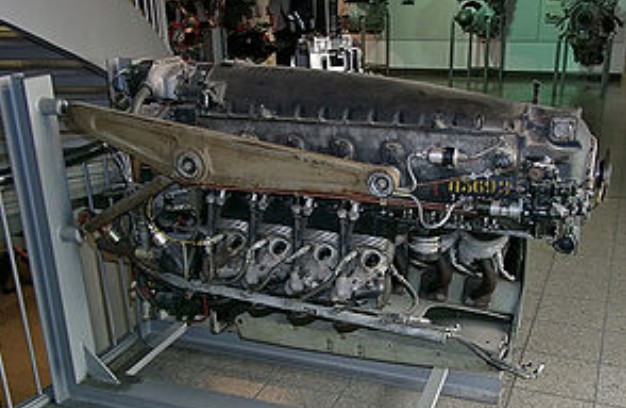
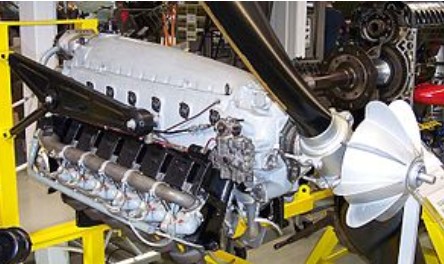
A twelve-cylinder, air-cooled, inverted-V aircraft engine developed by Argus Motoren in Germany during World War II , the As 411 was a refined and more powerful version of the Argus As 410. Most 411 production was undertaken by Renault in occupied Paris, these engines were used to power the Siebel Si 204 and the post war Dassault MD 315 Flamant. It developed 600 PS (592 hp, 441 kW) at 3,300 rpm.
Following the end of World War II, Renault continued to manufacture the engine as the Renault 12S. After merging the French aircraft engine manufacturers into SNECMA in 1945, production continued under the new designation SNECMA 12.
Approximately 2,600 were built.
Variants:
As 411 A refined and more powerful version of the Argus As 410.
Renault 12S Production of the As 411 after WWII in France.
SNECMA 12S; (a.k.a. SNECMA Renault 12T) Designation change on the formation of SNECMA.
SNECMA 12T (a.k.a. SNECMA Renault 12T) Refined version of the 12T with new pistons and cylinders, with a revised induction system.
Applications:
Arado Ar 96 Breguet 892 Mercure (4 × 12S) Dassault MD 315 Flamant Focke-Wulf Fw 189 Pilatus P-2 Siebel Si 204 Sud Ouest S.O.93
Specifications:
As 411 Type: 12-cylinder inverted 60-degree Vee Dry weight: 385 kg (849 lb) Cooling system: Air-cooled Power output: 600 PS (592 hp, 441 kW) at 3,300 rpm Compression ratio: 6.4:1
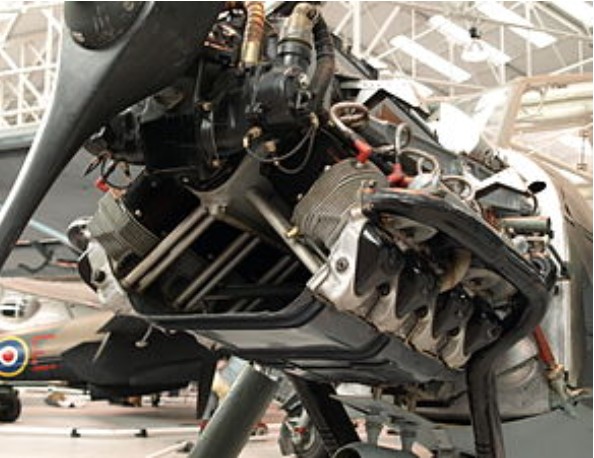
The engine marked a departure from earlier Argus engines in that it had new construction techniques which gave the engine greater operating speeds and power. The engine featured smaller 105 mm x 115 mm cylinders with deep finned steel cooling slots, aluminum heads, geared supercharger,a steel alloy crankshaft and a magnesium alloy crankcase. The engine weighed approximately 315 kg and produced 465 PS (459 hp, 342 kW) at 3,100 rpm. First run in 1937, approximately 28,700 engines were produced.
A distinctive feature is the finned spinner ahead of the propeller. This is driven by the airflow as a windmill, and used to power the actuator of the variable pitch propeller.
The more powerful and refined Argus As 411 was developed from it.
Applications:
Arado Ar 96 Focke-Wulf Fw 189 Pilatus P-2 Argus Fernfeuer
Specifications:
Argus 410 Type: 12-cylinder air-cooled inverted V engine Bore: 105 mm (4.13 in) Stroke: 115 mm (4.52 in) Displacement: 11.9 L (729 cu in) Dry weight: 315 kg (694 lb) Fuel system: Carburetor Cooling system: air Power output: 465 PS (459 hp, 342 kW) at 3,100 rpm
The Argus As 10 is a German-designed and built, air-cooled 90º cylinder bank angle inverted V8 “low power” inline aircraft engine, used mainly in training aircraft such as the Arado Ar 66 and Focke-Wulf Fw 56 Stösser and other small short range reconnaissance and communications aircraft like the Fieseler Fi 156 Storch during and shortly after WWII. It was first built in 1928.
Approximately 28,700 were built.
Variants As 10C
As 10E Optional output version of the As 10C, delivered with either 240 hp (179 kW) or 270 hp (201 kW) rating (achieved by increasing maximum rpm).
As 401 Supercharged As 10 with rated output at 3,000 m (9,843 ft), also fitted with hydraulically actuated variable pitch airscrew.
Applications:
Arado Ar 66 Arado Ar 76 Dornier Do 12 Fieseler Fi 156 Storch Focke-Wulf Fw 56 Stösser Focke-Wulf Fw 58 Gotha Go 145 Henschel Hs 121 Klemm Kl 151 Messerschmitt Bf 108 Taifun Kayaba Ka-1 Imperial Japanese Army Observation autogiro Rogozarski SIM-XIV-H
Specifications:
Argus As 10 C/3 Type: inverted V-8, air-cooled, 90° piston engine Bore: 120 mm (4.72 in) Stroke: 140 mm (5.51 in) Displacement: 12.667 l (772.99 cu in) Length: 1,105 mm (43.50 in) Width: 880 mm (34.65 in) Height: 936 mm (36.85 in) Dry weight: 213 kg (470 lb) dry Valvetrain: Two valves per cylinder. Fuel system: Two Sun carburetors adapted for aerobatics Fuel type: 80 octane Oil system: Dry sump, one pressure pump and two scavenge pumps Cooling system: Air Power output: 179 kW (240.04 hp) at 2,000 rpm Specific power: 14.8 kW/L (0.31 hp/in³) Compression ratio: 5.9:1 Specific fuel consumption: 235 gr/(hph); 0.518 lb/(hph) Oil consumption: 0.010 kg/kW/hr (0.0176 lb/hp/hr) Power-to-weight ratio: 0.835 kW/kg (0.51 hp/lb)
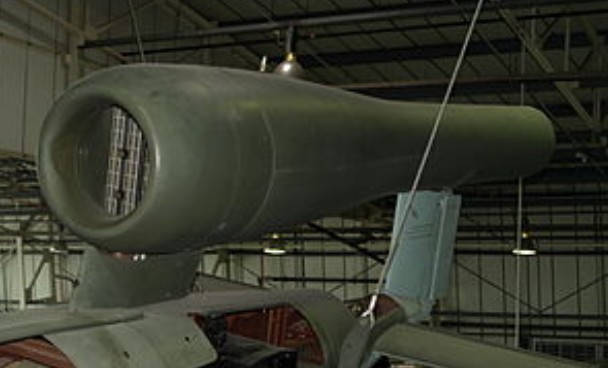
The Argus As 014 (also known as the 109-014 by the RLM) was a pulse jet engine used on the German V-1 flying bomb of World War II, and the first model of pulsejet engine placed in mass production.
The origins of the Argus As 014 lie in 1928, when Munich inventor Paul Schmidt began work on a new design of pulse jet engine. Schmidt received a patent on his design in 1931 and received support from the German Air Ministry in 1933. In 1934, along with Professor Georg Madelung, Schmidt proposed a “flying bomb” to be powered by his pulse jet to the Ministry and received a development contract the following year. In 1938 he demonstrated a pulse jet–powered pilotless bomber, but the project was shelved by the Air Ministry as the prototype lacked range and accuracy and was expensive to construct. That same year, however, the Argus Company began work on a flying bomb using Schmidt’s engine (first running in 1941). Schmidt later joined Argus in 1940.
A model of simplicity and low cost, the engine was made from a sheet of mild steel rolled into a tube. At the front of the engine there was a spring flap-valve grid (shutters), a fuel inlet valve and an igniter. It could run on any grade of petroleum fuel and its shutter system was not expected to last longer than one flight, as it had an operational life of approximately one hour. The engine was a resonant jet which, contrary to popular legend, could operate while the V-1 was stationary on its launch ramp.
Ignition was accomplished by an automotive-type spark plug located about 2.5 ft (0.76 m) behind the shutter system, electricity to the plug being supplied from a portable starting unit. Three air nozzles in the front of the pulse jet were connected to an external high pressure air source which was used to start the engine. Acetylene was used for starting, and very often a panel of wood or similar was held across the end of the tailpipe to prevent the fuel from diffusing and escaping before ignition was complete.
Once the engine had been started and the temperature rose to the minimum operating level, the external air hose and connectors were removed and the resonant design of the tailpipe kept the pulse jet firing. Each cycle or pulse of the engine began with the shutters open; fuel was injected behind them and ignited, and the resulting expansion of gases forced the shutters closed. As the pressure in the engine dropped following combustion, the shutters reopened and the cycle was repeated, roughly 45 to 55 times per second. The electrical ignition system was used only to start the engine – a V-1 carried no coils or magnetos to power the spark plug once launched.
Since the engine was rather simple, low-grade gasoline could be used and a good amount of thrust — 2.7 kN (660 lb) — was produced, but it was inefficient, limiting the range of the V-1 to 150–250 miles. The resonant frequency of this combustion process was around 45 Hz, giving the V-1 its nicknames “buzz bomb” or “doodlebug”, because of the sputtering sound it emitted. The prototype engine was tested while slung below a Gotha Go 145 Luftwaffe training biplane in April 1941 and the first prototype V-1 flew on December 24 of 1942. The As 014, as well as the higher thrust As 044 pulsejet engine, was also under consideration as a power source for various last-ditch German fighters in the closing days of World War II. Production totaled 31,100 units.
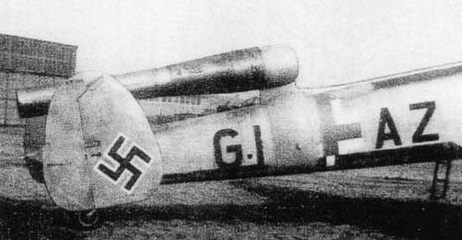
Me-110 fitted with Argus 014 pulsejet
License manufacture of the As 014 was carried out in Japan in the latter stages of World War II, as the Ka10, and as the American-made reverse-engineered Ford PJ31 in the United States, for powering the Republic-Ford JB-2 Loon cruise missile and the experimental USAAF-developed JB-4 television-guided bomb.
After the Second World War the As 014 was reverse-engineered / copied by Soviet Union as the Chelomey D-3 on the 10Kh (Fieseler Fi 103 look-alike).
The Planes of Fame Aeronautical Museum in Chino, California, houses what is believed to be the only operational As 014 in the world. It was restored into full operational status sometime in 2005 and retains the original valve system. The engine was run on a trailer during the annual 2009 Planes of Fame air show, the engine was used to push the trailer and the truck towing it at a speed of around 30 mph.
The V-1 flying bomb held by the London Science Museum features a sectioned As 014 engine.
Applications:
Fieseler Fi 103 Fieseler Fi 103R (Reichenberg) Junkers EF 126 Messerschmitt Me 328
Specifications:
As 014 Type: Pulse jet Length: 3,350 mm (132 in) Diameter: Dry weight: Compressor: None Fuel type: Petrol Maximum thrust: 2.7 kN (660 lbf)
Argus Motoren was a German manufacturing firm known for their series of small inverted-V engines and the V-1 (flying bomb) pulse jet engine.
Started in Berlin in 1906 as a subsidiary of Henri Jeannin’s automobile business, Argus Motoren company spun off entirely in November 1906. Their early products were car and boat engines, but later that year they were contracted to produce engines for the French airship, Ville de Paris, supplying them with a converted boat motor. They turned increasingly to the aviation market, and were widely used by 1910, receiving an order from Sikorsky for one of his large airplanes under construction in Russia. During World War I Argus produced engines for the German army and air corps.
After WWI the company manufactured automobile engines and acquired a majority interest in Horch Automobile in 1919. In 1926 they resumed aircraft engine design, producing a series of inverted inline and V engines. Although all were at the “low-power” end of the market by the start of World War II, they saw extensive use in training aircraft and other utility roles. Most famous of these designs are the Argus As 10, used in the Fieseler Fi 156 Storch, in the Arado Ar 66 and in the Focke-Wulf Fw 56 Stösser; and the Argus As 410, used on many German trainers, including the Arado Ar 96.
The Berlin-Reinickendorf subcamp of Sachsenhausen concentration camp provided labor for the Argus-Werke.
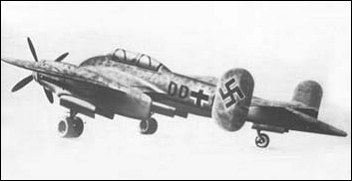
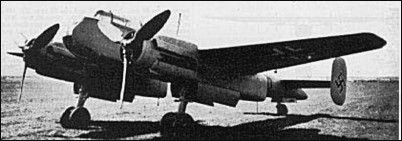
A 1942 development of the Ar 240, abandoned on favour of the Do 335. A general-purpose twin-engine, enclosed tandem two-seater. Only four were built.
Engines: 2 x Daimler Benz DB 603G, 1900 hp
Engines: 2 x Daimler Benz DB 627A, 2000 hp Propellers: metal three-blade variable pitch Wing span: 14,33 m Length: 12,80 m Height: 3,95 m Wing area: 31,30 m² Empty weight: 6200 kg MTOW: 9450 kg Wing loading: 301,916 Kg/m² Powwer loading: 4,021 Kg/hp Max speed: 620 Kmh at 6000 m Cruise: 555 Kmh at 6000 m ROC: 6000 m in 11 min Ceiling: 10500 m Range: 2000 km Armament: 2 x 7,92 mm MG 17 in wing root, 2 barbettes F 13, dorsal and ventral with one 2 Mg 81 7,92 mm each.
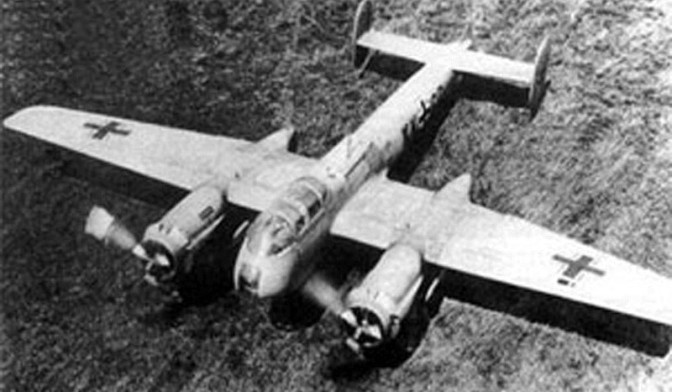
The Arado Ar 240 was designed by Walter Blume to an RLM 1938 response to replace the twin engine, two seat Messerschmitt BF 110 Zerstorer heavy fighter.
Intended to be produced as a high-speed and high-altitude reconnaissance aircraft, night fighter and bomber, the first prototype flew on 10 May 1940. Two prototypes and pre-production aircraft were completed and tested – most as reconnaissance aircraft but including examples for other roles – until 15 aircraft had been built by October 1942. The third prototype had the fuselage lengthened of 1,25 m, (12m 80 m), and equipped with 2 MG 17 of 7,92 mm in the wing root and 2 barbettes, 1 dorsal and 1 ventral, each with one 2 MG 81 of 7,92 mm.
The design was to feature a fully pressurized cockpit for two, remote-controlled operated armament and a specially designed lift flap. In addition to its heavy fighter role, the Ar 240 was to be a dive bomber as well, complicating the Ar 240 design further with the introduction of a dive braking system. The end product was a progressively heavy-laden design.
The Ar 240 was a traditional twin-engine layout with engines on a mid-mount monoplane wing. Crew was a pilot and navigator/gunner. The navigator/gunner manning two remote-controlled fuselage barbettes, each mounting twin 7.92m MG81 machine guns. An additional 2 x 7.92mm MG17 machine guns were available in fixed positions as well.
With the Ar 240A-0 series, the system had reach production stages. The definitive design would end up being the multi-purpose Ar 240C series of which several major variants would be developed. The Ar 240C version had a new aerofoil with the modified profile.
The type was used in the unarmed reconnaissance role over England during the operational trials phase of the development.
With no decision as to the best role for the aircraft, the programme was terminated in late 1942. A total of 14 were built. A few completed aircraft were taken into service by the Luftwaffe and used on the Eastern Front. Maximum level speed of the ninth aircraft, powered by two 1,304kW Daimler-Benz 603A-2 engines, was 730 km/h.
Ar 240V-2 – Second Prototype Model; larger ailerons, additional vertical fin on dive braking system and inclusion of smallish radiators for improved cooling.
Ar 240V-3 – Third Prototype Model; fitted with Arado / DVL FA 9 rear-firing weapons system; armament consisted of 1 x 7.92mm MG 81Z machine gun.
Ar 240V-4 – Fourth Ordered Prototype; first in series to include operational dive brake system.
Ar 240V-5 – Fifth Ordered Prototype; fitted with updated FA 13 weapon system consisting of 2 x 13mm MG 131 cannons.
Ar 240V-6 – Sixth Prototype Model
Ar 240A-0 – Initial Production Model Series; high-altitude reconnaissance variant; four preproduction aircraft produced.
Ar 240B-0 – Proposed Fighter-Bomber/Reconnaissance Variant.
Ar 240C-0 – Multi-Role Platform
Ar 240C-1 – Heavy Fighter Variant
Ar 240C-2 – Night Fighter Variant
Ar 240C-3 – Light Bomber Variant
Ar 240C-4 – High-Altitude Reconnaissance Variant
Ar 240E-0 – Dedicated Bomber Variant
Ar 240F-0 – Dedicated Fighter Variant
Specifiactions:
Prototype Engines: 2 x Daimler Benz 601A, 1075 hp Propellers: metal three-bladed variable pitch Wing span: 14,33 m Length: 11,55 m Height: 3,95 m Wing area: 31,30 m².
Ar 240A Engines: 2 x Daimler Benz DB 601E, 1175 hp Propellers: metal variable pitch Wingspan: 14,33 m Length: 12,80 m Height: 3,95 m Wing area: 31,30 m² Empty weight: 6200 kg MTOW: 9450 kg Wing loading: 301,916 Kg/m² Power loading: 4,021kg/hp Max speed: 620 Kmh at 6000 m Cruise: 555 Kmh to 6000 m ROC: 6000 m in 11 min Ceiling: 10500 m Range: 2000 km Crew: 2 Armament: 2 MG 17 7,92 mm, 2 Mg 81 7,92 mm.
Engines: 2 x BMW 801TJ, 1880 hp Propellers: metal variable pitch Wingspan: 14,33 m Length: 12,80 m Height: 3,95 m Wing area: 31,30 m² Empty weight: 6200 kg MTOW: 9450 kg Wing loading: 301,916 Kg/m² Power loading: 4,021kg/hp Max speed: 620 Kmh at 6000 m Cruise: 555 Kmh to 6000 m ROC: 6000 m in 11 min Ceiling: 10500 m Range: 2000 km Crew: 2 Armament: 2 MG 17 7,92 mm, 2 Mg 81 7,92 mm. Number built: 1
Engines: 2 x Daimler Benz DB 603A, 1750 hp Propellers: metal variable pitch Wingspan: 14,33 m Length: 12,80 m Height: 3,95 m Wing area: 31,30 m² Empty weight: 6200 kg MTOW: 9450 kg Wing loading: 301,916 Kg/m² Power loading: 4,021kg/hp Max speed: 620 Kmh at 6000 m Cruise: 555 Kmh to 6000 m ROC: 6000 m in 11 min Ceiling: 10500 m Range: 2000 km Crew: 2 Armament: 2 MG 17 7,92 mm, 2 Mg 81 7,92 mm. Number built: 1
Ar 240B Engines 2 x Daimler Benz DB 605A, 1475 hp Empty weight: 6950 kg MTOW: 8900 kg Max speed: 630 Kmh at 6055 m Cruise: 580 Kmh at 6055 m Range: 1910 km
Ar 240C Engines: 2 x Daimler Benz DB 603A-2, 1750 hp Max speed: 676 Kmh Armament:, 4 x 20 mm MG 151/20 in nose, 2 x MG 131 13 mm in barbettes, and 2 x 20 mm MG 151 in a ventral careenage.
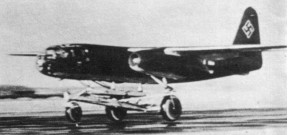
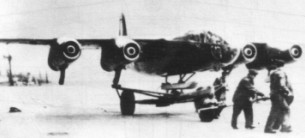
Development of the Ar 234 began in 1940 at Arado’s Brandenburg plant. The German Aviation Ministry issued an order to Dr. Walter Blume, technical director of the state-owned Arado concern, to design and build a reconnaissance aircraft propelled by the turbojet engines then under development by BMW and Junkers. Rüdiger Kosin led the design team. Initially designated the E 370, Kosin created a high-wing monoplane with two turbojet engines mounted in nacelles under the wings. The rear fuselage contained two downward-looking reconnaissance cameras. The Luftwaffe specification called for the new aircraft to have a range of 1,340 miles. To house sufficient fuel in the fuselage to meet this difficult requirement, Blume had to dispense with a conventional undercarriage. The aircraft would take off from a wheeled trolley, which would be released as soon as it got airborne. The landing would be made on three retractable skids, one under the fuselage and one under each engine.
The calculated performance figures for the E 370 were a maximum speed of 485 mph at 20,000ft, a maximum operating altitude of more than 35,750ft, and a maximum range, excluding reserves, of 1,250 miles. The range was down on the stated requirement, but the Luftwaffe Technical Office approved the design and ordered the construction of two prototypes. At that point the aircraft received its official designation: Arado Ar 234. By the end of 1941 the two Ar 234 prototypes were almost complete, except for their engines. The fuselage of the Ar 234 was a circular section, semi monocoque structure with flush riveted stressed skin with a single seat cockpit in the extreme nose. The centre section, in the region of the wing and landing gear attachments, was of reinforced box girder construction. The radio equipment and tail braking parachute were stowed in the rear fuselage.
Ar234V6
This all metal cantilever monoplane’s wings were made in one piece, each a two spar structure with a flush ¬riveted stressed skin covering. The Frise ailerons had mass balanced geared tabs on their inner ends and hydraulically operated flaps were mounted inboard and outboard of the jet engines. Outboard of the jet engines were three inset lugs for the attachment of Walter 109-500 liquid fuelled rocket booster pods to assist take off. Each pod developed 1,100 lb thrust for 30sec. When the fuel was exhausted the pods parachuted to earth for reuse. The metal fin had a detachable wooden leading edge, behind which was a radio aerial. The all metal rudder had tabs along its entire trailing edge, the upper tab being geared and the lower controlled from the cockpit. The cantilever tailplane was an all metal stressed skin structure, pivoted on self aligning bearings at the leading edge. Incidence of the entire surface could be varied by a screwjack controlled by a lever in the cockpit. The narrow chord metal elevators had no trim tabs, and a single mass balance weight in the fuselage served for both the elevators and rudder. The fuel capacity was 836 Imp.gal, contained in the two fuselage tanks, one aft of the cockpit and one aft of the wing attachment fittings. There was provision to carry one 66 Imp.gal drop tank under each engine. Some aircraft were fitted with two 20mm MG 151/20 cannon in a fixed rearward firing mounting. Sighting was by means of a PV1 B periscopic gunsight, when turned to look rearwards. The gunsight graticule was reversed and inverted, so the pilot saw the target aircraft back to-front and upside down, and would then fly the Arado to place the sight on the target as if the aircraft he was engaging was in front of him. There is little evidence that the system was used successfully in action. A standard load for operations would be 1,100 lb, comprising either a high ¬explosive bomb or a cluster bomb unit carried beneath the fuselage. Although Arado completed the Ar 234 V1 airframe in late 1942, the Junkers company encountered severe problems in trying to get its new turbojet engine to run controllably and with a reasonable running life. Not until February 1943 did Arado receive its first pair of 004 engines, and these were not flight ¬cleared. They were installed in the Arado 234V1 first prototype, which then underwent static ground running and taxying trials. In the late spring of 1943 two flight cleared Jumo 004s finally become available. Even before it made its maiden flight, the aircraft was being considered for the bomber role. The subject arose at a conference at the Air Ministry in Berlin on July 1943.
Ar 234B
The Ar 234 V1 did not fly until July 30, 1943, from Rheine Airfield near Munster, with Flugkapitan Selle at the controls. There was a problem with the take off trolley. As briefed, Selle released the trolley when the aircraft reached 200ft. It fell away cleanly, but the retarding parachutes failed to deploy fully and the trolley was wrecked on hitting the ground. The company rushed a replacement trolley to Rheine for the second flight, but that was also destroyed after the parachutes again failed to open properly. After these mishaps it was decided to release the trolley when the aircraft reached flying speed, and thereafter it seldom left the ground. Further prototypes followed including the Ar 234 V6 and Ar 234 V8 which were powered by four 800 kg (1,764 1b) thrust BMW 003A-1 turbojets. The test programme gradually gained momentum, although there was a setback on October 2 when Selle was killed when the second prototype crashed during a test flight. By the end of September 1943 three further Ar 234 prototypes had flown, and a bomber version was under active consideration. The Air Ministry directed Arado to redesign the landing gear and give the jet a bombing capability and ordered two prototypes of a new version, the Ar 234B, fitted with a conventional tricycle undercarriage retracting into the fuselage. Kosin and his team enlarged the fuselage slightly to accommodate a conventional tricycle landing gear and added a semi-recessed bomb bay under the fuselage. To allow the pilot to act as a bombardier, Kosin mounted a Lotfe 7K bombsight in the fuselage floor ahead of the control column, which the pilot swung out of his way to use the sight. A Patin PDS autopilot guided the aircraft during the bombing run. The pilot-bombardier used another periscope sight during shallow-angle, glide bombing. The first prototype for the revised design, designated Ar 234 V9, flew on March 12, 1944.
The Ar 234 B had two fuel tanks mounted in the fuselage. The forward tank held 1800 lt / 396 Imp.Gal and the rear tank held 2000 lt / 440 Imp.Gal.
Refuelling Ar 234B at Rheine autumn 1944.
Four further trolley mounted aircraft flew during December 1943 and the early months of 1944: the 5th and 7th prototypes, similar to the earlier machines; the 6th prototype, with four 1,760 lb thrust BMW 003 turbojets in separate pods under the wing; and the 8th prototype with four BMW 003s paired in wing pods. To enable the aircraft to take off fully loaded from short runways when there was little or no wind, the third prototype and subsequent twin-engined aircraft had provision for the installation of a Walter 109 500 liquid fuelled rocket booster pod under each outer wing section. Weighing 616 lb apiece, the booster pods developed 1,100 lb of thrust and carried sufficient hydrogen peroxide and sodium permanganate for about 30sec running. A system of inter-connected electrical pressure switches ensured that if one pod failed to deliver thrust, that on the fuselage or on racks mounted beneath the engine nacelles.
Ar234C
The Ar 234B 1 was an unarmed reconnaiss¬ance aircraft which first served with 1 Versuchsverband OberbefehIshaber der Luftwaffe late in 1944, and soon after with Sonderkorrimando Hecht and Sperling. These units were re¬placed in 1945 by 1 (F) 33, 1 (F) 100 and 1 (F) 123, and many reconnaissance sorties were flown over the UK. The bomber version, designated Ar 234 B-0, became the first subtype built in quantity. The Air Ministry ordered 200 Ar 234 Bs and Arado built them at a new Luftwaffe airfield factory at Alt Lönnewitz in Saxony. The factory finished and delivered all 200 airplanes by the end of December 1944 but managed to roll out another 20 by war’s end. The initial order had called for two versions of the Ar 234 B: the B-1 reconnaissance aircraft and the B-2 bomber but Arado built only the B-2 version. The company converted B-2 airframes into reconnaissance aircraft. The bomber version was the Ar 234B 2, which could carry a bombload of 2000 kg (4,409 lb), and other variants included the Ar 234B 2/b reconnaiss¬ance aircraft the Ar 234B 2/1 path¬finder and Ar 234B 2/r long range bomber. Ar 234B 2 bombers joined KG 76 in January 1945 and carried out a number of raids before the end of the war. The Ar 234B’s undercarriage was of retractable tricycle type. The nose¬wheel retracted into a compartment aft of the cockpit, and was fitted with a spring and cam centralising and anti shimmy device. The main wheels retracted forward and inwards into the fuselage, and were of unusually narrow track.
The bomber version had an effective operating radius of action, carrying a 1,100 lb bomb one way and allowing reasonable fuel reserves, of about 300 miles at high altitude, or about 120 miles if the aircraft remained at low altitude. In the reconnaissance role at high altitude with two 66gal drop tanks, the aircraft had a radius of action of about 450 miles. Three modes of bombing attack were possible with the Ar 234B. The shallow dive attack, the horizontal attack from low altitude and the horizontal attack from high altitude. The shallow dive attack was the most used method, and typically involved a nose down throttled back descent from about 16,250ft to 4,500ft, during which the pilot sighted his bombs using the periscopic sight protruding from the top of his cabin.
The low altitude horizontal attack was employed only when poor visibility or low cloud at the target precluded any other method. The pilot simply ran low over his target and released the bombs by eye.
The high altitude horizontal attack used normal map ¬reading or radio navigational methods to an initial point about 18 miles from the target. He then engaged the Patin three axis autopilot and swung his control column out of the way to his right. This done, he loosened his shoulder straps and leaned forward to the bomb aiming position, over the eyepiece of the Lotfe bombsight. The bombsight’s controls were connected to the aircraft’s automatic pilot via a simple form of computer. The pilot adjusted the bombsight controls to hold the graticule over the target; the bombsight then fed the appropriate signals via the computer to the autopilot and thus “flew” the aircraft through its bombing run. When the aircraft reached the bomb release position, the system released the bombs automatically. The pilot then straightened up in his seat, tightened his shoulder straps, retrieved the control column, switched oft the autopilot and turned the aircraft around for home.
An innovation introduced with the Ar 234B was the use of a tail brake parachute to shorten the landing run. It was the first combat aircraft to have this fitted as standard.
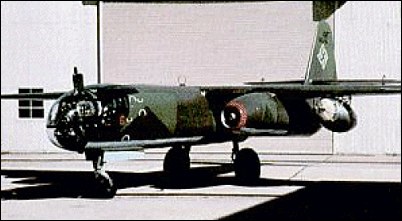
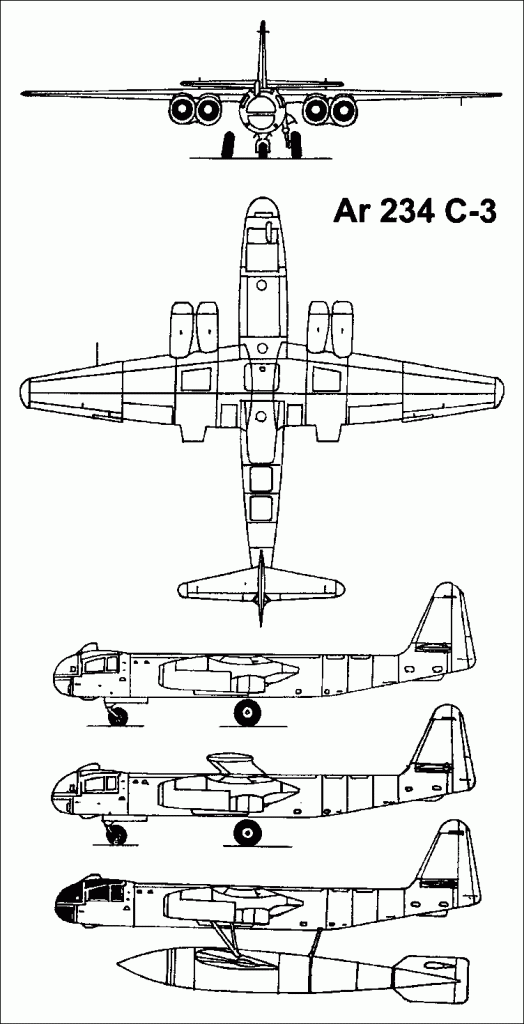
Plans called for more advanced versions of the Arado jet, including the Ar 234 C powered by four 1,760 lb thrust BMW 003 A-1 engines and fitted with a pressurized cockpit. Subvariants of the “C” model included the C-3 multi-role aircraft and the C-3N two-seat nightfighter. However, only 14 Ar 234 Cs left the Arado factory before Soviet forces overran the area. The four-engine Ar 234 was, however, the fastest jet aircraft of World War II. With the extra engine thrust this version could take off fully laden from shorter airfields without the use of booster rockets. Peter Kappus, a test pilot with BMW who flew the Ar 234C, later recalled: “The four engined Ar 234C had a very high performance in the take off and the climb. But it could not be flown at full power horizontally, because at the very high speeds reached it structural flutter problems.”
Prototypes for the more advanced Ar 234 D reconnaissance aircraft and bomber with provision for a second crewman were under construction but not completed at war’s end.
Early in 1945 a few Ar 234Bs were modified for use as night-fighters with Kornmando Bonow. These aircraft carried the FuG 218 Neptun radar, with nose-mounted aerials. The radar operator sat in an improvised position inside the rear fuselage, aft of the wing. For this role the Ar 234B was armed with two 20mm MG 151 cannon in a pack mounted under the fuselage. One idea tried out as a means of increasing the radius of action of the Ar 234 bomber was to tow a V1 flying bomb, with the warhead, engine and tailplane removed and a wheeled undercarriage fitted, to carry extra fuel. The idea was not a success and the scheme was never tried in action. During March 1945 Soviet troops advanced into eastern Germany, and the Arado plant at Alt Loennewitz came under threat. To prevent it failing into enemy hands, German Army engineers destroyed the factory with explosives. This brought production to a precipitate halt, after just 210 Ar 234Bs and 14 Ar 234Cs had been delivered to the Luftwaffe. The Arados reached their high point with their prolonged attacks on the big Remagen bridge across the Rhine, and their 1 000 kg (2,205 1b) bombs dropped from low level in shallow dive attacks finally brought the bridge down after 10 days on 17 March 1945. But by then the Allied armies were well into Germany. About 60 of the 210 Arados delivered were captured in flying condition, and most Allied countries had a whole squadron of them in mid 1945. Apart from the critical nature of some take offs, the Ar 234 was found to be a fine aircraft, with no severe Mach trouble up to 0.8 and a range in clean condition of well over 1610 km (1,000 miles).
Characteristics The take off run was long, but single engine safety speed was 140 mph (225km/h) when the aircraft would swing and bank, although not violently, and provided corrective action was taken within 2sec it could be held straight without loss of height. Flaps were raised after reaching 155 m.p.h. (250km/h) and then speed for the initial climb built up to 250 m.p.h. (400km/h). This was reduced to 235 m.p.h. (380km/h) after passing through 26,250ft (8,000m) altitude to give optimum rate of climb. The maximum initial climb rate was 2,500ft/min (12.7m/sec) but had reduced to 1,800ft/min (9.14m/sec) by 10,000ft (3,000m) and to 1,000ft/min (5.08m/sec) by 20,000ft (6,000m). These figures were certainly good for a 1945 vintage reconnaissance bomber but the top speed of 475 mph (765km/h) was what made Blitz so appropriate a name for the Ar 234B. The Blitz handled beautifully at high altitude, its stability about all axes being positive and the harmony of control being good. These characteristics, allied to the superlative view that it offered its pilot, made the Ar 234B a first class platform for photography or bombing. Quality control was suffering adversely in the chaotic conditions prevailing in the German aircraft industry as a result of the heavy Allied bombing attacks. On the Blitz the extremely sharp nosed Frise ailerons were very sensitive to rigging errors and could misbehave violently at speeds above 370 m.p.h. (600km/h), a common fault being rapid oscillation of the ailerons The Blitz suffered from directional snaking, and as often as not this undesirable characteristic was aggravated by poor manufacturing standards on the rudder which sometimes came out fatter or thinner than the fin profile. The Arado company failed to tackle this problem, merely rectifying the fault by off-setting the rudder hinge to one side, or by rigging the balance and trim tabs out in opposite directions. German test pilots did not investigate the high Mach characteristics of the Ar 234B, although normal production testing involved a dive from 10,000ft (3,000m) up to a true speed of 530 m.p.h. (850km/h) low altitude work that did not involve compressibility effects. The transonic region was, therefore, virtually fresh ground for the Royal Aircraft Establishment. In a series of dives from an altitude of 30,000ft (9,100m). The Blitz accelerated less than expected from maximum cruising speed and so a dive of some 30 degrees was needed to achieve the desired entry into the compressibility region before too much altitude was lost. This also entailed using nose down trim, as otherwise the push force to hold the dive angle became too high. At M0.76 nose heaviness set in and the elevator began to feel sloppy. These effects were accentuated until at M0.82 full backward pull on the stick was required to hold the dive angle constant and to allow the loss of altitude to have its density effect on reducing true airspeed until recovery could be effected. For its role as a reconnaissance bomber, therefore, the Ar 234B had a tactical Mach number of 0.75 while its top speed at around 30,000ft (9,145m) was about M0.72. The low speed end of the performance envelope displayed extremely docile characteristics at the stall, this being a straightforward and gentle nose drop. Stalling speed in landing condition was 112 m.p.h. (180km/h). Landing was very easy since the view from the cockpit was superb. The maximum speed for lowering the undercarriage was 250 m.p.h. (400km/h) and then flaps to 25O at 200 m.p.h. (320km/h). It was best to apply full 45O flap after turning on to the final approach at about 175 m.p.h. (280km/h), reducing speed to 130 mph (210km/h), and, when sure of making the airfield, easing back the throttles to idling at 4,000 rpm., crossing the boundary at 125 mph (200km/h). The landing run was lengthy as the rather ineffective brakes faded badly, having to be held on continuously throughout the ground run. All versions of the Blitz had a braking ‘chute fitted which halved the landing run.
Operations The 5th and 7th prototype Ar 234s each carried a pair of Rb 50/30 aerial cameras mounted nearly vertically in the rear fuselage. Fitted with 50cm long focus lenses, the cameras were splayed outwards away from each other at 120 to the vertical, perpendicular to the line of flight. From 32,500ft this split pair camera arrangement took in a swathe of ground just over 6 miles wide along the aircraft’s track. The 5th and 7th prototypes were delivered to the Versuchsverband der Oberkommando der Luftwaffe (Luftwaffe High Command Trials Detachment) based at Oranienburg, a special reconnaissance unit under the direct control of the Luftwaffe High Command. Oberieutnant Horst Goetz took command of the Arado 234 detachment, and he and another pilot, Leutnant Erich Sommer, began learning to fly the new aircraft. In mid July 1944 Goetz received orders to move the Ar 234 detachment to Juvincourt, near Reims in France, to begin reconnaissance operations over the Western Front. From the start there were problems. On July 17 the two Arados took off from Oranienburg, but soon after getting airborne Goetz suffered an engine failure and had to turn back. Sommer continued on to Juvincourt, and landed without incident. After landing, his aircraft was hoisted on to a low loading trailer and towed into a hangar. Then the world’s most advanced reconnaissance aircraft had to remain, unusable, until its tailor¬-made take off trolley arrived from Oranienburg by rail (since there were minor differences between the two hand built prototypes, their take off trolleys were not interchangeable). By that time the Allied bombing campaign had reduced the French rail system to a state of near chaos. Despite the high priority accorded the move, more than two weeks elapsed before the trucks carrying the take¬off trollev reached Juvincourt. At last, on the morning of August 2, everything was ready for Sommer to set out on the world’s first jet reconnaissance mission. It took Sommer about 20min to climb to 34,000ft, by which time the Arado was almost over the battle area. High over the Cherbourg Peninsula he turned the aircraft on to an easterly heading, eased down the nose and descended to build up his speed to about 462 mph. He levelled off and concen¬trated on flying exactly straight and level for his first photographic run. The doors protecting the camera lenses were open, and Sommer flicked the switch to activate the two cameras. The automatic mechanism on each camera took one picture every 11 sec. If any Allied fighter attempted to catch the high flying Arado, Sommer never noticed it. That first photographic run, taking in the coastal strip, lasted about 10 min. Then Sommer turned through a semi circle and levelled out, heading due west for a second run parallel to the first and about 6 miles inland. The second run completed, he turned on to an easterly heading and flew a third run 6 miles further inland and parallel to the previous two. Near the end of the third run the counters on the camera panel clicked to zero. In a flight lasting less than 90min he had photographed almost the entire Allied lodgement area in Normandy. The 380 photographs he had taken caused a considerable stir. During the three weeks that followed the two aircraft flew 13 further missions. On August 28 American tanks neared Reims, and Goetz received orders to move the two Ar 234s from Juvincourt to Chibvres in Belgium. As Goetz prepared to land at Chievres, the ground defences, long conditioned to treat any approaching aircraft as hostile, opened fire at him. An accurate shell struck the Ar 234 just beneath the cockpit, knocking out the aircraft’s electrical and hydraulic systems. Goetz broke off his approach and found that his flaps and landing skids would not extend. The aircraft was still flyable, however, so he flew it back to Oranienburg, where there were proper repair facilities. There Goetz made a skilful flapless belly landing, touching down at about 190 m.p.h. The valuable aircraft came to a halt having suffered remarkably little damage, and Goetz climbed out of the cockpit. Then the Arado received its coup de grace. A young fighter pilot taking off from the airfield, not expecting such an obstacle to be in his path, ran straight into the rear of the Arado and the propeller of his aircraft severed the complete tail unit. Goetz emerged with cuts from stones and flying glass, and was unable to see clearly for a couple of weeks. The Ar 234 was wrecked. Sommer landed his Ar 234 at Chievres without difficulty, then as Allied tanks approached the area he had to move to Volkel in Holland a few days later. Sommer was there on September 3, when over 100 RAF Lancasters carried out a heavy daylight attack on the airfield. Although the landing ground and camp areas were pockmarked with craters, Sommer’s Ar 234 sat undamaged in its hangar The airfield was judged unusable for normal operations, so on the following day, September 4, Sommer made a trolley take off from one of the taxy tracks after some of the craters had been filled in. He landed the Ar 234 at Rheine, near Osnabruck, the new base for jet reconnaissance operations. The withdrawal of the unit to Germany coincided with an end to missions using the take off trolley, for in September the Ar 234B with a normal undercarriage became available. The slightly wider fuselage necessary to accommodate the undercarriage reduced the maximum speed by about 20 mph, but still the aircraft was fast enough to avoid fighter interception. There was also a reduction in the radius of action, but there was provision to carry a 66gal drop tank under each engine for the longer missions. In return for these limitations the Ar 234B was a considerably more versatile machine able to operate from airfields without specialist ground equipment. At Rheine, Goetz’s unit, now designated Kommando Sperfing (Sparrow), gradually built up to nine Ar 234Bs and flew almost daily reconnaissance missions. Standing patrols over the airfield by Allied fighters posed a continual problem, however. The only time an airborne Ar 234 was vulnerable to fighter attack was when it was flying slowly immediately after take off, or before landing. On January 10, 1945, the Luftwaffe Quartermaster General’s list recorded only five reconnaissance Ar 234Bs in service, four with Kornmando Sperling and one with Kornmando Hecht. From September 1944 until the end of the war the reconnaissance Ar 234Bs operated regularly, photographing Allied positions with minimal interference. Early in 1945 Goetz’s Kornmando Sperling had been expanded into a Staffel, and it was redesignated as 1st Staffel of Fernaufklarungsgruppe (FAGr long range reconnaissance group) 123. Two other reconnaissance Staffeln also re equipped with the Ar 23413, one being attached to FAGr 100 and one to FAGr 33. In addition, Erich Sommer had formed his own unit, Kornmando Sommer, equipped with three Ar 234Bs and operating on the Italian front. Not until February 11, 1945, after more than six months, was a reconnaissance Ar 234 lost to an Allied fighter. On that day Scin Ldr David Fairbanks was leading an armed reconnaissance by eight Hawker Tempests of 274 Sqn RAF when he spotted a lone jet aircraft which he took to be an Me 262. After a lengthy chase he caught up with the machine as it slowed to land at Rheine, and shot it down. It was an Ar 234B of Goet’s unit, piloted by Hptm Hans Felden, returning from a photographic mission over Hull. Felden was killed. Kornmando Sommer, based at Udine in Italy, suffered its only pilot loss on April 11. Leutnant Gunther Gniesmer was near Bologna when he had the bad luck to run into a formation of bombers escorted by P 51s of the 52nd FG. Lieutenants Hall and Cooper succeeded in reaching firing positions, and shot him down. Gniesmer baled out, but as he fell clear he struck the tailplane and died in hospital a few days later. The Ar 234 was consistently successful in penetrating deep into enemy territory and bringing back vital pictures. These flights often went undetected by the enemy, and if they were detected the Arados were difficult to shoot down. During the early morning darkness of January 1, 1945, Lukesch led four Ar 234Bs for the world’s first night jet bombing mission. The aircraft took off from Munster Handorf and flew a circular route which took them over Brussels and Liege, dropping bombs on each. The bombing was intended to deceive the enemy rather than cause damage, however. The aim of the mission was to report on the weather over Belgium and Holland in preparation for Operation Boden¬platte (Baseplate), the massed Luftwaffe attack on Allied airfields scheduled to open soon after dawn. By the end of 1944 the Luftwaffe had accepted 148 Ar 234Bs. Yet on January 10, 1945, the Quartermaster General’s list recorded only 12 Ar 234B bombers in front line service, of which 11 were serviceable. All served with 9th Staffel of KG76. By then the remainder of the Geschwader was in the process of re equipping with the type, but about half of the Ar 234s built were sitting in aircraft parks. The crescendo of Allied air attacks on the German transport system greatly hindered the formation of operational units equipped with the Ar 234B, as with other new types. On April 10, 1945, the last date for which figures exist, the Quartermaster General’s report listed a mere dozen Ar 234Bs in service with operational bomber units, of which four were serviceable. The largest attack by Arados on a single day, on February 27, 1945, involved only 37 Arado sorties. The total bomb load carried, 18.25 tons, caused only minor inconvenience to the Allied troops dispersed over a large area.
On 10 April 1945, an Arado 234B-1 reconnaissance aircraft took off from Sula Airfield in Stavanger, Norway. The plane took photographs of Scotland and landed back at Sala 2 hr 30 min later. The Luftwaffe had just ended its last mission over Britain.
The National Air and Space Museum’s Blitz, an Arado Ar 234 B-2 bomber carrying Werk Nummer (manufacturer’s serial number) 140312, was one of nine Ar 234s surrendered to British forces at Sola airfield near Stavanger, Norway. It is the sole surviving example of an Ar 234. The aircraft had been on strength with 9./KG 76 (Ninth Squadron/ bomber Wing 76) during the final weeks of the war, having served earlier with the unit’s eighth squadron. It and three other Ar 234s were collected by the famous “Watson’s Whizzers” group of the USAAF (United States Army Air Forces) for shipment to the United States. After flying from Sola to Cherbourg, France on June 24, 1945, the four Ar 234s joined thirty-four other advanced German aircraft aboard the British aircraft carrier HMS Reaper for shipment to the United States. The Reaper departed from Cherbourg on July 20, arriving at Newark, New Jersey eight days later. U. S. Army Air Forces personnel reassembled and flew two Ar 234s, including 140312, to Freeman Field, Indiana, for testing and evaluation. The USAAF assigned the foreign equipment number FE-1010 to this Ar 234 for inventory and tracking purpose. The only surviving example was in 2004 on display at the Steven F Udvar Hazy Center at Dulles Airport in Washington DC.
Arado Ar 234 B Blitz Engine : 2 x Jumo 004 B, 8731 N Length: 41.535 ft / 12.66 m Height: 13.78 ft / 4.2 m Wingspan : 47.375 ft / 14.44 m Wing area : 298.163 sqft / 27.7 sq.m Max take off weight : 21609.0 lb / 9800.0 kg Weight empty : 11466.0 lb / 5200.0 kg Max. speed : 410 kts / 760 km/h Landing speed : 79 kts / 146 km/h Cruising speed : 378 kts / 700 km/h Service ceiling : 32808 ft / 10000 m Wing load : 72.57 lb/sq.ft / 354.00 kg/sq.m Range : 864 nm / 1600 km Crew : 1 Armament : 2x MG 151 20mm, 1000kg
Ar 234B 1 Type: unarmed reconnaiss¬ance aircraft.
Ar.234B-2 Engines: 2 x Junkers Jumo 004B turbojets, 890kg / 1,980 lbs Wingspan: 14.10 m / 46 ft 3 in Length: 12.64 m / 41 ft 6 in Height: 4.30 m / 14 ft 1 in Wing area: 26.40 sq.m / 284.17 sq ft Max take-off weight: 9850 kg / 21716 lb Empty weight: 5200 kg / 11464 lb Max. speed: 740 km/h / 460 mph / 401kt Ceiling: 10000 m / 32800 ft Range: 1630 km / 1013 miles Armament: 2 x 20mm rear-firing cannons (periscope operated) Bombload: 2000kg / 4,410 lb Crew: 1
Ar234B 2 Blitz Engines: 2 x 1,980 lb thrust Junkers Jumo 004B jet engines, plus two 1,100 lb thrust Waiter 109 500 liquid fuelled rocket booster pods. Wing span: 47ft 3.25in. Length: 41ft 5.5in. Height (on ground over fin): 14ft 1.25in. Wheel track: 6ft 8.75in. Gross wing area: 290.6sq.ft. Normal take off wt: 18,522 lb. Max permissible take off weight without rocket assistance: 19,514 lb. Maximum permissible take off weight with rocket assistance: 22,050 lb. Normally loaded wt, with two booster rockets and a 500kg bomb: 20,870 lb. Maximum speed (clean): 461 mph. at 19,500ft. Max speed with 500kg bomb: 430 mph at 19,500ft. Range at 19,500ft carrying 500kg bomb, no res: 970 miles. Climb to 19,500ft carrying 500kg bomb: 12min 48sec.
Ar 234B 2 Type: single seat tactical light bomber. Engines: two 800 kg (1,764 1b) thrust BMW 003A 1 turbojets. Wing span: 14.44 m (46 ft 3.5 in) Length: 12.64 m (41 ft 5.5 in) Height: 4.29 m (14 ft 1.5 in) Wing area: 27.3 sq.m (284.17 sq.ft). Empty weight: 5200kg (11,4641b) Max take off weight: 9800 kg (21,605 lb). Fuel cap: 3750 lt (825 Imp gal) diesel. Max speed: 742 km/h (461 mph) at 6000 m (19,685 ft) Climb to 6000 m (19,685 ft): 12.8 min. Service ceiling: 10000 m (32,810 ft). Range: 1630 km (1,013 miles). Armament: bombload of up to 2000 kg (4,409 lb); some aircraft carried two rear firing MG 151 20 mm guns.
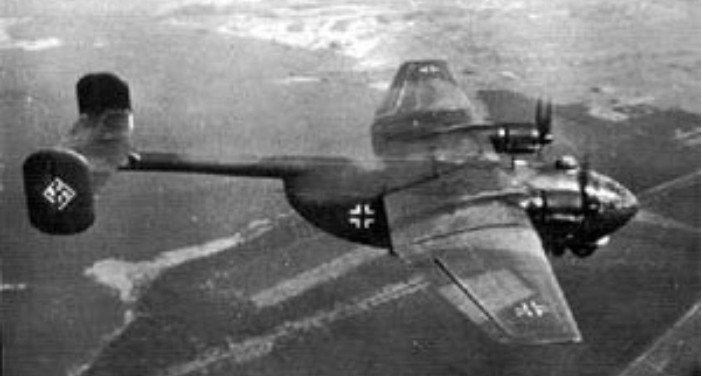
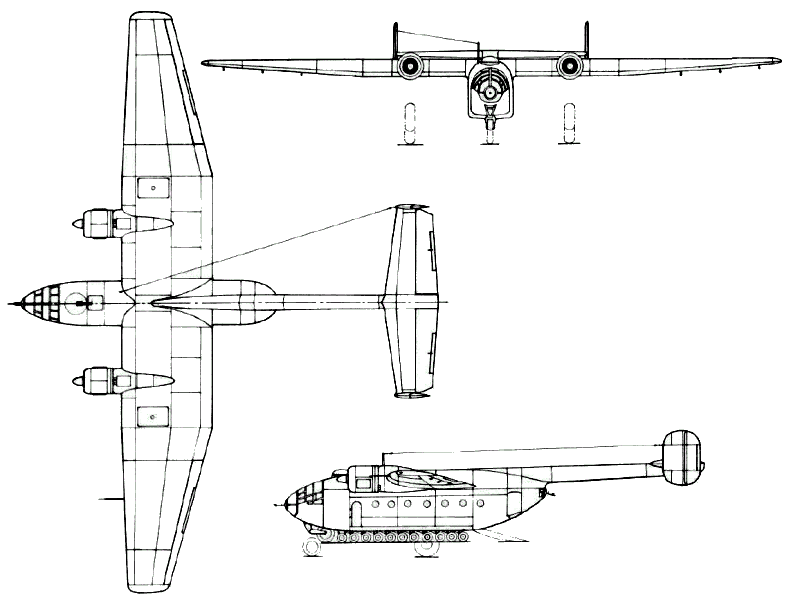
The Arado Ar 232 was built around a monocoque fuselage, designed for cargo-carrying capacity.
Known unofficially as the “millipede” (or “Tausendfussler”) thanks to the many sets of wheels utilized in the undercarriage arrangement, the Ar 232 system saw only a limited production run with no more than 22 total examples made. To that end, the Ar 232 served in an equally-limiting capacity for Luftwaffe special operations missions and one other transportation air group.
Powered was four Bramo piston engines, two mounted on each wing, each generating 1,200 horsepower. The wings were of a high monoplane with a twin-fin tail assembly. Armament was defensive and included a nose-mounted 13mm machine gun, a 20mm cannon in a dorsal turret mounting and one or two 13mm machine guns mounted at rear.
The landing gear featured a retractable main nosewheel type gear and a secondary gear of ten pairs of smaller wheels on shorter legs situated under the fuselage. The smaller wheels were normally off the ground but took the weight of the aircraft during loading and unloading when the main undercarriage legs were reduced in length to facilitate cargo handling.
The first prototype Ar.232 flew in 1941 powered by two 1,192kW BMW 801MA radial engines.
The Ar 232 series included “A” and “B models. The difference was in the choice and number of powerplants. Aircraft were built as Ar.232As or B-0s and Ar.232Bs, most of which were powered by four 894kW BMW Bramo 323R-2 radials and carried a crew of four and about 4,500kg of cargo (including vehicles).
Ar.232s, including the prototypes, served with the Luftwaffe from 1942 until 1944.
Engines: 4 x BMW 801MA radial, 1193kW Take-off weight: 21135 kg / 46595 lb Empty weight: 12802 kg / 28224 lb Wingspan: 33.50 m / 109 ft 11 in Length: 23.52 m / 77 ft 2 in Height: 5.69 m / 18 ft 8 in Wing area: 142.60 sq.m / 1534.93 sq ft Ceiling: 8000 m / 26250 ft Range: 1060 km / 659 miles
Engine: 4 x BMW Bramo 323 R-2 Fafnir, 986 hp Wingspan: 109.908 ft / 33.5 m Length: 77.1 ft / 23.5 m Height: 18.701 ft / 5.7 m Max take off weight: 46657.8 lb / 21160.0 kg Weight empty: 22667.4 lb / 10280.0 kg Max. speed: 183 kt / 338 km/h Service ceiling: 26247 ft / 8000 m Range: 702 nm / 1300 km Armament: 3x MG 131 13mm, 1x MG 151 20mm
Arado Ar 232 Tausendfussler (Millipede) Engines: 4 x Bramo 232-R Fafnir radial, 1,200hp each. Length: 77.17ft (23.52m) Wingspan: 109.91ft (33.50m) Height: 18.70ft (5.70m) Maximum Take-Off Weight: 46,650lbs (21,160kg) Maximum Speed: 211mph (340kmh; 184kts) Maximum Range: 830miles (1,335km) Service Ceiling: 22,638ft (6,900m) Armament: 1 x 20mm cannon (in dorsal turret) 1 x 13mm machine gun (nose-mounted) 1 or 2 x 13mm machine gun(s) (rear position mount) Crew: 4



 All Aero