Avro / A.V.Roe

When the Daily Mail organised a model-flying contest at Alexander Palace, London, in March 1907, young A.V. Roe won first prize. His 8 ft tail first model flew more than 100 feet.
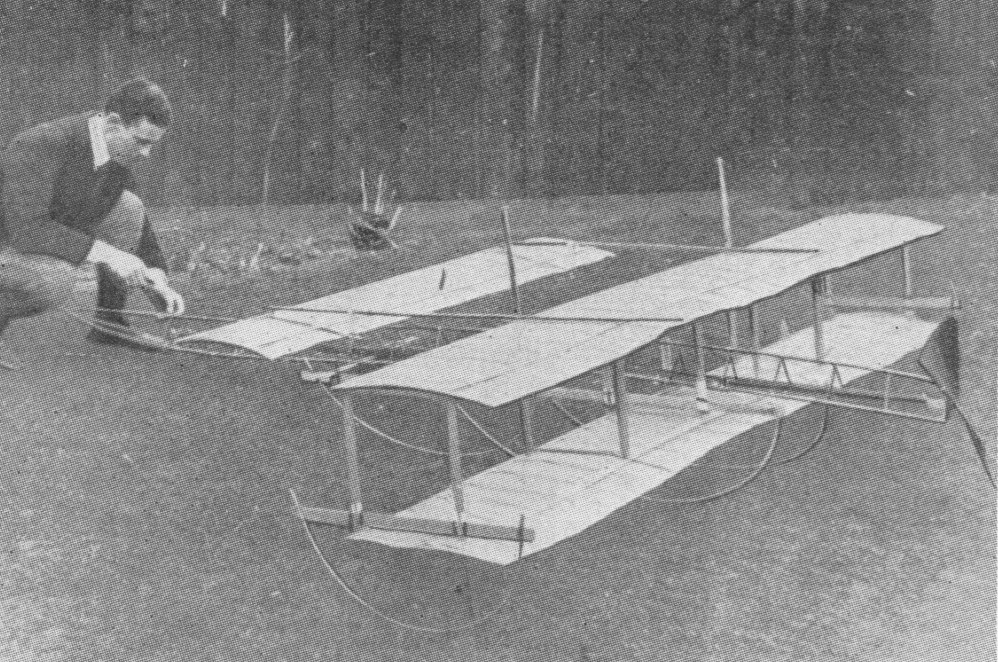
Avro Article

Alliott Verdon Roe, after a varied career in surveying, tree-planting, fishing, post-office management and marine engineering began aircraft design in 1906. Spurred by winning £75 in a model aircraft contest held in London in 1907. Roe built a full-size biplane, which made some tentative hops from the motor racing circuit at Brooklands in 1908.

Moving to an abandoned railway arch on Lea Marshes in Essex, he built the Roe I Triplane which weighed less than 91 kg (200 lb) and was covered in brown wrapping paper. He called it the Bull’s-Eye Avroplane after the brand-name of men’s trouser braces whose manufacturer had supported him. In July 1909 the Roe I Triplane made the first official powered flights in Britain by an all-British aircraft.
Alliott Roe subsequently developed three other triplane designs, one of which he flew (and crashed three times) at the great Boston-Harvard Aviation Meeting of 1910.

A.V. Roe and Company was established at Brownsfield Mill, Great Ancoats Street, Manchester, by Alliott Verdon Roe and his brother Humphrey Verdon Roe on 1 January 1910. Humphrey’s contribution was chiefly financial and organizational; funding it from the earnings of the family webbing business and acting as Managing Director until he joined the RFC in 1917.

In the summer of 1910 A. V. Roe and Company declared its willingness to build aeroplanes to other people’s designs and the first such aircraft was a Farman-type biplane for a Bolton business man. The Farman-type evidently did not meet with much success as 18 months later, at the end of 1912, the engine and airframe were advertised for sale in new condition for £45 and £60 respectively. Bolts, fittings and bracing wires were also supplied to Miss Lilian Bland who built and flew the Mayfly biplane of her own design at Carnamony, Belfast. Each of these aircraft was fitted with one of the few examples of the 20 h.p. two cylinder, horizontally opposed, air cooled Avro engines. These were never given an Avro designation.

A.V.Roe carried out numerous experiments with all kinds of plane sections with varying cambers, etc. These were sold off in November 1911 at peppercorn prices for gliders.

The first Avro aircraft to be produced in any quantity was the Avro E or Avro 500, first flown in March 1912, of which 18 were manufactured, most for the newly-formed RFC. The company also built the world’s first aircraft with enclosed crew accommodation in 1912, the monoplane Type F and the biplane Avro Type G in 1912, neither progressing beyond the prototype stage. The Type 500 was developed into the Avro 504, first flown in September 1913. A small number were bought by the War Office before the outbreak of the First World War and the type saw some front line service in the early months of the war, but is best known as a training aircraft, serving in this role until 1933. Production lasted 20 years and totalled 8,340 at several factories: Hamble, Failsworth, Miles Platting and Newton Heath.

By 1913 the company had become registered as A.V.Roe & Co. Ltd.

After the boom in orders during the First World War, the lack of new work in peacetime caused severe financial problems and in August 1920, 68.5% of the company’s shares were acquired by nearby Crossley Motors who had an urgent need for more factory space for automotive vehicle body building.

In 1924, the Company left Alexandra Park Aerodrome in south Manchester where test flying had taken place during the period since 1918 and the site was taken over by a mixture of recreation and housing development. A rural site to the south of the growing city was found at New Hall Farm, Woodford in Cheshire, which continued to serve aviation builders BAE Systems until March 2011.

Cierva Autogiro production started in Britain at A. V. Roe’s Hamble factory in 1926.

In 1928 Crossley Motors sold AVRO to Armstrong Siddeley Holdings Ltd. In 1928, A.V.Roe resigned from the company he had founded and formed the Saunders-Roe company that after World War II developed several radical designs for combat jets, and, eventually, a range of powerful hovercraft.

In 1928 Avro acquired a license to build the Fokker F.VIIB/3M as the Avro 618 Ten: it carried eight passengers and two crew, and orders included five for Australian National Airways. Rivaling the success of the 504 was the twin-engined Anson trainer and coastal patrol monoplane, flown as the Avro 652 civil transport for Imperial Airways in 1935.

In 1935, Avro became a subsidiary of Hawker Siddeley.

More than 10,000 Ansons were built in Britain and Canada between 1935 and 1952. The twin-engined Manchester bomber of 1939, with the unproven Rolls-Royce Vulture engines, was not a success, but led to the superb four-engined Lancaster, of which 7,374 were built during Second World War. The York transport derivative mated the same wings and tail, plus a central fin, with an entirely new fuselage seating 12 passengers. The Lincoln bomber was built as a replacement for the Lancaster, entering RAF service soon after VJ-day.

Over 7,000 Lancasters were built and of the total, nearly half were built at Avro’s Woodford and Chadderton (Manchester) sites, with some 700 Lancasters built at the Avro “shadow” factory next to Leeds Bradford Airport (formerly Yeadon Aerodrome), northwest Leeds. This factory employed 17,500 workers at a time when the population of Yeadon was just 10,000. The old taxiway from the factory to the runway is still evident.

Although only ⅓ of Lancasters hit their target, the Lancasters were at the time Britain’s best bombers.

The civilian Lancastrian and maritime reconnaissance Shackleton were derived from the Lancaster design. Avro’s postwar Tudor transport was not a success. With the same wings and engines as the Lincoln, it achieved only a short (34 completed) production run following a first flight in June 1945 and the cancellation of an order from BOAC.

The company’s last piston-engined aircraft was the Shackleton four-engined maritime reconnaissance aircraft. Following production of four Avro 707 delta research aircraft, the company produced the four-jet delta-wing Vulcan bomber, which began to enter RAF service in 1956. The Vulcan saw service as a conventional bomber during the British campaign to recapture the Falkland Islands in 1982. Vulcan XH558 flew again after several years of refurbishment, and several are prized as museum exhibits. Avro’s last design before being restyled the Avro Whitworth Division of Hawker Siddeley Aviation, in 1963, was the Avro 748 twin-turboprop transport (first flown in 1960). The Royal Flight bought a few and a variant with a rear-loading ramp and a “kneeling” main undercarriage was sold to the RAF and several members of the Commonwealth as the Andover.

When the company was absorbed into Hawker Siddeley Aviation with Folland, Gloster, Armstrong Whitworth, and de Havilland in July 1963, the Avro name ceased to be used. The brand still had a strong heritage appeal, and the marketing name “Avro RJ” (regional jet) was used by British Aerospace for production of the RJ-85 and RJ-100 models of the BAe 146 from 1994 to 2001. This aircraft type is sometimes also loosely called the “Avro 146”.
The BAe ATP (Advanced Turbo Prop) design evolved from the Avro 748. At 39 years, the Shackleton held the distinction of being the aircraft with the longest period of active RAF service, until overtaken by the English Electric Canberra in 1998.
Avion Inc

USA . Formed 1942 to undertake research, engineering, and production of military aircraft. Orders during war included subassemblies for Northrop and Lockheed. In January 1943 received Northrop subcontract for three XP-79 jet fighters, one of which (MX-324) was the first American rocket-propelled aircraft to fly, on July 5,1944.

Aviolanda

AVIOLANDA MAATSCHAPPIJ VOOR VUEGTUIGBOUW NV
AC-pi / ML-sp
Founded December 1926. Before Second World War built under license Dornier Wai twin-engined flying-boats for Royal Netherlands Naval Air Service and Curtiss Hawk biplane fighters for East Indies Army Air Service. After war made assemblies for Gloster Meteor, Hawker Hunter, and Lockheed Starfighter. Made N.H.I. Kolibrie helicopter. Developed AT-21 pilotless drone and aircraft components (e.g. passenger ramps). Extensive repair and overhaul work also undertaken.
Aviolanda, De Schelde and Fokker were eventually to unite, but not until long after World War Two.

Avia Akciova Spolecnost Pro Prumysl Letecky

The company was founded by Pavel Beneš, Miroslav Hajn, Jaroslav František Koch and Václav Malý in 1919. Taken over by Milos Bondy a Spol about 1923, but acquired 1926 by Skoda, which also made Hispano-Suiza air engines under license. During the 1930s the factory became the biggest aircraft producer in Czechoslovakia and moved to Letňany in Prague, where production continued. During World War II Avia produced aircraft for the German Luftwaffe. After the war the company was nationalized and became involved in the automotive industry. It manufactured aircraft up to 1963, then targeted on truck production and continued to make aircraft engines (producing only propellers from 1988). The company was split in 1992 into propeller and truck sections, both using the Avia brand.

Before the war the company produced civilian and military aircraft, including the Avia BH-1, Avia BH-21, Avia B-534 and Avia B-71 (Soviet licensed Tupolev SB). Early Avia designers were Benes and Hajn: hence initials in aircraft designations. BH-1 was light sporting two-seater; BH-3 a low-wing strut-braced single-seat fighter for the Czechoslovak National Defense Ministry; BH-25 a five seater; BH-26 a two-seat fighter; BH-33 a single-seat biplane fighter developed from the BH-21.

Company made Fokker F.VII/3m under license, and Avia FIV IX was a Fokker-designed bomber. Before the war the company built fast metal-skinned transports of original design: Avia 51, 56, and 57. B 534 biplane was outstanding single-seat biplane fighter (445 built) used by Czechoslovak Air Force and widely considered best of class in Continental Europe. B 71 was Soviet-designed monoplane bomber.

In 1945 factories were reconstituted under Government, but production of Avia 36 light monoplane was resumed and Douglas C-47s were converted for civil use. Avia had started building Messerschmitt Me 109G soon after WWII as the Avia S-99, but soon ran out of the 109’s Daimler-Benz DB 605 engine.

Also during the war the Germans set up a number of assembly plants in Czechoslovakia for production of the Messerschmitt Me 262, designated the Avia S-92. After the war the manufacturing infrastructure remained intact, so production could start up again for the new owners.

The first S-92 was assembled at Letňany Research Institute in 1945 with the airframes coming from Avia and the engines from the repair works in Malešice (the Junkers Jumo 004, now called the M-04). The S-92’s first flight was on 27 September 1946, with Avia’s chief pilot Antonin Kraus in control. That same year on December 10 the CS-92 took to the air for the first time.

Delivery of the first S-92 to the Czechoslovak Air Force was on 6 February 1948. Twelve were made in all, nine S-92 and three CS-92, equipping the 5th Fighter Flight, until they were grounded for use as instructional airframes in 1951.

By the time Yugoslavia showed interest in buying the S-92, Avia was looking at closing down the production line to make way for newer up-to-date aircraft, and when Avia were given a license to make the Mikoyan-Gurevich MiG 15 Fagot (they were already making the Yakovlev Yak 23 Flora, as the S-101) the S-92 production lines were dismantled.

An Avia S-92 (A-1a) and Avia CS-92 (B-1a) can be seen at the Vojenské Muzeum, Kbely AB.

The Avia S-199 was a fighter aircraft built in Czechoslovakia after World War II using parts and plans left over from Luftwaffe aircraft production that had taken place in the country during the war. While a problematic aircraft, unpopular with its pilots, it achieved fame as the first fighter obtained by the Israeli Air Force for use during the War of Independence. Czechoslovak pilots nicknamed it Mezek (“Mule”), whilst in Israel it was known as the Messer (“knife”; it is a common mistake that it was nicknamed Sakeen; the official name was even different – Python).

The S-199 continued to use the Me 109G airframe, but with none of the original engines available, the engine (Junkers Jumo 211) and propeller from the Heinkel He 111 bomber were used instead. The result of this compromise was an aircraft with poor handling qualities. The substitute engine lacked the responsiveness of the Daimler-Benz unit, was heavier, and the torque created by the massive paddle-bladed propeller made control difficult. This latter flaw, combined with the 109’s narrow-track undercarriage also made landings and take-offs more hazardous. A final hidden danger lay in the synchronization gear which did not seem to work properly, leading a few Israeli aircraft to shoot off their own propellers.

Later produced Avia B-33 (licensed Ilyushin Il-10) or Avia 14 (licensed Ilyushin Il-14M), that airliner version (able to carry 42 passengers) became the largest aircraft ever produced in Czechoslovakia.

In 1992, AVIA was transformed into a stock company, and also Avia – Hamilton Standard, a new company with AVIA’s equity share manufacturing aircraft propeller was established. One year later, the propeller manufacture was moved from the Letňany factory to the new premises near Stará Boleslav. This definitively terminated the aircraft production in Letňany.

Auster Sharp’s Special

The Auster Sharp’s Special was an un-named two seat tourer with a 65 hp Lycoming O-145-B3 powerplant, based on the Plus C.

It was known as the ‘Sharps Special’ after Ken Sharp, Manager of Taylorcrafts No.7 Works.

On the death of Ken Sharp, interest in the ”Sharp’s Special” was lost.

Built at Rearsby, the one example built, G-AGPS c/n 1660, first flew in 1945, possibly in August.

Auster Model L

The Model L was the first low-wing design by the company. Responsible for its development was Mr.A.L.Wykes, and it owed much to the Auster, being little more than an Auster airframe with the wings mounted on the bottom of the fuselage.

Construction apparently started in 1944 as a 2/3 seat lightplane powered by a 130 h.p. Lycoming O-290-3 engine.

The prototype was almost completed but was abandoned after the death of Mr. A.L.Wykes in May 1944.

Engine: Lycoming O-290-3, 130 h.p.
Span: 28.0 ft
Length: 22 ft 5 in
Seat: 2-3

Auster Model H

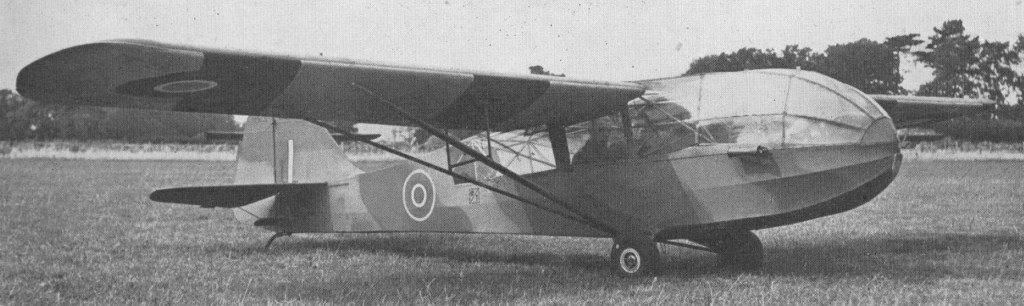
The Auster Model H three seat training glider was an Auster Mk.III converted by Taylorcraft Aeroplanes, Rearsby. This involved removal of the engine and mounts, and installing a third seat and set of controls. A lower and simpler landing gear was used.

The sole example built, X1091, first flew July 1943.

Wingspan: 36 ft / 11 m
Length: 23 ft / 7.3 m

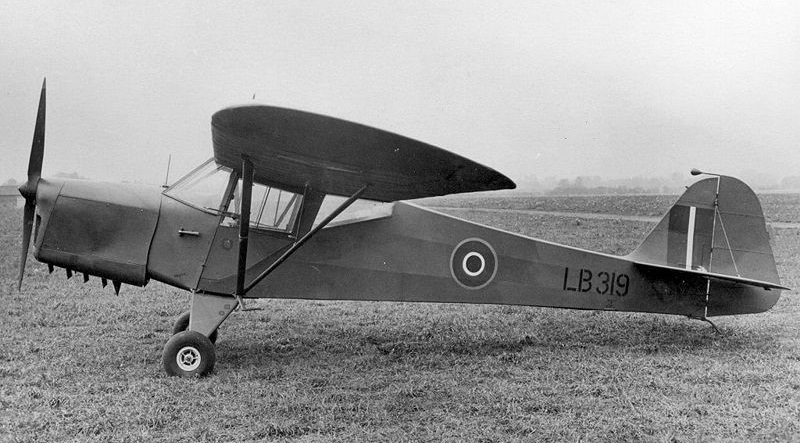
Auster III / Model E / AOP.3

Auster III

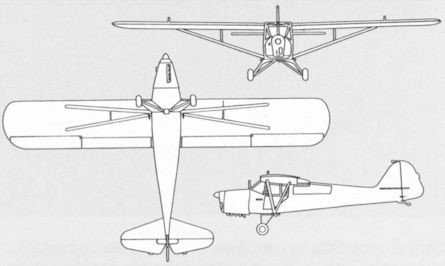
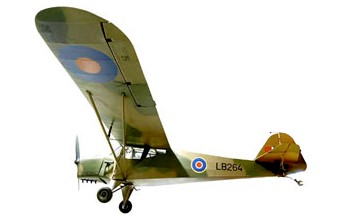
The Auster II was a re-engined aircraft with an American 130 hp (97 kW) Lycoming O-290 engine. Due to the shortage of American engines that version was not built but led to the two-seat, composite wood and metal structure, fabric covered, Auster III (Model E), which was the same as the Auster I but had a 130 hp (97 kW) de Havilland Gipsy Major engine.

Auster Beagle built over 1600 Mark (Mk) I-V’s for the British Army, which used all but the Mk II in their Air Observation Post (AOP) squadrons. The Auster’s main roles were artillery spotting, supply drops, liaison, casualty evacuation and photographic reconnaissance, for which it was well-suited; its short take-off and landing (STOL) abilities enabled it to operate from small landing fields.

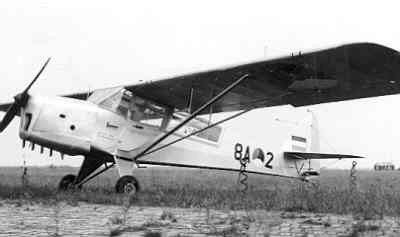
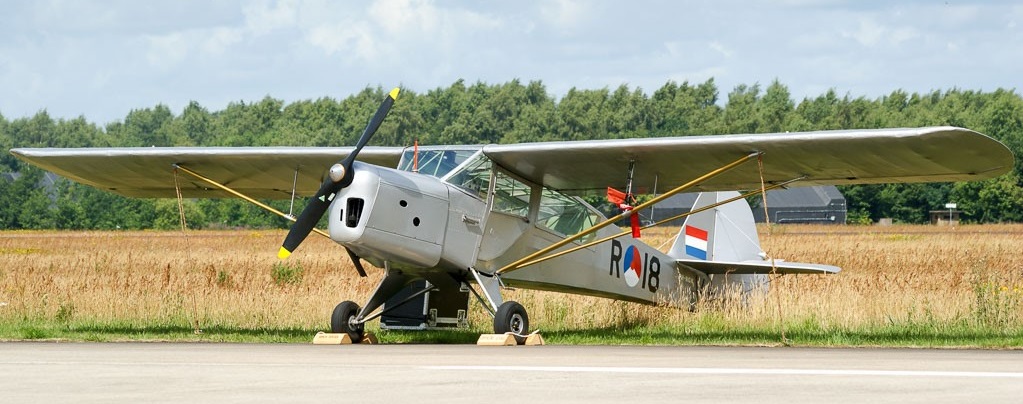
Auster AOP Mk.3

In January 1945 the Dutch Auster squadron RAF became operational. It was equipped with 19 Auster III’s which were mainly used for liaison purposes.

AOP.3

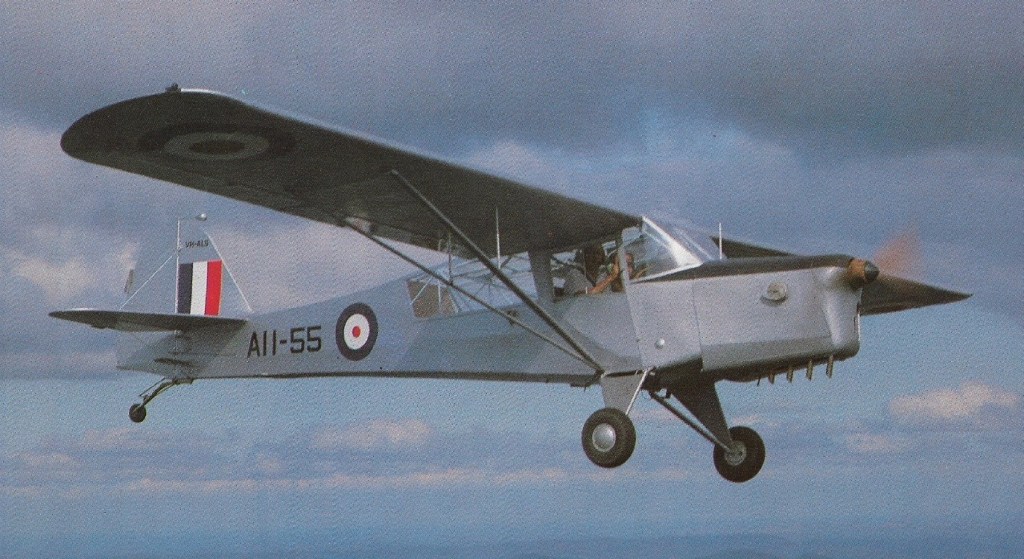
The RAAF Auster AOP Mk IIIs, of which A11-1 was originally a Mk II, were allotted to Nos 16 and 17 AOP Flights, and the official history ‘Air War Against Japan’ describes these aircraft in operations. Somewhat surprisingly, the volume also pictures A11-5 with aggressive “sharks teeth” markings.

Auster III VH-ALS / A11-55 (c/n 293)

In post-war years, Auster continued to operate with No 16 AOP Flight until 24 July 1959 when A11-41 and A11-53 were flown from Canberra to Tocumwal by Captain Doyle and Lieutenant Constable, the latter being the last Auster-trained pilot before the arrival of the Cessna 180As. In all 56 Mk III and two Mk V Austers appeared on the RAAF register.

A small number of these aircraft (23+) were used in Greece by 345, 346 and 347 Reconnaissance Flights from 1945 to 1948, before being replaced by the T-6 Harvard. They were also used as medical transport and liaison airplanes and at least one was used by the Anti-malarial Squadron. They were all withdrawn by 1953.

470 Mk.IIIs were built.

Gallery

Auster AOP Mk III
Engine: 130-hp/97-kW de Havilland Gipsy Major I
Wingspan: 10.97 m (36 ft)
Length: 7.14 m (23ft 5in)
Height: 2.44 m (8ft).
Empty weight: 476 kg (1100lb)
Loaded weight: 771 kg (1,700lb).
Maximum speed: 209 km/h (113 kt)
Cruising speed: 174 km/h (94 kt)
Initial climb: 213 m (700 ft)/min
Ceiling: 15,000ft (4572 m)
Range: 402 km (217 nm)
Armament: None
Crew: 2

Auster Plus Model D / Taylorcraft Aeroplanes Mk.I

This design originated with a pre-war American light cabin monoplane of 1938 built in England under licence. Successful trials with impressed civilian Taylorcraft Plus D aircraft by the Army for artillery spotting duties led to the introduction of the first fully militarised Taylorcraft, the unarmed two-seat Auster I.

One hundred were built, entering service with No 654 Squadron in August 1942 as the first fixed wing aircraft in British Army service and along with the succeeding Auster marks III, IV and V they served in with the Desert Air Force in North Africa, and in Sicily, Italy, and with the 2nd Tactical Air Force from Normandy to Germany in 1944-45, flown by British Army officers trained by the RAF. The survivors were sold out of front-line service by 1946, though the Fleet Air Arm operated a few in second-line units.

Engine: 90-hp/67-kW de Havilland Cirrus Minor I
Wingspan: 36 ft
Length: 22 ft 11 in
Empty weight: 125 mph
Loaded weight: 1400 lb
Max speed: 125 mph
Cruise: 107 mph
ROC: 1000 fpm

Auster / Taylorcraft Aeroplanes (England)

In 1936 the Taylorcraft Aviation Company was established in the USA to design and built light planes for civil use. In 1938 the company established its Taylorcraft Aeroplanes (England) Ltd as its British subsidiary. British production was mainly of the Plus C and Plus D models, and in 1939 the Royal Air Force impressed 24 of the 32 aircraft for evaluation as observation and artillery spotter aircraft. The evaluation confirmed the soundness of the concept, and a derivative of the Plus D was ordered into production as the Auster Mk 1. This entered service in August 1942.
Taylorcraft Aeroplanes (England), in March 1946, was changed to Auster and the factory transferred from Thurmaston, Leicester, to Rearsby, Leicester.
Became Auster Aircraft Ltd on March 7,1946, by which time it had built more than 1,600 Taylorcraft C, Plus C, Plus D and Auster I, II, III, IV, and V, as well as early Auster J-1 Autocrats and prototype of J-2 Arrow.
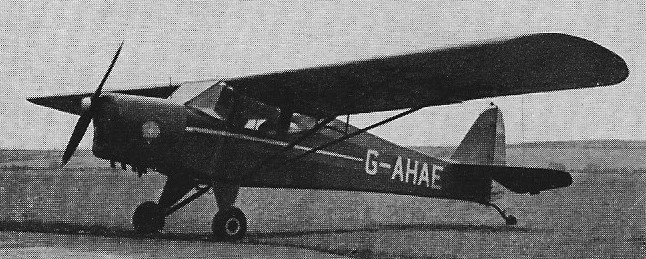
Auster name was well established in Second World War by light observation (AOP) monoplanes known as Taylorcraft Austers, and many of these made an important contribution to the development of postwar light aviation. The type mainly concerned was the Auster 5, or Model J, three-seater with Lycoming engine. As war neared its end Taylorcraft designers were already looking to the civil market, and the outcome was the Autocrat, often British-powered and widely used not only for ordinary tasks but also, for instance, to test the Rover TP.90 gas turbine. In the 1950s came the Aiglet and the Autocar, one of the latter being used to test the Saunders- Roe hydro-ski landing gear. The Aiglet Trainer differed greatly from the Aiglet, and the Agricola was an entirely new low-wing agricultural aircraft, first flown December 1955. To supersede the AOP6 the entirely new military AOP9 was tested in March 1954, by which time the British Army and RAF had received nearly 2,000 Austers.
After the war, Auster Aircraft Ltd was formed and commenced a series of variations on the basic theme until 1960 when it was absorbed into Beagle Aircraft Ltd. Production of the basic Auster type continued until the low-wing Pup emerged.

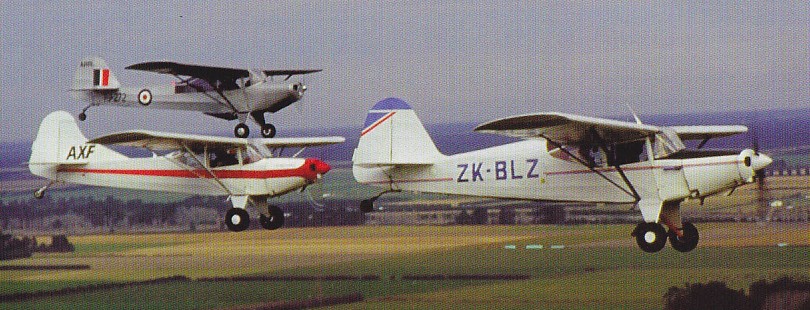
Auster Mk.V on the outer with a J/1 in the middle

All production work on Auster designs finally ceased in 1967 when Beagle sold all rights to Hants and Sussex Aviation. Although there is some conflict in the official records, it is believed that around 3868 Austers (not including licence-built aircraft) had been built.

The Pup evolved into the Bulldog basic military trainer that was taken up by Scottish Aviation Ltd after Beagle went into receivership in 1970 and finally found its last home with British Aerospace.