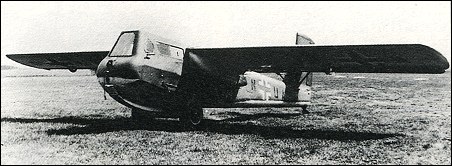
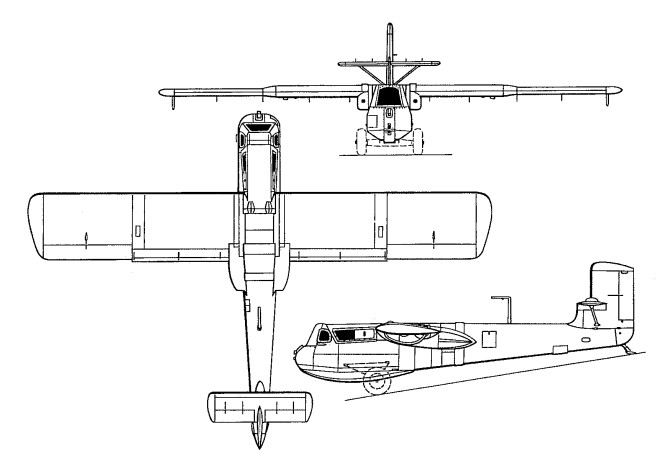
By 1943 the US bombers raiding German cities spurred the Reich Air Ministry (RLM) to seek interesting technical solutions from industry. The theory behind the Blohm und Voss BV 40 was that a single-seat glider, armed with powerful cannon, could swoop through a formation of bombers and knock one or two down almost before it was detected. After its firing pass it was proposed that the BV 40 make a second pass towing a bomb on a cable, but this was rejected in favour of a second 30mm cannon. First towed flight took place in May 1944 and despite losses of several prototypes, the flight test programme proved the basic functionality of the BV 40, but not the feasibility of the concept, and the idea was abandoned in late 1944. The BV 40 took off on a wheeled dolly, which was then jettisoned. If it survived its mission it landed on a retractable skid. To minimize the frontal area the pilot lay prone in the cockpit with his head resting on a padded support. The small cross-section theoretically enabled the BV 40 to dive from a height onto the bombers at speeds over 805km/h. To protect the pilot against return fire from massed heavy bombers, the BV 40’s cockpit was heavily armoured on all sides. The windscreen glass was 120mm thick, and armament was a pair of heavy Mk 108 30mm cannon as used in the Me 262, mounted in the wing roots and loaded with 35 rounds each. The Bv.40 was of steel construction for the fuselage and wood for the aerofoil and empennage. Total production: 9 prototypes.
Empty weight: 836 kg Max take-off weight: 950 kg / 2094 lb Wingspan: 7.90 m / 25 ft 11 in Length: 5.70 m / 18 ft 8 in Height: 1.66 m / 5 ft 5 in Max speed: 900 kph Tow speed (Me 109): 553 kph Tow climb to 7000m: 12 min Armament: 2 x 30 mm MK 108
Blohm und Voss was a shipbuilding concern, based on the Elbe at Hamburg. Its aircraft division, Hamburger Flugzeugbau GmbH, turned to construction of maritime aircraft in the early 1930s. In 1937 Hamburger Flugzeugbau adopted the title of the parent company. Successful designs of Dr Ing Richard Vogt initiated under the Ha designation continued in production becoming designated, for example, Bv 138 instead of Ha 138. True Blohm und Voss developments included the Bv 222 Viking, the largest flying boat to attain operational status in the Second World War, and the even larger Bv 238, evolved too late to enter production before the war’s end. The only prototype Bv 238 was destroyed by air attack four days before VE-day.
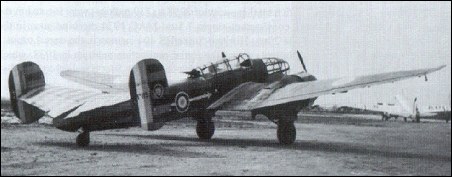
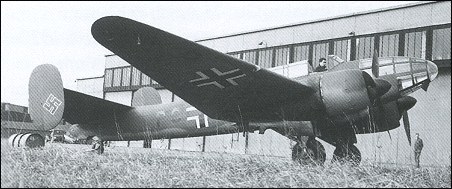
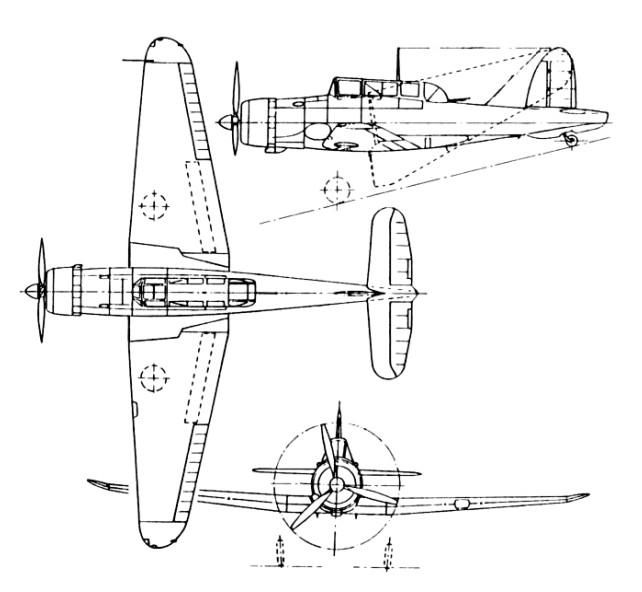
The design originated in 1936 with the MB-170.01 two-seat fighter, which flew for the first time on 15 February 1938 with two 708-kW (950-hp) Gnome-Rhone 14N-6/7 radials and an underfuselage cupola intended for defensive armament or reconnaissance equipment, but the undercarriage collapsed on landing a month later. On 30 July the three-seat MB-170-02 was air-tested. The M.B.170.02 second prototype was configured as a pure bomber without the cupola but with an extensively glazed nose and larger vertical surfaces for improved directional stability.
Several operational variants were proposed, but the only types to enter service in World War II were the M.B.174 reconnaissance and attack bomber, and the M.B.175 light bomber.
Further development led to the Bloch 174.01, which flew on 5 January 1939 and series production at three SNCASO factories was ordered the following month. The M.B.174 prototype had 768-kW (1,030-hp) 14N-20/21 engines and revised accommodation, leading to the definitive model with more power and a number of refinements.
The MB-174 was a low-wing monoplane with two 850kW Gnome-Rhone 14N-48/49 radial engines in close-fitting cowlings. It had twin fins and rudders of oval form. The nose was extensively glazed, and pilot and dorsal gunner were accommodated under a raised glazed canopy. Defensive armament comprised two fixed forward-firing wing machine-guns, twin guns on a flexible mounting at the rear of the crew canopy and three further guns ventrally mounted to fire to the rear. All machine-guns were of the 7.5mm MAC 1934 type.
56 Bloch 174 A3 reconnaissance aircraft had been completed by the time of the June 1940 capitulation.
MB.175
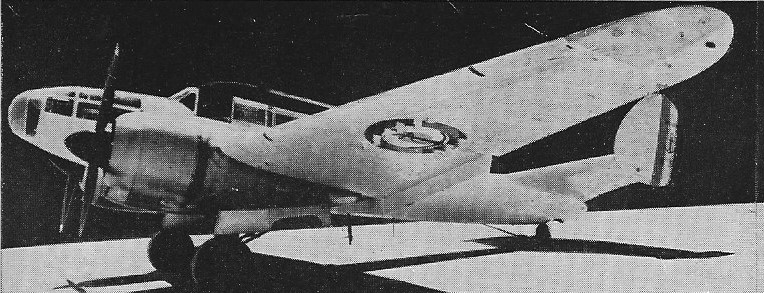
The MB-174 was developed into the MB-175 B3 bomber, with an enlarged bomb bay capable of carrying a maximum of 600kg of bombs, requiring a new centre section.
Only 20 had been accepted when the Germans took over deliveries, using 56 MB-175s as trainers. The French Navy took delivery of a post-war MB-175T torpedo-bomber version, 79 being built.
M.B.174.01 Prototype. Engines: 2 x Gnome-Rhone 14N-6/7 radial, 708-kW (950-hp).
M.B.174 Reconnaissance and attack bomber. Seats: 3. Span: 17.9m (58ft 8.75 in) Length: 12.25m (40ft 2.25in). Engines: 2xGnome-Rhone 14N-48/49, 820kW (1,100 hp). Armament: 7×7.5-mm (0.295-in) MAC machine-guns plus provision for up to 400kg (8812 lb) bombs internal MTOW: 7160 kg (15,784 lb). Max speed: 329 mph at 17,060 ft. Operational range: 802 miles with max bombload.
MB.175 Engines: 2 x 2 x 1000 hp Gnome-Rhone 14N-48/49 Wingspan: 58 ft 11 in Wing area: 456.6 sq.ft Length: 40 ft 9.25 in Height: 10 ft Empty weight: 19,361 lb Loaded weight: 18,959 lb Max speed: 335 mph Cruise: 317 mph Range: 2050 mi Armament: 3 x 20mm cannon Bombload: 8 x rocket and 1 x torpedo
M.B.175.A3 Light bomber. Take-off weight: 7160 kg / 15785 lb Wingspan: 17.92 m / 58 ft 10 in Length: 12.23 m / 40 ft 1 in Max. speed: 530 km/h / 329 mph Range: 2000 km / 1243 miles
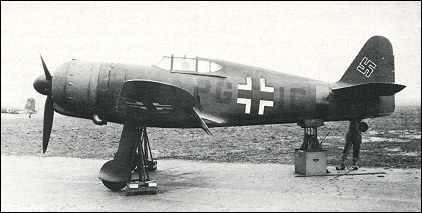
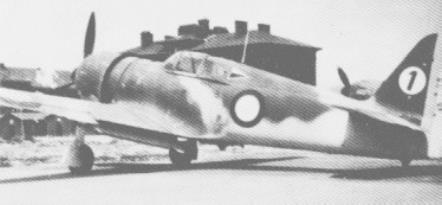
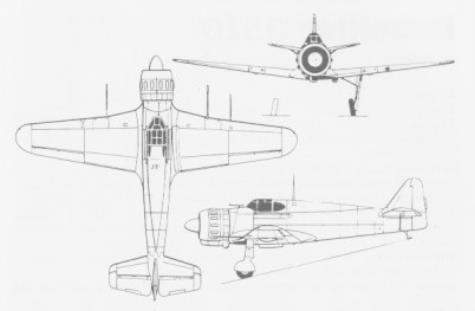
The last of the fighter aircraft to be evolved from the M.B.150, the Bloch M.B.157 was to be the airframe of the M.B.152 with a more powerful Gnome-Rhone 14R. An air-cooled radial engine with a power output of 1186kW for take-off, and having a supercharger that could provide 1268kW at 8000m. The increased size and weight of this engine brought realisation that it would not be practical to install it in the existing M.B.152 airframe. The conclusion that the full potential of the Gnome-Rhone 14R would be lost by attempting an adaptation of the airframe led to a decision to design a new fighter which would retain the same basic structural techniques.
It was possible to formulate the details of the M.B.157 very rapidly, for the basic design already existed and after just over six months of design initiation, the components of the prototype were ready for assembly. With German forces closing in on Paris, the M.B.157 components were loaded to be evacuated but, en route, this vehicle was intercepted by the Germans and ordered to proceed to an SNCASO establishment within the occupied zone. Finally, in March 1942, the M.B.157 was assembled and test flown under German supervision, demonstrating superb performance achieving 710km/h before being flown to Orly where the powerplant was removed for wind-tunnel testing. This was the most interesting feature so far as the Germans were concerned, and after tests had been completed the engine was transported to Germany. SNCASO’s airframe, which had demonstrated in conjunction with Gnome-Rhone 14R a degree of performance that was not to be attained elsewhere until later in the war, was destroyed during an Allied air raid.
M.B.157 Engine: 1 x Gnome-Rhone 14R-4 radial piston, 1186kW Take-Off Weight: 3250 kg / 7165 lb Empty Weight: 2390 kg / 5269 lb Wingspan: 10.70 m / 35 ft 1 in Length: 9.7 m / 31 ft 10 in Height: 3.2 m / 10 ft 6 in Wing Area: 19.4 sq.m / 208.82 sq ft Max. Speed: 710 km/h / 441 mph Cruise Speed: 400 km/h / 249 mph Range: 1095 km / 680 miles Armament: 2 x 20mm cannon + 4 x 7.5mm machine-guns
In July 1936 the M.B.150.01 prototype failed even to take-off. Redesign, abandoned for a period, was subsequently re-started and a first flight was successfully completed on 29 September 1937. The prototype had been revised with a larger wing and a 701-kW (940-hp) Gnome-Phone l4No radial.
Trials confirmed that the revised prototype was a promising fighter, and span and power were again increased. Bloch had become part of a nationalised group by this time, and from this SNCASO was ordered the M.B.151 in the form of 140 aircraft including 25 pre-production machines. The airframe was redesigned for mass-production, and the first aeroplane flew on 18 August 1938 with the 14N-11 engine.
While testing and further production were taking place, the improved MB-152.01 with a 14N-25 engine, in place of the MB-151’s less powerful 14N-35, was tested. The imminence of war led to additional orders, based on optimistic MB-152 performance figures (reached with inaccurate measuring instruments).
The first MB-151 delivered was not accepted by the Armee de l’Air until March 1939, and was regarded as unsuitable for combat. Even after modifications, Armee de l’Air MB-151 were utilised only for training.
MB.152
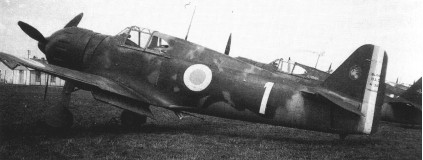
The designers had also been working on an improved version, the M.B.152 with more power and revised armament, first flying in December 1938. The Bloch 152 C1 cantilever low-wing monoplane was one of the standard Armee de l’Air fighters during the Battle of France in May-June 1940, but was comparatively unsuccessful.
The 745.2kWGnome-Rhone 14N-25 radial engine powering most Bloch 152 was insufficiently powerful to give good performance; a number had the improved 14N-49 engine and Chauviere 371 variable-pitch propeller, which rendered them more effective. It was clear, however, that the Bloch fighters (while robustly built and stable in flight) lacked manoeuvrability. Nevertheless Bloch-equipped units were credited with 146 confirmed and 34 probable victories by the time of the June 1940 Armistice.
MB.152
The first fighter Groupe to equip with the MB-152 was GC I/1 at Etampes-Mondesir in July 1939. The type was subsequently withdrawn for modification and when war broke out no Bloch fighters were in escadrille service. Re-equipment got under way at the end of 1939 and by the time of the German Blitzkrieg on 10 May 1940, 140 MB-151 and 363 MB-152 had been taken on charge by the French. Some of the former were to see service with navy fighter escadrilles. By the time of the Armistice the number of MB-152 accepted had risen to 482, plus one MB-153 (with Pratt & Whitney Twin Wasp radial) and nine MB-155. The MB.155 first flew on 3 December 1939 and the MB.157 in March 1942
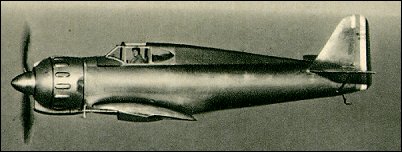
Nineteen more MB-155 were completed by the Vichy French. They differed from the MB-152 in detail and had increased fuel capacity. Externally the main change was in the adoption of a smooth engine cowling. The Vichy regime was allowed to retain six (out of nine) MB-152-equipped Groupes after June 1940, but only 215 MB-152 and MB-155 were on charge when the air arm was dissolved by the Germans in November 1942.
MB.155
Twenty MB-152 were sent to Romania and others (plus some MB-155) ended their careers as Luftwaffe trainers. Nine MB-151 of a Greek export order were delivered to that country in 1940, but there is no record of their operational use.
Production totalled 483, but most of these were inoperative in France during1940 for lack of propellers.
MB.152 Engine: 1 x Gnome-Rhone 14N21, 735kW Take-off weight: 2693 kg / 5937 lb Empty weight: 2103 kg / 4636 lb Wingspan: 10.5 m / 34 ft 5 in Length: 9.1 m / 29 ft 10 in Height: 3.0 m / 9 ft 10 in Wing area: 17.3 sq.m / 186.22 sq ft Max. speed: 482 km/h / 300 mph Cruise speed: 440 km/h / 273 mph Ceiling: 10000 m / 32800 ft Range: 580 km / 360 miles Crew: 1 Armament: 2 x 20mm machine-guns, 2 x 7.5mm machine-guns
MB.152 Engine: l x Gnome-Rhone 14N-25 or N-49, 805 or 820kW (1,080 or 1,100 hp). Span: 10.55m (34ft 7.25 in). Length: 9.1 m (29ft 10.25 in). Max T/O weight: 2680 kg (5,908 lb). Max speed: 320 mph at 13,125ft. Operational range: 373 miles. Armament: 2×20-mm Hispano¬Suiza cannon and 2x or 4×7.5-mm (0.295-in) MAC machine-guns.
MB.152 Engine: l x Gnome-Rhone 14N-25, 805 kW / 1,080 hp Span: 10.55m (34ft 7.25 in). Length: 9.1 m (29ft 10.25 in). Height: 3.98 m / 13 ft 0 in Empty weight: 2020 kg / 4453 lb Max T/O weight: 2680 kg (5,908 lb). Max speed: 520 kph / 320 mph at 13,125ft. Time to 6000 m / 16,400 ft: 6 min Service ceiling: 10,000 m / 32,800 ft Operational range: 600 km / 373 miles. Armament: 2×20-mm HispanoSuiza 404 cannon (60 rds) and 2x or 4×7.5-mm (0.295-in) MAC 1934 machine-guns (500 ds each)
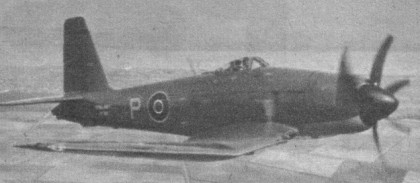
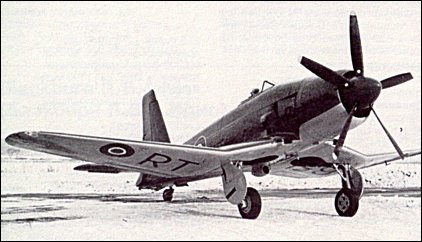
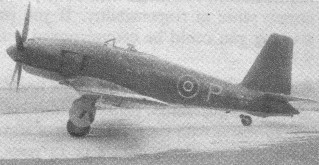
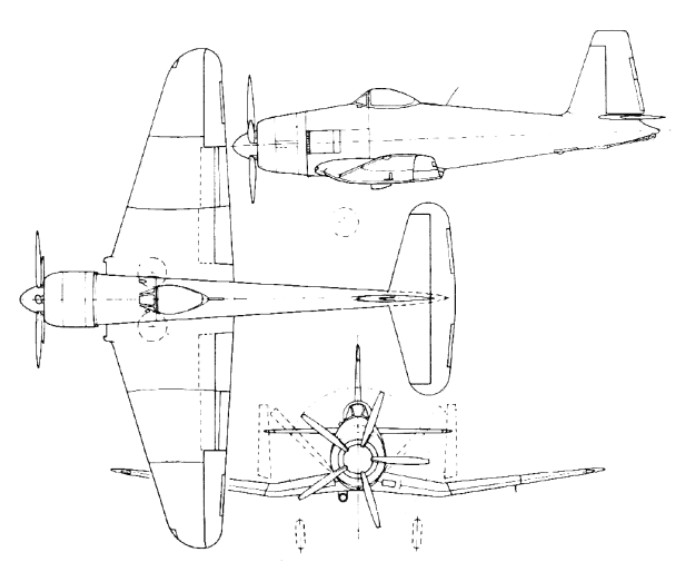
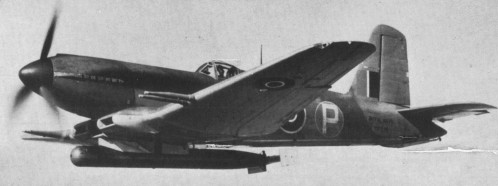
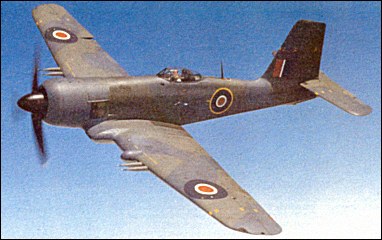
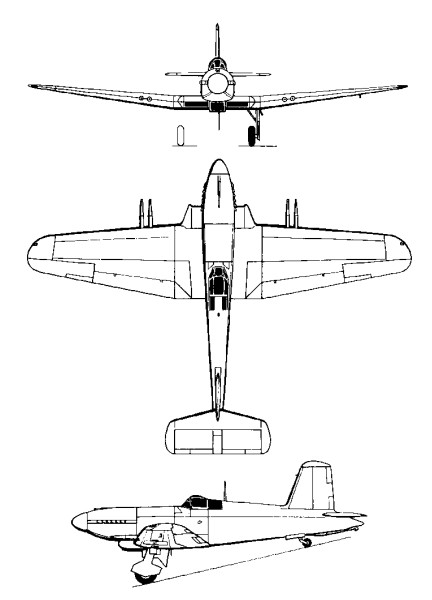
The Blackburn B.48, designed to specification S.28/43 as a potential successor to the Firebrand, and unofficially known as the Firecrest, was flown for the first time on April 1, 1947, although design work on this aircraft was actually initiated in October 1943. Three prototypes were built, the third of these (VF172) featuring power-operated ailerons and a reduction in dihedral angle (from nine to three degrees) on the outboard wing panels. Power was provided by a Bristol Centaurus 59 eighteen cylinder radial rated at 1,825 hp. (with water/methanol injection) for takeoff, and although no armament was actually installed, provision was made for two wing mounted 0.5in. (12.7 mm) machine guns, and a torpedo and two 500lb. (227 kg) bombs plus rocket projectiles could be carried beneath the fuselage and wings.
No production of the B.48 was undertaken, although before all development was abandoned versions were projected with the Bristol Proteus, the Armstrong Siddeley Python, and Rolls Royce Clyde turboprops.
Engine: Bristol Centaurus 59, 1,825 hp Wing span: 44ft 11.5in (13.7 m) Length: 39 ft 3.5 in (12 m) Height: 14 ft 6 in (4.42 m) Wing area: 361.5 sq.ft (33.6 sq.m). Empty wt: 10,513 lb (4773 kg) Loaded weight with a 1,850 1b. (839 kg) torpedo: 15,183 lb (6 887 kg) Max speeds: 323 mph (521 kph) at sea level Max speed: 345 mph (556 kph) at 5,000 ft (1524 m) Max speed: 382 mph (615 kph) at 19,000 ft (5791 m). Cruising speed: 299 mph (482 kph) at 20,000 ft (6096 m) Max range internal fuel: 518 mls (834km) Max range three 100 Imp.G (455 lt) drop tanks: 1,440 mls (2 317 km) Initial climb rate: 2,100 fpm (10.7 m/sec).
Originally designed to Specification N.11/40 as a single-seat carrier based fighter, powered by the Napier Sabre liquid-cooled engine. Owing to the unavailability of the Sabre engine, a new specification, S.8/43, was drawn up to provide for the Bristol Centaurus air-cooled engine. At the same time the requirements of the specification were broadened to include a strike role, carrying a torpedo, bombs and/or rockets.
The unarmed B-36 prototype was first flown by February 27th, 1942 with a Napier Sabre III, a 24-cylinder H-type inline engine, followed by nine Firebrand Is (B.37) powered by 1,718kW Napier Sabre III engines. These were followed by 12 TF.II powered by similar engines but able to carry a 457mm torpedo.
Blackburn was forced to re-engine their design and settle on the Bristol Centaurus VII 18-cylinder radial piston powerplant. This redesign also forced a rethinking in the intended roles of the Firebrand. Along with its fighter duties, the Firebrand was now envisioned to double as a strike platform capable of delivering bombs, rockets and a 457mm torpedo. The new design was fitted with lengthened wings and appropriate munitions provisions in the form of pylons. The resulting product became the model – achieving first flight on March 31st, 1943 – and entered production as the B-45 TF.Mk II. The TF.Mk II was limited to just 12 production examples.
An attempt at improving the Firebrand line came in the form of the 1,878kW Bristol Centaurus IX radial engined TF.Mk III model. This “improved” design revealed flaws in low-speed flight thanks to poor rudder control and a tremendous amount of torque output from the new engine. A first flight was achieved on December 21st, 1943 and further testing resulted in the deaths of two test pilots along with months of re-evaluation before the Firebrand was even successfully test-landed on a carrier deck. Despite the successful landing, the aircraft was deemed too dangerous for use as a production aircraft. As such, this particular Firebrand model was dropped from production contention. 27 TF.III were built.
Model B-46 became the true improved Firebrand as the TF.Mk IV model, first flying on May 17th, 1945. A new engine – the 2500 hp Bristol Centaurus VII or IX engine – was allocated to the TF.Mk IV as well as a revised tail with increased surface areas. Dive brakes were installed on both the upper and lower wing assemblies for improved control. The TF.Mk IV became the first quantitative and somewhat definitive Firebrand in production with 102 examples produced. Performance specifications included a top speed of 350 miles per hour with a listed cruise speed of 289 miles per hour. Range was equivalent to 1,250 miles when fitted with drop tanks. A rate-of-climb of 2,600 feet-per-minute was possible with a service ceiling of approximately 28,500 feet. At least 40 of these aircraft were later converted to the newer TF.Mk 5 standard.
In September 1945, Fleet Air Arm No 813 Squadron was equipped with the Firebrand IV.
The TF.Mk 5 followed the TF.Mk IV into service with horn-balanced elevators and other refinements to improve manoeuvrability. Production only lasted through 68 examples (plus about 40 TF.4 converted to the later standard). The improved TF.Mk 5A finished the Firebrand line to which total production amounted to 193 examples, lasting from 1943 through December 1947. The 5A had powered ailerons and the torpedo crutch was hinged to rotate the weapon into the minimum drag attitude after takeoff.
Cannon armament was the standard firepower for the Firebrand, consisting of 4 x 20mm Hispano Mk II series cannons mounted in pairs on each wing. The Firebrand could carry a single 1,850lb 18″ Mark XVII series torpedo running centerline under the fuselage or 2 x 1,000lb bombs under the wings – one to a wing pylon.
The Firebrand served with the United Kingdom’s Royal Navy (RN) Fleet Air Arm (FAA). The FAA squadrons utilizing the type were the 700, 703, 708, 736, 738, 759, 764, 767, 778, 787, 799, 813 and the 827 Naval Air Squadrons. The Blackburn Firebrand was officially operated by the British Royal Navy from 1943 through 1953 before facing retirement from operational status.
Firebrand I Engine: 1,718kW Napier Sabre III Armament: four 20 mm (0.79 in) Hispano cannon
Firebrand TF.II Engine: 1,718kW Napier Sabre III Armament: four 20 mm (0.79 in) Hispano cannon, 457mm torpedo.
TF.III 1,878kW Bristol Centaurus IX radial Armament: four 20 mm (0.79 in) Hispano cannon
Firebrand IV
TF.4 Engine: 1 x Bristol Centaurus IX, 2,500hp Length: 39.37ft (12m) Width: 51.25ft (15.62m) Height: 14.93ft (4.55m) Empty Weight: 11,354lbs (5,150kg) Maximum Take-Off Weight: 16,226lbs (7,360kg) Maximum Speed: 348mph (560kmh; 302kts) Maximum Range: 1,243miles (2,000km) Rate-of-Climb: 2,600ft/min (792m/min) Service Ceiling: 28,510ft (8,690m) Armament: 4 x 20mm Hispano Mk II cannons Bombload: 2,000lb Accommodation: 1 Hardpoints: 2
TFA S.4
TF.5 Engine: Bristol Centaurus IX, 2485 hp, 1879kW Length: 38 ft 9 in / 11.81 m Height: 13 ft 3 in / 4.04 m Wingspan: 51 ft 3 in / 15.63 m Wing area: 382.983 sq.ft / 35.58 sq.m Max take off weight: 17503.3 lb / 7938.0 kg Weight empty: 11836.4 lb / 5368.0 kg Max. speed: 295 kts / 547 km/h / 340 mph Cruising speed: 222 kts / 412 km/h / 256 mph Service ceiling: 28494 ft / 8685 m Wing load: 45.72 lb/sq.ft / 223.0 kg/sq.m Range: 643 nm / 1191 km Armament: four 20 mm (0.79 in) Hispano cannon, 1 Torp. 839kg / 2x Bomb. 454kg / Rocket Crew: 1
TF.5A Engine: Bristol Centaurus IX, 2485 hp, 1879kW Span: 15.63 m (51 ft31 in) Length: 11.87 m (38 ft 11.5 in) Gross weight: 7945 kg (17515 lb) Maximum speed: (with torpedo) 550 km/h (342 mph). Armament: four 20 mm (0.79 in) Hispano cannon
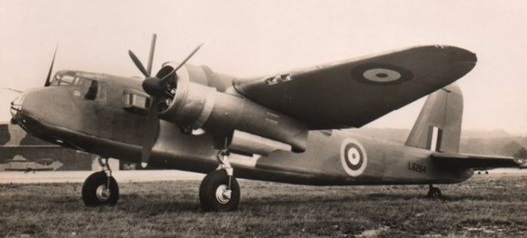
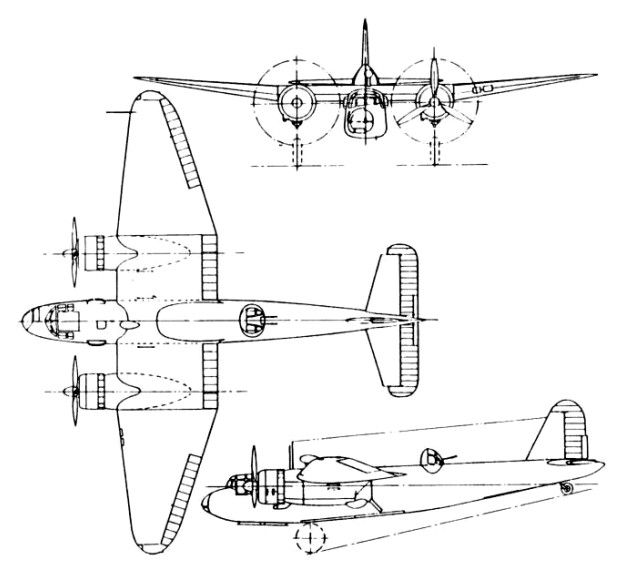
The Botha was designed for Coastal Command RAF as a three-seat twin-engined reconnaissance-bomber, able to carry a torpedo internally or up to 907kg of bombs. Defensive armament was a single 7.69mm Vickers machine-gun forward and a dorsal turret with two Lewis guns. The first prototype made its maiden flight on 28 December 1938 and the first production Bothas entered service with No 608 Squadron on 28 June 1940, but remained in first-line service only until November of that year. A handful of operational Bothas also went to No 502 Squadron, but were also withdrawn rapidly. Although the Botha was a failure as a torpedo-bomber – mainly due to being underpowered – large numbers served as pilot, navigation, bombing, gunnery and radio trainers until 1944.
Engine: 2 x Bristol Perseus X A, 917 hp, 694kW Length: 51 ft 1 in / 15.58 m Height: 14 ft 8 in / 4.46 m Wingspan: 58 ft 12 in / 17.98 m Wing area: 517.964 sq.ft / 48.12 sq.m Max take off weight: 18453.6 lb / 8369.0 kg Weight empty: 11832.0 lb / 5366.0 kg Max speed: 217 kts / 401 km/h / 249 mph Cruising speed: 184 kts / 341 km/h / 211 mph Service ceiling: 17503 ft / 5335 m Wing load: 35.67 lb/sq.ft / 174.00 kg/sq.m Range: 1104 nm / 2044 km Crew: 4 Armament: 3x cal.303 MG (7,7mm), 907KG Bomb./Torp./DepthChrg.
The RN had been asking for a dive bombing sight since the early 1930s, but it never became a reality. The RAF was largely indifferent to dive bombing, and, as it controlled naval aircraft development until 1937, held back the RN’s ability to develop a true dive bomber. Finally, with specification O.27/34, the RN was allowed to have its way.
On December 12, 1934, the Air Ministry invited Vickers and Blackburn to submit designs for an Osprey replacement. Two months later Blackburn tendered the B-24, an all-metal low-wing monoplane. Vickers submitted its Type 280, a midwing monoplane with semielliptical wings, powered by a Rolls-Royce Merlin. The Blackburn design, with its retractable undercarriage and flaps, was the most modern submission. Blackburn was awarded a contract for two prototypes, but the B-24 had still not flown by October 1936. On the 24th the Air Ministry confirmed a production contract for 150 B-24s, later increasing it to 190. Blackburn apparently saw the design as a dive bomber above all else, designating the project the DB-1.
The Air Ministry stipulated a number of production requirements. The Bristol Mercury radial engine was replaced by a nine cylinder Perseus PRE3M, Bristol’s first production sleeve-valve engine; relatively untried for an aircraft already suffering delays. Armament was to be four Browning 0.303in machine-guns in the wings, with 600 rounds per gun, and a Lewis Mk III machine-gun in the rear cockpit. The main bomb proposed was a 250pounder, though later the Air Ministry asked that a 500lb semi-armour-piercing (SAP) bomb be carried. It was also requested that the aircraft be readily convertible for target towing.
Both the Skua and the Roc were of all-metal stressed-skin construction, with external plating flush-riveted to longitudinal stringers over transverse frames. The fuselage was built in two sections. The main fuselage ran from the firewall at the nose to a point just ahead of the fin, while the detachable rear fuselage incorporated the fin and tailplane mountings. The fuselage had a hollow in the upper surface containing a liferaft, and the cover was faired in with the top of the rear fuselage. The raft was accessed by pulling a D-ring on a cord in the rear cockpit, which rarely worked as advertised.
Along most of its length the fuselage was of circular section, but under and immediately aft of the wings triangular-section fillets joined the mainplanes to the fuselage, giving a complex cross-section. Two watertight compartments were built in. The cockpit was watertight up to the coaming and was enclosed by a long framed glazing with a steep windscreen. Two of the fuselage frames in the cockpit area extended to the top of the cockpit to prevent crushing if the aircraft overturned.
The glass was unarmoured initially, although from July 1940 armoured glass was added to the windscreen front panel. The standard RAF blind-flying panel formed the centre of the instrument panel; the gunsight was a Mk II reflector unit.
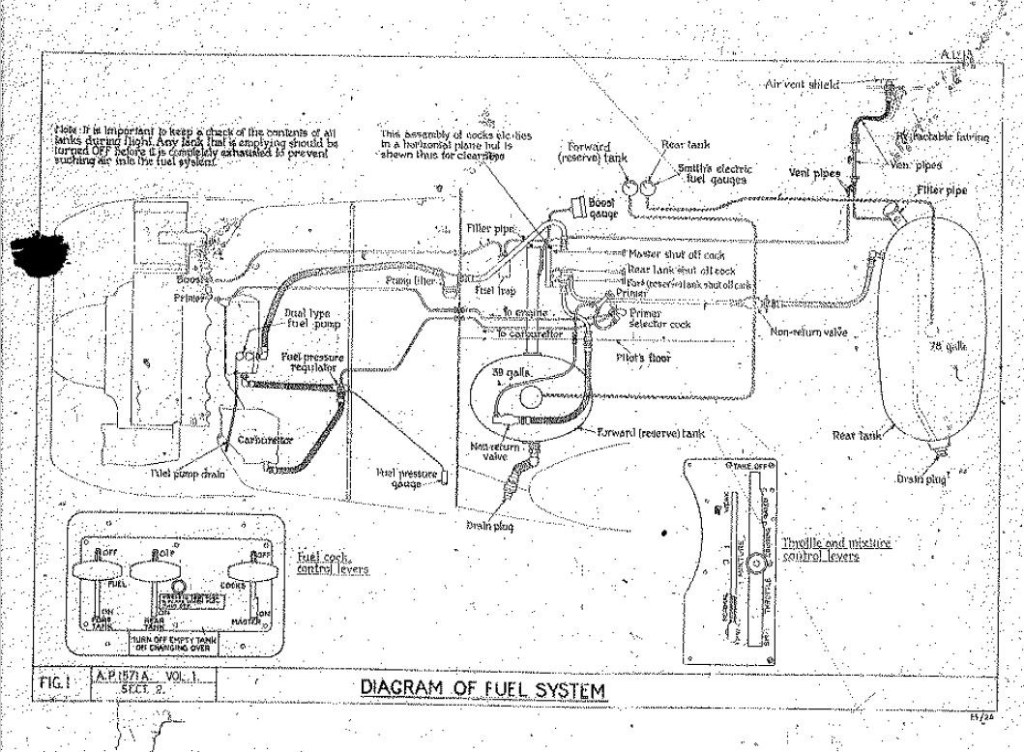
Two 200gal non-self-sealing fuel tanks were installed in the middle of the cockpit on either side, while a small tank for starting the engine was mounted in the forward fuselage.
The rear gun was mounted on a Fairey pillar, and lowered into a recess in the rear fuselage when not in use. The glazing enclosing the rear cockpit could be swivelled back into the canopy when the gun was to be used.
Rather than a seat, the Observer or Telegraphist Air Gunner(TAG) had only a thinly rubber-padded bench atop the bomb recess. To keep the TAG in place during diving and other violent manoeuvres a “g-string” was bolted to the floor, and the occupant could attach this to his harness. A bar could also be attached across the rear cockpit to give added support.
The production Skua II and Roc I had a cartridge-started Bristol Perseus XII nine-cylincler sleeve valve moderately-supercharged air-cooled radial engine giving 745 b.h.p. maximum climbing for 30min and 905 b.h.p. in level flight for 5min. Cooling gills at the rear of the cowling could be opened to provide greater flow of air. The engine was mounted on a two-bay tubular steel structure and fully cowled. An exhaust collector ring fed into a single tube discharging to starboard. The three-bladed, two-pitch de Havilland propeller was hydraulically operated.
The wings comprised three main sections; a centre section and two outer panels. The outer panels could be manually folded back along the fuselage for stowage of the aircraft in carrier hangars. The wings were based on two box-girder spars, on to which were attached the latch pin fittings that locked the wings in place when unfolded. The ailerons were fabric-covered. The all-metal flaps, of aerofoil section, were operated by hydraulic jack rams. The flap was arranged so that the leading edge moved aft as the flap was extended. At full extent the flap was vertical and the leading edge had moved through approximately 16 of the chord of the flap.
The tailplane was a two-spar structure similar to the wings, with a fabric-covered mass balanced elevator. The fin, which was detachable, was set forward of the tailplane to avoid the airflow being blanketed in a spin and at low speeds. The rudder was fabric-covered and horn balanced. Trim tabs on elevators and rudder could be controlled from the cockpit.
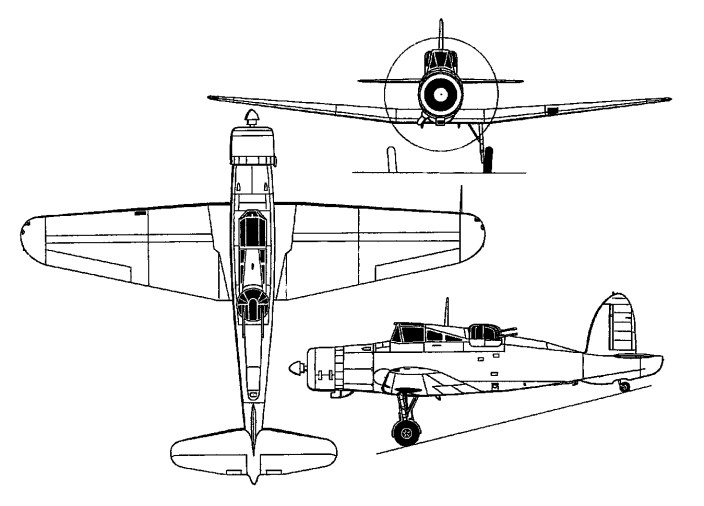
The Roc had no fixed forward facing weapons. The Boulton Paul power turret was fitted with four belt-fed Browning 0.303in machine-guns, fired by a control stick operated by the gunner.
The Roc was essentially similar to the Skua, but with its shape and construction altered as necessary for the role of turret fighter. The changes needed to instal this device mainly affected the rear fuselage. The body aft of the centre section was widened slightly. Instead of having the Skua’s complex underbody shape, the Roc was flat underneath and a hatch was incorporated to provide an escape route for the gunner.
The centre cockpit housed a small “radio room”, so fuel storage was in the fuselage, of a reduced capacity compared to the Skua.
The central section of canopy automatically retracted to allow the turret to traverse clearly, as did a plywood fairing aft of the turret. The fairings were pneumatic, powered by a pump run off the engine. Pressure could run down if the turret was revolved too much, the fairings becoming stuck until the pressure had built up again.
The pilot’s cockpit was largely similar to that of the Skua. Control of the turret guns could be transferred to the pilot with the turret facing forward.
The wings were similar to those of the Skua but had greater dihedral and no upturned tips.
The first production Roc M k 1, L3057, made its maiden flight on December 23,1938, piloted by Blackburn test pilot Fit Lt H.J. Wilson. It remained at Brough for contractor’s trials until March 1939, when the A&AEE took it for handling tests. Stalling speed was rather higher than that of the Skua, but handling was better. However, if the turret was used over-exuberantly the air pressure system operating the fairings would run down, preventing full turret movement until pressure was restored. While L3059joined the A&AEE test programme, the second Roc, L3058, was used for turret tests.
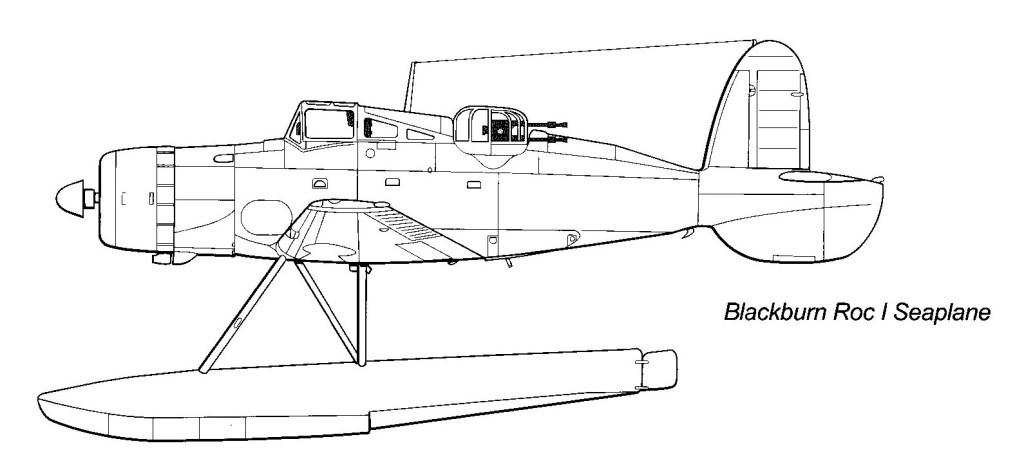
The Admiralty thought Roc floatplanes could be used for fleet defence, so when handling trials were largely complete, in November 1939, L3057 and L3059 were fitted with floats at Dumbarton. Tests at the Marine Aircraft Experimental Establishment at Helensburgh showed that the floats degraded directional stability, and L3059 crashed on December 3. As a result L3057 was given a much deeper ventral fin. Although L3060 and L3074 were also converted, the poor performance was evident and further trials scheduled for June 1940 were cancelled. Even so, L3074 retained its floats and was used as a target tug in this form.
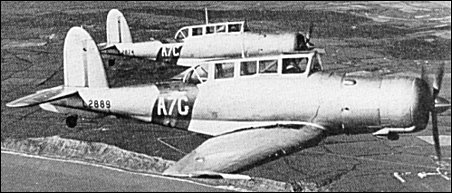
Rocs entered service in late 1939. They were never allotted their own squadrons, but were issued to existing Skua units to operate alongside their stablemates. Small numbers, typically three or four, were later operated by Nos 800, 801, 803 and 806 Sqns, FAA.
The first combat work undertaken by Rocs was with 803 Sqn, protecting the fleet anchorage at Scapa Flow. Early in the war this target was tempting for German bombers, and RAF fighter squadrons were not available, so 803 Sqn moved to Wick in October 1939.
The Roc’s shortcomings quickly became apparent. After October 18 the Luftwaffe rarely approached Scapa Flow, confining its attacks mainly to transport convoys and warships in the North Sea. Increasingly, 803 Sqn was called upon to deal with flying-boats shadowing warships of the Home Fleet, and civilian shipping under attack. The squadron was divided into sections of three, usually comprising two Skuas and one Roc. As the aircraft were frequently required at longer range, the Rocs were said by 803 Sqn’s CO, Lt-Cdr D.R.F. Cambell, to be “a constant hindrance” ‘ He described an occasion when the C-in-C of the Home Fleet requested fighter assistance 210 miles from Wick. Two sections were on standby but only the four Skuas could cover the distance, reducing the squadron’s strength by a third.
Blackburn was developing a long-range fuel tank for the Roc, but it was not ready for Service use. In January 1940 Cambell wrote to the Admiral Commanding Orkney and Shetlands, requesting that the four Rocs be replaced by Skuas, but was strongly opposed by the Naval Air Division (NAD) of the Admiralty, which was desperate to gain experience in tactics for the turret fighters. Even the C-in-C Home Fleet, Admiral Forbes, favoured 803 retaining Rocs.
Even Cambell said that the Roc could be considered “slightly superior” to the Skua. Forbes noted that with its “excellent multi-gun turret” the Roc was “more than slightly superior to the Skua; it offers the only chance of effective action against an enemy aircraft of equal or superior performance”. The concept still had quite a few supporters, Forbes, in a letter to the secretary of the Admiralty in February 1940, suggested that all future FAA fighters should be of the turret fighter type. Nevertheless, in March 1940 the Rocs were replaced by Skuas. It had been decided that all aircraft in the Scapa Flow area must have identification friend or foe (IFF) to avoid “friendly fire” incidents, but the Roc’s cockpit had no space for the equipment. So the Rocs had to be withdrawn from the region. Ironically, the Luftwaffe chose this moment for a concerted attack on the fleet anchorage, and in the ensuing five days of air raids a Roc made the type’s first combat claim, a Heinkel He 111 damaged.
On April 8 Germany invaded neutral Norway and the RN was hurriedly required to respond. The early strikes were carried out by Skuas, the only aircraft with the range and accuracy to attack targets in Norway. Both Glorious and Ark Royal were training their Swordfish squadrons in the Mediterranean, and their Skua and Roc units were disembarked. Furious left for the combat zone in such a hurry that 801 Sqn was left behind at Evanton. Therefore, until Glorious and Ark Royal returned, the FAA’s Rocs were unable to contribute.
A nonentity in Norway On April 20 Ark Royal and Glorious, under Vice-Admiral Wells, embarked their fighter squadrons and set out to join the Norway Campaign Task Force. Ark Royal’s fighter squadrons took Rocs as well as Skuas; 801 Sqn had three and 800 Sqn two. On Glorious, 803 Sqn was now exclusively a Skua unit, although it was the only squadron with any Roc combat experience.
Most missions in support of the ground forces needed every bit of the Skua’s endurance, so Rocs were limited to providing combat air patrols (CAP) over the task force. Roy Stevens, an 800 Sqn armourer, remarked: “When the Rocs were ranged, you knew there was a raid coming! “
Rocs had about twice the endurance of the Gloster Sea Gladiators with which they shared CAP duty, but while the Gladiators had the speed and rate of climb to make interceptions, Rocs struggled to catch even the slowest shadowing seaplanes. Furthermore, on the few occasions when a Roc was able to bring its guns to bear, lowering the fairings and swinging the four Brownings into the airflow usually reduced the hapless fighter’s speed enough to allow the prey to escape. The Rocs made little impact during the campaign, and one 800 Sqn armourer summed up their contribution to the Norwegian campaign as “bloody useless”.
The higher echelons in the RN pushed the squadrons hard to make the Roc work. But an almost symbiotic co-operation between pilot and gunner was required, as the latter had to tell the pilot where to place the aircraft. Pilots were often officers, and gunners were enlisted men, expected to speak only when spoken to. The Admiralty requested that a second-line squadron be tasked with investigating the best tactical use of the Roc, with particular emphasis on co-operation between the pilot and gunner. This job was given to 759 Sqn at Eastleigh, but it seems little was done before the Roc was withdrawn from service.
The fourth Skua and Roc squadron, 806, had been formed in February 1940 and blooded over Norway with a number of long range strike missions from Orkney, flying Skuas. The squadron transferred to RAF Coastal Command control and flew to Manston in May, and then to Detling, to help cover the Allied withdrawal from France. On May 29 two Skuas and a Roc flown by Midshipman Day, RNVR, with Naval Airman Newton as his gunner, were patrolling the French coast. They saw a gaggle of Junkers Ju 88s about to bomb some ships, intent on their targets and flying slowly. Performing as intended for once, the Roc drew alongside a Ju 88 and a broadside of Brownings sent the bomber crashing inflames. It was the only confirmed kill ever scored by a Roc.
At the end of May 806 Sqn was replaced at Detling by 801 Sqn, which then became the closest thing to a Roc squadron when it exchanged some of its Skuas for the Rocs from 800 and 806 Sqns. Endurance was less important over the Channel, so the Skuas were kept for the squadrons still fighting in Norway.
From early in the morning on June 2 numerous patrols were flown over the ships ferrying troops back from France, the Skuas and Rocs joining RAF Hudsons and Blenheims. On the following day therewere hardly any German aircraft over the Channel and the squadron Operations Records Book states: “Nothing to report”. The three Skuas and three Rocs patrolled at 4,000ft around the North Foreland and saw nothing; the evacuation was all but over. However, the Battle of France raged on and Channel convoys were now even more vulnerable. The Roc’s work was to continue.
The next mission for 801 Sqn, escorting convoys, did not take place unti1June 9. Similar missions were flown on the 11th and 12th, the convoys being hard to locate because of poor visibility. While part of the squadron searched in vain for convoys, the rest attacked E-boats in Boulogne Harbour.
At around 1235hr Skuas and Rocs dive-bombed the harbour where the E-boats were moored and strafed the boats themselves. On returning to Detling the flight commander suggested another attack with the addition of 201b bombs in Light Series carriers, so at 1525hr the Flight of five aircraft took off again. The E-boats had been moved across the harbour, but were no less vulnerable. The aircraft dropped three 2501b bombs and 40 x 201b bombs. One E-boat suffered several direct hits and two others were damaged.
More convoy and reconnaissance missions followed, plus further strikes against German positions. On June 20 four Skuas and five Rocs of 801 Sqn were despatched to bomb heavy gun emplacements for a large battery being installed at Cap Blanc Nez.
Apparently the lessons of the recent past had been learned (a disastrous attack on the Scharnhorst in Norway had taken place only the previous week), and fighter escort was on hand. At 1440hr the squadron attacked from the sea in line astern. Diving to 1,000ft before dropping their bombs, they caught the defences off guard, but by the time the third sub-flight had winged-over into the dive the anti-aircraft artillery batteries were firing. Sub- Lieutenant Day and Naval Airman Berry’s Roc was hit as it dived, and plunged into the sea wreathed in black smoke. The others scored four direct hits and a number of near misses.
Shortly afterwards 801 Sqn was released by Coastal Command and returned to Hatston. It soon re-equipped with Skuas, and the Roc’s front-line career ended. Various trials had not yet been completed, so swiftly did the end come. The second wave of floatplane trials was cancelled, and the long-range tank never saw Service use. In December 1940 the Admiralty decreed that trials on tactical use of the Roc were no longer required. The Roc had outlived its usefulness. It continued in second-line service as a target tug and gunnery trainer, and the last was phased out in 1943.
Swayed by the RAF’s enthusiasm, the Royal Navy invited Blackburn to design a naval turret fighter based on the Skua, issuing Specification O.30/35 on December 31,1935. The Skua’s maiden flight was still more than a year away, but the Air Ministry ordered 136 Rocs to production standard “off the drawing board” and without prototypes.
First flying on 9 February 1937, the design was similar to the production Skua, modified to accept a Boulton Paul Type-A Mk 11 electrically-driven turret. The centre of the cockpit, which in the Skua contained the main fuel tanks, became a space for the gunner to operate the radio.
Retractable fairings in front of and behind the turret could be lowered to allow it to rotate freely. The Skua’s central bomb recess was deleted, but wing racks for two 2501b bombs were added. To avoid the Skua’s lowspeed instability the Roc’s wing panels gained 2 degrees dihedral, doing away with the upturned tips.
Blackburn was too busy with Skua and Botha work, so the production order went to Boulton Paul. Blackburn subsidiary General Aircraft built the tail units.
Both the Skua and the Roc were of all-metal stressed-skin construction, with external plating flush-riveted to longitudinal stringers over transverse frames. The fuselage was built in two sections. The main fuselage ran from the firewall at the nose to a point just ahead of the fin, while the detachable rear fuselage incorporated the fin and tailplane mountings. The fuselage had a hollow in the upper surface containing a liferaft, and the cover was faired in with the top of the rear fuselage. The raft was accessed by pulling a D-ring on a cord in the rear cockpit, which rarely worked as advertised.
Along most of its length the fuselage was of circular section, but under and immediately aft of the wings triangular-section fillets joined the mainplanes to the fuselage, giving a complex cross-section. Two watertight compartments were built in. The cockpit was watertight up to the coaming and was enclosed by a long framed glazing with a steep windscreen. Two of the fuselage frames in the cockpit area extended to the top of the cockpit to prevent crushing if the aircraft overturned.
The glass was unarmoured initially, although from July 1940 armoured glass was added to the windscreen front panel. The standard RAF blind-flying panel formed the centre of the instrument panel; the gunsight was a Mk II reflector unit.
Two 200gal non-self-sealing fuel tanks were installed in the middle of the cockpit on either side, while a small tank for starting the engine was mounted in the forward fuselage.
The rear gun was mounted on a Fairey pillar, and lowered into a recess in the rear fuselage when not in use. The glazing enclosing the rear cockpit could be swivelled back into the canopy when the gun was to be used.
Rather than a seat, the Observer or Telegraphist Air Gunner(TAG) had only a thinly rubber-padded bench atop the bomb recess. To keep the TAG in place during diving and other violent manoeuvres a “g-string” was bolted to the floor, and the occupant could attach this to his harness. A bar could also be attached across the rear cockpit to give added support.
The production Skua II and Roc I had a cartridge-started Bristol Perseus XII nine-cylincler sleeve valve moderately-supercharged air-cooled radial engine giving 745 b.h.p. maximum climbing for 30min and 905 b.h.p. in level flight for 5min. Cooling gills at the rear of the cowling could be opened to provide greater flow of air. The engine was mounted on a two-bay tubular steel structure and fully cowled. An exhaust collector ring fed into a single tube discharging to starboard. The three-bladed, two-pitch de Havilland propeller was hydraulically operated.
The wings comprised three main sections; a centre section and two outer panels. The outer panels could be manually folded back along the fuselage for stowage of the aircraft in carrier hangars. The wings were based on two box-girder spars, on to which were attached the latch pin fittings that locked the wings in place when unfolded. The ailerons were fabric-covered. The all-metal flaps, of aerofoil section, were operated by hydraulic jack rams. The flap was arranged so that the leading edge moved aft as the flap was extended. At full extent the flap was vertical and the leading edge had moved through approximately 16 of the chord of the flap.
The tailplane was a two-spar structure similar to the wings, with a fabric-covered mass balanced elevator. The fin, which was detachable, was set forward of the tailplane to avoid the airflow being blanketed in a spin and at low speeds. The rudder was fabric-covered and horn balanced. Trim tabs on elevators and rudder could be controlled from the cockpit.
The undercarriage consisted of two retractable main units and a non-retractable tailwheel. The main units were oleo-pneumatic struts mounted on the outer edges of the centre section. The undercarriage legs and all the hydraulic retraction gear were located in the centre section, but folded outwards into the outer mainplanes. The tailwheel was fixed and later modified with an anti-shimmy device that could lock it straight or leave it free.
The Skua and Roc were equipped with an RT1110 Wireless Telegraphy (W/T) set consisting of a 1082 Receiver and a 1083 Transmitter. The W/T used an overhead aerial, but to make best use of the high-frequency equipment a trailing aerial could be wound out by the TAG or Observer. Communication was only by Morse code, but the transmitter was also used as an amplifier to provide intercom between the front and rear cockpit, a vast improvement on the Gosport tubes of previous FAA aircraft.
Communication between aircraft in flight was basic or non-existent. The W/T set was tuned laboriously by fitting pairs of plugs (twenty pairs, one red plug and one green) into sockets, more or less by trial and error until the correct coil for a particular frequency was reached. In the Skua this equipment was situated at the rear of the cockpit; in the Roc it was repositioned in the central space between the turret and the pilot’s cockpit.
The Roc had no fixed forward facing weapons. The Boulton Paul power turret was fitted with four belt-fed Browning 0.303in machine-guns, fired by a control stick operated by the gunner.
The Roc was essentially similar to the Skua, but with its shape and construction altered as necessary for the role of turret fighter. The changes needed to instal this device mainly affected the rear fuselage. The body aft of the centre section was widened slightly. Instead of having the Skua’s complex underbody shape, the Roc was flat underneath and a hatch was incorporated to provide an escape route for the gunner.
The centre cockpit housed a small “radio room”, so fuel storage was relocated to the wings. The central section of canopy automatically retracted to allow the turret to traverse clearly, as did a plywood fairing aft of the turret. The fairings were pneumatic, powered by a pump run off the engine. Pressure could run down if the turret was revolved too much, the fairings becoming stuck until the pressure had built up again.
The pilot’s cockpit was largely similar to that of the Skua. Control of the turret guns could be transferred to the pilot with the turret facing forward.
The wings were similar to those of the Skua but had greater dihedral and no upturned tips.
Blackburn B-24 Skua
The first production Roc M k 1, L3057, made its maiden flight on December 23,1938, piloted by Blackburn test pilot Fit Lt H.J. Wilson. It remained at Brough for contractor’s trials until March 1939, when the A&AEE took it for handling tests. Stalling speed was rather higher than that of the Skua, but handling was better. However, if the turret was used over-exuberantly the air pressure system operating the fairings would run down, preventing full turret movement until pressure was restored. While L3059joined the A&AEE test programme, the second Roc, L3058, was used for turret tests.
The Admiralty thought Roc floatplanes could be used for fleet defence, so when handling trials were largely complete, in November 1939, L3057 and L3059 were fitted with floats at Dumbarton. Tests at the Marine Aircraft Experimental Establishment at Helensburgh showed that the floats degraded directional stability, and L3059 crashed on December 3. As a result L3057 was given a much deeper ventral fin. Although L3060 and L3074 were also converted, the poor performance was evident and further trials scheduled for June 1940 were cancelled. Even so, L3074 retained its floats and was used as a target tug in this form.
Rocs entered service in late 1939. They were never allotted their own squadrons, but were issued to existing Skua units to operate alongside their stablemates. Small numbers, typically three or four, were later operated by Nos 800, 801, 803 and 806 Sqns, FAA.
The first combat work undertaken by Rocs was with 803 Sqn, protecting the fleet anchorage at Scapa Flow. Early in the war this target was tempting for German bombers, and RAF fighter squadrons were not available, so 803 Sqn moved to Wick in October 1939.
The Roc’s shortcomings quickly became apparent. After October 18 the Luftwaffe rarely approached Scapa Flow, confining its attacks mainly to transport convoys and warships in the North Sea. Increasingly, 803 Sqn was called upon to deal with flying-boats shadowing warships of the Home Fleet, and civilian shipping under attack. The squadron was divided into sections of three, usually comprising two Skuas and one Roc. As the aircraft were frequently required at longer range, the Rocs were said by 803 Sqn’s CO, Lt-Cdr D.R.F. Cambell, to be “a constant hindrance” ‘ He described an occasion when the C-in-C of the Home Fleet requested fighter assistance 210 miles from Wick. Two sections were on standby but only the four Skuas could cover the distance, reducing the squadron’s strength by a third.
Blackburn was developing a long-range fuel tank for the Roc, but it was not ready for Service use. In January 1940 Cambell wrote to the Admiral Commanding Orkney and Shetlands, requesting that the four Rocs be replaced by Skuas, but was strongly opposed by the Naval Air Division (NAD) of the Admiralty, which was desperate to gain experience in tactics for the turret fighters. Even the C-in-C Home Fleet, Admiral Forbes, favoured 803 retaining Rocs.
Even Cambell said that the Roc could be considered “slightly superior” to the Skua. Forbes noted that with its “excellent multi-gun turret” the Roc was “more than slightly superior to the Skua; it offers the only chance of effective action against an enemy aircraft of equal or superior performance”. The concept still had quite a few supporters, Forbes, in a letter to the secretary of the Admiralty in February 1940, suggested that all future FAA fighters should be of the turret fighter type. Nevertheless, in March 1940 the Rocs were replaced by Skuas. It had been decided that all aircraft in the Scapa Flow area must have identification friend or foe (IFF) to avoid “friendly fire” incidents, but the Roc’s cockpit had no space for the equipment. So the Rocs had to be withdrawn from the region. Ironically, the Luftwaffe chose this moment for a concerted attack on the fleet anchorage, and in the ensuing five days of air raids a Roc made the type’s first combat claim, a Heinkel He 111 damaged.
On April 8 Germany invaded neutral Norway and the RN was hurriedly required to respond. The early strikes were carried out by Skuas, the only aircraft with the range and accuracy to attack targets in Norway. Both Glorious and Ark Royal were training their Swordfish squadrons in the Mediterranean, and their Skua and Roc units were disembarked. Furious left for the combat zone in such a hurry that 801 Sqn was left behind at Evanton. Therefore, until Glorious and Ark Royal returned, the FAA’s Rocs were unable to contribute.
A nonentity in Norway On April 20 Ark Royal and Glorious, under Vice-Admiral Wells, embarked their fighter squadrons and set out to join the Norway Campaign Task Force. Ark Royal’s fighter squadrons took Rocs as well as Skuas; 801 Sqn had three and 800 Sqn two. On Glorious, 803 Sqn was now exclusively a Skua unit, although it was the only squadron with any Roc combat experience.
Most missions in support of the ground forces needed every bit of the Skua’s endurance, so Rocs were limited to providing combat air patrols (CAP) over the task force. Roy Stevens, an 800 Sqn armourer, remarked: “When the Rocs were ranged, you knew there was a raid coming! “
Rocs had about twice the endurance of the Gloster Sea Gladiators with which they shared CAP duty, but while the Gladiators had the speed and rate of climb to make interceptions, Rocs struggled to catch even the slowest shadowing seaplanes. Furthermore, on the few occasions when a Roc was able to bring its guns to bear, lowering the fairings and swinging the four Brownings into the airflow usually reduced the hapless fighter’s speed enough to allow the prey to escape. The Rocs made little impact during the campaign, and one 800 Sqn armourer summed up their contribution to the Norwegian campaign as “bloody useless”.
The higher echelons in the RN pushed the squadrons hard to make the Roc work. But an almost symbiotic co-operation between pilot and gunner was required, as the latter had to tell the pilot where to place the aircraft. Pilots were often officers, and gunners were enlisted men, expected to speak only when spoken to. The Admiralty requested that a second-line squadron be tasked with investigating the best tactical use of the Roc, with particular emphasis on co-operation between the pilot and gunner. This job was given to 759 Sqn at Eastleigh, but it seems little was done before the Roc was withdrawn from service.
The fourth Skua and Roc squadron, 806, had been formed in February 1940 and blooded over Norway with a number of long range strike missions from Orkney, flying Skuas. The squadron transferred to RAF Coastal Command control and flew to Manston in May, and then to Detling, to help cover the Allied withdrawal from France. On May 29 two Skuas and a Roc flown by Midshipman Day, RNVR, with Naval Airman Newton as his gunner, were patrolling the French coast. They saw a gaggle of Junkers Ju 88s about to bomb some ships, intent on their targets and flying slowly. Performing as intended for once, the Roc drew alongside a Ju 88 and a broadside of Brownings sent the bomber crashing inflames. It was the only confirmed kill ever scored by a Roc.
On Wednesday 10 April 1940, 15 Blackburn Skua took-off from the aircraft carrier Furious to carry out their first successful dive-bomb attack. They made three direct 562-lb bomb hits on the light cruiser Konigsberg and sank it, losing only one plane.
At the end of May 806 Sqn was replaced at Detling by 801 Sqn, which then became the closest thing to a Roc squadron when it exchanged some of its Skuas for the Rocs from 800 and 806 Sqns. Endurance was less important over the Channel, so the Skuas were kept for the squadrons still fighting in Norway.
From early in the morning on June 2 numerous patrols were flown over the ships ferrying troops back from France, the Skuas and Rocs joining RAF Hudsons and Blenheims. On the following day therewere hardly any German aircraft over the Channel and the squadron Operations Records Book states: “Nothing to report”. The three Skuas and three Rocs patrolled at 4,000ft around the North Foreland and saw nothing; the evacuation was all but over. However, the Battle of France raged on and Channel convoys were now even more vulnerable. The Roc’s work was to continue.
The next mission for 801 Sqn, escorting convoys, did not take place unti1June 9. Similar missions were flown on the 11th and 12th, the convoys being hard to locate because of poor visibility. While part of the squadron searched in vain for convoys, the rest attacked E-boats in Boulogne Harbour.
At around 1235hr Skuas and Rocs dive-bombed the harbour where the E-boats were moored and strafed the boats themselves. On returning to Detling the flight commander suggested another attack with the addition of 201b bombs in Light Series carriers, so at 1525hr the Flight of five aircraft took off again. The E-boats had been moved across the harbour, but were no less vulnerable. The aircraft dropped three 2501b bombs and 40 x 201b bombs. One E-boat suffered several direct hits and two others were damaged.
More convoy and reconnaissance missions followed, plus further strikes against German positions. On June 20 four Skuas and five Rocs of 801 Sqn were despatched to bomb heavy gun emplacements for a large battery being installed at Cap Blanc Nez.
Apparently the lessons of the recent past had been learned (a disastrous attack on the Scharnhorst in Norway had taken place only the previous week), and fighter escort was on hand. At 1440hr the squadron attacked from the sea in line astern. Diving to 1,000ft before dropping their bombs, they caught the defences off guard, but by the time the third sub-flight had winged-over into the dive the anti-aircraft artillery batteries were firing. Sub- Lieutenant Day and Naval Airman Berry’s Roc was hit as it dived, and plunged into the sea wreathed in black smoke. The others scored four direct hits and a number of near misses.
Shortly afterwards 801 Sqn was released by Coastal Command and returned to Hatston. It soon re-equipped with Skuas, and the Roc’s front-line career ended. Various trials had not yet been completed, so swiftly did the end come. The second wave of floatplane trials was cancelled, and the long-range tank never saw Service use. In December 1940 the Admiralty decreed that trials on tactical use of the Roc were no longer required. The Roc had outlived its usefulness. It continued in second-line service as a target tug and gunnery trainer, and the last was phased out in 1943.
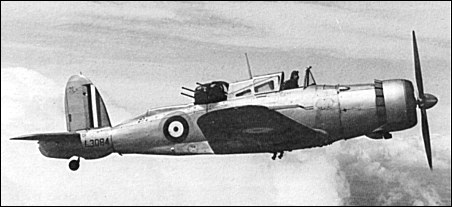
Skua Engine: 1 x Bristol Perseus XII, 905 hp Span: 46 ft 2 in Width folded: 15 ft 6 in Height: 12 ft 6 in Wing dihedral: 1.2 Undercarriage track: 9 ft 7 in Empty weight: 5496 lb Combat weight – fighter: 8105 lb Combat weight-bomber: 8204 lb Fuel capacity: 145 Imp.Gal Max speed: 225 mph @ 6500 ft Cruise speed: 187 mph Econ cruise: 114 mph ROC: 1580 fpm Service ceiling: 20,200 ft Endurance: 4 hr 20 min
B-24 Skua II Engine: 1 x Bristol Perseus XII, 664kW, 878 hp Max Take-Off Weight: 3732 kg / 8228 lb Empty Weight: 2490 kg / 5490 lb Wingspan: 14.07 m / 46 ft 2 in Length: 10.85 m / 35 ft 7 in Height: 3.81 m / 12 ft 6 in Wing Area: 28.98 sq.m / 311.94 sq ft Wing load: 26.45 lb/sq.ft / 129.0 kg/sq.m Max. Speed: 195 kt / 362 km/h / 225 mph Cruise Speed: 144 kt / 266 km/h / 165 mph Service Ceiling: 6160 m / 20200 ft Cruising altitude: 14993 ft / 4570 m Range: 660 nm / 1223 km / 760 miles Crew: 2 Armament: 5 x 7.7mm machine-guns, 340kg bombs








 All Aero