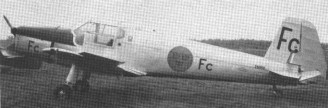
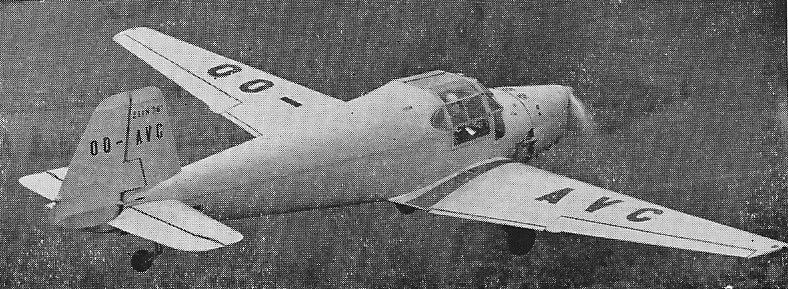
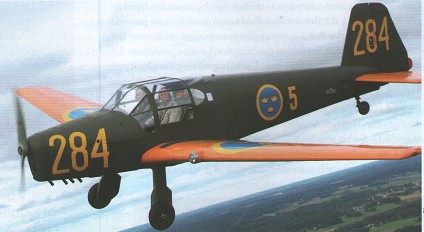
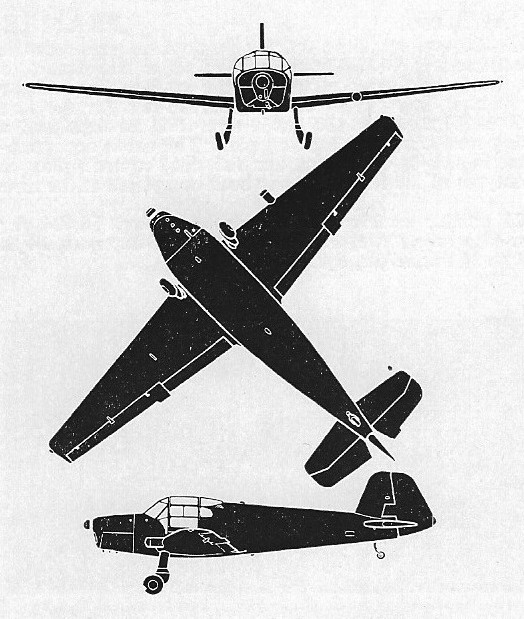
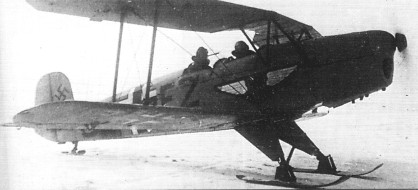
The Bu 181 low-wing monoplane trainer was a development of the Bu 180 Student with enclosed side-by-side accommodation for the crew of two and typical mixed construction (ply/fabric-covered wooden flying surfaces, aluminium alloy covered steel tube forward fuselage and wooden monocoque rear fuselage) with fixed tailwheel landing gear.
The production version for the Luftwaffe was the Bu 181A of which several thousand were built in Germany. Production was transferred to Fokker in Holland (who produced nearly 1000) and Zlin in Czechoslovakia. More production was undertaken in Holland (708) and Sweden by Hägglunds & Söner (125 Sk 25s) during 1944-46 for the Flygvapnet.
Post-war production was launched in Czechoslovakia as the C.6 and CC.106 (105 hp Minor 4-III) and, in civil form as the Zlin 381.
Zlin 381
Under Czech license, the Bu 181 was built Egypt as the ‘Republic of Egypt’, and one civil machine was designated Gomhouria Mk.2.
The final war-time development was the Bu 181D with a number of detail improvements over the Bu 181A. In addition to its designed role, the Bu 181 was used as a communications aeroplane and, in small numbers, as a tug for light training gliders.
Heliopolis Air Works in Egypt was formed 1950 to manufacture a local version of the German Bücker Bu 181D Bestmann as the Gomhouria trainer for Egypt, Jordan, Libya, Saudi Arabia, Somalia and the Sudan.
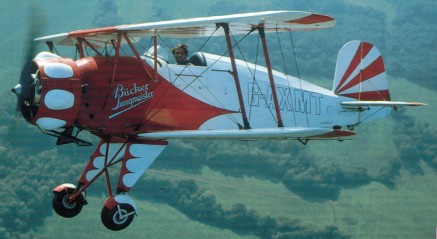
The success of the Jungmann led Bucker to open a second factory where a single-seat derivative could be produced in parallel with the original two-seater. The single-seater was the Jungmeister (young champion) advanced trainer, essentially a scaled-down Jungmann. First introduced in 1935, quickly developed an international reputation for its outstanding aerobatic capabilities.
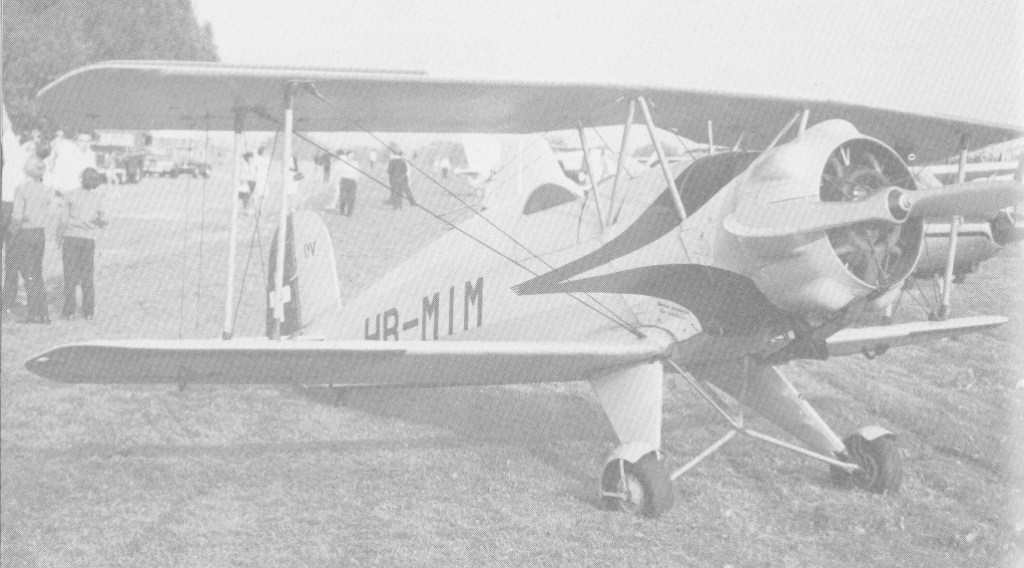
The initial Bu 133A had the 101-kW (135-hp) Hirth HM 6 inline but better performance than the higher-powered Bu 131. Quantity production was undertaken for the Luftwaffe, though precise details are lacking. The Bu 133B export version was produced to the extent of some 100 aircraft by Dornier in Switzerland and CASA in Spain with the 119-kW (160-hp) Hirth HM 506 inline. The definitive version, however, was the Bu 133C with a radial engine: this had excellent agility and performance, and was used as a fighter lead-in trainer as well as for advanced flying training. This model too was built in Switzerland and Spain.
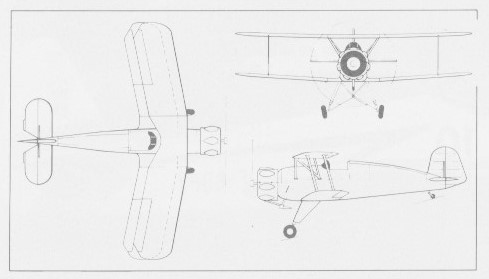
Bu 133C Jungmeister
The Bu 133 was built be Construcciones Aeronauticas S.A. in Spain for the Spanish Air Force under the designation ES-1, and 47 were built in Switzerland by the former Dornier-Werke for the Swiss Air Force.
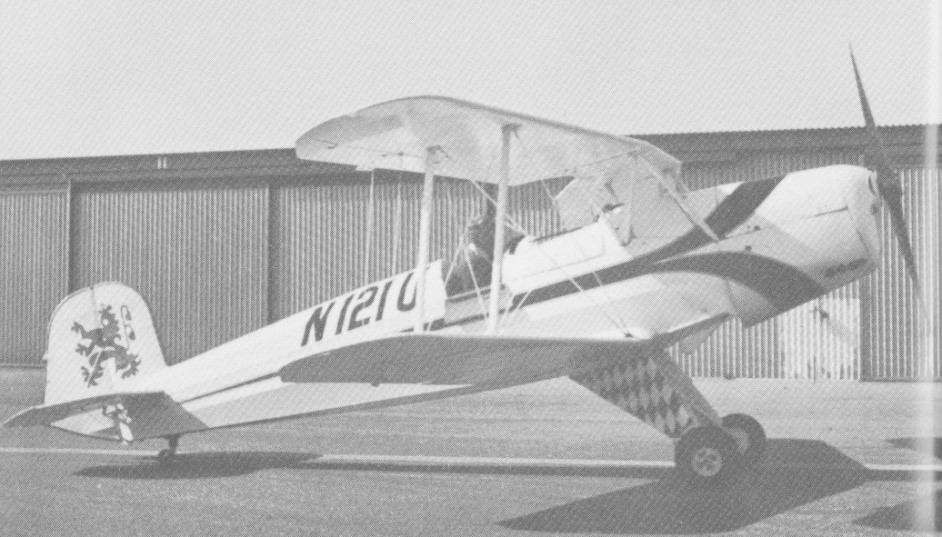
In 1968, the Aero Technik Canary in Munich, Germany, began production of the BU-133 D-1, also called the Jungmeister. Its engine is a remanufactured Siemens-Halske Sh-14A4; however, due to this engine’s limited availability and demand for more power, a new version, the BU-133F, was built by Wolf Hirth GmbH with a 220 hp Franklin engine.
The Bu-133D-1 is basically as the Bu-133C but engine, optimised for constant inverted flight, Goodyear tyres, wheels and brakes, and US instruments.
Bucker Prado Sl offered kits to build the former German Jungmann two-seat aerobatic biplane using original Bucker/CASA Bu 131 jigs, plus Jungmeister single-seat aerobatic biplane.
Bu 133A Engine: Hirth HM 6 inline, 101-kW (135-hp)
Bu 133B Engine: Hirth HM 506 inline, 119-kW (160-hp)
Bu 133C Jungmeister Engine: l x Siemens Sh 14A-4, 119kW (160hp) Span: 6.6m (21 ft 7.75in) Length: 6m (l9ft 8.25 in) Empty weight: 420 kg / 925 lb Max T/O weight: 585 kg (1,290 lb) Max speed: 134 mph / 116 kt / 215 kph at sea level Max cruise: 108 kt / 124 mph / 200 kph Climb to 3300 ft / 1000m: 2 min 50 sec Service ceiling: 19,685 ft / 6000 m Operational range: 311 mi / 269 nm / 500 km Optional fuel: 8.6 ImpGal / 39 lt
Bu 133 D-1 Engine: Siemens Sh-14A-4 Bramo, 158 hp Length: 19.751 ft / 6.02 m Height: 7.71 ft / 2.35 m Wingspan: 21.654 ft / 6.6 m Wing area: 129.168 sq.ft / 12.0 sq.m Max take off weight: 1411.2 lb / 640.0 kg Weight empty: 992.3 lb / 450.0 kg Max. weight carried: 419.0 lb / 190.0 kg Max. speed: 113 kts / 210 km/h Initial climb rate: 1082.68 ft/min / 5.5 m/s Service ceiling: 12467 ft / 3800 m Wing load: 10.87 lb/sq.ft / 53.00 kg/sq.m Range: 205 nm / 380 km Endurance: 2 h Crew: 1
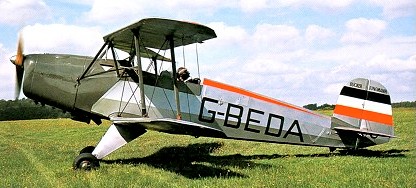
Bücker Flugzeugbau first design, designed by Anders Andersson, was the Bü.131A Jungmann powered by a 4 cylinder Hirth in line engine. A light two-seat biplane trainer specially developed for school and other training purposes, the prototype “D-3150” flew first 27 April 1934 with a 60-kW (80-hp) Hirth HM 6CR inline engine. The Jungmann was ordered by the Deutsche Luftsport Verband (The German Air-Sports Association). In 1936, the Luftwaffe adopted the Jungmann as one of its primary trainers.
Power was provided by a 60kW Hirth H.M.60R engine in the Bü.131A and a 78kW Hirth H.M.504A inverted engine in the Bü.131B.
Bu.131B
Before the outbreak of World War II the trainer was being used in 21 countries and licence-built in Holland, Czechoslovakia, Spain and Switzerland.
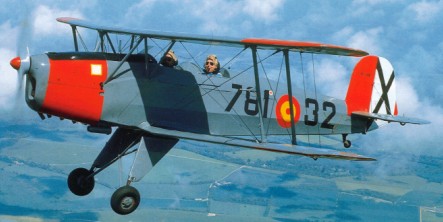
Spain was one of the earliest customers. Over a hundred German-built Jungmanns were delivered to the Spanish Nationalist side in the civil war. A total of 500 Jungmanns were built by the Construcciones Aeronauticas S.A. (CASA) in Spain. The first 200 had German Hirth HM504 engines but the remainder were powered by versions of the Spanish ENMA Tigre G-IV. In Spain production started 1938 and the CASA I-131 remained in production until the end of the fifties. The CASA E3B is a licence-built example.
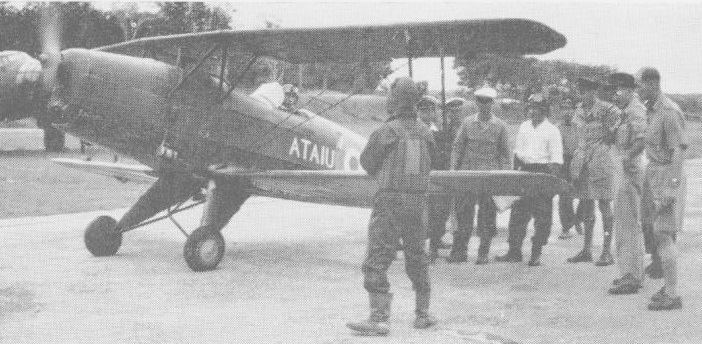
Some 1,254+ were built in Japan by Watanabe and Kyushu as the army’s Kokusai Ki-86A (1,037) and the navy’s K9W1 Momiji (Maple) (217+). Later models had 110 hp Hitahi Ha.47 engines. The code name was Cypress, applied to both the Navy Type 2 Momiji and Army Type 4.
The prototype was originally delivered to Japan in 1939, and Navy production began in August 1941.
K9W1 Cypress
Production figures have not survived, but some indication of scale is provided by the fact that Hungary took 100 and Romania 150, while Switzerland built 75. The Bucker Bü.131B Jungmann was also built under license pre-war in Switzerland by Dornier, and Czechoslovakia as the Tatra T.131. In Czechoslovakia the post-war version of the Bu.131B was the C.4. The C.104 was as the C.4 but with a 105 hp Walter Minor 4-III engine.
CASA 1-131E
Bucker Prado Sl offered kits to build the former German Jungmann two-seat aerobatic biplane using original Bucker/CASA Bu 131 jigs, plus Jungmeister single-seat aerobatic biplane.
Bu 131A Engine: 1 x Hirth HM60R, 59kW / 80 hp Max Take-off weight: 630 kg / 1389 lb Empty weight: 280 kg / 617 lb Wingspan: 7.4 m / 24 ft 3 in Length: 6.7 m / 21 ft 12 in Height: 2.3 m / 7 ft 7 in Wing area: 13.5 sq.m / 145.31 sq ft Max. speed: 170 km/h / 106 mph Cruise speed: 150 km/h / 93 mph Ceiling: 3500 m / 11500 ft Range w/max.fuel: 680 km / 423 miles Crew: 2
Bu 131B Engine: Hirth HM 504 A-2, 104 hp, 78kW Wingspan: 24 ft 3.25 in / 7.4 m Wing area: 145.314 sq.ft / 13.5 sq.m Length: 21 ft 8in / 6.62 m Height: 7.776 ft / 2.37 m Max take-off weight: 1477.4 lb / 670.0 kg Weight empty: 882.0 lb / 400.0 kg Max. weight carried: 595.4 lb / 270.0 kg Max. speed: 93 kts / 173 km/h / 114mph at sea level Initial climb rate: 748.03 ft/min / 3.8 m/s Service ceiling: 11483 ft / 3500 m Wing load: 10.25 lb/sq.ft / 50.0kg/sq.m Range: 216 nm / 400 km Endurance: 3 h Crew: 2
Bucker Flugzeugbau GmbH Bücker Flugzeugbau was founded by Carl Bücker in 1932, its first aircraft was the Bu 131 Jungmann trainer, designed by Swede Anders Andersson. The prototype first flew on April 27,1934. It was followed by the Bu 133 Jungmeister in 1935 and by the extensively built Bu 181 Bestmann in 1936. Production of the latter continued after Second World War by Zlin in Czechoslovakia and, under Czech license, by Egypt’s Heliopolis Aircraft Works in the 1950s.
The LF-1 was designed by Prof. Dr.-Ing. Hermann Winter and some of his students from the Technische Universität Braunschweig (English:Technical University of Brunswick), Lower Saxony, Germany in 1939, as a fool-proof trainer for novice student pilots to experience solo flight. Winter was a former chief engineer at the Bulgarian company, DAR (Drzhavnata Aeroplanna Rabotilnitsa in cyrillic ДАР – Държавната аеропланна работилница).
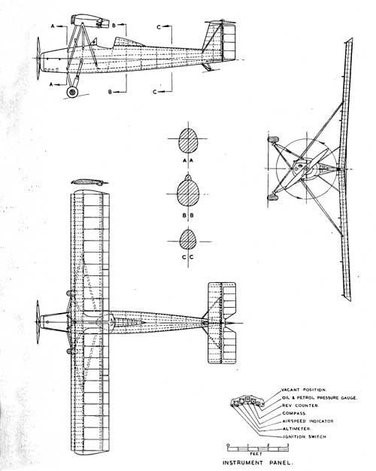
The LF-1 is a parasol wing monoplane with a high-set tailplane, powered by a Zündapp Z 9-092 engine delivering 37 kW (50 hp), able to operate from a 100 m (330 ft) airstrip. The two-piece wings are set at 16° dihedral and are supported by a pair of v cabane struts and v-struts either side from approx half-span to the lower centre fuselage. Full span leading edge slats extend automatically and full span trailing edge flaps / drooping ailerons can be extended manually by the pilot. The fixed tailwheel undercarriage attaches to the fuselage with long struts and oleo pneumatic shock absorbers.
When the flaps were lowered (max. angle 40°), the ailerons also drooped. The Zündapp engine was an air-cooled 4-cylinder engine with single ignition, it produced 51 hp producing a max. airspeed of 87 m.p.h.
It was a proof-of-concept design for a ‘fool-proof’ trainer intended for novice pilots with only one hour of ground instruction, the hour being reduced to five-minutes for those who had already flown gliders, and was intended to be impossible to either stall or spin.
The first prototype, the LF-1 V1, was built in 1940 and made its maiden flight, piloted by Winter himself, on 17 December 1940 powered by a 51 hp Zündapp 9-092 engine. The flight characteristics revealed a good-natured behavior, while the flight performance confirmed the expectations with a stall speed of 29.2 mph (47 kmh) and a maximum speed in level flight of 87.6 mph (141 kmh). The aircraft was repaired and flown again on July 16, 1941, however, on September 11, 1942, during a flight to determine the roll speed of the aircraft, a second serious accident occurred. During the flight tests, performed by the assistant Franz Glatz, there was an overload of the lateral control system, which then failed. This led to the flapping of the wings and subsequently the loss of the right wing. The pilot managed to parachute to safety, the plane crashed onto a truck parked on the parade ground in Brunswick, and both the aircraft and the truck were a total loss.
In 1943 a second prototype, the V2, was built, again receiving the registration D-YBAR. The aircraft was tested for military applications and was once even armed with a Panzerfaust 100 recoilless anti-tank weapon.
The type was named Zaunkönig (Wren) on February 5, 1944.
The aircraft survived WW II, but shortly before the occupation of the Technische Hochschule Braunschweig by Allied troops in April 1945, all aircraft documentation was destroyed. In 1945 groups of specialist units were capturing German secrets and technology. Eric ‘Winkle’ Brown led a British aviation team and managed to fly most of the Luftwaffe’s aeroplanes, from the Messerschmitt 163 rocket fighter to the Blohm und Voss 222 6- engined flying boat. One less exotic type he encountered was the Zaunkönig (Wren). An example was brought back to England for thorough testing.
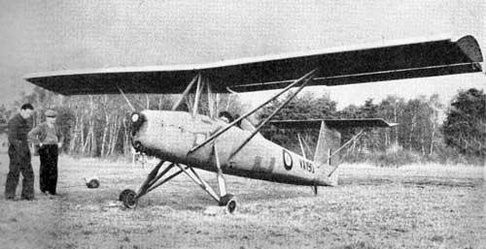
The Zaunkönig registration D-YBAR was taken to the Royal Aircraft Establishment (RAE) at Farnborough for slow flying tests; given the British serial VX190, where amongst others, it was flown by Eric “Winkle” Brown CO Aero Flight, the aircraft also being soloed by the then-head of the RAE Aerodynamics Section, Handel Davies, whose previous experience was as a pupil in a dual-control Miles Magister, after a half-hour of ground instruction.
Most of the pilots found flying the Zaunkönig ‘an interesting experience’. Getting into the small cockpit close under the wing was quite a gymnastic manoeuvre. The engine started easily and with no ignition check or elevator trimmer it was soon time for take-off. The briefing was that flap position was ‘anywhere you like’ and on opening the throttle the aircraft ‘cannot fail to fly itself away’. It left the ground at 44 m.p.h. flaps up or 31 m.p.h. flaps down. The lack of trimmer was not a problem as all three controls were light and pleasantly balanced. Approach to land was at 45 m.p.h. flaps up or 40 m.p.h. flaps down. There was no need to flatten out. The aircraft approached in a three point attitude and the pilot could be told to ‘wait until the ground hits the aircraft’. The undercarriage was strengthened to allow it to absorb the shock of the widest range of landing techniques – or should that be lack of technique.
‘Stalling’ tests were carried out with wool tufts attached to the upper surface of the wing. These were filmed from a following helicopter and showed that, at about 30 m.p.h., engine off or engine on, the centre section of the wing stalled but the outer section went on flying and the ailerons continued to give full lateral control. The Zaunkönig effectively ‘turned into a parachute’.
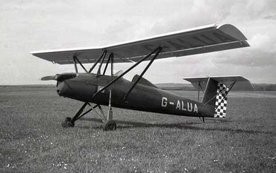
After being wrung out at Farnborough, there seemed to be no useful military function for the Zaunkönig and it was tested by the Civil Aviation Flying Unit of the Ministry of Civil Aviation at Gatwick. There were ideas of using it to promote the expected surge in private flying so it was sold to a British private owner in June 1949 as G-ALUA, and then to the Experimental Flying Group and to the Ultra Light Aircraft Association.
It toured the flying clubs whose members could fly it for £1 per hour. However, it caused little excitement and passed through the hands of several private owners including one in Ireland. At one stage, it was rebuilt by John Isaacs (noted for his own designs of a mini Hawker Fury biplane and mini Spitfire).
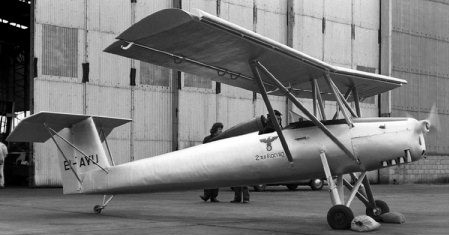
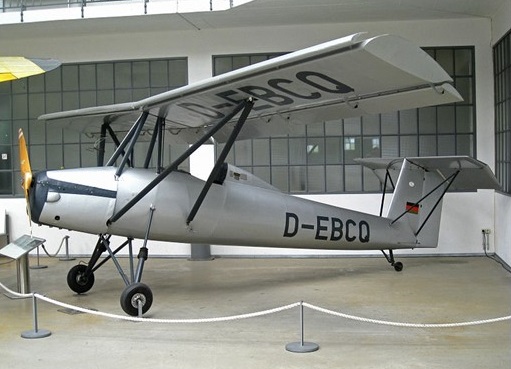
It was subsequently sold in 1974 to an Irish owner, being registered EI-AYU, returning to Germany, in 1976, as D-EBCQ. As of 2008, it was preserved in the Deutsches Museum collection at Oberschleissheim near Munich.
The second Zaunkönig D-EBCQ preserved in the Deutsches Museum, Oberschleissheim, in July 2008
Encouraged by the positive British reviews Prof. Ing. Hermann Winter decided to build a third LF-1. The construction started in 1954 and it was the first new aircraft in Germany after the war to receive a certificate by the Luftfahrt-Bundesamt (LBA) in Braunschweig and the registration D-EBAR. Winter envisioned the Zaunkönig as a People’s Aircraft affordable for all (for a price of around DM 6,000). On 28 April 1957, the wartime Luftwaffe fighter ace Heinrich Bär was conducting a routine flight check in the D-EBAR. Bär put the aircraft into a flat spin, the final manoeuvre in the test process at Braunschweig-Waggum. The aircraft spun down to 50 m (160 ft) then, unable to regain control, it crashed and Bär received fatal head injuries. The aircraft was damaged beyond repair and written off.
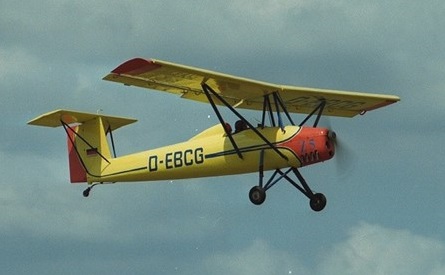
At the time a fourth LF-1 V4 was already under construction and it flew a few months after the fatal accident with the V3, in the summer of 1957. It received its certificate in 1958, it expired on October 8, 1964, when the aircraft was grounded, and the code D-ECER. This aircraft flew for some years in Germany until grounded after the death of Prof. Ing. Winter in 1968. In November 1979 it was registered again, this time as D-EBCG, restored in 1980 and flew until 1999 as D-EBCG. The registration was cancelled on October 15, 1999. As of 2008 it was preserved in the collection of the Internationals Luftfahrtmuseum Manfred Pflumm near Villingen-Schwenningen.
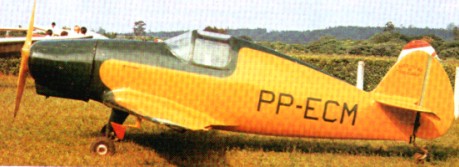
Designed as a private venture in the late ‘thirties, the Bichino subsequently served as a test-bed for the IPT (Instituto de Pesquisas Tecnológicas or Technological Research Institute) of the São Paulo State University. Four examples were built. In 1938, the IPT’s Aviation Research Department was, by a fair margin, the most important aviation research centre working in Brazil and had completed a long series of studies of the use of native Brazilian woods in aircraft. A special technique had been developed for producing in industrial quantities a new kind of plywood for aircraft using Brazilian pine, and studies had been made of freijo, a Brazilian hardwood 20 per cent stronger and heavier than spruce. One of the principal researchers at the IPT was Frederico Abranches Brotero, who was also a gifted aircraft designer. In company with Orthon Hoover, an American who had come to Brazil as a demonstration pilot for Curtiss in 1911 and had decided to stay, Brotero set about putting freijo and the new plywood to the test in a light aircraft. Work on Brotero’s tiny wooden aeroplane, designed around a 60 hp Walter Mikron engine, began late in 1939 in a workshop of the São Paulo Polytechnic School under IPT supervision and it was transferred to Rio Claro city aero club for completion and first flight. The latter was effected in 1940. The Little Bug was of all wood construction, the cantilever low-wing being a two-spar structure with a Clark Y aerofoil; the spars were of paumarfim, ribs of freijo and covering of Brazilian pine plywood. Ailerons were fabric covered; fixed letter-box slots were incorporated ahead of the ailerons and split flaps extended along each trailing edge from aileron to fuselage. The wooden monocoque fuselage structure had guapuruvu longerons and freijo reinforcements with plywood construction. Tail unit construction was of freijo with fabric covering for the elevators and rudder; there was a controllable trim-tab in the starboard elevator. The fixed landing gear had rubber-in-compression shock absorbers and a steel tail skid. Phenolic resin was used to bond the wooden components. The open cockpit was just wide enough for a pilot of average build, but was comfortable and afforded good visibility. In 1943, the Bichino prototype (PP-THH) was purchased by the IPT to be used as a flying test bed and three more examples were put in hand, with some structural redesign to reduce weight and improve performance. The three new Bichinos had 65 hp, 75 hp and 85 hp Continental engines respectively. By this time, IPT had completed other prototypes designated the IPT- 1, IPT-2 and IPT-3, and the Bichino was consequently given the designation IPT-0, the three new examples becoming the IPT-0-A, -B and -C respectively. The fourth and last was completed in 1947 and proved to be the best performer and most pleasant to fly
During 1942 the U.S. Navy let contracts for the development of several amphibious transport gliders. Two of the contracts called for twelve¬-seaters manufactured primarily from non¬-strategic materials, these being the Allied XLRA 1 and the Bristol XLRQ 1. The Bristol XLRQ 1 produced by the Bristol Aeronautical Company of New Haven, Conn., was a low wing cantilever monoplane. Its overall span and length were 72 ft (21.94 m) and 40 ft (12.2 m) respectively, and there were four prototypes (BuAer Nos. 11651 54), although it is not certain that all of these gliders were completed. A production order was placed for one hundred LRQ 1 gliders (BuAer Nos. 33715 814), but this was cancelled in 1943.
Wing span: 72 ft (21.94 m). Length: 40 ft (12.2 m).
Bristol’s earlier project to Specification B.2/41, the Type 162, itself replacing a previous Bristol Beaufighter bomber scheme, the Type 161 Beaumont, was revised as a result of official delays in finalising requirements. It was further delayed by teething troubles with the new Bristol Centaurus engines, and it was not until 4 February 1943 that the prototype Buckingham flew, without armament. The second, armed, prototype followed shortly afterwards and was followed by two more, all with Centaurus IV engines with high-altitude rating, although production aircraft were to have medium-altitude Centaurus VIIs or XIs. Minor control modifications were made before the first production Buckingham flew on 12 February 1944, but changes were made to the tail surfaces after 10 had been completed to improve stability, particularly in single-engine performance. Although outclassed by the Mosquito in European operations, it was felt that the Buckingham’s superior range would prove a great asset against the Japanese. But by the time production aircraft were being delivered the end of the Far East war was in sight and the original order was cut from 400 to 119, plus the four prototypes. With the end of their potential usefulness as bombers, it was decided to convert the Buckinghams to fast courier transports; the last batch of 65 on the line were completed as Buckingham C. Mk 1 transports and it was intended that the earlier Buckingham B. Mk 1 bombers would be retrospectively modified to the same standard. In this configuration (with extra tankage, seats for four passengers and a crew of three) the Buckingham had a range of 4828km and was used on services to Malta and Egypt, although they were uneconomical with such a small passenger capacity. Two were adapted to accommodate seven passengers, but the modification proved too expensive and was not taken further. Although the 54 bomber versions were returned to Filton for conversion, most were stored and eventually scrapped with very low hours, the last surviving Buckingham being used as a ground testing rig until 1950.
Buckingham B Mk.I Engines: 2 x Bristol Centaurus VII / XI, 2485 hp, 1879kW Take-off weight: 17259 kg / 38050 lb Empty weight: 10905 kg / 24042 lb Wingspan: 21.89 m / 71 ft 10 in Length: 14.27 m / 46 ft 10 in Height: 5.33 m / 17 ft 6 in Wing area: 65.77 sq.m / 707.94 sq ft Max. speed: 531 km/h / 330 mph Cruise speed: 459 km/h / 285 mph Ceiling: 7620 m / 25000 ft Range: 5118 km / 3180 miles Crew: 4Armament: 10 x 7.7mm machine-guns, 1800kg of bombs
The Beaufighter was original proposed by the Bristol company and sold to the Royal Air Force to fulfill a need it required (though the RAF never officially approached the Bristol company about design any such aircraft).
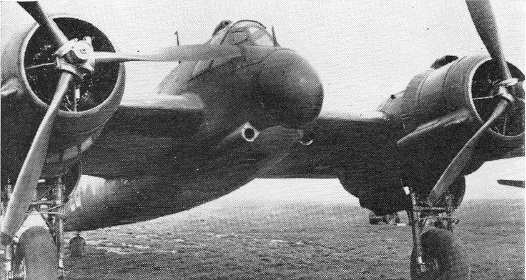
Fourth prototype Beaufighter R2055 with Vickers S and Rolls-Royce 40mm guns, Duxford 1941
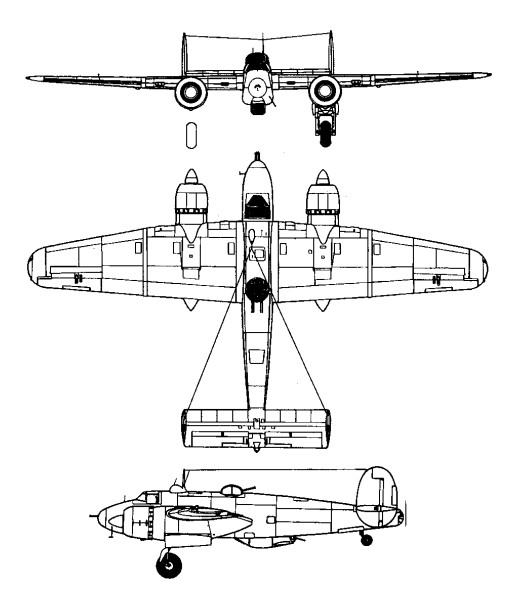
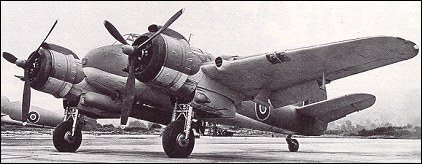
The first of four radar-equipped night fighter prototypes flew on 17 July 1939 and the first production Beaufighters were delivered to the Royal Air Force in the following April. The type was the first high performance night fighter equipped with airborne interception radar and successfully operated against the German night raids in the winter of 1940-1941. The twin-engine fighter utilized a crew of two men and was initially fitted with 4 x 20mm cannon and 6 x 7.7mm machine guns. Since the Beaufighter utilized many components of the already-in-production Beaufort torpedo plane, the implementation of the Beaufighter was quick. The Type 156 was based on the wings, tail unit, and landing gear of the Beaufort torpedo bomber with a new fuselage and Hercules radial engines. Production of the Beaufighter was launched on three lines.
The first night fighter success with AI.Mk IV radar followed in November 1940.
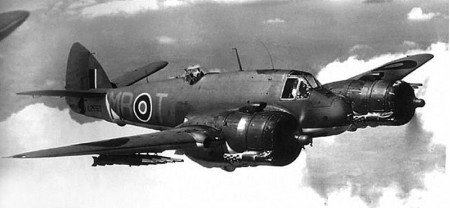
The Beaufighter Mk IIF (597 night fighters) had a dihedralled tailplane to avoid directional instability and 1,280-hp/954-kW Rolls-Royce Merlin XX inline engines to avoid overtaxing Hercules production. Later the Beaufighter was introduced into Coastal Command as a strike fighter. Its original gun armament was retained but rockets and torpedoes were added giving it an even greater fire power. Not only did the Beaufighter operate in North West Europe but also the Middle and Far East. For operations in the Mediterranean theatre, some Beaufighter Mk IFs were tropicalized and fitted with additional fuel tankage.
The USAF utilized the Bristol Beaufighter platform for a time as their primary nightfighter until an American-made alternative could be produced.
A total of 5564 aircraft were built in England and 364 built in Australia, by the time the last UK built one was delivered in September 1945 and fifty-two operational Royal Air Force squadrons had been equipped with the type. The last Australian Mk.21 (first flown 26 May 1944) delivery was in December 1946
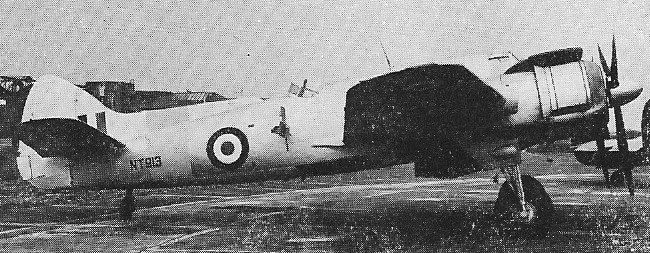
Of the 5562 built when production ended in September 1945, 2231 were Beaufighter Mk.10s and many were converted to target tug duties. Modifications included removal of most of the combat equipment, the installation of a target towing winch on the starboard side of the fuselage, together with a seat for the winch operator.
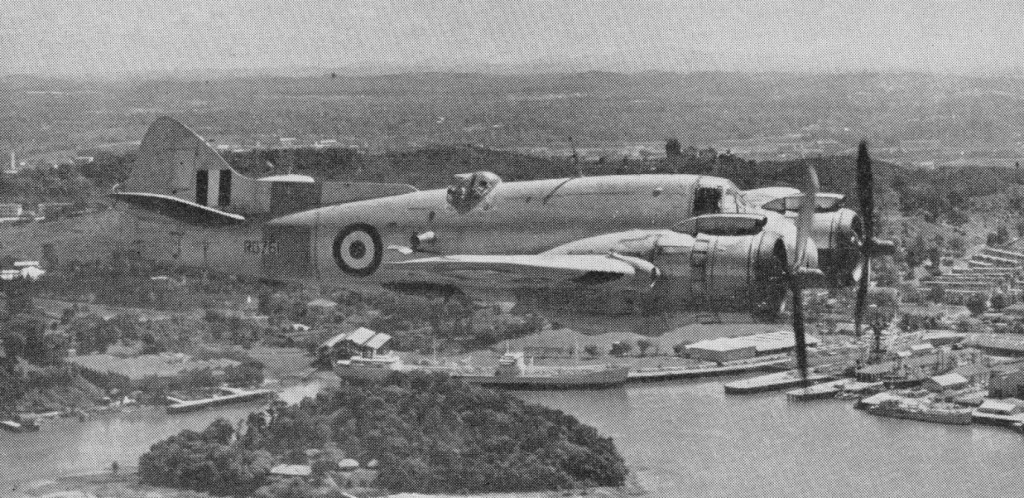
Beaufighter TT.10
The last flight of the type in Royal Air Force service took place on 17 May 1960 when a TT10 made a final target towing flight from Seletar.
RAF Beaufighter final flight – broken up for scrap hours later
Beaufighter Mk IC 397 Coastal Command strike fighters
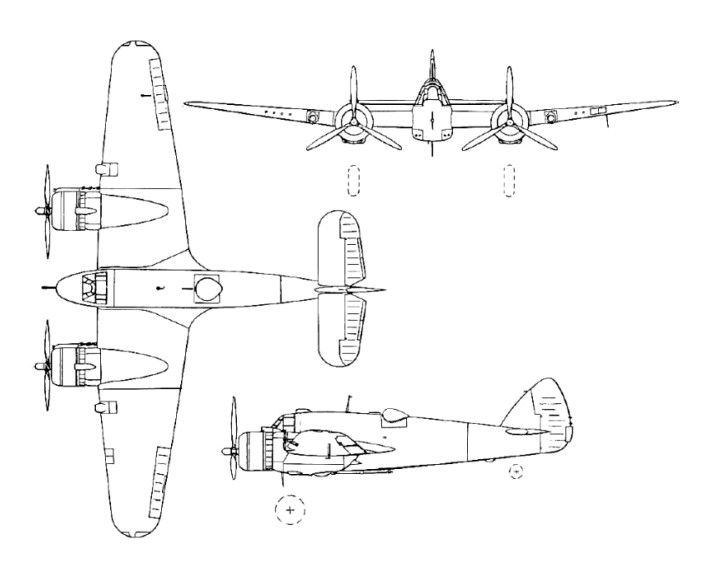
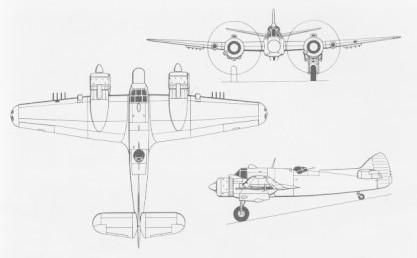
Beaufighter Mk IF two-seat night fighter. Engines: two 1,590-hp (1,186-kW) Bristol Hercules VI radial Maximum speed: 306 mph (492 km/h) at sea level Initial climb rate: 1,850 ft (564 m) per minute Service ceiling: 28,900 ft (8,810 m) Range: 1,500 miles (2,414 km) Weights empty: 14,069 lb (6,381 kg) Maximum take-off: 21,100 lb (9,526 kg) Wing span: 57 ft 10 in (17.63 m) Length: 41 ft 4 in (12.60 m) Height: 15 ft 10 in (4.82 m) Wing area: 503.0 sq ft (46.73 sq.m) Armament: four 20-mm cannon and six 0.303-in (7.7-mm) machine guns.
Beaufighter Mk IIF 597 night fighters Engines: 2 x 1,280-hp/954-kW Rolls-Royce Merlin XX Wingspan: 57 ft 10 in / 17.63 m Length: 42 ft 9 in Height: 15 ft 10 in / 4.84 m Empty weight: 13,800 lb Seats: 2
Beaufighter VI Wingspan: 57 ft 10 in / 17.63 m Length: 42 ft 9 in Height: 15 ft 10 in / 4.84 m Empty weight: 14,900 lb
Bristol Beaufighter VIF Length: 41.34ft (12.6m) Width: 57.91ft (17.65m) Height: 15.88ft (4.84m) Maximum Speed: 333mph (536kmh; 289kts) Maximum Range: 1,479miles (2,381km) Rate-of-Climb: 1,923ft/min (586m/min) Service Ceiling: 26,519ft (8,083m; 5.0miles) Armament: 4 x 20mm cannons in under nose position 6 x 7.62mm machine guns in wings Accommodation: 2 Hardpoints: 2 Empty Weight: 14,619lbs (6,631kg) Maximum Take-Off Weight: 21,627lbs (9,810kg) Engines: 2 x Bristol Hercules VI 14-cylinder air-cooled sleeve radials, 1,635hp.
Beaufighter IX Wingspan: 57 ft 10 in / 17.63 m Length: 42 ft 9 in Height: 15 ft 10 in / 4.84 m Empty weight: 14,900 lb
Bristol Beaufighter TF. Mk X Engines: 2 x Bristol Hercules XVII, 1320kW / 1770 hp Props: 3 blade Take-off weight: 11431 kg / 25201 lb Empty weight: 7076 kg / 15600 lb Wingspan: 17.63 m / 57 ft 10 in Length: 12.7 m / 41 ft 8 in Height: 4.83 m / 15 ft 10 in Wing area: 46.73 sq.m / 503.00 sq ft Max. speed: 488 km/h / 303 mph Cruise speed: 217 kts / 401 km/h / 249 mph Service ceiling: 26,500 ft / 8077 m ROC: 1850 fpm / 564 m/min Range: 2366 km / 1470 miles Range w/extra wing tanks: 1750 miles Crew: 2 Armament: 2 x 20mm Hispano cannons, 7 x Vickers 0.303 / 7.7mm machine-guns Bombload: 1 torpedo and 2 x 113kg bombs
Beaufighter TT.10 Engines: 2 x Bristol Hercules 18, 1770 hp Wingspan: 57 ft 10 in Length: 41 ft 4 in Loaded weight: 21,250 lb Max speed: 285 mph Max cruise: 264 mph Range at 15,000ft: 1960 mi Range with target out: 1680 mi



 All Aero