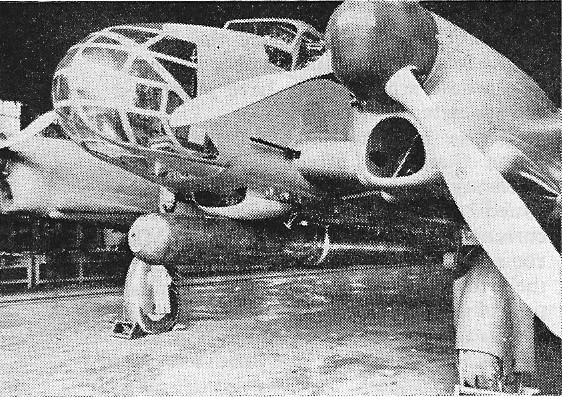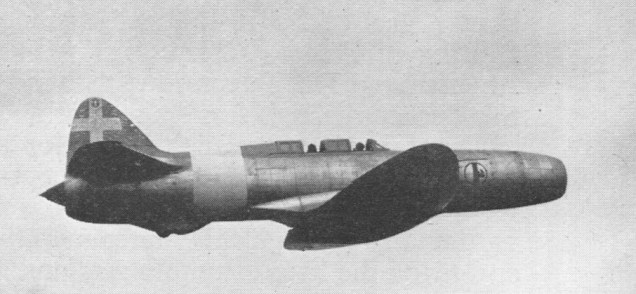
Caproni-Campini N.1 (CC.2)

The engineer Secondo Campini had created a company in 1931 to pursue research into reaction propulsion and in 1939 persuaded Caproni to build an aircraft for an adaptation of an Isotta-Fraschini radial engine driving a ducted fan compressor. The compressed air was exhausted through a variable area nozzle in the aircraft’s extreme tail, and additional fuel could be ignited in the tailpipe to increase thrust.
The N1 became a large aircraft design piloted by two personnel. It was a low-wing monoplane with a traditionally-designed empennage and a single vertical tail surface. The intake was open at the extreme forward position and exhaust jettisoned at the extreme rear of the aircraft. Landing gear was powered and fully retractable. Keeping with early “jet” designs of the time, wings were straight-wings and featured the distinct smooth curves of piston engine fighter designs. The N1 would achieve a top speed of only 233 miles per hour.
The two seat low wing N1 (sometimes referred to as the CC.2) was first flown at Taliedo on 28 August 1940 by Mario de Bernadi. A number of set piece demonstration flights were undertaken, including one of 270 km (168 miles) from Taliedo to Guidonia at an average speed of 209 km/h (130 mph). It was clear from the outset that use of a three stage fan-compressor driven by a piston engine would limit further development, and the experiment was abandoned early in 1942 when Italy was faced with more serious priorities. The N1 survives in the Museo della Scienza Technica at Milan as a monument to ingenuity if not sophisticated technology.
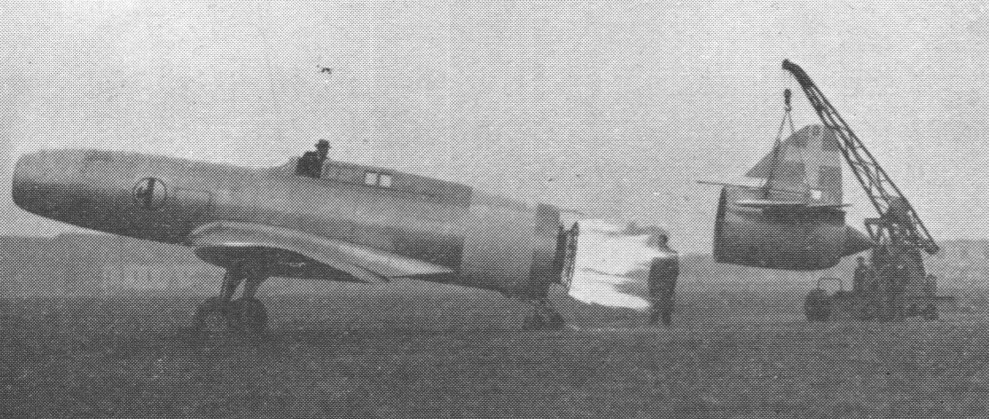
Engine: one 900 hp (671 kW) Isotta Fraschini radial piston engine driving a three stage ducted fan compressor.
Wing span: 15.85 m (52 ft 0 in)
Length 13.10 m (43 ft 0 in)
Wing area: 36.00 sq.m (387.51 sq.ft)
Empty Weight: 8,025lbs (3,640kg)
Maximum Take-Off Weight: 9,248lbs (4,195kg)
Maximum Speed: 233mph / 375kmh / 202kts
Service Ceiling: 13,123ft / 4,000m
Crew: 2
Caproni A-10 / A-12 / A-14 / A-20 Calif

In 1969, the Caproni Vizzola began producing a series of gliders baptized Calif, the names of their designers Carlo Ferrarin and Livio Sonzio: A- 10 (one unit), A-12 (two units), A- 14 (one unit). A-15 (one unit), A- 20, A-21 and their derivatives were produced in series from 1972-73.

Seats 1
Wing loading 7.92 lbs/sq ft.
Wing aspect ratio 28.3.
Gross weight 1,574 lbs
Max airspeed 135 kt.
Empty weight 1,067 lbs
Rough air speed 135 kts.
Useful load 507 lbs
Stall 34 kt.
Lift to drag 51 at 60 kts.
Sink 1.57 fps at 43 kts.
Length 23 ft 10.25 in.
Wingspan 75 ft 0.5 in.

Caproni F.6         

Caproni-Vizzola F.6M

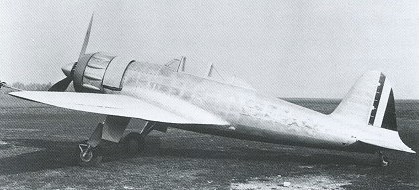
The F.4 had been redesigned to take the German DB 601Aa engine, finally flying with this in late 1940. Results were excellent, but Fabrizi decided not to pursue this, developing it instead with the more powerful DB 605A of 1475 hp, which was to be built in Italy as the Fiat RA1050 RC58 Tifone. With this engine the F.6 flew in 1942, and subsequently an all metal F.6M was built, passing through various development stages. Basic armament was four 12.7 mm (0.54n) Breda SAFAT machine guns. Several developments were projected, most having the X-form Isotta Fraschini Zeta engine, but the Armistice halted further work in September 1943.Engine: Daimler-Benz DB 605A.

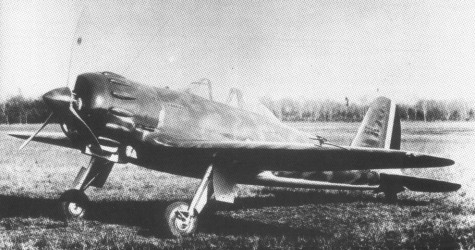
Caproni F.5 Vizzola         

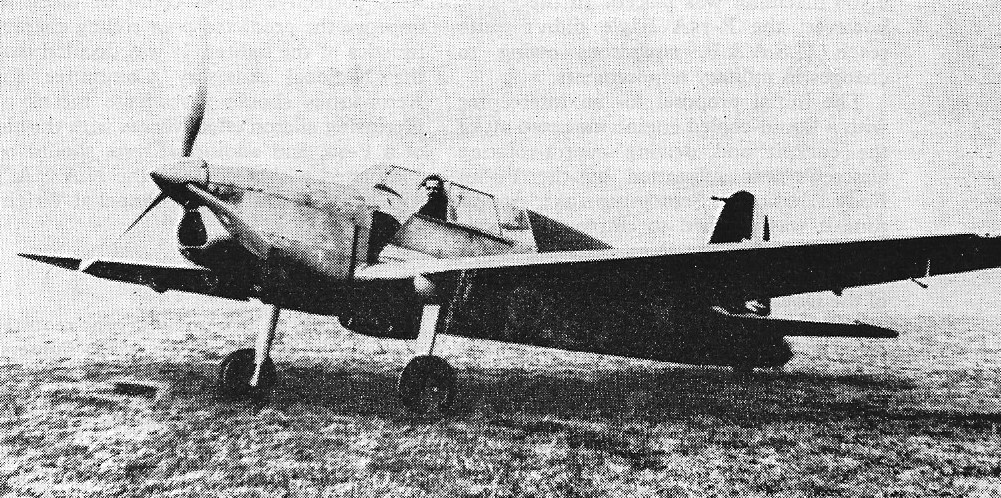
The F.4 and F.5 were designed in parallel with the 890-hp (664-kW) Isotta-Fraschini Asso 121 inline and 870-hp (649-kW) Fiat A.74 radial engines respectively. They had traditional mixed construction, with welded steel tube fuselage with light ¬alloy skin and wooden wings. Landing gear and flaps were hydraulic, and ailerons were arranged to droop with extension of the flaps. Tailplanes had variable incidence for trim¬ming.
The F.5 was the first to fly, in early in 1939, and was evaluated against the Fiat G.50 and Macchi MC.200 for a production order, but the only contract placed was for 14 pre-production fighters. These had a modified cockpit canopy, greater fuel capacity, larger vertical tail surfaces, and a non-retracting tailwheel. The F.5s were used from mid-1940 for the night defense of Rome in the first months of the war, and then employed as interceptors until lack of serviceability forced their retirement. Armament was two 12.7 mm (0.5 in) Breda SAFAT guns. Fabrizi had numerous schemes for developments of the F.5, but none was built.

Caproni Vizzola F.5
Type: single-seat fighter.
Engine: one 870-hp (649-kW) Fiat A.74 RC 38 radial piston
Maximum speed: 317 mph (510 km/h) at 9,845 ft (3,000 m)
Climb to 21,325 ft (6,500 m): 6 minutes 30 seconds
Service ceiling: 31,170 ft (9,500 m)
Range: 478 miles (770 km).
Empty weight: 4,078 lb (1,850 kg)
Maximum take-off weight: 5,181 lb (2,350 kg).
Wing span 37 ft 1 in (11.30 m)
Length 25 ft 11 in (7.90 m)
Height 9 ft 10 in (3.00 m)
Wing area 189.45 sq ft (17.60 sq.m)
Armament: two fixed 0.5-in (12.7-mm) machine guns.

Caproni F.4

The F.4 and F.5 were designed in parallel with the 890-hp (664-kW) Isotta-Fraschini Asso 121 inline and 870-hp (649-kW) Fiat A.74 radial engines respectively. It was then decided to fit the more powerful Daimler-Benz DB 601A in the F.4, and the delay thus caused meant that the F.5 was the first to fly, an event that took place early in 1939.
The F.4 had traditional mixed construction, with welded steel tube fuselage with light alloy skin and wooden wings. Landing gear and flaps were hydraulic, and ailerons were arranged to droop with extension of the flaps. Tailplanes had variable incidence for trimming.
The F.4 finally flew in late 1940 with the DB 601A, and it was then decided to concentrate on an improved F.6 with the DB 605A.

Caproni Ca.380 Corsaro

The Ca 380 Corsaro was a twin- fuselage two-seat fighter with the crew seated in tandem in a cockpit carried by the port boom (a similar arrangement to that adopted for the S.M.92). The Corsaro was powered by two 1,550-h.p. Daimler- Benz DB 603 engines and carried an armament of eight 2O-mm. Mauser cannon and a bomb load under the wing section between the two fuselages. A prototype of the Corsaro was flight tested but eventually destroyed by the retreating German forces.

Caproni Ca.331

Caproni-331A.jpg

The Ca 331 was a light twin-engined bomber reconnaissance aircraft. Of all-metal construction, the Ca 331 was projected in two versions, the Ca 331A reconnaissance bomber and the Ca 331B night fighter, prototypes of both versions being built and flown. The latter version was to have been built in large numbers and carried an armament of four 20-mm. cannon and four 12.7-mm. machine guns. Power was provided by two 825-h.p. Isotta-Fraschini Delta 4 in-line engines and construction was all metal.

Caproni Ca.331B

Caproni Ca.313 / Ca.314

Ca.314

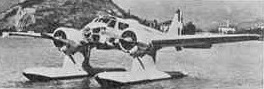
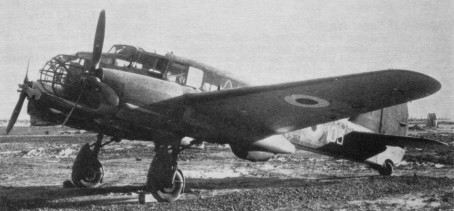
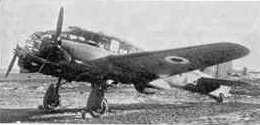
A modified Ca.310 with two Isotta-Fraschini Asso 120 IRCC 40 engines served as the Ca.313 prototype, first flown on 22 December 1939, but France had already confirmed an order for 200 Ca313 RPB1 on 1 October, followed closely by British and Swedish orders for 300 and 64 respectively.

The Caproni Ca313 and Ca314 were comparatively small and light aircraft powered by two Isotta-Fraschini Delta RC35 twelve-cylinder in-line engines of 700hp each. Both aircraft were constructed of a mixture of wood, metal and fabric and were developed versions of the Ca311 and 312M for multi-role use.

Caproni Ca.313

The Ca313 and Ca314 fulfilled a specification for a lightweight general-purpose combat aircraft capable of being used for reconnaissance, light bombing, ground attack, training and torpedo-attack. Both types had similar speed performance, in the 250-270mph category.

The torpedo installation was carried by the Ca313 RPB 1 SIL and Ca314 SIL (silurante =torpedo, in Italian).
These aircraft were also used by the Luftwaffe and some were used after capture by the Allies as communications aircraft in North Africa.

Italy’s entry into the war prevented delivery of any of the British machines and France received only five Ca.313F models, the remainder being diverted to the Regia Aeronautica.

Eighty Ca 313 were exported to Sweden in 1940. According to Swedish sources, the Ca 313 was generally unsatisfactory and had to be rebuilt and extensively strengthened after delivery. Forty-one Swedish airmen lost their lives in accidents involving the Ca 313 and, after the war. The Swedish Government took legal action against the Caproni concern but, in the meantime, the Societa Italiana Caproni had gone into liquidation.

Most extensively built version was the Ca.314.

Caproni Ca.314

The Ca 314, an improved version of the Ca 313, was the last of the Bergamaschi-designed light twin-engined reconnaissance bombers to be produced in quantity. It was also used in small numbers by the Luftwaffe and was to have been built under license in Germany as the Ca 315 (featuring a modified nose similar to that of the Ca 316).

Ca.314

Variants included the Ca.314A or Ca.314-SC (Scorta), a convoy escort/maritime patrol aircraft, the Ca.314B or Ca314-RA (Ricognizione Aerosiluranti) torpedo-bomber and the ground-attack Ca.314C. The extra under-fuselage gun packs were carried by the Ca314C. These additional items were not normally carried by the reconnaissance-bomber versions.

Ca313 RA

Ca313 RPB 1
Type: reconnaissance-bomber.

Ca313 RPB 1 SIL
Type: torpedo bomber.

Ca313 RTB 2
Type: reconnaissance-bomber.

Ca 314 A Libeccio
Engine: 2 x Isotta-Fraschini Delta RC.35, 720 hp
Length: 38.714 ft / 11.8 m
Height: 12.139 ft / 3.7 m
Wingspan: 54.626 ft / 16.65 m
Wing area: 421.949 sq.ft / 39.2 sq.m
Max take off weight: 14597.1 lb / 6620.0 kg
Weight empty: 10054.8 lb / 4560.0 kg
Max. speed: 213 kts / 395 km/h
Cruising speed: 173 kts / 320 km/h
Service ceiling: 20997 ft / 6400 m
Cruising altitude: 13780 ft / 4200 m
Wing load: 34.65 lb/sq.ft / 169.0 kg/sq.m
Range: 913 nm / 1690 km
Armament: 2x MG 12,7mm, 1x MG 7,7mm, 500kg Bomb.

Ca314C
Type: attack aircraft.

Ca314 SIL
Type: torpedo-bomber.