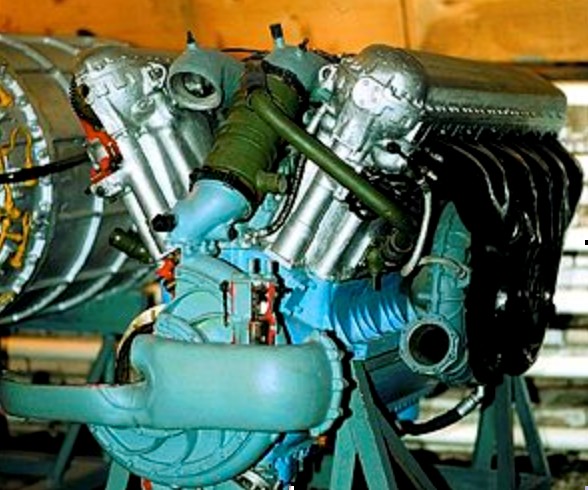
The Charomskiy M-40 was a Soviet turbocharged aircraft diesel engine developed during World War II. It was used in a few Petlyakov Pe-8 heavy bombers until August 1941 when it was removed, because it was unreliable at high altitudes. The engines were stored until 1944 when they were disassembled and their components were used in the closely related Charomskiy ACh-30B.
The Charomskiy ACh-30 was a Soviet liquid-cooled V-12 turbo-supercharged diesel aircraft engine developed during World War II. The initial version was not very satisfactory and it was cancelled when its factory was forced to evacuate in the autumn of 1941. But production was reinitiated in the summer of 1942 and continued until September 1945 to meet the need for an economical engine to power the Soviet long-range bombers like the Petlyakov Pe-8 and the Yermolayev Yer-2.
The ACh-30 was a development of the experimental AN-1RTK turbo-supercharged diesel engine that had begun development in the early 1930s. It was initially designated as the AD-5 when development began in the sharashka attached to Factory (Zavod) No. 82 at Tushino Airport in 1939. Construction of the first five prototypes began at the end of that year and it passed its tests in early 1940. Preparations to begin series manufacture at Factory No. 82 began in May 1940, but actual production was delayed until 1941 when forty-four were built as the M-30. Production was planned to be transferred to the Kharkov Tractor Factory, but this was cancelled before any engines were built. The M-30 had proven to be unsatisfactory in service, as it was unreliable and troublesome at high altitudes and in cold conditions. Specific problems were its failure to deliver full rpms and it suffered from oil blowouts and failures of the oil pumps. Therefore production was cancelled when Factory No. 82 was forced to evacuate in the fall of 1941 because of the German advance on Moscow.
Production was reinitiated in the evacuated workshops of Factory No. 82 by Factory No. 500 in June 1942, thirty-two engines being completed during the year. Development of supercharged versions began about the same time, using geared, centrifugal type superchargers adapted from the Mikulin AM-38 and the Klimov M-105 engines with intercoolers. That from the AM-38 was more successful and was put into production as the M-30B. Thirty-five incomplete M-30 engines were modified beginning in August into M-30Bs and then thirty-four M-30Bs were produced during the rest of 1942. Oddly the ACh-30B, as the engine was now known, was not formally accepted for series production until 19 June 1943, but production had begun quite a bit earlier than that. Factory No. 45 began production in the fourth quarter of 1943. Some 1450 ACh-30Bs were built before production ended at both factories in September 1945.
The ACh-30B was tested as a motorjet where the jet engine’s compressor was driven by the piston engine’s turbochargers. It was bench tested from June 1944 through May 1945, but was never installed in any aircraft. The jet engine’s thrust was 1,925 lbf (8.56 kN) and the equivalent horsepower of the combination was 4,500 hp (3,400 kW). The combination weighed 1,700 kg (3,700 lb).
Versions of the ACh-30 were evaluated on the Ilyushin Il-6 and the ANT-67, a long-range version of the Tupolev Tu-2, but neither aircraft was put into production. It was also proposed for use on the Tupolev Tu-8S and the MN executive transport, but neither of those projects progressed past design proposal stage.
Variants: AD-5, M-30, ACh-30 four turbochargers, but no supercharger. Weight: 1,200 kg (2,600 lb), Power: 1,500 hp (1,100 kW), approximately 76 built.
M-30F 1942 prototype. Power: 1,750 hp (1,300 kW)
M-30B, ACh-30B main production variant, 1450 built.
M-30D Boosted version for an attack aircraft with 2,000 hp (1,500 kW). Factory No. 500 ordered to develop this version, but no further information is known.
ACh-30BF Boosted version of the ACh-30B. Weight: 1,280 kg (2,800 lb), Power: 1,900 hp (1,400 kW), 17 built by modifying standard ACh-30Bs.
TD-30B tank engine – a post-war development that later led to the TD11B tank engine.
Applications: Petlyakov Pe-8 Yermolayev Yer-2
Specifications:
ACh-30B Type: V-12, turbo-supercharged, four-stroke, diesel engine Bore: 180 mm (7.1 in) Stroke: 200 mm (7.9 in) Displacement: 61.04 L (3,725 cu in) Dry weight: 1,290 kg (2,800 lb) Supercharger: geared, centrifugal type supercharger Turbocharger: 2 x T1-82 Fuel type: diesel Cooling system: liquid-cooled Power output: 1,500 hp (1,100 kW) Compression ratio: 13.5:1
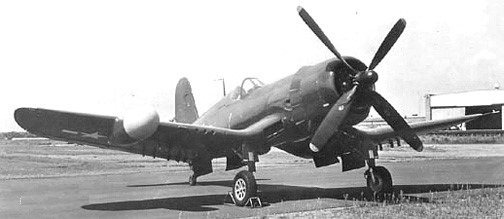
A design team headed by Rex Biesel and lgor Sikorsky set out to tackle a February 1938 US Navy requirement for a single seat carrier borne fighter; the challenge being to build the smallest possible fighter around the most powerful air cooled engine then under development.
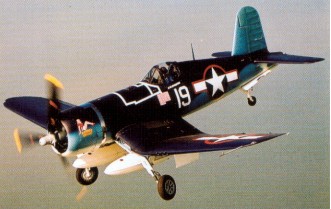
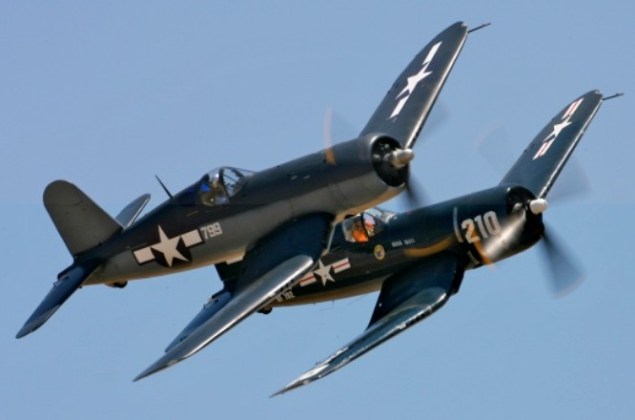
Such a huge propeller was required for the world’s first 2000 horse power engine a Pratt and Whitney 18 cylinder two row Double Wasp radial that the team followed Junker’s lead in using an inverted gull wing to provide sufficient ground clearance for the 4.1 metre (13 feet 4 inch) three bladed Hamilton constant speed propeller.
The wing design also enabled the use of short and strong oleo legs capable of withstanding operational carrier landings and, as an added benefit, the wings folded from the lowest part of the wing to provide a low overall height when the wings were in folded configuration. On retraction the gear rotates through 89 degrees and then folds backwards into the wing. As the weight is taken off the oleos the legs are prevented from extending by cables. The distinctive gull wing shape was used to allow the very large diameter propeller to be used and still keep a relatively short strong undercarriage for aircraft carrier operations.
In 1938 the Navy became involved in three new fighter projects the Grumman XF5F 1 and similar USAAF XP 50, the Bell XF1 1 and the Vought XF4U 1 (V-166A). The long term intention was to bolster the Navy’s sagging carrier forces whose squadrons flew the Grumman F3F 2 biplane fighter harking back to the mid1930s.
Chance Vought won the contract and the project was under way. The Corsair’s first test flight on 29 May 1940 the delay being largely the result of engine development problems resulted in the elevator tabs tearing loose during a high frequency oscillation just above 200 mph. Lyman Bullard Jnr, Chance Vought test pilot, landed the prototype 1443 successfully despite the damage to the control surfaces. On 1 October 1940 the aircraft recorded a ground speed of 404 mph, the first single-engine US military aircraft to exceed that speed (Lockheed P-38 was the first US aircraft).
Vought XF4U-1 1443
Some 12,681 of them were built over the following 10 years.
US Navy pilots were enthusiastic about the aircraft’s rate of climb and speed but had reservations about inadequate forward vision during takeoff and landing, a marked tendency to torque stall in carrier approach configurations and a lack of directional stability following touchdown. There appears no doubt that, had the necessity for a high speed carrier borne fighter not been paramount, the Corsair could well have become an also ran. Instead the US Navy issued a contract for 584 units and the first production example flew on 25 June 1942.
The production F4U-1 (V-166B) machines featured the cockpit moved rearwards to make room for the fuel tankage, shifted from the wings to make way for six .50 Browning machine guns, and the even further impaired forward view plus the still unsolved directional instability after landing and the threat of torque stall on approach led the US Navy to decide that the Corsair was unsuitable for combat in the hands of average carrier pilots.
Instead the production delivery (the first -1 in June 1942) was re allocated to the US Marines for land based operations; the first unit (VMF124) flying its first operational mission from Guadalcanal on 1 February 1943 and, within six months, all Marine squadrons in the Pacific had been equipped with the Corsair.
The Marine Corsairs provided immediate protection for the bombing raids on Rabaul, usually flown at 20,000 feet with the P-40s flying below and the P-38 Lightning as top cover above 30,000 feet.
First flying on 25 June 1942, piloted by Boone T Guyton, some 688 F4U-1s (V-166B) were built before a bubble canopy and undercarriage modifications led to the F4U-1A model.
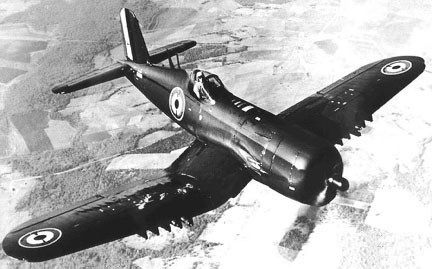
The 1942 F4U-1A was an improved F4U-1 with a P&W R-2800-8, and later 2250hp -8W engine. 688 were built, including 360 to the Fleet Air Arm as the Corsair II and 173 to the RNZAF as Corsair. The wingtips were shortened 6″ and squared-off to fit the lower ceilings of the British carrier hangar decks, and the cockpit was re-arranged with British radio, new seat and harness, other mods.
By August 1943 both Goodyear (FG-1 – fixed wing) and Brewster (F3A1) had joined Chance Vought in the production of Corsairs. Goodyear built FG 1Ds were distinguished from the F4U 1D by clear blown canopies, underwing rocket launching stubs and starting courtesy of a electric battery cart rather than cartridges.
It was at this time that the British Royal Navy gladly accepted 95 early F4U-1 models, designated Corsair Mk.1s, for carrier service. F4U-1B was the temporary production designation for 1943 exports for Great Britain but was never applied in deference to aircraft taken from USN production batches. About 605 went to the Fleet Air Arm as Corsair I, and 370 for the RNZAF. The Royal Navy, after clipping eight inches off each wing to enable the fighters to be fitted underneath the flight deck, operated the Corsair in the European theatre alongside their Fleet Air Arm Wildcats, Hellcats and Seafires.
A total 4,102 of all F4U-1 variants were built. Modified with water injection, raised cockpit, and canopy redesign after the first 1,550 units.
Vought F4U-1B with shortened wingtips
A notable operation was the attack by HMS Victorious-based Corsairs on the German pocket battleship Tirpitz in Kaa Fjord. By April 1944 Royal Navy Corsairs were in operation in the Pacific.
The XF4U-3 of 1946 was an experimental high-altitude fighter version with twin turbochargers. Three prototypes for the Goodyear FG-3 were conversions from F4U-1As 02157, 17516, and 49664.
Vought XF4U-3
One F4U-1 was modified in 1944 to a XF4U-3B ground-attack fighter powered by a P&W R-2800-16 with an external turbo-supercharger.
In 1943 five XF4U-4 prototypes with 2450hp R-2800-18W engines were built, 80759 to 80763, plus two were modified from F4U-1A as XF4U-4X, 49763 and 50301, one of which tested with Aeroproducts’ twin counter-rotating props in 1945.
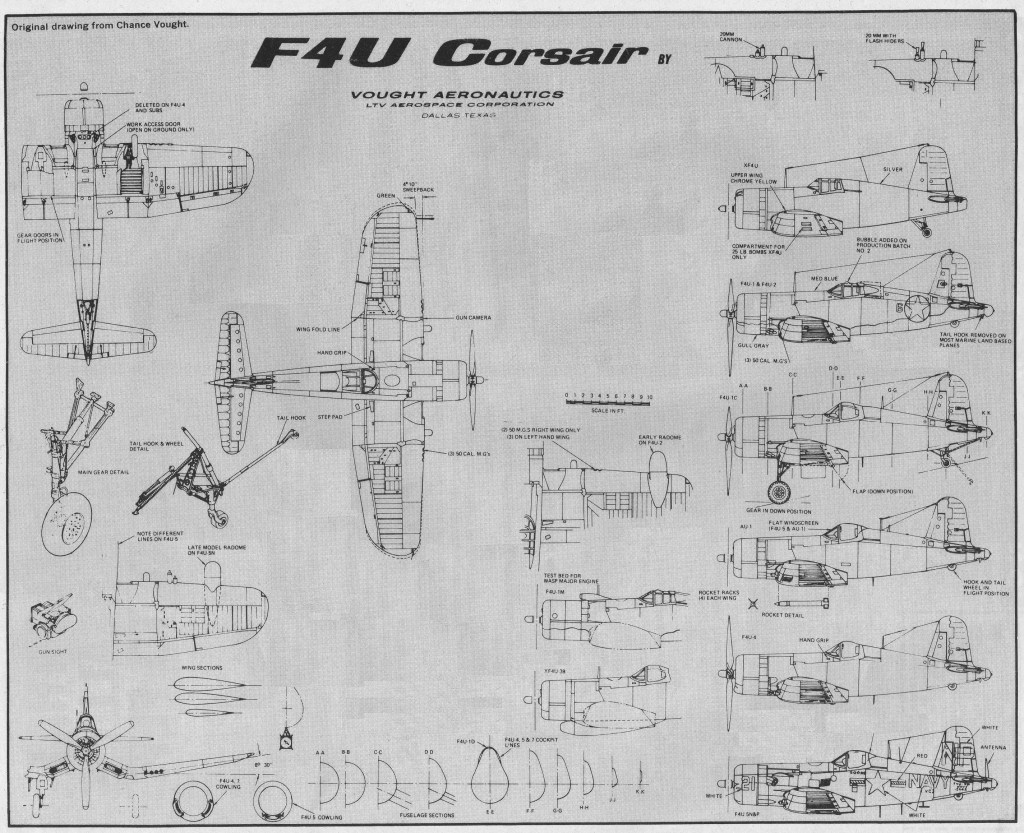
Two hundred F4U-1A were modified from 1943 to F4U-1C close-air-support version with four 20mm cannons. These first saw combat at Okinawa.
Vought F4U-1C
The US Navy accepted the F4U-1D in April 1944 for carrier trials – the new designation covering a multitude of modifications such a full plexiglass canopy to replace the metal braced flat sided canopy of the -1, a higher placed pilot’s seat for improved visibility, longer stroked oleos, modified aileron mechanism to improve control at low speeds, and more power from a water injected P&W R2800-8W. The Corsair remained a difficult aircraft for US carrier operations.
Vought F4U-1D
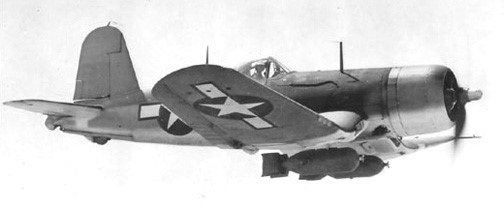
Also built as the Goodyear FG-1D the fighter/bomber was equipped with 160-gal drop tank, bomb racks, under-wing rockets. 150 of the F4U-1D were built, going to the Fleet Air Arm as Corsair II and 190 to the RNZAF as Corsair.
After six months the US Navy cleared the Corsair for combat duty, the first operation unit (VF17) flying from New Georgia as a shore-based squadron. It was not until late in 1944 that a Corsair-equipped Marine squadron (VMF124) joined the USS Essex and proved highly successful against Kamikaze attacks. By the end of the Okinawa campaign all US Navy carriers were equipped with Corsairs.
A 1943 night-fighter version, the XF4U-2 was operated by an American specialist unit flying out of Munda on New Georgia with two machine guns removed and an early mark of airborne interception radar (an APS-4) mounted on the right wing leading edge and an autopilot fitted. The XF4U-2 was a conversion from F4U-1 02153.
Vought F4U-2
Thirty-two were converted from F4U-1s by NAF, and two from F4U-1As in the field.
Charles Lindberg, acting as a civilian technical representative for United Aircraft in the Pacific combat area, pioneered the process of doubling the Corsair bomb load from 2000 to 4000 lbs.
Re-introduced in the early -1D were wing leading edge fuel tanks, small 62 gallon unprotected units outboard of the gunbays. Most, later F4U-1Ds differed in having the outboard-wing leading edge fuel tanks deleted and hard points for bombs or external fuel tanks installed under the centre section.
The RNZAF was issued with 424 of these aircraft; thirteen squadrons eventually used the aircraft. Corsairs in RNZAF service did have their problems – predominately centering on the complex hydraulic system, the engine, bombracks, brakes, and ailerons – the main spar of which rotted out after about a year due to water. The F4U-1 wing tanks on the leading edges wept petrol through rivet holes after a few months service due to the vibration of the Brownings, and caused these tanks to be sealed off. This was the primary difference between the F4U-ls and the -1Ds in the RNZAF. FG-1D’s were similar to F4U-1Ds but introduced a clear blown pilot canopy and rocket launching stubs underwing.
With dive brakes extended, the airspeed would stabilise at about 300 knots, but in the clean condition, the aircraft was permitted to indicate 420 knots between 7,500 feet and sea level, which was 470 knots true airspeed.
As early as 1941 the US Navy had requested better high altitude performance from Chance Vought and, in July 1944, the F4U 4 with an uprated Pratt and Whitney R2800 18W engine with water/methanol and driving a four bladed propeller, and new cowl design, made its first test flight. The 4 proved to have a top speed of 425 mph (680 kph) at 28,000 feet, compared with the 1 of 392 mph (630 kph) at 24,000. The first F4U 4 went into service in January 1945, being operated until the end of the Korean War as a carrier borne fighter bomber. Production was also scheduled by Goodyear as FG-4, but the contract was cancelled and none were built.
Vought F4U-4
In 1945 287 F4U-4B were scheduled for the Fleet Air Arm as Corsair I, but were cancelled with the end of hostilities.
Two-hundred and ninety-seven of the 1945 F4U-4C were built, with 20mm cannons.
The 1946 V-354 was a two-place trainer conversion of F4U-1 for Navy evaluation but, with the impending jet age, no contract was offered. USN mark 49763 was possibly assigned, which listed as an F4U-4XA.
Possibly only one of the 1946 F4U-4E night fighter with APS-4 radar was built, and the single F4U-4K was a radio-controlled target.
There was one F4U-4N in 1946 which may have been an upgrade of an F4U-4E with a wing-mounted APS-6 radar.
Vought F4U-4N
About 1946, nine aircraft were modified to F4U-4P Photo-recon aircraft.
The F4U-5 was developed to meet a high altitude fighter requirement for the United States Navy in 1947. It differs from the F4U-1 and FG-ID series in a number of respects; a four bladed propeller, twin cheek inlets on the cowling for the side mounted superchargers, metal covered outer wing rear panels (instead of fabric aft of the main spar) to reduce drag and a slightly more bulged canopy to improve rearward vision. The uprated 2850 hp R-2800-32W engine was titled downward 2.75′ to improve stability and forward vision.
Although most contracts for fighters were cancelled at the end of WW2 the Corsair remained in production. Only 5 F4U-5 were built in 1947, 61 in 1948, and 69 in 1949.
F4U-5
The last of 14 F4U-5N was delivered to the US Navy on 22 October 1951. The winterised F4U-5NL had a production run of 100 during 1950-51.
The F4U 5N night fighter variant differs significantly from the 1 model in having different engines, propeller, cowls and exhaust system as well as a later style canopy with a raised section aft.
The XF4U-5 first flew on 4 April 1946 and introduced a new engine. The wings were totally skinned in metal and ailerons were given spring tabs. Heaters were provided for the windshield, gun bays and pitot head. Three were converted from F4U-4. A total of 223 production F4U-5 were built from 1946, featuring all-metal wings.
The 1947 F4U-5P was an armed photo-recon version. Thirty were built: 122167 to 122206.
Similar to the F4U-5, a low altitude version with the R-2800-83W engine and increased armour was originally designated F4U-6, and later AU-1. Built in 1951, the prototype, 124665, first flew on 29 December 1951.
Vought F4U-6
Built from 1952 as a USMC low-altitude fighter and ground support aircraft featuring a narrow cowling, wing oil coolers move to inside fuselage; added armor, and bomb/rocket wing racks. The F4U-6 designation was never applied; redesignated AU-1 instead. 111 went to the USMC squadrons in Korea (129318-129417, and 133833-133843). Veteran aircraft were overhauled and sold to the French AF in 1955.
90 F4U-7 were built in 1952 for the French AF in Indochina. The last prop-driven fighter built in the US.
Vought F4U-7
Forty-four F4U-5N night fighters were built from 194, 124665 to 124709. Some 75 winterised F4U-5Ns were built for service in Korea as F4U-5NLs with wing and empennage boots, propellor de-icer shoes and windshield de-iceing, 124504 to 124560, and 124710 to 124724. The F4U-5N had the APS-19A radar. The last operational Corsairs in United States Navy services were withdrawn in December 1955 and the last of the Reserve Squadron F41J-5s were retired in June 1957.
F4U-5NL Corsair
During the Korean War the US Navy used 27 F4U day squadrons. In addition VC-3 flew F4U-5NL night fighters with attachments on every carrier.
The F2G-1 was the “Sprint” Corsair developed by Goodyear in 1945 using the Wasp Major engine. Only 17 were built. The Goodyear F2G is distinguishable from the Chance-Vought Corsair by having a clear blown canopy.
The last Corsairs to see actual air to air combat were those of the Honduran Air Force during the 11 19 border war between Honduras and El Salvador. On 17 July 1969 a Honduran pilot flying an F4U 5 shot down a P 51D Mustang and two FG 1 Corsairs. The Honduran Corsairs were subsequently sold to collectors in the USA. The aircraft was used by the French naval air arm during the Suez operations in 1956.
In production from 1941 to 1953, a total of 12,571 were built. Final production on 26 January 1953 ended the longest production record of any airplane built up to that time.
The combat record in the Pacific was 189 F4Us were lost both in combat and non-combat (but excluding training) in destroying 2,140 Japanese aircraft.
Variants: XF4U-1 – Prototype VS-317 Modifications on XF4U-1 F4U-1 – Production, seat moved aft 3 ft VS-321 Modifications on F4U-1 VS-323 F4U-1 with Wright R-3350 engine VS-324 Modifications on F4U-1 VS-325 Modifications on F4U-1 F4U-1B – Production for British Royal Navy F4U-1C – Four 20 mm cannon F4U-1D – Twin pylons for fuel tanks or bombs F4U-1P – Photographic equipment XF4U-2 – Special night fighter, radar gear F4U-2 – modified by Navy as night fighter VS-331 XF4U-3 – projected turbosupercharger version XF4U-4 – new engine, propeller, cowling, carberator V-334 F4U-4 – basic production version V-336 F4U-1WM (F4U-1 with P&W R-4360 Wasp Major) V-342 F4U with E engine F4U-4B – Produced for Royal Navy F4U-4C – Four 20 mm cannon F4U-4N – night fighter version F4U-4P – Photographic version F3A-1 – Manufactured by Brewster F3A-1D – Mrewster model of F4U-1D FG-1 – Manufactured by Goodyear (F4U-1) FG-1D – Goodyear version of F4U-1D FG-1E – Radar equipped FG-3 – Turbosupercharger version F2G – 3000 hp engine version XF4U-5 – New P&W engine, supercharger V-351 F4U-5 – R-2800-32(e) engine, max speed 480 mph V-354 F4U two seat advanced trainer V-376 F4U for Perú V-361 F4U-5 variant F4U-5N – Night fighter version F4U-5P – Photographic version F4U-5NL – Winterised version for Korea AU-1 – Low altitude attack version, Korean war F4U-7 – Same as F4U-4 for French Navy
Specifications:
Vought F 4 U Corsair Engine: Pratt & Whitney R 2800 18W Double Wasp, 2416 hp Length: 33.661 ft / 10.26 m Height: 14.764 ft / 4.5 m Wingspan: 40.912 ft / 12.47 m Wing area: 313.986 sqft / 29.170 sq.m Max take off weight: 14672.1 lb / 6654.0 kg Weight empty: 9205.9 lb / 4175.0 kg Max. speed: 388 kts / 718 km/h Service ceiling: 41503 ft / 12650 m Wing load: 46.74 lb/sq.ft / 228.00 kg/sq.m Maximum range: 1356 nm / 2511 km Range: 873 nm / 1617 km Crew: 1 Armament: 6x cal,.50 mg (12,7mm), 2x 454kg Bomb./ 8x 5″-Rocket
F4U-1 / V-166B Engine: Pratt & Whitney R-2800-8(B) Double Wasp, 2000 hp Wingspan: 40 ft 11.75 in / 12.48 m / British 39 ft 7 in Length: 33’4″ Useful load: 3057 lb MAUW overload: 14,000 lb. Max speed: 417 mph Top speed: 392 mph (630 kph) at 24,000 ft Cruise speed: 182 mph Stall: 87 mph Range: 1015 mi Ceiling: 36,900 ft
F4U-1A Engine: P&W R-2800-8, later -18W Double Wasp, 2450 hp Wingspan: 40 ft 11.75 in / 12.48 m / British 39 ft 7 in Length: 33 ft 8.25 in / 10.27 m Empty weight: 8873 lb / 4025 kg MAUW: 14,000 lb / 6350 kg Max speed: 395 mph / 635 kph ROC: 2890 fpm / 880 m/min Service ceiling: 37,000 ft / 11,280 m
F4U-1D Engine: Pratt & Whitney R2800-8W Double Wasp, 2000 hp. Length 33.3 ft. (10.15 m.). Wing span 41 ft. (12.5 m.). Weight empty 8,980 lb. (4,070 kg.). Max wt: 5,465kg (12,039 lb). Crew 1 pilot. Armament 6 x 0.50 in. machine guns, 2 x 1,000 lb. (450 kg.) bombs; or 8 x 5 in. (13 cm.) rockets. Max speed 417 mph (670 kph). Range 1,015 miles (1,630 km.).
XF4U-3 Length: 33 ft 4in 4 Max speed: 412 mph Cruise: 180 mph Stall: 83 mph Range: 780 mi Ceiling: 38,400 ft
XF4U-3B Engine: P&W R-2800-16
XF4U-4 Engine: R-2800-18W, 2450hp
F4U-4 Engine: Pratt & Whitney R-2800-32(E) Double Wasp, 2850 hp Prop: four-blade Wingspan: 40 ft 11.75 in / 12.48 m / British 39 ft 7 in Length: 33 ft 8.25 in / 10.27 m Useful load: 3215 lb Max speed: 446 mph Top speed: 425 mph (680 kph) at 28,000 ft Cruise speed: 215 mph Stall: 89 mph Range: 1005 mi Ceiling: 41,500′ Armament: six .50 guns, eight wing rockets Bombload: two 1000 lb
XF4U-5 Engine: Pratt & Whitney R2800-32W Double Wasp, 2850 hp. Engine: P&W R2800-8W Double Wasp 18-cylinder radial, 2,000 hp Wing span: 41’0” Length of 33’4.5”. Sevice ceiling: 37,000 ft. Range: 1015 sm Armament: 4 x 20mm
F4U-5 Engine: Pratt & Whitney R-2800-8(B) Double Wasp, 2000 hp Wingspan: 40 ft 11.75 in / 12.48 m / British 39 ft 7 in Length: 33 ft 8.25 in / 10.27 m Empty weight: 9900 lb / 4490 kg MAUW: 15,079 lb / 6840 kg Max speed: 462 mph / 744 kph ROC: 4800 fpm / 1463 m/min Service ceiling: 44,000 ft / 13,400 m Range: 1120 mile.
F4U-5N Engine: Pratt & Whitney R2800 Double Wasp, 2850 hp. Length: 34 ft 6 in Max speed: 470 mph. Range: 1120 mile.
F4U-5NL Engine: 2,100 h.p. R2800 Span: 40 ft. l1.75 in Weight: 13,300 lb. Max. Speed: 470 m.p.h. Armament: 4×20 mm. Cannon
F4U-7 Engine: Pratt & Whitney R-2800-18W Double Wasp two-stage superchargers, 2100 hp Wingspan: 40 ft 11.75 in Wing area: 314 sq.ft Length: 34 ft 6.5 in Height: 14 ft 9.25 in Empty weight: 13,426 lb Normal take-off weight: 13,426 lb Fuel capacity internal: 195 gal Fuel capacity external: 2 x 125 gal Max speed: 450 mph at 25.000 ft Armament: 4 x 20 mm cannon Bombload: 4000 lb
F2G-1 Engine: Pratt & Whitney R-4360 Wasp Major, 3000 hp. Wingspan: 40 ft 11.75 in / 12.48 m Length: 33 ft 8.25 in / 10.27 m
FG-1D Engine: Pratt & Whitney R-2800-8W.
AU-1 Engine: 2100 hp Pratt & Whitner R-2800-83WA Wingspan: 40 ft 11.75 in Length: 34 ft 6.5 in Height: 14 ft 9.25 in Wing area: 314 sq.ft Empty weight: 10,418 lb Loaded weight: 13,300 lb MAUW: 19,398 lb Max speed: 470 mph ROC: 4800 fpm Service ceiling: 40,000 ft Range: 1120 mi Armament: 4 x 20mm cannon
Lewis & Vought Corporation was renamed Chance Vought Corporation after First World War. From 1922-1926 produced UO-1 observation float biplanes (developed from VE-7/9) and FU-1 catapult fighter seaplanes for U.S. Navy, followed in 1927 by O2U observation landplanes for same customer, first of several Vought designs to bear the name Corsair. Moved to East Hartford, Connecticut, in about 1930, where until 1935 it continued the Corsair series with 03U observation biplanes and similar SU scouts, again for U.S. Navy. Became Chance Vought Division of United Aircraft Corporation in 1934, initially continuing production at East Hartford of O3U/SU Corsairs. These were followed by Vought SBU two-seat scout-bomber, designed in 1932 and produced for U.S. Navy between 1935-1937. In 1928, Boeing Airplane and Transportation Corporation went public and the stock sold quickly. Encouraged, Boeing formed the United Air¬craft and Transport Corporation, which included Boeing Airplane Company, Pratt & Whitney, Chance Vought, Sikorsky, Hamilton Propeller, Pacific Air Transport and Boeing Air Transport. In 1934, Boeing was informed by the U.S. Government that he was violating the new antitrust laws. He resigned as chairman, sold out his stock and the corporation was divided into three new companies –United Air Lines to handle air transport, United Aircraft Corporation to take over the eastern manufacturing firms and Boeing Airplane Company to manage Western operations.
From 1936 concentrated primarily upon manufacture for the US Navy, major programs including the SB2U Vindicator scout-bomber, OS2U Kingfisher observation aircraft, and F4U Corsair single-seat naval fighter. Of the massive production of the wartime Corsair, which continued until 1952, Vought alone built more than 7,700.
Joined with Sikorsky Division of UAC in April 1939 to form Chance Vought and Sikorsky Aircraft Division of United Aircraft Corporation. Vought and Sikorsky were reconstituted in January 1943 as separate manufacturing divisions of UAC, so that Sikorsky could concentrate on helicopter development and Vought on combat aircraft, primarily the F4U and OS2U. On 1 July 1954 the company became independent of UAC, under the new name of Chance Vought Aircraft Inc. Chance Vought moved headquarters to Stratford, Connectictut. Vought-Sikorsky products at this time included the Sikorsky-designed VS- 43 and VS-44 flying-boats and the historic VS-300, the world’s first fully practical helicopter, from which the production R-4 and R-5 and later designs were developed. After the war, Chance Vought Aircraft Division moved to Dallas, Texas, in 1948-1949, and produced its first jet fighter for the US Navy, the F6U Pirate. Became Chance Vought Aircraft Inc. after becoming separate and independent from UAC on July 1,1954. Main product during this stage of its history was the unorthodox F7U Cutlass, in production 1952-1955 for the U.S. Navy. Deliveries began also in 1957 of the F-8 (originally F8U) Crusader, development and production of which continued as the LTV F-8 after further company metamorphoses into Chance Vought, Chance Vought & Sikorsky VS-44A Excalibur flying-boat, Chance Vought F7U Cutlass carrier-based fighter Corporation (from December 31,1960), and a merger on August 31,1961 with Ling-Temco Electronics Inc. to form Ling-Temco-Vought Inc.
Within the latter structure, Vought became, successively, the Aerospace Division of LTV, then Vought Aeronautics Company (Division of LTV Aerospace Corporation). Corsair II production under the name of the Vought Corporation. In 1964 in combination with Hiller-Ryan developed the XC-142A VTOL transport with swivelling wings. LTV Electro-systems developed the L450F quiet reconnaissance aircraft in 1970.
Since January 1, 1976 it has continued its activities as Vought Corporation, a subsidiary of the LTV Corporation.
Undertook considerable subcontract work, including on B-2 and many transport aircraft. Teamed with Argentina to propose Pampa 2000 for JPATS program, but not selected. Took name Vought once again in 1992. Became LTV Aircraft Products Group in 1986 and LTV Aerospace and Defense Company 1990. Following 1992 sale of 49 percent stock in LTV to Northrop and Carlyle Group, became Vought Aircraft Company, finally merging as a division of Northrop Grumman in 1994 after remaining stock purchased, becoming Northrop Grumman’s headquarters for its Commercial Aircraft Division.
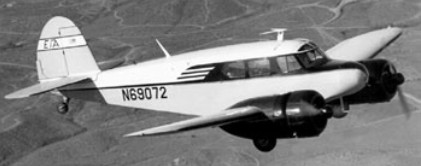
Dwane Wallace and his company perceived the untapped twin engine market as being for a relatively inexpensive and uncomplicated airplane. The prototype T 50 was a simple airplane. It had fixed ¬pitch props and small (225 hp) Jacobs en¬gines, but constant speed propellers and 20 more horsepower per side were later fitted. The props were not full feathering, and could only be pulled into full coarse pitch in the event of an engine failure. The design used al¬most no aluminum (only the nose cap, tail stinger, engine cowlings and nacelles) at a time when aluminum was far too valuable to waste on trainers. The T 50’s fuselage was welded steel tubing with fabric over wood longerons and formers, and the wing was all wood spruce, mahogany and birch under fabric. The flaps were wood also, and they and the gear were both driven through bicycle -chain loops by a pair of electric motors in the belly. The screw jack actuator for the gear was non-reversible, so no down locks or up¬latches were needed. The landing gear retracts upward into the nacelles and remains partly exposed so that belly landings can be made with little or no damage if the flaps are up. An unusual feature of the Jacobs engine is that it operates on only one magneto, plus battery ignition. It is started on the battery, then switched to the mag. Both engines turn generators, and they run smoothly on ignition if a mag fails. The T-50 prototype makes its first flight with Dwane Wallace at the controls on March 26, 1939. The plane was certified in December 1939. By 1940, it was in production and ready for buyers. Cessna only had time to make a few commercial T 50s before rumors of war reached American ears. The Army showed a polite interest in the T 50 as a trainer for bomber pilots, and ordered 33 specially equipped T-50’s – at the time, the largest order in Cessna’s history. The Army’s new planes are designated AT-8’s. The Army Air Corps’ first Bobcats were AT 8s, and they were, in fact, the service’s first multi-engine trainers of any sort. The AT¬8 had 290 hp nine cylinder Lycomings in place of the civilian airplane’s seven cylinder 220kW / 245 hp Jacobs R-680-9 engines, plus the eyebrow windows and transparent cockpit roof that henceforth all military T 50s would have. Service trials showed that these were unnecessarily powerful for use in a two-seat trainer, and when in 1941 the first real production contracts were placed, less powerful engines by the same manufacturer were specified. The British decided to ship their students to Canada for flight instruc¬tion, so it fell to Canada to come up with the necessary training planes. Prior to that, they’d sold four to the CAA [as airways fa¬cility check planes] and 33 to the Air Corps, but the big sale was the first 180 airplanes to the Canadians dubbing them “Cranes”. The Canadians called the T¬50s Cranes and eventually got 830 airplanes. One extra thing the Canadians wanted was a third fuel tank, installed in the fuselage be¬neath the rear seat; the two 60 gallon wing tanks were only good for about three hours, and 40 gallons in the fuselage gave the Crane an extra hour or so. The Crane wasn’t certified for civilian use with the third tank, and the filler cap opening was covered over in surplus Canadi¬an T 50s (and later U.S. versions that also got the mod) after the war. The Canadians soon reverted to wooden fixed pitch props, because of a lack of metal for blades and perhaps because they figured the airplane was going nowhere but down anyway if an engine stopped. For the Commonwealth Joint Air Training Plan, eventually 550 aircraft were supplied under Lend-Lease. The original use of Cessna’s T-50s had been in a light transport role, and in 1942 the USAAF decided that these aircraft would be valuable for liaison/communication purposes and as light personnel transports. The aircraft were named Bobcat and given the designation C-78, later changed to UC-78. In addition, a small number of commercial T-50s were impressed for service with the USAAF under the designation UC-78A.
The USAAF’s requirement for the two-seat conversion trainers had been difficult to predict, and when it was discovered in late 1942 that procurement contracts very considerably exceeded the training requirement, Cessna was requested to fulfil the outstanding balance of the AT-17B and AT-17D models as UC-78B and UC-78C Bobcats respectively. Both were virtually identical, but differed from the original UC-78s by having two-blade fixed-pitch wooden-propellers and some minor changes of installed equipment. Production of these two versions amounted to 1,806 UC-78Bs and 327 UC-78Cs. (3,370 UC-78 Bobcats for the USAAF in total)
The initial production version, designated AT-17, was equipped with Jacobs R-755-9 engines driving wooden propellers. A total of 450 was built, and these aircraft were followed into production by 223 of the generally similar AT-17A, which differed by having Hamilton-Standard constant-speed metal propellers and a lighter maximum weight. The later AT-17B (466 built) had some equipment changes, and the AT-17C (60 built) was provided with different radio for communications. Of these 1,199 aircraft, 550 were delivered to Canada with the name Crane Mk 1A. They came in two gross weights, de¬pending on the wing construction used¬ – 5,100 and 5,700 pounds and their crew capacity was either two or five, depending on whether they had the fuselage aux tank.
In the period 1942-3, the US Navy had a requirement for a lightweight transport aircraft to carry ferry pilots between delivery points and their home bases, as well as for the movement of US Navy flight crews. This led to the procurement of 67 aircraft, generally similar to the UC-78, which entered service under the designation JRC-1. Many examples of USAAF Bobcats remained in service for two or three years after the end of World War II. Originally built with 245 hp Jacobs radial engines, some Bobcats later got 295 hp Lycomings, and others were re-engined with 300 hp Jacobs powerplants. With the addition of an exit-hatch window to meet safety requirements, some also have been converted to six-seaters, though normal seating is two pilots and three passengers on a single bench-type rear seat.
Bobcats have a large rudder, but the vertical stabilizer is small and minimum single-engine control speed is 90 mph. At 10,000 feet, full throttle gives 20″ of manifold pressure, and 1,900 rpm on the Hamilton Standard constant-speed props will yield 143 mph indicated.
Cessna AT-17 / T-50 Bobcat
There are four different single engine ceilings listed for the heavier of the two versions of the airplane, based on gross weights of 5,400 and 5,700 pounds, each calculated with fixed pitch and constant speed props. The best is 1,500 feet above sea level; the worst is sea level, with a minimum rate of descent of 50 feet per minute. There were several little ¬known Bobcat variants and derivatives, though none of them ever progressed much beyond the prototype stage. The first was the Cessna P 7, a Bobcat with plywood covered wings and tail surfaces and 330 hp Jacobs engines. The second was the P 10, a Wichita mini-version of the de Havilland Mosquito, it was a two place P 7, with the big Jacobs en¬gines and a plywood covered fuselage, a little snub nose and a pair of side by side seats un¬der a bubble windscreen and roll back cano¬py. Finally, there was the P 260, which had the Bobcat’s wing planform, fabric covered fuselage arrangement and formation of boil¬ers nacelles; but it was a 14,000 pound car¬go hauler with R 1340 Pratt & Whitneys. It almost made it into production the Govern¬ment was about to buy 500 of them as C¬106As except the C-47 turned out to be more useful than any¬body had expected. In early 1944, Cessna suspends production of the Bobcat and begins manufacturing components for the Douglas A-26 and Boeing B-29 bomber. More than 5400 T-50s were constructed for the RCAF and the US military.
Cessna UC 78 Bobcat Engine: 2 x Jacobs R 755-9, 242 hp Length: 32 ft 9 in / 9.98 m Height: 9 ft 11 in / 3.02 m Wingspan: 41 ft 11 in / 12.78 m Wing area: 295.041 sqft / 27.410 sq.m Max take off weight: 5699.9 lb / 2585.0 kg Weight empty: 3501.5 lb / 1588.0 kg Max. speed: 170 kts / 314 km/h / 195 mph Cruising speed: 152 kts / 282 km/h Service ceiling: 22,000 ft / 6705 m Wing load: 19.27 lbs/sq.ft / 94.00 kg/sq.m Range: 652 nm / 1207 km / 750 miles Crew: 2 Passenger: 3
UC-78 Bobcat Engine: 2 x Lycoming R-680-9 radial, 220-kW (295-hp).
JRC-1 Engine: 2 x Lycoming R-680-9 radial, 220-kW (295-hp).
Crane Mk I Engine: 2 x Lycoming R-680-9 radial, 220-kW (295-hp).
Crane Mk 1A
AT-8 Engine: 2 x Lycoming R-680-9 radial, 220-kW (295-hp).
AT-17 Engines: 2 x Jacobs 8-775-9, 183kW (245 hp). Wingspan: 12.80m (41 ft 11 in). Length: 10m (32ft 9in). Max TO weight: 2258 kg (5,700 lb). Gross weight: 5,700 lb. Empty weight: 4,050 lb. Fuel capacity: 120-160 USG. Max speed: 195 mph at sea level. Cruise: 165 mph. Landing speed: 65 mph. Initial climb rate: 1,525 fpm. Ceiling: 15,000 ft. Operational range: 750 miles. Seats: 4-6.
Clyde Vernon Cessna was born in Iowa on December 5th, 1879. His family moved to Kansas when he was two years old, and he grew up on a farm and began helping out as soon as he was able. Clyde had a natural mechanical ability and loved to take equipment apart and reassemble it. Even from an early age, he used his self-taught skills and a natural aptitude to both improve the efficiency of farm equipment and develop better methods of farming. Eventually, Clyde’s love for the mechanical spread to cars, and he became a successful car dealer in Enid, Oklahoma.
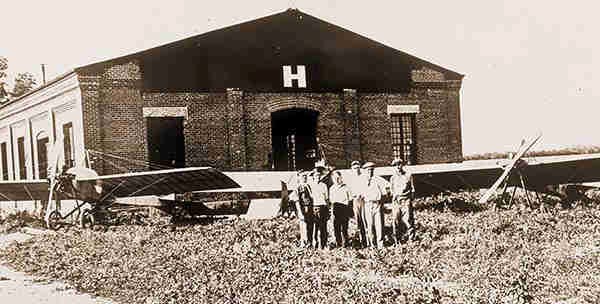
Clyde Cessna built his first aircraft at Enid, Oklahoma, in the spring of 1911. Built and flew several more before moving to Wichita, Kansas, in 1917. Founded Travel Air Manufacturing Company with Walter Beech and Lloyd Stearman on February 5,1925. The Travel Air Manufacturing Company was in es¬sence Waiter Beech, Lloyd Stearman and Clyde Cessna, all backed by Walter P. Innes. In 1926, Stearman quit to go it alone. Cessna followed a year later. Cessna’s bone of contention was that he thought the monoplane was the way to go, while Walter Beech felt there was life left yet in the biplane.
In 1910, Clyde witnessed an aerial exhibition that would dramatically change the course of his life. He was amazed by what he saw at the exhibition and decided to learn everything he could about flying and aviation. Moving to New York, he worked at the Queen Aeroplane Company for a short time, experiencing hangar life and learning how aircraft were constructed. Though Clyde wasn’t there long, he soaked up all the information he could and would use that knowledge to create his first monoplane.
In 1911, finding inspiration from the American version of the Bleriot XI, Clyde created his first monoplane using linen and spruce. This initial creation was known as the “Silverwing,” and was powered by an Elbridge 4 cylinder motorboat motor with 40 hp.
Between 1912 and 1915, he created a number of monoplane designs, all powered by an Anzani 6-cylinder engine, providing between 40 and 60 hp. During this time, he also took to the skies flying for holiday events and county fairs, something which proved surprisingly lucrative. This also earned Clyde Cessna the distinction of being the only man to construct and fly an aircraft between the rugged Rocky Mountains and the great Mississippi River.
In 1916, Clyde acquired a vacant building where he planned to build aircraft for the upcoming 1917 aviation exhibition season. Seeing the demand for aviation growing, he also opened a flight school that ran out of his new factory, quickly enrolling five students. Unfortunately, after the US entered World War 1 in 1917, the exhibition flying market came to a halt, putting a damper on Clyde’s primary source of income. And so he relocated back to his family farm in Kansas and resumed a farming lifestyle.
After WWI ended, there was a huge push for new aircraft and private flying, so in 1925, Clyde Cessna partnered with Lloyd Stearman and Walter Beech to create the Travel Air Manufacturing Company in Wichita, Kansas. Clyde served as the company’s president, and it soon became one of the leading US aircraft manufacturers. This was due in large part to Clyde’s advanced design ideas and the attention brought to their aircraft as the aircraft were used to set a variety of distance and speed records.
Clyde remained with Travel Air Manufacturing Company for 2 years but found his own interests gravitating toward monoplane designs while his partners were more interested in biplane designs. When he proposed a monoplane design without wing struts, his Travel Air associates dismissed the idea, claiming it was folly. This prompted Clyde to resign from the company and build a fully cantilevered wing monoplane on his own. This aircraft, known as the Comet, inspired him to start a new business focused on monoplanes.
Clyde Cessna started the Cessna Aircraft Company on 22 December 1927 in Wichita, Kansas, delivering his self-financed first aircraft on 28 February 1928 to a Pittsburgh customer for $6500. The aircraft was a Series monoplane, which developed into Airmaster and Model 195 series of four-seat cantilever high-wing cabin monoplanes.
Clyde V. Cessna and Victor H. Roos formed a partnership leading to the formation of the Cessna-Roos Aircraft Company on September 8,1927. Roos backed out, on December 22 the secretary of state approved a name change to Cessna Aircraft Company, and on December 31 the Cessna company was incorporated.
In September 1927, Clyde partnered up with aviation entrepreneur Victor Roos to create Cessna-Roos Aircraft. This partnership turned out to be very short-lived and only one month in, Roos chose to resign and sell back his interest in the company to Clyde. Finally in December that year, Clyde was able to drop Roos from the name and the Cessna Aircraft Company was born.
Clyde continued to perfect his monoplane design which included enclosing the cockpit. In late 1927, the company released the AW model, followed by the CW-6 which flew in 1928, and the DC-6 in 1929.
Production of “A” series (again with cantilever wings) began 1928, as did BW three-seater. Built DC-6 prototype 1929, followed by four-seat DC-6A and 6B.
Cessna tried to keep factory functioning during the Depression, producing 300 CG-2 primary gliders, but finally had to close in 1931.
In 1929, Clyde began collaborating with his son Eldon on the CR series of racing aircraft. However, the Great Depression hit and even though the company was able to keep its doors open longer than most, the Cessna Aircraft Company eventually declared bankruptcy and closed its doors in 1931.
Though they closed the company, Clyde and Eldon started a new business building custom racing aircraft for few years.
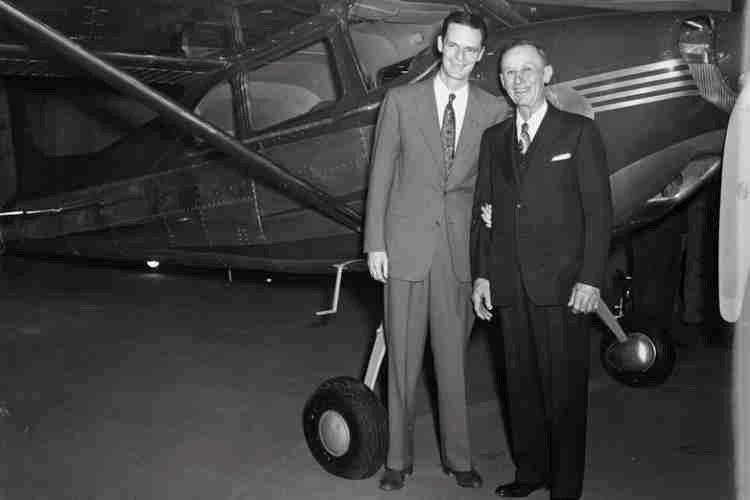
In 1934, Clyde’s nephew’s, Dwane and Dwight Wallace approached him with a plan and persuaded him to reopen the company and take control once more. The pair contacted all of the Cessna Aircraft Company stockholders and let them know that if they allowed Clyde to come back as president and resume construction of aircraft, then they and Clyde would all work for free until the company began to show a profit. After being forced out of the company in 1931, Clyde is re-instated as president January 17, 1934. Clyde returned to his role as president, with Dwane Wallace serving as the general manager at the young age of 23.
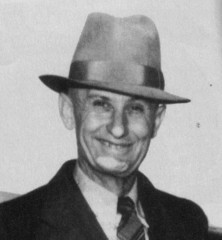
Dwane Wallace and Clyde Cessna
It’s not known exactly why, but whether because of a family dispute, a lack of interest in working for free or some other reason, Eldon did not rejoin the company and instead moved to California where he began working as a design engineer for first the Douglas Aircraft Company, then North American Aviation, and finally Rockwell International. During this period, he helped with the designs for both the P-51 Mustang and the F-86 Fighter Jet.
Finally, in 1936, Clyde Cessna retired from the aviation business, selling his interests to his nephews and returning to a life of farming. During his two-year return from 1934-36, it is said that Clyde had served more in a ceremonial capacity and stayed out of the day to day functioning of the company.
Factory reopened 1934, but Clyde sold his interests and company continued to be run by his son, a nephew, and T. Salter. Went on to develop highly successful Airmaster series and in 1939 the first Cessna twin, the T-50 five-seat cabin monoplane. Latter built in large numbers including nearly 1,200 Crane trainer versions for the RCAF. Adopted also by USAAF, U.S. Army and Navy, and over 5,000 produced during Second World War, serving in all theaters. After the war Cessna began building light aircraft for private and business use. The most successful early models were Models 140 and 170, plus later Models 172, 305,180, and others which became world renowned. Model 305 used widely for liaison duties during Korean War and later as L-19/OE-1 Bird Dog (over 3,500 built). In 1952 Cessna acquired the Seibel Helicopter Company and the CH-1 four-seat helicopter was developed and built in small numbers.
1958 Cessna production included (from top to bottom) Model 310B, Skylane, Model 182, and Model 172.
In 1960 Cessna affiliates itself with Reims Aviation, S.A., Reims, France, and acquires McCauley, a manufacturer of propellers and other aircraft components.
In 1978, Clyde Cessna was posthumously inducted into the National Aviation Hall of Fame, and Flying Magazine placed him at number 27 on their list of “51 Heroes in Aviation.”
In 1972 Cessna became the world’s first company to have produced 100,000 aircraft. Production has included nearly 2,000 twin-engined jet trainers and A-37 strike aircraft for the U.S.A.F. and U.S. Military Assistance Program. Company’s Pawnee and Wallace divisions taken into Aircraft division in 1984, but company sold to General Dynamics in 1985 and then to Textron Inc in 1992. In July 1996 Cessna Single Engine Piston Facility opened in Independence, Kansas, to reintroduce production of single-engined light aircraft to Cessna range. Available Cessna aircraft were Cessna 172R and 172SP Skyhawk four-seat lightplanes as much refined versions of previous Skyhawk, four-seat 182S Skylane as refinement of previous Skylane versions, six-seat 206H Stationair and T206H Turbo Stationair as refinements of previous versions, 208 Caravan (first flown 1982) as single-turboprop commuter, business and cargo aircraft (among other uses) offered in four civil versions plus as U-27A for U.S. foreign military sales, and a range of business jets as six/seven-seat Model 525 CitationJet (first flown April 1991), nine/12-seat Model 550 Citation Bravo (first flown April 1995), nine/ten-seat Model 560 Citation Ultra and latest Ultra Encore (latter first flown July 1998), eight/ten-seat Model 560-XL Citation Excel (first flown February 1996), 15-seat Model 650 Citation VII (first flown February 1991), ten-seat Model 680 Citation Sovereign (for certification in year 2002), 11/14-seat Model 750 Citation X (first flown December 1993), CJ1 (for delivery from year 2000 as successor to CitationJet), and eight-seat CJ2 (to fly 1999).
On 27 November 2007, Cessna purchased Columbia Aircraft from bankruptcy for US$26.4M including its Columbia 350 and 400 line
In the immediate postwar period, the French aerospace industry launched several campaigns to reactivate the activities of aircraft manufacturers. This gave rise, among other things to the exceptionally competative “Air 100” glider allowing the French to later participate in the International Competition Soaring. Meanwhile, other French companies also studied various kinds of gliders during the war years including Guerchais Roche.
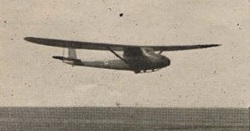
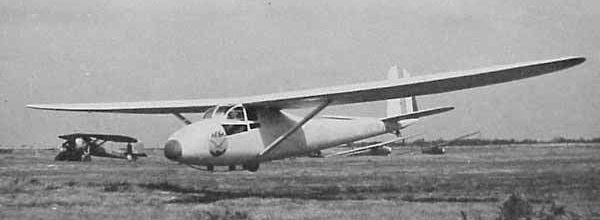
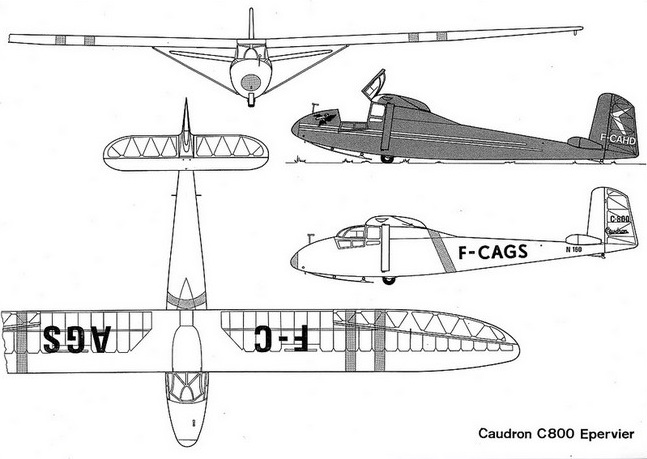
Caudron was also one of these and at the request of the Ministry of Youth and Sport, which was looking for a twin seat trainer glider for all the French gliding clubs, designed the C800 in 1941 for just that purpose.
The first prototype flew in the free zone in 1942, before the German invasion. The training glider has always been known as the Caudron C-800 although its production was undertaken by SNCA du Nord at Meaulte (Somme) after SNCAN had absorbed the Societe Anonyme des Avions Caudron-Renault at the end of 1945 and taken over its designs.
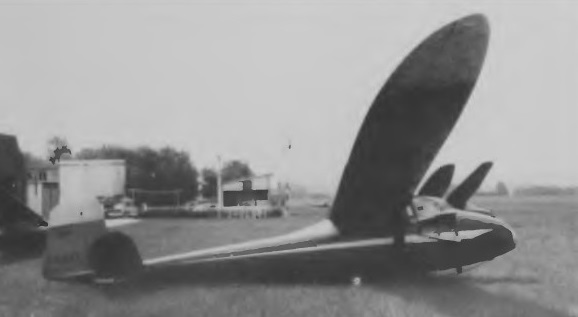
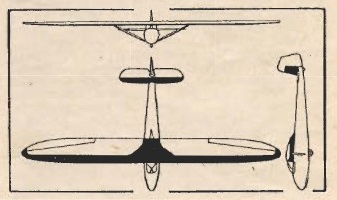
The C-800 is of conventional all-wood construction with mixed plywood and fabric covering; the high wing is braced and there is dihedral on the tailplane. The wing, with a wingspan of 16 m, was linen covered, as were the elevators and rudder. The landing gear consists of a fixed monowheel with brake with a sprung wooden skid under the forward fuselage and a tailskid. The two pilots have dual controls and there is an extra transparent panel below the cockpit canopy on each side that hinges downwards. The canopies complex appearance had numerous vertically opening sections and the whole was hinged at the top to allow the canopy to fall backward over the wing root. The seats were side by side and slightly offset, giving it an impressive fuselage width for a glider. Equipment includes spoilers, elevator trimmer, and complete panel of instruments.
In 1946 the French Government ordered no less than 300 C-800s for use at clubs and elementary flying training schools. Repeat orders were also placed, and the type was at first known as the Epervier (or Sparrowhawk), although this name did not catch on and was later applied to the Morane-Saulnier MS 1500 light COIN aircraft of 1957.
By November 1947, 250 had been built. About two dozen C-800s were still on the French civil register in 1979.
Performance flights have included: Climb to 17,000 ft at St.Auban, 11 November 1945 – unofficial French record French duration record, 17 hr 10 min, at Avignon French goal record, Beynes-Chateaudun, 63 miles
From 1944 following the end of WW II, more than 300 were built, particularly in the Aire sur Adour factory of the Fouga company and for more than 20 years the C 800 has been the French standard trainer glider, being inexpensive to fly, forgiving of trainee pilots, well known for its robustness and ease of servicing. It was able to achieve a high performance level in the hands of a good pilot e.g.: ceiling height of 5300 m, 17 hours duration, 180 km distance. It was also used by the French Air Force and Naval Aviation.
Span: 52 ft 5in Length: 27 ft 4 in Wing area: 237.3 sq ft Aspect ratio: 11.6 Empty weight: 530 lb MAUW: 930 lb Normal gliding speed: 45mph Max glide ratio: 19 @ 4 mph Min sink: 3.1 # 40 mph Vne: 100 mph
The Caudron 760 was a fighter, first flown in 1939 but in 1940 the entire production line was deliberately set on fire to prevent the type falling into German hands.
Gaston and Rene Caudron established an airplane factory as Caudron Freres at Romiotte (Seine) in 1910. Initial flight of the first of a series of highly successful biplanes (G.I, II, and III) was in February 1911. The G.III was considered extremely reliable and used widely as a trainer in the First World War. A single-seat monoplane trainer was produced in 1912. G.IIIAs were built for military use in 1914 and used extensively by France, U.K., Belgium, Russia, and Italy as two-seat reconnaissance/ artillery observation aircraft. Several hundred were built, mostly in France, but also by British Caudron and in Italy. The series continued with the G.IV (1915), several military variants, and also in that year the prototype R.4 three-seat bomber appeared. The R.II with five Lewis machine guns was produced a few months before the Armistice was declared.
The company had moved to Issy-les-Moulineaux (Seine) by 1919, and postwar products included the C 23 (and/or C 232) two-seat biplane, which inaugurated French commercial air services on February 10, 1919 with a flight from Paris to Brussels, the C 61 three-engined six/eight passenger biplane, a three-engined seven-seat development of C 61, the C 183, a further modernisation of two previous aircraft of which one only was built, in 1925.
The company, known as Societe Anonyme des Avions Caudron, ran into financial difficulties and was reorganized as Societe Caudron-Renault. Next became notable for distinctive streamlined aircraft from its designer Marcel Riffard, who joined in 1932. His C363 took second place in the 1933 Coupe Deutsch race, and developed versions took first three places in 1934 and 1935, and the first two places in 1936. Derivatives of these included the Rafale series of single- and two-seat sporting/racing aircraft of the late 1930s. Fifteen C 690Ms were built as advanced trainers for the Armee de I’Air. The series ended with the C 720. These were followed by the single-seat C 580 and C 680, C 600 Aiglon series, C 620/C 630 Simoun four-seat cabin monoplane, C 640 Typhon series, the C 670 ground-attack prototype, and the single-seat C 860, built in 1938 for an attempt (never made) on 1936 Paris-Tokyo flight record established by a Simoun. About 1,700 examples of C 440 (later AA.1) Goeland, twin-engined six-passenger transport were built in about ten years. Two series of light fighters were developed from the Coupe Deutsch racers. Following the C 710 and C 713 prototypes, the four-gun C 714 entered service. Improved variants of the CR 760 and 770 were under development when France collapsed. The factories built aircraft for Germany during the Occupation. Later nationalised as Ateliers Aeronautiques d’lssyles-Moulineaux, and incorporated into SNCAN in late 1947.
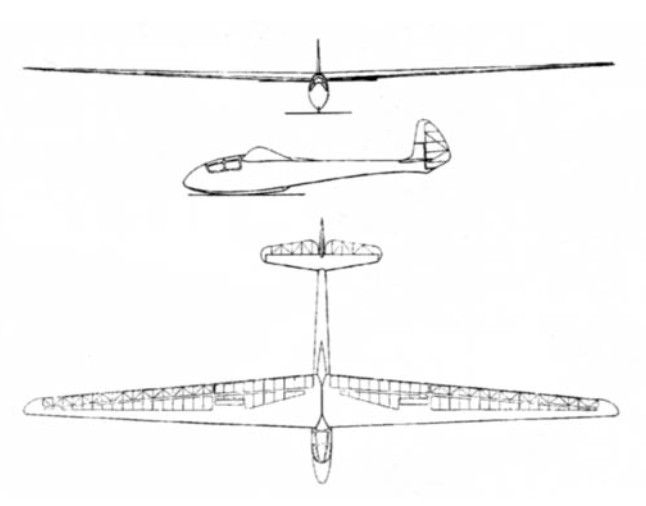
A 1948 2-seat wooden gull-winged sailplane, 18 m span
CM.7 Adour: [Project] 1941, for Commissariat général aux Sports Intended for sports flying, blind flying, and acrobatics instruction CM.7: Fouga-built model (Fouga CM.7 Adour), 2 built













 All Aero