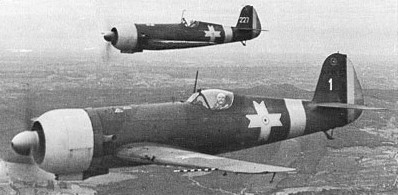
IAR IAR.80

Provisional design work on a monoplane fighter with retractable landing gears was privately started by a small JAR team in early 1936, to be abandoned at the end of the year due to lack of interest shown by authorities. Corrupt members of the Romanian government had already influenced the military to place a substantial order for the ill fated PZL P.11. However, the design was secretly warmed up in mid 1937 and eventually lead the prototype of an aircraft comparable to the main fighter designs of those pre war years.
Designed as a successor to the licence-built P.Z.L. P.24E by a team comprising Ion Grosu, Ion Cosereanu, Gheorghe Zotta and Gheorghe Vallner, the I.A.R.80 single-seat fighter was flown on 20 April 1939 in the hands of Capitan Aviator Constantin Pufi Popeseu, IAR’s chief test pilot. The prototype was powered by a 900hp I.A.R.-K 14-II C32 14- cylinder air-cooled radial based on the Gnome-Rhone 14K Mistral-Major and its armament consisted of two wing-mounted 7.92mm FN-Browning guns. The series-production I.A.R.80 appeared in the spring of 1940, and featured a 52cm increase in wing span, a 74cm increase in fuselage length, greater fuel capacity, an aft-sliding cockpit canopy, an armament of four 7.92mm guns and a 930hp I.A.R.-K 14-III C36 engine. The series model also discarded the tailplane bracing struts featured by the prototype.
The first flight of an initial series production dive bomber, the IAR 81, No 81, happened on August 16,1941. The I.A.R.80 achieved operational capability on 14 January 1941 with Flotilla 2 Vinatoare of the Royal Air Forces of Romania (Fortelor Aeriene Regal ale Romania), or FARR. The 50th and last of the initial series (No 175) left the production line in April 1942, and was fitted with an extra pair of guns, this six-gun armament being standardised for subsequent aircraft, which were designated I.A.R.80As, these also having racks for two 50kg bombs and being powered by the 1,025hp I.A.R.-K 14-1000A engine. Ninety I.A.R.80As were followed by 50 I.A.R.80Bs, with an armament of four 7.92mm and two 13.2mm guns, the 21st and subsequent aircraft of this batch having a further increase in wing span of 48cm and provision for underwing drop tanks. Manufacture of the pure fighter version of the basic design was completed with 50 I.A.R.80Cs – originally laid down as I.A.R.81Bs, which see – with 20mm Ikaria cannon replacing the 13.2mm weapons and reintroducing the tailplane bracing struts. A small number of I.A.R.80s remained in Romanian service until late 1949, after which survivors with the lowest hours were rebuilt as I.A.R.80DC tandem-seat dual-control advanced trainers.
The Junkers Jumo 211Da was not the only in line engine to be experimentally fitted to an IAR 80 airframe. At the end of June 1943, several test flights were performed with an IAR 80 fitted with a Daimler Benz DB 601Aa from a Messerschmitt Bf 109E.

IAR-80 prototype
1939
Engine: 870hp IAR K14-III C32
Wingspan: 10m
open cockpit
Armament: 2 [or 4?] x FN-Browning 7.92mm

IAR-80
initial production 1941
Engine: 930hp K14-III C36
Wingspan: 10.52m
Armament: 4 x 7.92mm
20 built

IAR-80 (No.13)
April 1941
Engine: 1100hp DB 601Aa (from Bf-109E)
Wingspan: 10.52m

IAR-80
late production 1941
Engine: 960 hp IAR K14-IV C32
Armament: 4 x 7.92mm
30 built

IAR-80A
Engine: 1025hp IAR K14-1000A
Armament: 6 x FN-Browning 7.92mm
reinforced rear fuselage, additional armour protection

IAR-80B
Wingspan: 11.00 m / 36 ft 1 in
Length: 8.97 m/ 29 ft 5 in
Height: 3.52 m / 11 ft 7 in
Wing area: 16.50 sq.m / 177.60 sq ft
Take-off weight: 2980 kg / 6570 lb
Loaded weight: 2200 kg / 4850 lb
Max. speed: 550 km/h / 342 mph
Range: 730km, drop tank 1030km
Armament: 4 x FN-Browning 7.92mm mg + 2 x FN-Browning 13.2mm mg
50 built

IAR-80B (No.326)
June 1943
Engine: 1475hp DB-605A for trials

I.A.R.80C
Wingspan: 11.00 m / 36 ft 1 in
Length: 8.97 m/ 29 ft 5 in
Height: 3.52 m / 11 ft 7 in
Wing area: 16.50 sq.m / 177.60 sq ft
Take-off weight: 2980 kg / 6570 lb
Loaded weight: 2200 kg / 4850 lb
Max. speed: 550 km/h / 342 mph
Armament: 4 x FN-Browning 7.92mm + 2 x 20mm Ikarus
50 built

IAR-80DC
Postwar conv. to 2-seat trainer (fuselage fuel tank removed)

IAR-80M
1944-45
conv. to uprate IAR-80 gun armament to IAR-81C standards

IAR-80
one conv.
Engine: 1600hp engine [Gnome-Rhône 14R?]
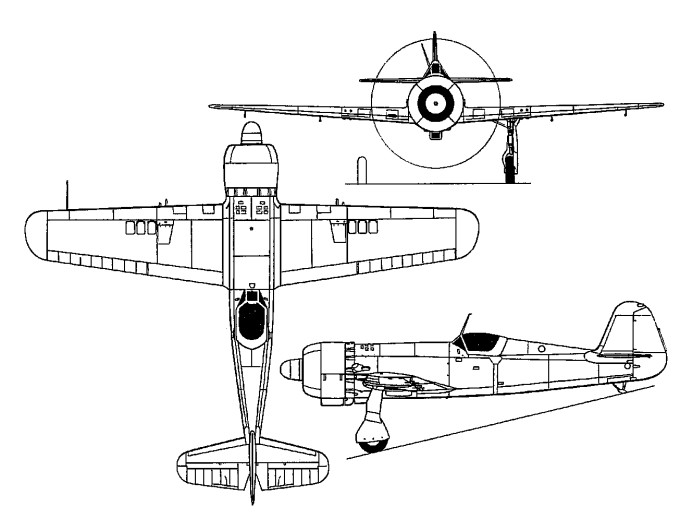
IAR IAR-47

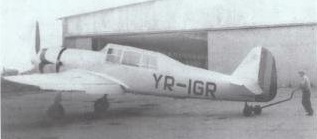
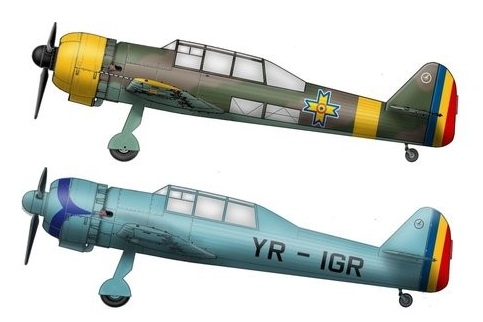
In 1940 three I.A.R.47 prototypes were under construction, intended to replace the I.A.R.39 in production. A low-wing monoplane recce bomber, the first was for static tests. The other two were of different design. They were a combination of the IAR 39’s fuselage with the IAR 80’s wings.

None of them were destroyed during US bombings, and at least one (YR-IGR) was still flying in 1956.

IAR-47
Engine: IAR K14 1000A, 960hp
Max Speeds:
at sea level: 396km/h
at 1000m: 406km/h
at 2000m: 419km/h
at 3000m: 435km/h
at 4000m: 456km/h
at 4300m: 464km/h
at 5000m: 460km/h / 304mph
Armament: 3 x 7.92mm Rheinmetall mg (2 fixed, 1 flex)
Bombload: 6 x 50kg

IAR IAR-37 / IAR-371 / IAR-38 / IAR-39

IAR-37

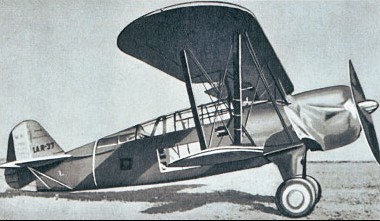
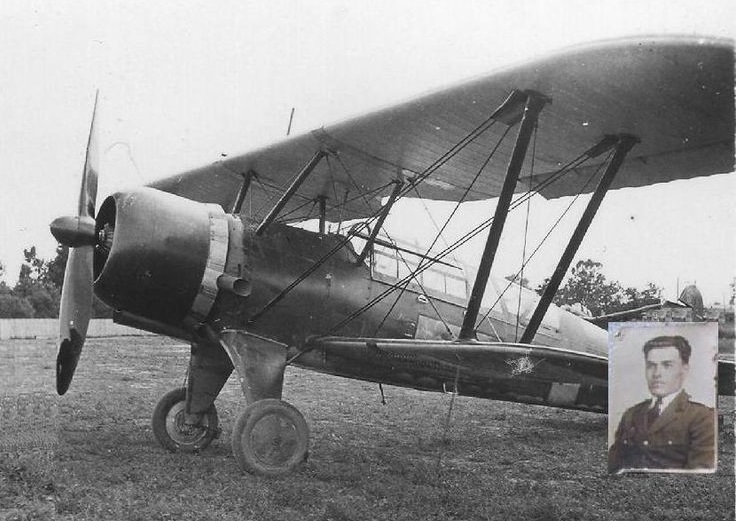
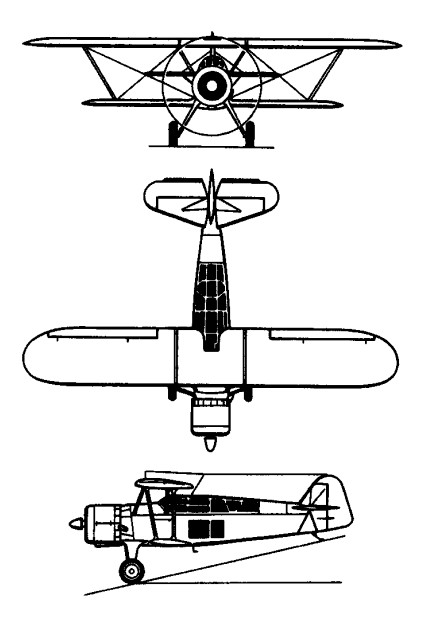
The I.A.R.37 prototype was built to the design of engineers Grossu-Vizuru and Carp. Flown for the first time in 1937 by company pilot Max Manolescu, it was intended to meet an official requirement for a tactical bombing and reconnaissance aircraft. An unequal-span biplane, the I.A.R.37 had fixed main landing gear and was powered by an I.A.R. K.14 radial engine. Its three-man crew was accommodated beneath a continuous glazed canopy, the observer seated between pilot and gunner and provided with full dual controls, a Romanian-designed Estopey bomb-sight, radio and a camera. Defensive armament comprised four machine-guns and the offensive load 12 50kg bombs or six 100kg bombs on underwing racks.
The I.A.R.37 entered production.in late 1938 and was built in small numbers before being succeeded in 1939 by the interim I.A.R.38, which differed mainly in its powerplant.
An attempt to modify an IAR 37 into a dive bomber was made in the summer of 1940. No 5, redesignated IAR 371, performed the Romanian dive bombing premiere on July 16 with a test diving from 4,000ft (1,200m), piloted by Emil Droc, test pilot of the IAR factory. Several modifications (including the cockpit canopy and fuselage side glazing) were made to the IAR 37 design before it was fitted with a German BMW 132A radial engine, giving birth to the more reliable IAR 38.
In January 1939, even before all 50 examples of the –37 had been completed production was shifted in favour of the IAR 38. The last IAR 37, No 47 was first flown on June 16, l939.
The final number of IAR 38s actually manufactured is still unclear, the existence of a photograph depicting ‘Red’ 89 suggests that possibly 90, even up to 120, such aircraft could have been finally produced at Brasov.
The -38 was soon displaced on the production line by the I.A.R.39.
The increased fuel consumption of the more powerful IAR K1 4 engine installed in the IAR 39s decreased the aircraft’s range to 350nm (650km), equal to the similarly equipped IAR 37.
Of the total production of 325 I.A.R.37, 38 and 39 aircraft, over 200 were I.A.R.39s, 96 built under sub-contract by the S.E.T. company and over 100 by I.A.R.

IAR 39

By the end of 1940 the I.A.R. biplanes were in large-scale service with Fortelor Aeriene Regal ale Romania (Royal Romanian Air Force) or FARR. They equipped a number of squadrons attached to the various army corps and by June 1941, when Romania supported the German offensive against the Soviet Union, the three reconnaissance flotile of the FARR had 18 eskadrile, 15 of which were equipped with I.A.R. biplanes. In July 1942 the air expeditionary force in the Soviet Union had been re-formed as Corpul I Aerian and had several groups equipped with the I.A.R.39. Eleven reconnaissance eskadrile were operating with the army co-operation flotile during the 1944 offensive in the Ukraine, most of them with I.A.R.39s on strength. Post-war the new Communist republic was declared at the end of 1947, and the reorganised air arm, known as the FR-RPR (Fortele Aeriene ale Republicii Populare Romania) had a small number of I.A.R.39s for training and liaison duties for several years.
The last member of the IAR 37/38/39 family was withdrawn from service in mid 1960s.

IAR-37
Engine: I.A.R. K.14-II C32, 649 kW (870 hp)
Empty weight: 4,892 lb (2,219kg)
Crew: 3
50 built (IAR)

IAR-38
Engine: BMW 132A, 522 kW (700 hp)
Empty weight: 5,070 lb (2,300kg)
Taller tail.
75 built (IAR).

IAR-39
Engine: 1 x IAR K.14-IV C32, 16 kW (960 hp)
Wingspan: 13.10 m / 42 ft 11.75 in
Length: 9.60 m / 31 ft 6 in
Height: 3.99 m / 13 ft 1 in
Wing Area: 40.30 sq.m / 433.79 sq ft
Take-Off Weight: 3085 kg / 6801 lb
Loaded Weight: 2177 kg / 4799 lb
Max. Speed: 336 km/h / 209 mph / 182 kn
Service Ceiling: 8000 m / 26245 ft
Range: 1050 km / 652 miles / 567 nmi
Armament: 3 x FN (Browning) 7.92mm machine-guns
Bombload: 288kg (635lb) or 144 air-grenades
Crew: 3
255 built (95 at IAR and 160 at SET).

CNIAR / IAR / Industria Aeronautica Romania / ICA Brasov / IAR-SA Brasov / Regia Autonoma Industria / Aeronautica Romana / Intreprinderea de Constructii Aeronautice / URMV-3 / Sovromtractor

In 1925 was established in Brason the first large Romanian aircraft named “Societate Anonima Industria Aeronautica Romana” (IAR) to build aircraft and aero engines. Between 1925 and 1945 this company built around 1000 aircraft of 25 different types of which eight were under foreign licence including the Potez 25, Morane-Saulnier 35, Fleet 10-G, PZL11 c and XXIV. Indigenous designs included the IAR.15 single-seat fighter monoplane.
The most known aircraft entirely conceived and built by this company was the IAR-80 combat plane, ranked the fourth in the world at the time of its appearance in 1939.
Renamed Regia Autonoma Industria Aeronautica Romana in 1940, but still using IAR for types.
Came under joint Soviet/Romanian control as Sovromtractor from 1946, with Brasov works known as URMV-3 between 1950 and 1959. Only a team of enthusiastic specialists led by Iosef Silimon continued to design, build, and repair light aircraft.
Aircraft development at Brasov by mid-1956 included IAR 811 piston trainer (first flown 1949), IAR 813 two-seat lightplane, IAR 814 twin-engined transport of 1953 and IAR 817 single-engined general-purpose light transport of 1955. Aircraft from LFIL factory at Reghin included RG-6 tandem two-seat sports and training monoplane.
The ICA-Brasov or Intreprinderea de Constructii Aeronautice Brasov (Aircraft Construction Factory Brasov) is responsible for all sailplane development and production in Romania, and their principal designer is Professor losif Silimon, who has created a long series of sailplanes that are widely used in the national clubs; these are prefixed by the letters ‘IS’ which form the Professor’s initials.

In 1968 it was decided to restore the the aircraft factory under the new name “ICA Brasov”. Undertook repair and overhaul of light aircraft; built aircraft of its own design, such as the IAR-824 six seat general-purpose light aircraft and IS-28/IS-29 sailplanes, manufactured Aerospatiale SA 316B Alouette III helicopters under license, participated in license-construction of the Britten-Norman BN-2A Islander and carried out series production of nationally designed aircraft.
In 1976 the IS28M2 motor glider began manufacture, and in 1977 the tandem two-seat IS28M1 motor glider prototype had been completed, from which the IAR-34 was derived.
Name changed to IAR-SA Brasov in 1991. Has built Aerospatiale Alouette helicopter as IAR 316B (280), Russian Ka-126 helicopter, and French Puma helicopter (as IAR 330L Puma) under license, with Puma 2000 upgraded IAR 330L model offered with more engine power, Hellfire antiarmor missiles and advanced avionics among changes. Has agreement with Eurocopter to construct up to 80 AS 350BA and AS 355N helicopters. Made agreement with Bell Helicopter Textron of U.S.A. to license build 96 AH-1W SuperCobra attack helicopters for the Romanian armed forces as AH-1RO Draculas, with Bell taking a majority shareholding in the privatizing company as part of the agreement. Kraiova works to license-manufacture Russian Beriev Be-32K. Own products include IAR 46 two-seat lightplane (first flown 1993), IAR-35 glider, and IS-28 series of gliders/motorgliders.
2008: IAR Brasov No. 1, Aeroportului Street P.O. Box 198 Brasov 2200 Romania

Compagnia Nazionale Aeronautica / CNA D / D.4

The CNA D, often known as the CNA D.4, was a four-cylinder, air-cooled, horizontally opposed engine built in Italy between 1940 and 1951 to power light aircraft.

Specifications:
Bore: 100 mm (3.9 in)
Stroke: 95 mm (3.7 in)
Displacement: 3.0 L (182 cu in)
Compression ratio: 5.3:1
Rated Power: 45 kW (60 hp) at 2,100 rpm
Fuel consumption at rated power: 0.34 kg/kW hr (0.56 lb/hp hr)
Weight: 80 kg (180 lb)

Applications:
Adam RA-14 Loisirs
Ambrosini SAI.10
CNA PM.1
CNA MPL
CVV Tartaca
Druine Condor
GCA Pedro
GCA Etabeta
Lombardi FL.3
Lombardi FL.5
Lombardi FL.7
Macchi MB.308

CNA / Compagnia Nazionale Aeronautica   

Italy
Compagnia Nazionale Aeronautica was a manufacturer of aircraft and aircraft engines established in Italy in 1920 by Count Giovanni Bonmartini. Together with a group of World War I veteran pilots, he operated a flying school in Rome from a field that would eventually be developed into Littorio airport. For the next decade or so, CNA also developed their own aircraft and engines to power them. Bonmartini had also worked on an advanced racing motorcycle engine, the GBR in another partnership, and eventually CNA acquired the rights to this as well.

When they moved their Roman base from Cerveteri to Littorio in 1928, they built a factory in which they could produce both aircraft and aircraft engines; some were designed by other companies, some by themselves.

Mainly a license builder of others’ designs, but in mid/late 1930s own products included C.N.A.15 low-wing and C.N.A.25 high-wing four-seat cabin monoplanes (both CNA-engined).

In 1934 Bonmartini sold CNA to Caproni. In turn, Caproni sold rights to the GBR engine to Gilera, who developed it as the Rondine.

During 1939-1940 said to have produced PM1 two-seat high-wing monoplane with flat-four engine.

Aircraft Types:
CNA Beta
CNA Eta
CNA Teta
CNA Merrah
CNA 15
CNA 25
CNA PM.1

Engines:
CNA C
CNA C.II
CNA C.VI
CNA C-7
CNA D-4

CKD-Praga

Ceskomoravska-Kolben-Danek, maker of aero engines from 1915, including several marketed under the name Praga. Began aircraft construction in 1931, subsequent products including the Praga E.40 two-seat training biplane and E.45 single-seat fighter biplane, and a family of two/four-seat light cabin monoplanes designated E.114 Air Baby, E.115, E.210, and E.214. Factory overrun by German invasion, but operated by Germany as Bb’hmisch- Muhrische Maschinenfabriken AG. (Bohemian-Moravian Engineering Works). Reestablished postwar under new title of Zavody Letecke Praga, producing, inter alia, updated models of the E.114 and E.210/211.

Cierva W.9 / Weir W.9

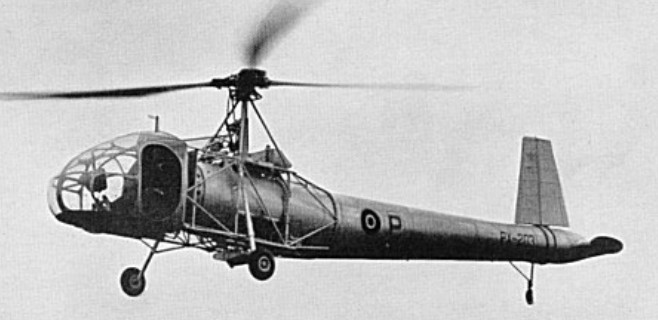
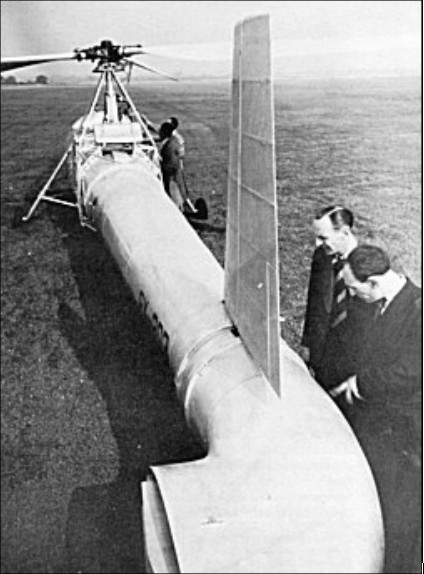
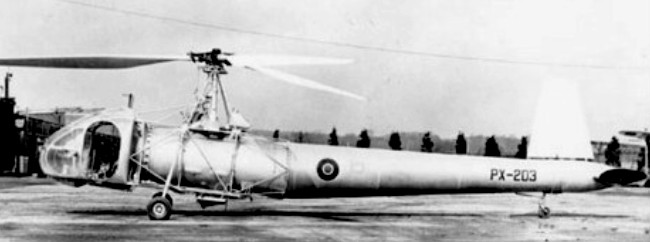
The W.9 was an experimental helicopter to E.16/43, with a three-blade main rotor. Torque compensation was achieved by a jet of air discharged from the port side of the rear fuselage and supplied by a fan which also cooled the engine. The jet was controlled by two vanes. The air from a multi-bladed fan which cooled the engine was ducted through the inside of the fuselage, heated by the exhaust gases and then ejected through an opening on the port side. Two horizontal shutters controlled the flow of this air. The controllable efflux was also used to impart turning movements to the rotorcraft, which had neither fin nor rudder. The multi-bladed variable-pitch fan was coupled to the rudder pedals and thus provided yawing control.

First flown in 1945, only one was built.

W.9
Engine: 1 x Gipsy Six Series II, 155kW
Main rotor diameter: 10.98m
Max take-off weight: 1200kg