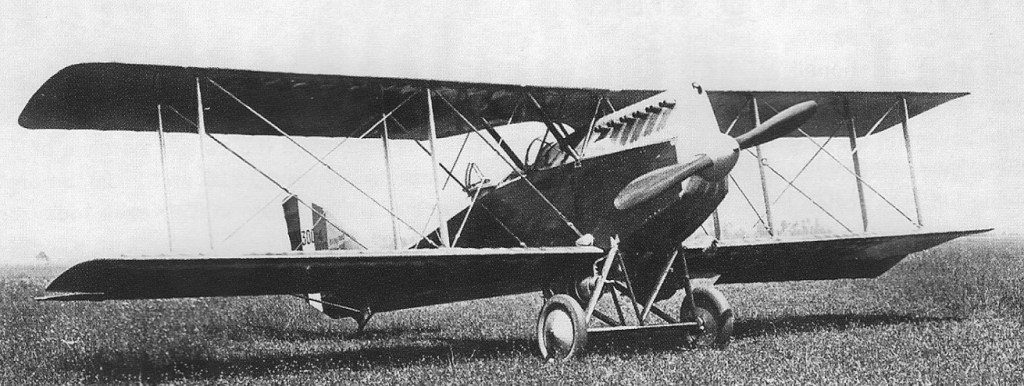
Armstrong Whitworth

Sir W G Armstrong Whitworth & Co Ltd was a major British manufacturing company of the early years of the 20th century. With headquarters in Elswick, Newcastle upon Tyne, Armstrong Whitworth engaged in the construction of armaments, ships, locomotives, automobiles, and aircraft.

In 1847, engineer William George Armstrong founded the Elswick works at Newcastle, to produce hydraulic machinery, cranes and bridges, soon to be followed by artillery, notably the Armstrong breech-loading gun, which re-equipped the British Army after the Crimean War. In 1882, it merged with the shipbuilding firm of Charles Mitchell to form Armstrong Mitchell & Company and at the time its works extended for over a mile (about 2 km) along the bank of the River Tyne. Armstrong Mitchell merged again with the engineering firm of Joseph Whitworth in 1897. The company expanded into the manufacture of cars and trucks in 1902, and created an “aerial department” in 1913, which became the Armstrong Whitworth Aircraft subsidiary in 1920.

In September 1914 built the unsuccessful F.K.1 single-seater. Later (during the war) the F.K.3 and F.K.8 two-seat observation aircraft were delivered in quantity, as improvements on the Government designed B.E.2c.

Armstrong-Whitworth built in 1914 a gondola for non-rigid naval airship HMA No.2 “Willows IV”. This was followed by gondolas for SS.40-49 airships in 1915, developed from F.K.3 fuselage, with 100 hp Green (probably 20 built as spares required), a gondola for SS.27 (also from an F.K.3 fuselage) but with a Renault engine.
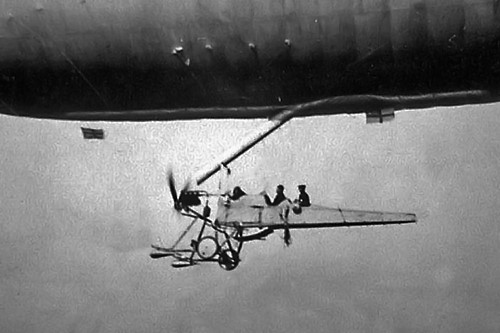
SS Airships (B.E.2c car)

The F.K.15 is described as an airship gondola design for the Beta II, F.K.16 and F.K.17 as an airship gondola design for North Sea airships based on the F.K.3 fuselage.
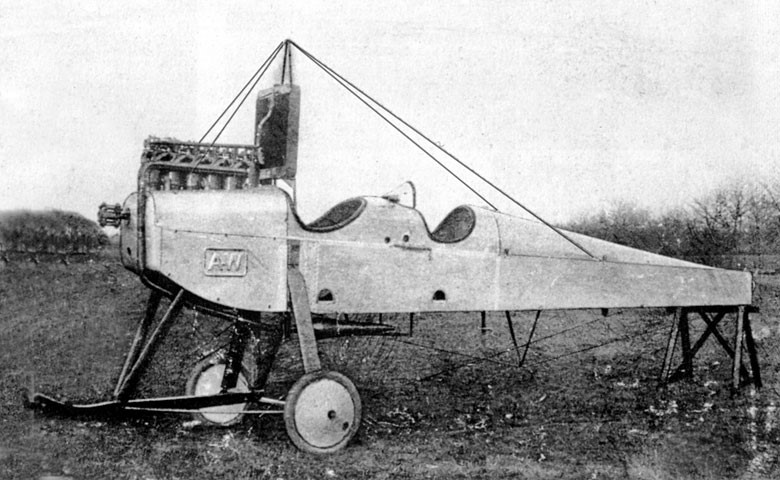
F.K.4

Experimental First World War types included quadruplanes and Armadillo and Ara biplane single-seat fighters. The Airplane Department closed in late 1919, but a new company, named Armstrong Whitworth, was formed in 1920. Products between the wars were the Siskin single-seat fighter and Atlas army cooperaton aircraft for the RAF, both introducing some steel construction. The Scimitar fighter (1934) was among the world’s fastest with a radial engine, partly due to company’s associations with engine-builder Armstrong Siddeley.

By the end of 1924 Armstrong’s was virtually bankrupt. The bank of England discreetly moved in, and eventually brought pressure to force a merger with Vickers, using the Sun Insurance Company as their front to guarantee the new company, now called Vickers Armstrong. It was a condition of the rescue that the new company would restrict themselves to ship building, heavy engineering, and predominantly armaments.

In 1927, it merged with Vickers Limited to form Vickers-Armstrongs.

Notable airliners were the three-engined Argosy biplane (1926), four-engined Atalanta monoplane (1932), and the much larger Ensign (1938). The company’s most famous product was the Whitley twin-engined bomber of 1936, in which year Hawker Siddeley Group was formed, with Armstrong Whitworth as a member company. In July 1943 the 1,824th Whitley left the assembly line at Baginton, Coventry, the type having achieved several historic “firsts” in RAF service. The Albemarle (600 built) was used as glider-tug and transport, and Avro Lancaster bombers were built in dispersed factories. After the war, from the basic Gloster design, the company developed and produced in quantity Meteor two-seat nightfighters. When this type was well advanced they undertook development of the Hawker Sea Hawk naval fighter. Avro Lincolns, Hawker Hunters, and Gloster Javelins also produced. Experiments made with flying-wing aircraft and prone-pilot position were undertaken. The Apollo turboprop airliner (1949) had no commercial success, though the Argosy twin-boom four-turboprop freighter (1959) gained limited civil and military orders.
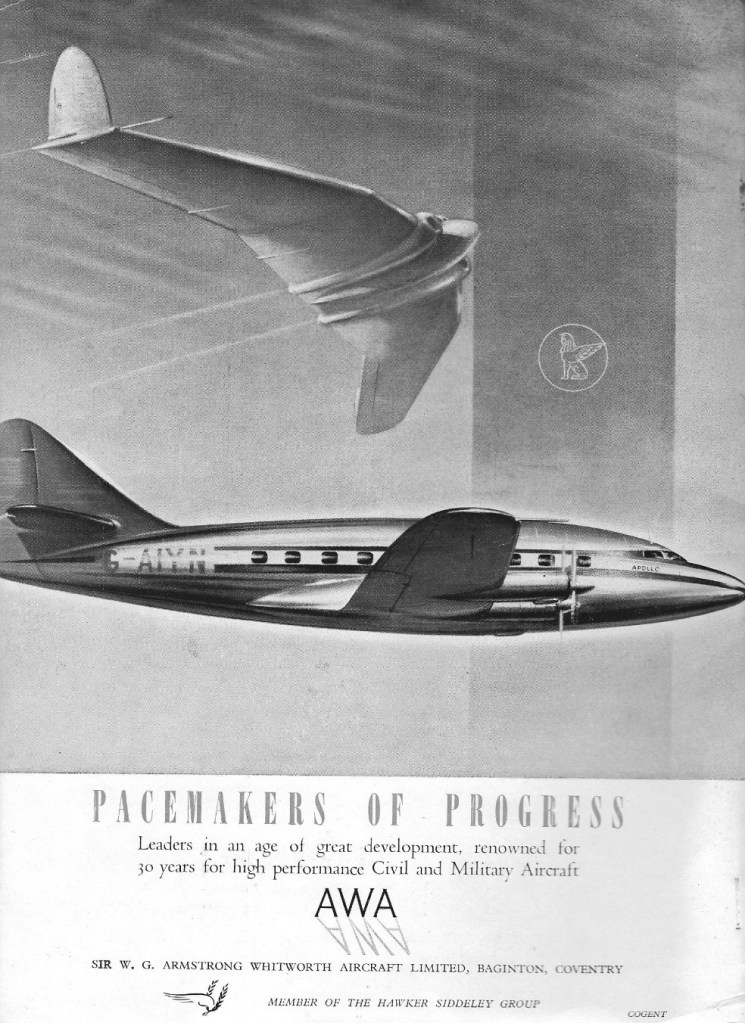
January 1951

Gloster, Armstrong Whitworth and Avro joined Hawker Siddeley Aviation in 1965.
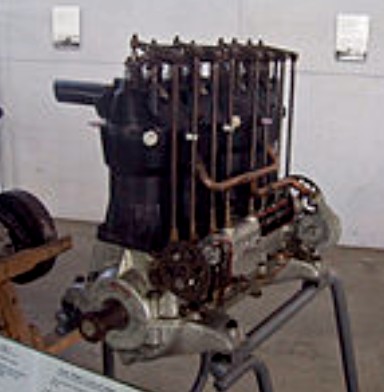
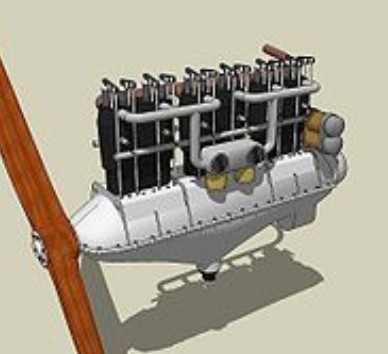
Argus As II          

The Argus As II was a six-cylinder, in-line, water-cooled, aircraft engine produced in Germany by Argus Motoren in 1914.

Applications:
Halberstadt D.II
Albatros B.II
Häfeli DH-1
Häfeli DH-3

Specifications:
Type: Six-cylinder, upright, inline, liquid-cooled piston engine
Bore: 130 mm
Stroke: 130 mm
Valvetrain: Overhead-valve, two valves per cylinder, pushrod operated
Fuel system: Twin carburettors
Oil system: Pressure feed
Power output: 120 hp (89 kW) at 1,350 rpm

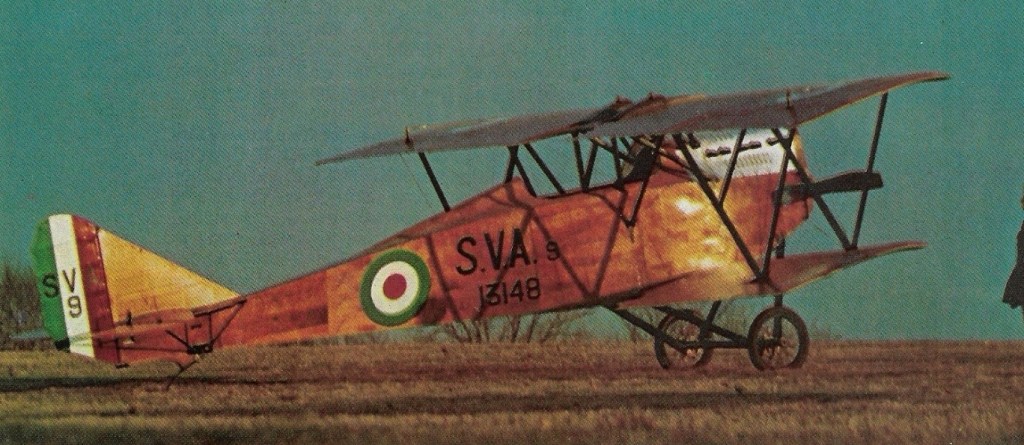
Ansaldo SVA.1 / SVA.2 / SVA.3 / SVA.4 / SVA.5 / SVA.6

Ansaldo SVA.5

The 1917 SVA.1 was a single-engine one-seat biplane utility aircraft. The SVA.2 was the production version of the SVA.1.

The SVA.3 was a fast-climbing interceptor version of the SVA.2

A production version of the SVA.2 equipped for reconnaissance was designated SVA.4.

The SVA.5 production version of the SVA.2 was a fighter. Notable for fast reconnaissance flights and record-breaking. The SVA.5 had Warren truss wing bracing, later a characteristic of Fiat biplanes.

Ansalado SVA5 Article

Armament was two Vickers machine guns mounted above the fuselage forward of the cockpit on the fighter. The reconnaissance version carried one gun and 220 lb of bombs.

The SVA.5 wings were of wooden construction, with Warren-truss bracing and fabric covering. The flat-sided wooden fuselage was covered with plywood. Conventional control surfaces were fitted, with ailerons on the top wing only.

The fuel capacity was 40 gallons in the fighters, and 75 gallons in the reconnaissance version.

Delivery of the SVA.5 to Italian fighter-training schools began in the Autumn of 1917.

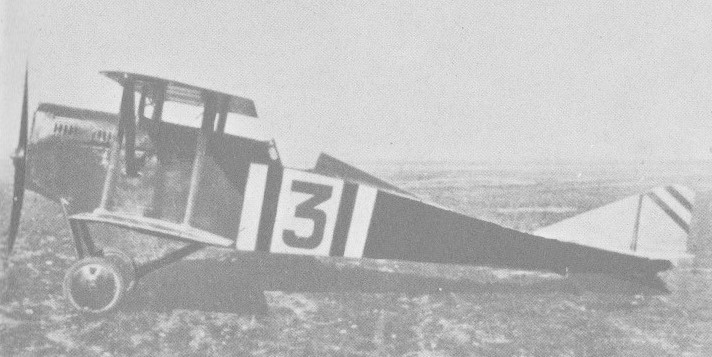
SVA.5

However, it is as a long-range reconnaissance aircraft that it eventually played its major role. Six squadrons and five smaller units received SVA.5s, and the best known being the 87th Squadron, known as ‘La Serenissima’, from Venice, which had the Lion of St.Mark painted on the fuselage of its aircraft. The first operational flights were made in March 1918. Two months later, an SVA.5 made a round trip of 440 miles to photograph the Zeppelin sheds at Friedrichshafen. In August 1918, seven SVA.s, led by a two-seat SVA.9, flew to Vienna and back, a distance of 625 miles, to drop leaflets on the Austrian capitol. On other occasions they dropped bombs.

SVA.5

Altogether 1295 SV.5s were built, including 50 Idro-AM seaplanes.

The SVA.6 was a prototype bomber version of the SVA.2

Reconnaissance
Engine: S.P.A. 6A, 220 hp
Wingspan: 31 ft
Wing area: 261 sq.ft
Length: 26 ft 8 in
Height: 9 ft 8 in
Empty weight: 1533 lb
MTOW: 2295 lb
Max speed: 136 mph at SL
Service ceiling: 22,000 ft

Ansaldo

Aeronautica Ansaido SA was established late in the First World War by engineering and shipbuilding firm of Gio. Ansaido (formed 1896). After the war a separate company was formed, Societa Aninima Aeronautica, Turin, though title was variously rendered. Ansaido achieved aeronautical eminence in 1917 by providing a single-seat fighter of original Italian design (Italy having previously used French types). The aircraft was A-1 Balilla. About 150 were built; others were license-built in Poland, and served well into 1920s. The S.V.A.5 was also a fighter, though more notable for fast reconnaissance flights and record-breaking, which had Warrentruss wing bracing, later a characteristic of Fiat biplanes. Before Ansaido merged completely with Fiat, in 1925, the company built the A.300 two/three-seat multipurpose biplane, extensively produced and used. Hydrofoils fitted to a seaplane development of S.V.A.5 presaged later developments in UK and USA. The initials S.V. signified Savoia Verducci. Ansaldo/Fiat links were implicit in name Rosatelli. Pomilio name also linked by 1918 takeover.

ANEC / Air Navigation and Engineering Co.

Air Navigation and Engineering Co. Ltd. formed at Addlestone, Surrey, as successor to the Bleriot and Spad Aircraft Works, which had built Spads and had been awarded a contract for S.E.5a fighters, though name ANEC was associated with new civil airplanes. Three monoplanes (ANEC I, IA and II), designed by W. S. Shackleton, were among Britain’s earliest ultralight aircraft. ANEC IV Missel Thrush (designer J. Bewsher) was light biplane, but ANEC III was large single-engined transport biplane designed by G. H. Handasyde, who had no production facilities for his own Handasyde Aircraft Co. Ltd. First ANEC III flown March 1926. Three of type contributed to development of aviation in Australia, two being converted to Larkin Lascowls, one of which was not retired until June 1932.