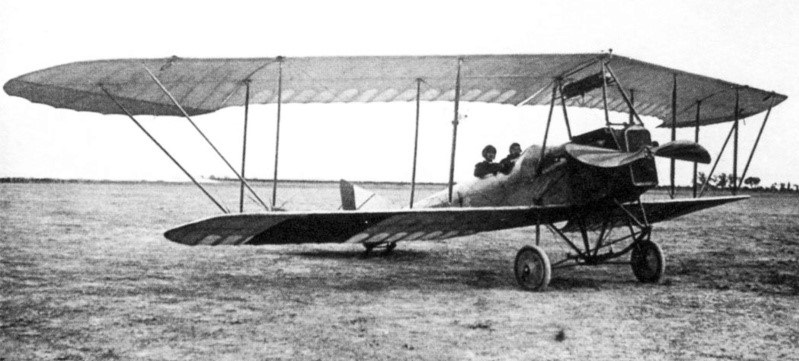
Beardmore 160 hp

The Beardmore 160 hp is a British six-cylinder, water-cooled aero engine that first ran in 1916, it was built by Arrol-Johnston and Crossley Motors for William Beardmore and Company as a development of the Beardmore 120 hp, itself a licensed-built version of the Austro-Daimler 6.

The engine featured cast iron cylinders and mild steel concave pistons. Produced between March 1916 and December 1918, the design powered many World War I aircraft types. It was noted that the engine was not as reliable as its smaller capacity predecessor and had a unit cost of £1,045. A total of 2556 were built.

A Beardmore 160 hp has been restored to airworthy condition by The Vintage Aviator Ltd, an aircraft restoration company based in Wellington, New Zealand. The engine was found complete and in a preserved condition in a farm shed in Uruguay, after a complete overhaul and ground test runs the engine powered the company’s F.E.2b replica on its maiden flight.

Applications:
Airco DH.3
Armstrong Whitworth F.K.7
Austin Kestrel
Beardmore W.B.II
Beardmore W.B.X
Central Centaur IIA
Marinens Flyvebaatfabrikk M.F.6
Martinsyde G.102
Norman Thompson N.T.2B
Royal Aircraft Factory F.E.2
Royal Aircraft Factory R.E.7
Short Sporting Type
Supermarine Channel
Supermarine Sea King
Vickers F.B.14

Specifications (160 hp)
Type: 6-cylinder, inline, upright piston engine
Bore: 5.59 in (142 mm)
Stroke: 6.93 in (176 mm)
Displacement: 1,020 cu in (16.635 L)
Length: 57 in (1,148 mm)
Width: 19.9 in (505 mm)
Height: 31.9 in (810 mm)
Dry weight: 615 lb (279 kg)
Valvetrain: Overhead valve
Fuel system: Twin Zenith carburettors
Fuel type: Petrol
Oil system: Gear pump
Cooling system: Water-cooled
Reduction gear: Direct drive, right-hand tractor
Power output: 186 hp (139 kW) at 1,450 rpm (maximum power)
Specific power: 0.18 hp/cu in (8.74 kw/L)
Compression ratio: 4.56:1
Specific fuel consumption: 0.57 pints per hp/hr
Oil consumption: 0.3 pints per hp/hr
Power-to-weight ratio: 0.30 hp/lb (0.5 kW/kg)
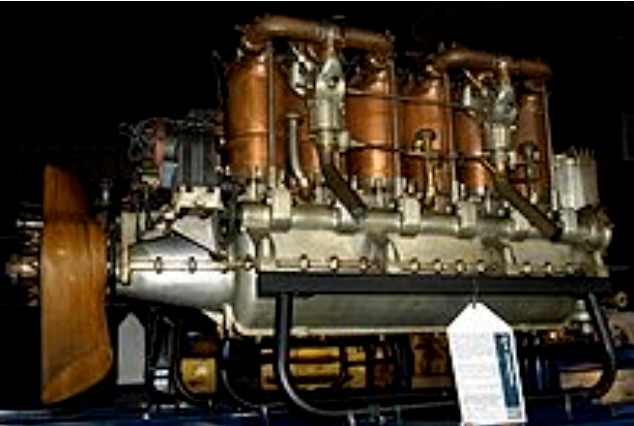
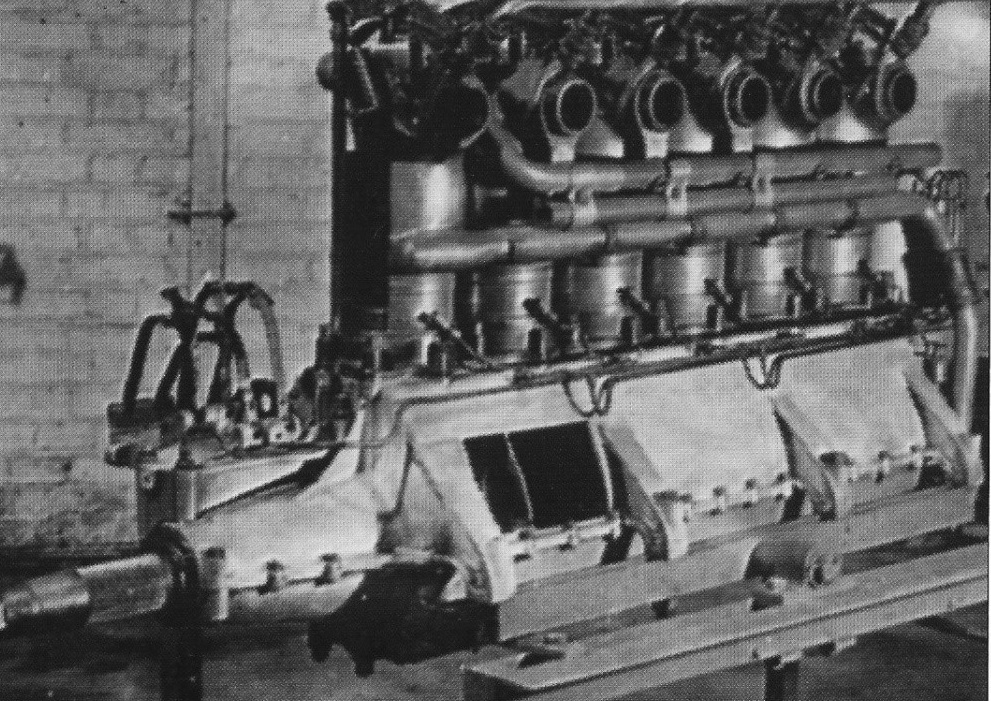
Beardmore 120 hp

The Beardmore 120 hp was a British six-cylinder, water-cooled aero engine that first ran in 1914, it was built by William Beardmore and Company as a licensed-built version of the Austro-Daimler 6. The engine featured cast iron cylinders and mild steel concave pistons. Produced between August 1914 and December 1918, the design powered many World War I aircraft types.

Applications:
Airco DH.1
Airco DH.3
Armstrong Whitworth F.K.3
Armstrong Whitworth F.K.8
Bristol T.T.A.
Cody V
Martinsyde Elephant
Royal Aircraft Factory F.E.2
Royal Aircraft Factory R.E.5
Royal Aircraft Factory R.E.7
Vickers F.B.14
White and Thompson No. 3

Specifications (120 hp)
Type: 6-cylinder, inline, upright piston engine
Bore: 5.12 in (130 mm)
Stroke: 6.89 in (175 mm)
Displacement: 851 cu in (13.145 L)
Length: 57 in (1,148 mm)
Width: 19.9 in (505 mm)
Height: 31.9 in (810 mm)
Dry weight: 545 lb (247 kg)
Valvetrain: Overhead valve
Fuel type: Petrol
Cooling system: Water-cooled
Reduction gear: Direct drive, right-hand tractor
Power output: 154 hp (115 kW) at 1,400 rpm (maximum power)
Specific power: 0.18 hp/cu in (8.74 kw/L)
Compression ratio: 4.85:1
Power-to-weight ratio: 0.28 hp/lb (0.46 kW/kg)

Beardmore WB.V

The W.B.V single-seat shipboard fighter was developed in parallel with the W.B.IV. It was intended to carry a 37mm Puteaux cannon between the cylinder blocks of its 200hp Hispano-Suiza eight-cylinder water-cooled engine and featured folding wings, a jettisonable undercarriage and inflatable flotation bags beneath the underside of the leading edge of the lower wing. Three prototypes of the W.B.V were ordered, the first flying on 3 December 1917, but the engine-mounted cannon was removed and a more conventional synchronised 7.7mm Vickers gun and a 7.7mm Lewis gun on a tripod ahead of the cockpit mounted. The second prototype W.B.V was completed and flown in 1918, but further development was abandoned before the end of World War I.

Engine: 200hp Hispano-Suiza
Take-off weight: 1134 kg / 2500 lb
Empty weight: 844 kg / 1861 lb
Wingspan: 10.92 m / 35 ft 10 in
Length: 8.10 m / 26 ft 7 in
Height: 3.61 m / 11 ft 10 in
Wing area: 36.60 sq.m / 393.96 sq ft
Max. speed: 180 km/h / 112 mph

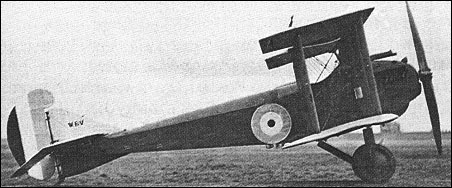
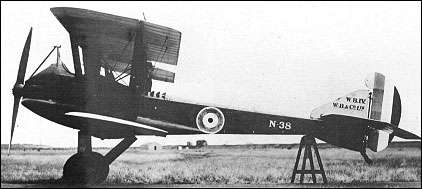
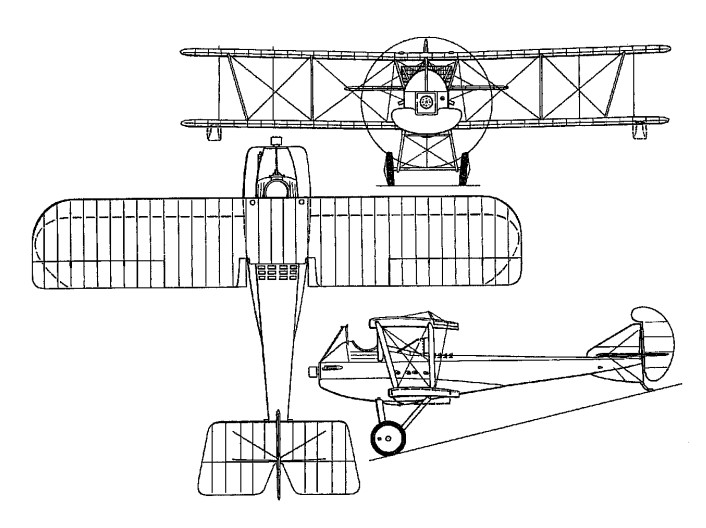
Beardmore WB.IV

The W.B.IV single-seat shipboard fighter was the first entirely original fighter to be developed by William Beardmore & Company. The 200hp Hispano-Suiza eight-cylinder water-cooled engine was mounted aft of the cockpit and drove the propeller via an extension shaft which passed between the pilot’s legs to provide the best possible view for the pilot, The cockpit was water-tight, a large flotation chamber was provided in the forward fuselage, wingtip floats were incorporated to stabilise the aircraft in the event of it alighting on the water in an emergency, and the undercarriage was jettisonable. The mainplanes could be folded, and The WB.IV was armed with a single synchronised 7.7mm Vickers gun and a 7.7mm Lewis gun mounted on a tripod ahead of the cockpit. Three prototypes of the W.B.IV were ordered, the first of these flying on 12 December 1917, but the other prototypes were not completed.

Engine: 200hp Hispano-Suiza
Take-off weight: 1177 kg / 2595 lb
Empty weight: 932 kg / 2055 lb
Wingspan: 10.92 m / 35 ft 10 in
Length: 8.08 m / 26 ft 6 in
Height: 3.00 m / 9 ft 10 in
Wing area: 32.52 sq.m / 350.04 sq ft
Max. speed: 177 km/h / 110 mph

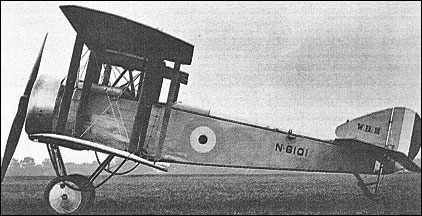
Beardmore WB.III / SB.3

William Beardmore and Co developed their W.B.III as a carrier version of the Sopwith Pup fighter with manually-folding mainplanes and folding main undercarriage members. The William Beardmore and Company firm was already under contract to produce the land-based Sopwith Pup, this under legal license, and developed the WB III for shipboard use by the Royal Naval Air Service during World War 1.

Design of the WB III was conventional for biplane fighter aircraft of the time, keeping up with features as found on the Sopwith Pup. The engine was held in a forward compartment at the front of the slab-sided fuselage. A cylindrical engine cowling was fitted over the front engine facing for a more streamlined approach. The engine, a single nine-cylinder Le Rhone 9C series engine or a seven-cylinder Clerget (each delivering up to 80 horsepower), turned a two-bladed wooden propeller. The biplane wing arrangement featured straight parallel struts unlike the Sopwith Pup’s staggered formation, necessitated by the Navy requirement for manually folding wings (space on aircraft carriers was always at a premium). Additionally, the undercarriage – consisting of two fixed single-wheeled members – could be removed by the ground crew for improved stowage while the tail was supported by a simplistic tail skid. The fuselage tapered off to the empennage to which was affixed a rounded vertical tail fin and applicable horizontal planes.

Performance from the available powerplant allowed for a top speed of up to 103 miles per hour with a service ceiling of up to 12,400 feet and a rate-of-climb equal to 534 feet per minute. Endurance time (essentially the aircraft’s operational range) was listed at 2 hours and 45 minutes. The WB.III maintained a wingspan of 25 feet with a running length of 20 feet, 3 inches. She sat with an 8 foot, 1 inch height. On empty, she weighed in at 890lbs and could take off with a weight of up to 1,290 lbs. Armament was a single fixed, upward-firing .303 Lewis machine gun, firing through a cut-out section of the upper wing assembly.

The prototype WB III (a modified Pup) was accepted by the British military on February 7th, 1917. A contract for 100 production examples soon followed under the official British designation of SB 3.

Armament comprised a single 7.7mm Lewis gun which fired upwards through a cut-out in the upper wing centre section, and the W.B.III could be fitted with either the seven-cylinder Clerget or nine cylinder Le Rhone 9C rotary, both of 80hp. The first 13 production W.B.IIIs had folding undercarriages similar to the prototype and were known as S.B.3Fs, but subsequent W.B.Ills had jettisonable undercarriages (S.B.3D) and flotation equipment.

The initial production models fell under the designation of SB 3F and covered some thirteen examples until supplanted by the revised SB 3D. The SB 3D sported a jettisonable undercarriage as well as emergency flotation equipment in a slightly lengthened fuselage.

The WB III served on only three Royal aircraft carriers, these being the HMS Furious, HMS Nairana and the HMS Pegasus. One S.B.3D was used in an unsuccessful attempt to fly from the forecastle of the battle cruiser HMS Renown. Japan became the only other notable operator of the WB III/SB 3 series.

Beardmore SB 3F
Engine: 1 x Le Rhone 9C OR 1 x Clerget rotary, 80 hp
Length: 20 ft 3 in (6.16m)
Wingspan: 25.00ft (7.62m)
Height: 8 ft 1 in (2.47m)
Wing area: 22.57 sq.m / 242.94 sq ft
Maximum Speed: 103mph (166kmh; 90kts)
Maximum Range: 171miles (275km)
Rate-of-Climb: 534ft/min (163m/min)
Service Ceiling: 12,402ft (3,780m)
Armament: 1 x 7.7mm (0.303 caliber) Lewis machine gun
Accommodation: 1
Empty Weight: 891lbs (404kg)
Maximum Take-Off Weight: 1,290lbs (585kg)

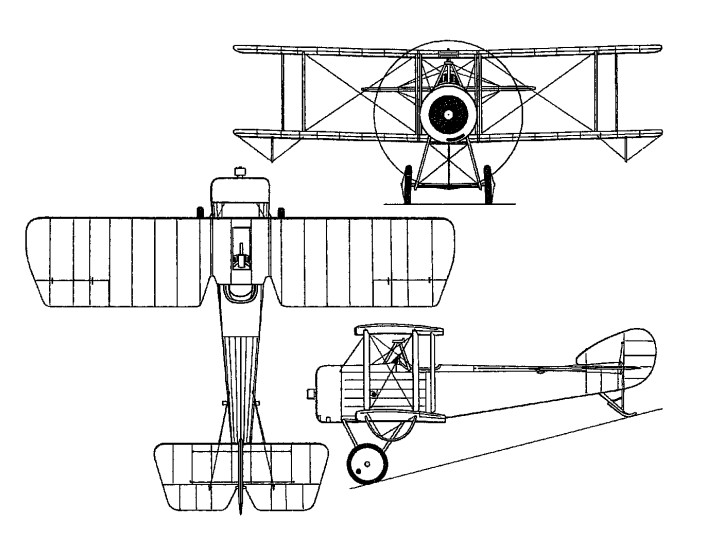
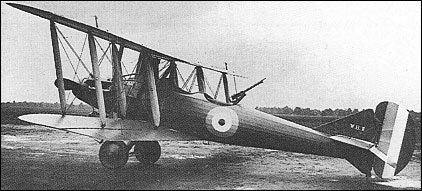
Beardmore WB.II

Based on the design of the B.E.2c, the two-seat WB.II fighter was built as a private venture by G Tilghman-Richards of William Beardmore & Co. The W.B.II was powered by a 200hp Hispano-Suiza 8Bd eight-cylinder water-cooled engine and carried an armament of two fixed synchronised 7.7mm Vickers guns and a single 7.7mm Lewis gun on a swivelling Beardmore- Richards mounting. The W.B.II was first flown on 30 August 1917, and performance proved good, but the Hispano-Suiza engine was in short supply and was required for the S.E.5a single-seater. No production of the W.B.II was undertaken, although two civil examples were built in 1920 as the W.B.IIB.

Engine: 200hp Hispano-Suiza 8Bd
Take-off weight: 1202 kg / 2650 lb
Empty weight: 800 kg / 1764 lb
Wingspan: 10.62 m / 34 ft 10 in
Length: 8.18 m / 26 ft 10 in
Height: 3.05 m / 10 ft 0 in
Wing area: 32.88 sq.m / 353.92 sq ft
Max. speed: 193 km/h / 120 mph

William Beardmore & Co

In 1913, pre-empting The Great War, William Beardmore & Co ventured into aircraft production, building Sopwith Pup aircraft at Dalmuir under licence.
Later, a shipborne version of the Pup – the Beardmore W.B.III – was designed in-house. A hundred of these aircraft were produced and delivered to the Royal Naval Air Service (RNAS). The company built and ran the Inchinnan Airship Constructional Station at Inchinnan in Renfrewshire. It produced the airships R27, R32, R34 and R36.
Beardmore obtained a license to build German DFW biplanes to be powered by Beardmore-built Austro-Daimler engines, and built large numbers of aircraft under sub-contract during war.
In 1924, the company acquired a licence for stressed skin construction using the Rohrbach principles. An order for two flying boats using this construction idea was placed with Beardmore. It had the first aircraft built for it by the Rohrbach Metal Aeroplane Company in Copenhagen, building the second itself and they were delivered to the RAF as the Beardmore Inverness. In addition, a large, experimental, all-metal trimotor transport aircraft was designed and built at Dalmuir and delivered to the Royal Air Force as the Beardmore Inflexible. Beardmore produced a line of aircraft engines, including the Cyclone, Meteor, Simoon, Tornado (used in the R101 airship), Typhoon and Whirlwind.
Under the leadership of G. Tilghman Richards, produced original aircraft, including the W.B.III, a redesigned Sopwith Pup with folding wings and folding or jettisonable landing gear. Designed and built a small number of civil and military aircraft in the interwar years.

Basse und Selve GmbH    

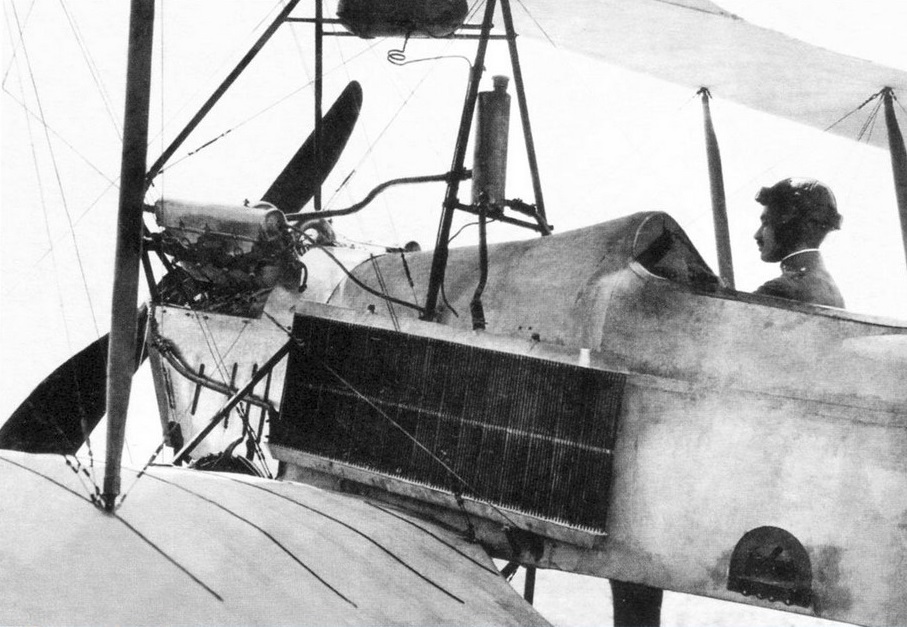
Basse und Selve (BuS) were German manufacturers of engines for automobiles, motorcycles, boats, aircraft and railcars, supplying engines for Selve cars built at the Selve Automobilwerke AG, but also various other manufacturers of automobiles and commercial vehicles, such as Beckmann, Mannesman, and Heim. The Altena factory was founded in 1908 by Gustav Selve, employing 2,000 workers, with Dr.Walther von Selve taking over the firm on the death of Gustav Selve, his father.

Basse und Selve aero-engines did not make a big impact on the aviation industry in Germany, but did find limited use, particularly in several large aircraft. The largest and most powerful fighter fitted with a Basse & Selve engine was the Hansa-Brandenburg W 34, asingle prototype of which was completed before hostilities ceased in 1918. Several large Riesenflugzeuge were also fitted with Basse & Selve engines, but they were generally replaced with Mercedes or Maybach alternatives as soon as possible.

Basse & Selve continued to build engines until closing its doors in 1932, two years before the closure of its sister company the Selve Automobilwerke AG which closed in 1934.

Applications:

Hansa-Brandenburg W.34
BuS.IVa

AGO S.I
1 x 150 hp BuS.III (1918)

Rumpler C.I
1 x 260 hp BuS.IV (1918)

Siemens-Schuckert R.VIII
6 x 300 hp BuS.IVa (1918)

Rumpler C.IV
1 x BuS.IVa

Zeppelin-Staaken R.VI
4 x 300 hp BuS.IVa, R.52/16 only, later replaced by four 245hp Maybach Mb.IVa engines

Barron Flecha

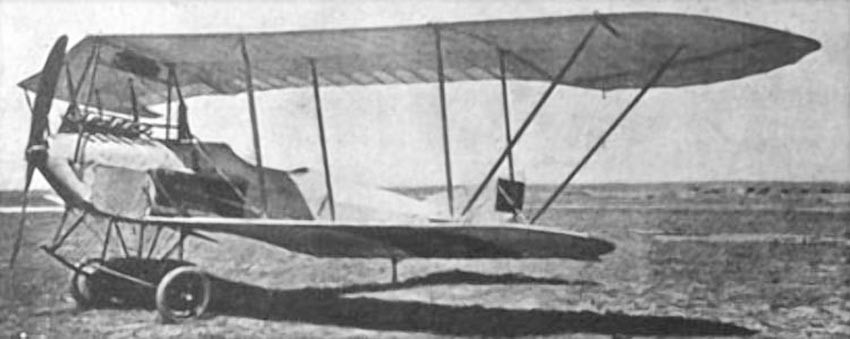
In 1913, several copies of the Austrian Lohner Pfeilflieger aircraft (later Lohner B.I) were brought to Spain. After reviewing the design of these aircraft from Eduardo Barron (Eduardo Barrón y Ramos de Sotomayor) decided to modify the Pfeilflieger.

As a result, on April 3, 1915, a new lightweight auxiliary aircraft, the Barrón Flecha (arrow), flew into the sky. After successful tests for the Spanish Air Force, six such aircraft were ordered. All of them were built in the workshops of Cuatro Vientos. Several aircraft like the Pfeilflieger were equipped with an Austro-Daimler engine with an output of 80 hp, and the rest received 100-horsepower Mercedes engines.

At the end of 1916, the Hispano Suiza 8A eight-cylinder engine with a power of 140 hp appeared. (103 kW). Eduardo Barron equipped this engine with one Flecha and arranged a demonstration flight for the King of Spain Alfonso XIII.

After receiving royal approval, Barron built 12 aircraft for the Aeronáutica Militar at the Carde and Escoriaza plant in Zaragoza. The military used Flecha until 1919. And Barron based on the Arrow has developed an even more advanced machine – Barron W.

Gallery

Wingspan: 13.40 m
Length: 8.50 m
Height: 3.00 m
Wing area: 37.50 sq.m
Empty weight: 630 kg
Max weight: 970 kg
Engine: Hispano Suiza 8A, 140 hp
Max speed: 115 kph
Cruise speed: 95 kph
Crew: 2

Barnwell, Frank and Harold

Frank Barnwell in 1914 on joining the RFC

Frank Barnwell was born in Lewisham in south east London but the family moved to Glasgow the year after his birth he and was educated at Fettes College in Edinburgh, after which he served a six-year apprenticeship with the Fairfield Shipbuilding and Engineering Company, of which his father was a partner, between 1898 and 1904. He attended the University of Glasgow at the same time and received a BSc in naval architecture in 1905. He then spent a year in America working as a draughtsman for a shipbuilder.

In 1907 he returned to Scotland and established the Grampian Motors & Engineering Company in Stirling in partnership with his brother Harold. The brothers had built an unsuccessful glider in 1905, and between 1908 and 1910 they constructed three experimental powered aircraft. The first lacked sufficient power to fly, but the second, a canard biplane, made the first powered flight in Scotland, piloted by Harold in July 1909. but was wrecked on the second attempt to fly it. The third, a mid-wing monoplane, was built during 1910 and flown by to win a prize for the first flight of over a mile in Scotland on 30 January 1911 at Causewayhead under the Wallace Monument.

Harold joined Vickers, while Frank joined the Bristol company, then called the British and Colonial Aeroplane Co.

In late 1911 Barnwell was hired to work as a designer for a secret department set up by the British and Colonial Aeroplane Company to work on an unconventional seaplane project for the Admiralty in collaboration with Dennistoun Burney, resulting in the unsuccessful Bristol-Burney seaplanes. He then co-designed the Bristol Scout with Harry Busteed. When war broke out in 1914 Barnwell enlisted in the Royal Flying Corps and after qualifying as a pilot at the Central Flying School, Upavon, he joined 12 Squadron RFC but in August 1915 was released from service to become chief designer at Bristol. Here he put his experience of service conditions to use by designing the Bristol Fighter, one of the outstanding aircraft of the war. With the exception of a short period between October 1921 and October 1923, when he briefly emigrated to Australia to work as an aviation advisor to the Australian Government, he worked as Bristol’s head of design for the rest of his life, designing aircraft such the Bristol Bulldog and Bristol Blenheim.

Barnwell was killed in an aircraft crash in 1938, piloting a small aircraft he had designed and had constructed privately, the Barnwell B.S.W.