Blackburn AD Scout

1915
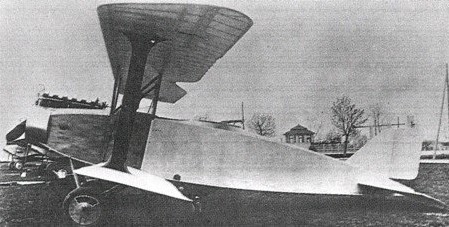
Harris Booth of the Admiralty (or A.D.) designed this anti-airship fighter for naval use. Although of conventional wood and fabric construction, the fuselage nacelle was attached to the top wing rather than the bottom. This gave the pilot/gunner an excellent all-round view but contributed nothing to stability.
The Scout (unofficially called the Sparrow) was intended to carry a Davis two-pounder recoilless gun, but the structure wasn’t up to such a weapon. An ordinary Lewis gun was fitted instead. The ability of a single man to fly the aircraft, load, fire and reload these heavy guns was always doubtful. RNAS pilots found the Scout was overweight with extremely poor handling. The Admiralty accepted it, but got rid of it as unsatisfactory within a month.

Engine: 1 x 100hp 9-cylinder Gnome Monosoupape rotary engine
Wingspan: 10.18 m / 33 ft 5 in
Length: 6.93 m / 22 ft 9 in
Height: 3.12 m / 10 ft 3 in
Max. speed: 135 km/h / 84 mph
Crew: 1

Blackburn

The Blackburn Aeroplane Company was founded by Robert Blackburn, who had designed and built his first aircraft in 1909. The Blackburn Aeroplane & Motor Company was created in 1914. A new factory was built at Brough, East Riding of Yorkshire in 1916.

November 1911

Throughout the company’s history the emphasis was on the design and production of naval aircraft; its first for the Royal Navy was the twin-engined GP seaplane of 1916. A similar landplane, the Kangaroo, was supplied to the RAF in 1918. Aircraft to serve with the Navy include the Baffin, Blackburn, Buccaneer, Dart, Firebrand, Ripon, Roc, Shark and Skua. In 1930 acquired Cirrus Hermes Engineering Co. By acquiring the Cirrus-Hermes company in 1937, Blackburn started producing aircraft engines – the Blackburn Cirrus range. Blackburn Aircraft Company founded 1936. The company’s name was changed to Blackburn Aircraft Limited in 1939.

Robert Blackburn Article

During 1948, discussions between General Aircraft Ltd and the Humberside firm of Blackburn led to a merger of the two companies under the joint name of Blackburn & General Aircraft Ltd. The new company was formed on 1 January 1949 and it was proposed that all work in progress at the various factories be com¬pleted as originally planned.

Company name reverted to Blackburn Aircraft Ltd. in 1959, when Blackburn & General became the holding company. Its aircraft production operation was absorbed into Hawker Siddeley in 1960, and its engine operations into Bristol Siddeley, as part of the rationalisation of British aircraft manufacturers, and the Blackburn name was dropped completely in 1963.

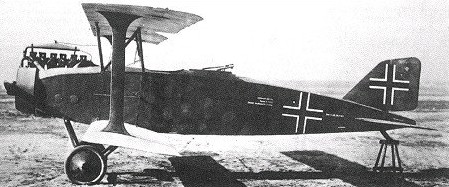
BFW CL.III

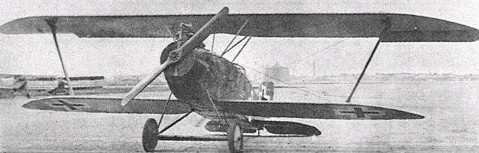
Redesign of the CL.la by BFW in accordance with the “new design principles” as requested by Idflieg resulted in the CL.III, a single prototype of which was completed at the close of hostilities but was not apparently subjected to Idflieg testing. Adhering closely to the concept of the CL.la, the CL.III was powered by a 200hp Benz Bz IV engine and featured longer-span, more angular wings. A further development, the CL.IV, remained on the BFW drawing boards.

Engine: 200hp Benz Bz IV
Wingspan: 11.54 m / 38 ft 10 in
Length: 7.81 m / 26 ft 7 in

BFW 17 / CL.I

In late 1917, the Bayerische Flugzeugwerke (BFW) of Munich was awarded a contract to build two prototypes of the CL.I two-seat reconnaissance fighter of original design. At the time, BFW was negotiating a contract to build 100 Halberstadt CL.II reconnaissance fighters and the company’s CL.I was specifically designed to require 20% less manufacturing manhours than the Halberstadt aircraft. The first prototype, known by BFW as the Type 17, was completed in April 1918 with a 160hp Mercedes D III engine. A single-bay unequal span biplane with an intended armament of one fixed LMG 08/15 machine gun and an LMG 14 on a ring mounting, the CL.I was sent to the Adlershof test centre for Typprüfung in July 1918, but the Idflieg reported that it was “in no way equal” to the Hannover CL.V, requesting that improvements be made and the aircraft resubmitted for further evaluation. Accordingly, a lighter fuselage was fitted and, as the CL.la, the aircraft underwent static load testing between 30 August and 14 September 1918. Results were unsatisfactory and BFW agreed to redesign the CL.Ia in accordance with “new design principles”.

Engine: 160hp Mercedes D III
Take-off weight: 1060 kg / 2337 lb
Empty weight: 720 kg / 1587 lb
Wingspan: 10.62 m / 35 ft 10 in
Length: 7.81 m / 26 ft 7 in

Bezobrazov and Mosca 1914 tandem triplane

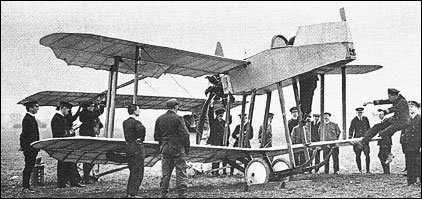
Ensign Alexander Aleksandrovich Bezobrazov (Russia) wanted to make an airplane that was to stable without a tail and proposed a three-winged tailless tandem. In February 1914, he showed his project to the Italian designer and pilot Francesco Mosca, who did a significant part of the design work. According to Bezobrazov’s original ideas, the engine should have been placed in the middle of the fuselage with a long shaft to a tractor propeller, and the cockpit behind the engine in a closed glazed cabin with a periscope, but Mosca objected and the aircraft was being built with a normal fuselage. The construction was completed by October 1914, a month after the outbreak of hostilities. The first flight by Mosca was successful, but Bezobrazov had already been sent to the front. He was wounded and spent a long time in hospital, while the machine was transferred to Crimea where Mosca continued the tests. On 6 August 1916 the pilot IA Orlov crashed it when trying to take off. Repair was completed by March 1917, but further experiments were suspended.

Berry, John

John Berry (1849-1931) was an inventor, mechanic, car-dealer, and builder of balloons in St. Louis who in 1907 was slated to race his airship in the dirigible races held in conjunction with the Gordon Bennett balloon race.

Berry made his first balloon flight on a smoke balloon, in 1862 at the age of 13 from Rochester, N.Y., and his first gas balloon flight the following year. “The Dean of American Aeronauts”, Capt. Berry made more than 500 balloon flights during his aeronautical career which lasted sixty years; his last flight taking place in 1922.

Benz Bz.IV

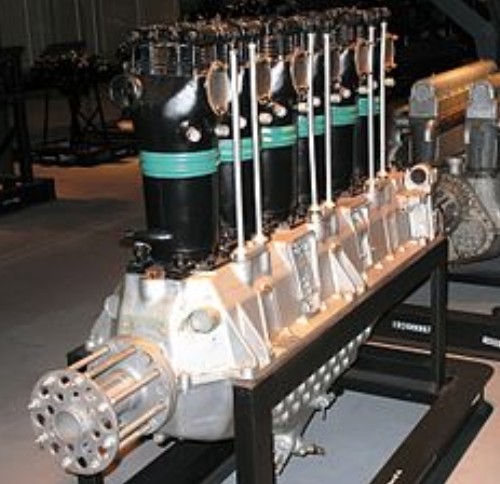
The Benz Bz.IV was a German six-cylinder, water-cooled, inline engine developed for aircraft use. Deliveries began in 1916 and some 6,400 were produced.

The Bz.IV was a dual-camshaft design, with two intake and two exhaust valves per cylinder. The cylinders were cast iron surrounded by a sheet metal cooling jacket. The crankcase was aluminium and pistons were initially steel but later versions had aluminium pistons. A high compression version of the engine (Bz IVü) was produced from 1917 onwards and can be recognised by the red bands painted on each cylinder. In February 1918, pistons from such an engine fitted to an Aviatik G.130 were the first captured aluminium pistons to be examined by the British Ministry of Munitions.

Applications:
AEG C.VI
AEG J.I
AGO C.IV
Albatros C.VII
Albatros J.I
Chitty 2 (racing car)
DFW C.V
Dobi-II
Friedrichshafen FF.49
Friedrichshafen G.II
Halberstadt C.V
Junkers J.I
LVG C.VI
NAVO RK-P4/220
Pfalz D.XII
Pfalz D.XIV
R-planes, the German giants of WWI

Specifications:
Type: 6-cylinder, water-cooled, inline aircraft piston engine
Bore: 145 mm (5.7 in)
Stroke: 190 mm (7.5 in)
Displacement: 18.83 l (1,149.1 cu in)
Length: 1,990 mm (78.3 in)
Width: 530 mm (20.9 in)
Height: 1,150 mm (45.3 in)
Dry weight: 370 kg (815.7 lb)
Valvetrain: Twin inlet and exhaust valves operated by pushrod actuated double rockers
Fuel system: Two Benz 2-jet carburettors feeding three cylinders each
Fuel type: Gasoline specific gravity 0.72
Oil system: Pressure feed at 0.2 MPa (28 psi): 50% Vacuum Heavy, 50% Sternol
Cooling system: Water-cooled
Power output: 170 kW (228.0 hp) at 1,400 rpm
Specific power: 9.1 kW/l (0.2 hp/cu in)
Compression ratio: 4.91:1
Fuel consumption: 85.2 l (150 imp pt) / hour
Specific fuel consumption: 0.495 l/kW/hr (0.65 pts/hp/hour)
Oil consumption: 2.6 l (4.5 imp pt) / hour
Power-to-weight ratio: 0.3796 kW/kg (0.231 hp/lb)

Benz Bz.IIIb

The Benz Bz.IIIb was an eight-cylinder, water-cooled, V-engine developed in Germany for use in aircraft in 1918.

Inspired by the Hispano-Suiza 8, some of which were captured and tested, the Benz Bz.IIIb was a fairly large engine, but its performance was disappointing. Despite not being accepted for service use a number of late World War I prototype German aircraft used the Bz.IIIb and the Benz IIIbo.

Applications:
AEG DJ.I
AEG PE
Albatros D.X
Albatros Dr.II

Specifications:

Benz Bz.IIIb
Type: 8-cylinder liquid-cooled V engine
Bore: 135 mm (5.31 in)
Stroke: 135 mm (5.31 in)
Displacement: 15.5 L (943 cu in)
Length: 1,300 mm (51 in)
Width: 860 mm (34 in)
Height: 850 mm (33 in)
Dry weight: 257 kg (568lb)
Fuel system: Carburetor
Cooling system: Liquid-cooled
Power output: 200 hp at 1,750 rpm