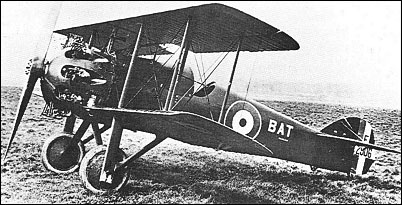
British Aerial Transport Co. / BAT FK.25 Basilisk

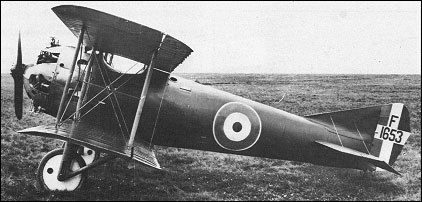
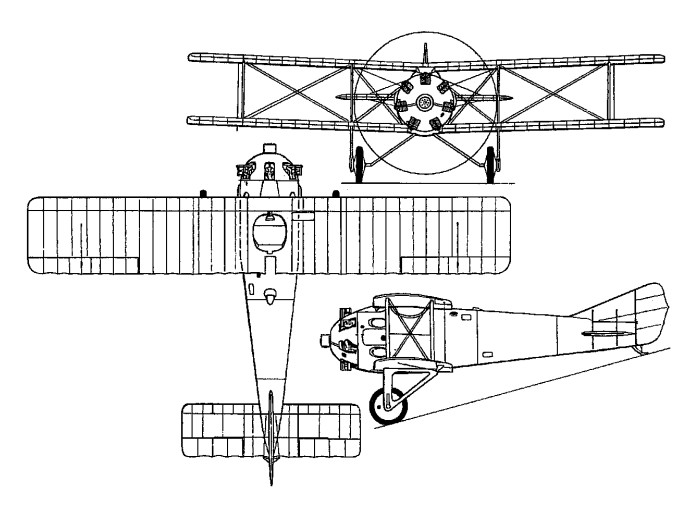
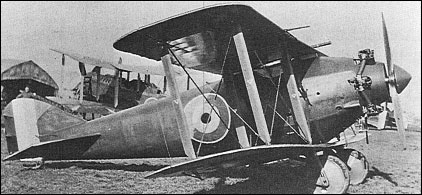
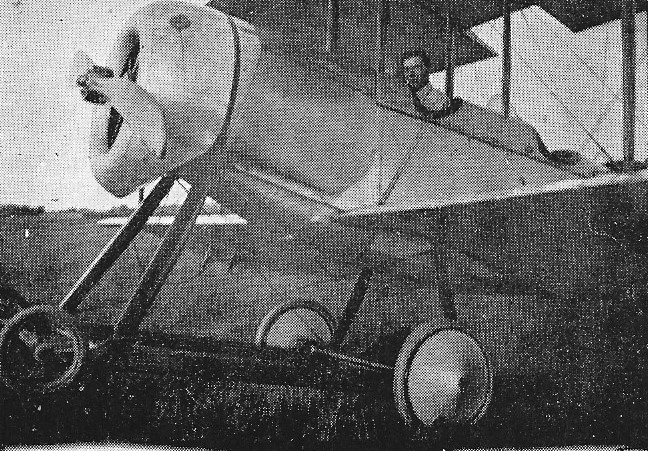
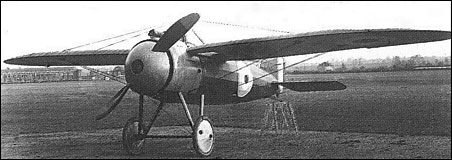
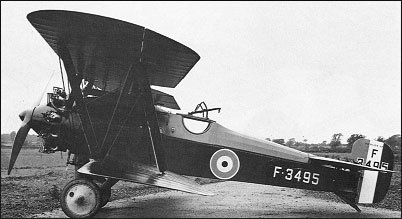
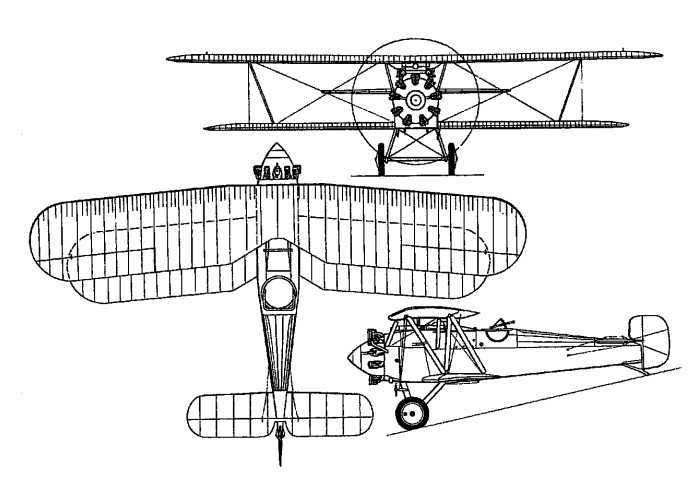
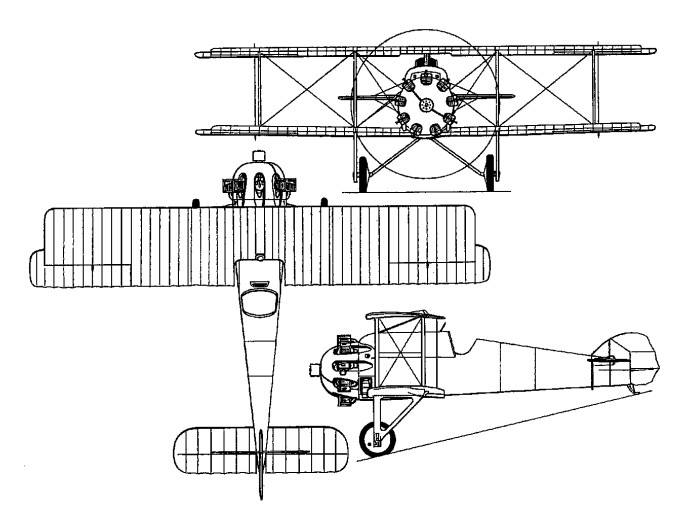
The last single-seat fighter of Koolhoven design built by the British Aerial Transport Company, the F.K.25 Basilisk was designed around the 350hp A.B.C. Dragonfly I nine-cylinder radial engine and carried the usual armament of twin synchronised 7.7mm Vickers guns. Of wooden construction with a monocoque fuselage, the Basilisk featured a hood-like fairing, ahead of the cockpit, which enclosed the guns and shielded the pilot. Three prototypes were ordered, the first of these flying during the summer of 1918. The second prototype, completed in 1919, differed from its predecessor primarily in having a deeper fairing ahead of the cockpit. Further work on the Basilisk was abandoned at the end of 1919.

Engine: 350hp A.B.C. Dragonfly I nine-cylinder radial
Take-off weight: 990 kg / 2183 lb
Empty weight: 659 kg / 1453 lb
Wingspan: 7.72 m / 25 ft 4 in
Length: 6.22 m / 20 ft 5 in
Height: 2.49 m / 8 ft 2 in
Wing area: 19.69 sq.m / 211.94 sq ft
Max. speed: 228 km/h / 142 mph
Armament: 2 x 7.7mm Vickers
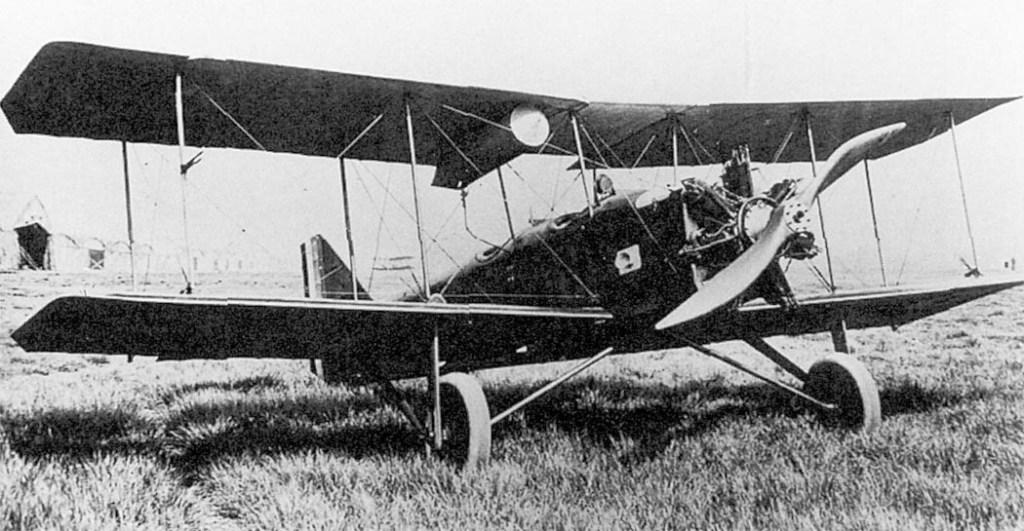
British Aerial Transport Co. / BAT F.K.24 Baboon

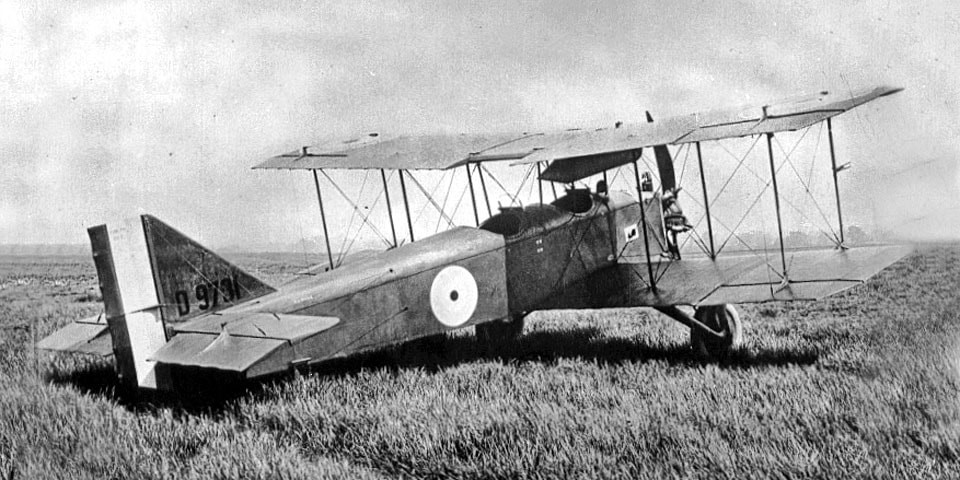
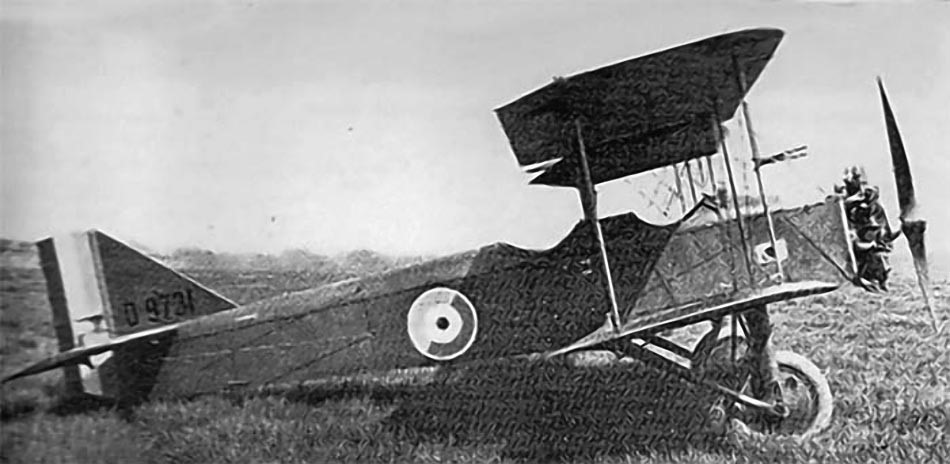
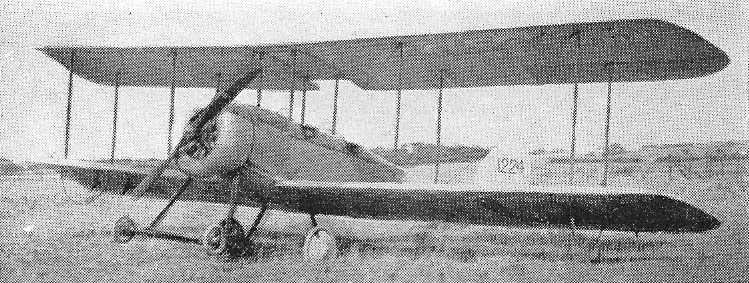
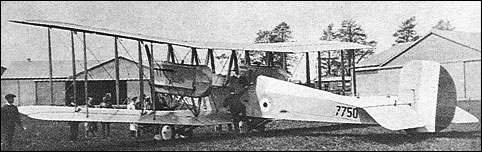
The British Aerial Transport Company Limited F.K.24 Baboon was a two-seat training biplane produced during World War I. Using experience gained designing the Bantam, aircraft designer Frederick Koolhoven (assisted by Robert Noorduyn) designed the two-bay biplane elementary trainer.

The aircraft had a flat-sided fuselage and an uncowled 170 hp (127 kW) ABC Wasp engine simply bolted to the firewall. Maintenance and repair costs have been kept to a minimum through the use of interchangeable upper and lower wing panels, ailerons, elevators and rudders.

Six aircraft were planned but only one was built in July 1918 as a consequence of the end of the First World War and the subsequent sharp reduction in orders for military aircraft.

The Baboon was registered with British Aerial Transport Co. Ltd in May 1919. The only notable act was when it won the Hendon Trophy Race over a 20-mile (32-km) circuit in July 1919 flown by Major Christopher Draper. The Baboon was scrapped at Hendon in 1920.

Powerplant: 1 × ABC Wasp I, 170 hp (130 kW)
Propellers 2-bladed BAT tractor, 5 ft (1.52 m), 7 ft 10 in (2.39 m) diameter
Wingspan: 25 ft (7.6 m)
Wing area: 259 sq ft (24.1 m2)
Length: 22 ft 8 in (6.91 m)
Height: 8 ft 10 in (2.69 m)
Empty weight: 950 lb (431 kg)
Gross weight: 1,350 lb (612 kg)
Fuel capacity: 12 imp gal (54.55 l; 14.41 US gal)
Maximum speed: 90 mph (140 km/h, 78 kn)
Landing speed: 40 mph (64 km/h; 35 kn)
Endurance: 2 hours
Rate of climb: 833.33 ft/min (4.2333 m/s)
Time to altitude: 10,000 ft (3,048.0 m) in 12 minutes
Wing loading: 5.2 lb/sq ft (25 kg/m2)
Power/mass: 0.126 hp/lb (0.206 kW/kg)
Crew: 2
Capacity: 400 lb (181.44 kg) disposable load

British Aerial Transport Co. / BAT FK.23 Bantam I

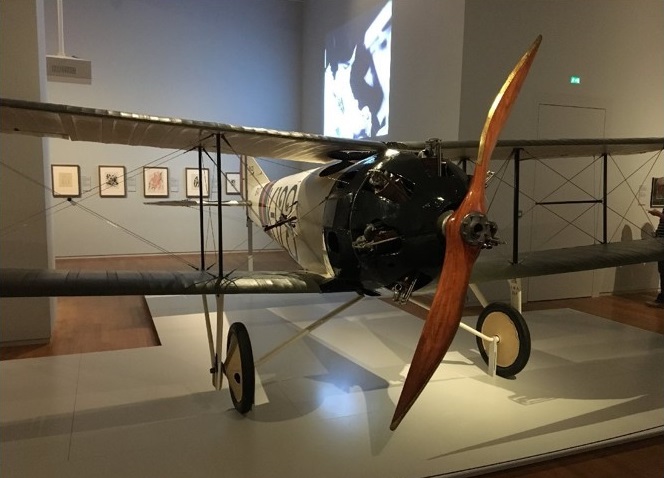
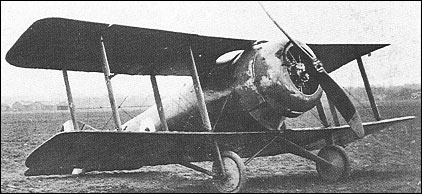
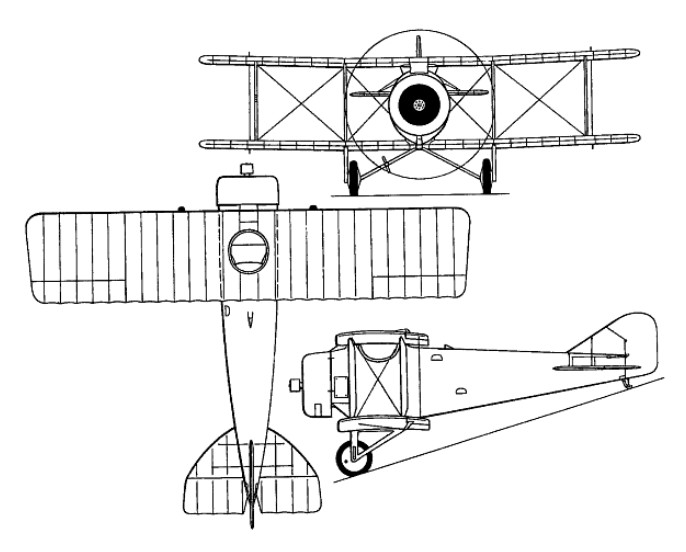
The first prototype F.K.23 was originally ordered as the fourth of a batch of six development F.K.22s, and while retaining the wooden structure with monocoque fuselage, it embodied extensive redesign. Overall span and wing area were reduced to 6.09m and 14.86sq.m respectively, and the tail surfaces were redesigned. Armament comprised two synchronised 7.7mm Vickers guns and power was provided by a 170hp A.B.C. Wasp I, flight testing being initiated in May 1918. Two further prototypes (originally ordered as the fifth and sixth F.K.22s) were similarly powered, but dimensionally larger, and after further redesign resulting from initial flight trials, a batch of 12 F.K.23 Bantam Is was ordered, the first of these being delivered to the RAE at Farnborough on 26 July 1918. At least nine Bantam Is were completed, one of these being sent to France and evaluated at Villacoublay in the late summer of 1918. One example was sent to the USA for evaluation at Wright Field, but this fighter’s principal shortcoming was the poor reliability of its Wasp I engine.

Engine: 170hp A.B.C. Wasp I
Wingspan: 6.09m
Wing area: 14.86 sq.m

British Aerial Transport Co. / BAT FK.22 Bat / Bantam II

The first design by Frederick (Frits) Koolhoven after joining the British Aerial Transport Company (B.A.T.), the private-venture F.K.22 single-seat fighter flown in September 1917 was of wooden construction with a monocoque fuselage. Powered by a 120hp A.B.C. Mosquito six-cylinder radial engine, it displayed sufficient promise to win an official contract for a batch of six development aircraft. The first and third of these were powered by the 170hp A.B.C. Wasp seven-cylinder radial (F.K.22/1) and the second by a 100hp Gnome Monosoupape nine-cylinder rotary (F.K.22/2), the remaining three eventually being completed as prototypes for the F.K.23. The F.K.22/2, retroactively named Bantam II, was the first to fly, commencing its trials in December 1917 and being delivered to Martlesham for official trials on 19 January 1918. Armament comprised two synchronised 7.7mm Vickers guns, and this prototype, later re-engined with a 110hp Le Rhone 9J nine-cylinder rotary, was eventually assigned to the Central Flying School at Upavon.

F.K22
Engine: 120hp A.B.C. Mosquito six-cylinder radial

F.K.22/1
Engine: 170hp A.B.C. Wasp seven-cylinder radial

F.K.22/2
Engine: 100hp Gnome Monosoupape nine-cylinder rotary
Take-off weight: 571 kg / 1259 lb
Empty weight: 393 kg / 866 lb
Wingspan: 7.52 m / 24 ft 8 in
Length: 6.30 m / 20 ft 8 in
Height: 2.26 m / 7 ft 5 in
Wing area: 21.37 sq.m / 230.02 sq ft
Max. speed: 161 km/h / 100 mph

British Aerial Transport Co. / BAT

Founded in 1917 by Samuel Waring in premises previously occupied by the Joucques Aviation Company. The British Aerial Transport Company’s chief designer was Frederick Koolhoven, formerly with Sir W. G. Armstrong, Whitworth & Company Ltd. His first design for the new company was the BAT F.K.22 Bat, a small single-seat fighter. Failure of the ABC Mosquito engine for which it was designed resulted in a new and smaller aircraft being created, the F.K.23 Bantam, powered by the ABC Wasp. Only nine production aircraft were built, and none saw wartime. Other BAT designs included the F.K.24 Baboon, F.K.25 Basilisk and, finally, the F.K.26, a civil transport aircraft with accommodation for four passengers, of which only four were built. The F.K.27 was a single side-by-side, two-seat variant of the Bantam. When the company went bankrupt in 1919, its assets were distributed between Alliance Aeroplane Company Ltd. and Nieuport & General Aircraft Company, also founded by Samuel Waring.

Bristol TB.8

The Bristol TB.8 two-seat trainer of 1914-15 was powered by 80 hp rotary engines. Various makes were used including Gnome, Le Rhone and Clerget. Later models were powered by a 100 hp Gnome Monosoupape engine.

RNAS TB.8 – 100 hp Gnome

About 36 were built, of which some were supplied to the RNAS and six went to Roumania.

Wingspan: 37 ft 8 in
Length: 29 ft 3 in
Max speed: 73 mph

Bristol TTA

Designed by Frank Barnwell assisted by Leslie G Frise, the T.T.A. (Twin Tractor Model A) was intended to meet a requirement for a two-seat twin-engined local defence fighter, the gunner in the nose having an unobstructed field of fire for two free-mounted 7.7mm Lewis guns. Dual controls were fitted and the intended power plant comprised two 150hp R.A.F.4a engines. In the event, non-availability of these engines resulted in the installation of two 120hp six-cylinder Beardmore water-cooled engines in the two prototypes ordered. The first T.T.A. was flown in April 1916, but displayed poor lateral control and was adversely criticised on the grounds of poor pilot view. As by this time synchronising mechanisms for guns were becoming available, no further development of this category of aircraft was pursued.

Engines: 2 x 120hp six-cylinder Beardmore
Take-off weight: 2313 kg / 5099 lb
Empty weight: 1733 kg / 3821 lb
Wingspan: 16.30 m / 53 ft 6 in
Length: 11.94 m / 39 ft 2 in
Height: 3.81 m / 12 ft 6 in
Wing area: 75.90 sq.m / 816.98 sq ft

Bristol M1 Monoplane / B.20

M1C

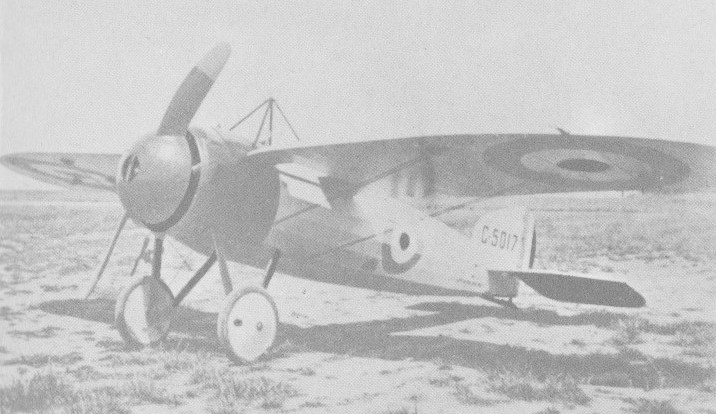
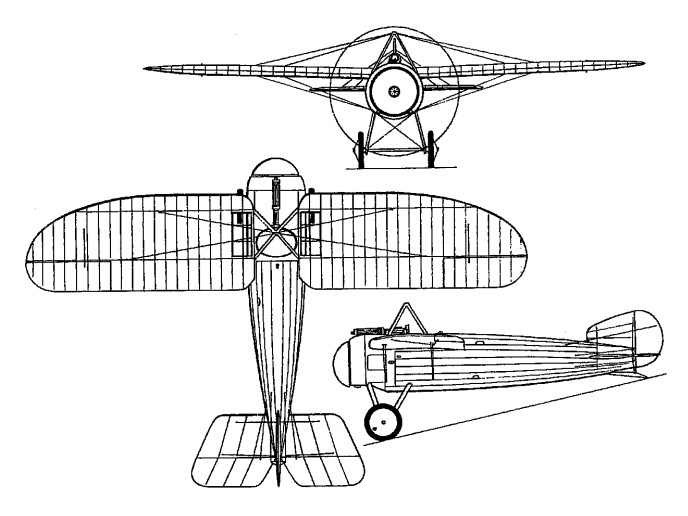
The prototype Bristol M.1A, designed by Frank Barnwell with a 110 hp Clerget engine, flew for the first time on 14 July 1916. Streamlined for its day, it reached a top speed of 132 mph.

Four M.1B’s were built for service trials, differing from the prototype only in having a pyramid-shape wing support structure, in place of the former curved cabane, and a 7.7mm Vickers machine-gun on the port side of their front fuselage and a clear-view cut-out panel in the starboard wing root to afford the pilot a measure of downward visibility.

A production order for 125 aircraft was placed on 3 August 1917 as M.1s. Powered by a 110hp Le Rhone 9J nine-cylinder rotary engine, the M.1C had a centrally-mounted Vickers gun, but its subsequent operational career was largely confined to the Middle East where 33 M.1Cs were sent during 1917-18.

M .1C

Only five squadrons were partly equipped with the M1 for operational use although a number were issued to flying schools. No aircraft of this type were issued to RFC squadrons based in France, the 97km/h landing speed being considered too high for small Western Front airfields.

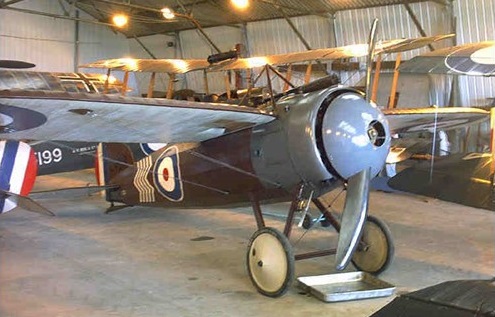
Northern Aeroplane Workshops Replica Bristol M1C

Replica: Northern Aeroplane Workshops Bristol M1C

Gallery

M.1A
Engine: 110 hp Clerget
Seats: 1

M.1B
Engine: 110 hp Clerget
Seats: 1

M.1C
Engine: 110hp Le Rhone 9J nine-cylinder rotary
Wingspan: 9.37 m / 30 ft 9 in
Length: 6.23 m / 20 ft 5 in
Height: 2.37 m / 7 ft 9 in
Wing area: 13.47 sq.m / 144.99 sq ft
Empty weight: 406 kg / 895 lb
Take-off weight: 611 kg / 1347 lb
Fuel capacity: 18 gal
Max. speed: 209 km/h / 130 mph at SL
Service ceiling: 20,000 ft
Endurance: 1 hr 45 min
Armament: 1 x Vickers 7.7mm mg
Seats: 1

Bristol Braemar

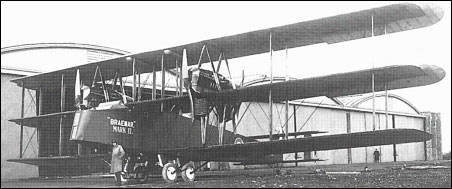
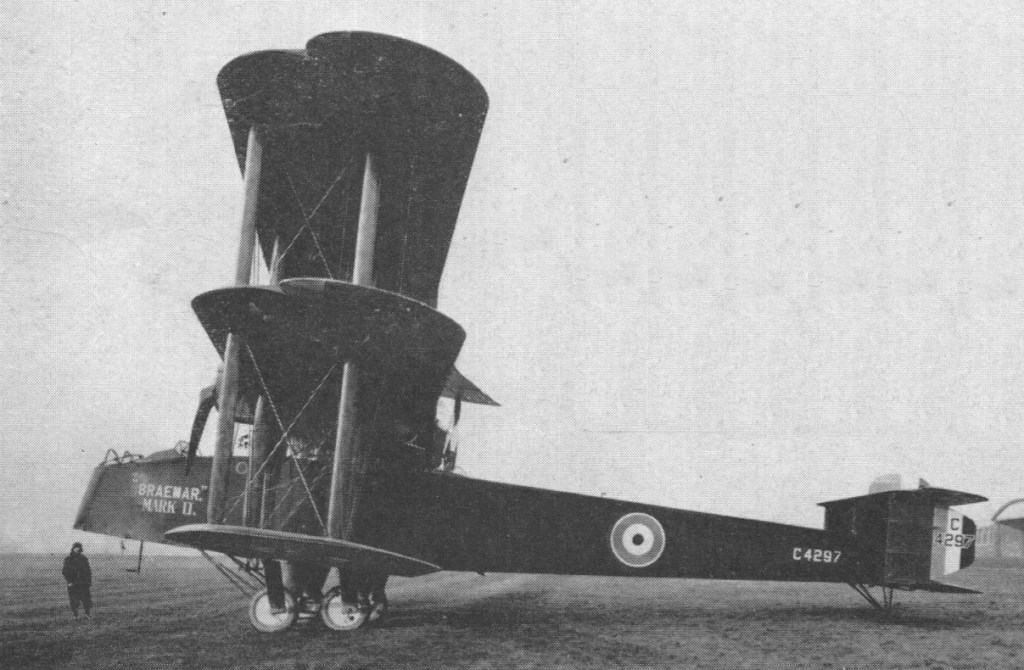
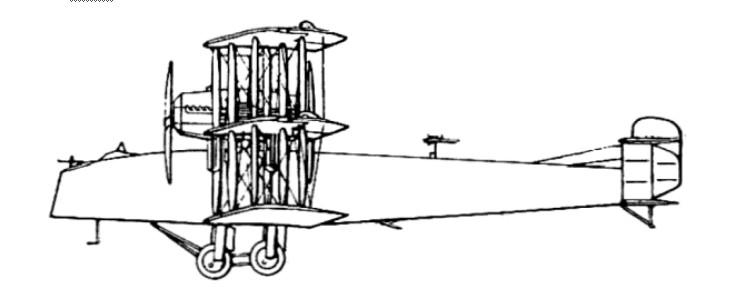
An unsuccessful contender for a 1917 large bomber requirement, the four engined triplane Bristol Braemar which did not go into production. The Braemar formed the basis of the Pullman, an equally unwanted airliner with a large cabin and enclosed cockpit. The Pullman’s crew distrusted this feature and took to carrying axes with which to hack their way out in an emergency.

Braemar Mark II
Engine: 4 x 410hp Liberty 12A water-cooled in-line engines
Wingspan: 24.89 m / 81 ft 8 in
Length: 15.70 m / 51 ft 6 in
Height: 6.30 m / 20 ft 8 in
Wing area: 176.98 sq.m / 1905.00 sq ft
Take-off weight: 8399 kg / 18517 lb
Empty weight: 4835 kg / 10659 lb
Max. speed: 201 km/h / 125 mph
Ceiling: 5182 m / 17000 ft
Crew: 6
Armament: 5 x 7.7mm machine-guns, 6 x 100kg bombs

Bristol F.2C Badger

Intended as a successor to the F.2B two-seat fighter-reconnaissance aircraft, the F.2C Badger was designed for the 320hp ABC Dragonfly I nine-cylinder radial. Three prototypes were ordered. Armament comprised two fixed 7.7mm Vickers machine guns and a 7.7mm Lewis gun mounted on a Scarff ring in the rear cockpit.
The first prototype suffered a crash landing because of an engine failure during its first take-off on 4 February 1919, but was rebuilt and flown. The second prototype was completed with a nine-cylinder Cosmos Jupiter of 450hp and flew on 24 May 1919, but later had a Dragonfly substituted for the Jupiter. A third aircraft was completed as the Badger II with a Cosmos Jupiter engine and redesigned wings, this being re-engined in 1921 with a 385hp Jupiter II (this power plant having meanwhile been taken over by Bristol) and subsequently being used primarily for engine development purposes.

F.2C Badger
Engine: 320hp ABC Dragonfly I nine-cylinder radial
Take-off weight: 1430 kg / 3153 lb
Empty weight: 884 kg / 1949 lb
Wingspan: 11.20 m / 36 ft 9 in
Length: 7.21 m / 23 ft 8 in
Height: 2.76 m / 9 ft 1 in
Wing area: 33.18 sq.m / 357.15 sq ft
Max. speed: 217 km/h / 135 mph