Canadian Vickers Ltd was established 1911 at St Hubert, Montreal, as subsidiary of Vickers Ltd. Aircraft division formed 1922; first Canadian company to build aircraft commercially. First contract was for six U.K.-designed Viking IV amphibians for Canadian Air Force. These followed from 1924 by 61 Vedette single-engined flying-boats and amphibians, its most successful product, designed in Canada by W.T Reid. During the 1920s six other designs appeared: the Varuna, Vista, Vanessa, Velos, Vigil, and Vancouver. Of these, only the Varuna (eight) and Vancouver (six) flying-boats went into production. In the 1930s the company license-built Fairchild and Fokker designs and Northrop Deltas. During the Second World War built 40 Supermarine Stranraer flying-boats for the RCAF, 230 Consolidated OA-10 Catalinas for the USAAF, and 149 Canso amphibians for the RCAF, plus hulls for 600 more Catalinas and fuselages for 40 Handley Page Hampden bombers. Took over Canadian Associated Aircraft in 1941, and in following year moved to government factory at Cartierville, near Montreal. In December 1944 became a separate autonomous company under new name of Canadair Ltd.
Formed December 1944 at Cartierville, Montreal, from Aircraft Division of Canadian Vickers Ltd., as a “Crown Company.” Purchased 1946 by Electric Boat Company of New York; later that year became a subsidiary of General Dynamics Corporation. First contract (1944) to build the DC-4m (Merlin-engined version of the Douglas DC-4) for the RCAF. Eventually built 71, including commercial versions, and converted many wartime C-47s into postwar commercial DC-3s. Since 1949 has license-built more than 1,900 North American F-86 Sabre jetfightersforthe RCAF and the U.S. Military Assistance Program; more than 700 Lockheed T-33 SilverStar jettrainers; 200 Lockheed F-104 Starfighters for the RCAF; and 240 Northrop F-5s for the Canadian Armed Forces and Royal Netherlands Air Force.
Products of its own design have included the CL-28 Argus Maritime patrol aircraft (32 built); CL-41 jet trainer/ground-attack aircraft (210 for Royal Canadian and Malaysian Air Forces); 39 CL-44 Yukon and 44 military/civil transports; three prototypes of the CL-84 tilt-wing VTOL research aircraft; CL-215 twin piston-engined firefighting and utility amphibian (first flown October 1967) and its CL-215T twin-turboprop reengined derivative (first flown June 1989); and Challenger 600 wide-body business jet (first flown November 1978) and 601 follow up. Company was repurchased by the Canadian government in December 1975. Other programs included the CL-89 battlefield reconnaissance RPV, major subcontract work for the U.S. Navy’s P-3C Orion and its Canadian derivative, the CP140 Aurora, and manufacture of components for other companies.
Canadair became part of Bombardier Aerospace Group in December of 1986, renamed Bombardier Inc. Canadair.
World War 1
Bussard Arrow
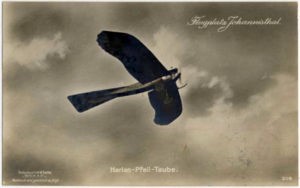
From a Harlan Dove, which was improved constructively, the Buzzard Arrows flew with a 100-horsepower Daimler engine.
Bussard-Flugzeug-Werke GmbH
At the beginning of 1914, the “Bussard-Flugzeug-Werke GmbH” emerged from the sale of the remains of Harlan-Flugzeugwerke GmbH and had its small workshop and flying school in the shed.
From a Harlan Dove, which was improved constructively, the Buzzard Arrows flew with a 100-horsepower Daimler engine. In addition, a light sports aircraft with an air-cooled 25-hp three-cylinder engine was built, which still flew in Johannisthal in 1914, before the Buzzard workshop was shut down in the summer of 1914.
Buscaylet et Cie
France
Built aircraft under subcontract during the First World War. In 1923 secured services of Louis de Monge as a designer, producing in 1924 a single-seat monoplane fighter with 300 hp Hispano-Suiza engine. It was notable for being of all-metal construction, except for fabric covering of wing and tail surfaces.
Burgess X-16
In 1913 as Burgess-White, R White designed the X-16 aero engine. It was a 500hp air-cooled 16 cylinder, X-configuration. With two V-8 motors united, it was possibly never completed.
Burgess Military Aeroplane
Burgess K / D-1 / AB-6
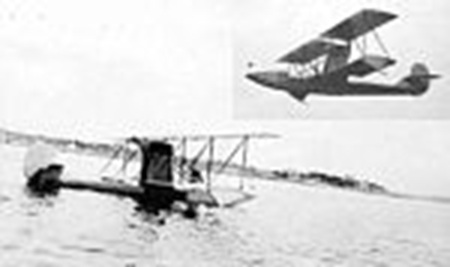
The Burgess K was flown in April 1913 with a 70 hp Renault pusher engine. The two-bay biplane wings had inverted V-struts with a single tube metal spar, and wooden hull.
The single example built, purchased by the Navy, was taken into service as the D-1 (later AB-6) and was destroyed in a crash in early 1914.
Burgess K
Engine: 70 hp Renault
Span: upper 40’9″ lower 35’5″
Length: 30’9″
Seats: 2

Burgess Dunne Seaplane / AH-7

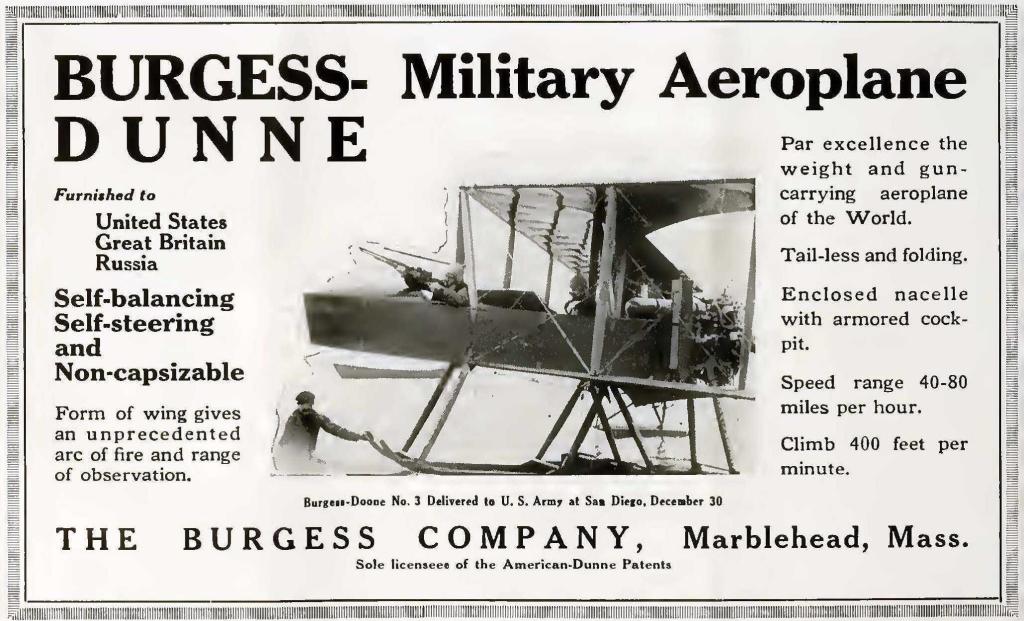
Canada’s first military aircraft was this 1914 seaplane, one of several built in America to the designs of J.W.Dunne.

Bugatti U-16 / Breguet-Bugatti U.16 / Duesenberg Motor Corporation King-Bugatti U-16
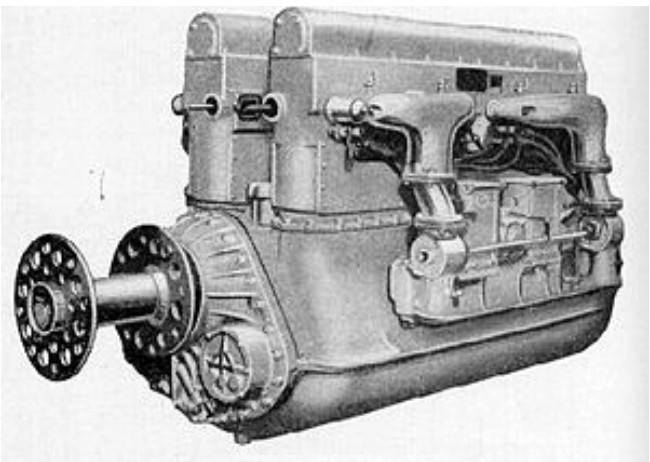
The Bugatti U-16 was a 16-cylinder water-cooled double-8 vertical in-line “U engine”. The U-16 engine was designed by Ettore Bugatti in 1915-1916 to use as many features of a previous Bugatti 8-cylinder in-line engine as possible. Two eight-cylinder banks were mounted vertically side by side on a common cast aluminium crankcase, each bank driving its own crankshaft. The two crankshafts were geared to and drove a single common airscrew shaft. The shaft was bored to accept a 37-mm gun barrel, and a clear passage was provided through the crankcase in line with the shaft boring for the same purpose. Each eight-cylinder bank was made up of two cast iron four-cylinder blocks; the crankshafts were each made up of two standard four-cylinder crankshafts joined end to end by a fine taper cone joint. To reduce overall length, these crankshafts were undercut.
A bevel gear at the junction drove a vertical shaft from which the single overhead camshaft and dual magnetos for each bank were driven. Two magnetos were mounted on the outside of each cylinder bank. Each magneto fired all eight cylinders for that bank, driven by bevel gear from the vertical shaft that also drove the bank’s single overhead camshaft. Each cylinder had two vertical inlet valves and a single vertical exhaust valve, all driven by rocking levers from the camshaft. Four carburettors each fed four cylinders via a water jacketed manifold. Each cylinder exhausted into an individual pipe in the space between the cylinder blocks. The whole construction was protected by patents until 1935.
The engine completed ten-hour and fifty-hour endurance tests in 1917, and the French government purchased a license and arranged for production by Peugeot. During the fifty hour test a US sergeant who was observing the test for the Bolling Commission was killed by the propeller, becoming the first US serviceman to die on active service during World War I.
In 1917 a US military mission headed by Colonel R.C. Bolling visited Europe to choose aero engines to be produced for the US army air forces. The mission was accompanied by a group of civilian experts headed by the engine manufacturer Howard Marmon. The Bugatti U-16 aroused interest and Marmon arranged for a license to be purchased for $100,000 by the US government. In December 1917 a “Bugatti Mission” sailed from Bordeaux for the US to supervise production of the engine at the Duesenberg Motor Corporation of Elizabeth, New Jersey, where the engines were planned to be made.
The US government engaged one Colonel Charles B. King to redesign the engine for production in the US, much to Ettore Bugatti’s irritation. Col. King did not approve of some of the detail design of the engine, such as the lack of water cooling around the valve seats and the close pitch of valves. Accordingly King’s revisions to the design altered the cylinder heads to provide freer water circulation, better valve cooling, and a slight increase in the distance between valve centres. Probably about 40 King-Bugattis were made before the end of World War I caused building contracts to be canceled.
Neither Bugatti’s U-16 or the King-Bugatti were particularly successful engines. Few were installed in aircraft, and even fewer actually flew. After World War I no further developments were made in the US, while in France Breguet took over the license and continued development under the designation “Type U-24”. In 1920 Breguet showed a “quadrimoteur” made of two Type U-24s coupled together, with provision to declutch any cylinder bank to enable it to be stopped while the other three units continued to provide power.
Variants:
Bugatti U-16 (1915)
King-Bugatti (1918)
Breguet-Bugatti (1919 – early 1920s)
Applications:
Bugatti U-16 – Morane-Saulnier AN, 1918 prototype fighter aircraft
King-Bugatti – a 1918 Packard-Le Peré LUSAC-21
Breguet-Bugatti – Breguet type XIX, 1921 (but not flown with this engine), and types 20 and 21 “Leviathan”, 1920 & 1921
Specifications:
King-Bugatti
Type: 16-cylinder water-cooled double vertical in-line engine
Bore: 4.33 in (110 mm)
Stroke: 6.3 in (160 mm)
Displacement: 1484.3 in3 (24.32 L)
Length: about 44.25 inches (1,124 mm)
Width: about 24.8 inches (630 mm)
Height: about 32.28 inches (820 mm)
Dry weight: 1,286 pounds (583.3 kg)
Valvetrain: Single overhead camshaft per cylinder bank, 3 valves per cylinder (2 inlet, one exhaust)
Fuel type: Petrol
Oil system: Dry sump, one scavenging pump and one pressure pump each driven from the front ends of the camshafts
Cooling system: Water-cooled
Reduction gear: 1.5 to 1
Power output: 410 hp (305 kW) at 2,000 rpm
Compression ratio: 5:1
Power-to-weight ratio: 0.42 hp/lb (0.7 kW/kg)
British Anzani
The original Anzani Moteurs d’Aviation was situated at 112 Boulevard de Courbevoie, Courbevoie, Paris and opened for business in 1907.
The British Anzani Engine Company was an agency of the original French operation and the first premises were established on November 20th 1912 in Scrubbs Lane, Willesden, London NW10. The majority shareholder was General Aviation Contractors a company which had been established in 1911 under Mr Ridley Prentice to supply aircraft and spares for the emerging British aviation market and which already handled the sales of the French built Anzani motors. They had been given 1500 £1 shares as compensation for the loss of their sole rights.
British Anzani was then solely concerned with making aero engines which were sold from the salesrooms of General Aviation Contractors in Regent Street, London and constructed by Coventry Ordnance Works Ltd., an engineering company known for their contract engineering skills.
You could purchase a 25-30hp Anzani 3 cylinder ‘Y’ for £172, a 40-45hp 6 cylinder radial was £300, a 50-60hp radial was £372, a 70-75hp 10 cylinder radial cost £500 or the 100hp 10 cylinder radial was £600. The 120° radial 3 cylinder was an uprated version of the original Blériot motor bored out to 120×130mm (35hp) while the 45hp radial was a two row machine (the first of it’s kind) made by basically placing a second 3 cylinder motor behind the first at 60° rotation for equal cooling (likewise the 10 cylinder machines were 2×5 cylinder configuration). They featured cast iron cylinders, sprung auto inlet valves, rocker operated exhaust valves, two throw crankshafts, and slipper-type big ends to give their 45hp at 1,300 rpm. The production numbers were relatively small (125 engines were produced between 1914-1918) and during the Great War they were used mainly in British Caudron GIII and GIV trainers. The engine designs didn’t alter drastically through this period although pushrod inlet valves were introduced and water cooling was tried, but reliability was always a problem.
The first chairman of the new company was Dominic L. Santoni a former director of British Deperdussin and listed in the company documentation as an ‘aviator’. Many of his fellow directors also had aviation in their blood. Lt. J.C. Porte was a naval officer and well known pilot who had connections with the American company Curtiss as well as also being a former British Deperdussin director. W.R. Prentice was the third director with flying experience as was Captain J.C. Halahan (Royal Dublin Fusiliers and R.A.F.) and Claude Schofield. Schofield’s Anzani career wasn’t longlived as his name was removed from the company records in 1913 with the word ‘dismissed’ crossed out and ‘resigned’ entered over it!
The original capital investment of £10,000 was enhanced by another £12,000 raised on a debenture in 1915. In December 1916 Hubert Hagens joined the board along with accountant Richard Simpkin. Hagens was a Belgian motorcycle racer and an extremely talented engine designer. The engines he designed and his influence on the company would be significant.
Another important arrival was Gustave Maclure. ‘Mac’ Maclure had joined the company as Works Manager in 1917 from Rolls Royce car division where he had been employed as head of the testing department at only 25 years of age. The addition of Maclure strengthened considerably the engineering expertise available at British Anzani and many rated his talent among the very best in the British engineering industry at the time. He had been brought into the company to oversee the production of the 5 and 10 cylinder aero engines and stayed to design possibly their most successful engine, the 11.9 hp side-valve car engine.
There were many comings and goings at board level and another well known executive was it’s general manager Mr A.M. Ramsay (who was later also MD of the British Caudron aircraft company of Cricklewood and Alloa from 1914-24). There is evidence of a significant alliance with British Caudron and this sharing of directors may be illustrative of that.
In the UK, British Anzani outsourced the manufacture of their engines to Coventry Ordnance Works Ltd. In the 1920s, it was refinanced as British Vulpine Engine Company, and then again as British Anzani Engineering Company, concentrating on small engines and car and motorcycle powerplants. They supplied AC Cars with the 1496cc side-valve four-cylinder (that would become AC’s famous 2-litre motor), Frazer-Nash with an 1496cc ohv engine, Morgan Motor Company with a V-twin, and Squire with the R1 twin cam engine. Berkeley Cars used small Anzani motorcycle engines in some models. British Anzani’s best known products were motorcycle, lawnmower and outboard engines. Cotton, Tandon and Greeves motorcycles used Anzani motors.
From 1927 the US Anzani agent was a company called Brownback Motor Laboratories Inc, of 1038 Graybar Building, New York. Like the British company they made their own modifications to the engines which included changing the ignition and lubricating systems, the valves, rocker arms and piston designs.
After World War I the British aviation industry contracted and consolidated behind the larger companies and many of the smaller firms disappeared. One of these was British Caudron who made no aircraft after 1919 and eventually went into receivership in 1924. In the depths of the War though they had needed more engines and had given British Anzani the finance to expand and build a production capability at their Willesden site. This led to their most productive year of the war delivering 107 100hp models. Later, a change in buying policy by the Allies meant fewer companies supplying the War effort effectively freezing out the smaller contributors and by February 1918 British Anzani had all but given up trying to compete in the aero engine business. They were still making spares for Curtiss however and doing development work for the Government. They refurbished and repaired old engines and were desperately trying to gain contracts for new engines – and it was with these brand new engines that British Anzani faced the post-war challenge.
One of these engines was to be a Hagens designed 35hp 60° V-twin of 1,100cc which eventually found applications in motorcycles, light cars and aircraft right up until the start of the Second World War. It was based on a 500cc single cylinder French Anzani engine that had been sent over just after the War but Hubert Hagens development skills produced a marvellously powerful engine that appeared in a multiplicity of formats over the next 15 years. It was this little engine that took Claude Temple to a land speed record on two wheels in 1923 and powered AJW, OEC, McEvoy, Trump and Montgomery motorcycles, Morgan sports cars and a score of different types of light aircraft.
The engine had first appeared in 1921 and British Anzani finally ceased to produce the engine themselves in 1938 saying that it was “due to a rush of sub-contract orders and the fact that a new light aero engine is in the design stage.” It was however surplus to requirements although they did continue to manufacture small numbers on behalf of Luton Aircraft until that company’s demise during the war.
The V-twin was supplied in many different formats. The 78×105 stroke (1000cc) which was developed into the 83×101.5 (1100cc) stroke for the later sprint and aero engines. Recognisable by parallel push rods and open rocker gear and known as 8-valvers because of their twin inlet and exhaust valves per cylinder.
In 1922 Douglas Hawkes driving a Morgan with one of these engines achieved two World Records: the Flying 5 (85.14mph) and Standing 10 mile (81.70mph).
This was the engine that was later reintroduced in the Nash years to power the Flying Flea small aeroplanes. It then had a ‘softer’ cam and had it’s power output limited by a 3000rpm rev limit.
The last type of standard V-twin came with diverging push rods and were intended for more prestigeous applications such as the innovative AJW machines. They were designed to have quieter running characteristics and were far more oil-tight.
The final design was the hugely impressive OHC engine Hagens designed for his friend and collaborator Claude Temple. This was the engine with which Temple shattered motorcycle World Land Speed records, firstly at 108.48mph then 120.41mph (and 104.12 with a sidecar) and he also became the first man to do 100 miles in an hour and he held records at the 200 mile mark and 2 and 3 hour limited speed trials.
Airplane manufacturers liked the powerful little motor: ANEC (The Air Navigation and Engineering Company) of Addlestone, Surrey used it in their ANEC I & II monoplanes, Mignet in their HM14, and Hawker powered their little Cygnet biplane with it in 1924. The same year it also appeared in the Bristol Prier-Dickson. The design was eventually purchased in 1938 by the Luton Aircraft Company of Gerrards Cross, who had been fitting it to their Luton Minor and Luton Buzzard range of homebuild light aircraft popularly known at the time as Flying Fleas. The engine was modified yet again by Luton with a slight over-bore and fitted with dual ignition and a different carburettor and was marketed as the Luton-Anzani. Luton went out of business during WWII.
A ready-to-fly Luton ‘Flea’ finished in any colour and complete with Anzani motor and airscrew was available at £165 or in true home build tradition all the parts could be purchased separately. A plane in kit form (with instructions) was priced at £62.10s.0d
In August 1919 Mr Ramsay resigned and British Anzani was reformed as a limited company under the joint control of Mr R.H. Simpkin (also general manager of the British Caudron factory at Cricklewood, north London) and Hubert Hagens.
In the years after World War II, the company’s main product was the ‘Iron Horse’ – a two-wheeled pedestrian-controlled ploughing engine and light tractor. In time, four-wheeled versions with the driver sitting on the front of the vehicle were produced. The company became the British Anzani Group, and was trading under that name when it went into liquidation in 1980.
The trademark ‘British Anzani’ was re-registered in 2003 and the company, Anzani Ltd, in 2006. The company is supplying classic spares through Dolphin Engines of Launceston (Cornwall, UK) and was planning a return to the automotive, marine and transport industries, with products designed by Bo Zolland.
 All Aero