
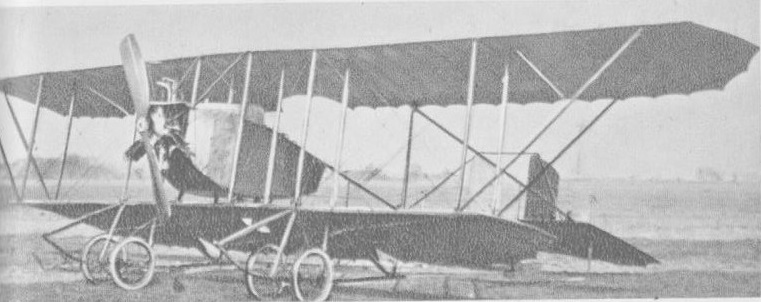
Developed from the G.II, the G.III was a two-seat sesquiplane powered by a 59.6kW Le Rhone, Gnome or Anzani engine mounted in the nose of the short crew nacelle. First flown in France in 1912, over 100 were operated by the Royal Naval Air Service and Royal Flying Corps for training. A few had initially been used prior to 1914 as seaplanes.
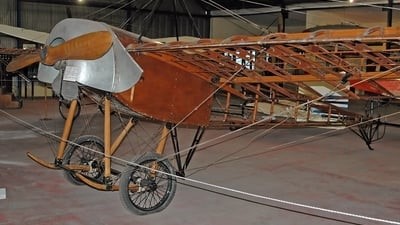
The G.III was a two-bay biplane with strut-braced extensions to the upper wing. The wings were of wooden construction with fabric covering. There was a small nacelle for the crew. The tail surfaces, with twin fins and rudders, were carried on open wire-braced wooden booms, the lower members continuing forward to form skids. Wing warping was used instead of ailerons. Two twin-wheel main undercarriage units were fitted.
The G.III remained in service with the French Air Force for artillery spotting duties on the Western Front and in the Balkans until mid-1916.
Others, built in Italy, were used operationally until March 1917.
Most of the G.IIIs flown by the American, Belgian and Russian air forces were used as trainers.

G.IIIAs were built for military use in 1914 and used extensively by France, U.K., Belgium, Russia, and Italy as two-seat reconnaissance/ artillery observation aircraft. Several hundred were built, mostly in France, but also by British Caudron and in Italy.
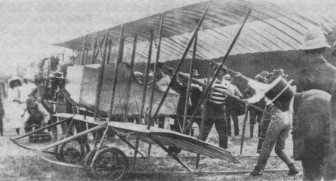
The Canterbury (NZ) Aviation Co. Ltd of New Zealand had six imported Caudron GIII one and two-seat trainers. They built up three locally made copies – #3 #5 and #9.
3 – Caudron-type single seater
‘White Wings’
First flown 21 Jul 1917
Local copy built by J G Mackie at Sockburn. Single-seater, 45hp Anzani.
Badly damaged on takeoff Sockburn 7 Oct 1917. Pilot H Morse.
5 – Caudron-type 2-seater
Local copy built by J G Mackie at Sockburn. Dual control, fitted with 60hp Motor ex-#2
First flown Oct 1917
Withdrawn from use Sockburn 1920
9 – Caudron-type single-seater
Local copy built by J G Mackie at Sockburn. Single-seater, 45hp Anzani.
First flown May 1918.
Withdrawn from use Sockburn 1920


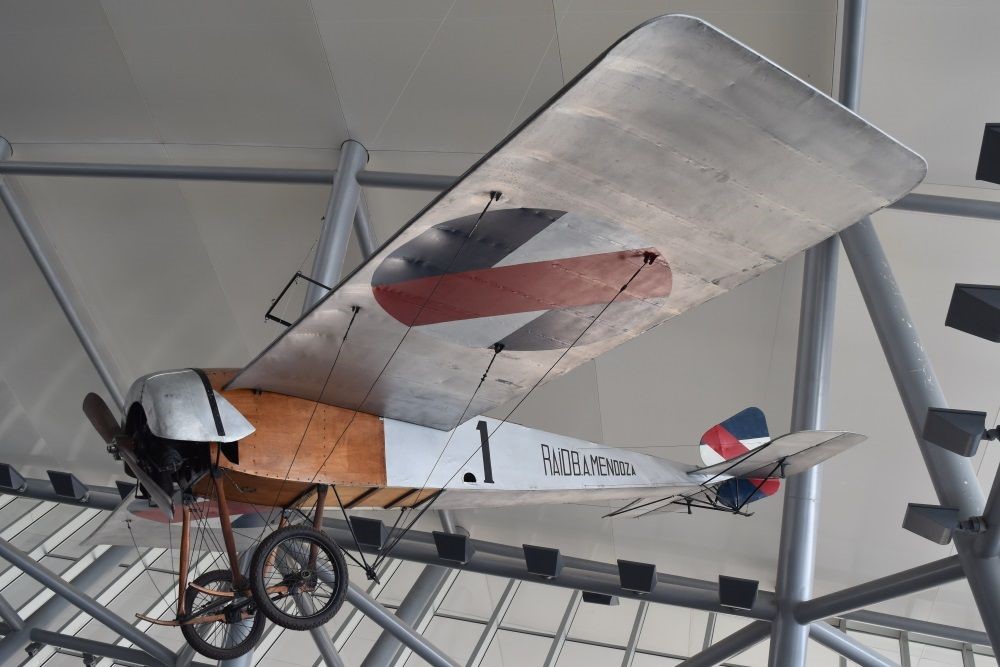
Some 3000 G-3s were constructed 1913-18 being used as observation aircraft until 1916 and as trainers throughout WW1. The first G-3s were without ailerons. The elevator cables are attached to exterior control stick extension. With no pressure on the stick the elevators drag on the ground.

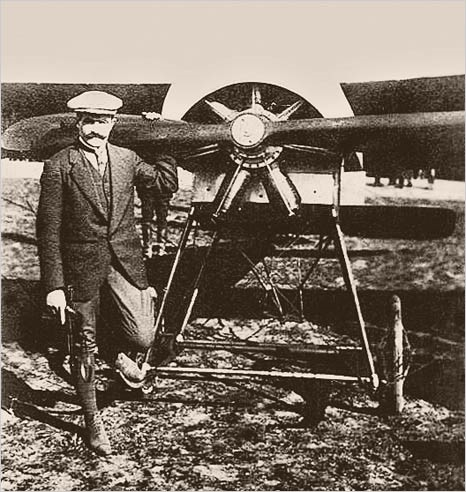
In 1913, a shipment of 20 (some says 12) Caudron G.3s arrived from France, accompanied by Gaston Caudron.

The Caudrons were used to train Chinese pilots at the Pukou Flight School, 185 miles west of Shanghai. By the end of World War I, the Chinese had added a number of other aircraft. The Caudrons continued as training craft until at least 1920.

Records include first flights at Peking and Peking to Tien-Tsin by Rene Caudron and passenger in July 1913; first biplane to loop (by Chanteloup on 17 September 1913); World Endurance Record by Poulet (16 hr 28 min) in May 1914.

Engine: 80 hp Gnome, Le Rhone, Clerget or 100 hp Anzani
Props: 2 blade
Wingspan: 43 ft 11 in
Length: 21 ft
Height: 8 ft 6 in
Engine: 80 hp Gnome
Props: 2 blade
Wingspan: 43 ft 11 in
Length: 21 ft
Height: 8 ft 6 in
Take-off weight: 734 kg / 1618 lb
Empty weight: 445 kg / 981 lb
MTOW: 1612 lb
Max speed: 69 mph at SL
Service ceiling: 10,000 ft
Endurance: 4 hr
Armament: 1 x mg
Bombload: 20 lb
Engine: 1 x Le Rhone, 80 hp / 59kW
Take-off weight: 734 kg / 1618 lb
Empty weight: 445 kg / 981 lb
Wingspan: 13.4 m / 42 ft 8 in
Length: 6.4 m / 22 ft 9 in
Height: 2.6 m / 8 ft 6 in
Wing area: 27.0 sq.m / 290.63 sq ft
Max. speed: 106 km/h / 66 mph
Ceiling: 3000 m / 9850 ft
Range w/max.fuel: 300 km / 186 miles
Crew: 2
G-3
Engine: Walter NZ 120
Prop: Merville, 8 ft dia.
Weight: 1650 lb
Fuel capacity: 24 USG
Oil capacity: 5.67 USG
Speed: 56 mph
Endurance: 2 hr 30 min
Tires: 3.00×19 Dunlop
Aileron span: 9 ft 7 in
Aileron chord: 21 in
Elevator span: 6 ft 7 in
Stabiliser span: 13 ft 2 in
 All Aero