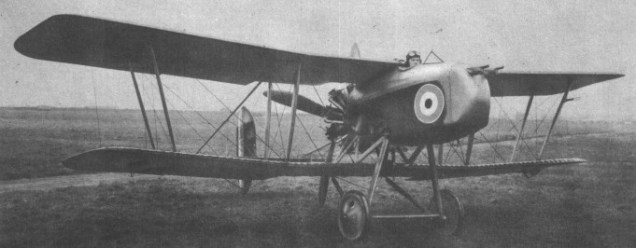
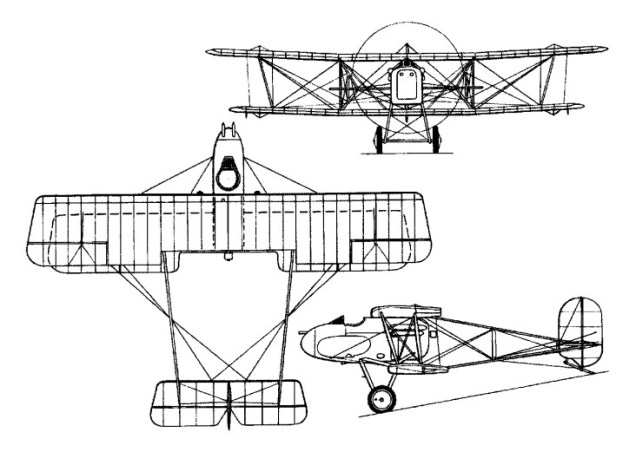
The VE-8 was a 1918 two-place, open cockpit biplane.
Two Vought VE-8 were ordered by the Army on 11 October 1918, 40099 and 63266, and three more were cancelled, 40100-40102.
VE-8
Engine: 340hp Hispano H
Wingspan: 31’9″
Length: 21’4″
Seats: 2
The VE-8 was a 1918 two-place, open cockpit biplane.
Two Vought VE-8 were ordered by the Army on 11 October 1918, 40099 and 63266, and three more were cancelled, 40100-40102.
VE-8
Engine: 340hp Hispano H
Wingspan: 31’9″
Length: 21’4″
Seats: 2

The two-place Lewis & Vought VE-7 Bluebird of 1917 was advertised post-WW1 as a sport and training plane. One prototype was built. The wings and tail of the prototype were located in a hangar after WW2, and rebuilt into Waterman Pusher).
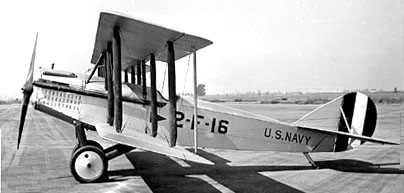
The VE-7 was built in 1918 (The first production aircraft of Chance Vought) as an advanced military trainer, observer, and fighter. Fourteen went to the USAS including AS19898-19902 and AS40072 (One of two known to have been built at McCook Field). Reportedly four more were built by Springfield Co and possibly never assigned s/ns.) There were conversions to VE-7G, 7GS, and -7S.
The USN received twenty VE-7, A5661-5680, plus 39 built by NAF, A5942-5969, A5971, and A6011-6020.

Forty of the 1921 VE-7F were built, A5912-5941, and A6021-6030, plus 29, A5943-5971, by NAF. They were powered by 180hp Wright E-3 engines.
In 1921 twenty-three VE-7, A5681-5700 were converted to VE-7G by NAF with 180hp Hispano E engines and one was modified, A5685, as a VE-7GF.
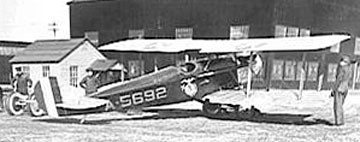
NAF built nine VE-7H, A6436/6444, with 180hp Hispano E engines for the USN in 1924.
In 1925 forty VE-7S were built for the AAF plus eleven to the USN, A5942 and A6011-6020, as VE-7SF, and one, A5680, as VE-7S converted from a VE-7 by NAF.
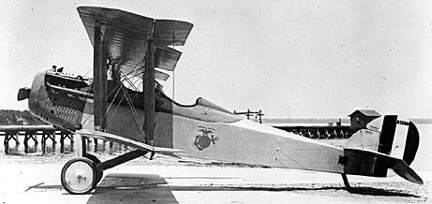
A VE-7 was the first aircraft to fly from an aircraft carrier.
A scratch-built replica of the Bluebird was completed in early 2007 by volunteers of the Vought Aircraft Heritage Foundation.
VE-7 Bluebird prototype
Engine: 150hp Wright-Hispano A
Wingspan: 34’2″
Length: 24’6″
Useful load: 536 lb
Speed: 114 mph
Seats: 2
VE-7F
Engine: 180hp Wright E-3
Wingspan: 34’1″
Length: 24’5″
Speed: 119 mph
Ceiling: 19,200′
VE-7G
Engine: 180hp Hispano E
VE-7GF
Engine: 180hp Hispano E
VE-7H
Engine: 180hp Hispano E
Length: 31’1″
Speed: 110 mph
Ceiling: 14,800′
VE-7S
Engine: 180hp Hispano E
Length: 24’5″
Speed: 117 mph
Range: 290 mi
Ceiling: 15,000′
Seats: 1
VE-7SF
Engine: 180hp Hispano E
Length: 24’5″
Speed: 117 mph
Range: 290 mi
Ceiling: 15,000′
Seats: 1

The Voisin Triplane was a large experimental bomber built by Voisin. The first model was designing and produced in 39 days, presentation in August 1915 before the French high military, and was fitted with four Salmson radial engines of 150 hp / 110 kW each. The four engines were mounted in tandem pairs in two nacelles on the centre wing. Not only did it have three wings, but also two fuselages, the upper one affording an air gunner a near 360-degree field of fire. Two gun positions were provided, one the nose and second behind the trailing edge of the wings, firing downwards through an aperture in the fuselage. The tail surfaces being supported between the fuselage and an upper boom attached to the centre section of the upper wing.
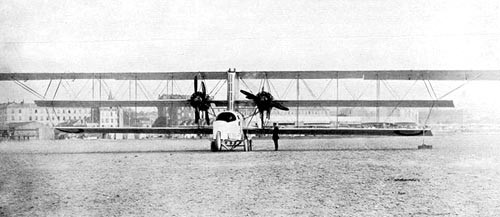
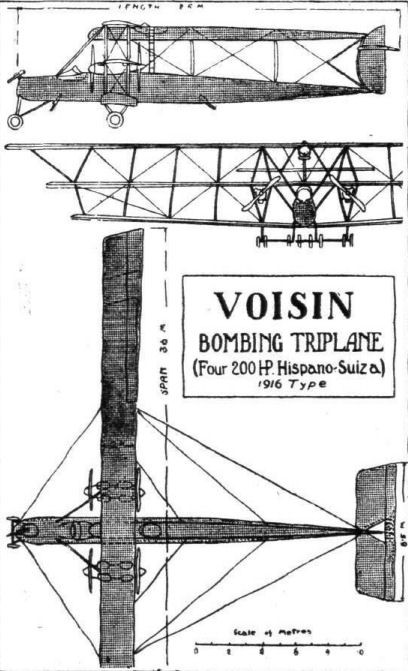
As this first machine did not come up to expectations on its trials, another machine was constructed in 1916, similar in general design, but embodying many modifications. This Triplane No.2 got the design study identification E.28. The 1916 version switched to four 200 hp (150 kW) Hispano Suiza engines, and a redesigned circular section fuselage. In both models the lower fuselage forms the main body, the upper fuselage being of much lighter construction and serving as an outrigger for the tail. The four Hispano-Suiza engines (220 h.p. each) are mounted in pairs in tandem, just below the middle plane in the 1916 model, on tubular V frames, extending from top to bottom planes. The engine mounting is additionally braced by diagonal struts from both upper and lower fuselages.
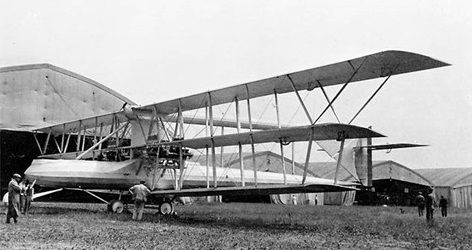
This time construction proceeded far slower as the machine was finished in 1919 and first flown in 1920. The design obviously came too late for the war and was not ordered in production.

1916 version
Engines: 4 × Hispano-Suiza V-8, 150 kW (200 hp)
Upper wingspan: 36 m (118 ft)
Wing area: 200 m2 (2,150 sq ft)
Chord: 6 ft. 6 in
Empty weight: 4,990 kg (11,000 lb)
Gross weight: 6,985 kg (15,400 lb)
Maximum speed: 127 km/h; 69 kn (79 mph) at 1981 metres (6500 ft)
Service ceiling: 3,505 m (11,500 ft)
Time to altitude: 27 minutes to 1981 m (6,500 ft)
Wing loading: 35 kg/m2 (7.1 lb/sq ft)
Crew: 3
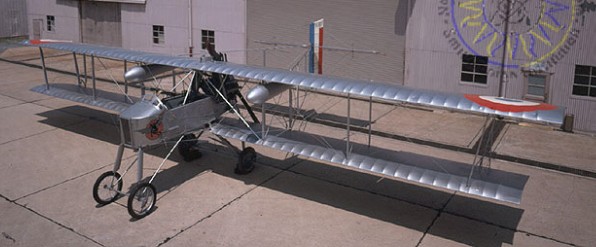
The 1915 Type L.A.5 B2 two-place observation-bomber was powered by a 140 hp Salmson Canton-Unne pusher engine. After 1917 the 5 B2 was relegated to training.
Voisin L.A.5 Type V First Aerial Dogfight
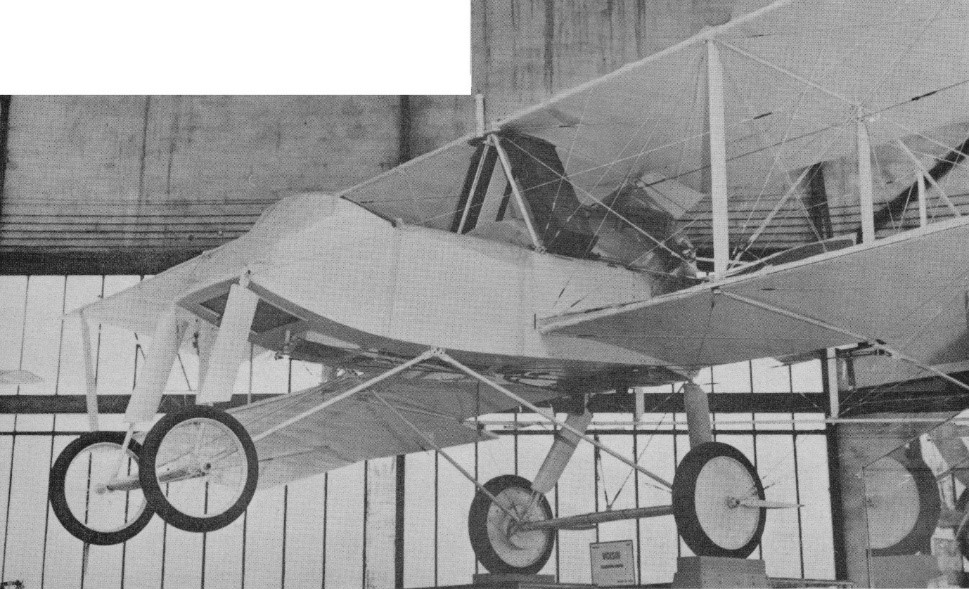
The Voisin Type 8 was specifically designed as a bomber and manufactured 1916-1918. A three bay biplane, the wings are of mixed steel and wood construction, with fabric covering, and four wheel undercarriage. The cockpit nacelle is steel framed. Ailerons are on all four wings and the tail unit, consisting of rudder and elevators only, are carried on open steel booms.
The Peugeot engine drives a two blade pusher propeller. Fuel is held in streamlined tanks under the top wing. One or two machine-guns are mounted in the front cockpit and up to 396 lb of bombs.
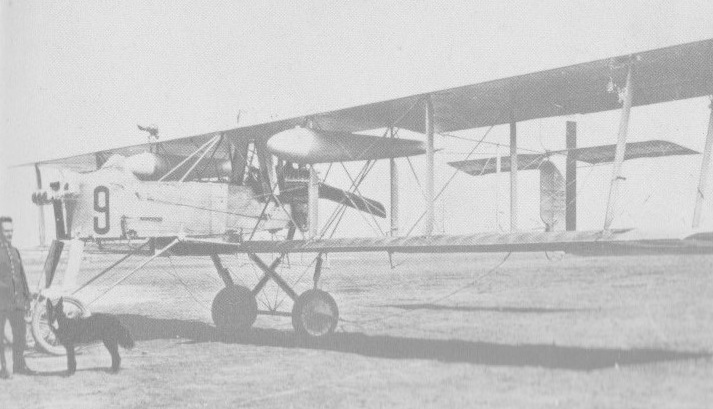
When manufactured in February 1916, it was equipped as a night bomber, with internal bomb racks, cockpit lights, and provision for landing lights.
Continuous development, and the use of increasingly powerful engines, enabled it to remain in service throughout the war. The original version, the Type L, had a 70 hp Gnome engine and was unarmed.
The Voisin Type 8 entered service with French night bombing squadrons in November 1916.
Development was directed along two lines, producing night bomber and ‘Avion Canon’ versions. The latter mounting a 37mm or 47mm gun for use against ground targets.
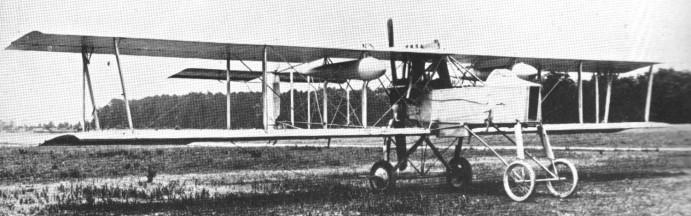
The final version was the Type 10, with a 300 hp Renault engine and bombload of 600 lb.
A total of 1100 were built, mainly for us as bombers.
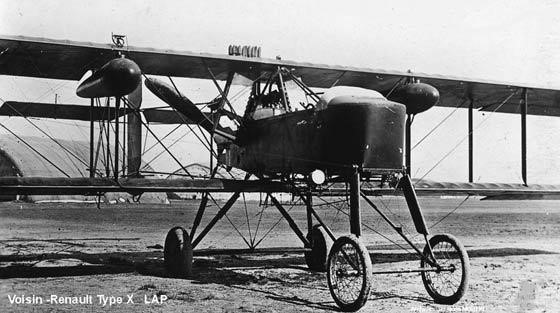
Type L
Engine: Gnome, 70 hp
Span: 55’9″
Voisin 5
Engine: Canton-Unne, 150 hp
Wingspan: 52 ft 4.5 in
Length: 31 ft 6.5 in
MTOW: 3240 lb
Speed: 74 mph
Ceiling: 1500 ft
Endurance: 3 hr 30 min
Crew: 2
Armament: 1 x mg
Bombload: 130 lb
LA.5 B2
Engine: 140 hp Salmson Canton-Unne
Wingspan: 48.35 ft
Length: 31.16 ft
Gross weight: 3080 lb
Speed: 62 mph
Voisin 5 LAS Canon
Engine: Salmson R9, 138 hp
Length: 31.824 ft / 9.7 m
Height: 9.514 ft / 2.9 m
Wingspan: 44.291 ft / 13.5 m
Wing area: 339.819 sqft / 31.570 sq.m
Max take off weight: 2513.7 lb / 1140.0 kg
Weight empty: 1719.9 lb / 780.0 kg
Payload: 793.8 lb / 360.0 kg
Max. speed: 65 kts / 120 km/h
Initial climb rate: 285.43 ft/min / 1.45 m/s
Service ceiling: 13123 ft / 4000 m
Wing load: 7.38 lbs/sq.ft / 36.00 kg/sq.m
Range: 216 nm / 400 km
Endurance: 4 h
Crew: 2
Voisin 8
Engine: Peugeot 8Aa, 220 hp
Wingspan: 18.0 m (59 ft)
Length: 10.4 m (34 ft)
Height: 4.0 m (13 ft)
Weight: Empty, 1,310 kg (2,888 lb)
Gross, 1860 kg (4,101 lb)
Airframe: Wood
Covering: Fabric
Seats: 2
Voisin 8
Engine: Peugeot 8Aa, 220 hp
Wingspan: 61 ft 8 in
Length: 36 ft 2 in
Height: 11 ft 6 in
Empty weight: 2893 lb
MTOW: 4103 lb
Max speed: 75 mph at 6000 ft
Service ceiling: 14,100 ft
Endurance: 4 hr
Type 10
Engine: 300 hp Renault
Bombload: 600 lb
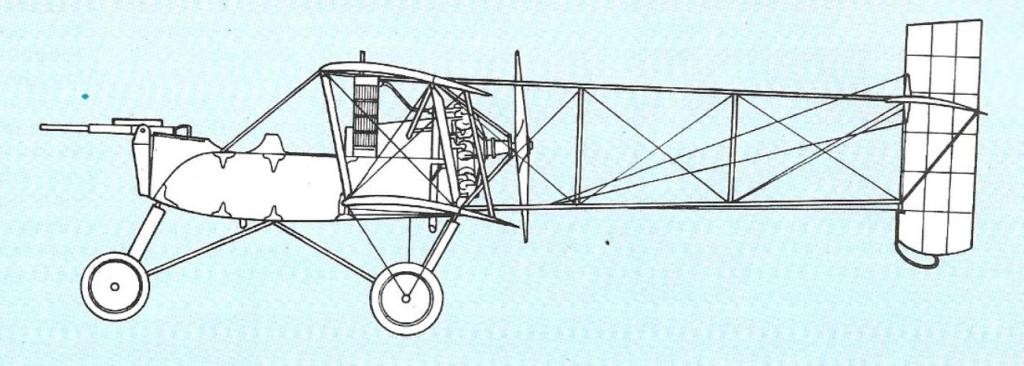
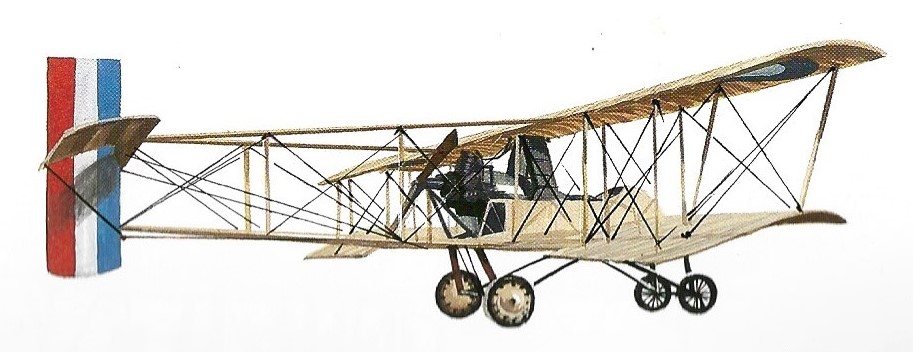
A 1914 light bomber.
Engine: Canton-Unne, 120 hp
Wingspan: 48 ft 4.75 in / 14.75 m
Length: 31 ft 2 in / 9.6 m
Height: 12 ft 6 in / 3.8 m
Weight: 3025 lb / 1370 kg
Max speed: 74 mph / 120 kph at SL
Ceiling: 11,485 ft / 3500 m
Range: 310 mi / 500 km
Armament: 1 x mg
Crew: 2
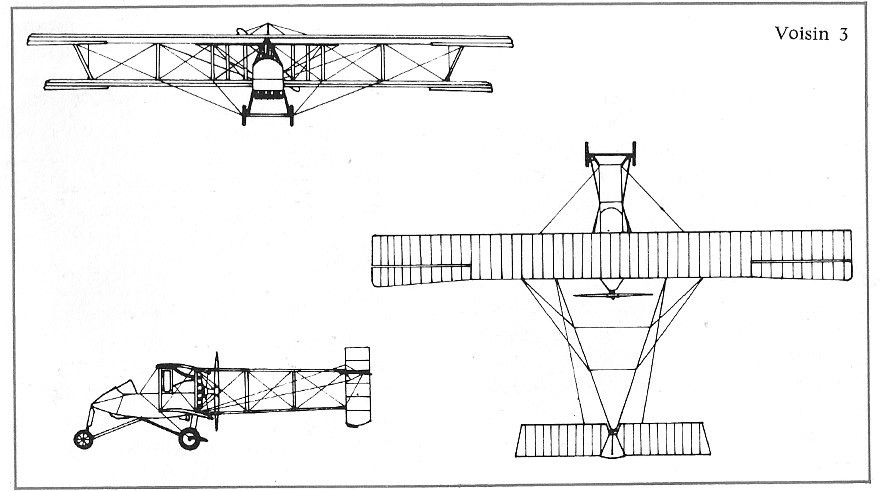

In July 1905 the world’s first company to build aeroplanes, Ateliers d’Aviation Edouard Surcouf, Bleriot et Voisin, was formed by brothers Gabriel and Charles Voisin assisted by Ernest Archdeacon and Louis Bleriot.
On 5 November 1906 the brothers Gabriel (1880-1973) and Charles (1888-1912) formed their own manufacturing firm, Appareils d’Aviation Les Freres Voisin, at the same location in a hanger at Rue de la Ferme, Billancourt, Paris. Dominant partner was Gabriel, one of aviation’s earliest pioneers built gliders (with varying success) for Archdeacon, Bleriot and others from 1904.
When Bleriot formed his own company in February 1907 the AA Les Freres Voisin was formed in new premises at Lyons, and from spring 1907 began building series of boxkite biplanes (Hargrave-based) for Delagrange, Paulhan, Farman, Moore-Brabazon, and others; by end of 1909 had built nearly 20, though by then this type had been separately much improved by Henry Farman.
First “gunbus” biplane appeared 1910, a canard oddity in 1911, and the large Icare seaplane in 1913; but Voisin chiefly known for extensive series of successful military bombers of 1914-1918. Primitive but strong, these Voisin “chickencoops” appeared in many variants, principal being Types 3,4,5,8, and 10 of which, collectively, nearly 3,400 were built. Although reliable, their design had progressed little by 1918, and in 1919 Gabriel Voisin left the aviation industry and subsequently entered the automobile industry.
In 1945 G&R owned a factory of the Aéroplanes Voisin firm, which had gone bankrupt in 1938.
USA
This company built at Freeport, Long Island, New York, in 1917-1918, radial-engined scouting/advanced training biplanes designed by A. S. Heinrich.
It was intended to buy three more Parsevals from Germany, PL 20, 21 and 22, but the outbreak of war ended this plan. Instead, three ships HMA No. 5, 6 and 7 were built in England by Vickers based on Parseval designs. These were not delivered until late 1917 and were used for training.
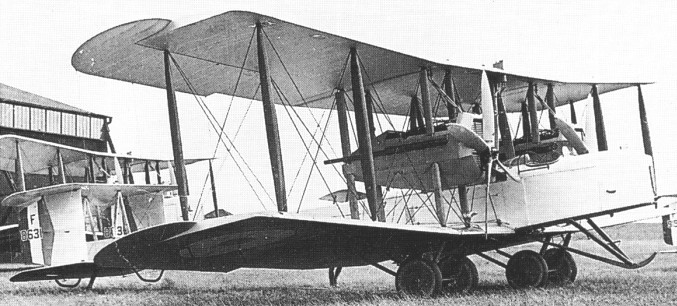
Design of the Vickers F.B.27 was initiated in 1917 to meet the requirement to provide bomber aircraft able to attack strategic targets in Germany from bases in Britain. The Vimy was one of three new-generation bombers with which the RAF planned to take the air war to Germany in 1919. Such aircraft as the de Havilland D.H.10 Amiens and Handley Page V/1500 were also built.
The F.B.27 was a three-bay biplane of conventional construction, with a biplane tail unit which had twin fins and rudders. The wing centre-section – almost one-third span – had the fuselage at its centre with large struts supporting the upper wing. At the outer ends of this centre-section the engines were mounted midway between the upper and lower wings. Two twin-wheel main landing-gear units were mounted beneath the lower wing, one directly below each engine. Outboard of this centre-section the wings had dihedral.
The largest aircraft then built by Vickers, it posed many construction problems; but despite this the first prototype, B9952, flew on 30 November 1917 – little more than four months after the design had been started. This aircraft was powered by two 149kW Hispano-Suiza engines (subsequently re-engined with 194kW Salmsons). Three further prototypes followed, powered respectively with 194kW Sunbeam Maoris, 223kW Fiat A-12s and 268kW Rolls-Royce Eagle VIIIs. It was the latter installation which was selected for production aircraft.
With the introduction of official aircraft names in 1918, the F.B.27 became the Vimy. But only a single example had been placed on an operational footing before the Armistice, which meant that none were used operationally in World War I.
The main production version was the Vimy Mk IV with Eagle VIII engines. Large contracts were cancelled at the end of the war but total Vimy Mk IV production amounted to 240, the last batch of 30 being ordered in 1925. The type entered service in July 1919 with No.58 Squadron in Egypt, home to another three squadrons; the type was retired from Middle Eastern service in August 1926 after operating the Cairo-Baghdad air mail service.
About 300 Vimy IVs of the standard production version were built, each with two 360 hp Rolls-¬Royce Eagle VIII engines. They carried a crew of three and 2476 lb of bombs, and were armed with twin Lewis machine guns in nose and midships positions.
Five home-based squadrons operated the Vimy, which was replaced as a first-line bomber by the Virginia during 1924 and 1925 but remained operational with No. 502 Squadron until January 1929.
Conversions carried 10 passengers. A small number of commercial and ambulance aircraft were built, known simply as Commercial Vimys. The Commercial was fundamentally the same as the Vimy bomber, with the same wings, engine and tail, but had a rounded fuselage, capable of taking up to ten passengers the two flying crew braving the elements in a high set open cockpit in the nose. G EAAV was the prototype Vimy Commercial, having first flown (as K107) on April 13, 1919.
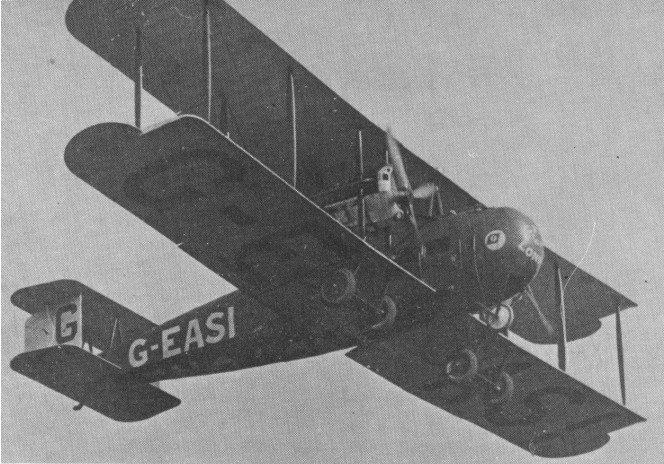
Vickers Vimy Commercial Article
A number of Vimys were used for flying and parachute training duties. Revived as an advanced instructional aircraft for training pilots in multi-engined flying. For this purpose Jupiter VI or Jaguar engines were fitted in about 80 aircraft.
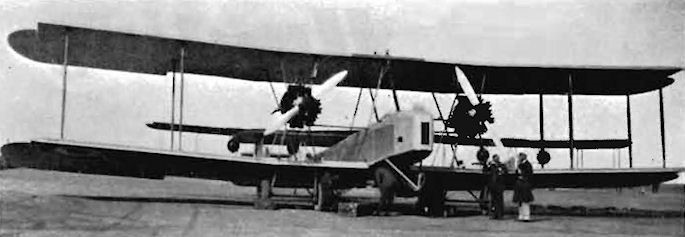
The Vimy is remembered especially in aviation history for the post-war long-distance flights which pointed the way to the air lanes that would link the world. First was the flight by Capt John Alcock and Lt Arthur Whitten-Brown across the North Atlantic, from St John’s, Newfoundland, to Clifden, Eire, during 14-15 June 1919 in a time of 16 hours 27 minutes.
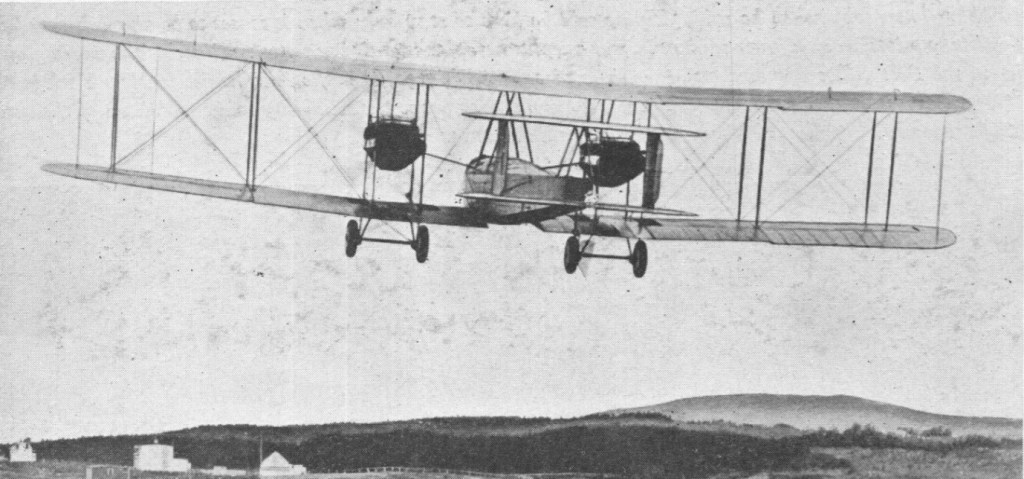
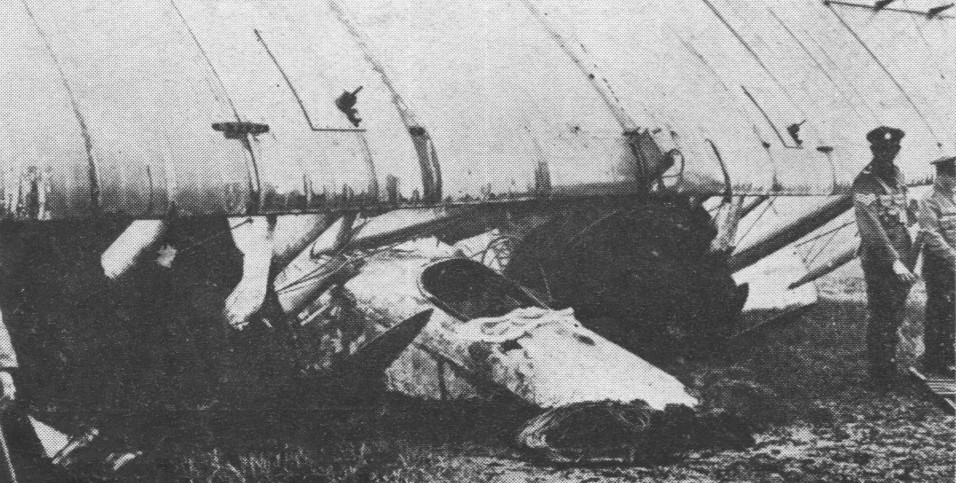
Next was the England-Australia flight of the brothers Capt Ross and Lt Keith Smith, together with Sgts Bennett and Shiers. Taking off from Hounslow (not far from today’s Heathrow Airport) on 12 November 1919, they landed safely at Darwin on 10 December 1919 in an elapsed flying time of 135 hours 55 minutes. Last of the trio of great Vimy flights was an attempt by Lt-Col Pierre van Ryneveld and Sqn Ldr Christopher J. Q. Brand of the South African Air Force to link London and Cape Town. On 4 February 1920 they took off from Brooklands, unfortunately making a crash landing between Cairo and Khartoum. Loaned a second Vimy by an RAF unit in Egypt, they continued to Bulawayo, Southern Rhodesia, where they failed to get airborne because of ‘hot and high’ conditions. They finally completed their flight to Cape Town in a third borrowed aircraft (a de Havilland D.H.9), arriving at their destination on 20 March 1920. They, like Alcock and Brown and the Ross brothers, were awarded knighthoods for their achievement.
Vickers Vimy Atlantic Crossing
In 1919, the Chinese government ordered perhaps 100 (or maybe 40) Vickers Vimy transports to be used to establish passenger service in China. Most remained in their shipping crates; only seven were put into use.
Replicas
Vintage Aircraft & Flying Association Vimy
Engines: 2 x 360hp Rolls Royce VIII
Length 43.5 ft (13.2 m)
Wing span 67.1 ft (20.5 m)
Height: 15 ft. 7.5 in
Wing area 1318 sq. ft
Weight loaded: 10885 lb
Weight empty 7,100 lb (3,220 kg)
Crew: 4
Armament: Two machine guns, one each in nose and aft cockpits
Bomb load: 18 x 112 lb (50 kg) bombs 2 x 230 lb (104 kg) bombs
Max speed: 89 kts / 103 mph (166 kph)
Ceiling: 7,000 ft (2,100 m)
Range: 1,000 miles (1,600 km)
Range max. weight: 391 nm / 725 km
Initial climb rate: 295.28 ft/min / 1.5 m/s
Vimy Mk II
Engines: 2 x Rolls-Royce Eagle VIII, 268kW
Max take-off weight: 4937 kg / 10884 lb
Empty weight: 3222 kg / 7103 lb
Wingspan: 20.75 m / 68 ft 1 in
Length: 13.27 m / 44 ft 6 in
Height: 4.76 m / 16 ft 7 in
Wing area: 122.44 sq.m / 1317.93 sq ft
Max. speed: 166 km/h / 103 mph
Ceiling: 2135 m / 7000 ft
Range w/max.fuel: 1448 km / 900 miles
Armament: 2 x 7.7mm machine-guns, 1123kg of bombs
Crew: 3
Vimy Mk IV
Type: three-seat heavy night bomber
Span: 20.75m (68 ft 1 in)
Length: 13.27m (43ft 6.5 in)
Powerplant: 2 x Rolls-Royce Eagle VIII, 268kW (360 hp)
Armament: 2 x 7.7-mm (0.303-in) machine-guns
Bombload: 1123 kg (2,476 lb)
MTOW: 5647 kg (12,500 lb)
Max speed: 103 mph at 6,500 ft
Operational range: about 900 miles
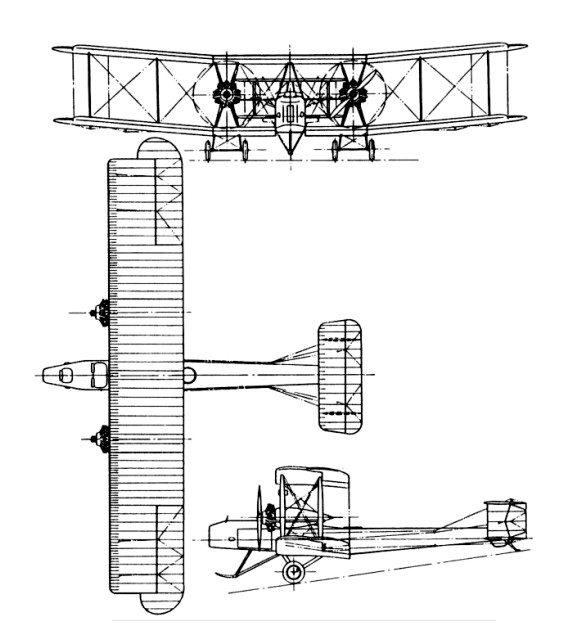
Curiously retrogressive in design when built in May 1917, the pusher fighter with boom-carried empennage being decidedly passe at that stage in Worid War I, the F.B.26 single-seat fighter had its nacelle attached directly to the upper wing. The original concept provided for a single 7.7mm Lewis gun, but an additional Lewis had been introduced by the time that the F.B.26 reached Martlesham Heath for official testing in July 1917.
Power was provided by a 200hp Hispano-Suiza engine, but inadequate cooling led to the original single flat radiator being replaced by two separate radiator blocks. On 25 August 1917, the prototype was spun into the ground by Vickers’ test pilot Harold Barnwell. Nonetheless, a month later, on 19 September, a contract was placed for six examples of a modified version of the F.B.26. The wing structure was completely revised, radiator blocks were attached to the nacelle sides and a larger vertical tail was introduced. Interest in the F.B.26 centred on its potential as a Home Defence fighter, and it was proposed that armament would consist of two Lewis guns coupled with an Aldis sight and capable of several degrees of elevation and depression. However, in order to obtain greater firepower, the nacelle of the F.B.26 was modified to permit installation of an Eeman three-gun universal mounting. The first two F.B.26s had the trio of Lewis guns fixed to fire horizontally, but it was intended that the next four aircraft would have a modified Eeman mounting capable of 45° of elevation.
The first of the modified F.B.26s was flown in December 1917 with a 200hp Hispano-Suiza engine. After testing at Martlesham Heath, this aircraft was assigned to No 141 Sqn in February 1918 for service evaluation. It was concluded that the F.B.26 was unsuited for Home Defence duties and work on the incomplete machines was halted, although the second and third examples had been completed and flown meanwhile. As the basic design was considered to possess potential in the close air support role, the second of the modified F.B.26s was fitted with a redesigned nacelle incorporating armour protection for the pilot and a 230 hp Bentley B.R.2 nine-cylinder rotary. This armoured “trench-strafer” was assigned the designation F.B.26A, and, under the official nomenclature scheme introduced in the spring of 1918, became the Vampire II, the F.B.26 being the Vampire I. In the event, the Vampire II had still to be completed by the end of June 1918, and thus came too late on the wartime scene.
Max take-off weight: 921 kg / 2030 lb
Empty weight: 667 kg / 1470 lb
Wingspan: 9.63 m / 32 ft 7 in
Length: 7.14 m / 23 ft 5 in
Height: 2.87 m / 9 ft 5 in
Wing area: 24.80 sq.m / 266.94 sq ft
Max. speed: 195 km/h / 121 mph
Ceiling: 6860 m / 22500 ft
 All Aero