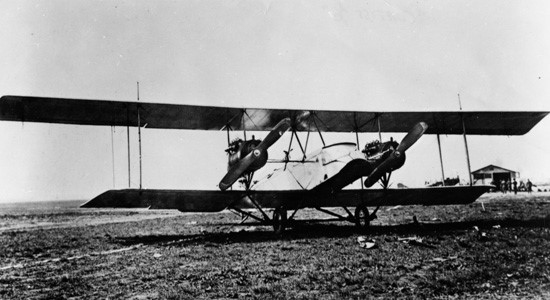
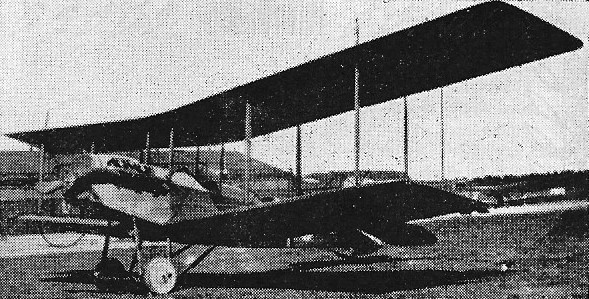
The Curtiss Twin JN (retrospectively called the Model 1B and also known as the JN-5) was an Experimental aircraft built by the Curtiss Aeroplane and Motor Company for the United States Army Air Service. It was a biplane, designed for observation missions.
Based on the successful Curtiss JN-4, the Twin JN used the same wing structure, but the wingspan was extended by enlarging the center section. Lateral control was achieved with the tail of a Curtiss R-4. The Twin JN was powered by a pair of 90 hp (67 kW) Curtiss OXX-2 engines located between the wings.
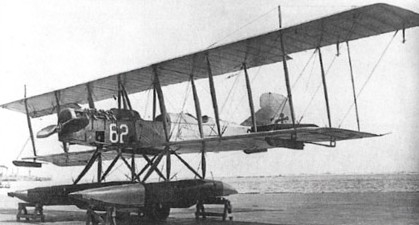
Eight were built in 1916, and one aircraft was evaluated by the United States Navy as a twin-float seaplane.
Engines: 2 × Curtiss OXX-2 water-cooled V-8, 90 hp (67 kW) each Wingspan: 52 ft 9⅜ in (16.08 m) Wing area: 450.3 ft2 (41.83 m2) Length: 29 ft 0 in (8.83 m) Height: 10 ft 8⅜ in (3.26 m) Empty weight: 2,030 lb (921 kg) Gross weight: 3,110 lb (1,411 kg) Maximum speed: 80 mph (129 km/h) Service ceiling: 11,000 ft (3,350 m) Crew: two
In 1916 a pusher version of the Curtiss R, based on wings of R, with new fuselage nacelle accommodating two crew was built. Only the one example was made.
The Curtiss R-7 of 1916 was a long-wing version of the R-6 specially built for the New York Times. The long range landplane was built for an attempted to fly non-stop from Chicago to New York in 1916. It failed to complete the flight but still set an American distance record of 452 miles (727 km).
Fitted with long-span wings, it was similar to the R-3 and R-6, and powered by Curtiss V-2-3 engine. Only one was built.
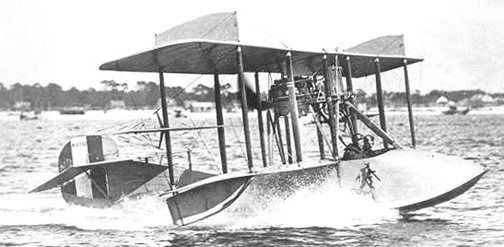
The 1916 Model 18 MF (Acronym was for “Modernized F”) was first powered by the 100hp Curtiss OXX-3. Later motors included 150hp K-6 and 400hp K-12.
Twenty-two were built; A2345-2350, A4403-4418, of which many were modified after WW1 by Cox-Klemin Co for civil use. Post-war production version became the Seagull.
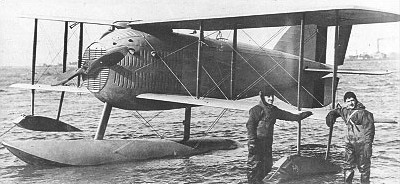
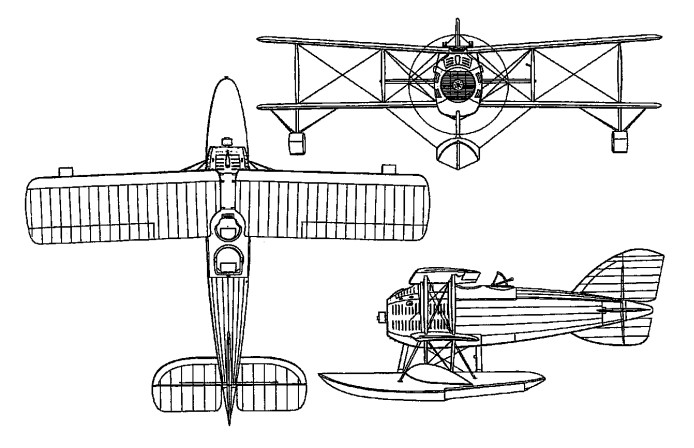
Designed by Capt B L Smith of the US Marine Corps as a two-seat patrol fighter floatplane for use in the Dunkirk-Calais area, the HA – known unofficially as the “Dunkirk Fighter” – was intended to combat the Brandenburg float fighters. The HA was built at the experimental plant of the Curtiss Engineering Corporation. Of conventional wooden construction with fabric skinning, the HA was powered by a 425hp Liberty 12 engine and proposed armament was two synchronized 7.62mm Marlin machine guns and two Lewis guns of the same calibre on a Scarff mounting in the rear cockpit. The HA was flown for the first time on 21 March 1918, but was found to be unstable longitudinally and seriously tail heavy. The initial test terminated in a crash. Curtiss was then awarded a contract for two further prototypes, the first of which, the HA-1, utilized salvaged components from the original HA and featured revised vertical tail surfaces, an annular-type radiator and relocated wings. The HA-1 demonstrated appreciably improved handling qualities, but was written off after a fire in the air. The third HA prototype, the HA-2, differed appreciably from the HA-1.
HA-2
The third HA float fighter prototype embodied considerable redesign as the HA-2. Powered by a 12- cylinder Liberty 12 water-cooled engine, like the preceding prototypes, the HA-2 had longer-span wings of marginally increased chord and gap, the upper wing being raised clear of the fuselage, the decking of which was lowered. The radiator was redesigned, but cooling problems were encountered and although the HA-2 proved more docile than the lighter HA-1, it possessed insufficient promise to warrant further development.
HA-1 Take-off weight: 1634 kg / 3602 lb Empty weight: 1111 kg / 2449 lb Wingspan: 10.97 m / 35 ft 12 in Length: 9.37 m / 30 ft 9 in Height: 3.23 m / 10 ft 7 in Wing area: 35.95 sq.m / 386.96 sq ft Max. speed: 203 km/h / 126 mph
HA-2 Take-off weight: 1772 kg / 3907 lb Empty weight: 1336 kg / 2 lb Wingspan: 12.80 m / 41 ft 12 in Length: 9.37 m / 30 ft 9 in Height: 3.48 m / 11 ft 5 in Wing area: 45.52 sq.m / 489.97 sq ft Max. speed: 190 km/h / 118 mph
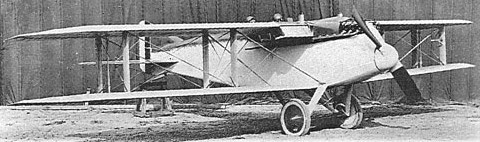
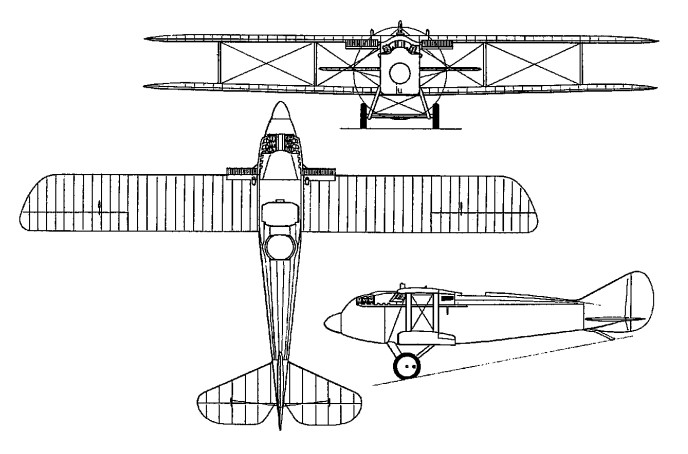
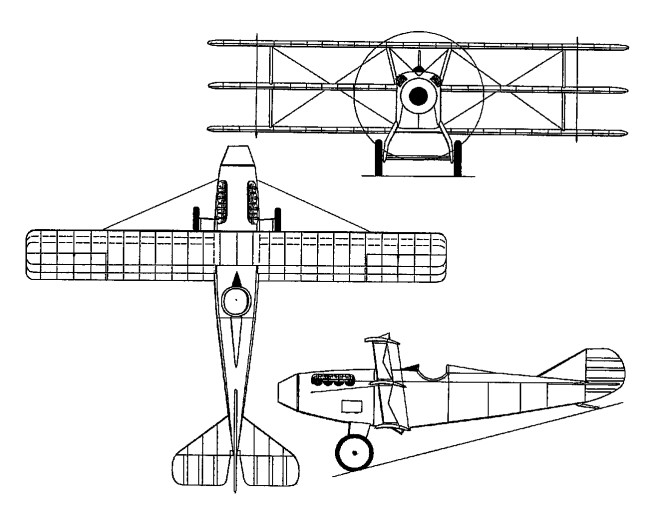
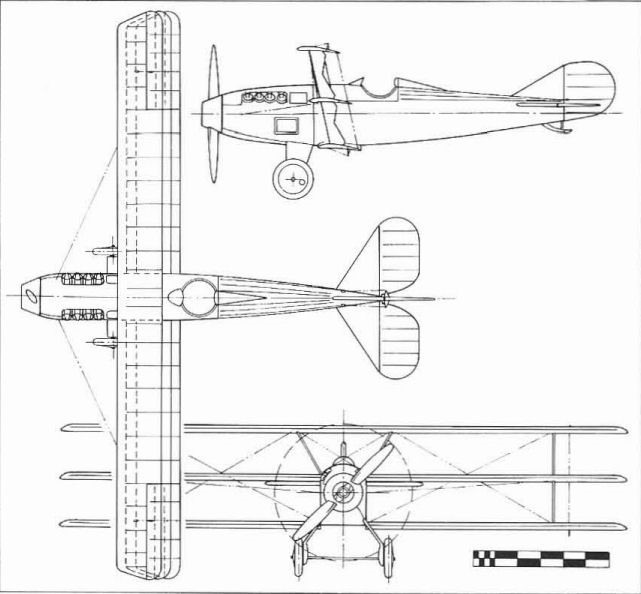
The CB (Curtiss Battleplane), unofficially known as the “Liberty Battler”, was an experimental two-seat fighter developed and flown early in 1918 as a result of difficulties being experienced with the Liberty-engined version of the Bristol F2B. Powered by a 425hp 12-cylinder Liberty 12 water-cooled engine, the CB two-bay biplane was of “Curtiss ply” construction – two layers of 5cm wide wood veneer being cross-laminated over a form to build up a monocoque fuselage shell. In an effort to maintain fuselage streamlining, the radiators were slung under the upper wing centre section, where they were found to have a seriously detrimental effect on the airflow. The fairing of the upper wing into the top fuselage contour resulted in a very narrow wing gap, with consequent aerodynamic penalties. While it provided the rear gunner with an excellent field of fire, it impaired the forward and downward view of the pilot, necessitating the provision of small windows in the fuselage sides. Flown in May 1918, the sole prototype CB proved to have extremely poor handling characteristics and crashed early in its test programme.
Empty weight: 1622 kg / 3576 lb Wingspan: 11.98 m / 39 ft 4 in Length: 8.25 m / 27 ft 1 in
During 1917, the US Navy issued the Curtiss company with a contract for five single-seat fighting scout float seaplanes powered by a US-built version of the 100hp Gnome nine-cylinder rotary, the GS designation indicating “Gnome Scout”. These were completed under the designation GS-2 when a supplementary contract was issued for a sixth aeroplane which was assigned the designation GS-1. The GS-1 was a single-seat triplane with a single central float and outrigger stabilizing floats which drew heavily on Curtiss S-3 experience. The GS introduced shock absorbers in the struts between the fuselage and the central float. These resulted in the float angle changing at high speed on the water and producing an undesirable porpoising. Delivered to the US Navy early in 1918, the GS-1 was flown several times by US Navy acceptance pilots, but was eventually damaged beyond repair as a result of a heavy landing. The five similarly-powered GS-2s differed from the GS-1 primarily in being of biplane configuration, but little is recorded of these aircraft apart from the fact that they suffered from tail heaviness.
A refined version of the S-3 with revised strutting carrying the centre section of the upper wing and the root attachments of the centre wing, a modified undercarriage and other changes. The S-6 triplane of 1917 was the first US “scout” to be fitted with twin forward-firing machine guns, these being gas-operated Lewis guns (which were mounted side-by-side on inverted and inclined “V” struts immediately beneath the centre section of the upper wing and firing outside the propeller disc. Only a single example of the S-6 was built and tested.
Take-off weight: 625 kg / 1378 lb Wingspan: 7.62 m / 25 ft 0 in Length: 5.94 m / 19 ft 6 in Height: 2.62 m / 8 ft 7 in Wing area: 13.25 sq.m / 142.62 sq ft Max. speed: 177 km/h / 110 mph
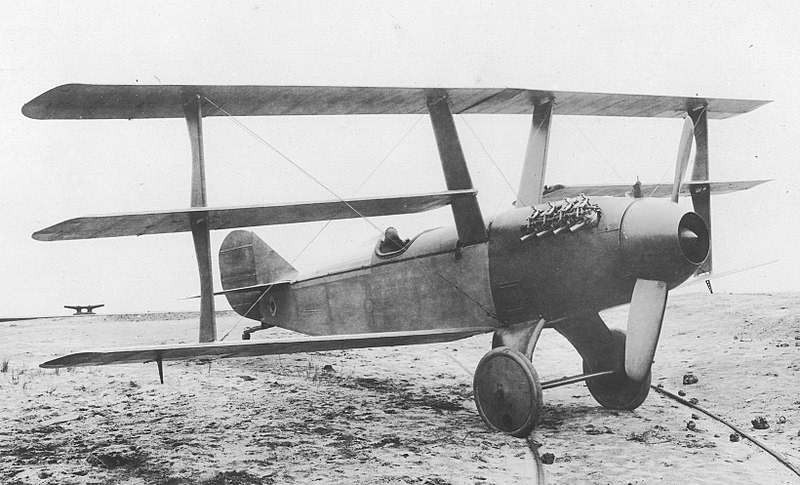
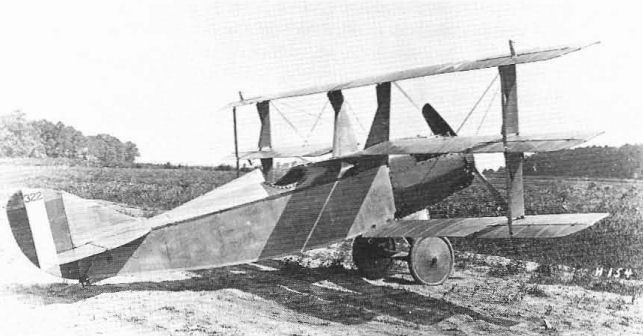
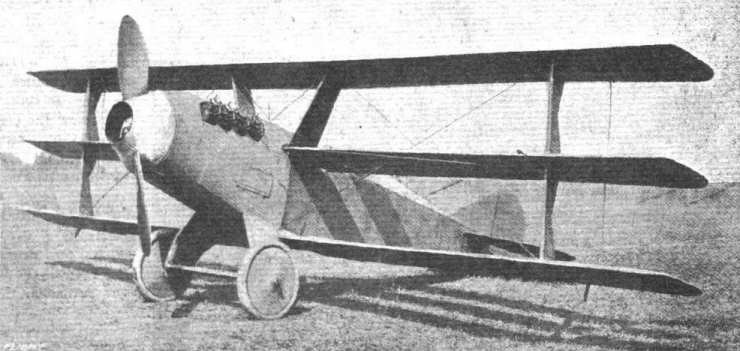
The only ‘production’ models of the S-series were four S-3 (Model 10) triplanes sold to the US Army early in 1917 (serial numbers 322 to 325). These used the basic fuselage, engine, and tail of the S and S-2 fitted with single-bay triplane wings using the RAF 6 aerofoil. These were the Army’s first single-seat Scouts, but they were still more than two years behind equivalent European types.
S-3 seen in August 1917 after the ducted propeller spinner had been discarded
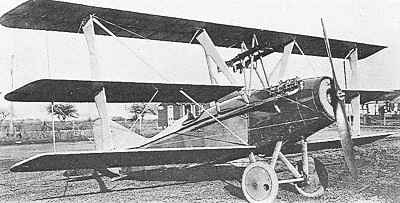
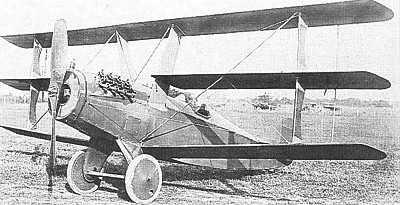
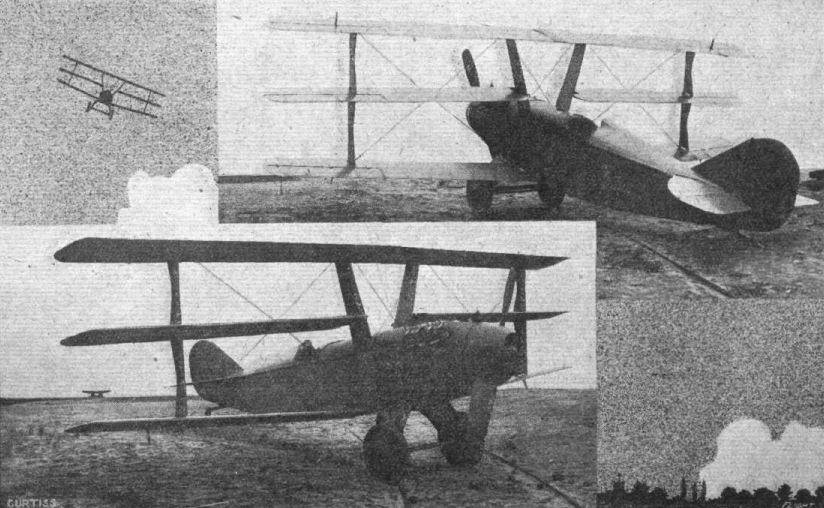
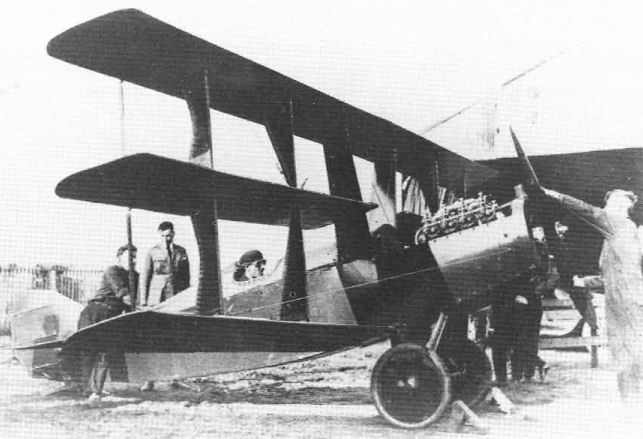
Essentially a triplane derivative of the S-2 “Wireless” (signifying lack of wing bracing wires) unarmed biplane “scout”, the S-3, or “Triplane Speed Scout”, possessed a similar fuselage and 100hp Curtiss OXX-3 engine, and initially retained the ducted propeller spinner featured by the biplane. Interplane bracing employed “K”-type struts and, on its second flight during the summer of 1917, the S-3 attained an altitude of 5030m, which was a record at the time. For initial trials, the centre wing was attached to the fuselage at low shoulder position, but the gap between all three wings was subsequently increased and the centre wing was raised above the fuselage.
Several modifications included smaller span, and all three planes equal. The body is of better streamline form, and the chassis struts are arched.
S-3
After redesign of the rudder and the discarding of the ducted spinner, the S-3 successfully completed evaluation trials and four were ordered during the course of 1917 for the US Army Signal Corps. It was proposed to arm the S-3 with two unsynchronised Lewis guns which were to fire over the propeller arc, but the S-3s were delivered to the Signal Corps without armament.
S-3
The four US Army Curtiss S-3s of early 1917 carried the new US national aeroplane markings but did not carry guns although they were classified as Scouts, which was synonymous with Pursuit at the time.
S-3
In 1918 and 1919, Curtiss experimented with seaplane versions of the S-3, designated S-4 and S-5.
The S-4 (Model 10A) was a triplane similar to the S-3 intended as a seaplane Scout for the US Navy (serial A149). Although tested as a land plane, the S-4 was intended to be a seaplane and had longer wings than the similar S-3 to carry the weight or the floats. This was Curtiss’s first experience with the twin-float configuration.
S-4
As with other Curtiss seaplanes, it became necessary to increase the span of the S-4 to carry the extra weight. The front float struts collapsed during a heavy alighting in January 1918 and the aircraft was struck off charge.
The S-5 Model 10B seaplane version was similar to the S-4 except for being fined with a single main float and small wingtip floats. Navy serial number A150, struck off on 6 August, 1919.
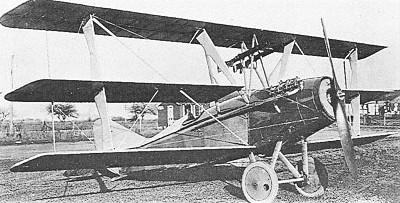
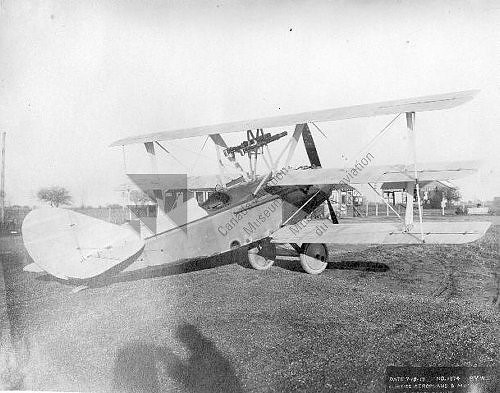
The S-6 (Model 10C) was an improved version of the S-3 and was the first American Scout fitted with twin forward-firing machine-guns. This may have been only an inoperative test installation intended to check weight, balance, and location, for the guns were gas-operated Lewis models which were not used for synchronized fire through the propeller. The sole Curtiss S-6 was flown in 1917 and was slightly larger than the S-3. The Army ordered twelve early in 1917 but only one, serial number 492, was delivered.
S-6
The S-6 triplane had revised strutting carrying the centre section of the upper wing and the root attachments of the centre wing, a modified undercarriage and other changes.
S-6
S-3 Engine: Curtiss OXX-3, 100 hp Wingspan: 7.62 m / 25 ft 0 in Wing area: 13.25 sq.m / 142.62 sq ft Chord: 24 ins Wing gap: 28 ins Length: 5.94 m / 19 ft 6 in Length: 19 ft 6 in (5.94 m) Height: 2.62 m / 8 ft 7 in Take-off weight: 599 kg / 1321 lb Empty weight: 440 kg / 970 lb Max. speed: 185 km/h / 115 mph / 100 kn Service ceiling: 16,500 ft (5,029 m) Climb, 10,000 ft. in 10 mins Crew: 1
S-6 Take-off weight: 625 kg / 1378 lb Wingspan: 7.62 m / 25 ft 0 in Length: 5.94 m / 19 ft 6 in Height: 2.62 m / 8 ft 7 in Wing area: 13.25 sq.m / 142.62 sq ft Max. speed: 177 km/h / 110 mph
At the beginning of 1915 there appeared the prototype Curtiss Model R, which was in 1935 given the retrospective designation Model 2, an enlarged version of the Model N with equal-span staggered wings. The prototype with highly-staggered, equal-span wings and with single long cockpit for pilot and observer. Powered by 160 hp (119 kW) Curtiss V-X engine. It was flown both as a land-plane and float seaplane. Pilot and observer of this military reconnaissance biplane were housed in one long open cockpit and the Model R could be distinguished from the Model N by its inter-plane ailerons and lack of a fixed fin.
The initial production military utility series version were designated as R-2 introduced unequal-span wings with ailerons attached to the upper wing, a vertical tailplane which incorporated a fixed fin and horn-balanced rudder and there were separate and widely spaced cockpits for the two crew members. The Curtiss V-X engine of the prototype was retained. The R-2 went into production at the end of 1915 and was built in some numbers, 12 going to the US Army (AS64-75), making only limited use of the type. The US Army R-2s were flown in support of the expedition against the Mexican insurgent leader Pancho Villa, but although their serviceability was poor they flew a number of reconnaissance and liaison missions. One hundred were built for the Royal Navy Air Service.
The one-off R-2A was an equal-span variant and established an American domestic altitude record of 2740m, carrying pilot and three passengers, in August 1915. Two R-3 seaplanes, resembling the R-2 but with increased wing span, were brought by the US Navy in 1916.
The R-3 of 1917 was a USN reconnaissance twin-float development of the Model R with three-bay wings. Two were built as R-3, A66 and A67, and 11 or transfers to the Army, also as landplane, but somehow came off the assembly line as R-9s (AS33748, AS39033-39042).
The R-4 (Model 2) of 1917 were an Army ambulance version of the R-2. Fifty-five were converted (AS177-192, AS281-316, AS469, AS2157, and AS37923), plus 12 new-build with a 400hp Liberty 12 as R-4L (AS39362-39367, AS39954-39959). They were refitted with 360hp Liberty 12 engines (de-rated ex-USN motor) as R-4LM.
One R-6 Mailplane is recorded as transferred from military surplus for evaluation in air mail service, powered with a Curtiss V-2-3, 200hp.
The Model R-4LM were conversion of R-4L into mailplane for the US Army, with the front cockpit converted to a mail compartment with capacity for 400 lb (181 kg) of mail. Many were used after WW1 in air mail service.
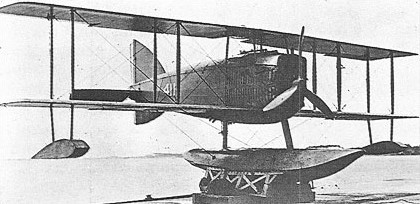
The Model 2 / R-6 were two-seat floatplane with long-span wings of R-3 but powered with Curtiss V-2-3 engine. Seventy-six (A162-197) were delivered to the US Navy plus twenty (A302-341, AS504-521, AS68563-68564) floatplanes and landplanes for US Army. They were used for torpedo-bomber trials post war.
Forty R-6 (A302-341) were converted to the Model 2 / R-6L with a 360 hp (269 kW) Liberty L-12 engine, plus 122 (A873-994) were built new in 1918.
The Model 2A / R-9 of 1917 was a two-seat bomber version of the R-6 for the US Navy, similar to the R-6, but with crew positions reversed so pilot sat in front cockpit and observer in rear. 112 built for the US Navy, ten of which (A883-887, A901-905) transferred to US Army in 1918 (as AS39033-39042).
In 1916 the Royal Naval Air Services took first delivery of one hundred US-built Curtiss R-2 powered by 160 hp Curtiss VX engines.
Royal Naval Air Service R-2
Curtiss R-2 Engine: 1 x 160 hp / 119kW Curtiss V-X inline piston Wingspan: 14.00 m / 45 ft 11 in Length: 11.70 m / 38 ft 5 in Wing area: 46.90 sq.m / 504.83 sq ft Height: 14 ft 4⅜ in (7.43 m) Take-off weight: 1403 kg / 3093 lb Empty weight: 826 kg / 1821 lb Max. speed: 138 km/h / 86 mph Range: 558 miles (900 km) Endurance: 6 hours 42 min Seats: 2

 All Aero