During World War I, the factories of Edmond de Marcay built substantial numbers of SPAD fighters under licence and the first original de Marcay fighter bore some resemblance to the SPAD 13, although, in fact, there was no commonality between the aircraft.
World War 1
de Havilland
Geoffrey de Havilland built his first (unsuccessful) aircraft in 1909. His second, flown in 1910, was bought by the War Office, and de Havilland was taken on as designer at the Balloon Factory (later Royal Aircraft Factory), where between 1911 and 1914 he designed the F.E.2, S.E.1, S.E.2, B.E.1, and B.E.2. In 1914 he joined the Aircraft Manufacturing Company at Hendon, designing the D.H.2 pusher fighter, D.H.3, and D.H.10 twin-engined bombers, D.H.5 fighter, and D.H.4 day bomber. The latter was extensively built in the USA. The D.H.9 and 9a were variations; the 9a equipped post-war RAF bomber squadrons and it, too, was built in the USA. Nearly 3,000 were constructed in Russia as the R-1.
The Aircraft Manufacturing Co. was sold in 1919 to the B.S.A.-Daimler group who, disappointed at the failure of air transport in 1919-20, shut the firm down. Almost immediately de Havilland and C.C.Walker, financed largely by Holt Thomas, out of money which he got by selling B.S.A. shares which he received in payment for the A.M.C. Ltd, started de Havilland Aircraft Co. Ltd. Airco name was temporarily revived January 1958 for production of D.H.121 jet transport.
The first aeroplane built at Stag Lane was the DH.18.
The D.H.53 Humming Bird ultralight was the best entrant in the 1923 Air Ministry Light Aeroplane competition, but de Havilland realised that their passion for lightness was an error, and in 1925 produced the first Moth to more sensible proportions. It was sold all over the world. A number of cabin monoplanes and a military version, the Tiger Moth, followed; over 8,000 Tigers were built for various air forces.
The three-engined D.H.66 Hercules was flown by Imperial Airways from 1926, and in the 1930s many domestic and foreign airlines used the twin-engined D.H.84/89 Dragon/Dragon Rapide and four-engined D.H.86 Express.
In 1934 de Havilland designed the all-wood D.H.88 Comet twin-engined racer for entrants in the “MacRobertson” England-Australia race. At a fixed unit price of GBP5,000 this gamble paid off; three were entered, and one of these won the speed prize. By 1939 the firm was producing the D.H.91 Albatross, a fast airliner with four engines; the twin-engined D.H.95 Flamingo feederliner and the diminutive D.H.94 Moth Minor. All production of these ceased at the outbreak of war, which also cut short a promising bombertrainer, the D.H.93 Don. In 1938 work started on a fast unarmed wooden bomber, the D.H.98 Mosquito. It became one of the most versatile aircraft of its time, and by the end of the war a single-seat fighter version attained a speed of 760km/h. The Vampire, de Havilland’s first turbojet fighter, Venom, Sea Venom and later Sea Vixen, served for a decade after the war.

The other problem arising from the cancelled Don order was the under-utilisation of woodworking skills at the de Havilland factory. To compensate the Company, on 2nd September 1938 the Air Ministry awarded them orders for a large batch of Tiger Moths, some more Queen Bees, plus a contract to build 150 all wooden Airspeed Oxford trainers for the RAF. When Geoffrey de Havilland read the letter, he saw red – de Havilland’s did build somebody else’s aeroplane. de Havilland gave Nixon a simple order – “Buy that company!”
As it transpired, this order took some doing and it would be several years before de Havilland’s owned Airspeed Ltd, of Portsmouth. Airspeed joined de Havilland in 1951.
Back in civil work, the company produced the twin-engined Dove, four-engined Heron and, in 1949, the first jet airliner in the world, the D.H.106 Comet. The Comet 1 ran into constructional problems, but the Mark IV achieved success. The last DH designs were the D.H.121 Trident, a three-engined airliner for BEA, and the D.H.125 executive jet (both first flown 1962). Both were still in production in 1978, long after the company’s absorbtion into the Hawker Siddeley Group in 1960, and the D.H.125’s successors were still in production at the turn of the new century.
de Bruyere C1
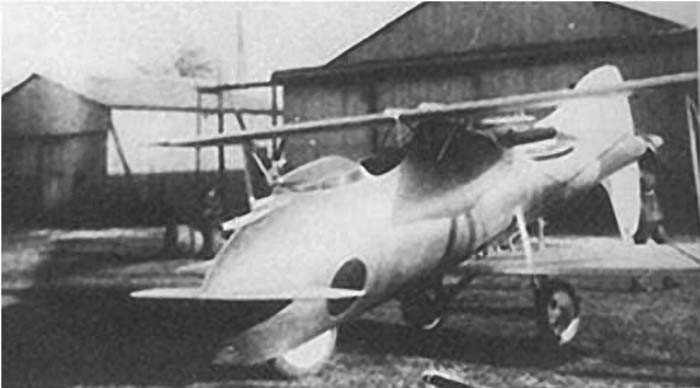
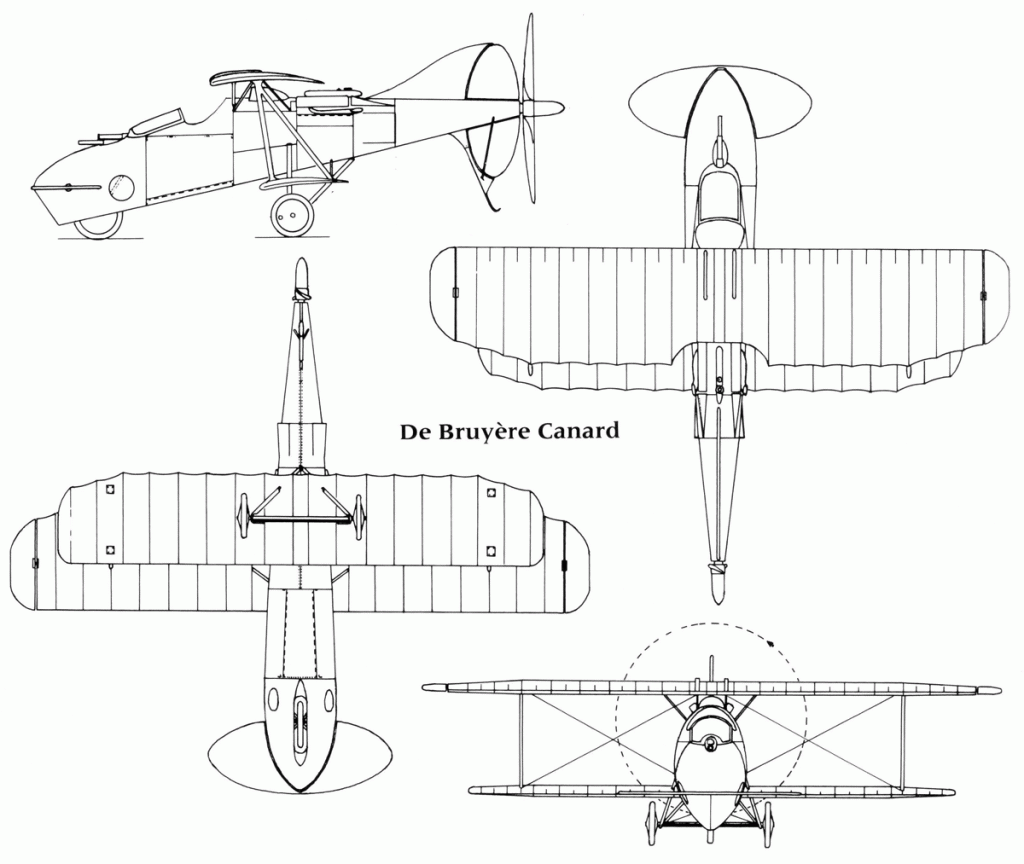
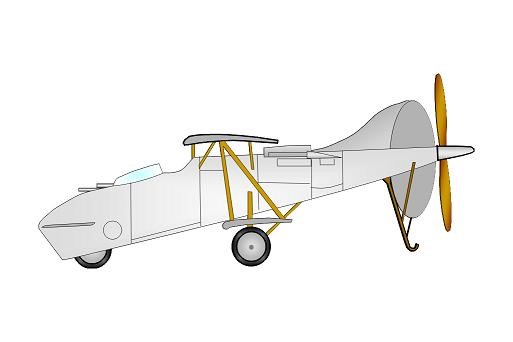
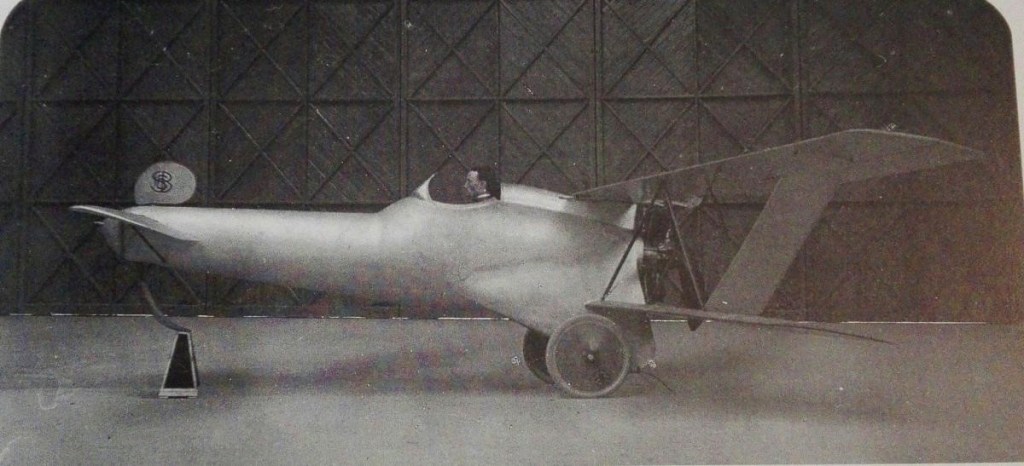
A fighter of the First World War created by French engineer Marcel de Bruyere in 1917, the C 1 was a biplane with equal-span, staggered wings supported by inverted V-struts. Pitch control came from a one-piece, all-moving canard foreplane, while roll was managed by full chord tip ailerons managed roll on the upper wing. The 150-horsepower Hispano-Suiza 8Aa engine was placed behind the wings.
A long shaft connected the engine to a pusher propeller mounted at the tail. The aircraft lacked a fixed horizontal stabiliser but had a short vertical fin and long tail skid to protect the rear-mounted propeller. Its tricycle landing gear and metal fuselage were extremely advanced for the time.
Large circular side windows gave reasonable downward visibility, and it was armed with a single Hotchkiss M1902 37mm cannon.

The fighter, designated de Bruyere C1, first flew in April 1917 from the Etampes test aerodrome in Belgium.
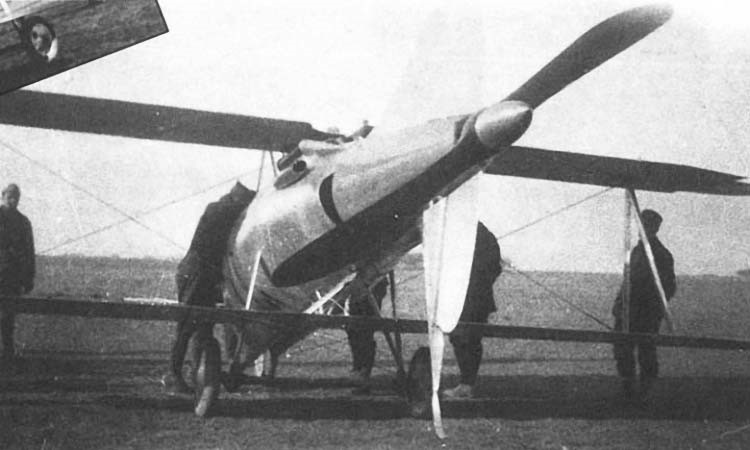
During the test flight, the plane climbed several meters, rolled over and crashed. The craft was not rebuilt and received no further development.
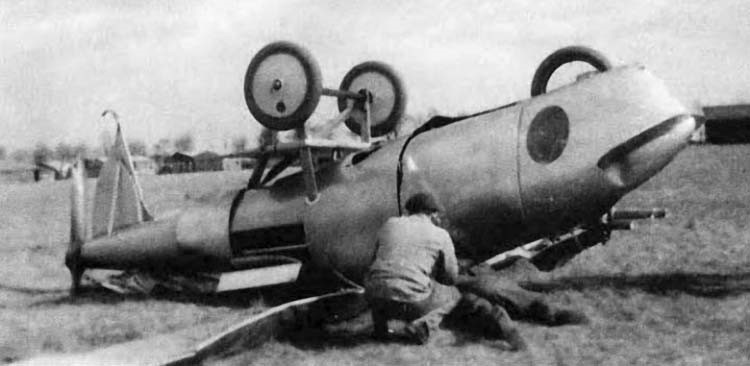
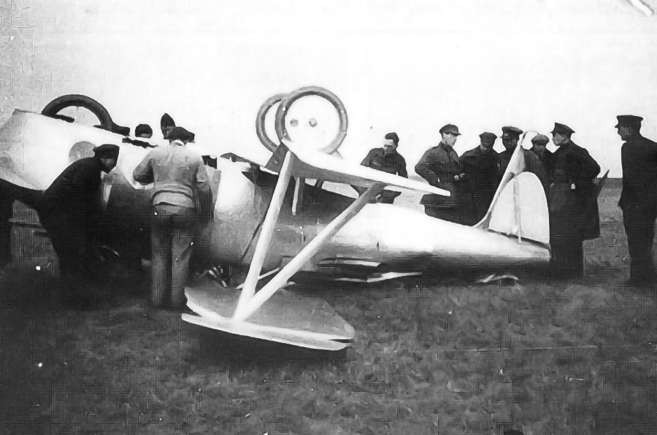
de Bruyere С1
Engine: 150 hp Hispano-Suiza 8a
Wing span: 8.20 m
Length: 7.50 m
Crew: 1
Armament: 1 x 37 mm Hotchkiss M1902
Dayton-Wright Airplane Co
USA.
Formed during First World War at Dayton, Ohio, for quantity aircraft production, with Orville Wright as consulting engineer. Built Liberty-engined DH-4 (the “Liberty plane”) and Standard J-1. In 1919 built a limousine version of DH- 4, single-seat Messenger, and also a three-seater. In 1920 Milton C. Baumann designed the revolutionary RB Racer, with solid all-wood wing, totally enclosed cockpit and retractable landing gear linked to rod-operated leading and trailing-edge camber-changing flaps. Built the USB-1, an Engineering Division redesign of the Bristol Fighter; 1921 twin-engined seaplane; side-by-side two-seat TR- 3 (last rotary-engined design for U.S. Army) and singlewheel landing-gear TR-5. In 1922 built Douglas DF-2. In 1923 the parent company, General Motors, abandoned aviation and dissolved Dayton-Wright; aeronautical work of the company taken over by Consolidated Aeronautics Inc.
The Dayton-Wright Company approached the USAAS to replace their World War 1-era Curtiss JN-4 “Jenny” series of trainers and was in turn asked to deliver three TA-3 models for evaluation. Though the design itself proved promising enough, the TA-3 (designated with an “A” for its air-cooled engine operation) was delivered by request with an uprated Le Rhone engine of 110 horsepower. Still further evaluation models were ordered, this time with the requested Wright-Hispano I V-8, 150 horsepower engine of increased power (designated TW-3 with the “W” standing for its water-cooled engine process) finally culminating in an official order by the USAAS.
Production rights for the trainer were secured by the newly-created Consolidated Aircraft Company (established by Reuben Fleet of the Gallaudet firm) as General Motors was reviewing their commitment to aircraft production in a post-war world and would eventually shut down operations at Dayton-Wright altogether. The TW-3 was delivered by 1923 and became the first notable variant of the “Trusty” production line.
Curtiss Tadpole
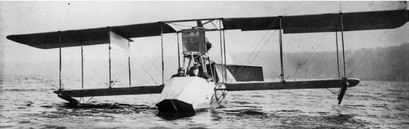
Curtiss built the Tadpole to test the aerodynamic relationship between the planning hull and the rigging of the wings. The first variation used a 100 hp Curtiss OX engine and came with the unequal span wings of the early F Boat, but with inset ailerons and several degrees of sweep. One of the devices tested on this aircraft was a set of moveable struts on the upper and lower wing centre sections that enabled incidence to be adjusted. If the wing were adjusted to a negative incidence while the plane was moored, it would not tend to become airborne during high winds. Continuing experiments were carried out with the Tadpole in the winter of 1914 when it was fitted with outrigger skis and flown from a frozen lake.
Curtiss-Wanamaker Triplane / Curtiss T / Curtiss Model 3
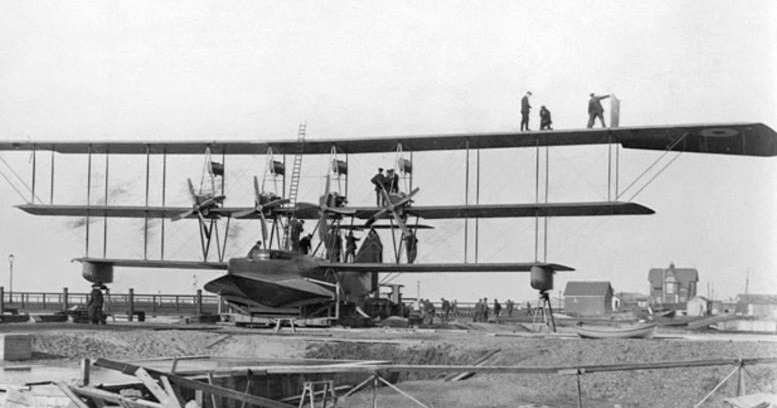
In 1915, the American businessman Rodman Wanamaker who, prior to the outbreak of the First World War commissioned the Curtiss Aeroplane and Motor Company to build a large flying boat, America to win the £10,000 prize put forward by the British newspaper Daily Mail for the first aircraft to cross the Atlantic, commissioned Curtiss to build a new, even larger flying boat for transatlantic flight that became known as the Wanamaker Triplane, or Curtiss Model T, (retroactively re-designated Model 3 when Curtiss changed its designation system).
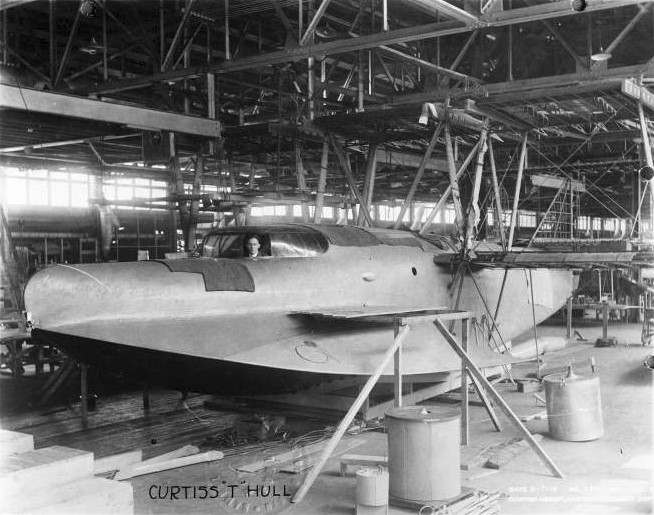
Early press reports showed a large triplane, 68 ft (17.9 metres) and with equal-span six-bay wings of 133 foot (40.5 metre) span. The aircraft, to be capable of carrying heavy armament, was estimated to have an all-up weight of 21,450 pounds (9,750 kilogrammes) and was to be powered by six 140 hp 104 kW) engines driving three propellers, two of which were to be of tractor configuration and the third a pusher.
The British Royal Naval Air Service (RNAS) placed an order for 20 Triplanes. The first one was completed at the Curtiss factory, Buffalo, New York in July 1916. This was the first four-engined aircraft to be built in the United States and one of the largest aircraft in the world.
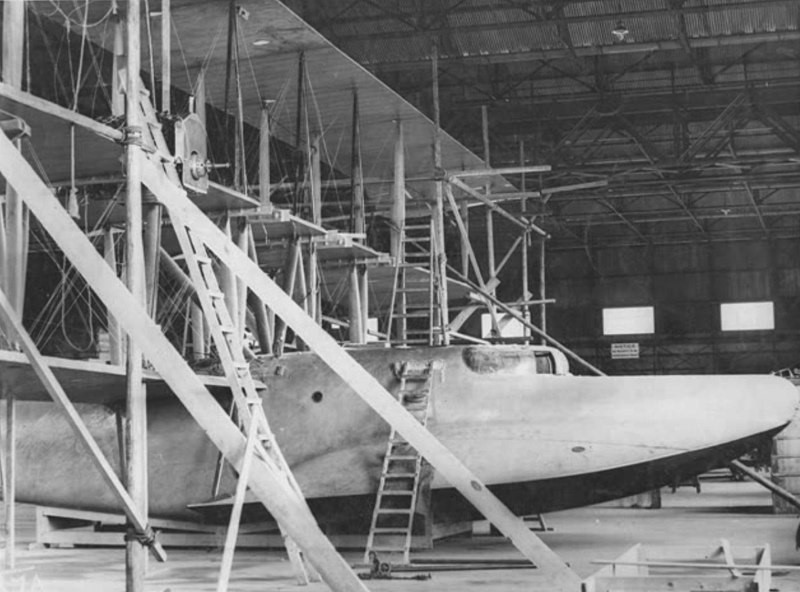
The finished Model T differed from the aircraft discussed in the press in various points. Size and weight were similar, with the upper wing having a span of 134 feet, but the other wings had different spans. It was planned to be powered by four tractor 250 hp (187 kW) Curtiss V-4 engines installed individually on the middle wing, which was unusual for the time. The crew of two pilots and a flight engineer were provided with an enclosed cabin, similar to the Curtiss Model H. To reduce the forces a pilot would need to use on the controls, small windmills could be connected to the aileron cables by electrically operated clutches to act as a form of power assisted controls.
As the planned Curtiss V-4 engines were not available when the prototype, 3073, was completed, it was decided not to fly the aircraft in the United States, but to take it to England by ship where it was reassembled at the naval air station Felixstowe. Initially it was fitted with four 240 hp (180 kW) Renault engines, but these were soon exchanged for four 250 hp Rolls-Royce Eagles.
As the aircraft was damaged beyond repair on the maiden flight it was considered unsuccessful, and the order for the remaining nineteen cancelled. The Wanamaker Triplane did however, provide the inspiration for John Porte of the Seaplane Experimental Station to build a massive five-engined flying boat of similar layout, the Felixstowe Fury.
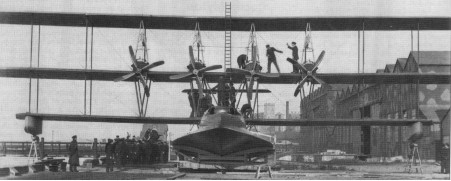
Although 20 Curtiss-Wanamaker triplanes were ordered by Britain, only one, 3073, reached the RNAS.
Engines: 4 × Renault 12F, 240 hp (180 kW) each
Upper wingspan: 134 ft (41 m)
Mid wingspan: 100 ft (30 m)
Lower wingspan: 78 ft 3 in (23.85 m)
Length: 58 ft 10 in (17.93 m)
Height: 31 ft 4 in (9.55 m)
Wing area: 2,815 sq ft (261.5 sq.m)
Empty weight: 15,645 lb (7,096 kg)
Gross weight: 22,000 lb (9,979 kg)
Maximum speed: 100 mph (161 km/h; 87 kn)
Range: 675 mi (587 nmi; 1,086 km) at cruise speed of 75 mph
Endurance: 7 hr
Time to altitude: 10 minutes to 4,000 ft (1,220 m)
Crew: 6
Engines: 4 x RR Eagle Mk1, 250 hp.
Curtiss VX
The 1916 Curtiss VX was as the Model V with some minor changes. They produced 180hp@1400rpm.
Curtiss OXX-2 / OXX-3
The 1916 Curtiss OX-2 aero engine was a water-cooled eight-cylinder V which produced 100hp from 567.44ci and a dry weight of 401 lb.
Except for a bigger bore, it was almost identical to the OX.
Curtiss-Kirkham K-12
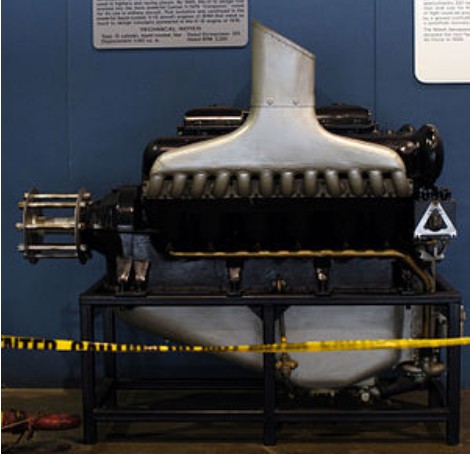
The 1917 Curtiss AB conceptual 12-cyl experimental low-drag, low-weight power engine for fighter planes project was shelved with only one built. The acquired technology went into development of the Curtiss-Kirkham K-12.
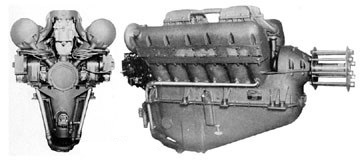
Designed by Charles B. Kirkham and first tested in 1916, the V12 K-12 featured a cast aluminum upper crankcase and integral cylinder blocks, four valves per cylinder, and “wet sleeve” construction for improved cooling. It relied upon high rpm and reduction gearing to develop the same power as larger engines. Although technologically advanced, many of the K-12’s innovations challenged the state-of-the-art and created serious reliability problems. Most problems were centered on producing reliable reduction gears. The K-12 design, however, led to the development of the very successful Curtiss D-12 (1922) engine used in fighters and racing planes. By 1926 the D-12 design had evolved into the more powerful Curtiss V-1570 “Conqueror,” noted for its use in military aircraft. That evolution was continued in the powerful liquid-cooled, V-12 aircraft engines of World War II that owed so much to design concepts pioneered in the K-12 engine of 1916.
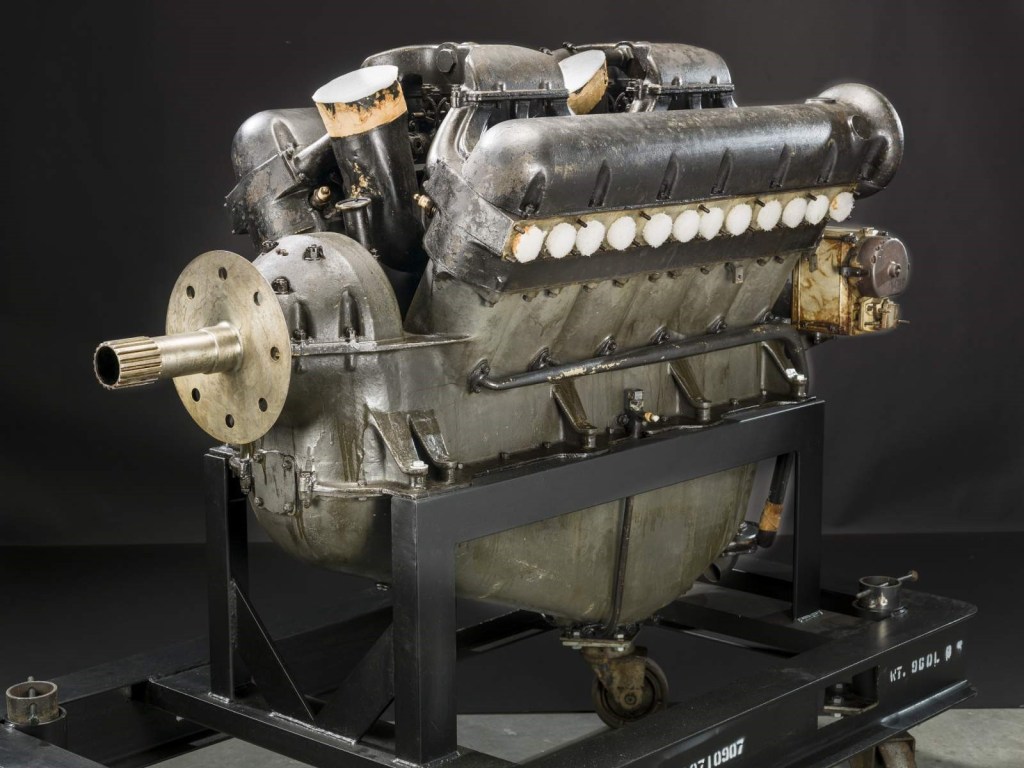
Curtiss K-12
Type: 12-cylinder liquid-cooled V
Bore: 4.5 in (114.3 mm)
Stroke: 6.0 in (152.4 mm)
Displacement: 1,145.1 cu in (18.77 L)
Cooling system: liquid
Power output: 375 hp / 280 kW at 2,250 RPM
Weight: 307.5 kg (678 lb)
Length 152.4 cm (60 in.)
Width 70.8 cm (27.875 in.)
Height 101.9 cm (40.125 in.)
Curtiss C-1 Canada
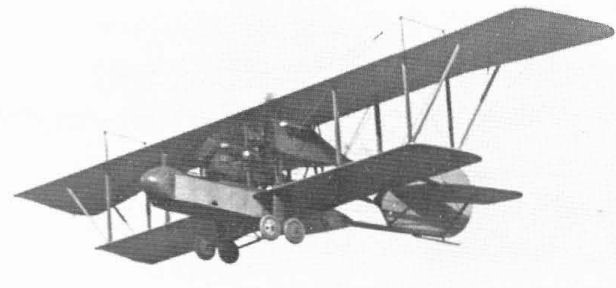
In 1915, Curtiss designed a twin-engined landplane bomber (the first twin-engined Curtiss landplane designed) based on its Curtiss Model H flying boat that had been designed for an attempt to fly across the Atlantic Ocean non-stop, and was in production for Britains’s Royal Naval Air Service (RNAS). The RNAS was interested in Curtiss’s design, and placed an order for a single prototype. As Curtiss’s Hammondsport and Buffalo, New York factories were busy building JN trainers and H-4 flying boats, it was decided to give responsibility for the new bomber, the C-1, to Curtiss’s new Canadian subsidiary, Canadian Aeroplanes Ltd., based at Toronto, giving rise to the name Curtiss Canada.
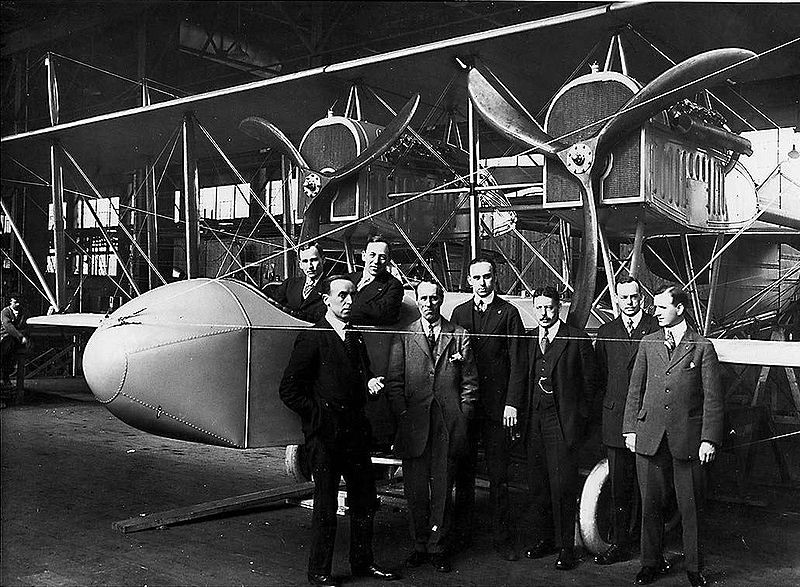
The Canada used the uneven span biplane wings and 160 hp (119 kW) Curtiss V-X engines of the H-4 flying boat, but the rest of the design was new. The fuselage was a long nacelle attached to the lower wing, with two gunners sitting side-by-side in an open cockpit in the nose of the nacelle, with the pilot sitting alone in a separate cockpit at the rear of the nacelle, behind the wings. The tail surfaces, with had a single vertical fin, were carried on twin tailbooms extending from the rear of the engine nacelles, with a third, lower, tailboom from the rear of the fuselage nacelle. It had a conventional landing gear with twin, tandem mainwheels and a tailskid. An early form of autopilot, the Sperry stabilizer, was fitted to improve stability for bombing.
Construction of the prototype started in May 1915, and was first flown on 3 September 1915, powered by two 90 hp (67 kW) Curtiss OX-5 engines as the planned V-Xs were unavailable. The C-1 Canada was tested at Long Branch near Toronto, in the Lakeshore area of Etobicoke. Further orders were placed for 102 production aircraft for the RNAS, and another prototype and ten production aircraft for the Royal Flying Corps.
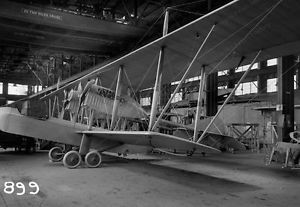
The first Curtiss Canada was delivered by ship to Britain in late 1915, being reassembled at Farnborough for the RFC and received RNAS serial 3700, flying again in January 1916. It was damaged in a crash in February, being rebuilt with modified wings. The wing overhang was now braced with struts instead of the original wires and the C-1 was the first aeroplane to fly with the new streamlined interplane wires (actually tie-rods), developed by the Royal Aircraft Factory, that came to be known as RAF Wires. When tested in April, its performance proved to be poor.
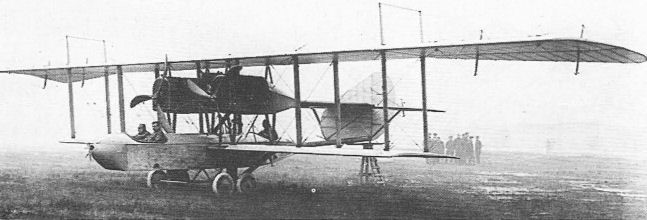
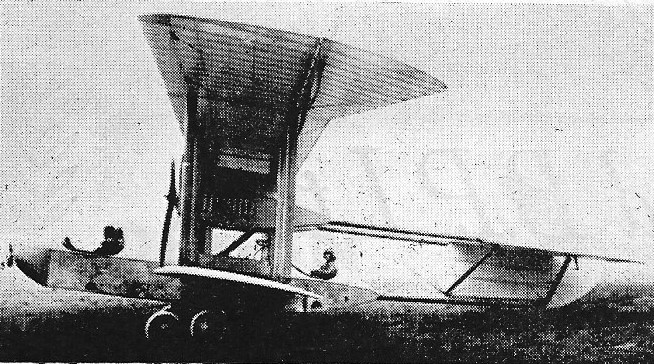
The adverse report led to the contract for the 100 RNAS aircraft (serials 9500-9599) was cancelled.
While the ten production aircraft for the RFC were delivered un-assembled to Farnborough by July 1916, the RFC had abandoned the Canada, and these aircraft were never re-assembled. The RNAS received one prototype, cancelling its orders as the greatly superior Handley Page O/100 was coming into service.
Powerplant: 2 × Curtiss OX-5 inline, 90 hp each
Upper wingspan: 75 ft 10 in (23.11 m)
Lower wingspan: 48 ft (15 m)
Length: 33 ft 4 in (10.17 m)
Height: 15 ft 6 in (4.72 m)
Empty weight: 4,700 lb (2,132 kg)
Gross weight: 6,300 lb (2,858 kg)
Maximum speed: 90 mph (145 km/h; 78 kn)
Range: 600 mi (521 nmi; 966 km)
Crew: 3
Armament: 2× .303 in (7.7 mm) Lewis guns
 All Aero