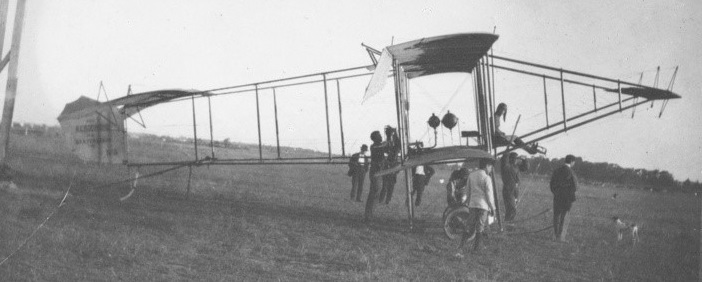
Dokuchayev No.3

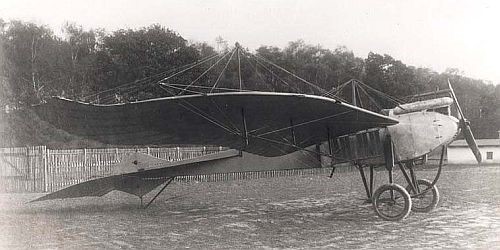
One of the designs of the Russian flying instructor A. Ya. Dokuchayev [А. Я. Докучаев]. The 1913-1914 number 3 machine – the Докучаев-3 – was based on two Henry Farman design which gives this mix. The front part is based on the Farman-VII and the tail side is based on the Farman-XVI (about equal with the French HF.20). This resulted in this one-off pusher trainer, fitted with a 80 hp Gnôme rotary engine. The instructor seat is right behind the seat of the pupil, somewhat higher placed so that he can see easily to the front. He could also guide the steering done by the pupil (or take it over).
DFW Stahltaub

The D.F.W. Stahltaube was a licence built version of the Jeannin Stahltaube reconnaissance and training aircraft of 1913.

The Deutsche Flugzeug-Werke G.m.b.H. firm at Lindenthal, Leipzig received an order for 18 of these copies but delivered only two.

Engine: Mercedes G 4 F, 94 hp
Length: 37.73 ft / 11.5 m
Wingspan: 45.932 ft / 14.0 m
Wing area: 322.92 sq.ft / 30.0 sq.m
Max take off weight: 1896.3 lb / 860.0 kg
Weight empty: 1323.0 lb / 600.0 kg
Max weight carried: 573.3 lb / 260.0 kg
Max speed: 59 kt / 109 km/h
Cruising speed: 51 kt / 95 km/h
Wing load: 5.95 lb/sq.ft / 29.0 kg/sq.m
Range: 205 nm / 380 km
Crew: 2

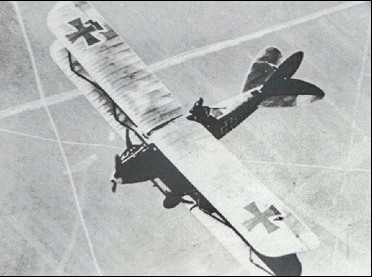
DFW C.V

With the power of a 200hp Benz Bz IV, the top level speed was 155km/h at 1000m, while the C.V’s operational ceiling was 5000m. Built not just by DFW, but by four other sub-contractors. Just under 1,000 were in operation on every front at the end of September 1917. Armament comprised the standard 7.92mm guns, one fixed forward-firing and one mounted in the rear cockpit, plus light bombs.

Max. speed: 155 km/h / 96 mph
Ceiling: 5000 m / 16400 ft

Deutsche Flugzeubu-Werke GmbH / DFW / Allegemeine Transportanlagen Gesellschaft Maschinenbau (ATG)

Deutsche Flugzeubu-Werke GmbH / DFW was formed by Bernard Meyer at Lindenthal, Leipzig, in 1910, it built Maurice Farman biplanes under license and produced its own Mars biplane and a copy of the Jeannin Taube and Etrich Stahl-taube in 1914. During the war the DFW B series (unarmed) and C (armed) two-seaters were well known, the C V in particular being license-built also by Aviatik and Halberstadt. In 1916 DFW produced the R.I. and R.ll giant bombers, very clean designs with engines in the fuselage. Planned civil development of these after the war had to be abandoned and they were scrapped, but civil conversions of C types were built. The company built no aircraft after 1920, amalgamating with Allegemeine Transportanlagen Gesellschaft Maschinenbau (ATG).
ATG joined Siebel in 1945 to become Siebel ATG (SIAT).