Though this company became part of British Aircraft Corporation in 1960, its origins date back to 1911 at its Coventry Works (Coventry Ordnance Works Ltd.), where quantity production of other manufacturers’ designs was undertaken during First World War. After the Armistice development centered on the Kingston flying-boats, following the lines of the Cork, a product of the Phoenix Dynamo Manufacturing Company Ltd., which was then also part of English Electric. Original features manifest in Ayr flying-boat and Wren ultralight monoplane (1923), but aircraft work ceased in the mid-1920s. In 1938 it was resumed, with contracts for the Handley Page Hampden (followed by the Halifax). In May 1944 an order was placed for de Havilland Vampire jet fighters. Over 1,000 Vampires built before production got under way on company’s own Canberra, the first British jet bomber and the first to serve with the RAF. Canberra production continued for ten years, totaling over 1,300 examples, including 403 license-built Martin B-57s for the USAF. Numerous variants developed, notably for reconnaissance; other countries using the type included Ecuador, France, Peru, Rhodesia, Sweden, and Venezuela. Many records broken (e.g. London-Cape Town December 1953). Lightning twin-jet single-seat fighter of 1952 was RAF’s first supersonic fighter (in level flight); entered service December 1959. Much development of this type was undertaken by British Aircraft Corporation, but two-seat version emanated from English Electric.
British Aircraft Corporation was formed out of Bristol, English Electric, Vickers-Armstrong and Hunting Aircraft Ltd, in 1960.
World War 1
EFW DH-2 / EFW DH-3
A tractor design of A. Haefeli which went into production as developed DH-3 (110 of these two-seaters built).
EFW DH-1
A pusher design of A. Haefeli (six built in 1916) showing Ago influence
EFW (Eidgenössische Flugzeugwerke) / F+W / EKW / Eidgenossische Konstruktions Werkstätte / Federal Construction Workshop / Eidgenossiches Flugzeugwerke / Elbe Flugzeugwerke / Fabrique Federale D’avions
Eidgenössiche (Constructions) Werkstätte was formed at Thun early in First World War. Made aircraft to designs of A. Haefeli, who was earlier with Farman and Ago. First was DH-1 pusher (six built in 1916) showing Ago influence; DH-2 was tractor which went into production as developed DH-3 (110 of these two-seaters built). DH-4 was fighter prototype of 1918; DH-5 (1919; 60 built) a DH-3 replacement; DH-5A a higher-powered version of 1928, with steel-tube fuselage (22 built). To a government specification of 1934 it built the C-35 multipurpose two-seat biplane as a replacement for the Fokker C.V-E, which it resembled, and which the company had produced jointly with Dornier since 1932.
The Eidgenos¬sische Konstruktions Werkstatte (EKW) built the Fokker C.V E under licence.
EKW (Eidgenossische Konstruktions Werkstätte, or Federal Construction Workshop) became EFW.
In 1932 Dornier production was resumed in Germany. The Swiss factory subsequently became the Eidgenossisches Flugzeugwerk. Founded 1934 as government-run R&D organization, with manufacturing, maintenance and upgrading capabilities. In an official specification of 1934 the company had designed the C-36 monoplane.
Newly named EFW, it revived the design in 1938 and built 160 as C-3603. Of C-3604 development, only 13 were built.
EFW began in 1955 manufacturing the Ilyushin Il-14P under licence, as well as development of the Baade 152.
After the war became responsible for Swiss license production of various foreign aircraft for Swiss Air Force, including the British Vampire, Venom and Hunter (under Hawker Siddeley contract), several versions of French Mirage and US F-5E/F combat aircraft, plus French Alouette III helicopter. Produced C-3605 as turboprop conversion of wartime C-3603 fighter-bomber, used for target-towing.
Adopted F + W title in 1972 from former EFW and two other used names. Subsequent work has included assembly of Hawk trainers, Hornet fighters, component production for Airbus and McDonnell Douglas airliners, manufacture of missiles, and more.
Later became a subsidiary of the European Aeronautic Defence and Space Company (EADS),
Eastborne Aviation Co Ltd
Founded at Eastbourne, Sussex by F. B. Fowler. Built in 1913, a single-seat tractor monoplane; in 1914 two types of tractor biplane, one single-seat and one two-seat, the latter for military use. Seaplane built for 1914 Circuit of Britain had “buried” engine driving two propellers through shafts. During war “Circuit” seaplane was modified but then abandoned. Company built Avro 504s and B.E.2cs under contract. Firm’s airfield near Eastbourne taken over by Royal Navy.
Douglas
Donald Douglas, the son of a bank cashier in Brooklyn, came to Los Angeles in 1915 with a degree from the Massachusetts Institute of Technology. By 1922 he had established a factory with a capital of $350 in an abandoned motion-picture studio in Santa Monica, where he built torpedo plane for the US Navy. Two years later he had signed for his first export order, to Norway.
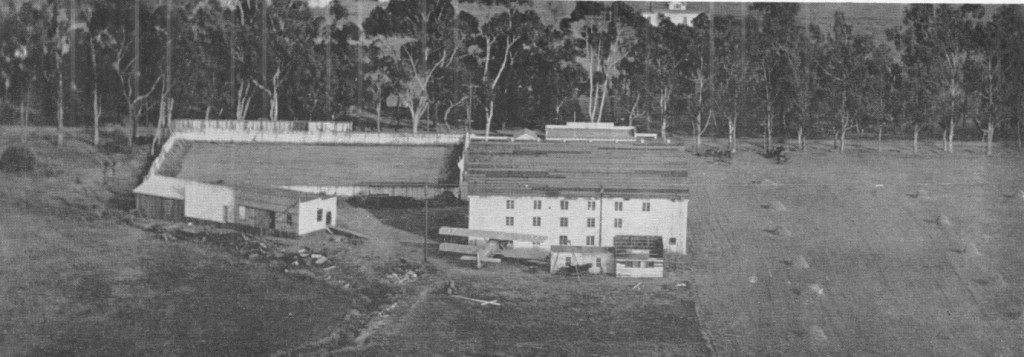
The Davis-Douglas Cloudster of 1920, Donald W. Douglas’s first design, was followed in 1921 by the DT torpedo- bomber for the U.S. Navy, the largest single-engined aircraft in the U.S.A. at the time. Four modified DTs, known as Douglas World Cruisers, made the first round-the-world flight in 1924, with Army crews. The Douglas Aircraft Company was formed in 1928, and in July 1929 a former Douglas engineer, Jack Northrop, set up the Northrop Aircraft Company and produced an all-metal low-wing dive-bomber, the XBT-1/A-17.
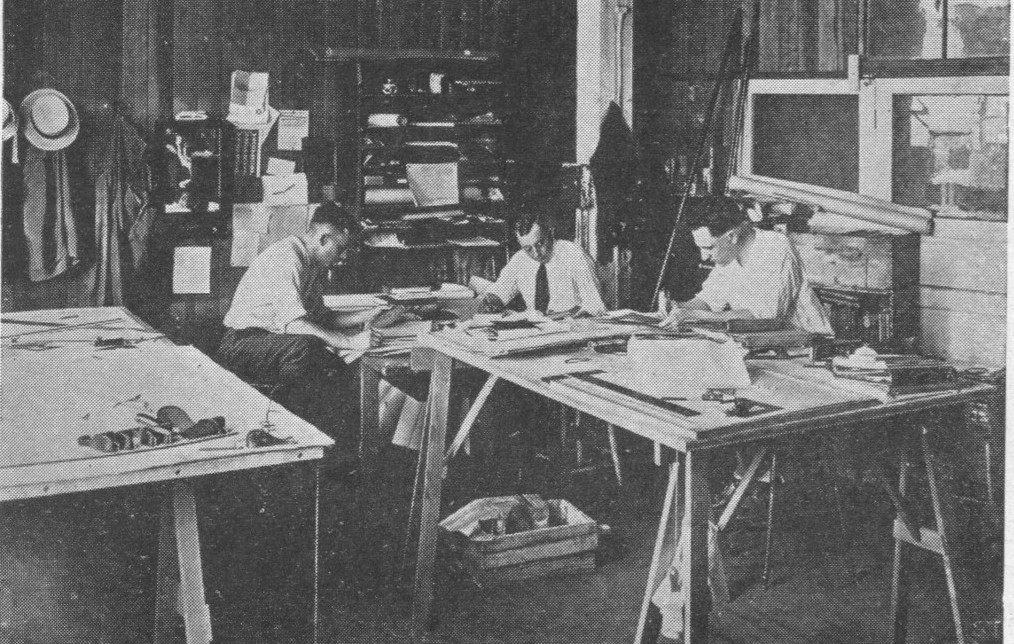
With the help of designer Jack Northrop, Lockheed built the F1, but it was turned down by the Navy. In 1923 Northrop left to take a job with Donald Douglas, and later founded his own corporation.
Northrop and Douglas merged in 1937 (Douglas with a majority stockholding), and in 1938 it became Douglas-El Segundo. The dive-bomber design progressed, via the Douglas TBD Devastator of 1934, to become the U.S. Navy’s first monoplane, and was followed by the Dauntless SBD. Ultimate Douglas development of the single-engined piston-engined attack-bomber was the 1945 Skyraider, which served in many roles until 1968, both in Korea and Vietnam. Last single-engined military designs by Douglas were the small delta-wing F4D Skyray jet fighter (first flown January 1951) and highly successful A4D Skyhawk jet attack-bomber (first flown June 1954 and 2,960 built up to 1979; current programs around the world keep substantial numbers of Skyhawks operationally capable with foreign forces).
The first twin-engined Douglas design appeared in 1925; the T2D for the U.S. Navy. The B7 of 1930 was the first of a series for the U.S. Army, and was followed by the B-18 in 1935. The most famous twin, however, was the DB-7/A-20 Boston (and nightfighter Havoc), which first saw action in June 1940. A total of 7,385 was built, of which 3,125 went to Russia. The A-26/B-26 Invader of 1945, developed from the A-20, served in Korea and Vietnam, and the Boston/Havoc concept was taken into the jet age by the Skywarrior and Skynight. A version of the former became the B-66 Destroyer, Douglas’s (and the USAF’s) last conventional light-attack bomber.
In 1933, under pressure from United Airlines’ Boeing 247, Transcontinental & Western Air turned to Douglas to provide a competing aircraft. The first DC-1 (Douglas Commercial) appeared in prototype only, but 131 DC-2s followed in 1932-1936. The first commercial orders were in 1933 for 40 DC-2 for the new Trans World Airways. A wide-bodied sleeper version, the DST, led to the DC-3 in 1936, which was to be the most famous airliner of all time. In 1940 the USAAC ordered it as the C-47 transport. Douglas built 9,255 of the 10,125 produced, and in 1961 1,000 were still in military use, and 600 civil DC-3s remained in operation in the U.S.A. in 1974. Douglas, consulting five airlines, developed a four-engined version, the DC-4, in 1941. The Army commandeered all civil DC-4s on U.S. entry into the war, and 1,162 military C-54s were built. After the war many reverted to DC-4 status, to be succeeded by the DC-6 and DC-7.
At Santa Monica, the Douglas company had made 29,000 aircraft during World War 2, but produced 127 in 1946.
Douglas temporarily lost its lead in transport when Boeing produced the Model 707, but then produced the very effective DC-8 and DC-9 jet.
Military transport design continued with the big C-124 Globemaster in 1950, and C-133 Cargomaster of 1957, a heavy strategic freighter capable of carrying all the thencurrent IRBMs or ICBMs. In 1947 Douglas went supersonic with the jet D-558-1 Skystreak and D-558-2 rocket Skyrocket, built for NASA. The latter held the world speed record in 1953 at 1,981km/h and achieved Mach 2.01 at 19,810m in 1953. The later X-3 research aircraft was intended for flight at up to Mach 3. There was a brief involvement with executive jets with the PD-808 Vespa-jet, production being transferred from El Segundo to Rinaldo Piaggio before, in 1967, the company merged with McDonnell Aircraft to become McDonnell Douglas.
Douglas files bankruptcy and was forced to sell at a knocked down price to McDonnell of St. Louis, which had been making handsome profits out of its F-4 Phantom, supplied to the air force in Vietnam.
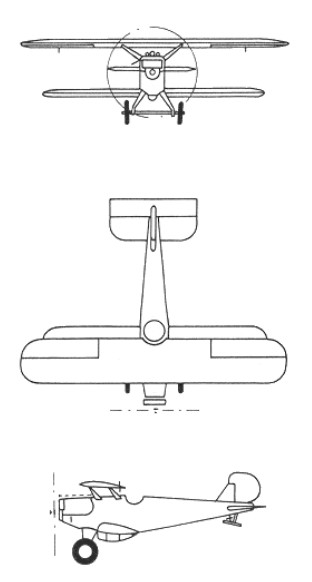
Dornier D-1
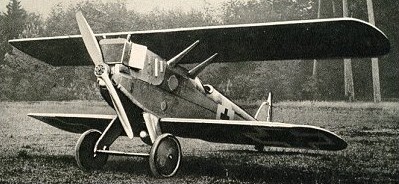
1918
Engine: 1 x BMW IIIa, 136kW
Take-off weight: 885 kg / 1951 lb
Empty weight: 160 kg / 353 lb
Wingspan: 7.8 m / 25 ft 7 in
Length: 6.4 m / 20 ft 12 in
Height: 2.6 m / 8 ft 6 in
Wing area: 18.6 sq.m / 200.21 sq ft
Max. Speed: 200 km/h / 124 mph
Cruise speed: 80 km/h / 50 mph
Ceiling: 8100 m / 26600 ft
Armament: 2 machine-guns
Crew: 1
Dornier Metallbauten GmbH / Aktien Gesellschaft für Dornier Fluzeuge / Dornier-Werke GmbH
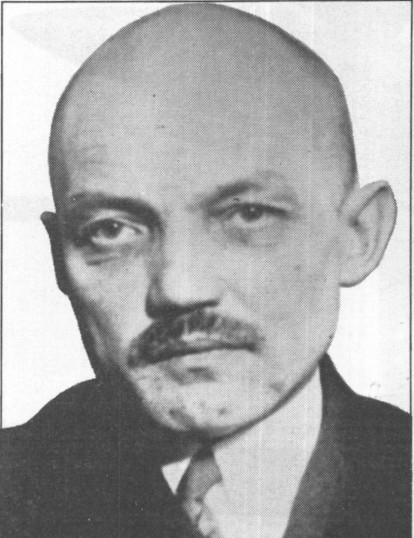
Dr Claude Dornier was employed by Count Zeppelin in 1910, and in 1914 was in charge of the design and construction of large all-metal marine aircraft at Zeppelin-Werke Lindau. Here he produced the Rs.I in 1915, then the largest aircraft in the world, with a span of 43.5m. By 1918 three more giant flying-boats had been built, Rs.II, III, and IV, as well as prototypes of single-seat and two-seat fighters.
All employed Dornier’s techniques of advanced metal construction. After the war the works were transferred to Manzel, near Friedrichshafen, where some two-seaters for the Swiss Air Force were completed. At Manzel, between 1920 and 1925, appeared the Libelle, Delphin, Komet and Merkur, small civil aircraft, and the Falke, an unsuccessful fighter. In 1922 the company became Dornier Metallbauten GmbH and in 1926, as the Manzel works were too small, it transferred to Altenrhein in Switzerland (Aktien Gesellschaft für Dornier Fluzeuge). Here, for the next three years, Aktien Gesellschaft fur Dornier Flugzeug was occupied in building three Do X flying-boats, the largest aircraft of their time, powered by 12 engines. Two were sold to Italy. Bomber designs followed, the Do N, P, and Y being built 1929-1931. These led to the Do F which, like the Do 11, began in 1933 to reequip the German Air Force.
However, in 1932 production was resumed in Germany. The Swiss factory subsequently became the Eidgenossisches Flugzeugwerk.
1932 production in Germany, this time as Dornier-Werke GmbH, began with the military Wal (later the Do 18) and Do 11 bomber, supplanted later by the Do 23. In 1934 appeared its first modern warplane, the Do 17, evolved from a fast, six-passenger mailplane designed for Deutsche Luft Hansa. The Do 17 and its successor, the Do 217, which served as a nightfighter, were the only Dornier designs to see largescale production during 1935-1943. Towards the end of the war the company produced the Do 335 push-pull twin-engined heavy fighter with a top speed of 763km/h, probably the fastest piston-engined Second World War fighter.
After the war Dornier became established in Spain. The first postwar aircraft developed completely in Germany was the twin-engined STOL Do 28. An experimental STOL jet transport followed, the Do 31, and the Do 29 research aircraft. From 1966 the company developed the Skyservant and was involved in international programs. Collaboration with Avions Marcel Dassault-Breguet Aviation on Alpha Jet development and production included research into supercritical wing.
Merkle joined Dornier in 1969.
Became Dornier GmbH in 1972. A majority shareholding was acquired by Daimler-Benz AG in 1985. In 1989 Deutsche Aerospace AG was formed as a corporate unit of Daimler-Benz Group and intended to unite the work of Dornier, MBB, MTU and more, and was renamed Daimler- Benz Aerospace AG. in 1995, with the Regional Aircraft division administered by Dornier Luftfahrt GmbH. In June 1996 Fairchild Aerospace purchased 80% of Dornier Luftfahrt from Daimler-Benz Aerospace, forming Fairchild Dornier Germany Dornier Luftfahrt GmbH. Within Daimler Chrysler Aerospace AG, Dornier Flugzeugwerft GmbH represents part of the Military Aircraft business unit.
Dorand AR.1 / AR.2 / ARL.2
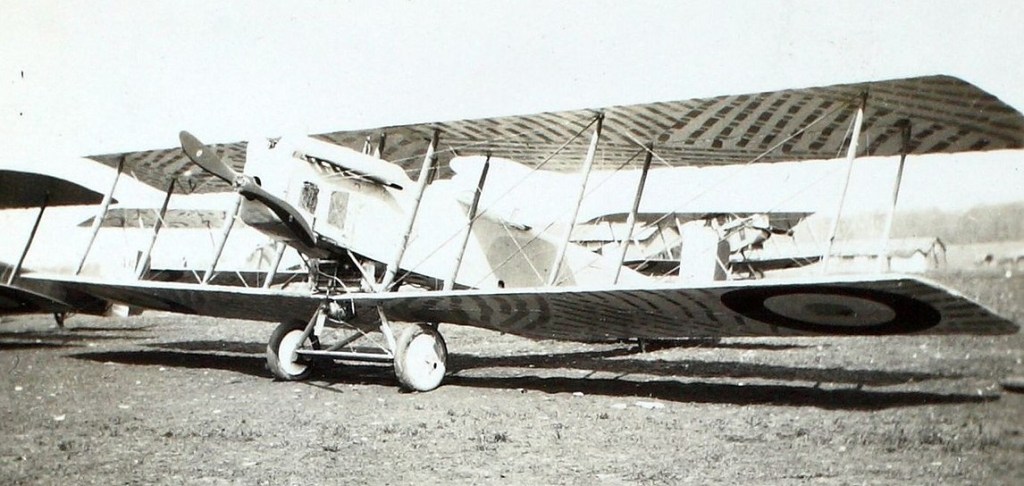
The Dorand AR.1 was a World War I French two-seat observation biplane aircraft used by the French Air Force, the American Expeditionary Force and, in small numbers, by Serbian Aviation.
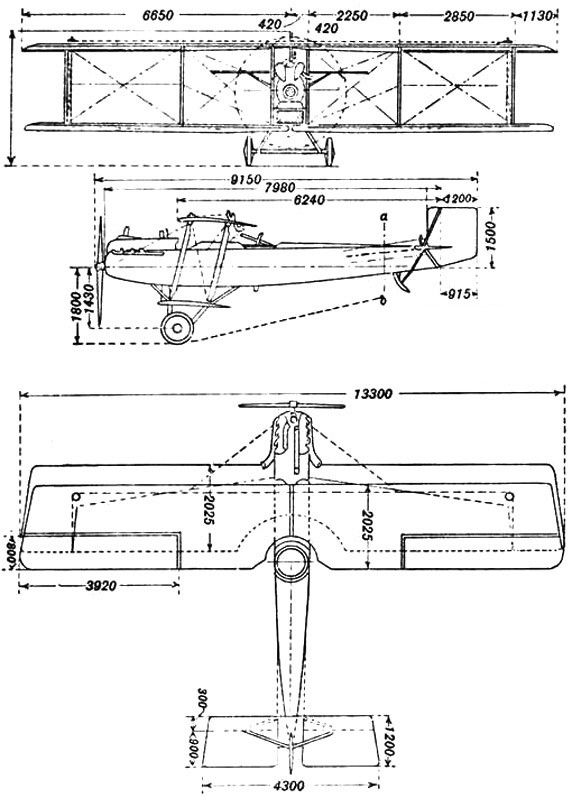
Designed by Captain Georges Lepère of the STAé to replace the obsolescent Farman F.40 pusher aircraft, Dorand AR-series were two-seater reconnaissance biplanes that were named after the STAé director, Lt. Col. Dorand. They were characterized by backward-staggered two-bay wings and angular all-moving tail surfaces. The pilot sat beneath the leading edge of the upper wing, with the observer’s cockpit being under the trailing edge, and there were cut-outs in both wings to improve the latter’s field of view. Rather unusually for a single-engine tractor biplane of the era, the lower wing was not directly attached to the fuselage, instead being somewhat below it, supported by struts.
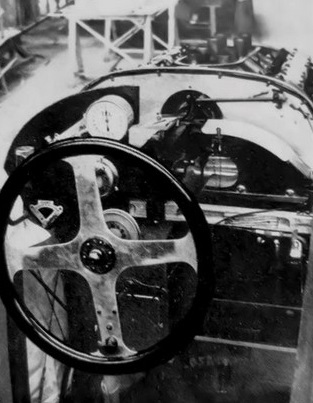
Production of these aircraft began in a state-owned French Army Aircraft Establishment (or S.T.Aé.) factory at Chalais-Meudon, near Paris, after flight testing had been completed in the autumn 1916.
The first of the thirteen squadrons which flew Dorands on the Western Front received their aircraft in the spring 1917. Five other French squadrons used the type on the Italian Front. These aircraft were withdrawn from the combat units in early 1918.
In 1917 the American Expeditionary Force ordered the Renault-engined varieties of the Dorand, the first of 22 AR.1s being delivered in December 1917 and the first of 120 AR.2s in following February. The Americans operated these types on the Western Front for the first half 1918, until replacing them with the Salmson 2. After being retired from fighting duties, the surviving examples were used as trainers.
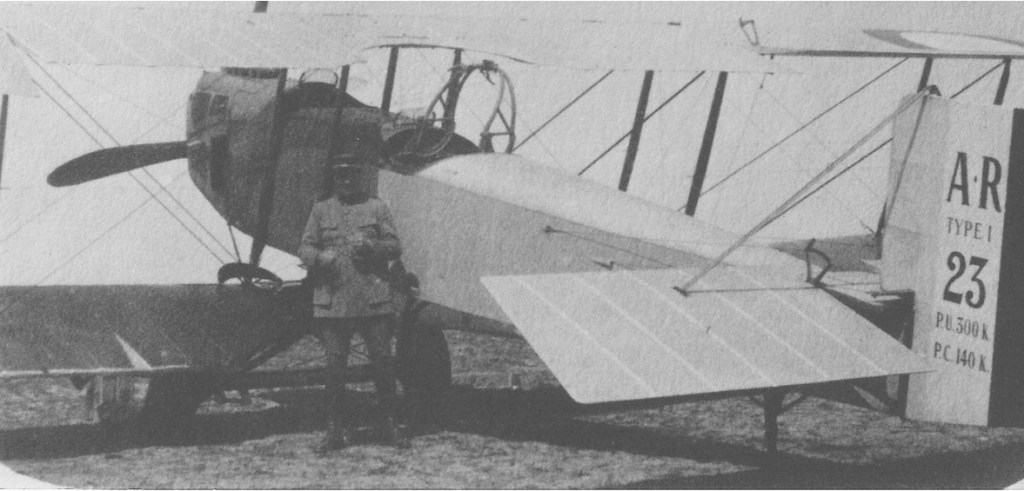
A small number of Dorand AR.1s were also supplied to Kingdom of Serbia, which operated these aircraft in four squadrons from April 1918 onwards.
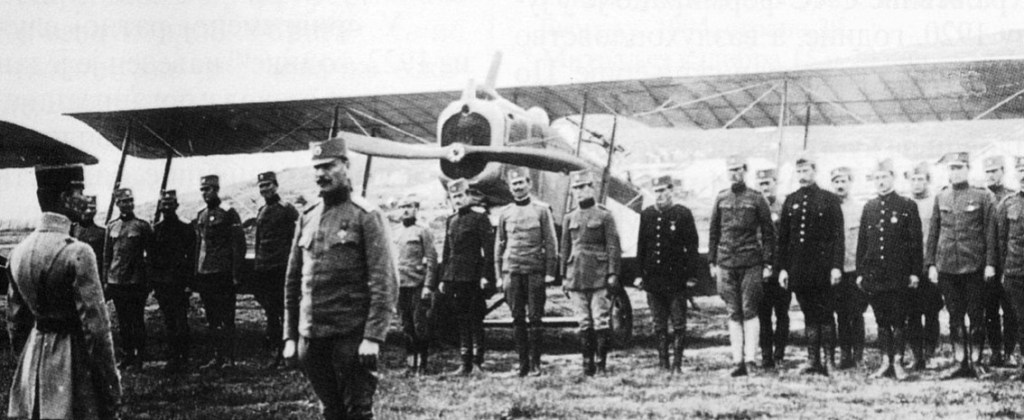
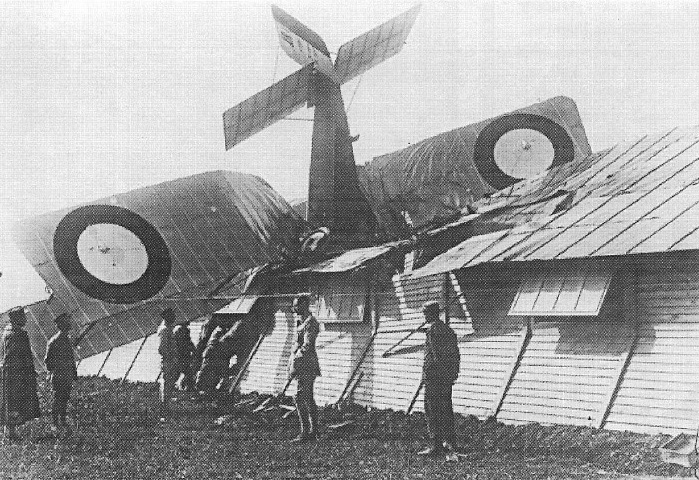
While the Dorand AR-types didn’t have a particularly distinguished career in either French or American service, having a rather mediocre performance for a late-war daytime reconnaissance aircraft and suffering from having low priority for engine supplies, it is a testimony to the general soundness of the design that after the war, many AR.1s and AR.2s appeared in the French civil register, being used as 2/3-passenger transports by companies like Compagnie Aérienne Française and Réseau Aérien Transafricain. Private users found the aircraft useful for training and joy-flights as well.
All these types had “A.2” added to their names in French service, indicating that they were two-seater reconnaissance aircraft.
Variants:
AR.1 A2 160
Early production version, frontal radiators
Engine: 120 kW (160 hp) Renault 8Gd
Wing span: 13.27 m (43.5 ft)
AR.1 A2 200
Mid production version, frontal radiators
Engine: 150 kW (200 hp) Renault 8Gdy
Propeller: 2-bladed wooden fixed pitch
Wing span: 13.27 m (43.5 ft)
Wing area: 50.36 m2 (542.1 sq ft)
Length: 8.225 m (27 ft 0 in)
Empty weight: 890 kg (1,962 lb)
Gross weight: 1,330 kg (2,932 lb)
Wing loading: 26.4 kg/m2 (5.4 lb/sq ft)
Power/mass: 0.143 kW/kg (0.087 hp/lb)
Fuel capacity: 170 L (37 imp gal)
Maximum speed: 148 km/h (92 mph, 80 kn) at 2,000 m (6,600 ft)
Endurance: 3 hours
Service ceiling: 5,500 m (18,000 ft)
Crew: 2 (pilot and observer)
Armament: 1 × fixed forward-firing 7.7 mm (.303 in) Vickers mg / 1 or 2 × 7.7 mm (.303 in) Lewis gun(s) for observer
AR.1 A2 190
Late production version, frontal radiators
Engine: 140 kW (190 hp) Renault 8Gd
Wing span: 13.27 m (43.5 ft)
ARL.1 A2
AR.1s modified, frontal radiators
Engine: 180 kW (240 hp) Lorraine-Dietrich
Wing span: 13.27 m (43.5 ft)
AR.1 D2
Trainers, frontal radiators
Engine: Renault 12d
Wing span: 13.27 m (43.5 ft)
AR.2 A2
2nd production version, wing mounted radiators
Engine: 148 kW (199 hp) Renault 8Ge
Wingspan: 12.0 m (39.4 ft)
Wing area: 45 sq.m
ARL.2 A2
AR.2s modified, wing mounted radiators
Engine: 180 kW (240 hp) Lorraine-Dietrich
Wingspan: 12.0 m (39.4 ft)
Wing area: 45 sq.m
Dorand, Emile
France
In 1916 Colonel Dorand, then head of the Section Technique d’Aviation, designed a two-seat reconnaissance biplane which was produced at the government aircraft factory at Chalais-Meudon and also by Farman.
 All Aero