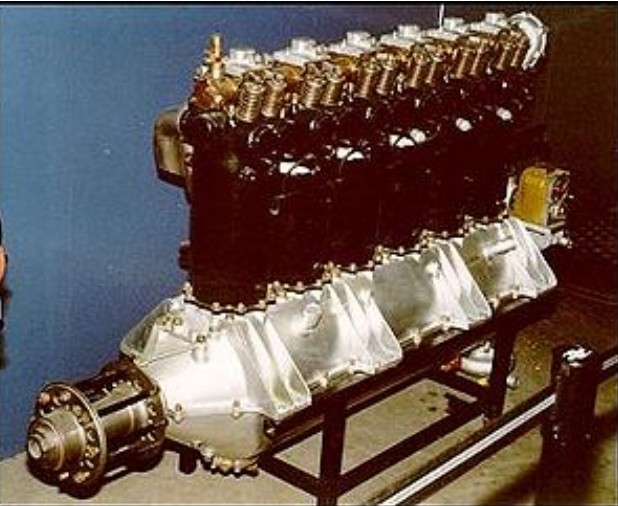
The Fiat A.12 was a six-cylinder liquid-cooled in-line engine 160 mm x 180 mm, 21.71 liters, 245–300 hp at 1,700 rpm. The A.12 was a rather large aero engine at the time and its dimensions were more typical of a marine engine, but it was efficient and reliable. No doubt Fiat’s experience with large racing engines contributed to its success. A total of 13,260 A.12s were produced between 1916 and 1919.
Applications: IVL A.22 Hansa Breguet 14 Ansaldo A.300 Caproni Ca.4 Caproni Ca.5 Caproni Ca.46 Fiat R.2 Macchi M.9 Macchi M.15 Pomilio PC Pomilio PD Pomilio PE SAML S.1 SAML S.2 Savoia-Marchetti S.55 Savoia-Pomilio SP.2 Savoia-Pomilio SP.3 SIA 7B.1 SIAI 9 SIAI S.16 and S.16bis (A.12bis) Airco DH.4 Airco DH.9 Vickers Vimy (only one prototype)
Specifications:
A.12 Type: 6-cylinder liquid-cooled inline engine. Bore: 160 mm (6.30 in) Stroke: 180 mm (7.09 in) Displacement: 21.71 L (1,325.1 cu in) Length: 1,780 mm (70 in) Width: 560 mm (22 in) Height: 1,130 mm (44.5 in) Dry weight: 415 kg (915 lb) Fuel system: Carburetor Fuel type: octane Cooling system: Liquid Power output: 245 hp at 1,700 rpm
The Fiat A.10 was an Italian 6-cylinder, liquid-cooled, in-line aero engine of World War I. The A.10 was succeeded by the larger A.12. Fiat produced over 15,000 engines during World War I.
Applications: Caproni Ca.2 Caproni Ca.32
Specifications:
Fiat A.10 Type: 6-cylinder, liquid-cooled, in-line engine Displacement: 9.5 L (580 cu in) Length: 1,470 mm (57.8 in) Width: 400 mm (15.74 in) Height: 820 mm (32.3 in) Dry weight: 190 kg (419 lb) Fuel system: Carburetor Power output: 100 hp (74 kW)
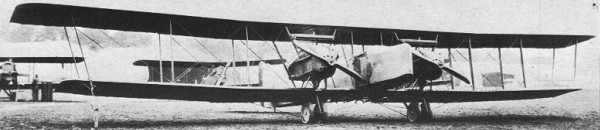
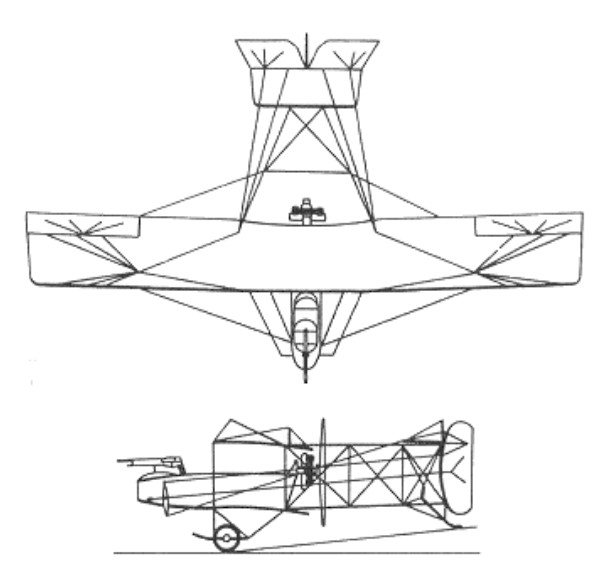
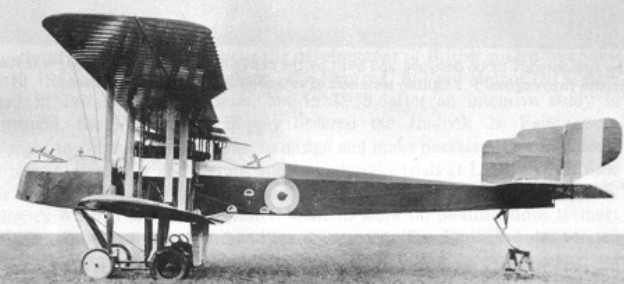
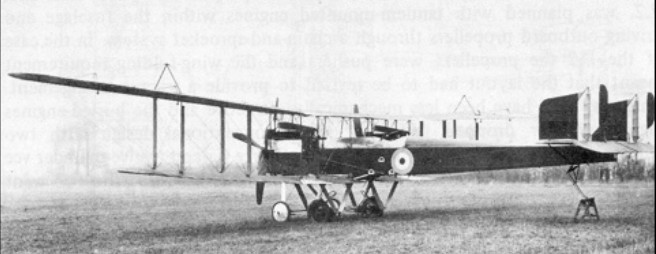
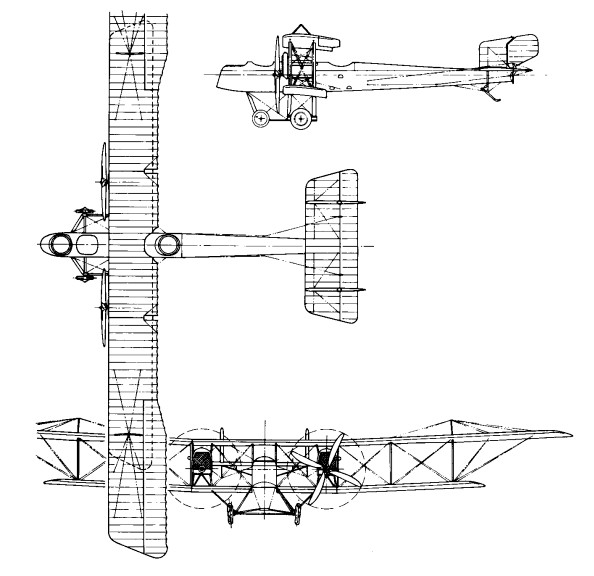
The F.50 bomber was a large tractor machine able to carry a significant load of heavier bombs. It was normally powered by two 250/265 hp Lorraine Dietrich engines, and in appearance strongly resembled the enemy Gothas. The front gunner/ bomb aimer was in the nose and the pilot just ahead of the wings; there was no rear cockpit for a gunner to provide defence astern. There were two twin wheel landing gears, between which were racks for eight 75 kg (165 lb) bombs. Two escadrilles of the Aviation Militaire used this type, and two were supplied to the AEF. The F.50BN 2 operating as a night bomber in 1918. Several survived for some years with the French navy (as torpedo bombers), in Japan and as civil transports.
Span: 22.9 m (75 ft 1.5 in) Length: 12.03 m (39 ft 5.75 in) Gross weight: 3116 kg (6870 lb) Maximum speed: 150 km/h (93 mph)
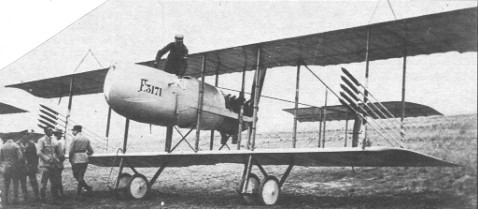
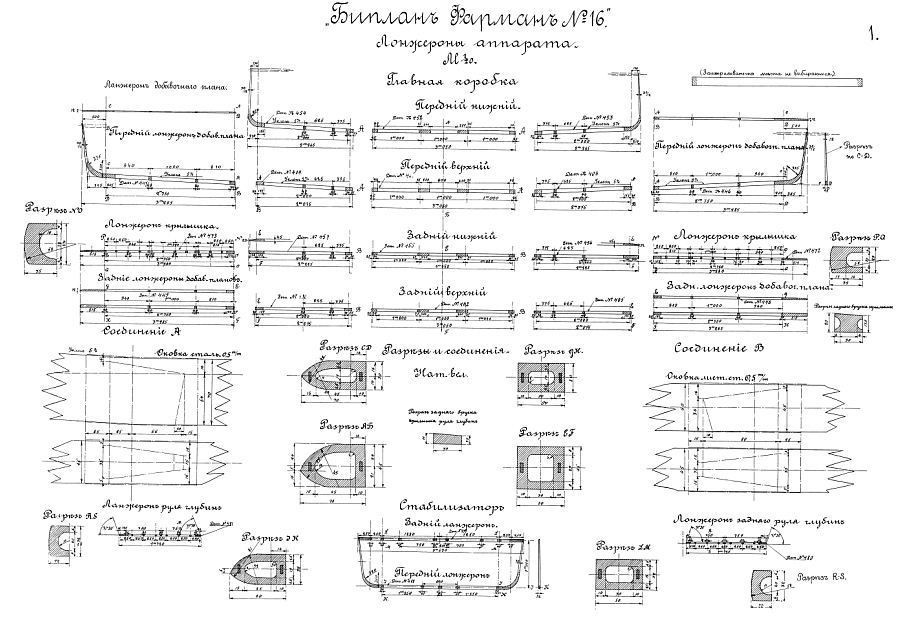
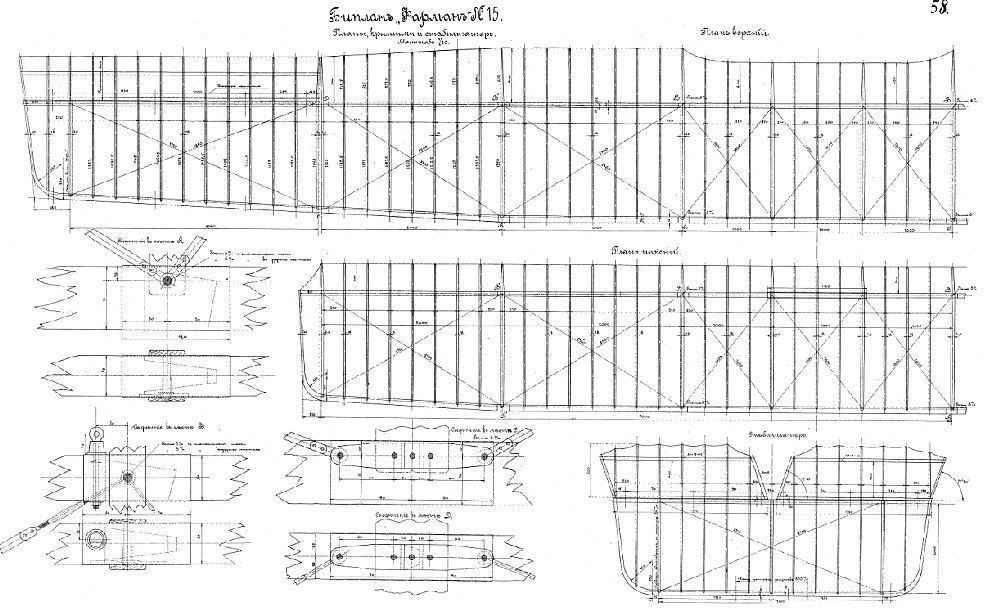
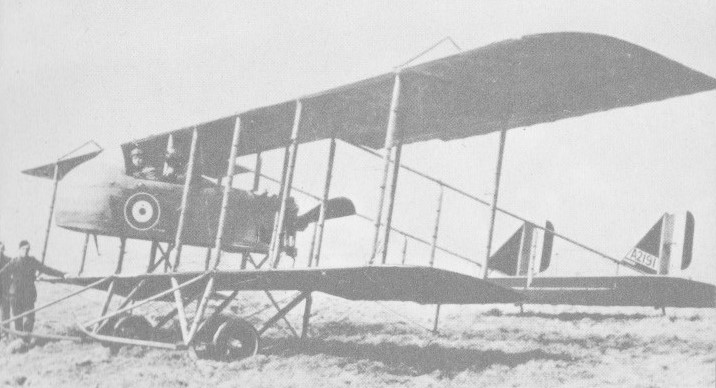
The last important pusher type produced by Henry and Maurice Farman was the F.40 and F.41 reconnaissance bombers, produced by the brothers’ new joint company at the end of 1915.
It derived from the F.30, the F.40 was a more refined aircraft, again with the gunner in the nose with a Hotchkiss or Lewis and the pilot seated behind. The usual engine was the 160 hp Renault V 8. The F.41 had a shorter span, less powerful Renault engine and reduced performance. The F.40 and 41 were used in large numbers by the Aviation Militaire, equipping 47 escadrilles on the Western Front and in Macedonia. Even in 1916 they were no match for enemy scouts, and many were lost. By 1917, they were used mainly by night, and continued in use until the Bre.XIV became available in numbers late in that year.
A few F.40s (F.40P) were armed with Le Prieu rockets and used against balloons.
F.40
F.40 Engine: Renault, 130 hp Span: 17.60 m (57 ft 10 in) Length: 9.25 m (30 ft 4 in) Gross weight: 1120 kg (2470 lb) Maximum speed: 135 km/h (84 mph)
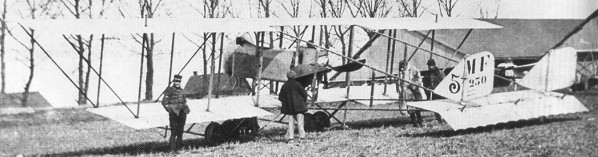
Most of the F.30 were built under licence in Russia, though the French Aviation Militaire may also have used small numbers of the F.30B 2 type (B 2=bomber, two seats) with the 260 hp Canton Unne (Salmson) radial. The Russian model usually had the 160 hp version of this engine.
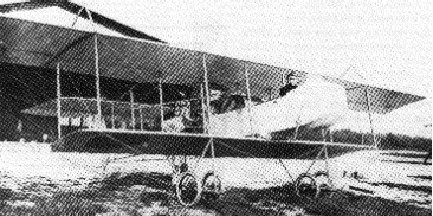
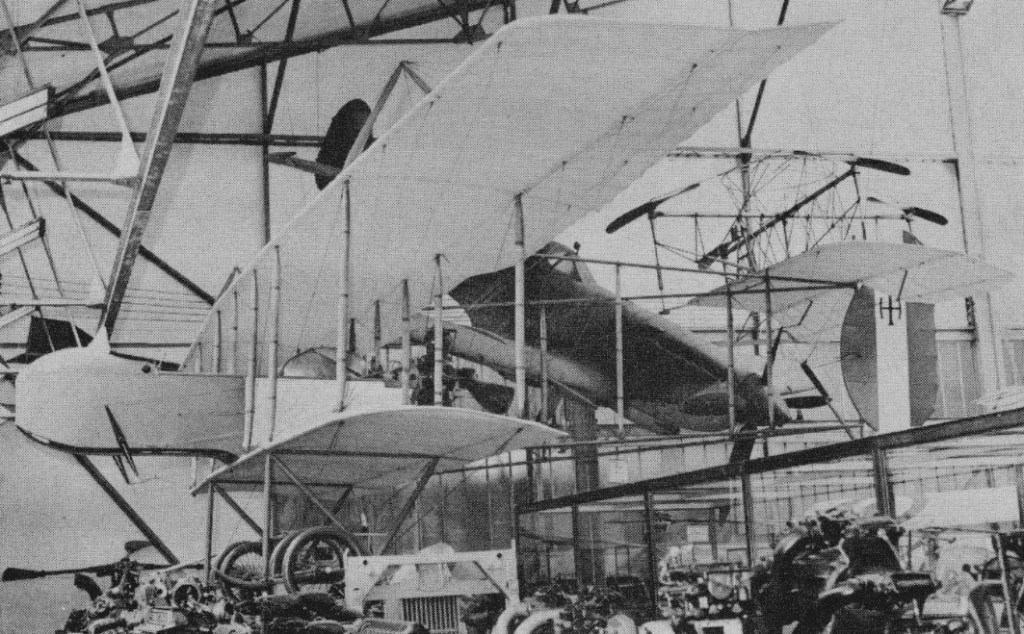
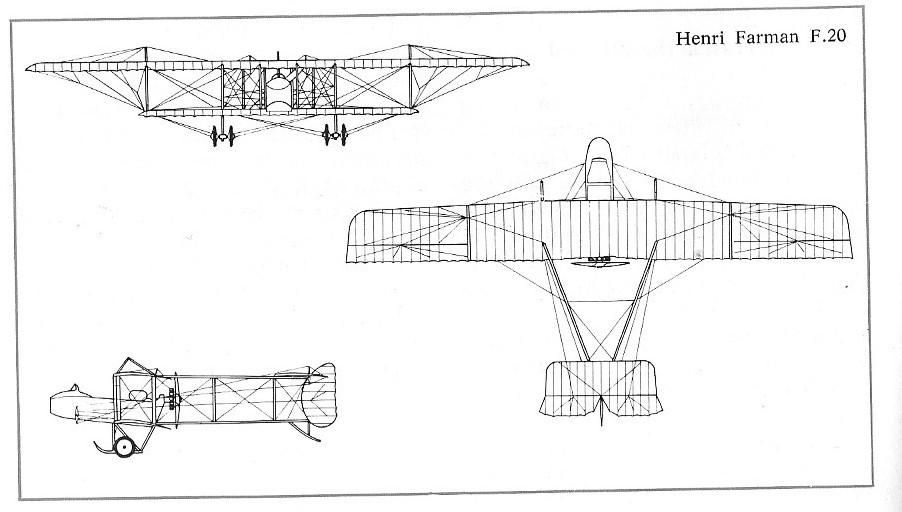
The two-seat H.F.20 was in service with the French and Belgian military in 1913 and was basically a refined “Shorthorn”, with a 59.6kW Gnome rotary engine driving a pusher propeller. With the outbreak of World War I the type was used also by the British air services for scouting and light bombing but achieved only marginal success as a reconnaissance type and then trainer.
H.F.21
By substituting the Gnome for a Le Rhone engine of similar power it was hoped to extend the aircraft’s capabilities, but the resulting H.F.21 was obsolete. In a final attempt to rectify the tremendous lack of power the H.F.27 was developed with a 104.3kW or 119kW Canton-Unne engine – as fitted to the equally light but far more successful early Voisin types. The resulting aircraft was sufficiently promising to be deployed on secondary war fronts.
Engine: 1 x Gnome, 59kW Max take-off weight: 660 kg / 1455 lb Empty weight: 360 kg / 794 lb Wingspan: 14.0 m / 45 ft 11 in Length: 8.3 m / 27 ft 3 in Height: 3.2 m / 10 ft 6 in Wing area: 35.0 sq.m / 376.74 sq ft Max. speed: 110 km/h / 68 mph Ceiling: 315 m / 1050 ft Range w/max.fuel: 250 km / 155 miles Armament: 1 machine-guns Crew: 2
HF.20 Engine: Gnome 7A. 80 hp Wingspan: 44 ft 10 in / 15.54 m Length: 27 ft 9 in / 8.79 m Height: 10 ft / 3.1 m Weight: 1565 lb / 710 kg Max speed: 65 mph / 100 kph at SL Ceiling: 9022 ft / 2750 m Endurance: 3 hr 20 min Armament: 1 x mg Crew: 2
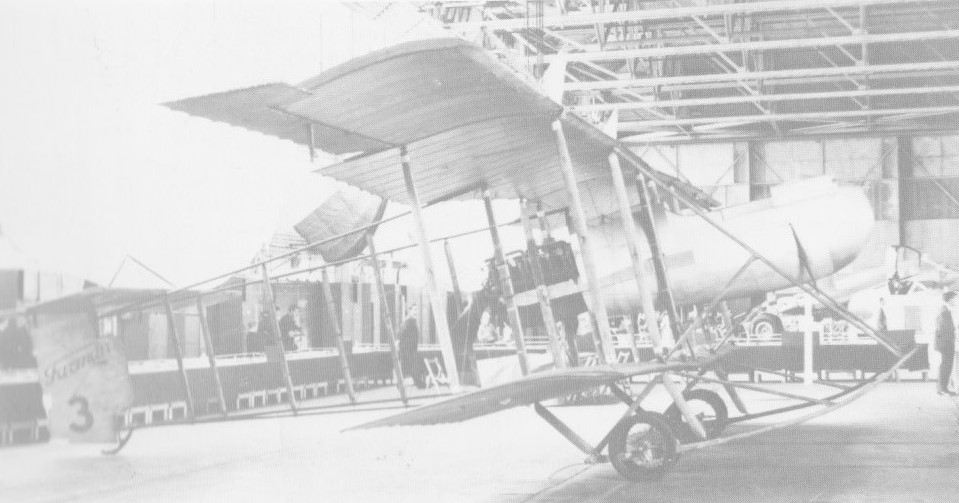
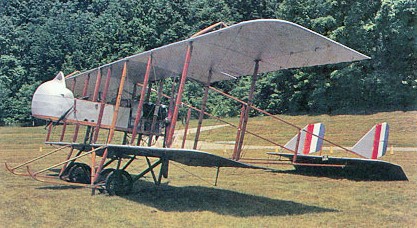
The M.F.11 retained the same basic configuration as Maurice Farman’s preceeding M.F.7, but introduced a number of refinements and one radical change: the forward elevator that had led the British to give the nickname “Longhorn” to the M.F.7 was abandoned, and the British dubbed the M.F.11 the “Shorthorn”. The tail unit was re-designed to have a single tailplane, elevator, and twin rudders. Another visually notable change was an alteration in the position of the nacelle, which was raised from the upper surface of the lower wing to a point between the upper and lower wings. It was the first Farman design to be armed, being employed on bombing and reconnaissance duties.
The M.F. 11 first flew in 1914 and entered service in 1915 with an assortment of engine types delivering anything between 70 and 130 hp (52 and 97 kW), though the most common units were De Dion or Renault engines; aircraft licence-built in Italy by S.I.A. had Renault or Fiat A.l0 engines.
The Shorthorn was also built in England by the Aircraft Manufacturing Company, the forerunner of the de Havilland aircraft company, used by both the RFC and RNAS. One of the RNAS machines dropped eighteen 16-lb bombs on enemy positions near Ostend on 21 December 1913 as the first-ever military night operation.
In the basic M.F. 11 the pilot was seated in front of the observer, but in the MF.11bis developed by Maurice’s brother, Henry Farman, the observer was given a better field of fire for his gun by being seated in front of the pilot.
The Farman MF 11 served in considerable numbers, equipping 37 French escadrilles, six squadrons of the RFC on the Western Front and other RFC/RNAS units in Mesopotamia, the Dardanelles and the Aegean. The R.F.C. received its first Shorthorns for No. 4 Squadron, each fitted with one machine gun. Unfortunately, they had such poor performance that they could often make no head¬way against the prevailing wind when returning from flights over the enemy line, and were easy prey for flak.
The type was used mainly for observation, but was occasionally and successfully pressed into service as a bomber. A Farman MF. 11 of the Royal Naval Air Service made the first night bombing raid of World War I, attacking German gun emplacements near Ostend on 21 December 1914.
The MF.11, shown here on at Hendon airfield, was fitted with an 80 hp De Dion-Bouton engine. This machine was the private aeroplane of the Frenchman Marquis Larienty-Tholozan.
1913 Maurice Farman MF.11 of Marquis Larienty-Tholozan
In 1916 the Australian Government ordered five Shorthorns from England for the Central Flying School at Point Cook, Victoria. They were serialled CFS-15, CFS-16, CFS-17, CFS19, and CFS-20. A sixth aircraft, CFS-18 was built at Point Cook. After the war, on 19 March 1919, four Shorthorns were offered for sale at a public auction but failed to sell. They were subsequently purchased by a syndicate of Graham Carey and Arthur Fenton.
Following their frontline service, the MF. 11 and its predecessor, the MF.7, were widely used for training. Principal versions – M.F. 11 (basic model) and M.F. 11bis (revised version with reversed seating). Principal users – France, Great Britain, Italy, and Russia.
Farman MF.11 “Shorthorn” Engine: Renault R-80, 70-hp (52-kW) Wing span 53 ft 0 in (16.15 m) Length 31 ft 2 in (9.50 m) Height 12 ft 9.5 in (3.90 m) Wing area 613.56 sq ft (57.00 sq.m). Empty weight: 1,213 lb (550 kg) Maximum take¬off weight: 1,874 lb (840 kg) Max. weight carried: 672.5 lb / 305.0 kg Wing loading: 3.69 lb/sq.ft / 18. 0 kg/sq.m Maximum speed: 46 kt / 85 km/h / 62mph (100 km/h) at sea level Service ceiling 12,470 ft (3,800 m) Initial climb rate: 295.28 ft/min / 1.5 m/s Endurance 3 hours 45 minutes. Range: 162 nm / 300 km Armament: one 8-mm (0.315-in) machine-gun and (bomber version) 288 lb (131 kg) of bombs. Crew: 2
Engine: 1 x 100hp Renault 8-cylinder air-cooled V Max take-off weight: 928 kg 2046 lb Wingspan: 16.16 m 53 ft 0 in Length: 9.45 m 31 ft 0 in Height: 3.18 m 10 ft 5 in Max. speed: 106 km/h 66 mph Ceiling: 3800 m 12450 ft Crew: 2 Armament: one machine gun, 130kg of bombs
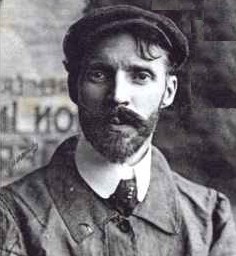
On November 9,1907 Henri Farman, in aVoisin-50 Antoinette biplane, made the first powered flight in Europe to last over a minute. At a 1909 Reims meeting he flew his own Farman III, the first aircraft with effective ailerons. Brother Maurice was also a designer; the two formed Avions Henri et Maurice
Maurice Farman designed the MF-7 Longhorn (1913) and MF-11 Shorthorn (1914), both used as trainer and observation aircraft by the Allied forces. Farman F.20 and F.40 developed, the latter with streamlined two-seat nacelle and powered by 135hp Renault engine. Farman F.50 night bomber followed; four-engined F.140 night bomber introduced 1925, replaced by F.221 and F.222 in 1937, the latter used subsequently by Vichy air force after June 1940 as a transport. Civil airliners included the F.60 Goliath. Twin-engined F.180 biplane, F.190 single-engined monoplane introduced 1928, three-engined F.300 in 1930.
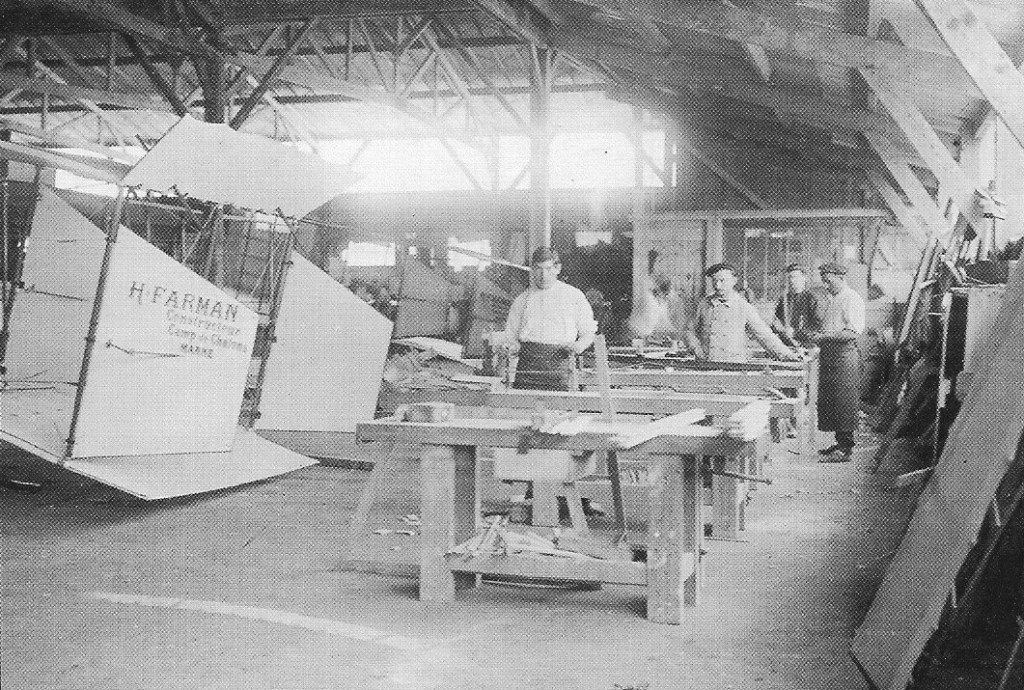
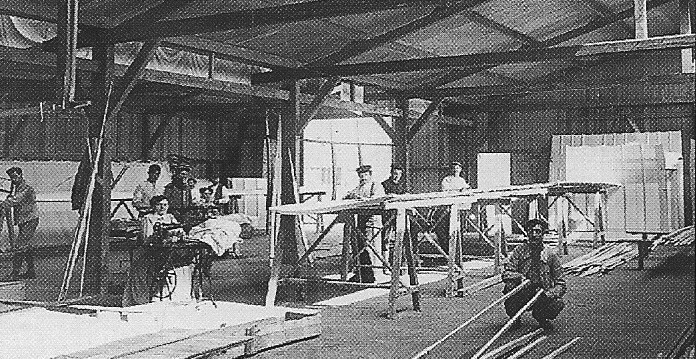
The French aircraft manufacturer Socété des Avions H. M. et D. Farman, with factories at Billancourt (Seine), began aircraft engine design and manufacture aimed at civil aviation shortly after WWI.
In France, the Socialist Government of the so called Popular Front brought all the companies building military aircraft, aero engines and armament under its control in 1936. The immediate result was the socialized oblivion of such established companies as Marcel Bloch, Bleriot, Nieuport, Potez, Dewoitine, Hanriot and Farman within half a dozen nationalized groups or Societies Nationales, named according to their geographical location (Nord, Ouest, Centre, Midi and so on). Hanriot joined Farman at Billancourt in 1936, eventually nationalized in 1937, to become SNCA du Centre.
Farman becoming part of SNCAC. After nationalization, in 1939 the Farman brothers acquired the license to manufacture the Stampe SV.4 trainer biplane. Although SNCAC was assigned manufacturing rights postwar, Farman retained license and with Jean Stampe the Societe Anonyme des Usines Farman developed Monitor I monoplane powered by 140 hp Renault engine. Variants included the II, III and IV, the latter being taken over by Stampe et Renard, Brussels.





 All Aero