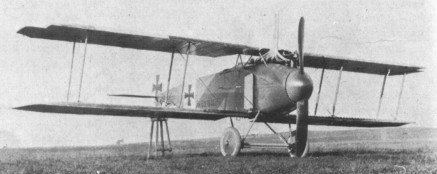
The D.IV (M.20), with its 160 h.p. Mercedes engine, was also unsuccessful. Of the 44 built, four went to Sweden, and these were mainly used for training. The D.IV had two machine guns.
The D.IV (M.20), with its 160 h.p. Mercedes engine, was also unsuccessful. Of the 44 built, four went to Sweden, and these were mainly used for training. The D.IV had two machine guns.
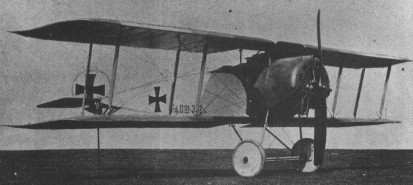
In an effort to maintain an edge over Allied fighters, the D III had more power, a fuselage based on that of the D II, D I wings and an armament of two machine-guns.
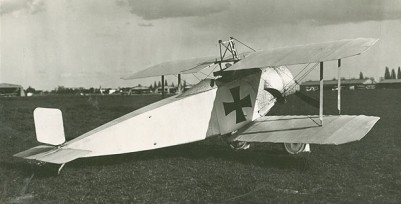
Ten D.IIIs (M.19Ks) were purchased by the LVA (Dutch Aviation Department) in Germany. Some 23 were built, but were not successful in spite of the fact that Boelcke shot down six opponents with this type. With a 160 h.p. Oberursel engine the maximum speed was 160 kph.
D III
Engine: l x Oberursel U.lll, 119kW (160hp).
Span: 9.05m (29ft 8.25in).
Length: 6.3m (20 ft 8 in).
Armament: 1 or 2 x 7.92-mm (0.312-in) LMG 08/15 mg.
Max T/O weight: 710kg (1,565lb).
Max speed: 99 mph at sea level.
Operational endurance: 1 hr 30 min.
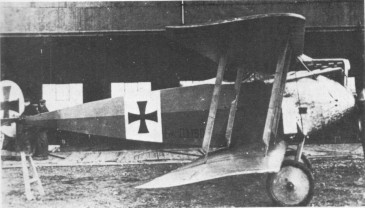
To replace its E-series monoplanes, in the summer of 1916 Fokker evolved the D I biplane fighter from its M.18z prototype.
The D.I had a 120 h.p. Mercedes engine, but looked very much like the D. II. Martin Kreutzer lost his life whilst testing a D. I Although 136 were built, the type proved too slow for use on the Western Front.
Engine: Mercedes DII, 89-kW (120-hp).
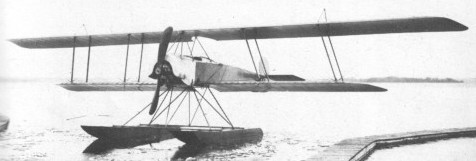
The W.3 floatplane, which appeared in March 1915, was a modified M.7 with floats originating from the W. 2. After some unsatisfactory trials it was restored to M. 7 configuration.
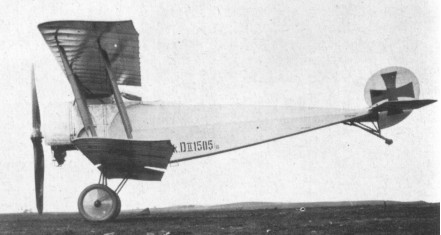
The D II appeared later than the D I but was derived from the earlier M.17z prototype. The D II had shorter wings and a longer fuselage, and as it was powered by a 75-kW (100-hp) Oberursel U.l rotary engine it was lighter and more manoeuvrable than the D I.
M.17E, a version of the M.16E with a 100 h.p. Oberursel rotary engine instead of the liquid cooled Mercedes of the latter. Equipped with one machine gun, the M.17E was not put into production.
The D.II (M.17ZF) fighter, designed by Martin Kreutzer, appeared early 1916 and was completed before the D.I. With a 100 h.p. Oberursel engine it attained a speed of 150 kph, and the armament comprised one machine gun. A total of 77 of this type were produced.
Engine: Oberursel U.l rotary, 75-kW (100-hp).
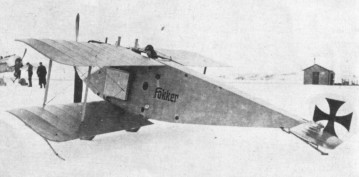
The M.16E, of 1915, an experimental fighter with one machine gun, did not go into production.
Thirty M.16Z two seaters were used by the Austro Hungarian army with the designation B.3. The M.16Z had a 160 h.p. Mercedes or a 200 h.p. Austro Daimler engine.
The E III was superseded by the generally similar E IV. The final attempt to wring extra capability out of the basic design was the overweight E IV with two guns and the 119-kW (160-hp) U.III rotary.
Total E-series production was about 300 aircraft, including 49 E.IV, the last in July 1916.
Engine: 119-kW (160-hp) Oberursel U.III rotary.
Wing Span: [10 m]
Length: [7.5 m]
Height: [2.7 m]
Empty Weight: [460 kg]
Gross Weight: [724 kg]
Max Speed: [166 km/h]
Ceiling: [4,500 m]
Endurance: 1½ hours
Crew: 1
Armament: 2 Spandau machine guns, 7.92 mm
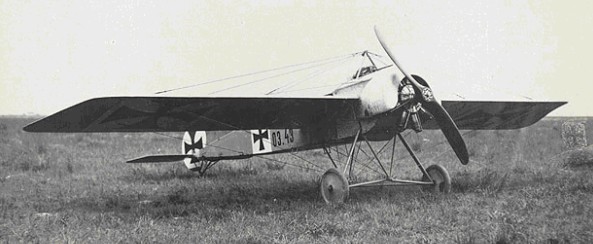
The E I was soon superseded by the generally similar E II with the 75-kW (100-hp) U.I rotary for improved performance and then by the definitive E III with detail modifications. The final attempt to wring extra capability out of the basic design was the overweight E IV with two guns and the 119-kW (160-hp) U.lll rotary. Total E-series production was about 300 aircraft including 258 E.III.
Flying the Fokker E.III – Frank Tallman
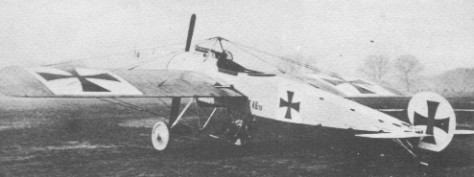
The E.I and E.II were built in both armed and unarmed versions, and mainly used for training, before the armed versions were re-engined with a 74.6 kW / 100 hp Oberursel rotary and re-designated E.III. They also had lengthened wings, could carry more fuel and had greater ammunition capacity.
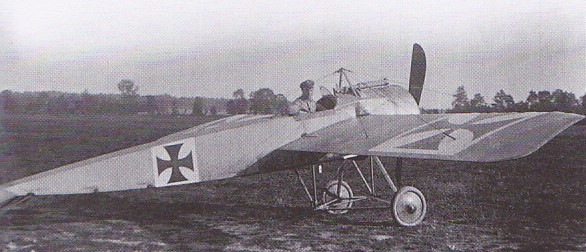
One E.III was part of trials of an early stealth experiment. The fabric covering was replaced with a transparent Cellon material, allowing all the internal structure to be seen, but otherwise reducing the visibility of the aircraft from a distance. Although it was relatively effective camouflage, the material itself lost its tautness when wet, thus affecting the flying qualities. The Cellon, an early form of Cellophane plastic, would also tear severely following minor damage, and so it was not used in service.
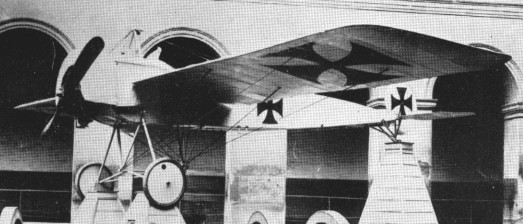
Of the 309 Fokker Eindeckers produced, only a single E.III survived. Captured by the RFC in April 1916, it hung for many years without covering in the Science Museum in London.
Replica:
Engels Aeroplanbau E.4 Fokker E.III
Musso Fokker E.III
Bianchi Fokker E.III
Mars Fokker E.III
Personal Plane Services Fokker E.III
Ultralight Replica:
Airdrome Airplanes Fokker E.III
Engine: l x Oberursel U.I, 75kW (100 hp).
Span: 9.52m (31 ft 2.75 in).
Length: 7.2m (23ft 7 5in).
Height: 9 ft 1¾ in [2.4 m]
Wing area: 165.766 sqft / 15.4 sq.m
Max T/O weight: 610kg (1,3451b).
Weight empty 878 lb (398 kg)
Wing loading: 8.2 lb/sq.ft / 40.0 kg/sq.m
Ceiling 12,000 ft (3,650 m) fully loaded.
Max speed: 87 / 140 km/h mph at sea level.
Cruising speed: 65 kts / 120 km/h
Operational endurance: 1 hr 30 min.
Range: 119 nm / 220 km
Seats: 1.
Armament: 1 or 2 x 7.92-mm (0.312-in) LMG 08/15 mg.
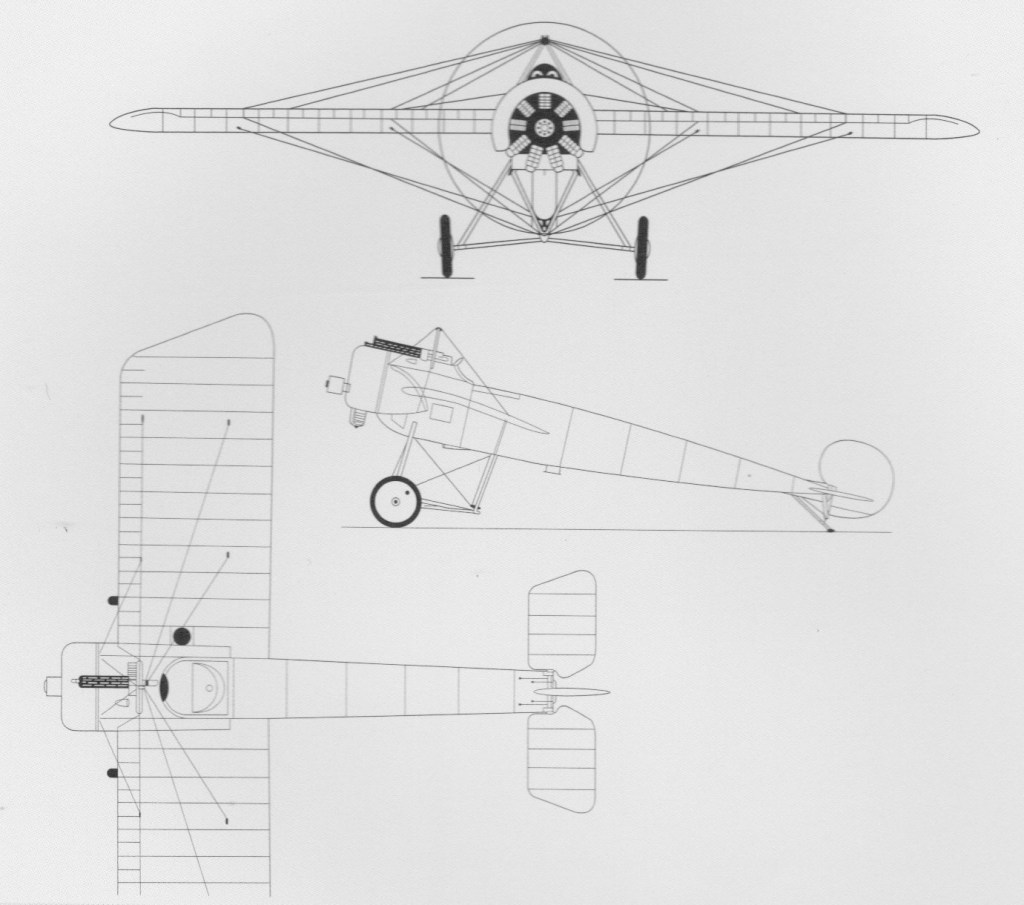
The E I was soon superseded by the generally similar E II with the 75-kW (100-hp) U.I rotary for improved performance. The E.II was slightly longer and heavier, even though it had shorter wings.
Early Fokker E.II – originally equipped with a 7 cylinder 80 hp Oberursel U.0 – later refitted with a 100 hp Oberursel U.I. On the early E.II, the upper longeron is straight, and the standard production E.II had an auxiliary longeron to support the larger diameter cowling ring and cowling needed for the 9 cylinder 100 hp U.I engine.
The E.I and E.II were built in both armed and unarmed versions, and mainly used for training, before the armed versions were re-engined with a 74.6 kW / 100 hp Oberursel rotary and re-designated E.III. They also had lengthened wings, could carry more fuel and had greater ammunition capacity.
Number Built: 59
Engine: Oberursel U.I rotary, 75-kW (100-hp)
Wing Span: 8.95 m
Length: 6.75 m
Height: 9 ft 1¾ in / 2.4 m
Max Speed: 130 km/h
Ceiling: 3,000 m
Endurance: 1½ hours
Crew: 1
Armament: 1 Spandau machine gun, 7.92 mm

The M.10E two seat trainer went into service with the Austrians in April 1915, designated B.1.
 All Aero