Built in 1915, the Forlanini F.4 was owned by Marina Italiana.
Volume: 15,000 cu.m
Built in 1915, the Forlanini F.4 was owned by Marina Italiana.
Volume: 15,000 cu.m
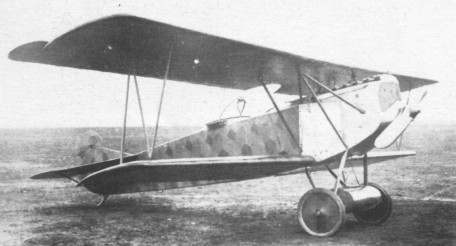
The V.38 was an enlarged D.VII. It served as the prototype for the C. I scout, which arrived too late at the Front to participate in the War. Fokker took approximately 70 of these with him to Holland.
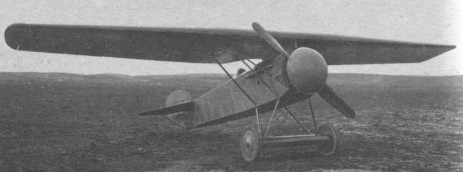
The armoured slit trench fighter, the V.37, was designed towards the end of 1918.
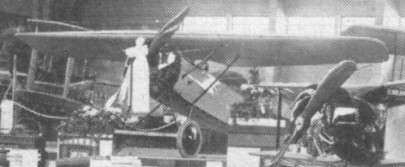
The third D-¬Flugzeug Weitbewerb competition, in October 1918, was terminated by the end of the war, but the Fokker V.29 and V.36 were well in the running.
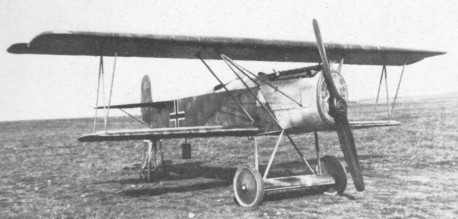
The V.34 single seat fighter appeared in the summer of 1918. Derived from the D.VII, it had a 185h.p. BMW engine and was not mass produced.
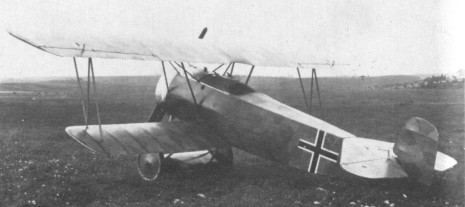
The V.33 was a development of the V.9. The only example of the type, powered by a 110 h.p. Le Rhone, was used by Fokker until 1922.
The Fokker V.30 was a special version of the Fokker D.VIII (Wnr.2737) fitted with a 200 hp Benz Bz III engine.
The approximate date of construction was August/September 1918.
The dimensions would imply that the V 30 was not a standard E.V / D.VIII fitted with an in line engine, but actually a rather bigger machine from new dimensions. As the V 30 was a heavier machine with its inline water-cooled engine needing a radiator and piping etc. more wing span and wing area was needed.
The V.30 parasol monoplane was related to V.27 and V.29. One of the documents indicates two wing sizes on both V.29 and V.30. One larger, 14.3 sq.m, the same as V.27, and another smaller, 13.3 sq.m.
Engine: 200 hp Benz Bz III
Span: 9,68 m
Length: 6,53 m
Height: 3,07 m
Wing loading: 60+ kg/sq.m
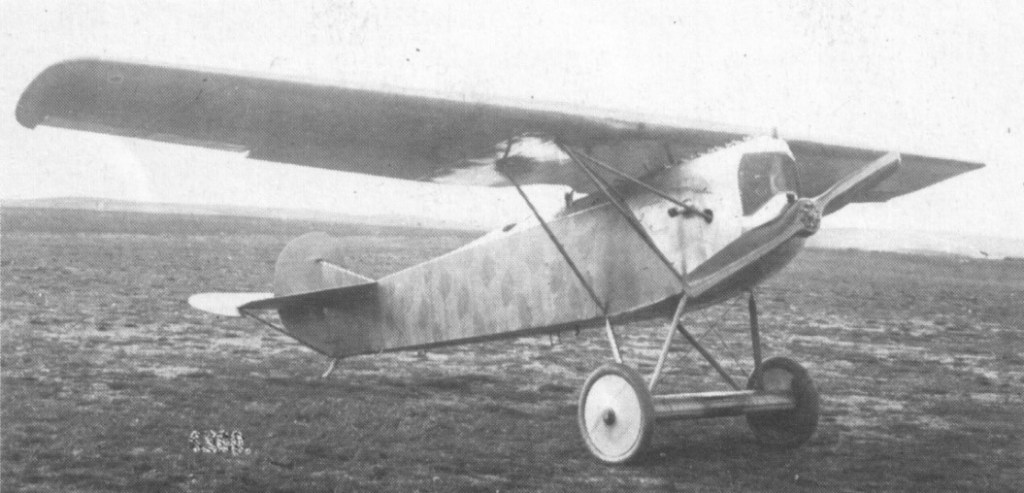
The third D-¬Flugzeug Weitbewerb competition, in October 1918, was terminated by the end of the war, but the Fokker V.29 and V.36 were well in the running.
The V.29 was another (larger) version of the V.26. It was not put into production. The engine was a 160h.p. Mercedes.
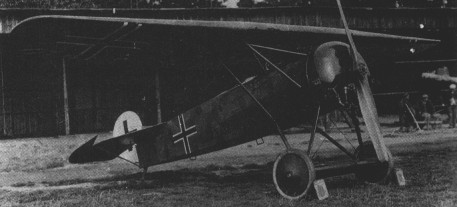
In service the E.V regarded with some suspicion after engine lubrication and wing structural problems, but after these had been eradicated the fighter re-entered production as the D VIII and became very popular. The re-designated V.III did not return to service until October 1918. Only a small number of aircraft reached operational units before the end of World War I.
The D VIII parasol monoplane introduced Fokker cantilever wing and had no external bracing wires.
The plane was somewhat under powered with the original 110 hp Oberursal Rotary; and explains why the 160 Gnome Rotary was the prefered powerplant (after the war concluded). That said the aircraft was a highly respected machine.
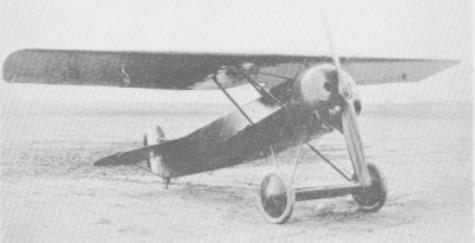
The Fokker D.VIII has the distinction of recording the last air kill in the First World War and was often referred to as ‘the Flying Razor’ by the Allies.
It is estimated that about 300 were produced.
Replica:
Engels Aeroplanbau E.6 Fokker D.VIII
TVAL Fokker D.VIII
Ultralight replica:
Airdrome Airplanes Fokker D.VIII
D.VIII
Engine: l x Oberursel U.II, 82kW (110 hp).
Span: 8.35m (27 ft 4.75 in)
Wing area: 115.2 sq.ft
Length: 5.85m (l9ft 2.25 in)
Height: 8 ft 6.5 in
Empty wt: 893 lb
Max T/O weight: 605 kg (1,334 lb).
Max speed: 127 mph at sea level.
Cruise Speed: 90 mph
Operational endurance: 1 hr 30 min.
Service ceiling: 21,000 ft (6,400 m).
Armament: 2 x 7.92-mm (0.312-in) Spandau LMG 08/15 mg.
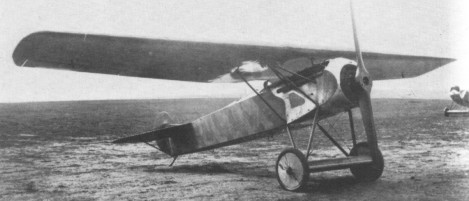
The V.27, which appeared in April 1918, was a larger version of the V.26 with a 195 h.p. Mercedes engine.
 All Aero