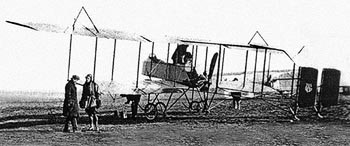
Grahame-White Type XV / Bi-Rudder ‘Bus / Box-Kite / G.W.15 / Admiralty Type 1600

GW XV, c.1916

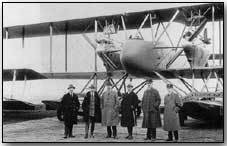
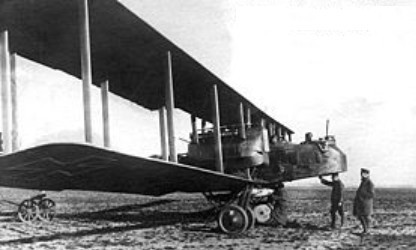
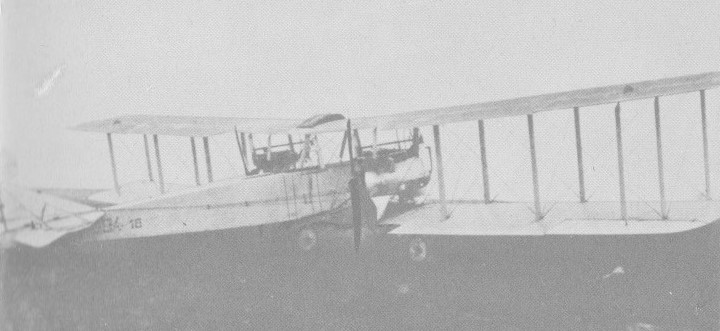
The Grahame-White Type XV (sometimes called “Bi-Rudder ‘Bus” or “Box-Kite” of 1915 was directly derived from the Type XII.

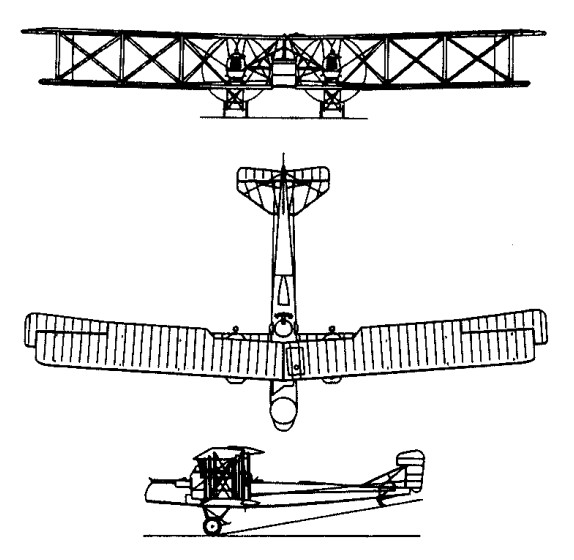
The aircraft itself was a pod-and-boom configuration biplane with three-bay un-staggered wings. In early models, two seats were fitted on the leading edge of the lower wing for the instructor and the trainee pilot; in later models, space was provided for them in tandem in an open-topped nacelle, with the engine mounted pusher-fashion behind them. The empennage was carried on four parallel beams extending two each from the top and bottom wings, and consisted of twin rudders and a horizontal stabiliser and elevator that were carried on the top two beams. Early production aircraft had wings of equal span, but later examples had long extensions fitted to increase the span of the upper wing. The landing gear comprised two separate, wing-mounted, ‘two-wheel plus skid’ assemblies and a tail-skid.

This military trainer biplane was built in quantity for the RNAS (as the Admiralty “Type 1600”) and later the RFC, for a total of 135 aircraft. It was known as the Admiralty Type 1600, since the first aircraft of the type purchased for the Royal Naval Air Service was given that serial number, and contemporary practice was to assign type numbers based on the serial number of the first example in service.

First flying in 1913, there were notable differences between the early and late examples produced, but they retained the same designation. They were made in a variety of forms from 1912 – 17, undergoing a gradual evolution, losing the front elevator and having a cockpit nacelle, aileron balance cables, top wing extensions and dual controls fitted. The Type XV can also be found as the “G.W.15” in some sources.

60hp Le Rhone, 70 & 80hp Gnome and 60hp Green engines were among those used to power the huge variation of types built under the general umbrella name of GW XV.

The Type XV was extensively used as a trainer by both the RNAS and RFC, with 135 machines being purchased for this purpose. In November 1913, one RFC Type XV was employed in the first British trials of firing a machine gun (a Lewis gun) from an aircraft at targets on the ground. Despite the number of aircraft produced, little documentation on the type has survived.

The XV trainers were the type used by No. 65 Squadron RFC, and 48 Reserve Sqn at Waddington from November 1916 to June 1917, as they were established for 18 machines, and A1700 was definitely on their charge. Along with Farman Shorthorns they were the first aircraft based here.

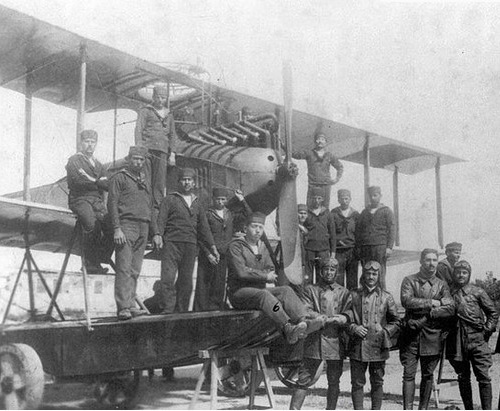
The Type XV was also operated by the Australian Flying Corps at Central Flying School, Point Cook, Victoria, Australia.
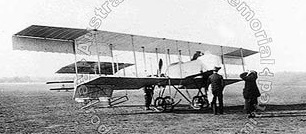
GW XV, c.1916

Three Type XVs survived the First World War to become civil aircraft, being some of the first aircraft to bear British aircraft registrations once civil flying was permitted in 1919.
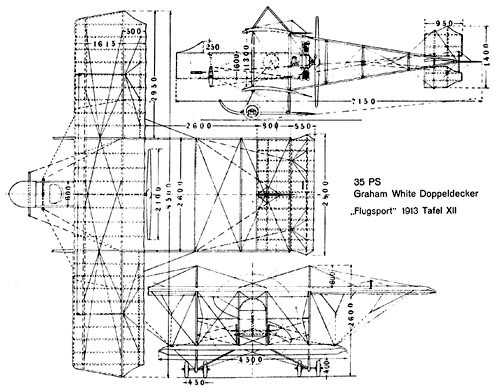
GW XV development, 1913

Grahame-White

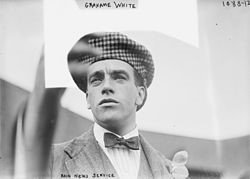
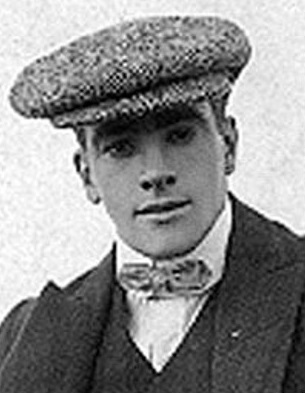
Claude Grahame-White (1879 – 1959)

Grahame-White was born in Bursledon, Hampshire in England on 21 August 1879, and educated at Bedford Grammar School. He learned to drive in 1895, was apprenticed as an engineer and later started his own motor engineering company.

Grahame-White Article

Grahame-White’s interest in aviation was sparked by Louis Blériot’s crossing of the English Channel in 1909. This prompted him to go to France, where he attended the Reims aviation meeting, at which he met Blériot and subsequently enrolled at his flying school.

Founded by Claude Grahame-White in 1909, the company began operations with flying school at Pau, France.

Grahame-White was one of the first people to qualify as pilot in England, becoming the holder of Royal Aero Club certificate No. 6, awarded in April 1910. He became a celebrity in England in April 1910 when he competed with the French pilot Louis Paulhan for the £10,000 prize offered by the Daily Mail newspaper for the first flight between London and Manchester in under 24 hours. Although Paulhan won the prize, Grahame White’s achievement was widely praised.

On 2 July 1910, Claude Grahame-White, in his Farman III biplane, won the £1,000 first prize for Aggregate Duration in Flight (1 hr 23 min 20 secs) at the Midlands Aviation Meeting at Wolverhampton. In the same year he won the Gordon Bennett Aviation Cup race in Belmont Park, Long Island, New York, for which he was awarded the Gold Medal of the Royal Aero Club.

On 14 October 1910 while in Washington, D.C. Grahame-White flew his Farman biplane over the city and landed on West Executive Avenue near the White House. Rather than being arrested Grahame-White was applauded for the feat by the newspapers.

Claude Grahame-White in 1910

He is known for activities related to the commercialisation of aviation, and he was also involved in promoting the military application of air power before the First World War with a campaign called “Wake Up Britain”, also experimenting with fitting various weapons and bombs to aircraft. During the war itself he flew the first night patrol mission against an expected German raid on 5 September 1914.

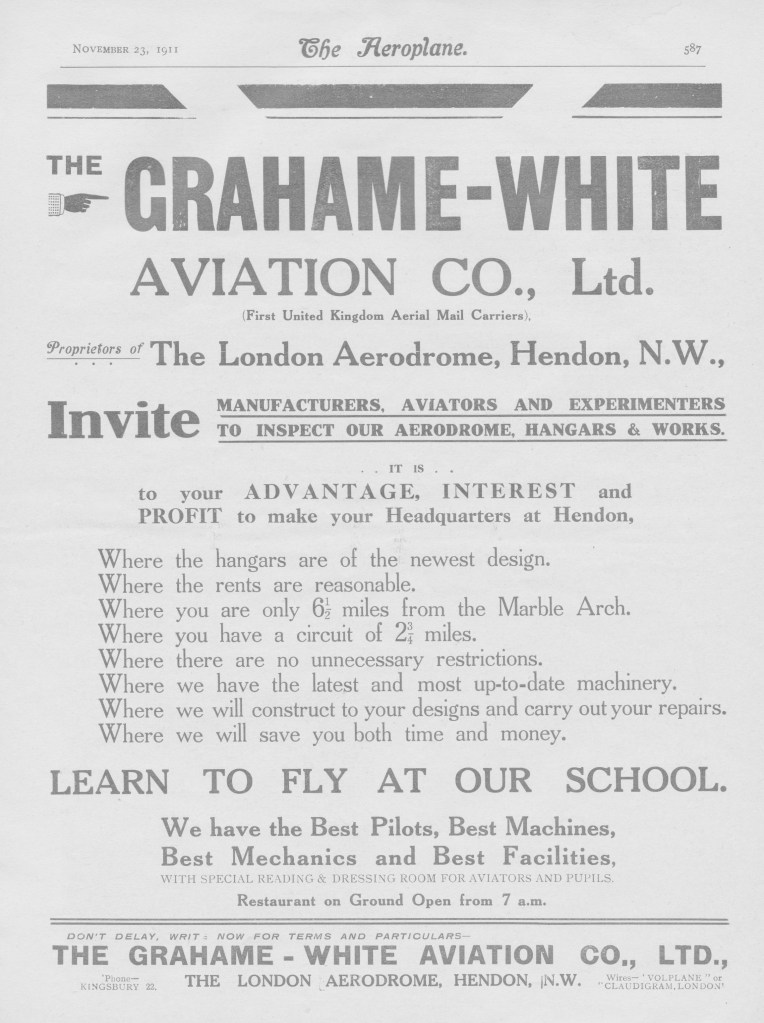
Moved to England, acquired Hendon Aerodrome in 1911 and built factory. One of the designers, John Dudley North, became Boulton & Paul’s chief designer. In 1911 he established a flying school at Hendon Aerodrome. By now White had made a fortune and he invested it in 220 acres of pasture at Hendon, turning it into London’s first aerodrome. For 3 years up to the outbreak of WW1 the weekend flying displays there were the greatest attraction in London and the aircraft he designed, which were Boxkite, formed the backbone of his Flying School. They were also used for the first demonstration of aerial bombing, straffing and pioneering night flying.

In 1912 Grahame-White gave H.G. Wells his first flight.

Acquired agency in 1913 for Morane-Saulnier monoplanes and built these for War Office. Also built own design pusher biplane in 1914, adopted by Admiralty as standard school machine. On the outbreak of WWI Grahame-White joined the Royal Naval Air Service and took part in attacks on German held ports before resigning to manage his business, whose staff had increased from 20 to 1000 due to war contracts. The Aerodrome was lent to the Admiralty (1916), and eventually taken over by the RAF in 1919.

Three-engine Ganymede bomber of 1918 had two tractor and one pusher propeller with twin fuselages.

Grahame-White was out of favour by the end of the war and was forced to go to France looking for contracts. Company stopped producing aircraft in 1919.

Grahame-White was a co-founder of Aerofilms Limited in 1919.

Eventually he became so disillusioned by Britain that he sold Hendon to the Air Ministry and immigrated to California where he was a realtor. In 1959 he died in Nice on his 80th birthday.

Publications
As well as his success in aviation, Claude Grahame-White was a published author whose works include:
The Story of the Aeroplane
The Aeroplane, Past, Present, and Future, 1911
The Aeroplane in War
Aviation, 1912
Learning to Fly, 1914
Aircraft in the Great War, 1915
Air Power, 1917
Our First Airways, their Organisation, Equipment, and Finance, 1918
Books for Boys
Heroes of the Air
With the Airmen
The Air King’s Treasure
The Invisible War-Plane
Heroes of the Flying Corps Flying, an Epitome and a Forecast, 1930
He also contributed to newspapers, reviews, and magazines, dealing with aeronautics in the military and commercial fields.

Grahame-White’s aerodrome was purchased by the RAF in 1925, after a protracted legal struggle. After this he lost his interest in aviation, eventually moving to Nice in his old age, where he died on 19 August 1959 (aged 79) having made a fortune in property development in the UK and US.

White had been married twice, to Dorothy Caldwell Taylor (1912, dissolved 1916), and Ethel Levey (1916).

Hendon Aerodrome later became RAF Hendon but after flying ceased there in the 1960s it was then largely redeveloped as a housing estate which was named Grahame Park in tribute to Grahame-White. An original World War I Grahame-White aircraft factory hangar was relocated a few years ago to the Royal Air Force Museum London, where it houses the museum’s World War I collection and is named the Grahame White Factory.

Hans Grade Fueger Werke

Hans Grade was the first German to fly in a triplane of his own design and with his own engine. Before First World War Grade had a civil flying school at Bork. His aircraft, mostly high-wing monoplanes, were not adopted by the military. First Germanjooping flights made in a Grade monoplane with landing gear both above and below wing.

Hans Grade had built 17 different types, while the general layout was very similar in most cases.

Sold factory to Aviatik during First World War.

Gotha WD.27

The Gotha WD.27 (for Wasser Doppeldecker – “Water Biplane”) was a patrol seaplanes developed in Germany during World War I. It was a conventional four-engine seaplane with engines grouped in tractor-pusher pairs on the lower wings. Contemporary records show three German Navy serial numbers allocated to the type, but firm evidence of only one of these being built.

Gotha WD.2 / WD.5 / WD.9 / WD.12 / WD.13 / WD.15

Gotha WD.2

The Gotha WD.2 (for Wasser Doppeldecker – “Water Biplane”) and its derivatives were a family of military reconnaissance aircraft produced in Germany just before and during the early part of World War I. It was a development of the Avro 503 that had been built under licence by Gotha as the WD.1, and like it, was a conventional three-bay biplane with tandem, open cockpits. The landing gear comprised twin pontoons and dispensed with the small pontoon carried under the tail of the WD.1. Machines built for the German Navy were unarmed, but those supplied to the Ottoman aviation squadrons carried a 7.92 mm (.312 in) machine gun in a ring mount on the upper wing, accessible to the observer, whose seat was located directly below it.

In an attempt to increase performance, one WD.2 was built with a reduced wingspan and its Benz Bz.III engine replaced with the more powerful Mercedes D.III. Designated the WD.5, no further examples were built in this configuration, but it served as the pattern for the WD.9, built in a small series. This differed from the WD.5 prototype in having a trainable 7.92 mm (.312 in) machine gun located in the rear cockpit, to which the observer had been relocated. One such aircraft was supplied to the German Navy, with the rest of the batch going to Turkey, albeit with the less powerful engine of the WD.2.

The last member of the family to be built in any quantity was the D.III-powered WD.12, an unarmed version which featured greater attention to streamlining the aircraft, most especially around the engine area, which was now provided with a close-fitting cowl and a spinner for the propeller. Again, this type was supplied to both Germany and the Ottoman Empire. It was followed in production by a small number of WD.13s, essentially similar but for the use again of the less powerful Bz.III.

Finally, two WD.15s were built after a considerable redesign of the aircraft. These had plywood-covered fuselages, as opposed to the fabric covering used on all earlier members of the family, and were fitted with Mercedes D.IVa engines.

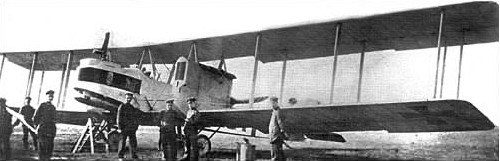
Gotha G.V

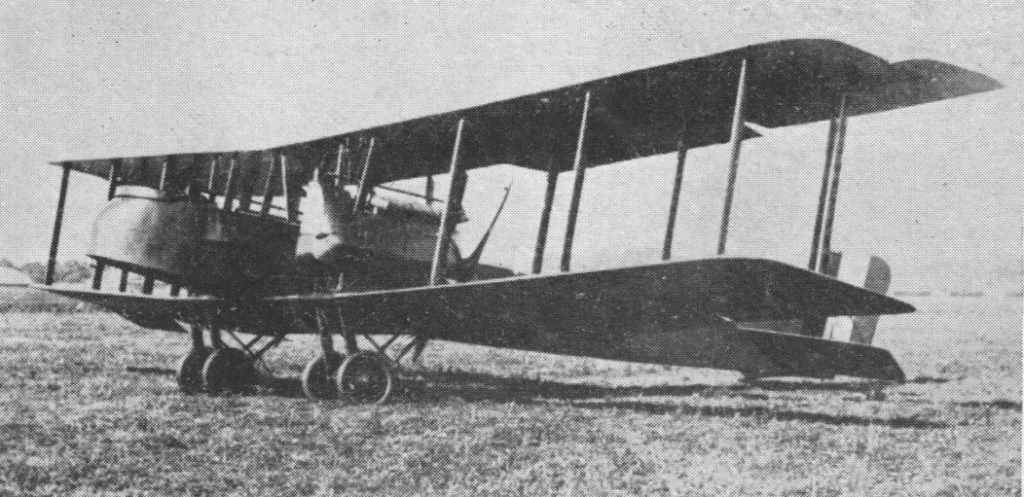
Operational use of the G.IV demonstrated that the incorporation of the fuel tanks into the engine nacelles was a mistake. In a crash landing the tanks could rupture and spill fuel onto the hot engines. This posed a serious problem because landing accidents caused 75% of operational losses. In response Gothaer produced the G.V, which housed its fuel tanks in the center of the fuselage. The smaller engine nacelles were mounted on struts above the lower wing.

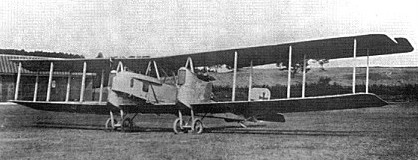
The G.V was a three-bay biplane with wings of two-spar wooden construction, with plywood covering of the centre section of the lower wing and fabric covering over the remainder. The wooden fuselage has plywood covering. Conventional control surfaces are fabric covered steel tube construction. Ailerons are on all four wings and each undercarriage unit has twin wheels.

Gotha G.V Article

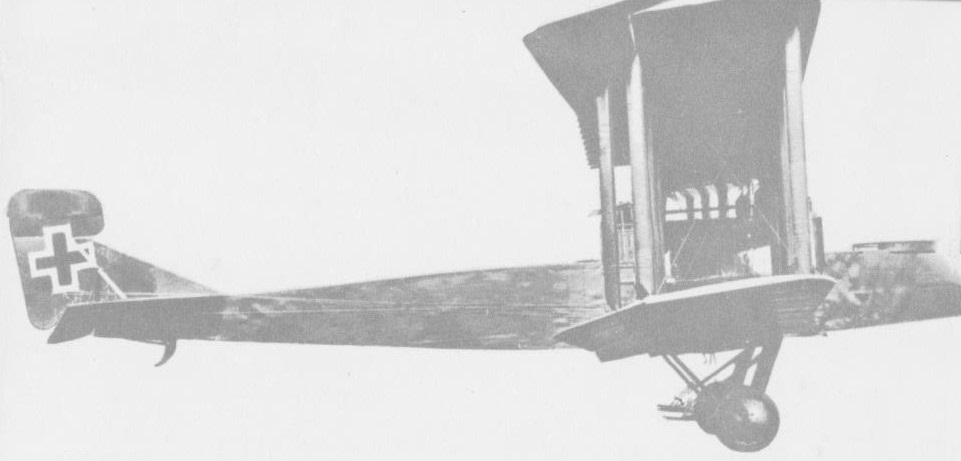
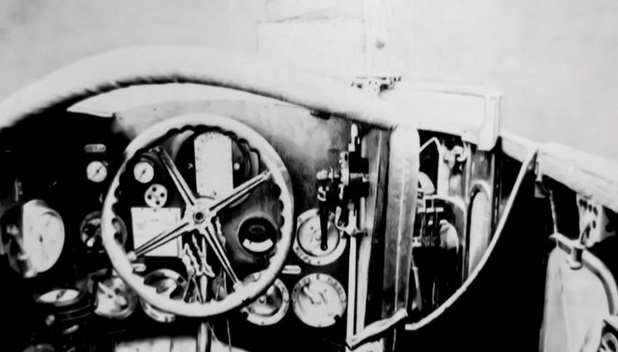
The Gotha G.V pilot seat was offset to port with the fuel tanks immediately behind. This blocked the connecting walkway that previously on earlier machines allowed crew members to move between the three gun stations. All bombs were carried externally in this model. The Gotha included an important innovation in the form of a “gun tunnel” whereby the underside of the rear fuselage was arched, allowing placement of a rearward-facing machine gun protecting from attack from below, removing the blind spot.

The base variant of G.V offered no performance improvement over the G.IV. The G.V was up to 450 kg (990 lb) heavier than the G.IV due to additional equipment and the use of insufficiently seasoned timber. The Mercedes D.IVa engines could not produce the rated 190 kW (260 hp) due to inferior quality of fuel.

The G.V entered service in August 1917. For the performance reasons aforementioned, it generally could not operate at altitudes as high as the G.IV. On 13 June 1917 London was raided in daylight by 14 Gothas against little opposition. As the RFC formed home defence squadrons, after one final raid by 22 Gothas on 7 July 1917, the raiders switched to night bombing.

G.Va
In February 1918, Gothaer tested a compound tail unit with biplane horizontal stabilizers and twin rudders. The new tail unit, known as the Kastensteuerung, improved the aircraft’s marginal directional control on one engine. The resulting G.Va subvariant incorporated the new tail as well as a slightly shorter forward fuselage with an auxiliary nose landing gear. All 25 G.Va aircraft were delivered to Bogohl 3, the new designation for the former Kagohl 3.

G.Vb
Carried an increased payload comparing to the earlier G.Va, and operated at a maximum takeoff weight of 4,550 kg (10,030 lb). To reduce the danger of flipping over during landing, Gothaer introduced the Stossfahrgestell (“shock landing gear”), a tandem two-bogie main landing gear. The Stossfahrgestell proved so good that it was fitted to all G.V’s in Bogohl 3. Some G.Vb aircraft also had Flettner servo tabs on the ailerons to reduce control forces.

Idflieg ordered 80 G.Vb aircraft, the first being delivered to Bogohl 3 in June 1918. By the Armistice, all 80 aircraft were built but the last batch did not reach the front and was delivered direct to the Allied special commission.

Engines: 2 x Mercedes D.IVa, 260 hp
Wingspan: 77 ft 9 in
Wing area: 963.4 sq.ft
Length: 38 ft 11 in
Height: 14 ft 1.25 in
Empty weight: 6040 lb
Take-off weight: 8763 lb
Max speed: 87 mph at SL
Range: 520 mi
Armament: 2 x mg
Bombload: 660-1100 lb

Gotha G.IV

The Gotha G.IV was a development of the G.III.
The blunt nose made it possible to place the engines closer together, and together with placing the tailfins in the slipstream this gave better one-engine performance making it possible to run the engine at full power. But none of the type G twin-engined biplanes could fly level on one engine. The Gotha G was a ‘tunnel’ in the bottom of the tail that made it possible for the tail gunner to cover the lower rear of the aircraft.

Gotha G.IV

Later versions had biplane tails with twin fins and eliminated the position for the nose gunner.

Gotha G-IV

The G.IV (also produced by LVG and Siemens-Schuckert) was used in the first mass attack on England, when 21 Gothas raided Folkestone, Shorncliffe and elsewhere on 25 May 1917, killing about 95 people and injuring many others. On 13 June 14 Gothas attacked London for the first time and caused the worst casualties (of an air raid) of the war, with 162 people being killed and 432 injured. The heavy casualties suffered among the civilian population of England by these raids forced the return of aircraft from France to defend the cities, and such was their success that the last big raid on England during daylight hours was carried out on 12 August.

Gallery

G.IV
Engine: 2 x 260hp Mercedes D.IVa
Take-off weight: 3975 kg / 8763 lb
Empty weight: 2740 kg / 6041 lb
Wingspan: 23.70 m / 77 ft 9 in
Length: 11.86 m / 38 ft 11 in
Height: 4.30 m / 14 ft 1 in
Wing area: 89.50 sq.m / 963.37 sq ft
Max. Speed: 140 km/h / 87 mph
Cruise speed: 124 km/h / 77 mph
Ceiling: 6500 m / 21350 ft
Range: 522 km / 324 miles
Crew: 3

Gotha G.III

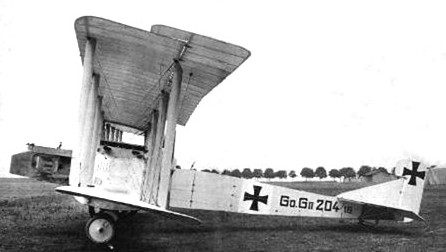
The Gotha G.II and G.III bombers made their appearance in 1916. The two bombers were remarkably similar, differing only in their engines and internal details. The G.III entered service in August of 1916 and was powered by two Mercedes D IVa direct drive engines. Engine power went directly to the propeller shaft without using a reduction gear to reduce revolution speed. Both aircraft were armed with two 7.92mm Maxim IMG Parabellum machine guns – one in the nose and another in the aft fuselage – and carried approximately 540kg of bombs. A few G.IIs and G.IIIs were equipped with a trapdoor in the undersurface of the rear fuselage, which permitted the rear gunner to take up a prone position and fire aft or downwards from a ventral position to defend the bomber’s vulnerable ‘blind spot.’

Gotha G.II

The Gotha G.II and G.III bombers made their appearance in 1916. The two bombers were remarkably similar, differing only in their engines and internal details. The G.II entered service in March of 1916 and was powered by a pair of direct drive 164kW six-cylinder liquid-cooled Mercedes DIV engines mounted in a pusher configuration. Some 15 G.IIs were used in the Balkans until they were withdrawn due to unreliable engines.
Both aircraft were armed with two 7.92mm Maxim IMG Parabellum machine guns – one in the nose and another in the aft fuselage – and carried approximately 540kg of bombs. A few G.IIs and G.IIIs were equipped with a trapdoor in the undersurface of the rear fuselage, which permitted the rear gunner to take up a prone position and fire aft or downwards from a ventral position to defend the bomber’s vulnerable ‘blind spot.’
The G.II used straight-eight DIV engines of 220hp, the G.III straight-six DIVa’s with 260hp.
Also the G.II did not have the trap-door, this was on G.IIIs only. Only 10 G.IIs were apparently built.

G II
Engine: 2 x Benz D IV, 165kW
Crew: 3

Gotha Ursinus G.I

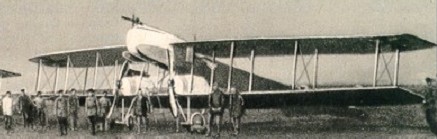
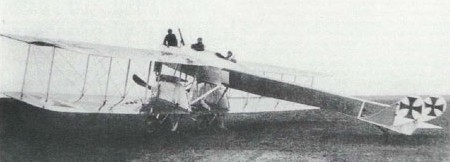
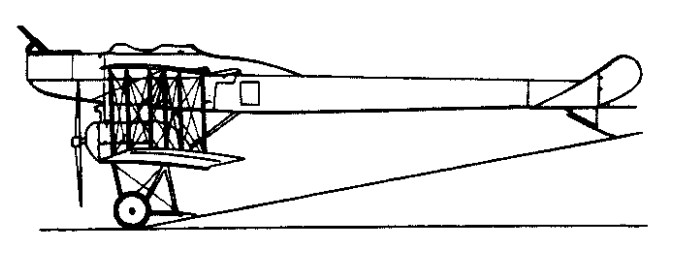
The first G.I flew in July 1915 followed by a further 17 of these three seater machines. While the prototype used two 160hp Mercedes D IIIs, the production aircraft employed two 150hp Benz Bz IIIs. mounted on the lower wing. A single Mercedes D.III-engined example of a seaplane version was also completed as the U.W.D. (Ursinus Wasser Doppeldecker, or Oscar Ursinus-designed float biplane).

G.I
Engine: 2 x Benz Bz-III, 110kW
Take-off weight: 2810 kg / 6195 lb
Wingspan: 22.0/19.7 m / 72 ft 2 in / 64 ft 8 in
Length: 12.9 m / 42 ft 4 in
Height: 3.9 m / 12 ft 10 in
Wing area: 82.0 sq.m / 882.64 sq ft
Max. Speed: 130 km/h / 81 mph
Ceiling: 2700 m / 8850 ft
Range w/max.fuel: 540 km / 336 miles
Crew: 3
Armament: 1 machine-gun