Hanriot HD.6

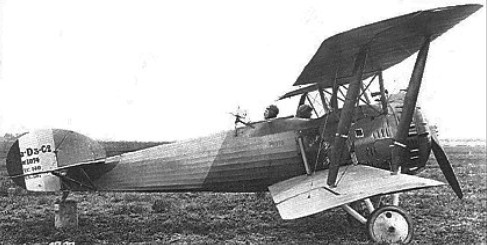
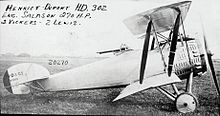
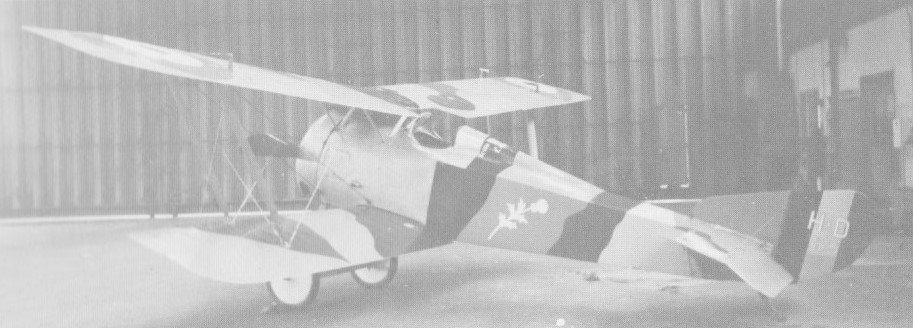
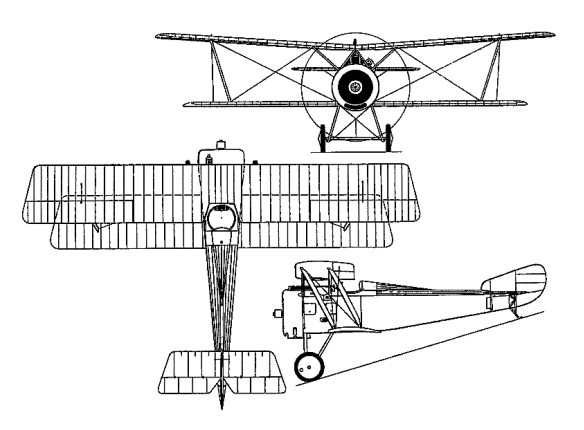
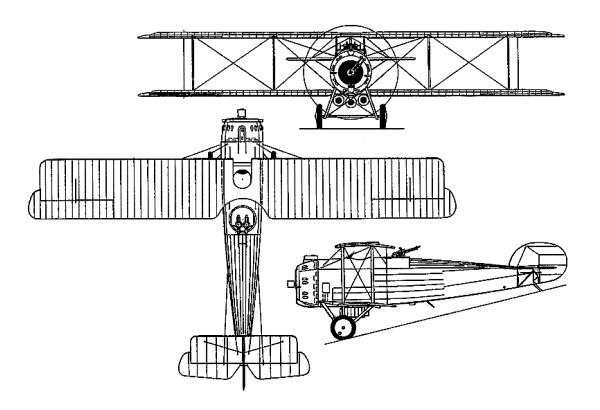
Evolved in parallel with the HD.5 and of generally similar configuration, but larger and more powerful, the HD.6 two-seat fighter was powered by a 530hp Salmson 18Z two-row radial water-cooled engine. This was essentially two Salmson 9Z engines on a common crankcase and flight testing was delayed by difficulties with this experimental power plant, eventually commencing in the spring of 1919. Armament consisted of two synchronised 7.7mm Vickers guns for the pilot and three 7.7mm Lewis guns for the gunner, two on a rotating mount and one firing through a trap in the fuselage floor. The pilot, seated beneath a cut-out in the upper wing, was offered a singularly poor field of vision. Performance did not show a significant improvement over that of the more compact and simpler HD.3, and development was discontinued by the late summer of 1919.

Max take-off weight: 1250 kg / 2756 lb
Empty weight: 810 kg / 1786 lb
Wingspan: 13.60 m / 44 ft 7 in
Length: 8.85 m / 29 ft 0 in
Height: 2.90 m / 9 ft 6 in
Wing area: 47.50 sq.m / 511.29 sq ft
Max. speed: 225 km/h / 140 mph
Range: 600 km / 373 miles

Hanriot HD.3 / HD.4

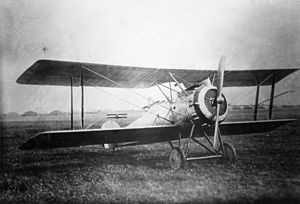
Design work on this two seat biplane was begun by Hanriot and Dupont in the autumn of 1917. The prototype had unequal span wings and was powered by a 260 hp Salmson (Canton Unnne) 9 Za radial engine and flew in June 1017. A double yoked pair of 0.303 in (7.7¬mm) Lewis guns were fitted in a ring mount¬ing in the rear cockpit.

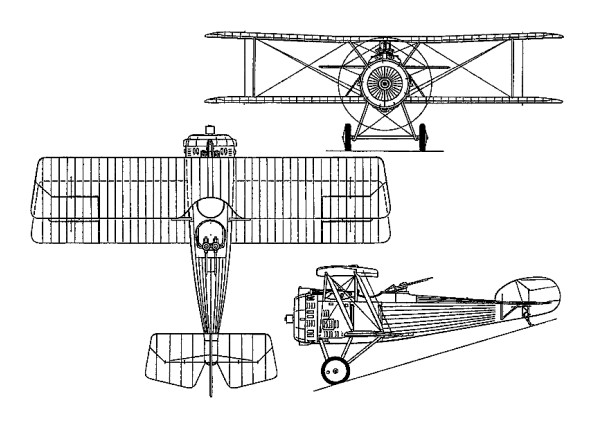
A production order for 120 (later increased to 300 when it was also ordered for the Aviation maritime), to be desig¬nated HD.3 C2, was placed in April 1918. Main modifications included reduction of the upper wing span to that of the lower dimension, adoption of horn balanced ailerons, and improved covering for the forward top decking panels. These were faired over the ammunition feed equipment to twin and fixed and synchronized 0.303 in (7.7 mm) Vickers guns. The pilot and gunner sat in tandem, open cockpits and the main units of the fixed tailskid undercarriage were linked by a cross-axle. Short struts braced the fuselage sides to the lower wing.

First production machines appeared in September 1918, but the Armistice in November prevented comparison with the combat promise shown by the HD.3 C2. However, 75 had been built (s/n 1001 to 1075) for the Esc. HD 174 and other squadrons of the Aviation Militaire (army aviation) and at least 15 for the Aviation Maritime (naval aviation) before the Armistice halted production. HD 174 had been formed but never saw any action before the end.

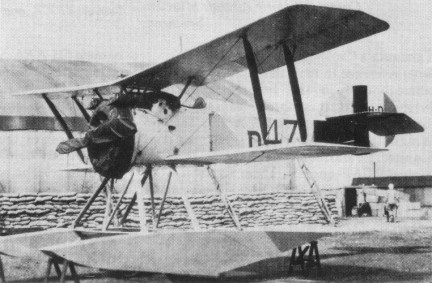
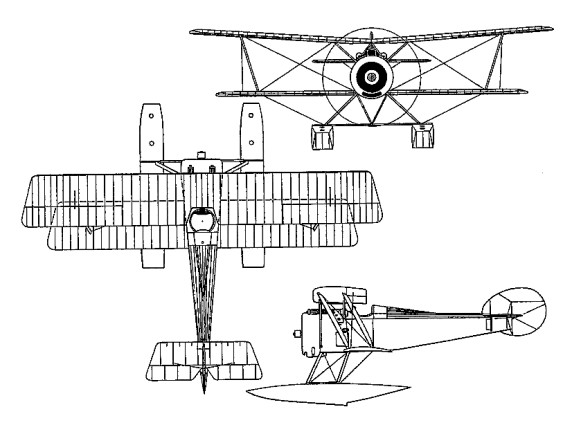
A floatplane, to have been designated HD.4 in production form, was developed with varying types of floats and hydrovanes and a larger tailfin during 1918. The first really successful mode did not appear until December 4, 1918. By this time it was too late for combat service but some were used by the Aviation Maritime for a few years.

Work on a proposed night fighter variant, the HD.3bis CN2, also stop¬ped at the end of the war. This had mainplanes of thicker section, enlarged and balanced ailerons and rudder.

After the war, one of the navy’s machines was used for trials aboard the new aircraft carrier Béarn, while another was used for floatation tests at the Isle of Grain.

The 15 used by l’Aviation Maritime never entered service until 1919. They have variously been quoted as having serials starting from 2000 and up, but according to Lucien Morareau they were from the same series quoted above.
The serial 2000 has also been quoted as the sole HD.4 prototype even though a photo clearly shows HD.3C2 on the tail. Few aircraft were completed in this serial range, highest number known is 2003.

Gallery

HD.3 C2
Engine: 1 × Salmson 9Za, 195 kW (260 hp)
Span: 9.00 m (29 ft 6.25 in)
Length: 6.95 m (22 ft 9.5 in)
Height: 3.00 m / 9 ft 10 in
Wing area: 25.50 sq.m / 274.48 sq ft
Gross weight: 1180 kg (2600 lb)
Empty weight: 760 kg / 1676 lb
Maximum speed: 192 km/h (119 mph)
Service ceiling: 5,700 m (18,700 ft)
Range: 498 km (310 miles)
Endurance: 2 hours
Rate of climb: 4.1 m/s (800 ft/min)
Crew: Two, pilot and gunner
Armament:
2 × fixed, forward-firing .303 Vickers machine guns
2 × trainable, rearward-firing .303 Lewis guns

Hanriot HD.2

At the end of 1917, a derivative of the HD.1 intended for use by France’s Aviation maritime as a single seat fighter float plane was tested as the HD.2. Possessing an essentially similar airframe to that of the HD.1, the HD.2 was powered by a 130 hp Clerget 9B rotary engine and carried an armament of twin synchronised Vickers machine guns. Two prototypes were tested with float undercarriages of differing lengths, and several HD.2s with wheel undercarriages were delivered to the Aviation maritime at Dunkirk for trials purposes, including trial operations from a 40 ft (12 m) platform mounted above a turret of the battleship Paris in the harbour at Toulon flown by Lieutenant Georges Guierre in October 1918. Later, in August and September 1918, similar trials were conducted at Saint Raphael with one of the HD.2 prototypes converted to landplane form and re engined with a 120 hp Le Rhone. Production exam¬ples, designated HD.2C, were fitted with 130 hp Clerget 9B engines, longer main floats, and a completely revised elliptical fin and rudder assembly. Armament comprised twin 0.303 in (7.7 mm) Vickers guns. Some HD.2Cs were in service with the French navy’s Centre Maritime at Dunkerque before the end of the First World War.
The US purchased 26 HD.2s and Japan also bought a number.
After the war, ten of the US batch were converted back to HD.1 landplanes by the naval aircraft factory, but continued to be used as trainers aboard at Langley Field, with flotation bags and hydrovanes attached in front of the main wheels. One was employed in August 1919 for trials from a platform mounted on the battleship USS Mississippi.

HD.2 – (float equipped)
Max speed, 113 mph (183 km/h).
Service ceiling, 15,750 ft (4800 m).
Range, 186 mls (300 km).
Empty weight, 1,091 lb (495 kg).
Loaded weight, 1,594 lb (723 kg).
Span, 28 ft 6.5 in (8,70 m).
Span upper: 8.7 m (28 ft 6.5 in)
Span lower: 7.4 m (24 ft 3.25 in)
Length, 22 ft 11.5 in (7,00 m).
Height, 10 ft 2 in (3,10 m).
Wing area, 195.9 sq ft (18,20 sq.m).

Hanriot HD.1

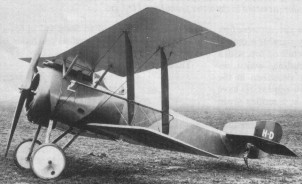
French single seat fighter biplane, prototype first flown 1916. It was designed by Pierre Dupont for the Sociote Anonyme des Appareils d’Aviation Hanriot and built by Hanriot at Billancourt, and was of sesquiplane configuration. The powerplant was a 110 hp Le Rhone 9 J rotary engine (120 hp Le Rhone 9 Jb on production aircraft) and carrying an armament of one synchronised 7,7 mm Vickers machine gun (although a few aircraft were later to be fitted with two Vickers guns). Tests proved it to be compact, manoeuvrable and with a good field of view. Although the HD.1 was accepted by the French government in early 1917, the huge contemporary production of the Spad 7 C1 precluded any production order for the French Aviation Militaire. Neither was the HD.1 considered to be a suitable replacement for the ageing Nieuport single seaters.

Hanriot HD.1 Article

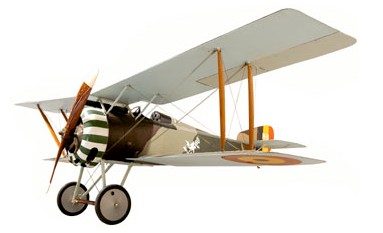
However, the HD.1 did impress the Italian and Belgian authorities. It was adopted by Italy as the main Nieuport replacement, and went into licence production by the Societa Nieuport Macchi at Varese. It seems that reports of 1700 being ordered from Nieuport-Macchi may have been exaggerated. Societa Nieuport Macchi delivered 125 to the Aeronautica del Regio Esercito in 1917, 706 in 1918, and a further 70 after the Armistice. 831 were received by the war’s end, the balance coming from French production.

The HD.1 entered Italian service in mid 1917, serving in the Austrian, Macedonian and Albanian theatres. During the latter stages of the war they equipped 16 of the Italian air arm’s 18 fighter squadrons, and some continued in service until 1925. Over nine-hundred were produced for the Italians and they used the type in greater numbers than any other fighter during the First World War.

The HD.1 was also adopted by Belgium to which country Hanriot supplied 79 fighters of this type from August 1917. The HD.1 continued in service in both Italy and Belgium into the mid ‘twenties, and in 1921, Switzerland purchased 16 from Italian war surplus stocks and retained these in service until 1930.

Standard armament was a single 0.303 in (7.7 mm) Vickers gun, initially offset but later moved to a central position where the firepower was more effective, although the pilot’s view was slightly impaired. Belgian orders, for French built HD.1s, totalled 125, the first being delivered in August 1917. They were not instantly successful, but later gained popularity. One Belgian HD.1 was fitted with a single 11 mm (0.433 in) gun, which proved highly successful. Belgian HD.1s also served long after the war, some until 1926.

Small numbers were used by the French Aviation Maritime (naval air arm), with 130 hp Clerget 9 B engines and, on some, fin and rudder modifications similar to those of the HD.2. Switzerland purchased 16 HD.1s in 1921, and these remained in service until 1928.

No.75 Hanriot HD 1 at RAF Cardington Museum

Gallery

HD 1
Engine: 120 hp Le Rhone 9Jb.
Max speed, 115 mph (184 km/h) at sea level, 111 mph (178 km/h) at 6,560 ft (2 000 m).
Time to 3,280 ft (1000 m), 2.97 min.
Ceiling, 20,670 ft (6 000 m).
Range, 224 mls (360 km).
Empty weight, 983 lb (446 kg).
Loaded weight, 1,437 lb (652kg).
ROC: 894 fpm / 272 m/min
Span: 8.70 m, (28 ft 6.5 in) upper
Span: 7.40 m (24 ft 3.25 in) lower
Length, 19 ft 2.25 in (5,85 m)
Height, 9 ft 7.5 in (2,94 m)
Wing area, 195.9 sq ft (18,20 sq.m)
Seats: 1

Hanriot

In 1908, while the automobile races are in full swing, René Hanriot wins the World Championship (unofficial) in a Benz of 150 hp. But he already had another sport in mind. In May he bought one of Léon Levasseur’s Antoinette monoplanes with a 25 hp motor. But by the end of 1908, the monoplane was not yet delivered and René Hanriot lost patience. This was when he decided to make his own machine. In February 1909 he creates the Hanriot Monoplane Corporation with 500,000 Francs capital. A shed was used as a hangar, workshop and office. His son assisted with the building of the aeroplane. In the summer of 1909, the first Hanriot I proudly left the workshop for its first flight. The motor seemed questionable as early as the departure. Hanriot bought a 6-cyl
Buchet, that develops 45 hp and weighs 155 kg.
The machine was subsequently displayed at the Salon de la Aeronautique in 1909.

Hanriot Article

By this time, devoting himself to his aviation business, René Hanriot abandons autoracing permanently for the flying. In the winter 1909- 1910, he buys several motors that he installs in his monoplanes. By now several copies and versions of the engine are available:
the V8 E. N. V., 50hp, 105kg, designed in 1908 by the British engineer Paul Rath
the four cylinder Vivinus, 70hp, 159kg
the Grégoire GYP by Pierre Joseph Grégoire, weighing 115kg,
the two cylinder Darracq , 30hp, 55 kg,
and a four cylinder of the Même Marque, 60hp, 130 kg.
But it is with the 4-cylinder Clément-Bayard of 40hp that the best results are obtained. The motor, cooled by water, weighs in at just 78kg, in working condition, and it develops not 40hp, as its competitors, but close to 50 true hp. With this motor the flights during the winter 1909-1910 are successful. The monoplane sometimes being piloted by the father, sometimes by the son.

With money earned racing automobiles, René Hanriot continues to develop his aviation business. Committed to flying, he opens a piloting school in Bétheny in December 1909, then in London in January 1910 where he opens a commercial affiliate The Hanriot Monoplane Company Ltd, with 600,000 Francs capital. The first year, 1910, he gains notoriety in Paris, at the 14, place du Havre, and creates at vast workshop in Paris at 34, rue du Moulin. Prudent, he recruits an experienced airman, Emile Ruchonnet, to develop his flying machines, and serve as engineer and chief pilot in his flight school. Former carpenter and former foreman with Levavasseur, Ruchonnet, who was registered in Reims, August 1909, in an Antoinette monoplane, has had his pilot’s license in France’s flying club since June 21, 1910. In April René Hanriot hires autoracer Louis Wagner as test pilot. He is in charge of representing the company at international meetings. His first competition is in Budapest June 5.
Eugene Ruchonnet, Leon Levasasseurs engineer, subsequent designs, developments of the first constructed at his Rheims workshop, had included the 20-hp, Darracq-engined Libellule and a larger derivative powered by a 40-hp Gype, both of which had enabled him to establish a flying school in Betheney in 1910. Instrumental in these aircraft had been Louis Wagner who, like Hanriot himself, had risen from the ground up as a racing car driver, and Marcel Hanriot, Hanriots son, who, at the age of 15, had become the world’s youngest pilot.

In a few months, Hanriot and Ruchonnet designed a new lighter monoplane, the type II. Baptized “Dragonfly” it flew at Bétheny in April, equipped with a 40hp Clément-Bayard. Then, they create a third type of monoplane, more powerful, intended for the competitions. The type IV, a two place, interested the army.
The type V and type VI were used in 1910 by Marcel Hanriot in air meets. Finishing his school year, Marcel Hanriot spends his Sundays on the grass in Bétheny. His father asks him to try all monoplanes produced by their firm. May 17 in Bétheny, Marcel Hanriot takes engineer Etienne Grandjean, a professor at à l’Ecole supérieure de l’aéronautique, for a flight over Champangne in the two place.
June 9, Marcel Hanriot flies from Bétheny to Mourmelon in their model VI. It gets ahead of Marthe Niel, a woman, flying a slower Voisin biplane. The following day Marcel Hanriot obtains his pilot’s license, with the n° 95. He is the youngest licensed pilot in France and most likely in all of Europe. During the 1910 season, the Hanriot monoplanes, piloted by Wagner (Budapest), Marcel Hanriot (Rouen, Caen, Dijon, Reims, Bournemouth), René Vidart (Lanark) and several foreign pilots, achieve glory in the aerial meetings. They win a number of honors and have several victories, showing off the French brand to the entire world, and reaping great financial rewards for the firm.

Aerial demonstrations are organized throughout the year from April to October, in the field at Budapest, but the summit of the 1910 season was the Grand Prix, from 5 May to 15 May1910 in Vienna, then the big week of aviation, June 5 to June 12, with prizes for flight time, distance traversed, altitude, and best take-off, plus a special prize for the trip (230 km traversed in six hours), with 200,000 Francs payoff.

Beginning 1910, thirty competitors were registered in Hungary. France engaged its habitual stables: with Voisin Rougier, Croquet, the Italian Baron of Caters, the Viscount Montigny and John Adorjan, with H. Farman Paulhan, Nicolas Kinet, Chavez, Efimoff and Jullerot, with Sommer André Frey, Hélène Dutrieu and Amerigo, Latham with Antoinette, Alfred of Pischoff (pardon, von Pischoff it was born Vienna Austria!). Orville Wright registered and entrusted a biplane to Engelhardt. Several pilots of the Austro-Hongrois Empire appear in local machines: Agoston Kutany, Erno of Horvath, Aladan of Zsekely. The day of the competition half of the registered competitors were missing. Dutrieu s’est abattue sur son Sommer to Odessa, and this is the Baroness of La Roche that defends the colors Voisin; she had access to a big ENV engine, as did Frey (Sommer) and Pischoff. The Austrian Illner (Etrich) and the French Wagner (Hanriot) had access to a 40hp Clément-Bayard (Clerget) engine. Kinet, Efimoff and Paulhan had access to Gnome engine with a remarkably effective propeller. The wind was blowing strong during the ten days of the competition and caused several spectacular accidents.
On June 7, Efimoff lost some pieces and crashed. Injured to the forehead and to the leg the French pilot was taken to hospital. On June 9, Latham breaks a wing strap (flying wire?) and crashed. His machine was pulverized but the Frenchman was miraculously unharmed.
The pilot is but one of six injured. Later in the evening, Bielovucic crashed but he was fortunately unhurt. The next day Illner’s airplane returned to service. Louis Wagner succeeded taking off in the evening but is forced to the ground by the wind. His machine is irreparable. Thus begins for Hanriot the 1910 season, and Marcel will outshine his father.

Aeroplanes Hanriot et Cie was founded during the First World War. Its first design was the Le Rhone-engined HD.1 sesquiplane fighter, rejected by the French services but subsequently used very successfully by Italian and Belgian pilots. An HD.2 floatplane version and more-powerful HD.3 two-seat reconnaissance/escort fighter were also built. After the war Hanriot license-manufactured British Sopwith aircraft and produced the H.43 advanced biplane trainer, H.46 Styx liaison and ambulance monoplane, and the H.131 low-wing racing monoplane, which won the 1931 Coupe Michelin. In 1930 the company became a division of Societe General Aeronautique (SNCAC), manufacturing aircraft under the Lorraine-Hanriot name.
In France, the Socialist Government of the so called Popular Front brought all the companies building military aircraft, aero engines and ar¬mament under its control in 1936. The im¬mediate result was the socialized oblivion of such established companies as Marcel Bloch, Bleriot, Nieuport, Potez, Dewoitine, Hanriot and Farman within half a dozen nationalized groups or Societies Nationales, named ac¬cording to their geographical location (Nord, Ouest, Centre, Midi and so on).
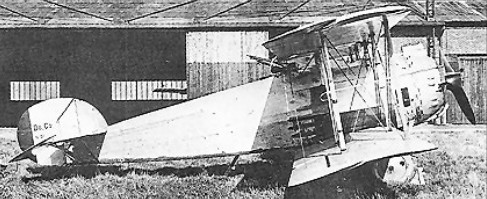
Hannover CL.I / CL.II / CL.III / CL.IV / CL.V / Kjeller Flyvernaskinsfabrik F.F.7 Hauk (Hawk)

CL.III

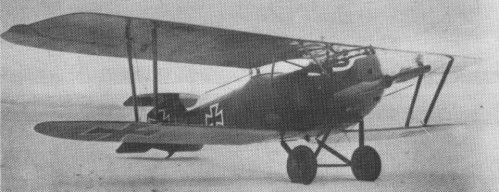
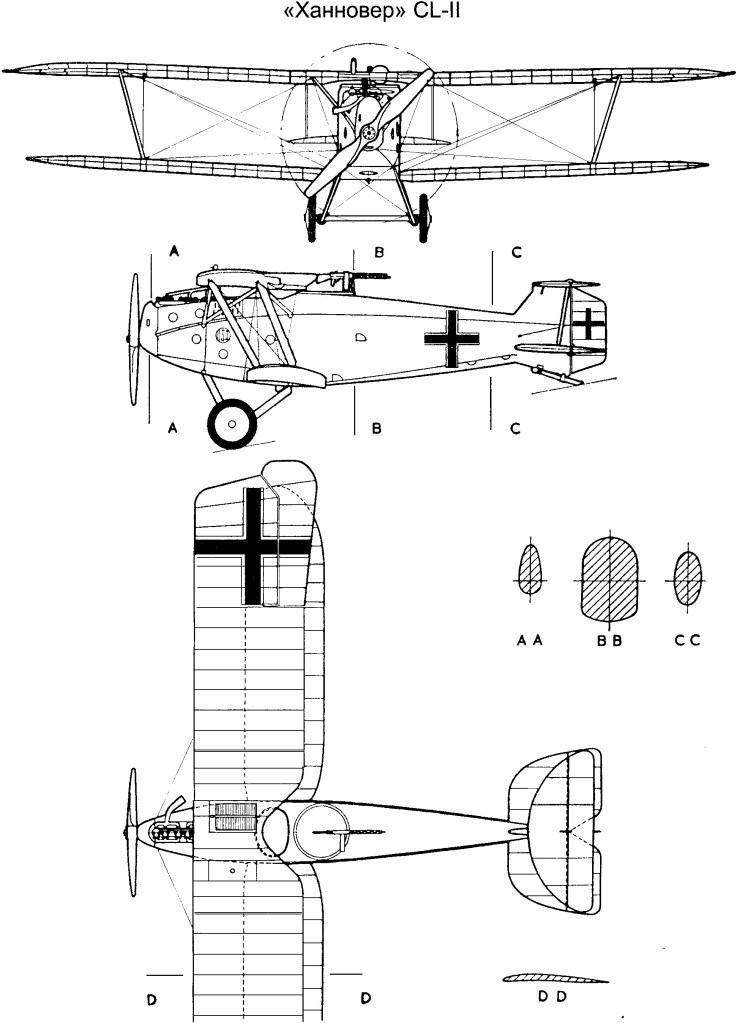
Designed by the Hannoversche Wag¬gonfabrik AG, the Hannover CL.II was produced in mid 1917 in response to an official requirement for a high performance two seat fighter for mainly low level tactical support of ground troops. The CL.II, which first went into operational service in late 1917, was unique for a single engined design in having a biplane tail assembly for greater field of fire by the observer/gunner and for a two seater was relatively small in overall dimensions. Its deep, ply covered fuselage gave the machine great strength, while the close set upper wing and narrow lower wings offered its crew an excellent field of vision both above and below.

A single-bay biplane, the two spar wooden wings were fabric covered. Both elevators, ailerons (on top wings only) and rudder were fabric covered steel tube structures.

In combat the Hannover proved itself as a formidable opponent to the Allied figh¬ters, able to manoeuvre with reasonable agil¬ity at most combat altitudes, and able to absorb battle damage to a high degree with¬out serious results.

A total of 439 Cl.II were built before production switched to an improved version, the CL.III, with a 160 hp Mercedes D.III engine, and incorpo¬rated modifications to the wingtips and ailerons, but only 80 machines were built due to the outstanding demands for Mercedes engines for single seat fighters.

Returning to the original 180 hp Argus engine, the next variant was designated CL.IIIa and saw large quantity production.

First production CL.IIs arrived on the Western Front in October 1917 and, along with the Halberstadt CL.II, became the backbone of the German Schutz¬staffeln (protection flights), escorting, the slower two seat reconnaissance machines. As such Hannovers were initially employed in a variety of roles, including artillery spot¬ting, reconnaissance, and photo sorties, apart from their nominal role of providing fighter cover for the older machines of the patrol flights.
Though extremely well constructed, the CL.II was temporarily grounded in May June 1918 due to a rash of wing failures, but after the safety factors of the wing fitting had been improved to double their former figure.

A progressive development of the Cl II designed by Hermann Dorner, the Cl III was intended to offer improved altitude capability with the 160 hp Mercedes D III water cooled engine. Despite some airframe strengthening, the Cl III possessed a slightly reduced structural weight and marginally smaller overall dimensions. The Typenprufung was success¬fully passed on 23 February 1918, and an order placed for 200 aircraft with deliveries to commence in the following month. In the event, as a result of shortages of the Mercedes engine, only 80 Cl IIIs were delivered, the remainder of the order being completed with 180 hp Argus As III(O) licence built by Opel as the Cl IIIa. A total of 537 Argus-powered Cl.IIIa were built, with the biplane tailplane span reduced to give the rear gunner a better field of fire. This version was to remain in production until the end of hostilities, 573 being delivered.

Cl.IIIa

The designation Cl IIIb was allocated to the version that was to have been powered by the 185 hp NAG C III engine, and the Cl IIIc was a twin bay version built specifically as a test bed for the NAG engine. The Cl III and IIIa entered service in April 1918, serving primarily with the Schlachtstaffeln operating in the ground attack fighter role. Oddly, the Hannoversche Waggonfabrik completed a further 100 Cl IIIs and 38 Cl IIIa’s after the Armistice.

Hannovers continued to equip first line units throughout late 1918. A total of 293 CL.IIs and CL.IIIs were in service on September 1 of that year.
The C.IV, the next development, did not go into production, but from it was evolved the CL.V. In mid 1918, the Idflieg prepared a specification calling for a Jagdzweisitzer a two seat fighter intended to engage the newer Allied single seaters on even terms, emphasising high speed, diving capability and manoeuvrability, and carrying a fixed forward firing armament of twin synchronised machine guns plus a third gun in the rear cockpit. To meet this requirement, which called for the aircraft to be tested to single¬ seat fighter load requirements, Hermann Dorner produced an extremely rugged and compact airframe. Designated Cl V, the prototype was powered by a 185 hp BMW IIIa engine and, tested against a similarly powered Fokker D VII, demonstrated comparable speed and climb. Twenty examples were ordered for operational evalu¬ation, but instead of being ordered into large production, Hannover’s chief designer, Her¬mann Dorner, was requested to develop the CL.V for a new category of two seat fighter (Jagdzweisitzer) specification. With the original biplane tail replaced by one of monoplane configuration, the Cl V was ordered into production, a contract for 100 aircraft being placed in September 1918, over 80 CL.Vs were thus built and tested to the new specification each armed with two forward and one rear firing machine guns although it is doubtful if any of the 46 completed before the end of hostilities reached the Front, a further 62 being completed after the Armistice. A stripped down example of the Cl V was to establish a world altitude record of 27,355 ft (8 340 m) on 22 November 1919. During 1923 24, the Kjeller Flyvernaskinsfabrik at Halden, Norway, built 14 Cl Vs under licence for the Norwegian Army as the F.F.7 Hauk (Hawk), these remaining in service until 1929.

Kjeller Flyvernaskinsfabrik F.F.7 Hauk (Hawk)

After the war Hannovers continued to be built, mainly as civil passenger machines or for export to other countries.

CL.II
Engine: 180 hp Argus As III
Seats: 2
Span: 11.70 m (38 ft 4.75 in)
Length: 7.58 m (24 ft 10.5 in)
Maximum speed: 166 km/h (103 mph) at 5000 m (16400 ft)
Service ceiling: 7500 m (24 600 ft)

CL.III
Engine: 160 hp Mercedes D.III

Cl. IIIa
Engine: 180 hp Argus As III(O)
Max speed, 103 mph (165 km/h) at 16,405 ft (5 000 m).
Time to 3,280 ft (1000 m), 5.3 min.
Endurance, 3 hrs.
Empty weight, 1,653 lb (750 kg).
Loaded weight, 2,447 lb (1110 kg).
Span, 38 ft 4.5 in (11,70 m).
Length, 24 ft 10.25 in (7,58 m).
Height, 9 ft 2.25in (2,80 m).
Wing area, 351.97 sq ft (32,70 sq.m).

CL IIIb
Engine: 185 hp NAG C III

Cl. V
Engine: 185 hp BMW IIIa
Max speed, 109 mph (175 km/h) at 6,560 ft (2 000 m).
Time to 9,840 ft (3 000 m). 12 min.
Range, 211 mls (340 km).
Empty weight. 1588 lb (720 kg).
Loaded weight, 2,381 lb (1080 kg).
Span, 34 ft 5 in (10,49 m).
Length, 22 ft 11.5 in (7,00 m).
Height, 9 ft 3.25 in (2,84 m).
Wing area, 306.76 sq ft (28,50 sq.m).
Seats: 2
Armament: 3 mg

Hannoversche Waggonfabrik AG / Hannover

Hannover, a manufacturer of railway rolling stock, began license production of Aviatik C.1, Rumpler C.1 A, and Halberstadt scouts in 1915 before proposing a compact two-seat escort fighter to German High Command. The biplane-tailed CL.II entered service in late 1917, and was succeeded by the CL.III and CL.IIIa, also built under license by Luftfahrzeug Gesellschaft as CL.IIa. Small numbers of the enlarged CIV and CL.V were constructed, plus experimental CL.IIIs with various engine and airframe changes. The company’s fighters were known popularly as “Hannoveraners”.

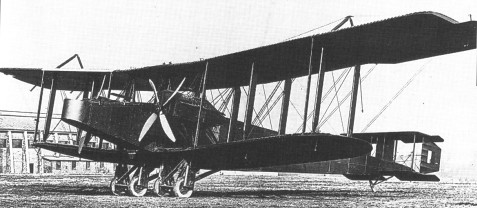
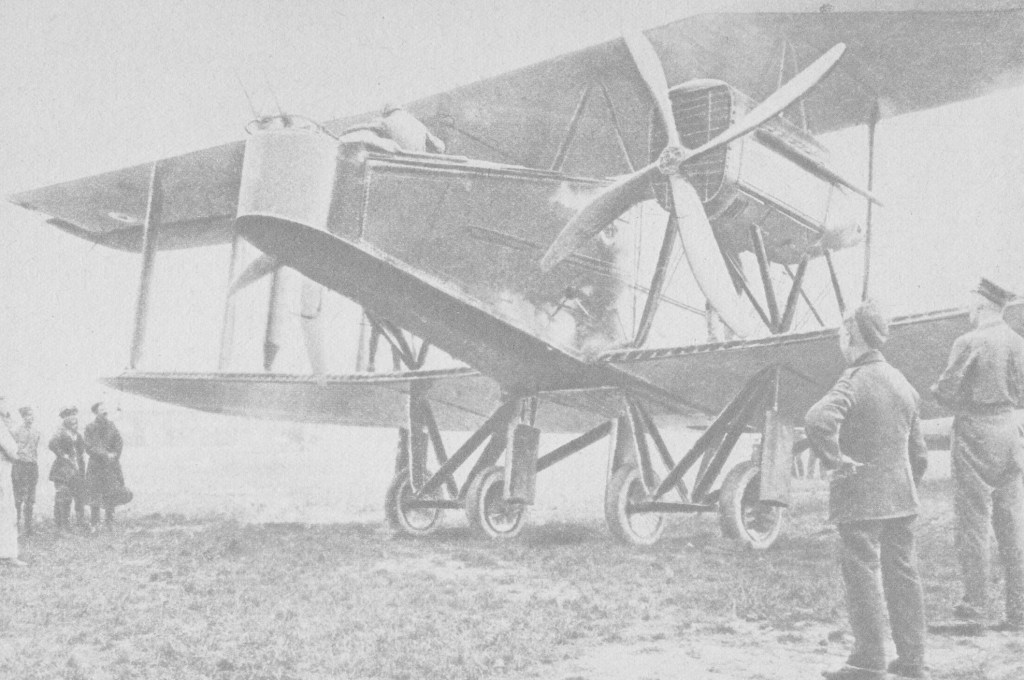
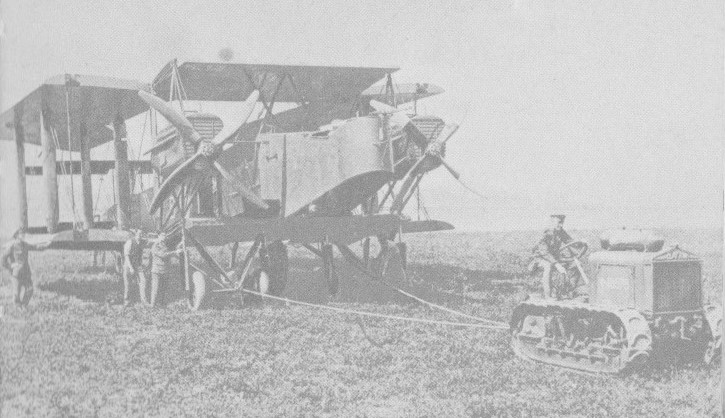
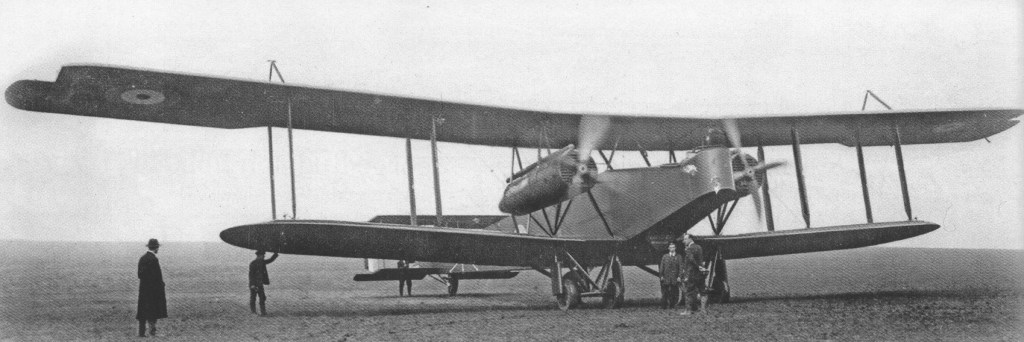
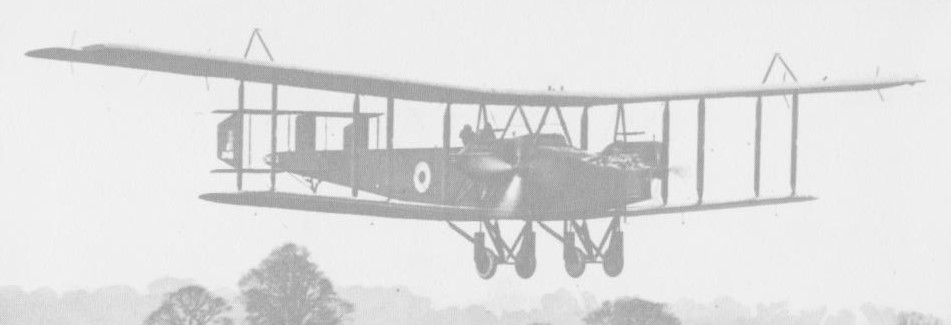
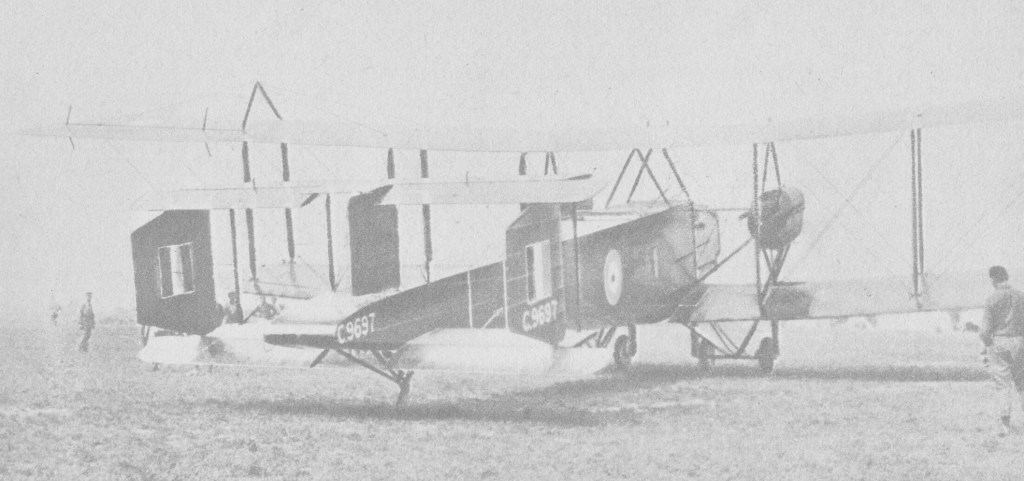
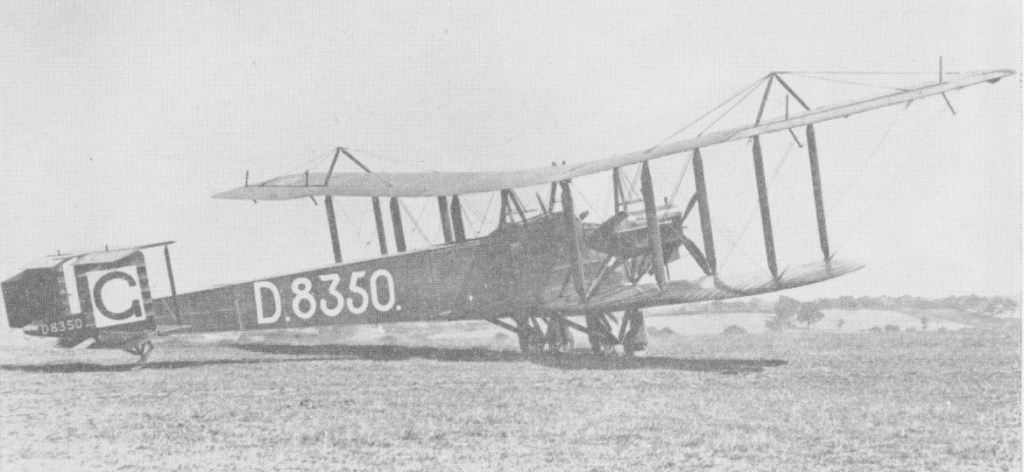
Handley Page O/400

In December, 1914, Capt. Murray Sueter had asked Handley Page to produce for the RNAS an aircraft which, with naval forthrightness, he described as “a bloody paralyzer”, a development of the O/100.

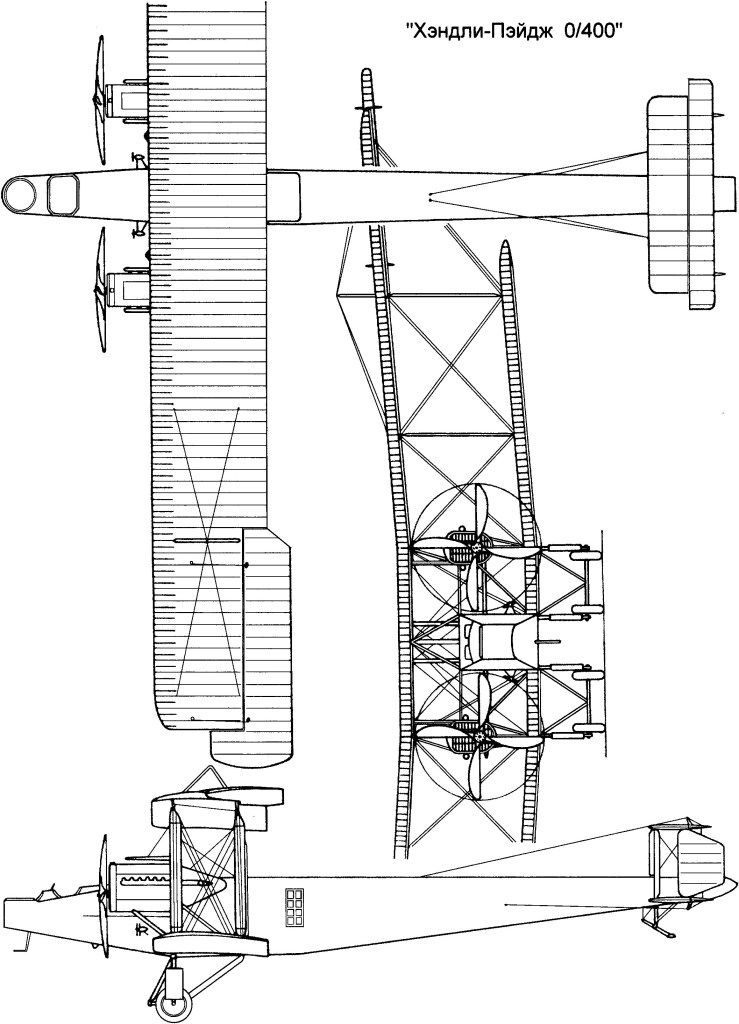
Operational experience with the O/100 showed that certain changes were desirable, especially to the fuel system. In the original layout each engine had its own armoured fuel tank contained within the armoured nacelle which housed the engine, restricting the amount of fuel which could be carried. The modified fuel system consisted of two fuselage tanks and two gravity-fed tanks installed in the leading edge of the upper wing’s centre-section. Wind-driven pumps supplied fuel direct to the engines, as well as to the gravity-fed tanks. Removal of the fuel tanks from the nacelles allowed them to be shortened and a new inter-plane strut to be fitted immediately aft of each nacelle.

Handley Page O/400 Article

Other improvements included the provision of a compressed-air engine-starting system, with a crank handle for manual start in the event of pressure loss, and changes to the rear gun position and central fin. In this new configuration this variant of the O/100 was redesignated O/400. An initial contract for 100 of these aircraft was awarded to Handley Page in August 1917.

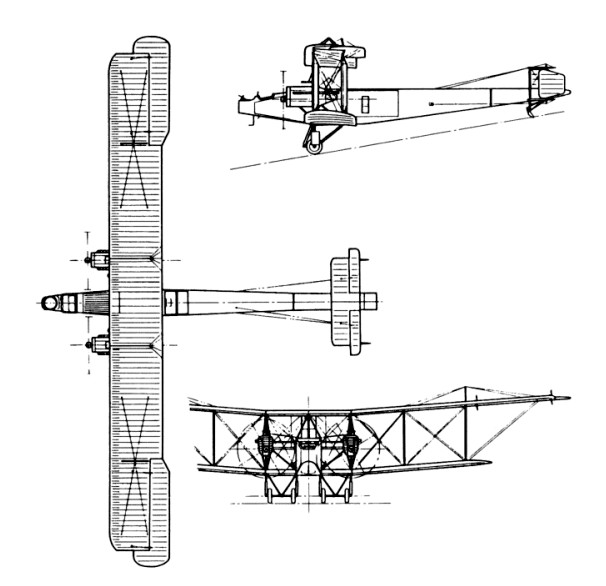
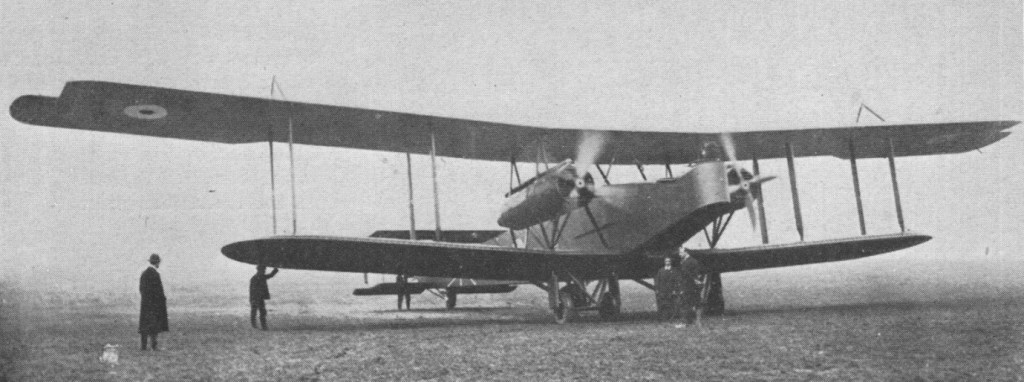
The O/400 was a two-place biplane with two-spar wooden wings, with fabric covering. The wings could be folded for storage. The fabric covered fuselage has a biplane tail-unit, with elevators on the top and bottom tailplanes, a central fixed fin and two outboard rudders. Ailerons were on the top wings only. Twin wheels were on each undercarriage unit.

A total of 284 Imp.Gal of fuel was in two tanks in the fuselage and two in the upper centre-section. Defensive armament consisted of one or two Lewis machine guns in the nose cockpit, one or two in the cockpit aft of the wings, and one firing rearward and downward through a trapdoor in the fuselage. An internal bomb-bay for one 1650-lb bomb or equivalent weight of smaller bombs. A typical load was sixteen 112-lb bombs.

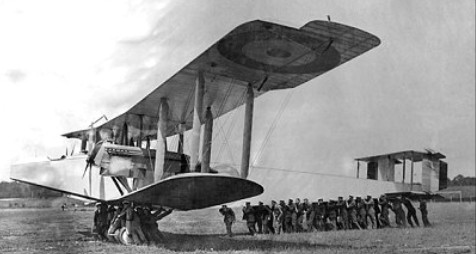
First flying in September 1917, production deliveries of O/400 began in the spring of 1918, but it was not until 9 August 1918 that No 97 Squadron, which was equipped with these aircraft, joined the Independent Force and began operations. As numbers built up it became possible to launch heavier and more frequent raids: on the night of 14-15 September 1918 an attack by 40 Handley Pages was launched against enemy targets. It was also during September that O/400 began to use newly developed 750kg bombs for the first time.

This weapon came into service in 1917 in the form of the O/400 twin engined, heavy bomber. Carrying a bombload of 1800 lbs, and powered by two Rolls Royce Eagle engines, it was the world’s first really effective night bomber.

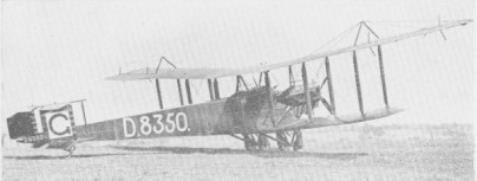
The Handley Page O/400 of 1918 was Britain’s standard heavy bomber of the first World War. A large biplane, with a span of 100 ft (30.5 m) on the upper wing, it was powered by two Rolls Royce Eagles or alternative engines of 250 350 hp each. A crew of three was usually carried, there being an open cockpit seating two side by-side and open gunners’ cockpits in the extreme nose and in the fuselage behind the wings. The guns were mounted on Scarff rings which allowed them to be swivelled through a 360 degree arc, and another gun was mounted in the underside of the fuselage to fire downwards and aft.

The O/400 could carry sixteen 112 1b bombs inside the fuselage, the bomb bay being covered by spring loaded doors which opened under the weight of the bombs as they were released. Other combinations of larger bombs could be carried, up to a single example of the 1,650 1b (750kg) bomb which was the largest used by the RAF in that war. Two more bombs could be carried on external racks under the fuselage. With a gross weight of about 13,500 lb (6,125 kg), the O/400 could reach a speed, flat out, of nearly 100 mph (160 km/h) and had a range of about 600 miles (965 km). Construction was of wood, with fabric covering.

On the Western Front an O/400 was the only aircraft to bomb Essen.

By comparison with the 0/100 the type had more power, detail improvements and the fuel relocated from the two engine nacelles to the fuselage, from where it was pumped to an upper-wing centre section tank for gravity feed to the two inline engines. The type was in service with seven Independent Air Force squadrons (Nos 58, 97, 15, 207, 214, 215 and 216) just before the end of the war, and remained in limited service in the period immediately after the war, until replaced by the de Havilland (Airco) DH10 Amiens and the Vickers Vimy. The O/400 had a slightly longer post-war career in Egypt, where it served with Nos 70 and 216 Squadrons up to 1920.

A total of 700 O/400 were ordered, and about 400 were delivered before the Armistice. In the US 1,500 of these aircraft were ordered from Standard Aircraft Corporation, with power plant comprising two 50hp / 261kW Liberty 12-N engines. Built as components from 1917, of this total only 107 were delivered to Great Britain in 1918 mainly for use as spare parts. Eight were assembled for the the US Army Air Service (AS62445 to 62451, and one other) before signature of the Armistice brought contract cancellation.

A number of British-built O/400 were delivered post-war to China.

Soon after the armistice with Turkey, Major-General Geoffrey Salmond, with Brig.-General A.E. Borton as chief pilot, flew from Palestine to India in an O/400, the first aircraft to make the journey.

On September 2, 1919, Handley Page Transport Ltd, operating from Cricklewood, began flights between London and Paris, and to Brussels and Amsterdam.

Handley Page used converted O/400 bombers on the London-Paris, London-Brussels routes, and converted de Havilland 9s on the London-Amsterdam. The converted DH9s were designated DH.16s. The fuselage of the aircraft was rebuilt as a cabin with room for four passengers. Converted in the same way, the O/400 has room for 12 passengers.

The O/400 led to the W8 airliner of 1920.

Gallery

O/400
Engines:
2 x Rolls-Royce Eagle IV, 250hp.

O/400
Engines: 2 x Rolls-Royce Eagle VII, 268kW (360hp).
Span: 30.48m (l00ft).
Length: 19.16m (62 ft 10.25 in).
MTOW: 6360 kg (14,022 lb).
Max speed: 97.5 mph at sea level.
Height: 22 ft.
Operational endurance: 8 hrs.
Wing chord: 10 ft.
Wing area: 1,648 sq. ft.
Weight empty: 8,502 lb
Loaded weight: 13,360 lb.
Ceiling: 8,500 ft.
Armament: 3 to 5 x 7.7-mm (0.303-mg plus up to 907kg (2,000lb) of bombs internally.

Engines: 2 x Rolls-Royce Eagle VIII, 265kW
Wingspan: 30.5 m / 100 ft 1 in
Wing area: 153.0 sq.m / 1646.88 sq ft
Length: 19.6 m / 64 ft 4 in
Height: 6.7 m / 21 ft 12 in
Max take-off weight: 5466 kg / 12051 lb
Empty weight: 3776 kg / 8325 lb
Fuel capacity: 284 Imp.Gal
Max. Speed: 157 km/h / 98 mph
Ceiling: 2600 m / 8550 ft
Range w/max.fuel: 1000 km / 621 miles
Crew: 2
Passengers: 10-14

Standard Aircraft Corp-Handley-Page O/400
Engines: two 350hp Liberty 12-N
Wingspan: 100’0″
Length: 62’10”
Useful load: 3704 lb
Speed: 96 mph

Handley Page O/100

Frederick designed a large biplane to attempt a non-stop transatlantic crossing for the DailyMail’s £10,000 prize, but war intervened. He used his design experience, assisted by the Admiralty, to propose plans for a 100ft-span twin-engined bomber for the Royal Naval Air Service, the O/100 to an Admiralty specification of December 1914.
The Royal Naval Air Service Admiralty was thinking in terms of a large twin engined aeroplane able to carry a crew of two and six 112 lb bombs on overwater patrols.
Identified originally as the Handley Page Type O, it was later designated O/100, the figure 100 indicating its wing span in feet. When the prototype was completed, it was the largest aeroplane that had then been built in the UK.

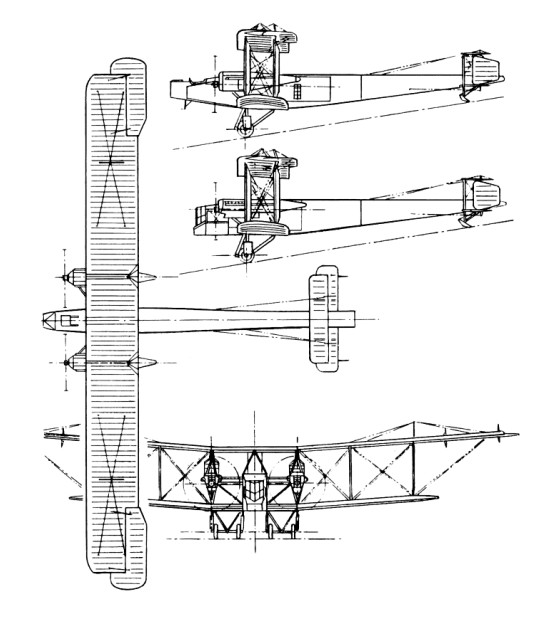
The O/100 was of biplane configuration, with folding unequal-span constant-chord wings that had straight leading and trailing edges; these were mounted on a square-section cross-braced fuselage that terminated in a biplane tail unit. The tailskid landing gear had twin wheels on each main unit and the two 250hp Rolls-Royce Eagle II engines, in armoured nacelles, were mounted between the wings just outboard of the fuselage. Accommodation in the first prototype was in a glazed cockpit enclosure, the floor and sides of the cockpit being protected by armour plate.

Flown for the first time on 18 December 1915, the O/100 was found to be inadequate in performance. The first O/100 with 275 hp RR Eagle engines weighed 14,000 lb empty. Clifford Prodger did the testing. The second prototype had a revised open cockpit for a crew of two (with provision for a gunner’s position forward), the cockpit armour plating and most of that incorporated in the engine nacelles was deleted, and new radiators were introduced for the water-cooled engines. When the machine was first tested in April 1916 there was a marked improvement in performance, to an extent that in early May it was flown with 20 Handley Page employees aboard to a height of just over 2135m. Brackley and Vereker were the first Navy pilots.

Three prototypes were powered with either Sunbeam Cossack motors of 250 hp Rolls-Royces.

Formation of the first ‘Handley Page Squadron’ began in August 1916 and this unit became operational in France in late October or early November; its first recorded bombing attack was made on the night of 16-17 March 1917 against an enemy-held railway junction.

One of the first three sent to France was delivered intact to the Germans when its pilot landed by mistake behind the enemy lines.

Altogether 46 were built and, after an initial period of daylight attacks against German shipping, they became the spearhead of British night bombing forces until succeeded in the last three months of the war by the improved O/400, with 250 hp Eagle IV or 360 hp Eagle VIII engines. Together the two types formed the heavy component of the Independent Force.
In addition to their use as night bombers on the Western Front, O/100s also equipped the first bomber squadron of the RAF’s Independent Force following its establishment on 5 June 1918. Forty were delivered to the RNAS at Dunkirk in 1916-17.

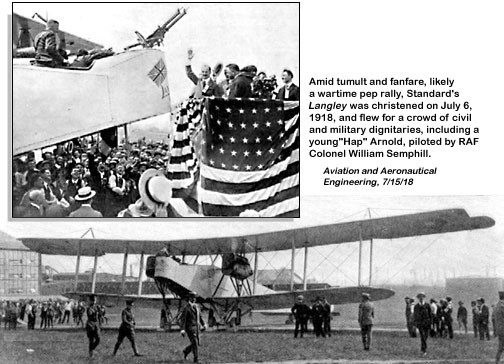
One early O/100 sample component (airframe B9449) was assembled by Standard Aircraft Corp in the US for publicity purposes and dubbed Langley, adorned with crossed British and American flags on the nose and its name on the sides, flew to 3500′ in a half-hour demonstration flight for a crowd of 5,000.

Standard-Handley-Page Langley

Gallery

Engine: 2 x Rolls-Royce Eagle II, 250 hp.
Max take-off weight: 6356 kg / 14013 lb
Empty weight: 3632 kg / 8007 lb
Wingspan: 30.48 m / 100 ft 0 in
Length: 19.15 m / 62 ft 10 in
Height: 6.71 m / 22 ft 0 in
Wing area: 153.10 sq.m / 1647.95 sq ft
Max. speed: 122 km/h / 76 mph
Ceiling: 2652 m / 8700 ft
Bombload: sixteen 112 lb. bombs

Engines: 2 x Rolls-Royce Eagle, 275 hp
Wingspan upper: 100 ft
Wingspan lower: 70 ft
Wing area: 1630 sq.ft
Wing loading: 8.5 lb/sq.ft
Length: 63 ft
Height: 22 ft
Empty weight: 8480 lb
Loaded weight: 14,022 lb
Max speed loaded: 79.5 mph
Time to 6500 ft: 30 min
Service ceiling: 7000 ft
Endurance: 8 hr
Crew: 3
Armament: 3 or 5 mg
Bombload: 1792 lb / 16 x 112 lb or 8 x 250 lb

Handley Page R/200

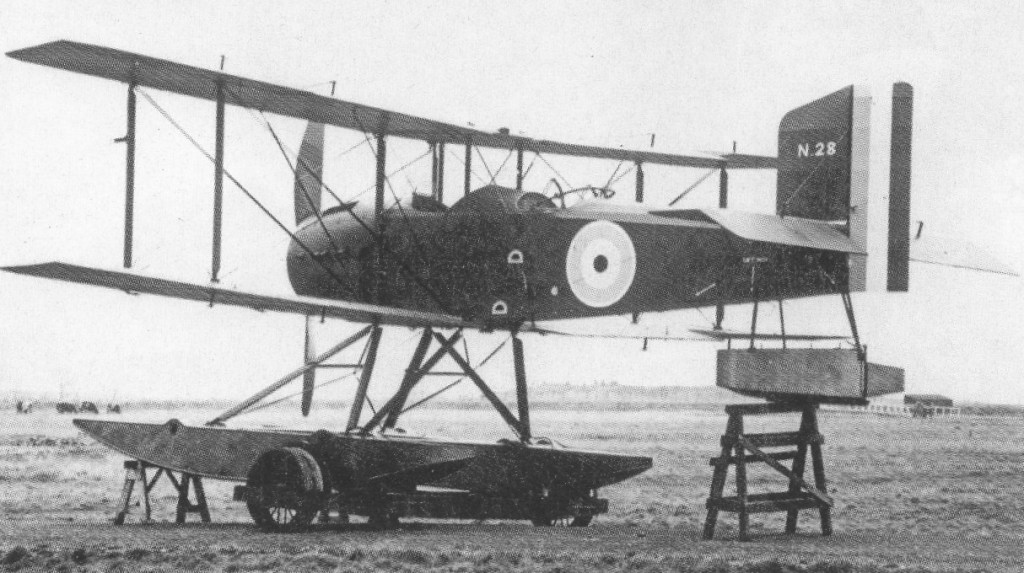
Designed to meet Admiralty requirement N.2a of 1917, the R/200 was a two seat reconnaissance fighter to operate as a seaplane or from the decks of the carriers HMS Furious and Argus.
Two prototypes with 200 hp Hispano-Suizas were built. The wing trailing edges were entirely taken up by ailerons and camber changing flaps, all of the same size. To speed production and minimise spares, the left ailerons were interchangable with the right flaps and vice versa, and the fin and each half of the tailplane, and the rudder and each elevator, were identical.
The R/200’s performance was undistinguished, and another four prototypes and twenty production aircraft were cancelled.