A 1917 single-seat equi-span fighter triplane, developed for the Austro-Hungarian K.u.k. Luftfahrttruppen, with aerofoil-section I-type interplane bracing struts, the L.16 was powered by a 185hp Austro-Daimler six-cylinder water-cooled engine and was intended to carry an armament of two synchronised machine guns. Various coolant radiator arrangements were evaluated on the single prototype built, but the fighter offered insufficient promise to warrant series production and development was abandoned.
Max take-off weight: 935 kg / 2061 lb Empty weight: 740 kg / 1631 lb Wingspan: 9.00 m / 30 ft 6 in Length: 7.21 m / 24 ft 8 in Height: 3.70 m / 12 ft 2 in Wing area: 33.5 sq.m / 360.59 sq ft Max. speed: 190 km/h / 118 mph
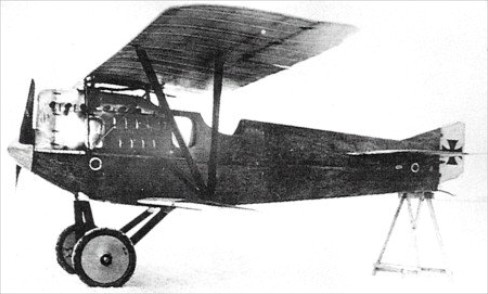
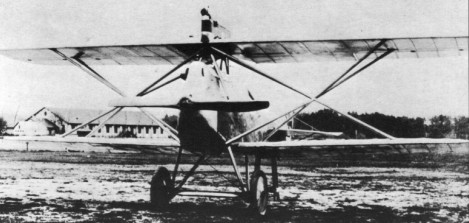
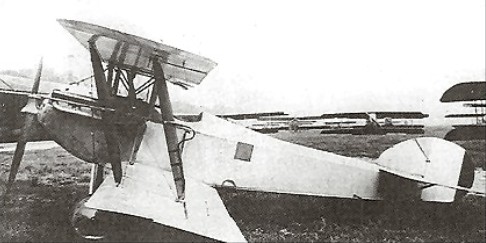
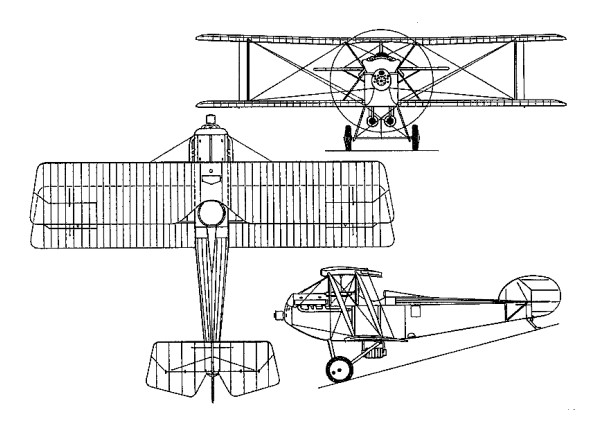
A derivative of the KD (D.I) with larger overall dimensions, simplified interplane bracing and a 200hp Hiero six-cylinder water-cooled engine, the L.14 single-seat fighter was evaluated by the Austro-Hungarian air arm in 1917, but was not accepted for series production. Two prototypes were built and flown, these differing primarily in the arrangement of the interplane bracing struts employed, and intended armament was twin 8mm Schwarzlose synchronised machine guns.
Max take-off weight: 940 kg / 2072 lb Empty weight: 740 kg / 1631 lb Wingspan: 10.20 m / 33 ft 6 in Length: 7.05 m / 23 ft 2 in Max. speed: 180 km/h / 112 mph
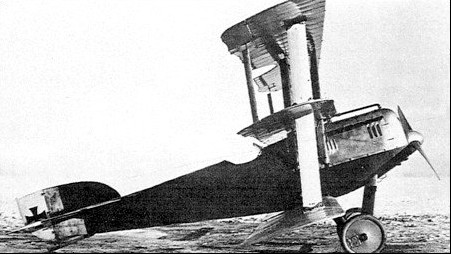
The first fighter to be designed by Ernst Heinkel as chief designer for the Hansa- und Brandenburgische Flugzeug-Werke, the KF two-seater appeared early in 1916, and was a two-bay, twin-boom biplane powered by a 150hp Benz Bz III six-cylinder water-cooled engine installed as a pusher and driving a two-bladed pro-peller between the tailbooms. The KF was of wooden construction with plywood-covered fuselage nacelle and tailbooms, and armament was intended to consist of a single 7.92mm Parabellum machine gun on a flexible mounting in the forward cockpit. Work on the KF was discontinued as it offered no advance in performance over the similarly-configured Ago C.I which served in the reconnaissance role.
Max take-off weight: 1290 kg / 2844 lb Empty weight: 760 kg / 1676 lb Wingspan: 11.60 m / 38 ft 1 in Length: 8.48 m / 28 ft 10 in Wing area: 38.6 sq.m / 415.49 sq ft Max. speed: 140 km/h / 87 mph
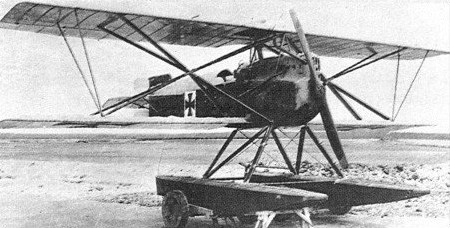
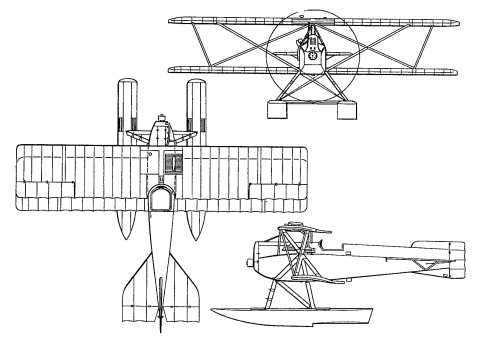
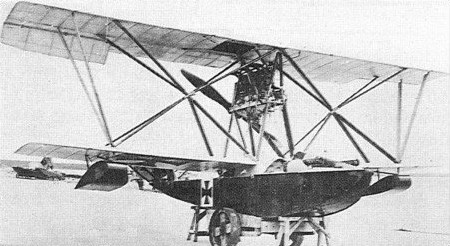
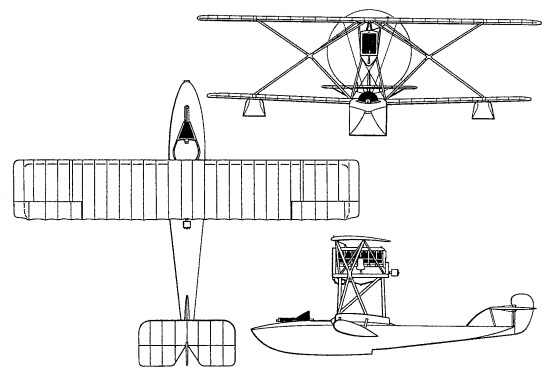
The KDW twin-float single-seat fighter seaplane was essentially a 1916 conversion of the land-based KD (D.I) to provide an interim aircraft for floatplane station defence. The only major change introduced on the prototype apart from provision of a twin-float chassis was some slight extension of the wings, but the fin area was later increased to compensate for the increased keel area resulting from the addition of the floats. The prototypes were fitted with the 150hp Benz Bz III six-cylinder water-cooled engine, but apart from a preproduction batch of 10 similarly-powered aircraft, all subsequent examples of the KDW had the 160hp Maybach Mb III six-cylinder water-cooled engine. The first production series was armed with a single synchronised 7.92mm LMG 08/15 machine gun mounted on the starboard side of the nose, but the final batch of 20 delivered between October 1917 and February 1918 had a gun mounted on each side of the cockpit and additional Vee-type interplane bracing struts. A total of 58 KDW float fighters was delivered.
KDW Engine: 1 x 160hp Maybach Mb.III Max take-off weight: 1039 kg / 2291 lb Empty weight: 759 kg / 1673 lb Wingspan: 9.30 m / 31 ft 6 in Length: 7.86 m / 26 ft 9 in Height: 3.35 m / 11 ft 0 in Wing area: 29.15sq.m / 313.77 sq ft Max. speed: 171 km/h / 106 mph Cruise speed: 154 km/h / 96 mph Ceiling: 3500 m / 11500 ft Rate of climb: 145 m/min / 500 ft/min Armament: 2 x 7.92mm Crew: 1
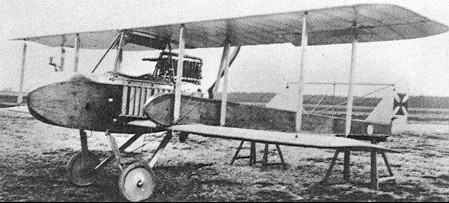
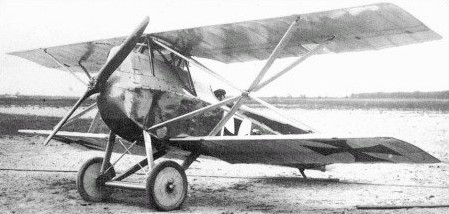
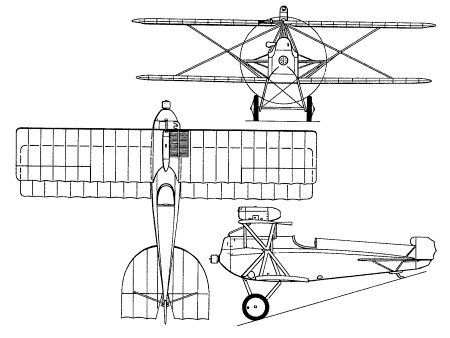
Designed by Ernst Heinkel for the Austrian army in 1916, the KD (Kampf Doppeldecker), later designated Hansa¬Brandenburg D.I, single seat fighter aircraft was known variously as the Spinne (spider) and ‘Star Strutter’. Each nickname referred to the unusual interplane strutting, comprised of four small V struts joined together in a star shape between each upper and lower wings. Flown as a prototype with the 160hp Mercedes D III six-cylinder water-cooled engine, the KD was manufactured in series as the D.I in two versions Series 28, with a 160 hp Austro Daimler engine, built by the Austrian firm of Phonix Flugzeugwerke; and Series 65, powered by a 185 hp Austro-Daimler, built by Ufag. Due to lack of a suitable synchronization gun gear, the D.I was armed with one machine gun in a ‘baby coffin’ housing above the upper wing centre section. Despite its shortcomings, the ‘Star Strutter’ was extensively flown in combat by most leading Austro Hungarian fighter pilots, who gained many victories in the type. Of wooden construction with fabric wing skinning, plywood fuselage skinning and having steel-tube interplane strutting, the D.I was armed with a single unsynchronised 8mm Schwarzlose machine gun which was enclosed by a fairing on top of the cabane and fired over the propeller. The D.I was reputedly difficult to fly, suffered inadequate directional stability owing to the rudder being blanketed by the deep fuselage, and had poor spin recovery characteristics. A number of Phonix-built Brandenburg D.Is survived World War I to serve briefly with the Deutschosterreichische Fliegertruppe.
Entering first line service in 1917, the D.I was found to have poor lateral control, and was difficult to land safely due to the pilot’s forward view being virtually obscured by the bulky engine installation. Such was the D.I’s high accident rate that it became nicknamed the Sarg (coffin) by front line pilots. Until its gradual replacement by Austrian built Albatros Ds and Berg D scouts in late 1917, however, the ‘Star Strutter’ bore a large burden of fighter combat. Austria’s leading fighter pilot, Godwin Brurnowski, commander of Fliegerkompagnie (Flik) 41J, had its Brandenburgs all doped in a red finish with a white skull on a black field as a unit mark.
Hansa-Brandenburg KD (D.I) Series 28 Engine: 160 hp Austro Daimler Span: 8.50 m (27 ft 10.5 in) Length: 6.35 m (20 ft 10 in) Wing area: 23.95 sq.m / 257.80 sq ft Max take-off weight: 920 kg / 2028 lb Empty weight: 672 kg /1482 lb Max. speed: 187 km/h / 116 mph Service ceiling: 5000 m (16400 ft)
Intended primarily for use by the Austro-Hungarian Navy, the CC single-seat fighter flying boat (the designation was derived from the initials of Camillo Castiglioni, the financier of the Hansa- und Brandenburgische Flugzeug-Werke) was a single-bay biplane of wooden construction which appeared in prototype form in mid-1916. Retaining the “star” interplane bracing strut arrangement introduced by the KD (D.I), the CC was supplied to the Austro-Hungarian Navy with both the 160hp Austro-Daimler and 180hp Hiero six-cylinder water-cooled engines, armament consisting of a single 8mm Schwarzlose machine gun projecting through the windscreen. A total of 37 fighter flying boats of this type was delivered to the service. The CC was also adopted by the German Navy, which received a total of 36, with deliveries commencing in February 1917. These were powered by the 150hp Benz Bz III, the engines of some examples being semi-cowled. The CC initially carried an armament of one 7.92mm LMG 08/15 machine gun, but late production examples had two such weapons fixed to fire forward in the upper decking of the hull nose, and the hull was lengthened to improve flying characteristics. In July 1917, the German Navy grounded the CC until all aircraft were provided with extra (Vee-type) interplane bracing struts to dampen severe wing vibration. The CC was employed extensively and with considerable success over the Adriatic by the Austro-Hungarian Navy. One example was completed experimentally as a triplane, the extra wing being placed at the intersection of the “starstruts”. It was delivered to the Austro-Hungarian Navy for evaluation on 11 May 1917, but was written-off in a landing accident on the following 19 September. One CC was modified and tested in the summer of 1918 as the W 22, with broad sponsons replacing the outrigger stabilising floats. This experimental model, which crashed during testing, was intended solely to evaluate the sponson concept as part of the Staaken Rs IV development programme.
Max take-off weight: 1080 kg / 2381 lb Empty weight: 800 kg / 1764 lb Wingspan: 9.30 m / 31 ft 6 in Length: 7.69 m / 25 ft 3 in Height: 3.57 m / 12 ft 9 in Wing area: 26.52 sq.m / 285.46 sq ft Max. speed: 175 km/h / 109 mph Range: 500 km / 311 miles
Under the technical development programme formulated in April 1919 by General Duval, the newly-appointed Directeur de l’Aeronautique, two categories of turbo-supercharged fighter were called for, one single-seat and the other two-seat. The two-seater came within the CAP, or fighter-reconnaissance, category, and Hanriot’s contribution to this programme was the HD.15, which, designed by Emile Dupont, was flown for the first time at Orly in April 1922. This competed with the Gourdou-Leseurre GL-50. The HD.15 was a tandem two-seat, unstaggered biplane employing rigid-X type interplane bracing. It was powered by a 300hp Hispano-Suiza HS 8Fb eight-cylinder water-cooled engine equipped with a Rateau turbo-supercharger which was intended to maintain sea level engine power to 5500m altitude. Armament comprised two fixed forward-firing 7.7mm Darne machine guns and two weapons of the same calibre on a swivelling mounting in the rear cockpit. In the event, the CAP category had been discarded before the flight testing of the HD.15 commenced and the entire turbo-supercharger fighter programme became something of a fiasco as a result of unavailability of the Rateau unit in quantity. However, the Japanese Army had begun to show interest in the potentiality of turbo-supercharged engines, and purchased the prototype HD.15, which was delivered in 1926. An order was placed for three identical examples of the HD.15, but, in the event, the vessel delivering the aircraft was struck by a tidal wave and the HD.15s never reached Japan.
Max take-off weight: 1750 kg / 3858 lb Empty weight: 1050 kg / 2315 lb Wingspan: 11.40 m / 37 ft 5 in Length: 7.60 m / 24 ft 11 in Height: 2.57 m / 8 ft 5 in Wing area: 32.48 sq.m / 349.61 sq ft Max. speed: 180 km/h / 112 mph Ceiling: 10250 m / 33650 ft Range: 800 km / 497 miles
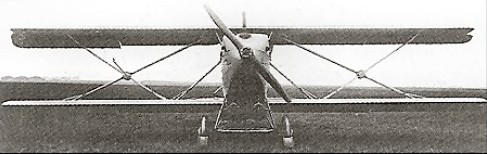
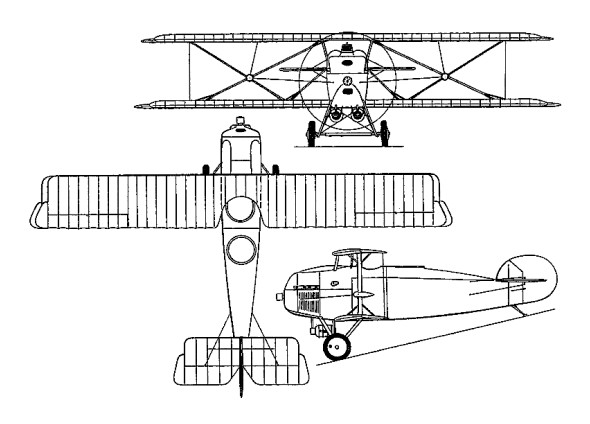
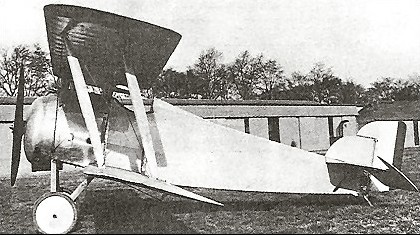
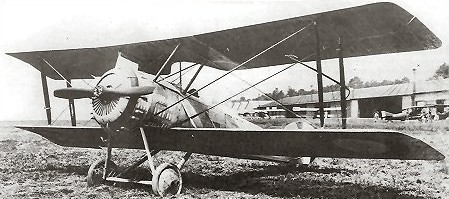
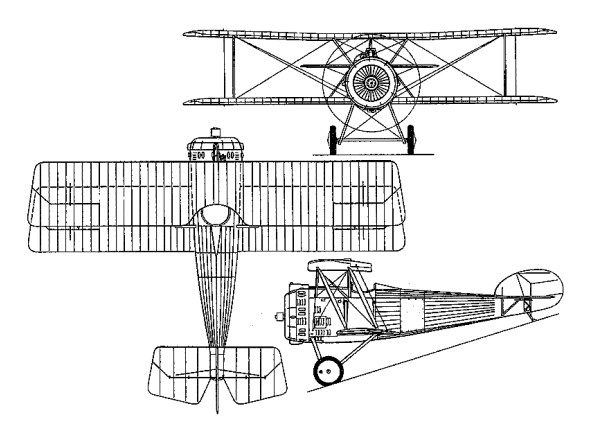
The HD.12 single-seat fighter commenced its flight test programme in 1921. A single-bay staggered biplane, the HD.12 was powered by the 170hp Le Rhone 9R nine-cylinder rotary air-cooled engine, and its intended armament was the standard pair of synchronised 7.7mm Vickers machine guns. The HD.12 was considered to be somewhat passe by the time it commenced flight testing, and, having a comparatively poor performance, it was discontinued.
Wingspan: 8.70 m / 28 ft 7 in Length: 5.94 m / 19 ft 6 in Height: 2.50 m / 8 ft 2 in Wing area: 19.00 sq.m / 204.51 sq ft Max. speed: 190 km/h / 118 mph
A single-seat reconnaissance fighter developed from the two-seat HD.3, the HD.9 was placed in the broad category of Avions de Corps d’Armee (as the HD.9 Apl) and it was armament with a single synchronised 7.7mm Vickers machine gun. The airframe was basically that of the HD.3 and the installation of the 260hp (194 kW) Salmson 9Za radial engine was identical, but fuel capacity was considerably increased.
The first example of the HD.9, serial 3001, was completed in November 1918 as the initial aircraft built against an order for 10 machines with serials starting at 3001 and up. However, its career was cut short by the Armistice and there is no evidence that all nine remaining aircraft were completed.
Empty weight: 710 kg / 1565 lb Wingspan: 9.00 m / 29 ft 6 in Length: 6.95 m / 22 ft 10 in Wing area: 25.50 sq.m / 274.48 sq ft Max. speed: 220 km/h / 137 mph Range: 800 km / 497 miles
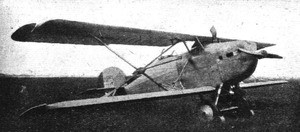
Designed as a potential successor for the SPAD S.XIII, the HD.7 single-seat fighter employed wings and tail surfaces essentially similar to those of the two-seat HD.3. Flown for the first time in the summer of 1918, the HD.7 was powered by a water-cooled Hispano-Suiza 8Fb eight-cylinder engine of 300hp and mounted an armament of two 7.7mm synchronised Vickers machine guns. The performance of the HD.7 proved good, but marginally inferior to that of its principal competitor for production orders, the Nieuport 29. With selection of the Nieuport for series manufacture, further development of the HD.7 was discontinued.
Max take-off weight: 1900 kg / 4189 lb Empty weight: 1230 kg / 2712 lb Wingspan: 9.80 m / 32 ft 2 in Length: 7.20 m / 23 ft 7 in Height: 3.00 m / 9 ft 10 in Wing area: 28.00 sq.m / 301.39 sq ft Max. speed: 218 km/h / 135 mph Range: 900 km / 559 miles
 All Aero