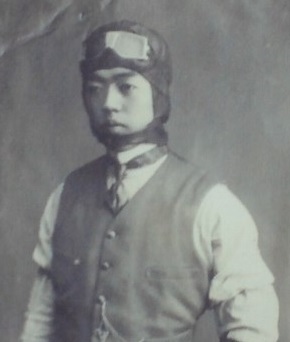
Itô was born in in southern Osaka. While employed as a young man by the Sadoshima Copper and Iron Company in his hometown of Osaka, Otojiro Itoh (伊藤音次郎, Itô Otojirô) (June 3, 1891 – December 26, 1971) became inspired with flight when seeing the Wright brothers’ success in a film. ‘
In September 1909, after reading an article about the new biplane developed by Sanji Narahara, Itô wrote a letter to Narahara pleading to be employed as a pilot. At Narahara’s urging, Itô began taking night classes on mechanical engineering at the Kôshu Gakko (now Kogakuin University). He continued to maintain a correspondence with Narahara for many years.
At the age of 19, in 1910, ltoh left home and moved to Tokyo where he worked as a mechanic at the Narahara aeroplane company. Impressed with his eagerness and interest in aviation, Narahara made ltoh an assistant to Einosuke Shirato, who had worked exclusively for Narahara as a pilot. This association was interrupted when Itoh reached the age of 20 because, like all other young Japanese men, he was conscripted for a one year term of service in the military. Upon returning to Narahara in 1912, he assisted in the manufacture of the aeroplanes and accompanied demonstration flights around Japan as a ground crewman.
In February 1915, following Narahara Sanji’s departure from the aviation community, Itô established the Itô Aircraft Research Center in present day Mihama Ward of Chiba City.
As spare-time employment, ltoh assisted Shigesaburo Torigai with the manufacture of the Torigai Hayabusa-go Aeroplane which eventually crashed in September 1913. ltoh borrowed this aeroplane, quit his job and moved with the aeroplane to Inage, on Tokyo Bay just north of Chiba City. There he made repairs and modifications to the aeroplane, and began to learn to fly with the help of two others. The sandy beach there proved an excellent runway, but its availability was dependent upon the height of the tide. After three months of flying training, maintaining and repairing his own aircraft, he had accumulated a total of a mere 3 hours of flying.
Pilot licences, or, for that matter, any regulations concerning flying and aeroplanes were yet to come. Therefore, Itoh established a flying school on the beach at Inage in February 1915, and called it the ltoh Kyodo Hiko Renshusho (Itoh Co-operative Flight Training Ground). The ltoh Aeroplane Research Studio and Training Ground were both known to the public as ltoh Airfield. For flying training, he used the Torigai Hayabusa-go Aeroplane after it had been modified. To supplement his income, Itoh joined part time with Shirato, formerly with the Narahara company, who now was building his own aeroplanes. This added income allowed ltoh to begin his commercial construction of aircraft and by the autumn of 1915 he completed his first; the Itoh Emi I.
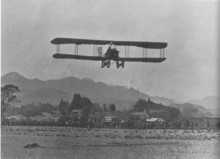
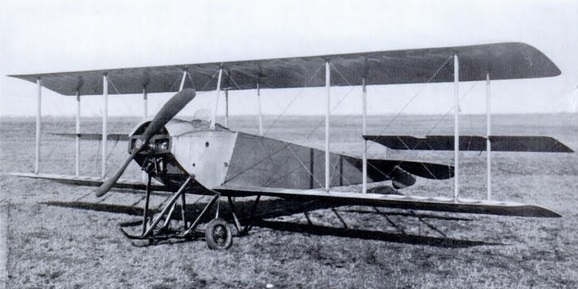
In November 1915, Itô finished construction of an airplane named after himself and his hometown, the “Itô-Emi Type 1.” On January 8, 1916, Itô flew his aircraft over Tokyo, making him famous among Japanese aviators. After Itô’s aircraft facility suffered severe damage from winds and flooding in late September 1917, he moved his operation to Tsunanuma-chô (now Naraishino City), and reestablished his business under the name “Itô Aircraft Manufacturing.” Among the pilots that Itô trained was Tadashi Hyōdō, the first Japanese woman to earn her pilot’s license, and Inoue Chôichi, who established the Japan Air Freight Corporation.
Ito-Emi type 1
When the Asahi News Corporation established the Tôsai Teiki Airlines in 1923, Itô Aircraft Manufacturing provided both aircraft and pilots, thereby contributing to civil aviation transportation. In 1930, Itô established the Japan Light Aircraft Club and appointed Sanji Narahara as club president, which contributed to the spread of lighter-than-air aircraft in Japan.
Although Itô was one of the few successful aviators to come from a purely civil aviation background, he withdrew from the world of aviation following the ban on all aviation activities from the GHQ after the Occupation of Japan. Itô established a farming cooperative with volunteers drawn from the former workers at his factory in 1948, and moved to Tôyama Village in Chiba Prefecture (now Tôhô, Narita City) to open up new farmland as part of the post-war land reclamation project.
Despite the great effort expended by Itô’s group to cultivate land that had once been bamboo forest, their farm was eventually included in the area designated for the Tokyo International Airport (now Narita International Airport). The sudden announcement of this plan was devastating for many local residents, some of whom participated in the Sanrizuka Struggle, but it was said that Itô alone of all the area’s residents welcomed the arrival of the airport. Although he had put his energy into farming, Itô willingly agreed to sell his land, and was among the first to sign a contract with the airport organization.
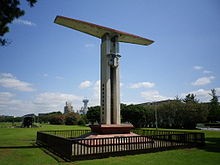
Memorial to the birthplace of civil aviation
Afterwards, Itô put his energy into the establishment of the Civil Aviation Memorial in Inage Seaside Park. The journals and written records that Itô left behind were eventually used by author Hiragi Kunio. On December 26, 1971, Itô died at the age of 80.
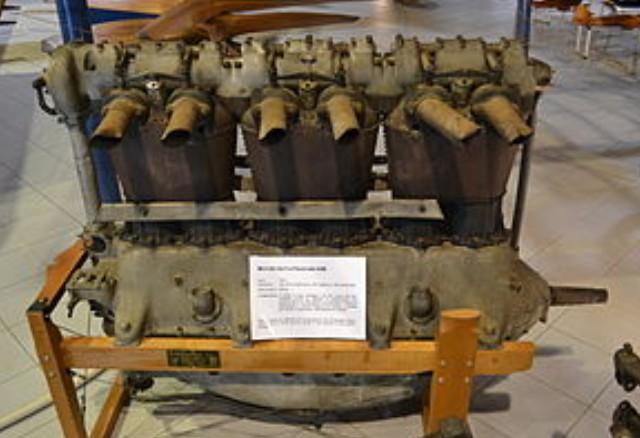
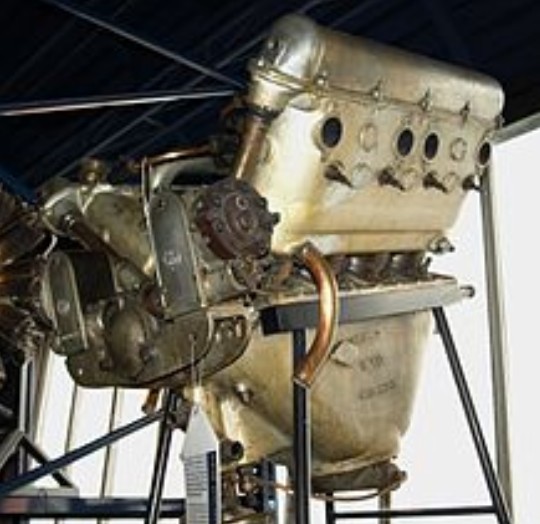
The Isotta Fraschini V.5 of 1916 was an Italian eight-cylinder, water-cooled, in-line piston aero engine first run in 1915. The “V” denoted “Volo” or “flight” rather than piston arrangement.
The V.5’s construction was fairly typical of aircraft engines of the period with cast-iron cylinders mounted in pairs with common heads and water jackets. It had much in common with the six-cylinder Isotta Fraschini V.4 and was built at a similar time. Though powerful, it was very heavy and thus, like some other Isotta Fraschini engines, better suited to airships than aircraft.
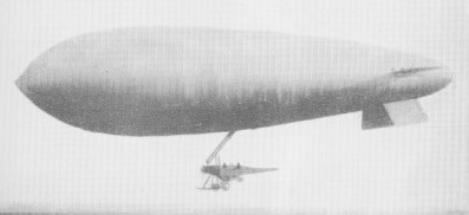
Applications: Forlanini airship
Specifications: Type: 8-cylinder inline Bore: 130 mm (5.12 in) Stroke: 180 mm (7.09 in) Displacement: 19 L (1,165 cu in) Length: 1,990 mm (78.3 in) Width: 600 mm (23.6 in) Height: 1,010 mm (39.8 in) Dry weight: 351 kg (774 lb) Valvetrain: Overhead camshaft Fuel system: Twin carburettors, twin eight spark magnetos Oil system: Forced feed Cooling system: water; cast iron cylinders in pairs, each pair in a steel water jacket Reduction gear: direct Power output: 183 kW (245 hp) at 1,400 rpm
The Isotta Fraschini V.4 of 1916 was an Italian six-cylinder, water-cooled, in-line piston aero engine of World War I (the “V” denoted “Volo” or “flight”). Its construction was fairly typical of aircraft engines of the period with six cast-iron cylinders mounted in pairs with common heads. This engine was also produced by Alfa Romeo.
V.4b Type: Six-cylinder, water-cooled, in-line piston engine Bore: 130 mm (5.12 in) Stroke: 180 mm (7.09 in) Displacement: 14.3 L (874 cu in) Length: 1,470 mm (58 in) Width: 460 mm (18.11 in) Height: 1,020 mm (40.15 in) Dry weight: 264 kg (584 lb) Valvetrain: Overhead camshaft Fuel system: Twin carburettors, two six spark magnetos Oil system: Forced feed Cooling system: Water; cylinders in pairs, each pair in a steel water jacket Power output: 142 kW (190 hp) at 1,450 rpm Compression ratio: 4.8
The Huntington Tractor Scout, two-place trainer, was built for an unsuccessful military evaluation in 1915. Powered by a 90 hp Gyro engine, it was built at the Hempstead Plains Airfield in Garden City.
In 1918 the New Britain Machine Co built an 18-cylinder air-cooled radial aero engine designed by G O Hodge. With two banks of 9 cyls each, it produced 320hp@2000rpm from 904.68ci. The dry weight was 480 lb.
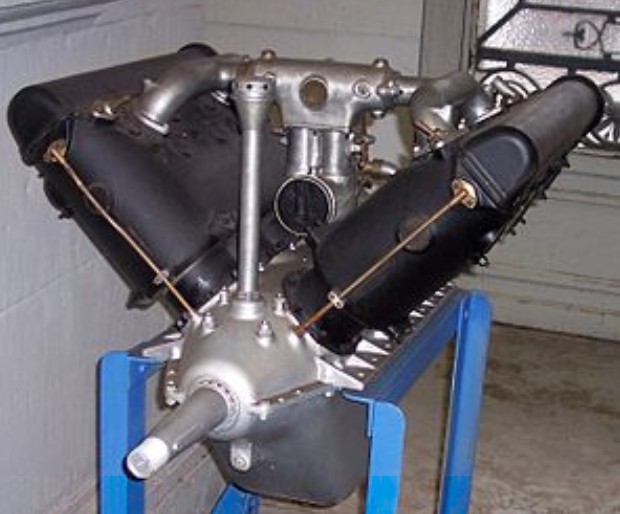
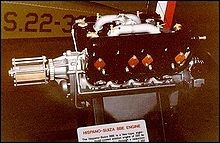
The Hispano-Suiza 8 was a water-cooled V8 SOHC aero engine introduced by Hispano-Suiza in 1914 and was the most commonly used engine in the aircraft of the Entente Powers during the First World War. The original Hispano-Suiza 8A was rated at 140 hp (102 kW) and the later Hispano-Suiza 8F reached 300 hp (220 kW).
HS-8 engines and variants produced by Hispano-Suiza and other companies under licence were built in twenty-one factories in Spain, France, Britain, Italy, and the U.S. Derivatives of the engine were also used abroad to power numerous aircraft types and the engine can be considered as the ancestor of another successful engine by the same designer, the Hispano-Suiza HS-12Y (and Soviet Klimov V12 derivative aero-engines) which served in World War II.
When World War I began, the production lines of the Barcelona based Hispano-Suiza automobile and engine company were switched to the production of war materiel. Chief engineer Marc Birkigt led work on an aircraft engine based on his successful V8 automobile engine. The resulting engine, called the Hispano-Suiza 8A (or HS-8A), made its first appearance in February 1915.
The first 8A kept the standard configuration of Birkigt’s existing design: eight cylinders in 90° Vee configuration, a displacement of 11.76 litres (717.8 cu in) and a power output of 140 hp at 1,900 rpm. In spite of the similarities with the original design, the engine had been substantially refined. The crankcase was machined from a solid piece of steel. The cylinders were cast aluminium with steel liners. The SOHC cylinder heads were also made of aluminium, using a rotary driveshaft (tower gear) coming up from the crankcase along the rear end of each cylinder bank, with the final drive for each cylinder bank’s camshaft accommodated within a semicircular bulge at the rear end of each valve cover. Aluminium parts were coated in vitreous enamel to reduce leakage. All parts subject to wear, and those critical for engine ignition were duplicated: spark plugs for dual ignition reliability, valve springs, magnetos, etc.
Although engine reliability was a great concern in these opening stages of aviation, the HS-8A also provided a good power-to-weight ratio and development potential. The engine and its accessories weighed 185 kg (408 lb), making it 40% heavier than a rotary engine of equivalent power. The design also promised far more development potential than rotary engines which, in spite of being the most common type then in use for aircraft, were getting close to the limits of their potential. Rotary engines of increased power generally had increased weight, which in turn increased the already serious gyroscopic torque generated by the engine’s rotation. A further increase in torque was considered unacceptable, and the power-to-weight ratio of the new rotary engines under development did not appeal to aircraft designers.
The new engine was presented to the French Ministère de la Guerre (Ministry of War) in February 1915, and tested for 15 hours at full power. This was standard procedure for a new engine design to be admitted in military service. However, because of lobbying by French engine manufacturers, the HS-8A was ordered to undergo a bench test that no French-made engine had yet achieved successfully: a 50-hour run at full speed. The HS-8A was therefore sent back to Chalais-Meudon on July 21, 1915 and tested for 50 hours, succeeding against all expectations.
French officials ordered production of the HS-8A to be started as soon as possible and issued a requirement for a new single-seat high-performance fighter aircraft using the new engine. The SPAD VII was the result of this requirement and would allow the Allies to regain air superiority over the Germans.
Guynemer informed Bechereau in December 1916 that “the Halberstadt [while] not faster, climbs better, consequently it has the overall advantage”. In the quest for more power, Marc Birkigt increased the compression ratio of the 8A engine from 4.7 to 5.3, which in turn raised its revolutions from 1500 to 1800 per minute. This resulted in a power output of 180hp, enabling a significant improvement in the SPAD VII’s performance to be achieved. Apart from the extra power, the new Hispano-Suiza 8Ab proved extremely reliable.
Hispano Suiza 8Ca
Approximately 49,800 were built.
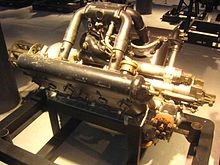
The Wolseley Viper is a British-built, high-compression derivative of the Hispano Suiza HS-8 liquid-cooled V-8 engine, built under licence by Wolseley Motors during World War I and first run in 1918.
It powered later models of the S.E.5a, SPAD VII and other British or British-built aircraft designed for the Hispano-Suiza.
Wolsley Viper
Variants:
8A (HS-8A) The first model of the Hispano-Suiza 8 produced in any quantity.
8Aa (HS-8Aa) The HS-8Aa, which entered production in July 1915, was the production variant of the basic HS-8A type, with increased power output: 150 hp (110 kW) at 2,000 rpm. Early HS-8A engines were plagued with various problems which required further work. The 150 hp HS-8Aa was the standard powerplant for early-production SPAD VIIs. The demand for the Hispano-Suiza engine was such that other manufacturers began producing it under licence, in France, Great Britain (Wolseley Adder), Italy (Nagliati in Florence and Itala/SCAT in Turin) and Russia. Total production of the HS-8Aa amounted to some 6,000 engines. To avoid the problems experienced by the 8A, Wolseley reduced the compression ratio to 4.7 in the Adder but opted for 5.3 in other variations such as the Viper.
8Ab (HS-8Ab) The HS-8Ab was yet another evolution of the HS-8A. By increasing the compression ratio from 4.7 to 5.3, Birkigt was able to increase the power output to 180 hp (132 kW) at 2,100 rpm. The HS-8Ab began replacing the 8Aa on SPAD VIIs in early 1917.
8Ac (HS-8Ac)
8B (HS-8B) The HS-8Ab had been plagued by engine failures due to the high compression ratio: piston heads were sometimes pierced and engines seized. In another ploy to increase the power output of the engine, Birkigt chose to increase engine speed.
8Ba (HS-8Ba) The first, the HS-8Ba, kept the 4.7 compression ratio of the HS-8Aa but delivered 200 hp (147 kW) at 2,300 rpm.
8Ba (HS-8Bb) The second version, the HS-8Bb, had a compression ratio of 5.3. A reduction gear (3:4 ratio) was fitted to compensate for the increased engine speed. However the reduction gear system was fragile, and often broke down, sometimes with spectacular results ending up with the entire propeller, driveshaft and driven gear parting company from the airframe. Progressive refinement of the engine brought the available power to 235 hp by the end of 1917. The HS-8B was used to power the earliest versions of the S.E.5a, all examples of the SPAD S.XII and SPAD S.XIII, front-line versions of the Sopwith Dolphin and several other Allied aircraft types, with its gear reduction easily identifiable in vintage World War I photos, from its use of a clockwise (viewed from in front, otherwise known as a left hand tractor) rotation propeller.
8Ba (HS-8Be)
Hispano-Suiza 8Be
8Ca (HS-8Ca) The HS-8Ca, a gear-reduction equipped powerplant with a resultant clockwise rotation propeller like the 8B, produced 220 hp at 2,100 rpm. It had a manually loaded 37 mm Puteaux SA 18 cannon mounted between the cylinder banks (a so-called moteur-canon) that could fire a single shot at a time through the hollow drive shaft without propeller interference. The engine was used on the SPAD S.XII.
Hispano Suiza 8Ca
8F (HS-8F) The HS-8F was basically an enlarged version of the HS-8B, and was intended for use in bombers. Displacement rose to 18.5 liters (1,127.3 in3), with a power of 300 hp (220 kW) at 2,100 rpm (eq. 750 lb·ft torque). Despite the increased weight of 256 kg (564 lb), the HS-8F was installed in fighters such as the Nieuport-Delage NiD 29 and Martinsyde Buzzard, and it would have powered the never-produced Mk.II version of the Sopwith Dolphin. Engine speed being lower than that of the HS-8B, the reduction gear was deleted, thereby increasing engine reliability.
8Fa (HS-8Fa)
8Fb (HS-8Fb)
8Fd (HS-8Fd)
Wolseley W.4B Adder I
Wolseley W.4B Adder II
Wolseley W.4B Adder III
Wolseley W.4A Python I
Wolseley W.4A Python II
Wolseley W.4A Viper Was an improved 8A. Wolseley’s engineers removed problems with the crankshaft and increased the compression ratio to give more power. It did not need the reduction gearing of the H-S8.
Wolseley W.4A Viper II The Viper II could deliver 210 hp at 2,000 rpm.
Wright-Hisso A
Wright-Hisso E The American Wright-Martin aviation firm licence-produced the original 150 hp HS-8Aa engine as the Wright-Hispano E, for use in World War I combat aircraft to be built in the United States – it found its way into the JN-4H version of the Curtiss Jenny, replacing the Curtiss OX-5 liquid-cooled V8 engine of only 90 hp output. Wright-Hisso H
Wright-Hisso I
Wright-Hisso T
Applications: Austin-Ball A.F.B.1 Avia BH-21 Avia BH-22 Bartel BM-5 Bernard SIMB AB 10 Blanchard Brd.1 Caudron C.59 Caudron R.11 Curtiss JN-4H Jenny FBA Type H Fokker D.IX Fokker D.X Fokker D.XII Fokker S.III Gourdou-Leseurre GL.21 Hanriot HD.5 Hanriot HD.15 Hanriot HD.20 Letov Š-7 Letov Š-13 Letov Š-14 Martinsyde F.4 Buzzard Nieuport 29 (8Fb) S.E.5 and S.E.5a (8a and Viper), Sopwith Dolphin (8B) Sopwith Cuckoo SPAD S.VII (8a) SPAD S.XI (8Be) SPAD S.XII (8Cb), with 37 mm calibre moteur-canon mount through the hollow propshaft SPAD S.XIII (8Be) Standard J-1 training biplanes, especially on restored, airworthy examples Waco DSO (8a) Wibault 1
Wright-Hispano E Boeing NB-2 AT-3 Consolidated PT-1 Cox-Klemin TW-2 Dayton-Wright TW-3 Huff-Daland TW-5 Curtiss AT-4 Vought VE-7 Waco DSO
Hispano-Suiza 8a Type: 8-cylinder liquid-cooled Vee piston engine Bore: 120 mm (4.724 in) Stroke: 130 mm (5.118 in) Displacement: 11.76 L (717.8 in3) Dry weight: 445 lb (202 kg) Fuel system: 1 Claudel or Zenith Carburetor Cooling system: liquid Fuel consumption: 0.51 lb/(hp·h) Oil consumption: 0.03 lb/(hp·h) Power output: 140 hp at 1900 rpm Length: 1.19 m Width: 0.81 m Height: 0.77 m Compression ratio: 4.7
8Aa Bore: 120 mm Stroke: 130 mm Displacement: 11.76 lt Compression ratio: 4.7 Length: 1.25 m Width: 0.83 m Height: 0.81 m Weight: 215 kg Power output: 150 hp at 2000 rpm
8Ab Bore: 120 mm Stroke: 130 mm Displacement: 11.76 lt Compression ratio: 5.3 Length: 1.31 m Width: 0.85 m Height: 0.87 m Weight: 230 kg Power output: 180 hp at 2100 rpm
8B Bore: 120 mm Stroke: 130 mm Displacement: 11.76 lt Compression ratio: 5.3 Length: 1.36 m Width: 0.86 m Height: 0.90 m Weight: 236 kg Power output: 200/235 hp at 2300 rpm
8F Bore: 140 mm Stroke: 150 mm Displacement: 18.47 lt Compression ratio: 5.3 Length: 1.32 m Width: 0.89 m Height: 0.88 m Weight: 256 kg Power output: 300 hp at 2100 rpm
W.4A Viper Type: 8-cylinder, upright, 90 degree Vee engine Bore: 4.72 in (120 mm) Stroke: 5.12 in (130 mm) Displacement: 716.8 cu in (11.77 L) Dry weight: 500 lb Fuel system: Twin Zenith-Duplex carburettors Cooling system: Liquid-cooled Reduction gear: Direct drive, Right-hand tractor Power output: 200 hp at 2,000 rpm (takeoff power) Compression ratio: 5.3:1
In 1968, Snecma took control over Hispano-Suiza, which included the mechanical engineering firm Bugatti, the landing gear manufacturer Messier, and the engine maker Berthiez. All of these were at the edge of ruin.
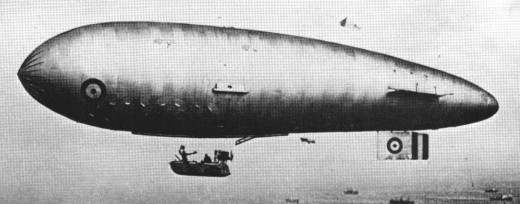
Utilised by the RNAS during WW 1 for anti-submarine patrol and convoy escort duties. Hurriedly conceived as a composite of the Willows JV (HMA No. 4) airship and a car formed from the fuselage of an RAF B. E. 2c aircraft, the resultant combination was a simple non-rigid that could be used for submarine hunting and convoy protection. It was first tested in March 1915 and given the designation ‘SS’ class, indicating ‘Sea Scout’ or ‘Submarine Scout’. Alternative cars could be fitted, and although the greater number used the B.E.2c fuselage (these being SS1 to SS3, SS8 to SS10A, SS12 to SS20, and SS23 to SS25), 11 were fitted with Armstrong Whitworth cars and 12 with Maurice Farman cars. Some are on record as going to France and Italy, while they also inspired certain US vessels of similar construction. The original ‘SS’class airships flew with a dorsal fin, while the ventral one of SS40 was extended in area. Anticipated work was agent-dropping, but it was actually used for night reconnaissance. The ‘SS’ class was used for patrols over the Dover Straits and Irish Narrows, the first base to have the type being that established at Capel near Folkestone on 8 May 1915; a second base began operations with the ‘SS’ on 6 July of the same year, this being at Polegate (Eastbourne) where there were three, compared with five at Capel. In later models the gas capacity was increased first to 1699 cu.m (60,000 cu ft) and later to 1982 cu.m (70,000 cu ft) from the original 580.5 cu.m (20,500 cu ft).
The SSO had a capacity of 70,500 cu ft., were 43.58m long and 9.14m in diameter. Useful lift was calculated to be 609.62kg. The class was powered by the 75hp Rolls Royce Hawk six cylinder engine with a maximum forward speed of 42 kts. On patrol speed was 30 kts. Other more radical variations were introduced to produce the ‘SST’ class, which had twin engines but of which only six were constructed, and the ‘SSP’ class (the last letter indicating pusher propulsion) that was even less successful, only two being built. As might be expected these airships, which gave to the English language the word ‘Blimp, had the capability to stay aloft for many hours, the normal flight duration being seven hours although records exist claiming up to twice this figure. The type served throughout the war on the same duties and certainly had a deterrent effect on submarine commanders, whose vessels it was possible to see below the surface of the water. Some, with Armstrong Whitworth F. K. 3 fuselages doing duty as their cars, were powered with 74.6-kW (100-hp) Green water-cooled motors as an alternative to the standard powerplant, the Hawk engine being particularly associated with the Maurice Farman nacelles. Production was about 150 ‘SS’ class airships. The final variant of the ‘32’ class airship was the ‘SSZ’ class (Z indicating the ultimate or zero form), of which no less than 93 were ordered although only 63 of these went to the Royal Navy: SSZ23 and SSZ24 were sent to the United States where the latter became A5472, while SSZ21 and SSZ22 went to France. The type was introduced late in 1916 and although the engine was usually the Rolls-Royce Hawk, two were fitted with the Renault V-S of similar rating, and all were used for similar work to that performed by the earlier ‘55’ type. The main visual difference between the two classes was the specially designed car that took the place of the aeroplane fuselages used formerly. In fact the SSZ was not originally intended for sea patrol, being designed to be towed by surface vessels of the Belgian coast patrol and by monitors, when their role would have been no more than aerial platforms for gunnery spotting after release and under their own power. The very first airship of this type was in fact built at Capel (Folkestone) and later flown to the Dunkirk area, where it was based at St Pol on 21 September 1916, three months after it had been constructed. Perhaps the chief claim to history enjoyed by the SSZ is the fact that, despite being of non-rigid construction and therefore capable of being flown only if the weather was suitable, they were responsible for spotting 49 submarines, of which 27 were claimed as sunk. To do this it was necessary for the airships to remain aloft for lengthy periods and the record for this goes to the crew of SSZ39, who remained in the air during the summer of 1918 for a continuous period of 50 hours. This was more than double that of the accepted ‘long patrol’, which was in the region of 24 hours, although the average was 12. A crew of three manned the airships. The crew car was designed to float like a boat and water landings were made on numerous occasions. In the front sat the wireless/telegraphist, the pilot in the centre and the engineer in the rearward position. Directional control was by rudder behind the vertical fin on the underside of the ship and elevators on the horizontal fins. To maintain envelope pressure and compensate for gas loss two ballonets were filled with air from a scoop immediately aft of the pusher propeller. The two ballonets were equivalent to about one third of the envelope volume which was a two ply rubberised fabric. Patrol duration was listed at 12 hours at full speed although at half speed patrols of 23 to 30 hours were quite common. In 1918 a flight of 50 hours 55 minutes was logged. It must be also remembered that the overhaul life of an aero engine at this time seldom exceeded 20 hours and was quite often as little as five hours. A total of seventy-one of the Submarine Scout class were built between 1916 and 1918.
‘SS’ class Powerplant: one 55.9-kW (75-hp) Renault V-S or Rolls-Royce Hawk six cylinder water-cooled piston engine, or one 74.6-kW (100-hp) Green water-cooled piston engine Maximum speed 48 kph (30 mph) with Renault or Rolls-Royce engine, or 80 km/h (50 mph) with Green engine. Useful lift 3001 kg (6,615 lb) Diameter 9.75 m (32 ft 0 in) Length 43.59 m (143 ft 0 in) Volume 1982.2 cu.m (70,000 cu ft) Armament: one 7.7-mm (0.303-in) Lewis machine-gun, plus bombs.
‘SSO’ class Engine: 1 x Rolls-Royce Hawk 6 cyl, 75 hp.
‘SSZ’ class Type: sea patrol airship. Powerplant: one 55.9-kW (75-hp) Rolls-Royce Hawk six-cylinder or Renault V-8 water-cooled piston engine. Maximum speed 77 kph (48 mph) Service ceiling 2400 m (7,875 ft) Normal endurance 12 hours Useful lift 3300 kg (7,275 lb Diameter 9.75 m (32 ft 0 in) Length 43.59 m(143 ft 0 in) Volume 1982.2 cu.m (70,000 cu ft) Armament: one 7.7-mm (0.303-in) Lewis gun for the observer, plus bombs
 All Aero